Black Academia in Britain

The last few years have witnessed a growing concern with the challenges that peoples of African heritage – who I will define in this blog as Black peoples – face working and studying in the UK higher education system. Issues of the relative absence of Black people in influential positions have taken centre stage, alongside the direct and indirect discrimination that both black students and staff might confront. These are long standing issues. Indeed, for a number of years now, some British Black academics have made careers in North America more easily than in their domicile country. 

These challenges have been met by various recent initiatives, for example, a concerted effort to formally institute a British Black Studies, and the creation of a network of Black British Academics. To repeat, concerns as to the presence and experience of Black people in British academia are by no means new. But these concerns have been re-engaged with in a new context marked by austerity, the growing internationalisation of universities, and the radical changes to the public university system in Britain implemented by the coalition government who  are turning “multiversities” into “monoversities” organized singularly along the lines of commercial logic and interest.

Having been involved in a small way in recent re-engagements with the place and standing of Black academics and staff in UK academia I thought I would take stock and look at a few recent statistical and qualitative studies that appraise the state of Black academia in Britain, from both an academic and student standpoint.

Before I start, though, I want to say a few words about the internal composition of Black peoples in the UK. According to the 2011 Census, Black people now compose 3.3% of the population. However, the pronounced immigration over the last twenty or so years of peoples from the African continent has significantly shifted the demographics and dynamics of the Black population itself. Whereas, in the 1950s to 80s, Black Britain referred primarily to the “historical” African Diaspora – mainly those from an African-Caribbean background – it now predominantly refers to a new Diaspora with a continental background.

Continue reading

Activism, Academia and Black Community Struggles

A little while ago Adam Elliot Cooper from Ceasefire Magazine interviewed Stafford Scott, along with myself, on Black community struggles, activism and academia in Britain. Stafford Scott was a co-founder of the Broadwater Farm Defence Campaign in 1985, and is now a consultant on racial equality and community engagement as well as co-ordinator of Tottenham Rights. The interview revolved around a one day workshop run by Dr Joy de Gruy in Tottenham last October, funded by Tottenham Rights and the Centre for Public Engagement, Queen Mary University of London.


Adam: Black community struggle has been an integral part of the way in which we understand the politics of race, class and empire in Britain today. Black communities and activists have led this struggle. But academics have played a role too. Stafford, in October 2013 you brought Dr Joy de Gruy over from the US to Tottenham to run a one day workshop on Post-Traumatic Slave Syndrome. Why Dr Joy, and why Tottenham?

ScreenHunter_18 Apr. 17 19.50Stafford: It’s relatively simple to be quite honest. Why Tottenham? Because in 2011 parts of Tottenham burned as a result of the shooting of a young black male called Mark Duggan. It hit the headlines. As a result of some of us going to the police station rioting broke out and then spread across the country. We saw the media and the government’s reactions to those riots and it really was to dismiss the youths as feral criminals looking to make money out of someone’s death. It was dismissed as an opportunity for people’s materialistic natures to come out. What I wanted to do was put a total different perspective to it – a historical perspective. So I wanted to look at why rioting broke out. I was there, and I don’t believe that it was simply about Mark Duggan’s killing and the way in which his family was treated. I believe that there was a history – a context – to it, that some people chose not to examine. Duggan’s killing was the straw that broke the camel’s back.

We had different events in 2013. One was about the uprising that took place on Broadwater Farm and the killing of Cynthia Jarrett, the killing of Joy GardnerRoger Sylvester and Mark Duggan – four people who died in Tottenham, with involvement of the police. So this was to help the community come to terms with recent traumatic events. We brought Dr Joy over to look at historic events that have caused us great trauma.

ScreenHunter_17 Apr. 17 19.50Adam: Dr Joy, a professor of social work, is famous for developing an analytical framework called Post-Traumatic Slave Syndrome and for developing practical programmes that address the challenges of Black communities in the United States. So Dr Joy’s work is not only based on scholarship in the traditional sense but also research that has come out of participating in the struggles that Black communities face in the United States. Robbie, do you see similar work happening in Britain?

Robbie: I think historically there certainly was, you could see that kind of thing happening. Today I think it’s far less the case and that’s to do with a number of significant transformations in British society and in academia. Continue reading

Every Ghetto, Every City

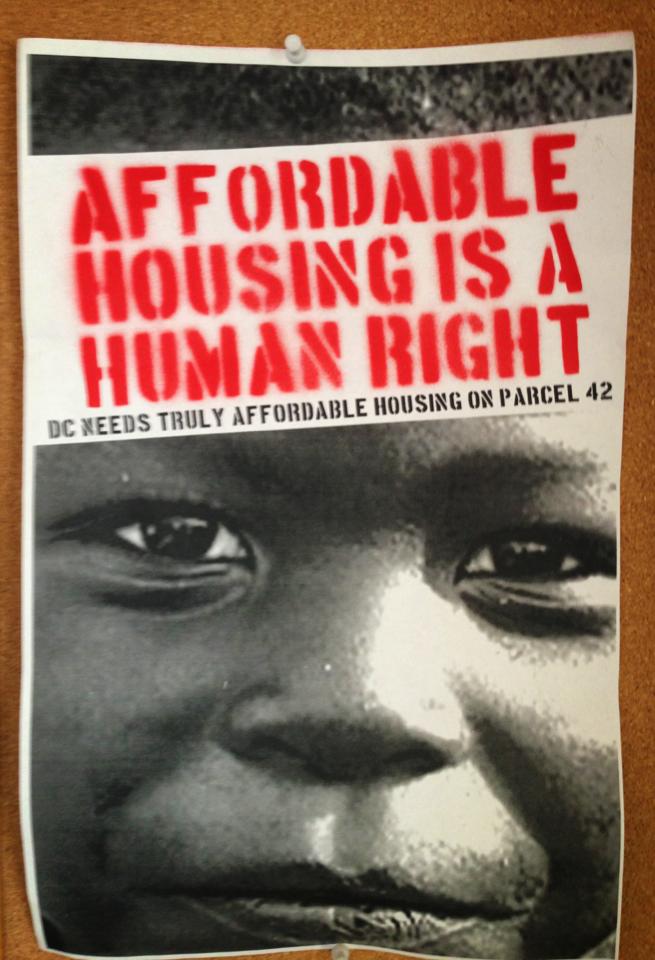
Really insightful video on displacement in Washington DC from Al Jazeera English. This piece traces a dynamic that is seen across the US and around the globe – including example of residents fighting for a human right to housing and featuring One DC.


And some tunes to go along with the news…


Living Knowledge Traditions and the Priestly Caste of the Western Academy

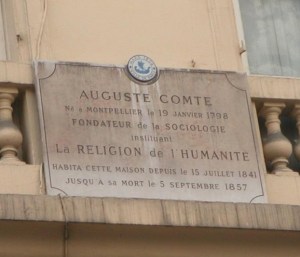
comte

The Western Academy, especially in its social science and humanities wings, incorporates as a priestly caste. Perhaps Kant is the first high priest of this caste when he argues for the Aufklärer to become a corporate entity equivalent to the hierocracy and nobility but exceptional in its duty to provide a truly public service of reasoning. The psalm of this priestly caste is “have the courage to use your own understanding”, its catechism: to singularly possess and hold aloft the flame of revelation, known as science, or, nowadays, the modern episteme. Even Marx holds the flame aloft when he takes Hegel’s Philosopher, who breathes world spirit, and makes him inhabit the skin of the Communist.

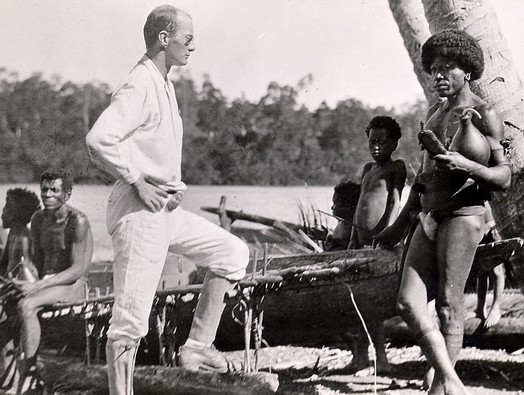
This priestly caste, as it founds the church of modernity, is instantly and integrally involved in founding a broader colonial division of labour.  These new priests conjure up the traditional/modern divide by the use of history –  differentiating old and new European Western societies – and by the use of anthropology (later, sociology too), by differentiating the colonized from the colonized. The living knowledge traditions of the colonized are pronounced dead on arrival in the present. And their cosmologies, philosophies, social practices – are entombed into opaque “cultures” the contents of which can only be clearly illuminated by the keepers of the flame. 

19_malinowski

Ultimately this mapping of difference works through race, gender and class coordinates so that even the “poor” living in the West, as well as un-mastered women and single mothers intersect with (post-)colonized subjects to become part of this opacity. The episteme of the Western Academy thus differentiates between the knowers and the known.

In this respect, the modern episteme is as seminal as gunboats to the maintenance of colonial difference. Key to this difference is not just the attribution of extra-ordinary exploitation, oppression and dispossession to colonized peoples but also their epistemic erasure, i.e., the outlawing of the possibility and desirability of intentional self-determining community amongst the colonized and their post-colonized descendents. It is in the colonial world and not Europe where Europeans develop the art of objectifying peoples into populations such that the basic competency of the colonized to self-define is deemed absent by the instruments and mores of European sanctioned international law. Postcolonial populations have only been able to become peoples under very specific conditionalities; and many who make the transition become the new police of colonial difference. Those who fall between or prefer a third way become the ungoverned, or ungovernable.

Continue reading

Where Have All The Black Professors Gone?

A new documentary, Absent From The Academy, on the status of black scholars in the UK. Alongside Paul Gilroy, Adam Elliott-Cooper, Denise Noble and others, it features our own Robbie Shilliam. The problem is simple enough: why are only 85 Professors in the UK – that’s 0.4% of the total – black? The official statistics show that only 1.4% of all academic staff are black or black British, whether African or Caribbean, compared to 4.5% of manual staff and around 3% of the general population (those, alongside assorted “mixed” and “other” are the categories available for contemporary biopolitics).

This accounting – while necessary – leaves some identities unreconstructed, not least when the inclusion of marginalised groups is read as synonymous with an intellectual identity politics. Gilroy channels C.L.R. James to warn of the reductionism, of making the status of whoever an issue of ‘X studies’, whilst privilege remains invisibly white. Or, as James argued in ‘Black Studies and the Contemporary Student’ (1969):

Now to talk to me about black studies as if it’s something that concerned black people is an utter denial. This is the history of Western Civilization. I can’t see it otherwise. This is the history that black people and white people and all serious students of modern history and the history of the world have to know. To say it’s some kind of ethnic problem is a lot of nonsense.

Stop and Search: Race and the Politics of Suspicion

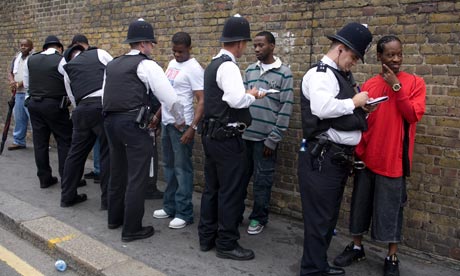
banksy-searchStop and search at Notting Hill carnival

BETWEEN me and the other world there is ever an unasked question: unasked by some through feelings of delicacy; by others through the difficulty of rightly framing it. All, nevertheless, flutter round it. They approach me in a half-hesitant sort of way, eye me curiously or compassionately, and then, instead of saying directly, How does it feel to be a problem? they say, I know an excellent colored man in my town; or, I fought at Mechanicsville; or, Do not these Southern outrages make your blood boil? At these I smile, or am interested, or reduce the boiling to a simmer, as the occasion may require. To the real question, How does it feel to be a problem? I answer seldom a word.

– W. E. B. Du Bois, The Souls of Black Folk, (1905)

Video from excellent activist group Stop-Watch.

The political pause over Stop and Search

The riots of 2011, and the research that was conducted afterwards, have had multiple political effects. Of these, one of the most important has been a clearer public exposure of the deep animosities generated by police use of stop and search powers against young people and especially those of black and Asian backgrounds. Whilst the idea that stop and search causes animosity is not news to anyone interested in British race relations or human rights, it has unusually become the focus of increasing political attention. For many years the Independent Police Complaints Commission has warned that the use of stop and search powers may be being exercised in a discriminatory and unaccountable way, and the Equalities and Human Rights Commission have been investigating police forces on this front.  Yet it was only following the riots that the Metropolitan Police Commissioner Sir Bernard Hogan-Howe began a large overhaul of the use of the power in London in 2012. Following this, parliamentary briefings were issued which pointed to the broader ineffectiveness and abuse of the powers, and the Home Office has launched a consultation into the use of stop and search. In launching this consultation, equality-sceptic Home Secretary Theresa May acknowledged, in very measly terms, the discriminatory ways in which these powers had been exercised:

The official statistics show that, if someone is from a black or minority ethnic background, they are up to seven times more likely to be stopped and searched by the police than if they are white. Now we should not rush to conclusions about those statistics, but everybody involved in policing has a duty to make sure that nobody is ever stopped just on the basis of their skin colour or ethnicity. The law is clear that in normal circumstances, stop and search should only ever be used where there is a reasonable suspicion of criminality—and that is how it should be. I am sure we have all been told stories by constituents and members of the public about what it is like to be a young, law-abiding black man who has been stopped and searched by the police on more than one occasion. If anybody thinks it is sustainable to allow that to continue, with all its consequences for public confidence in the police, they need to think again.

House of Commons Debate, 2 July 2013 Continue reading

Washington, DC: a human rights city?

Below are some initial reflections on the work I’ve been doing in Washington DC on the human right to housing. They are not terribly substantive and serve as much as a tribute and thank you to those who hosted me as disquisition on the topic. But I wanted to post the piece for those who might be interested in my broader project, or what’s going on in Washington DC. Enjoy.

In December 2008 Washington DC was declared a human rights city. The DC City Council passed the resolution, pushed for by the American Friends Service Committee. While this is a lovely idea, it leaves one wondering what does it mean to be a human rights city. In particular, what does it mean in a city defined by inequality, where more than 15,000 citizens do not have homes, where 20% of the population lives in poverty, where housing is more unaffordable than anywhere in the United States, and where public and affordable housing is under constant threat. Perhaps the declaration of DC as a human rights city would seem less cynical if the DC City Council or the Federal Government had shown themselves committed to protecting the human rights of residents of the District, particularly the right to housing.

Housing is a Human Right

Human rights promise us many things. The right to housing, however, is perhaps the most fundamental. What do our rights mean if we do not have a place to call home? Article 25 of the Universal Declaration of Human Rights promises that

Everyone has the right to a standard of living adequate for the health and well-being of himself and of his family, including food, clothing, housing and medical care and necessary social services, and the right to security in the event of unemployment, sickness, disability, widowhood, old age or other lack of livelihood in circumstances beyond his control.

The right to housing is fundamental because it is in our homes that we find the space to rest, to pursue wellness, to find love, to raise families, and build communities, to collect our energy and thoughts so that we can participate in democratic politics, and it is where we find the safety, security and privacy that make a dignified life possible. Continue reading

Rushed thoughts on political theory…

I am not sure I have proper post here, but I am pursuing some thoughts and it seems they might benefit from publicity. In the midst of “fieldwork” – a word I hate… Let’s scratch that – in the midst of a learning experience, in which I have been granted the opportunity to share in the struggle of some very brave people in Washington DC’s Shaw neighbourhood, I have stumbled over what seems a vital point about political theory. So vital in fact that it seems obvious now.

I spent yesterday in the Shaw neighbourhood of DC. Shaw is a historically black area, with a cultural and intellectual history that rivals Harlem or Bronzeville (in Chicago). It is also a neighbourhood in the midst of “gentrification”… wait, that’s the wrong word too. It is a neighbourhood in the midst of a campaign of displacement, moving long terms residents (mostly poor and Black – though also Latino and Asian) out of their homes and community. These people are being displaced to make way for “development” and “urban renewal” – which is a polite way of saying they are being moved for profit, because the investors and the city of Washington DC have found a way to make money off their homes and community.

Walking around the area you can see the transformation in process, as the old and new visions of the area meet like ocean currents. I sat in a park and while a young white woman jogged with her dog, a young and destitute black man watching from a nearby bench complained to himself that her dog needed to run free, not be stuck on a leash, and that the woman should have stayed in the suburbs rather than moving into his neighbourhood. And in Shaw, the writing is literally on the wall, as I walk past a former public housing complex that is now being advertised as a luxury apartment complex by a new owner keen to move out the current residence, renovate the building and move in new more profitable tenants.

I was fortunate to meet a group of local long time residents, mostly black women, who are trying to protect their homes and their place in the Shaw community. I won’t provide details here, but I will say that these people are incredibly brave and they face an absolutely monumental task. To oppose their own displacement requires them to fight against powerful adversaries using a system and a set of rules that is balanced against them. And this is where I started thinking about political theory… Continue reading

Bodies in Pain: Yasiin Bey and the Force-Feeding of Hunger Strikers at Guantanamo Bay

Lauren WilcoxA guest post from Lauren Wilcox, currently Charles and Amy Scharf Postdoctoral Fellow in the Department of Political Science at Johns Hopkins University. Lauren is starting a new job as a University Lecturer in Gender Studies at the University of Cambridge this fall. Her  work is located at the intersections of international relations, political theory, and feminist/queer theory in investigating the consequences of thinking about bodies and embodiment in the study of international practices of violence and security. She is the author of articles in Security Studies, Politics & Gender and, most recently, International Feminist Journal of Politics. Lauren’s current book manuscript is entitled Practices of Violence: Theorizing Embodied Subjects in International Relations.


Mos Def Nose Tube

Earlier this month, the UK human rights organization Reprieve released a video in which Yasiin Bey, formerly known as Mos Def, a well-known and critically acclaimed American hip-hop artist and actor, underwent (or attempted) the force-feeding procedure undergone by hunger strikers imprisoned at Guantánamo Bay. In this five minute video, Bey dresses in an orange jumpsuit like those worn by prisoners at Guantánamo Bay, and states simply that this is the ‘standard operating procedure’ for force-feeding hunger striking prisoners. He is then shackled to a chair resembling those used to force-feed prisoners (such as those pictured below). Bey is approached and held down by two people who attempt to insert a nasogastric tube down his nasal passage way. The video shows Bey struggling against the nasogastric tube, crying out, protesting, yelling for it to stop, and ultimately the force feeding is not carried out. The video is extremely emotional and difficult to watch. After the attempted force-feeding ends, Bey struggles to describe what it feels like, describing it as ‘unbearable’. It ends as it begins, with Bey stating ‘peace’ and ‘good morning’.

For some background context, 166 prisoners remain in Guantánamo Bay: of these, 126 have been cleared for release as not posing any threat to US national security, but are still being imprisoned. To protest their treatment and indefinite confinement prisoners have engaged in hunger strikes since the prison camp opened in July of 2002, the first wide scale hunger strike reached a peak in June 2005, when between 130-200 out of approximately 500 prisoners at Guantánamo Bay began refusing food. Hunger strikes again reached a peak in the spring and summer of 2013, and are ongoing with around 100 prisoners refusing food, and of those, between 44 and 46 are being force-fed (pictured above is an image of an inmate being hauled to the medical facilities to be force-fed), a number so high that the military had to send a back-up team of medical personnel to assist with the force-feeding of prisoners. While the force-feeding of hunger strikers when virtually unnoticed in the media in 2005/6, and again in 2009, the latest months have brought renewed attention to the plight of those who have been held at Guantánamo Bay, some for over a decade, with seemingly no progress made on holding tribunals or securing release of the remaining prisoners. Prisoners have spoken out, including an op-ed published in the NY Times by Samir Naji al Hasan Moqbel entitled “Gitmo is Killing Me”. While President Obama has recently renewed his pledge to close Guantánamo Bay, and a federal judge has even more recently stated that while she had no power to stop the force-feedings, Obama could himself order the force-feedings stopped.

What are the effects of Bey’s action? Continue reading

Pacific Redemption Songs

Te Hau

“Te Hau” by Abby Wendy

A few years ago I was reasoning with members of Ras Messengers, a reggae-jazz band who had in 1979 toured Aotearoa New Zealand. The Rastafari musicians recollected their experiences with various Māori communities. Occasionally female Māori elders (kuia), in introducing themselves to the band, would connect their genealogies back to Africa. The kuia did this as part of an indigenous practice called whakapapa, which literally means to “make ground”. It is a practice that allows diverse peoples who might never have met to find a genealogical route through which they are already personally related.

Chauncey Huntley from Ras Messengers showing the Rakau (traditional sticks) that he was gifted thirty years previously

Rastafari also have a practice called “grounding”, which is to collectively reason on the meaning and challenges of contemporary life. Over– or inner- standing (instead of under- standing) is cultivated through the guidance of natural laws and – often with the help of drums, fire and holy herb – the intuition provided by spiritual agencies (Irits) that allows ones to pierce the veil of deathly inequality, oppression and dehumanization so as to redeem living energies and relationships that might help with healing in the present. When I think of Irits I also think of a key concept of Māori cosmology called hau. Overstood by Māori Marsdenhau is the breath or wind of spirit which is infused into the process of birth to animate life and associated with the intention to bind peoples together in righteous living.

A key stone of the Rastafari faith is that adherents collectively redeem their African genealogy so as to breathe life back into their suffering condition and leave behind the death of enslavement and its contemporary legacies. So when I heard of this story of the kuia and Ras Messengers, I imagined how this practice might have given strength to the Ras. After all, in those days (and perhaps still today), peoples of various African heritages were often forced (directly or indirectly) to disavow those connections themselves.

Whakapapa is an art practised collectively. Yet it is not free play, nor is it the manufacturing of fiction. It is a creative retrieval. It could even be a redemptive act.

Keskidee 13

Keskidee perform in New Zealand

This was certainly the intention of those who organized the tour of Ras Messengers alongisde the Black British theatre group, Keskidee (the name of a Guianese bird known for its resilience). The organizers were a group of New Zealand activists that came together under the banner Keskidee Aroha (Aroha being the Māori word for love, sympathy, nurturing affection etc). Their intention was to learn from and work with the artistic tropes of Black Power and Rastafari so as to catalyse a cultural revolution and renaissance amongst young Māori and Pasifika peoples thereby strengthening them in their confrontation with a racist post-settler society.

Continue reading