Obama’s Ohio Report

My Ohioans did it again.  In every election since 1964 (and almost every time since 1904), the winner of this state ended up taking the presidency – hence the clichés “America’s bellwether” and “as Ohio goes, so goes America”.  Having spent six years of my life studying politics at The Ohio State University not so long ago, I can’t help but identify and sympathize with Buckeye voters, a group of people that every four years gets to decide the fate of the U.S. and, some might add, the world. This is a heavy burden for many reasons, including being exposed to the fanfare of presidential candidate fly-ins (82 of them this time), thousands of attack-counterattack TV ads (that typically target only “undecideds” and/or “independents”), as well as dozens of phone calls and door knocks reminding you to get out and vote for the right person (in the final week of the 2008 campaign, Team Obama said it knocked on a million Ohio doors per day).

The phrase “key battleground state” that every news outlet likes to attach to Ohio refers to its electoral-college vote clout (the 2010 Census reapportionment gives it 18 votes until 2020) as well as its recent record in presidential elections, which is marked by small margin-of-victory numbers (4.6 percentage points in 2008, 2 in 2004, etc.). The state has a remarkable red-blue balance overall; since 1998, the state voted for three Democratic and three Republican candidates each). Also remarkable were the results of pre-election state polling in October, which showed a tied (or at least tightening) race between President Barack Obama and his GOP challenger Mitt Romney (see, for example, the discussion of the RCP poll of polls from 30 October).

To be sure, electoral pathologists – those friends of yours obsessing about assorted ‘paths to presidency’ – had probably explained to you that each candidate could have won an electoral majority without Ohio (e.g. Obama would have had to grab one or two bigger states considered tossups plus all reliably blue states, and Romney would have had to hold onto all normally red states while pulling off multiple upsets elsewhere). This type of electoral math is both fun and fantastic, but reason tends to swiftly restore the status quo ante: it’s all about “Ohio, Ohio, Ohio!

Tuesday’s drama ended right after 11 pm Eastern Time, when the news organizations called Ohio for Obama; less than two hours later, Romney conceded the race.  To examine this outcome, let us begin with two issues identified by the media as key to this election: the auto and coal industries, and the thousands of jobs each of them provides to the state. (Compare, The Globe and Mail’s Ohio postcard of 25 October or The Economist of 27 October to the endorsement editorials in The Columbus Dispatch [Romney], The Cincinnati Enquirer [Romney], The Plain Dealer [Obama], or my favourite OH newspaper, The Blade [Obama]). In a nutshell, while some Ohioans liked what the president did with the former (that 2009 bailout of GM and Chrysler helped the manufacturing sector in the northern part of the state), others hated what he did with the latter. (Being viewed as too green on energy was expected to hobble Obama’s re-election chances in the coal-mining counties of the Appalachian part of the state).
Whatever the explanatory merits of simple storylines like these, unofficial returns bear this one out. The website of Ohio Secretary of State’s office has Obama winning by about 2 percentage points, which is lower than in 2008. The president indeed carried the populous Cuyahoga County (centered on Cleveland) plus a string of smaller counties in the northeast by sufficiently large margins, while Romney won large parts of the coal country.  What went on elsewhere in the state was more important, however. Though Romney ran strong in most traditionally Republican rural areas, he severely underperformed in the remaining half dozen big urban counties, which account for almost 40% of the statewide vote. Even Hamilton County (Cincinnati), historically a GOP bastion, went to Obama by about 20,000 votes again. (For the county-by-county comparisons over time, see Rich Exner’s page at The Plain Dealer; U.S. politics junkies might also consult a map of the 2008 precinct-by-precinct results provided by Stanford’s Spatial Social Science Lab).

Demographically, Obama probably carried the state in the same manner as he did four years ago.  How many Ohioans voted will not be known until late-arriving absentee ballots and provisional ballots are counted, but the turnout (about 68%) can safely be described as well above average. This surely helped the president: by getting its base to register and ballot (including via early in-person voting), the Obama campaign succeeded in maximizing Ohio’s Democratic potential once again (against a stream of ‘voter fraud’ legislation targeting qualified minority voters). What exit polls seem to be suggesting is that the president bested his challenger among female, young, college-educated as well as minority voters.  And what of Ohio’s white working class males (those without a university degree), who sit at the center of any “annoying, all-purpose pet theory” of U.S. presidential elections? Here, it appears that the president succeeded in avoiding a large margin of defeat, and it will be interesting to see why. The success in capitalizing on Romney’s casino capitalism sounds like a plausible hypothesis (and a nice extension of the auto bail-out storyline); but let’s recall that in 2008 Obama won 56% of votes from union households, which was lower than the national average.

What about the role played by ‘non-fundamentals’, specifically Obama’s race? Estimating this particular effect is challenging at any level of analysis, but both survey-based and non-survey-based studies have suggested that in 2008 Obama lost about 5 percentage points of the national popular vote due to racial intolerance on the part of some voters. A meaningful decline in this number would be my candidate for a feel-good story of the 2012 election.


Note: Cross-posted at the CIPS Blog, and meant to be read in conjunction with “Pre-Election Facebook Rants, #652

Eurocentrism, Racism: What’s In A Word?: A Response to Bowden, Sabaratnam and Vucetic

The fifth and final post in our symposium on John M. Hobson’s The Eurocentric Conception of World Politics: a reply from John himself, responding to the commentaries from Meera, Srdjan and Brett. John’s original summary post is, of course, still available too.


Introduction: All for one and one for all?

I would like to begin by thanking most sincerely my three blog interlocutors for having gone to the trouble of reading my new book, never mind taking the time to write up their extremely thoughtful and interesting blog responses. Of course, the cynic reading all of this might be forgiven for thinking that such a blog forum is hardly a ‘testing environment’ for Hobson’s book, given that his interlocutors are either postcolonialists or at least influenced by postcolonialism and have presumably, therefore, been “cherry-picked” for their potentially sympathetic tendencies. Even the titles that they have chosen, so the cynic might think, would appear to be symptomatic of this, with Meera Sabaratnam’s piece proclaiming – extremely generously I must concede – that my book has succeeded in ‘blowing up the disciplinary citadel of International Relations’, while Srdjan Vucetic’s title projects even further the meaning of the front cover of my book to that which I had intended, suggesting that IR is a ‘foolish discipline’ given his resounding agreement that it suffers from a pervading Eurocentrism. In this vein it might be thought that Brett Bowden’s title – ‘Eurocentrism and More’ – chimes in with yet another wholehearted rendition of the now familiar chorus of ‘IR is a Eurocentric discipline’. So why the fuss about all this and is there much point in reading on? For it would seem that we’re all agreed and there’s nothing to debate, right?

Well no, not quite all for one and one for all. Continue reading

A Foolish Discipline?

This is the third post in a symposium on John M. Hobson’s new book, The Eurocentric Conception of World Politics. The series began with a post by the author summarising the argument of the book, followed by Meera’s response. In the next few weeks, we will have a posts from Brett Bowden, followed by a reply from John.

Update: Brett’s response is now up.


Interest in the history of International Theory has grown, but the academic study of its origins has received relatively little attention to date.  The reasons are multiple: the complexity of the subject, a powerful commonplace view that ‘disciplinary history’ equates scholasticism and navel-gazing, and, I would hasten to add, a collective unwillingness to deal with racism that often pops up in the writings of mythicized fathers of international theory.  John M. Hobson is not hindered by any of these obstacles.  What he does in The Eurocentric Conception of World Politics is tell a story that begins in 1760 and ends in 2010, assessing hundreds of international theorists past and present, from Adam Smith to Anne-Marie Slaughter.

This wide-ranging, authoritative book is a continuation of the author’s previous achievement of note, The Eastern Origins of Western Civilisation. There, Hobson argued, echoing Edward Said, that nineteenth century European imperialism was symbiotic with Europe’s “racist identity.”  This symbiosis has had many implications, but none as big as this: “had racism not existed and had the West viewed the Eastern peoples as equal human beings, imperialism might never have occurred” (2004: 241).  This meta-point is now revisited in a major way:

international theory is to this book what Western literature is to Edward Said’s Orientalism….given Said’s claim that Eurocentrism has a clear link with international politics – in this case imperialism – then international theory should logically constitute the ultimate litmus test for revealing this discourse in Western academic thought (p.2; all subsequent in-text references are to this book, unless otherwise indicated). Continue reading

The Citadel Has Been Blown Up. Hurray! Next? A Response to Hobson

This is the second post in a symposium on John M. Hobson’s new book, The Eurocentric Conception of World Politics. The series began with a post by the author summarising the argument of the book and laying out some provocations for sympathetic readers. In the next few weeks, we will have further posts from Srjdan and Brett Bowden, followed by a reply from John.

Update: Srdjan’s post and Brett’s post are now up.


I was at an IR event last year where the speaker jovially declared that they just did not care about being, and being accused of being, Eurocentric. At the time, I found it both a little shocking and depressing that they could see fit to dispense with that fig leaf of serious acknowledgement that often accompanies discussions of Eurocentrism.  And indeed I thought, glumly, that it perhaps reflected many scholars’ underlying attitudes to the issue – a tokenistic practice of acknowledgement underpinning a wider apathy or disconnection. What only struck me later was also the possibility that the speaker also didn’t really understand the issue which was batted away so carelessly. Indeed, it is unclear that many ‘mainstream’ IR scholars truly understand the problem of Eurocentrism, given the mythologised twin deaths of colonialism and scientific racism in 1945 (or so).

Seriously?

So, Hobson is knocking at the door more loudly, with a bigger stick, and much more paperwork.  Continue reading

How Many Buddhists Are There in Northern Ireland?

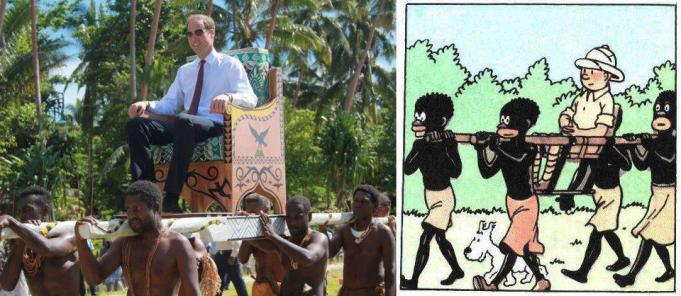
Danny Boyle’s Olympics opening extravaganza was many things, but one thing it was not was a history lesson. If you were looking for any acknowledgement of the place of empire in the British national narrative, you would have had to concentrate quite ferociously during the hauntingly beautiful Abide With Me section, sung by Emeli Sandé, to see Akram Khan’s dance troupe mime the whipping of slaves (1:21:04 into the BBC’s coverage of the event). It’s possible that I simply imagined this because I was looking so hard. Anachronistically, moments before, Empire Windrush had arrived on stage, without context, like a Caribbean cruise ship blown off course (Columbus revenge). Two moments that you would have missed if you’d blinked, leaving you mystified about how the opening ceremony, Team GB, and indeed Britain itself had become such a multiracial spectacle.

In the reams of mostly laudatory commentary that has followed the ceremony, some have suggested that it might not have been appropriate to stage imperial conquest and plunder on an occasion that was meant to welcome the world to London. The insinuation that opening ceremonies should be mind-numbingly ‘fun’ is belied precisely by what made this one meaningful. Boyle deserves credit for trying to do history—any history at all, however potted—and indeed what makes his exclusions telling and problematic was precisely the emotional depth and maturity with which he was able to stage historical trauma (the Industrial Revolution, the World Wars, 7/7) and individual vulnerability (children in hospital, the references to children’s literature evoking the darkness of growing up) without detracting from the spirit of celebration. Yet some traumas are clearly easier to commemorate, some dead easier to remember, than others. Boyle’s history was curiously blinkered, resolutely domestic, almost wilfully blind to anything that happened outside this ‘green and pleasant land’. (An alternative potted history entitled ‘How to Keep Your Land Green and Pleasant’ might read ‘Step 1: export surplus population, preferably of the lower orders, preferably to places quite far away; Step 2: export dirty industries; Step 3: repeat step 2 for as long as you are able to.) The problem may have begun with the title—Isles of Wonder—that foreshadowed the geographically circumscribed view of history with which we were presented. Indeed the extraordinary, infuriating and continuing dilemma of British identity is that only the cultural right does geographical justice to Britain’s role in forging the modern world, albeit in registers of racism and supremacism. If Boyle’s historical imagination is anything to go by, the left, it would seem, prefers amnesia.

Continue reading

Dr El-Khairy, I Presume?

We’re on a roll now. On Friday, Omar became the fourth of us to ascend the greased pole of academic accreditation since we began cultivating this little corner of the internet. Forever more to be known as Dr El-Khairy, his burgeoning cultural insurgency notwithstanding. The work in question? American Statecraft for a Global Digital Age: Warfare, Diplomacy and Culture in a Segregated World. And who said it was good enough? Faisal Devji and Eyal Weizman, actually. So there. And I have promises in writing that he will be telling us more about it all real soon.

What We Talked About at ISA 2012: A Human Right to Housing

Housing is a Human Right Exhibition, Philadelphia (original photo by Annie Seng)

I ain’t got no home. I’m just a roamin’ round, just a wandering worker, I go from town to town. And the police make it hard wherever I may go. And I ain’t got no home in this world anymore.

My brothers and my sisters they’re stranded on this road. A hot and dusty road that a million feet have trod. Rich man took my home and drove me from my door. And I ain’t got no home in this world anymore.

Was a farmin’ on the shares and always I was poor. My crops I lay into the banker’s store. My wife took down and died upon the cabin floor. And I ain’t got no home in this world anymore.

Now as I look around it’s mighty plain to see this world is such a great and funny place to be. Ah, the gamblin’ man is rich and the working man is poor. And I ain’t got no home in this world anymore.

-“I Ain’t Got No Home in this World” by Woodie Guthrie

Beginnings Are Difficult

How to start something new? This question troubles the academic as well as the activist. At the moment it troubles me both as a question of inquiry and as a meta-question of method.

In my previous work I have argued that human rights should be judged first and foremost by the consequences they bring about. Do human rights enable new forms of politics? Do they enable politics that increase the control we have over our lives, or that reduce the suffering and humiliation we are exposed to? Or do they confine us in a liberal subjectivity that makes wider visions of justice impossible, which push us to reconcile our beautiful revolutionary dreams to the limited horizon that contemporary liberal capitalism imposes?

I have offered a qualified defense of human rights as a democratising ethos, which suggests that human rights can enable everyday people to challenge the terms of legitimate political authority, including the institutional shape of their government and the makeup of their communities. This is done by formally opening up the identity of “rights holder” to anyone, regardless of their social position. This opening, however, is only formal and in that formality human rights have an ambiguous significance. For this reason, I have argued that to think of human rights as a democratising ethos also requires that we attend to the politics of human rights. This means that ensuring that human rights support democracy and equality is a political struggle as well as an ethical vision.

Continue reading

The Anglosphere, Part Two: Of Liberal Leviathans and Global Turns

Viewed from the perspective of liberal IR, Britain’s globe-spanning empire can be described as “Liberal Internationalism 1.0.” According to G. John Ikenberry, the “liberal ascendancy” had everything to do with the “growth and sheer geopolitical heft of the world’s liberal democracies.” The British may have been the first to harmonize national interest with the stability, openness and rule-following in the international systems, but it was the Americans who “fused” them. “If the liberal order was built after World War II primarily within the West, the end of the Cold War turned that order into a sprawling global system” [1].

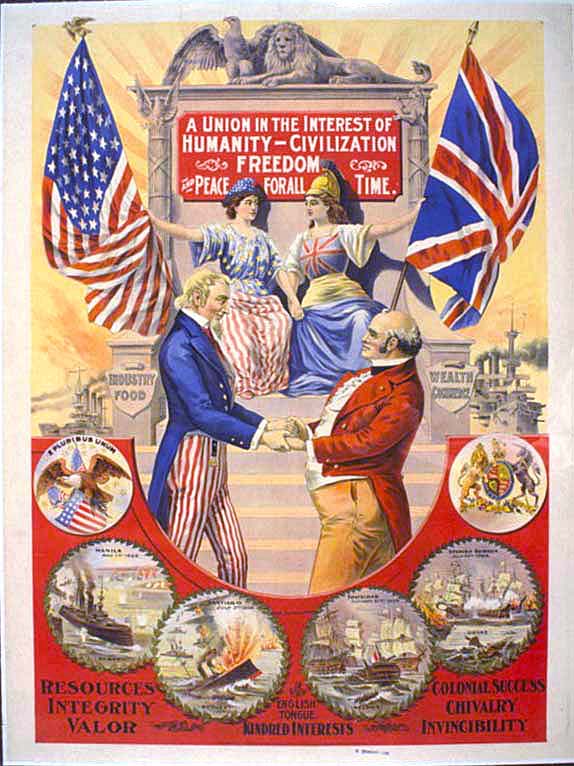
The question that has always fascinated me is how we got from Liberal Internationalism 1.0 to Liberal Internationalism 2.0, or how, to freely borrow from Ikenberry, power shifted between two liberal Leviathans, Britain and the U.S. What is puzzling here is the absence of the Wars of Anglophone Succession. Instead of fighting each other at least once or twice, the two empires first found ways to cooperate and coordinate their imperial activities around the globe, then engaged in what can be described as a pacted transition, even as a corporate merger. Here’s one verdict, taken from “The imperialism of decolonizationpiece by Wm Roger Louis and Ronald Robinson:

The British were welcoming the Americans back into the British family of nations and, informally at least, into the Commonwealth . . . [the post-war empire operated] as part of the Anglo- American coalition . . . like a multinational company.

Putting aside the historiography debates about its scope, timing and sequencing, this historical process was no doubt of momentous importance for the evolution of the liberal order, both in terms of the accumulation of hegemonic power, and in terms of social and institutional learning. The Anglosphere, in other words, begins here. So how do we explain it? Strategic calculus and/or a putatively liberal predilection for cooperation, compromise, and conciliation (last word Churchill’s) are only parts of this story, as Charles Kupchan notes in his How Enemies Become Friends:

British appeasement of the United States and the practice of reciprocal restraint that followed cleared the way for rapprochement. But it was the emergence of a new discourse on both sides of the Atlantic – one that propagated notions such as a “shared Anglo-Saxon race” and an “Anglo-American family” – that produced a compatible identity, consolidated stable peace, and laid the foundations for the strategic partnership that exists to this day.

I could not agree more. Racialized identities operate as social structures of power, and this was a time when they explicitly authorized unity and superiority for Us against Them in ways that had profound consequences for the evolution of the so-called liberal international order. Anglo-Saxonism enabled the U.S. and Britain – or their elites – not only to position themselves favourably vis-à-vis each other at the turn of the twentieth century, but also with respect to the rest of the world and in a longer term. The Anglo-American rapprochement was no “global turn” of the sort that Kupchan talks about in his latest book, but it arguably comes close to it in macro-historical term. For one, the paths, pace and outcomes of the 1945-1951 international institution-building spree – that foundation of Liberal Internationalism 2.0 –followed the patterns of UK-U.S. cooperation first established during the colonial wars and near-wars in the 1890s. The much-disclaimed “special relationship” has its origins in this period – something to keep in mind next time we hear that U.S.-hugging remains in someone’s national interest, as General Sir David Richards, the head of Britain’s armed forces, argued last week.

This story I wish to tell can be expanded and contracted empirically (Anglo-Saxonism is dead today, but its effects can be found everywhere from university scholarships to contemporary military alliances) and theoretically (through, say, an account of core-periphery relations that made global capitalism possible), but the main substantive point remains the same, and that is that we cannot fully understand the “liberal ascendancy” without pausing (as Siba Grovogui might say) over the pervasiveness and power of racialized identities that connected Liberal Internationalism 1.0 and 2.0 [2]. Continue reading

The Anglosphere, Part One: What’s in a Name?

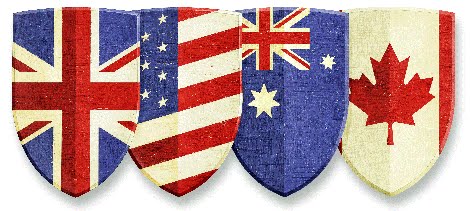
What do you get when you intersect indices that rank top two dozen nations of the world by political freedoms, GDP per capita, productivity, literacy, and patent applications in late 2000s? The answer is you get some kind of an “Anglosphere” – usually the quartet of Australia, Canada, the UK, and the U.S., but also, depending on the underlying measures and thresholds, New Zealand, Ireland, Singapore and so on.

Using data from the World Development Indicators, The Economist Intelligence Unit, and International Labour Organisation, among others sources, I’ve played this game in my research methods classes quite a bit. No methods textbook endorses such mindless empiricism, but students, from what I can tell, tend to appreciate the loose structure of the exercise. This is because the objective – familiarizing students with comparison, measurement, scaling, and so on – almost always shifts onto the “why?” questions, at which point everyone (ok, not everyone) tries to come up with his/her social scientific narrative on what makes this or that grouping “interesting,” “different,” or “special.”

Joel Kotkin, one of America’s premier demographers, and his nine collaborators have shown me how this game can be played at an infinitely more sophisticated level. Their argument – developed primarily in a collection of the Legatum Institute papers entitled “The New World Order”, but also in two shorter pieces penned by Kotkin and Shashi Parulekar at NewGeography.com and in City Journal – is that globalized economy by and large operates in and through three large “tribal groupings” or “spheres”: the Indosphere, the Sinosphere, and the Anglosphere [1]. As the authors note, their narrative can claim a formidable intellectual pedigree: “we have followed the great Arab historian Ibn Khaldun’s notion that ethnic and cultural ties are more important than geographic patterns or levels of economic development.”

Kotkin et al offer no shortage of interesting and novel observations and analytical points, but one of the project’s key punchlines is in the title of the Anglosphere section in the New World Order: “We are not dead yet.” The project’s foil, in other words, is the current wave of American declinism:

The era of unipolar domination by the United States and its key allies — which dates from the fall of the Soviet Union — has come to an end. Yet despite this, the core Anglosphere remains by far the largest cohesive economic bloc in the world. Overall it accounts for more than 18 trillion dollars, one quarter of the world’s GDP, far more than any other cohesive global grouping.

Continue reading

The Crisis of Europe and Colonial Amnesia

Recent commentary on the Eurozone crisis has started to pick up the grammar of colonial rule. The centre for Research on Finance and Money at SOAS, for example, has published an influential report wherein northern Europe (Germany especially) is framed as the core and southern Europe (especially Greece) as the periphery. Meanwhile, Ulrich Beck, European cosmopolitan par excellence, wonders whether the European Union will become “a European Empire with a German stamp”. Beck notes that Merkel’s sense of power “conforms to the imperial difference between lender and borrower countries.” At stake, agree many prominent European intellectuals in the pages of The Guardian, Eurozine and Der Spiegel, is no less than the promise of freedom and democracy immanent to the European project itself. All variously agree that, against the imperial sclerosis spread by capitalist and bureaucratic functionaries at the highest levels of governance, what is needed is a rejuvenation of meaningful democracy at a grass-roots level.

Faced with a dismantling of democracy Jürgen Habermas mounts a plea to save the old “biotope of Europe”. The constitutive components of this threatened ecosystem are freedom and democratisation, and its genesis lies in the Second World War and the fight against fascism and “internal” barbarism. The president of the European Central Bank has himself proclaimed that Europe now faces its “most difficult situation since the Second World War”. Alternatively, for many social democratic and leftist commentators, the danger of the situation lies in the loss of the “internal” struggle of labour and capital that defined the Cold War landscape. In the new context of EU institutional “empire” and its neoliberal tentacles, the defeat of labour quickens the erosion of social democracy, thus deciding the fate of the European project.

Europe, then, is perceived to be “colonizing” itself and in the process destroying freedoms and democratic structures that had been hard fought for by the general populace against political oppression and economic exploitation. But this angst-ridden imaginary of European crisis has very little to say about the substantive historical and global dimensions of European colonialism. Does cosmopolitan and social democratic angst cover these legacies and contemporary effects? In fact, in most recent treatises on the crisis the struggle for decolonization is given no integral status, even though these particular struggles were inseparable to and spanned the formative time period of the European project – the Second World War (and the Cold War). Some do mention current issues of migration and xenophobia. Nevertheless the implication, in general, is that colonial legacies are derivative of, or additional to, the core struggle for democracy and freedom in Europe. Fascism, Cold War, class struggle: yes; colonization, imperialism, decolonization and liberation struggle: not really.

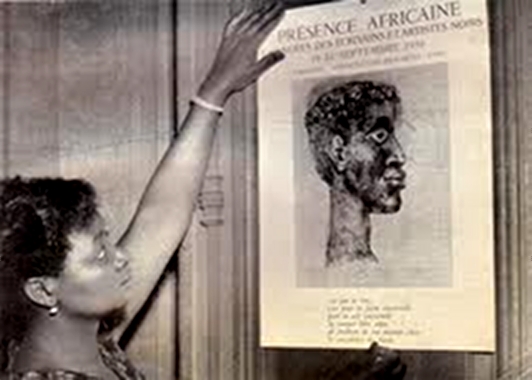
Not all intellectuals suffer from this colonial amnesia. A number of scholars including Robert Young, Pal Ahluwalia, Paige Arthur and Alina Sajed have argued that in some key strands of post-War French thought, the issue of colonialism and decolonization was integral to discussions of European re-democratization and humanist concerns. This engagement reached a peak in the Algerian war of independence in the late 50s before falling into abeyance. And this was precisely the same time, we should note, as the Treaty of Rome, which bound European countries together in a tighter economic union simultaneoulsy sought to re-bind (post-)colonial African polities, peoples and resources into this union.

More generally, there has accumulated a significant amount of scholarship that reveals the colonial influences that shaped and were woven into quintessentially “European” intellectual/political movements such as Enlightenment and modernity. Continue reading