Symptoms Worse Than Death

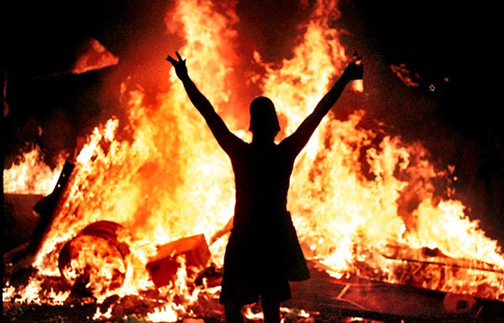
The “daughter of India” died in a hospital in Singapore yesterday, causing shockwaves around the globe and placing India on the verge of a violent implosion. Whilst rape had become a matter that women were told that they had to contend with in their everyday lives, that they must make it safer for themselves by not being alone after dark, by not dressing provocatively, and by not drinking or acting in a manner that is ‘lewd’ and ‘unladylike’, especially in North India, something about this case has led to a national uprising of unprecedented proportions. People have taken to the streets, New Year eves’ parties have turned into mass commemoration events, and the Internet is positively ablaze with news, blogs, and posts about this nameless woman whose impact on Indian politics today cannot be exaggerated.

India has had the distinction of being labelled the worst country in the world for women and Delhi is often called India’s ‘rape capital’, so perhaps it is not surprising that a 23-year old woman was gang-raped on a bus by six men on the way home after watching The Life of Pi with her boyfriend. It is perhaps also not surprising that the rape was brutal, that a metal rod was shoved into her vagina, that the men took turns at “having a go” and finally got rid of both her and her male friend by throwing them out of the window of the moving bus. What is surprising, however, is the reaction. Why has an event that may even be classified as mundane garnered so much attention and prominence?

Many on the so-called Left in India have proclaimed that the case has been given such importance only because the woman was (ostensibly) middle-class and it is always a shock when it happens to “us”, not least when it happens in a manner this horrific. Most of the mobilized youth claim that this was the last straw in what has been a devastatingly protracted chain of brutalities against women. The cynics argue that reactions such as these are tokenistic gesture that will change nothing but help those protesting come together in a moment of collective catharsis, share in a feeling of shame and sorrow not unlike that experienced when Pakistan defeats India in a cricket match. For me, the answer to the question posed above is ultimately immaterial. Yes, the woman was not a Dalit or Adivasi, and crimes against the poor in India vastly exceed those against the rich. And yes, the injustices perpetrated against the rich, powerful or established have historically been at the forefront of media reporting and government agendas, as was most blatantly obvious in the case of the Mumbai attacks in 2008. And indeed, it is unlikely that there will be any overwhelming change in either attitudes or policy towards women in the immediate aftermath of this insurrection.

In light of this, should we just lull ourselves into a state of callous complacency and churn out platitudes about the state of our society? Those who want to are welcome to squander away both hope and perspective. For those who recognise that the path to any significant change is thorny but may yet render itself navigable, some acknowledgement of the conditions that have made gender-based violence possible and continue to make it possible, even run-of-the-mill, is in order. An awareness of how we ourselves, albeit unwittingly, reproduce these conditions and help engender systemic violence that is both symbolic and ‘real’ is also urgently needed. We must be cognisant of the fact that India is a deeply conservative society and the ‘opening-up’ of the economy since 1991 has witnessed a patriarchal backlash in the face of rising inequity, the collapse of the extended family and the disappearance of any social welfare. Those who have placed the blame singularly on “Indian men” and our “backward culture” – and who think revenge in the form of capital punishment and castration is the only solution – fail to take into account how deeply embedded they are in this patriarchal order and how readily they are partaking of a discourse that is both misogynistic and short-sighted.

The calls for castration are symptomatic of an acutely phallocentric order – where a man’s ‘masculinity’ is considered his greatest pride, and the source of this masculinity is none other than his reproductive organs. Similarly, the widespread proclamation that “rape is a crime worse than murder” and must be punished accordingly has a patently sinister side to it. Is a woman (or man for that matter) who has been raped not entitled to a life? Is she “worse than murdered”? Is it the “defilement”, the snatching away the “honour” and “purity” of a woman that so bothers us? It is worth remembering that the woman who died yesterday, who the Indian government in yet another meaningless and flippant gesture has called a “martyr” and “Delhi’s braveheart”, desperately wanted to live. She had been “violated” by six men in an ordeal that lasted over an hour, was on life-support, but not, in her own opinion, worse than dead. She was only (worse than) dead after she died.

The protests in Delhi and around India contain within themselves a latent emancipatory potential. But in order for this to amount to anything, even something as pedestrian as allowing women to negotiate public spaces in Delhi without constant threat of harassment, we must think about how our subjectivity as women, men, and citizens is (re)produced. This is the only way we can build up some resistance to the “common-sense” we are invariably brought up with. We need to start problematising the taken for granted assumptions that our heteronormative order inflicts upon us everyday, most importantly the implicit belief that women are “less equal” than men. The contours and manifestations of this tacit hierarchy may be different in the West from those in the global South, but the substance remains largely the same. As always, the words of anthropologist Barbara Diane Miller resonate deeply: “We must not forget that human gender hierarchies are one of the most persistent, pervasive and pernicious forms of inequality”. Change will not come easy.

What We Talked About at ISA 2012: A Human Right to Housing

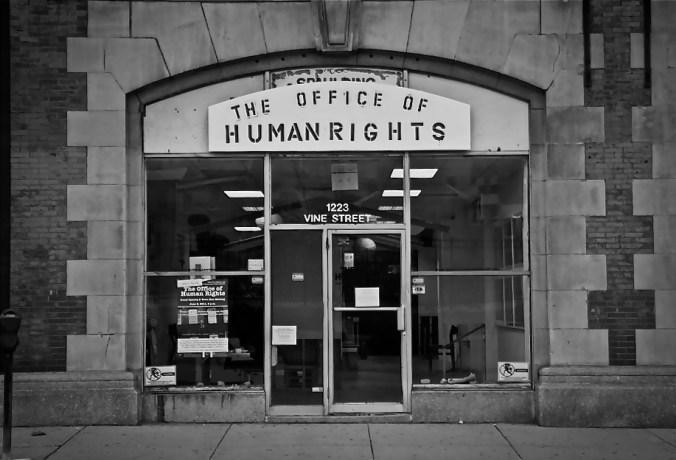
Housing is a Human Right Exhibition, Philadelphia (original photo by Annie Seng)

I ain’t got no home. I’m just a roamin’ round, just a wandering worker, I go from town to town. And the police make it hard wherever I may go. And I ain’t got no home in this world anymore.

My brothers and my sisters they’re stranded on this road. A hot and dusty road that a million feet have trod. Rich man took my home and drove me from my door. And I ain’t got no home in this world anymore.

Was a farmin’ on the shares and always I was poor. My crops I lay into the banker’s store. My wife took down and died upon the cabin floor. And I ain’t got no home in this world anymore.

Now as I look around it’s mighty plain to see this world is such a great and funny place to be. Ah, the gamblin’ man is rich and the working man is poor. And I ain’t got no home in this world anymore.

-“I Ain’t Got No Home in this World” by Woodie Guthrie

Beginnings Are Difficult

How to start something new? This question troubles the academic as well as the activist. At the moment it troubles me both as a question of inquiry and as a meta-question of method.

In my previous work I have argued that human rights should be judged first and foremost by the consequences they bring about. Do human rights enable new forms of politics? Do they enable politics that increase the control we have over our lives, or that reduce the suffering and humiliation we are exposed to? Or do they confine us in a liberal subjectivity that makes wider visions of justice impossible, which push us to reconcile our beautiful revolutionary dreams to the limited horizon that contemporary liberal capitalism imposes?

I have offered a qualified defense of human rights as a democratising ethos, which suggests that human rights can enable everyday people to challenge the terms of legitimate political authority, including the institutional shape of their government and the makeup of their communities. This is done by formally opening up the identity of “rights holder” to anyone, regardless of their social position. This opening, however, is only formal and in that formality human rights have an ambiguous significance. For this reason, I have argued that to think of human rights as a democratising ethos also requires that we attend to the politics of human rights. This means that ensuring that human rights support democracy and equality is a political struggle as well as an ethical vision.

Continue reading

It’s Really Kicking Off In Quebec

Despite some news coverage and discussions on Twitter, we’ve seen little on the continuing educational and political crisis in Quebec. Hence, a guest post from our friend and colleague Philippe Fournier. Philippe teaches political thought and International Relations at the Université de Montréal and the Université du Québec à Montréal. He has published research on Foucault and International Relations, Governmentality in the contemporary United States and Violence and Responsibility. He is currently working on the government of security in the US and on the theoretical conflation of sovereign power and government in Foucault. His other research interests include critical cultural theory and political economy.


A little background info and some thoughts on the student crisis in Quebec, which has been going on for 101 days now and shows no signs of waning in the face of the government’s disturbing intransigence. The recent adoption of Bill 78, which circumvents the right to protest without prior notice and gives the police the right to change a demonstration’s itinerary, among other things, has shocked and angered many Quebecers and made the news worldwide. On Tuesday May 22, over 250 000 people expressed their discontent with the current government and it was quite a sight.

Ever since the ‘quiet revolution’ in the early 1960s, which saw the institution of important social provisions and the attribution of several socio-economic entitlements to the francophone majority, Quebec has been holding fast to its social-democratic heritage. Jean Charest’s liberal party, in power since 2003, is determined to fight off the modern-day antichrist of debt and rationalise state activity. The Charest government’s attack on hard fought social entitlements, including accessible post-secondary education (Quebec has the lowest tuition fees in Canada), has been going steady since 2003 but has intensified since 2008. Quebecers were told that it was no longer reasonable to expect affordable public services and that it was high time that we join the pay as you go party.

What is at play in this conflict is no less than the fate of social-democratic expectations in Quebec. These expectations are actively discouraged and discredited by the current political elite. The demands for a tuition freeze by sizeable portions of Quebec’s students are considered unreasonable in many quarters, and seen as a plane expression of bad faith and overindulgence by a majority of Canadians, seemingly stuck in a Stephen Harper induced stupor. The words ‘pragmatic’, ‘realistic’ and ‘rational’ have been duly appropriated by the partisans of deregulation, free-enterprise and individual responsibility. Any suggestions that the latter orientations are based on an ideological choice are ridiculed; they simply express a sounder and more logical way to manage society.

Up to now, there seemed to be a dour resignation to the decimation of our social programs. This young generation of Quebecers, which many had touted as completely apathetic and apolitical, has taken a resolute stand against restricting access to a public good, against the further commodification of knowledge and against the uncompromising law and order approach of an arrogant and irresponsible government. Those that have taken to the streets day after day and sacrificed their terms and put their professional lives on hold for the students that will come after them, have shown extraordinary resilience and bravery. It came as a surprise to many, because they did it on their own, with little or no help from their political science professors, who have long abandoned critical thinking for functionalist replications of reality sanctioned by government money.

Continue reading

What We Talked About At ISA 2012: How Music Brings Meaning to Politics

At this year’s ISA conference, I presented on the panel ‘The Social Technologies of Protest’, with George Lawson, Eric Selbin, Robbie Shilliam and our discussant Patrick Jackson. The full text of the draft paper is available here. Thanks go to the panel and audience for some fascinating questions and discussions.


Music is a world within itself
With a language we all understand
With an equal opportunity
For all to sing, dance and clap their hands
But just because a record has a groove
Don’t make it in the groove
But you can tell right away at letter A
When the people start to move

–          ­‘Sir Duke’, Stevie Wonder, Songs in the Key of Life (1976)

Music is an old and effective technology of politics. This was highly visible in both the recent uprisings and the attempts at counter-revolution; whilst from the beginning Tunisian activists sang their national anthem in the street in anti-regime protest, Assad blasted the Syrian anthem into the cities as a reminder of his position. Rappers and older musicians shared platforms in Tahrir Square, and DJs parodically remixed Gaddafi’s final public speeches into technotronic nonsense. Whilst not all political music is sung of course, songs and the act of singing are particularly powerful in political situations as means and symbols of mobilisation and unification.  Moreover, songs tend to linger in the brain.

But there are at least two ways of thinking about the relationship between politics and music. The question which is perhaps most often asked and answered is: how, when and where is music political? So, why did the Tunisian protesters sing the national anthem in front of the courthouse, how did music support the anti-apartheid struggle, and why did the Haitian revolutionaries sing the Marseillaise? How did the musical character of these expressions facilitate a particular kind of political act? Lots of excellent writers, both scholarly and otherwise, have turned their attentions to the nature of political music, and especially protest music, in a variety of times and places.

However, the question that I want to focus on mainly here though is slightly different: how, when and where is politics musical? This question was stimulated by the general observation that when we try to make sense of politics, we often use metaphors related to music. A common phrase is that a political statement or value ‘struck a chord’ with an audience, or that protesters are ‘banging a drum’. Politicians may or may not be ‘in tune’ with publics, and relations may be ‘harmonious’ or not. Coups will be ‘orchestrated’.

Perhaps surprisingly, in moving from vernacular to scholarly modes of understanding politics, the metaphors of music are no less important. In fact, in some cases they seem to be more important. The genre-defining work of the historical sociologist Charles Tilly in the study of contentious politics is a revealing and fascinating case in point.

Continue reading

What We Talked About At ISA: From #occupyirtheory to #OpenIR?

A write up of my comments at the #occupyirtheory event in San Diego. The event itself was both hope-filled and occasionally frustrating, not least for the small group of walk-outs, apparently ‘political’ ‘scientists’ lacking in any conception of what it actually means to engage in the political (note: this bothered me especially, but was a rather minor irritation in the grander scheme of things). Despite the late hour, there were between 40 and 60 people there throughout, and a number of very positive things have come of it. It looks like there’ll be some gathering at BISA/ISA to discuss further, and we’re pitching something for the Millennium conference on some of the themes addressed below, and there will of course be ISA 2013 too. In the meantime, there’s the Facebook group, the blog, and a mailing list. The term OpenIR is owed to Kathryn Fisher, and seems to several of us to be a better umbrella term for the many things we want to address in the discipline and the academy. I also just want to give a public shout-out to Nick, Wanda, Robbie and Meera for doing so much on this.


The #occupy practice/meme has antecedents. Physical manifestations of a ‘public’, horizontalism, prefigurative politics and more can be traced in all sorts of histories. One such lineage is the foreshadowing of Zucotti Park in recent struggles over education. Take the slogan in March 2010 over privatisation at the University of California, which was ‘STRIKE / OCCUPY / TAKEOVER’. Or Middlesex, where students resisting the dismantling of the Philosophy Department in that same year unfurled a banner during their occupation, one that proclaimed: ‘THE UNIVERSITY IS A FACTORY! STRIKE! OCCUPY!’.

I want briefly, then, to think about the space of the university in our discussions of #occupy. There have been rich and suggestive calls to re-politicise ourselves as academic-activists, to look again at our work and its claims, and to turn our abilities, such as they are, to projects of resistance and transformation. But we risk a displacement. When we talk of ‘the street’, or politics enacted in the reconfigured space of #occupy, or of the ‘real world’ that we must be relevant to, we already miss the university itself as that factory in which we labour. We are tempted by a view of ourselves as leaving ivory towers to do politics, instead of seeing those towers themselves as spaces of politics. As if our institutions and practices were not already part of the world.

Whether you see #occupy as transformational or nor, or whether you simply prefer a different vocabulary, I think a demand remains: a demand to politicise our own positionality. This politicisation can have many dimensions, but I want to suggestively highlight four, each being a sphere in which we should be diagnosing and transforming our own practices.

Continue reading

Whitewashing History


The Morning Post, 1913 – on the violence of the suffragette movement:

Early yesterday morning some women succeeded in burning a valuable house near Trowbridge. In the night of Monday to Tuesday ROUGH’S boathouse on the river at Oxford, near the Long Bridges, was seen to be on fire. It was impossible to save the building or the boats which it contained. Nailed to the bridge near was found a card with the words “Votes for women. No peace till we get the vote.” The presumption is that the boathouse was set on fire, the KING’S horse was stopped, and the Trowbridge mansion was destroyed by some of the females who are discontented with the structure of society. Whether that be the case or not – it is quite possible that the truth may not be ascertained – the action is typical of much that has happened lately and deserves thinking about. Indeed, if we are to believe the leaders of the “movement”, the purpose with which these things are done is to make men think. The question is, What are we to think? The planned and deliberate destruction of property is intelligible as an expression of anger against the owner. But as the wellbeing of society depends upon the security of persons and property against wilful attacks, such attacks are regarded as crimes, and one of the principal purpose for which society is organised is to prevent such acts and to punish those who commit them. But in the class or cases which we are considering there is not motive or animosity against the particular person whose property is destroyed. Those who do them have not the personal hatred which usually explains such doings. If this were an isolated case, if it were found that a house had been wilfully set on fire by a young lady well brought up and accustomed in other respects to behave herself well, a jury would probably come to the conclusion that she was not in her right mind, and the Court order that she should be taken care of until she was restored to complete sanity. But the present case is not isolated. There is an epidemic of the state of mind which produced it; it is but one of a large number of similar cases. This frame of mind cannot possibly be considered healthy. The acts which it produces constitute a war, not only upon society as at present constituted but upon any conceivable state of society because it is impossible to imagine any community of human beings not based upon laws for preserving the security of property as well as of life and society, the propounds of the most astounding schemes for the reconstruction of the community, have ever propounded a plan which would not guarantee the work of and man’s hands against wanton and wilful destruction. The women who go about setting fire to houses seem, therefore to have their thoughts out of gear. In most respects apparently their minds work as other people’s do, but the epidemic of arson appears to be a form of monomania. This quality of the minds concerned noes not disappear under an examination of the alleged motive. These ladies say that women ought to have the same political rights as men, and in particular the Parliamentary franchise, and they assert that women are qualified to be members of the body polite. But it is unthinkable that a person who refuses to recognise the fundamental condition upon which every society is founded can be qualified for membership in that society. The person whose mind works in that way is inaccessible to reasonable arguments.

**********

Mahatma Gandhi – on violence:

I do believe that, where there is only a choice between cowardice and violence, I would advise violence… I would rather have India resort to arms in order to defend her honour than that she should, in a cowardly manner, become or remain a helpless witness to her own dishonor.

Continue reading

Body Politics: Corporeal Suffering, Memes and Power/Resistance, with Special Reference to #Occupy, Tahrir Square, ‘Hunger’ (2008) and Rage Against The Machine

*some extremely disturbing images ahead* (and some humorous deployments of Impressionism and Leonardo DiCaprio).


Two weeks ago, Karin Fierke presented a paper at our theory workshop on self-immolation as speech act (part of a forthcoming book entitled The Warden’s Dilemma: Self-Sacrifice, Agency and Emotion in Global Politics with Cambridge University Press). She focused principally on Thich Quang Duc, the South Vietnamese Buddhist monk who set himself alight and burned to death, silent and still, in Saigon in June of 1963, and on Norman Morrison, an American Quaker who copied Duc’s example in November 1965 by combusting his own flesh outside the Pentagon office of Robert McNamara, then the United States Secretary of Defence implementing Operation Rolling Thunder, the rain of fire which infamously unleashed a greater tonnage of bombs on Vietnams North and South than the total dispatched during the entirety of the Second World War.

This mimesis, an affinity not only of form but also of sacrificial politics, was cited as a mechanism for rupturing the symbolic order. Both Duc and Morrison engaged in a corporeal self-violence so forceful that it not only offended senses, but in fact extended a certain community. An act, substituting for speech, argument or manifesto, which forced itself on high politics and forged an international sensibility until that point lacking. One more contemporary dimension of that imitation and repetition is that many must have encountered the image the same way I did, which was via the front cover of Rage Against The Machine’s pugnacious, convulsively political eponymous debut in 1992. And not just the image, but a vague sense of the story imparted by sleeve notes (and lyrics today associated both with opposition to the media grip of Simon Cowell and with visions of the riotous encounter).

Self-immolation persists in a certain tradition of struggle, but the relevance of these themes – the body, sacrifice, the edifice of politics and protest, the circulation of images – has coalesced potently in the wake of recent events (on which more in a moment). Continue reading

On the Abstraction of Contemporary Crisis

On the Abstraction of Contemporary Crisis
Or, Why Today Feels Different From the 1930s

One of the oddities of the ongoing economic crisis is its apparent separation from everyday life.[1] Consumers still consume, luxury items are still produced. Starbucks is still filled with coffee drinkers, and Apple still sells its overpriced goods. Scanning the media, one finds its coverage devoid of lengthy soup lines or surges in tent cities. While most have had to cut back on their indebtedness, there hasn’t been a collapse on the scale of the Great Depression. This is in spite of some measures suggesting the current crisis is as deep in some ways.


Continue reading

The Obscure Object That Is Violence

A recurrent trope in the abundant commentary of the recent London riots was the “senselessness” and the “meaninglessness” of the violence witnessed, with the apparent lack of any clear or systematic political demands from rioters and the arson or vandalism of property that did not even seem to carry the symbolic charge that such acts might otherwise be seen to hold had the targets been obvious governmental or corporate institutions. In that respect, looting was much less discomforting in that it at least appeared to obey a discernable intent and acquisitive rationale and could be readily interpreted as the actions of “defective and disqualified consumers.” Perhaps the most common response by commentators has been to recognise the senselessness of some of the violence while simultaneously viewing such meaninglessness as rich with meaning. Žižek thus identified the riots as “zero-degree protest, a violent action demanding nothing” but which by its very nature had the effect of revealing to us that under our current predicament “the only form protest can take is meaningless violence.” Such a hermeneutics of the event has by no means been the preserve of any particular political persuasion, even if that which has been read into the violence varies wildly. In the days and weeks that followed the riots, moral collapsefamily breakdown,  materialism and rap music were, among other things, all blamed for the events, including by those who had initially refused to hear anything else than condemnation. What all seemed to be able to agree on however was the significance of the riots, that this unfocused outburst of violence had torn the veil behind which unpalatable truths about our society lay. One is left with the apparent paradox that a more orderly and articulate protest would likely have been endowed with much less meaning than the “senseless violence” of early August.

Continue reading

Dalston: A Worm’s Eye View

(…cheers…) Please welcome, in your traditional way, the latest in the expanding list of Disorder-ed contributors. Rahul Rao, currently Lecturer in International Security at SOAS, author most recently of the fascinating Third World Protest: Between Home and the World, as well as a number of articles on cosmopolitanism, world order and empire. He is currently working on projects aimed at provincialising Westphalia and introducing queer theory to IR.


There is a great deal that I don’t understand about the world, but I do know a little about that part of it where the Kingsland Road becomes Stoke Newington Road (London N16/E8, if that’s how you work). As the dust clears from what BBC Panorama recently called The August Riots – as if to distinguish them from those to come in September, October, November and December – it is difficult to walk around without wondering whether everyone is judging everyone else on the basis of age, race, class and sartorial preference. Multiculturalism in Dalston can sometimes feel like a polite version of separate-but-equal with the hipsters (mostly white, but equal opportunity for those with the right facial hair, skinny jeans, loafers with no socks, university education, fixie bikes and Apple accoutrements) patronising hipster cafés, the Turks hanging out in members-only social clubs, the Caribbeans in venues such as Open the Gate. Everyone goes to the Turkish restaurants, but gastronomy has always been the least challenging site for racial mixing. As gentrification has proceeded apace – a phenomenon driven by middle class professionals like myself – I cannot help but notice that Dalston Superstore is always full and the Caribbean restaurant in Centerprise (East London’s oldest and most famous black bookshop) often empty. (Oddly, the spell check on this blog thinks that the word ‘gentrifying’ does not exist and suggests replacing it with ‘petrifying’. There might be something to that.)

On August 8 when the riots reached Hackney, Dalston hit the headlines as the place where the riots caused little damage, its Turkish and Kurdish business owners much feted for their role in beating back the rioters. I have to confess to an immediate reaction (always a betrayal of one’s class identification) of gratitude to a local community of people who trusted and knew each other well enough to work together at a moment’s notice – a community to which I do not belong, but on whose efforts I was able to free-ride (like Zoe Williams, I watched these events on a live feed, it never having occurred to me that I could have gone on to my high street to defend anything). In the cold light of dawn, second thoughts: when the facade of the Leviathan had cracked, security had become a function of ethnic solidarity. Welcome to Sarajevo.

The reaction of the local business owners in Dalston poses two questions. Continue reading