The Crisis of Europe and Colonial Amnesia

Recent commentary on the Eurozone crisis has started to pick up the grammar of colonial rule. The centre for Research on Finance and Money at SOAS, for example, has published an influential report wherein northern Europe (Germany especially) is framed as the core and southern Europe (especially Greece) as the periphery. Meanwhile, Ulrich Beck, European cosmopolitan par excellence, wonders whether the European Union will become “a European Empire with a German stamp”. Beck notes that Merkel’s sense of power “conforms to the imperial difference between lender and borrower countries.” At stake, agree many prominent European intellectuals in the pages of The Guardian, Eurozine and Der Spiegel, is no less than the promise of freedom and democracy immanent to the European project itself. All variously agree that, against the imperial sclerosis spread by capitalist and bureaucratic functionaries at the highest levels of governance, what is needed is a rejuvenation of meaningful democracy at a grass-roots level.

Faced with a dismantling of democracy Jürgen Habermas mounts a plea to save the old “biotope of Europe”. The constitutive components of this threatened ecosystem are freedom and democratisation, and its genesis lies in the Second World War and the fight against fascism and “internal” barbarism. The president of the European Central Bank has himself proclaimed that Europe now faces its “most difficult situation since the Second World War”. Alternatively, for many social democratic and leftist commentators, the danger of the situation lies in the loss of the “internal” struggle of labour and capital that defined the Cold War landscape. In the new context of EU institutional “empire” and its neoliberal tentacles, the defeat of labour quickens the erosion of social democracy, thus deciding the fate of the European project.

Europe, then, is perceived to be “colonizing” itself and in the process destroying freedoms and democratic structures that had been hard fought for by the general populace against political oppression and economic exploitation. But this angst-ridden imaginary of European crisis has very little to say about the substantive historical and global dimensions of European colonialism. Does cosmopolitan and social democratic angst cover these legacies and contemporary effects? In fact, in most recent treatises on the crisis the struggle for decolonization is given no integral status, even though these particular struggles were inseparable to and spanned the formative time period of the European project – the Second World War (and the Cold War). Some do mention current issues of migration and xenophobia. Nevertheless the implication, in general, is that colonial legacies are derivative of, or additional to, the core struggle for democracy and freedom in Europe. Fascism, Cold War, class struggle: yes; colonization, imperialism, decolonization and liberation struggle: not really.

Not all intellectuals suffer from this colonial amnesia. A number of scholars including Robert Young, Pal Ahluwalia, Paige Arthur and Alina Sajed have argued that in some key strands of post-War French thought, the issue of colonialism and decolonization was integral to discussions of European re-democratization and humanist concerns. This engagement reached a peak in the Algerian war of independence in the late 50s before falling into abeyance. And this was precisely the same time, we should note, as the Treaty of Rome, which bound European countries together in a tighter economic union simultaneoulsy sought to re-bind (post-)colonial African polities, peoples and resources into this union.

More generally, there has accumulated a significant amount of scholarship that reveals the colonial influences that shaped and were woven into quintessentially “European” intellectual/political movements such as Enlightenment and modernity. Continue reading
Mapping the (In)Visibility of Gender in Politics and International Relations

Do elite institutions teach the global politics of gender and sexuality on any scale or in any depth? Emma Foster, Peter Kerr, Anthony Hopkins, Christopher Byrne and Linda Åhäll (all of Birmingham, at least when they did the research) have an Early View piece up at The British Journal of Politics and International Relations addressing just this question. Surveying the course content of the 16 top Politics and IR Departments in the UK (‘top’ meaning either in the top 10 in student satisfaction scores or in REF scores), they give some empirical confirmation of what many of us might have known anecdotally:

Our findings…show, in our view quite strikingly, that few political science and international relations departments offer extensive or in-depth coverage of gender and sexuality issues. As a result, many political science and international relations undergraduates merely experience a brief introduction to ‘feminism’ as their only encounter with key debates over gender inequalities and sexual identity.

Of 629 modules in IR and Politics identified across those Departments, only 9 existing full modules related to gender or sexuality (increasing to 12 if Aberystwyth’s ‘forthcoming’ courses are included). That’s 1.4%. Only an estimated 8.9% of all surveyed modules offer at least one week on feminism/gender as part of their wider sweep. The study also shows up some noteworthy cases where there is Departmental expertise but no teaching provision. Warwick and Oxford both have seven staff listing gender/feminism as a core research interest, but Warwick hosts only one gender-related module and Oxford none. Although the paper does not pursue this in great detail, the suggestion is that the relative paucity of courses is not a result of absent expertise, since the progress of feminist and gender studies has been sufficient that all Departments surveyed (with the exception of de Montfort) have staff members with a gender interest. Indeed, on the average of these 16 elite institutions, there are some 3.9 gender specialists in each one (although numbers are always, of course, shifting).

The overall picture, then, is of some progress (perhaps surprisingly limited) in getting gender (but not sexuality) included as the spectral “week on feminism”, presumably primarily in theoretical survey modules. But this vague and introductory inclusion is not supported by more concentrated work either theoretically (as in a module on different perspectives on gender) or empirically (as in an issue-by-issue survey of gender in global politics). Although Foster et al. do not map changes in Faculty composition, this appears to be happening at the same time as gender and feminist academics are increasing in strength within IR.

As is to be expected, this leaves a number of issues unaddressed. Continue reading

What We Talked About At ISA: Researching Sexuality in ‘Difficult’ Contexts

In September 2009, Ugandan Parliamentarian David Bahati introduced a draft ‘Anti Homosexuality Bill’ that proposed enhancing existing punishments for homosexual conduct in the Ugandan Penal Code, introducing new ‘related offences’ including ‘aiding and abetting’ homosexuality, ‘conspiracy to engage’ in homosexuality, the ‘promotion of homosexuality’, or ‘failure to disclose the offence’ of homosexuality to authorities within 24 hours, and mandating the death penalty for a select class of offences categorized as ‘aggravated homosexuality’. The bill remained bottled up in parliamentary committees for the duration of the 8th Parliament, thanks in large part to a sophisticated local campaign that sought to bring international pressure to bear on the government of President Yoweri Museveni, but has since been reintroduced in the current 9th Parliament and therefore remains a live concern. In August 2010, I travelled to Uganda to interview a range of actors associated with ongoing debates over sexuality in the country. Rather than commenting on the urgent and pressing substantive concerns at issue in these debates, at an ISA panel entitled ‘Researching sexuality in difficult contexts’, I chose to reflect on some of the methodological dilemmas I encountered in the field, for which my training in international relations had left me unprepared. Emboldened by recent ISA panels on storytelling and auto-ethnography (and utterly bored by what passes for mainstream IR), these reflections take the form of excerpts from my diary (italicized), interspersed with the more censorious, academic voice that I trotted out at ISA. (I make no apology for not writing about the more ‘serious’ issues at stake—on this occasion—because it occurs to me that where sexuality is concerned, the pursuit of fun can raise deadly serious questions, making distinctions between the trivial and the serious difficult to sustain.)

Uganda, August 2010: I am here to do interviews and I spend most of my day setting them up, preparing for them, travelling to or from them, or conducting them. The rest of the time I hang out, people watch, trying to piece together a picture of how life outside heteronormativity survives in a climate that seems—on the surface at least—as inhospitable as Uganda is supposed to be. On Friday, Al (name changed, and this account provided with permission) invited me to a strip-tease. This was going to be a straight strip-tease, but one that some of the gay men went to so that they could watch the straight men getting off on watching the women strip. It sounded convoluted, but unmissable. Plus, I’d never been to a straight strip-tease, so it seemed important to plug this gaping orifice in my sexual history. We entered a dimly lit hall and took seats at the back in a group near the bar. I think I was the only brown man there. There was also one white man in the whole place, in our group. He had evidently been to the place before, and because he came with the same motivations as Al, he had been traumatized on a previous occasion by the way the women flocked to him (money?). So Al was instructed to tell the emcee (a short guy dressed in a white track suit) to make sure that the women didn’t come to our corner. The real attraction, from the point of view of the gay guys, was that the women sometimes got the straight guys to get on stage and strip. Al told the emcee to do his best to encourage this possibility. Call it Straight Guy for the Queer Eye. I was impressed by the brazenness with which Al communicated all this to the emcee. As for the show, let’s just say it took the ‘tease’ out of strip-tease. The first woman (girl? all the performers looked like they were in their 30s, but they could have been younger and prematurely aged by their work) danced to some vaguely familiar Western pop number. She was followed by another woman with bigger hips. Somebody in the group, setting himself up as my informant, tells me that she is ‘a real African woman’. She danced to Shania Twain’s ‘From this Moment On’ (a song I played to my last (and final, I think) girlfriend on the first day I met her, after a year-long correspondence). Just when Shania reached the second verse, the woman dropped her panties. None of the performers took off their bras. ‘African men aren’t interested in breasts’, my self-appointed informant intones. The next half-hour is a blur of female anatomy. So here I am, in a country that people have been calling ‘conservative’ and that American evangelist Rick Warren has decided is ripe for transformation into the world’s first ‘purpose driven’ nation, looking at more naked women in ten minutes than I have seen in ten years, to the soundtrack of my failed romantic history.

Continue reading

Dr Sabaratnam, I Presume?

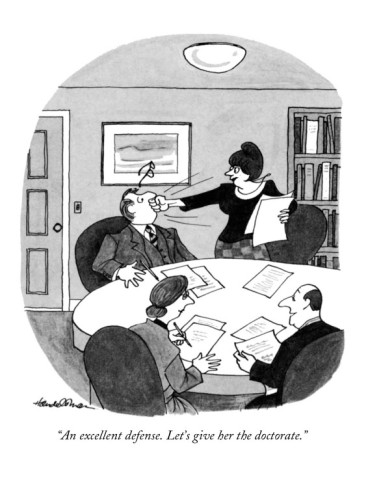
Hot on Roberto’s heels, and the third of us to achieve doctorhood since the inception of The Disorder Of Things, our very own Meera today survived the critical questioning of Robbie Shilliam and Christopher Cramer. She is henceforth Dr Sabaratnam, certified by virtue of her thesis: Re-Thinking the Liberal Peace: Anti-Colonial Thought and Post-War Intervention in Mozambique. For the record, I’m assured that any violence inflicted was purely intellectual.

Human Rights Contested – Part II

This is a continuation of my previous post

Who Are Human Rights For?

All of the authors take account of the ambiguous history of human rights, in which they can be said to have inspired the Haitian, American and French revolutions, while also justifying the counterrevolutionary post-Cold War order dominated by the United States. Yet recognising this ambiguity without also acknowledging the distinctive reconstruction of contemporary human rights that makes them part of a neo-liberal international order and the unequal power that makes such a quasi-imperial order possible would be irresponsible. A primary contribution made collectively by these texts is that they clearly diagnose the way human rights have been used to consolidate a particular form of political and economic order while undercutting the need for, much less justification of, revolutionary violence. Williams says of Amnesty International’s prisoners of conscience, who serve as archetypal victims of human rights abuse,

the prisoner of conscience, through its restrictive conditions, performs a critical diminution of what constitutes “the political.” The concept not only works to banish from recognition those who resort to or advocate violence, but at the same time it works to efface the very historical conditions that might come to serve as justifications – political and moral – for the taking up of arms.

Human rights, then, are for the civilised victims of the world, those abused by excessive state power, by anomalous states that have not been liberalised – they are not for dangerous radicals seeking to upset the social order.

Continue reading

Human Rights Contested – Part I

This post (presented in two parts) is drawn from a review article that will be forthcoming in The Journal of Intervention and Statebuilding, which looks at a recent set of critical writings on human rights in order to consider the profound limitations and evocative possibilities of the contested idea and politics of human rights.

Human Rights in a Posthuman World: Critical Essays by Upendra Baxi. Oxford: Oxford University Press, 2009.

Surrendering to Utopia: An Anthropology of Human Rights by Mark Goodale. Stanford, CA: Stanford University Press, 2009.

The Divided World: Human Rights and Its Violence by Randall Williams. Minneapolis, MN and London: University of Minnesota Press, 2010.

After Evil: A Politics of Human Rights by Robert Meister. New York, NY: Columbia University Press, 2011.

The central tension of human rights is that they propagate a universal and singular human identity in a fragmented political world. No one writing about human rights ignores this tension, but the most important question we face in judging the value of human rights is how to understand this tension and the divisions it creates. The expected divisions between good and evil, between moral universalists and dangerous relativist, between dignified interventionists and cowardly apologists, have long given shape to human rights, as both an ideal and a political project. Seeing the problems of (and for) human rights in these habituated ways has dulled our capacity for critical judgment, as few want to defend evil or violent particularisms or advocate passivity in the face of suffering. Even among serious and determined critics our inherited divisions are problematic (and increasingly over rehearsed), whether we think of human rights as the imposition of Western cultural values, or in terms of capitalist ideology serving the interests of neo-liberal elites, or as an expression of exceptional sovereign power at the domestic and global levels. The ways that these divisions deal with the tension at the heart of human rights misses the ambiguity of those rights in significant ways.

     Rather than trying to contain the tensions between singularity and pluralism, between commonality and difference, in a clear and definitive accounting, the authors of the texts reviewed here allow them to proliferate. Rather than trying to resolve the problem of human rights, they attempt to understand human rights in their indeterminate dissonance while exploring what they might become. To create and invoke the idea of humanity is not a political activity that is unique (either now or in the past) to the ‘West’. The people most dramatically injured by global capitalism sometimes fight their oppression by innovating and using the language and institutions of human rights. Political exceptions – the exclusion of outsiders, humanitarian wars and imperialist conceits – are certainly enabled by the same sovereign power that grants rights to its subjects, which is a metaphorical drama all too easily supported by human rights, but it is only a partial telling of the tale, a telling that leaves out how human rights can reshape political authority and enable struggles in unexpected ways. The work of these authors pushes us to reject the familiar divisions we use to understand the irresolvable tension at the centre of human rights and see the productive possibilities of that tension. If human rights will always be invoked in a politically divided world, and will also always create further divisions with each declaration and act that realises an ideal universalism, then our focus should be on who assumes (and who can assume) the authority to define humanity, the consequences for those subject to such power, and the ends toward which such authority is directed. Continue reading

Colouring Lessons: Reflections On The Self-Regulation Of Racism

A guest post, following Srdjan’s and Robbie’s contributions on the meaning and structure of contemporary racism, by Elizabeth Dauphinee. Elizabeth is Associate Professor in the Department of Political Science at York University in Toronto. She is the author of The Ethics of Researching War: Looking for Bosnia and co-editor of The Logics of Biopower and the War on Terror: Living, Dying, Surviving. Her work has appeared in Security Dialogue, Dialectical Anthropology, Review of International Studies and Millennium. Her current research interests involve autoethnographic and narrative approaches to international relations, Levinasian ethics and international relations theory, and the philosophy of religion.


The idea promulgated by Bet 115 that racism can and will meet its demise in a few short decades is based on the assumption that humans are self-regulating creatures, capable of recognizing and assessing their beliefs in an objective way and making appropriate corrections as needed. In order to explore this assumption, we need to inquire into the relationship between the self as an individual entity, capable of navigating and responding to the external world in an objective, disinterested way, and the social sphere, which may so entirely constitute us that we are incapable of thinking beyond the ‘texts’ (or scripts) of our socio-cultural milieus. In simpler terms, the question is: do we create the world, or does the world create us? 

In order to rightly consider this question, it is important to understand the implications of the answers one might be tempted to choose. It is also important to realise that each of us has a personal investment in the answer we might make. If we are individuals capable of willfully altering the world, then it makes sense to say that we can overcome racism (yet one is left with a lingering sense of bewilderment over why we have not done so). If we are fundamentally shaped and inextricably bound by the social sphere in which our ideas are formed, then we might lack the agency to escape the racism that seems to form a cornerstone of the institutions of our historico-political condition. Of course, there are few who would accept that our ability to self-regulate is an either/or proposition.  Rather, it is probably better to understand it as a ‘both/and’ state of affairs. In short, we shape and are shaped by the worlds we occupy. How, exactly, this is so is difficult to pick apart and navigate despite all of social science’s failed attempts to sharpen the distinction between the self and the worlds the self occupies. It inevitably flattens the complexity of social relations, and often ignores the tensions and contradictions that animate people’s views and beliefs. By way of example, let us consider the question with which we began: are we, or are we not, self-regulating creatures? The very structure of the question assumes that one will make answer either one way or the other. It leaves little room to suggest that both propositions are true, but in different ways and with different implications.

Continue reading

Colouring Lessons: Race Is A Structure Of Oppression, And Is Alive And Well

Race is a structure of oppression. So long as the structure remains, so does race. However, while there is plenty of talk about ethnicity and social cohesion, pathological cultures, and broken communities, race is usually mentioned only in its disavowal. And racism? Few would profess to that habit; most would comfortably label racism as a reactionary attitude. But to what imaginary golden mean? It is a privilege to believe that racism is a reaction rather than a catalysing agent of oppression. Meanwhile, all of us are variously implicated in this structure of oppression called race.

Even on the left, race is seen to be somewhat passé, and happily so now that the next world crisis in capital accumulation has arrived and we can all finally re-focus on the real thing: class. But what is the difference between race and class? Is it the difference between superstructure and base? Race does involve identification, both in order to oppress and in order to redeem. Yet in this respect, it is no more or less an identity than class. With the exception of Black Marxism, what the left has historically been unable or unwilling to consider is that, as a structure of oppression, race runs deeper than class.

Marx’s masterful hermeneutic shift from contract to class involved leaving behind the realm of exchange – wherein all things were of equivalent value and all transactions were equitable – and entering into the realm of production – wherein value was consistently expropriated and relations were exploitative. Nevertheless, in the colonial world, Marxism was more often used as a weapon for struggle and less so as a faith to guide contemplation. One reason for this engagement is that class exploitation never quite explained the reality of oppression experienced under the colonial exigencies of the world market.

In truth, Marx did not shift his hermeneutic far enough from liberalism and its obsession with civil society. Continue reading

Colouring Lessons: Bet 115 and the End of Racism

…(fireworks)… Please welcome, in our now well-established way, another new contributor to The Disorder Of Things. Srdjan Vucetic is currently Assistant Professor at the Graduate School of Public and International Affairs at the University of Ottawa. He is most recently the author of The Anglosphere: A Genealogy of a Racialized Identity in International Relations (on which he may blog soon), as well as of a number of articles on the ‘special relationship’, ‘Anglo’ coalitions of the willing and genealogy as a research tool in IR. Images by Pablo.


The problem of the twentieth century is the problem of the color line; the relation of the darker to the lighter races of men in Asia and Africa, in America and the islands of the sea.

W.E.B. Du Bois’ lucid remark, published in The Atlantic in 1901 (and elsewhere), continues to unify and motivate thinking on race and racism in International Relations. ‘Colouring Lessons: Race, Colour, Nation and Colony in Contemporary IR Theory’, an upcoming BISA-ISA conference panel featuring Meera, Omar, Pablo, Robbie, and myself, will consider how the “problem of the color line” might lead us to think differently about the structure and processes of world politics today. There are many good questions to cover; so many, in fact, that we best start our discussions early. Here’s one: when will racism end?

Let us begin by locating the question in the wonderful world of popular online betting. Thanks to the internet it is now possible to make and take wagers on almost anything, including on the future of phenomena such as racism. Recorded in May 2003 by a certain Bill Moore under the title ‘Bet 115’, one such wager can be found on the Long Bets website (Long Bets is run by a California-based non-profit foundation specializing in public education, including “enjoyably competitive predictions, of interest to society, with philanthropic money at stake”). It goes like this: “By 2100 racism will no longer be a significant phenomenon in most countries of the world”. The author qualified his thinking thus:

This prediction simply puts a date to a trend that is well underway. Racism is a set of learned attitudes and behaviour, and as such it can be eliminated. There has been a great deal of movement toward the elimination of racism in the past century. Racism plays a much less significant role in access to employment, housing, education, in distribution of wealth, etc., than it did 100 years ago. Racist attitudes are no longer acceptable in any mainstream, political, social, religious, corporate, or other public figure.

At the time of this writing, Bet 115 goes unchallenged, but thirty or so comments posted by assorted visitors to the site provide us with an interesting repository of ordinary and extraordinary language definitions of race and racism. (A discussion of the boundary conditions of the prediction follows one on human nature, which in turns follows an exchange regarding the “semantics and scope”). Also interesting is that 68% of the registered users of Long Bets (N=249) have voted “against” the prediction, suggesting that the majority expects the global colour line to outlast the end of the twentieth first century, two hundred years after Du Bois wrote (voting has been “temporarily disabled” this fall).

So what would the recent philosophical and socio-historical research on the subject say about Bet 115?

Continue reading

Dalston: A Worm’s Eye View

(…cheers…) Please welcome, in your traditional way, the latest in the expanding list of Disorder-ed contributors. Rahul Rao, currently Lecturer in International Security at SOAS, author most recently of the fascinating Third World Protest: Between Home and the World, as well as a number of articles on cosmopolitanism, world order and empire. He is currently working on projects aimed at provincialising Westphalia and introducing queer theory to IR.


There is a great deal that I don’t understand about the world, but I do know a little about that part of it where the Kingsland Road becomes Stoke Newington Road (London N16/E8, if that’s how you work). As the dust clears from what BBC Panorama recently called The August Riots – as if to distinguish them from those to come in September, October, November and December – it is difficult to walk around without wondering whether everyone is judging everyone else on the basis of age, race, class and sartorial preference. Multiculturalism in Dalston can sometimes feel like a polite version of separate-but-equal with the hipsters (mostly white, but equal opportunity for those with the right facial hair, skinny jeans, loafers with no socks, university education, fixie bikes and Apple accoutrements) patronising hipster cafés, the Turks hanging out in members-only social clubs, the Caribbeans in venues such as Open the Gate. Everyone goes to the Turkish restaurants, but gastronomy has always been the least challenging site for racial mixing. As gentrification has proceeded apace – a phenomenon driven by middle class professionals like myself – I cannot help but notice that Dalston Superstore is always full and the Caribbean restaurant in Centerprise (East London’s oldest and most famous black bookshop) often empty. (Oddly, the spell check on this blog thinks that the word ‘gentrifying’ does not exist and suggests replacing it with ‘petrifying’. There might be something to that.)

On August 8 when the riots reached Hackney, Dalston hit the headlines as the place where the riots caused little damage, its Turkish and Kurdish business owners much feted for their role in beating back the rioters. I have to confess to an immediate reaction (always a betrayal of one’s class identification) of gratitude to a local community of people who trusted and knew each other well enough to work together at a moment’s notice – a community to which I do not belong, but on whose efforts I was able to free-ride (like Zoe Williams, I watched these events on a live feed, it never having occurred to me that I could have gone on to my high street to defend anything). In the cold light of dawn, second thoughts: when the facade of the Leviathan had cracked, security had become a function of ethnic solidarity. Welcome to Sarajevo.

The reaction of the local business owners in Dalston poses two questions. Continue reading