 The third post in our symposium on Sophie Harman’s Seeing Politics, from Jo Vearey. Jo is an Associate Professor and Director of the African Centre for Migration & Society, University of the Witwatersrand, where she is involved in designing and coordinating research programmes, teaching, and supervising graduate students. Jo is involved in multiple international partnership, is Vice-Chair of the global Migration, Health, and Development Research Initiative (MHADRI), and is an Honorary Researcher at the School of Social and Political Sciences, University of Edinburgh. Jo is a South African National Research Foundation rated researcher and, supported by a Wellcome Trust Investigator Award, established the Migration and Health Project Southern Africa (maHp). With a commitment to social justice, Jo’s research explores ways to generate and communicate knowledge to improve responses to migration, health and wellbeing in the southern African region. Fundamental to her research practice is Jo’s participation in a range of policy processes at international, regional, national and local levels. Jo is exploring the role of public engagement in the development of appropriate policy responses, including the use of mixed methods approaches that involve various publics in the co-production and application of knowledge to affect change.
Sophie Harman has produced an excellent, accessible text within which she shares her reflections on the opportunities and tensions associated with a research process that draws on feminist research praxis, engages with efforts to democratise research, and aims to work with participants to co-produce knowledge. In Seeing Politics, Sophie presents a comprehensive review of the potential of film as a feminist method, and reflects on her work with 80 women in Tanzania that culminated in the co-production of a narrative feature film that shares their stories of living with HIV. The resultant film – Pili – has been shown at international film festivals and received awards and, as Sophie highlights, is the first time that a co-produced narrative film has been applied as a feminist research method in the field of International Relations (IR). Seeing Politics is a book about method and about a justice-driven approach that attempts to ‘make visible the invisible’ lived experiences of women living with HIV in Tanzania, notably their navigation of formal and informal everyday politics and how this intersects with their health and wellbeing, and with gendered experiences of discrimination and abuse. But it is also about a lot more.
Knowledge Politics
Seeing Politics forces us to see a different form of politics: the politics of knowledge. Whilst this is, obviously, implicit throughout the book, we should more explicitly reflect on how ‘the visual’ as a research method and research output ‘makes visible’ the discomforts of knowledge politics, namely: who is telling whose story and for what purpose? When we claim to ‘make visible the invisible’, who are we positioning as invisible and what does it mean to do so? In what context? Is it for us (the researcher) to determine who needs to be made visible? For whose benefit? What are the implications of making people and places visible? Such questions force us to engage in our own research praxis and confront uncomfortable questions about the politics of knowledge, and the role of scholarship and the academy when engaging in justice-driven research. These are by no means new or novel questions and an extensive body of literature exists that I won’t in any way attempt to summarise here. These long established calls for democratising, decolonising and humanizing research are attracting a new generation of indigenous researchers from multiple disciplinary perspectives who are productively engaging with these tensions, re-engaging with decolonial approaches to research methods and praxis and challenging the status quo in international partnerships.
Sophie highlights that the methodology outlined in Seeing Politics is about a commitment to ensuring what Sophie and her colleague William Brown have previously framed as ‘African agency’, an approach to research that aims “to take African politics, actions, preferences, strategies and purposes seriously to get beyond the tired tropes of an Africa that is victimised, chaotic, violent and poor” (Brown and Harman 2013, 1-2). This is a welcome imperative but, as a framing proposed by two white, British academics based in the UK, what does this – as an academic project in its own right – mean for the idea of ‘African agency’? At its core, I would argue that Seeing Politics is in fact about precisely these tensions and contradictions that many of us experience in our research praxis. The book itself becomes a helpful tool for recognising and responding to the discomfort we feel of being a researcher and the way we feel about our own positions and complicity in the extractive nature of research. I see how I can use the book in my teaching as a way to generate exactly this form of reflection.

 The fifth post in our symposium on Colonial Lives of Property is by Lisa Tilley. Lisa is Lecturer in Politics and Leverhulme Early Career Fellow at Birkbeck, University of London. She is also co-convenor of the Colonial, Postcolonial, Decolonial Working Group of the British International Studies Association (CPD-BISA); co-founder of the collaborative research project
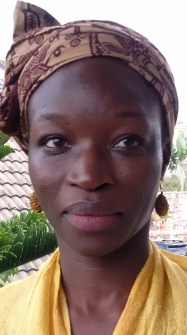
  The third post in our symposium on Brenna Bhandar’s Colonial Lives of Property is by Sara Salem. Sara is an Assistant Professor in Sociology at the London School of Economics. Sara’s research interests include political sociology, postcolonial studies, Marxist theory, feminist theory, and global histories of empire and imperialism. She is particularly interested in questions of traveling theory, postcolonial/anti-colonial nationalism, and feminist theory. She has recently published articles in journals such as Signs; Interventions: A Journal of Postcolonial Studies; Review of African Political Economy; and the European Journal of Women’s Studies, among others.
 Megan Mackenzie is an Associate Professor in the Department of Government and International Relations at the University of Sydney. Her research is broadly- and humbly- aimed at reducing and, eventually ending war; it bridges feminist theory, critical security studies, and critical/post development studies. Megan has contributed research on topics including sexual violence in war, truth and reconciliation commissions, military culture, images and international relations, and women in combat.
 Amy Niang is Senior Lecturer in International Relations at the University of the Witwatersrand, Johannesburg. Her research is informed by a broad interest in the history of state formation, peace and conflict, and Africa’s international relations. Her work has been published in Alternatives, Politics, African Studies, Journal of Ritual Studies, African Economic History, Afrique contemporaine and many edited collections. Her forthcoming publications include “Rehistoricising the sovereignty principle with reference to Africa: stature, decline, and anxieties of a foundational norm”, in Zubairu Wai and Marta Iniguez de Heredia (eds.) Bringing Africa “Back In”: World Politics and Theories of Africa’s Nonfulfillment (Palgrave Macmillan).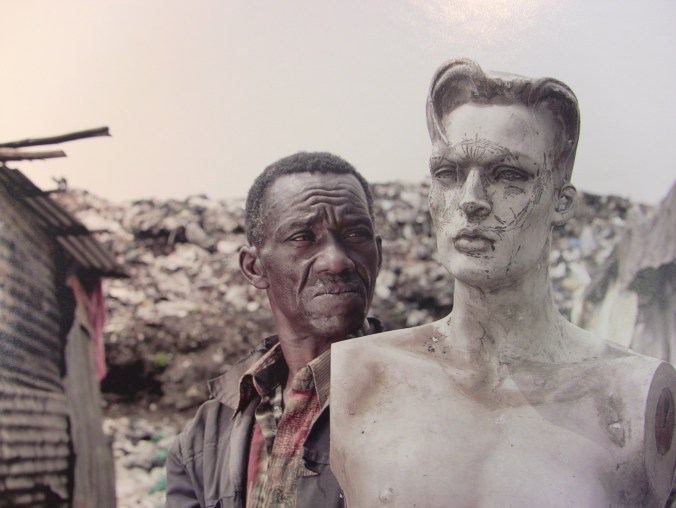

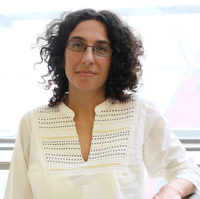 Marta Iñiguez de Heredia is a Marie-Sklodowska Curie Fellow at the Institute Barcelonaof International Studies. She holds a PhD from the London School of Economics and Political Science (LSE). She has taught at the University of Cambridge, the LSE, Rouen Business School, Deakin University and La Trobe University. Her research concentrates on the historical sociology of peacebuilding processes, with a focus on the relationship between order, violence, state-making and resistance, and on Africa in particular. She draws on historical sociology, critical Africanist and practice literatures, as well as on extensive fieldwork. Current research is focused on EU’s peacebuilding policies, the militarisation of peacebuilding and political transitions through the emergence of African social movements.
 The Disorder Of Things