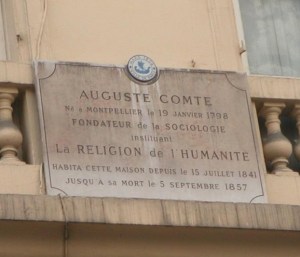
The Western Academy, especially in its social science and humanities wings, incorporates as a priestly caste. Perhaps Kant is the first high priest of this caste when he argues for the Aufklärer to become a corporate entity equivalent to the hierocracy and nobility but exceptional in its duty to provide a truly public service of reasoning. The psalm of this priestly caste is “have the courage to use your own understanding”, its catechism: to singularly possess and hold aloft the flame of revelation, known as science, or, nowadays, the modern episteme. Even Marx holds the flame aloft when he takes Hegel’s Philosopher, who breathes world spirit, and makes him inhabit the skin of the Communist.
This priestly caste, as it founds the church of modernity, is instantly and integrally involved in founding a broader colonial division of labour. These new priests conjure up the traditional/modern divide by the use of history – differentiating old and new European Western societies – and by the use of anthropology (later, sociology too), by differentiating the colonized from the colonized. The living knowledge traditions of the colonized are pronounced dead on arrival in the present. And their cosmologies, philosophies, social practices – are entombed into opaque “cultures” the contents of which can only be clearly illuminated by the keepers of the flame.
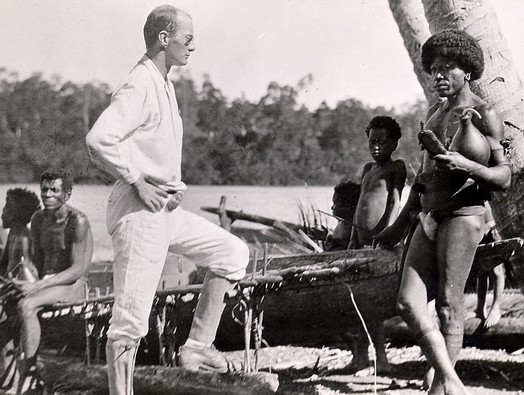
Ultimately this mapping of difference works through race, gender and class coordinates so that even the “poor” living in the West, as well as un-mastered women and single mothers intersect with (post-)colonized subjects to become part of this opacity. The episteme of the Western Academy thus differentiates between the knowers and the known.
In this respect, the modern episteme is as seminal as gunboats to the maintenance of colonial difference. Key to this difference is not just the attribution of extra-ordinary exploitation, oppression and dispossession to colonized peoples but also their epistemic erasure, i.e., the outlawing of the possibility and desirability of intentional self-determining community amongst the colonized and their post-colonized descendents. It is in the colonial world and not Europe where Europeans develop the art of objectifying peoples into populations such that the basic competency of the colonized to self-define is deemed absent by the instruments and mores of European sanctioned international law. Postcolonial populations have only been able to become peoples under very specific conditionalities; and many who make the transition become the new police of colonial difference. Those who fall between or prefer a third way become the ungoverned, or ungovernable.






 The Disorder Of Things