The Citadel Has Been Blown Up. Hurray! Next? A Response to Hobson

This is the second post in a symposium on John M. Hobson’s new book, The Eurocentric Conception of World Politics. The series began with a post by the author summarising the argument of the book and laying out some provocations for sympathetic readers. In the next few weeks, we will have further posts from Srjdan and Brett Bowden, followed by a reply from John.

Update: Srdjan’s post and Brett’s post are now up.


I was at an IR event last year where the speaker jovially declared that they just did not care about being, and being accused of being, Eurocentric. At the time, I found it both a little shocking and depressing that they could see fit to dispense with that fig leaf of serious acknowledgement that often accompanies discussions of Eurocentrism.  And indeed I thought, glumly, that it perhaps reflected many scholars’ underlying attitudes to the issue – a tokenistic practice of acknowledgement underpinning a wider apathy or disconnection. What only struck me later was also the possibility that the speaker also didn’t really understand the issue which was batted away so carelessly. Indeed, it is unclear that many ‘mainstream’ IR scholars truly understand the problem of Eurocentrism, given the mythologised twin deaths of colonialism and scientific racism in 1945 (or so).

Seriously?

So, Hobson is knocking at the door more loudly, with a bigger stick, and much more paperwork.  Continue reading

Re-visioning Eurocentrism: A Symposium

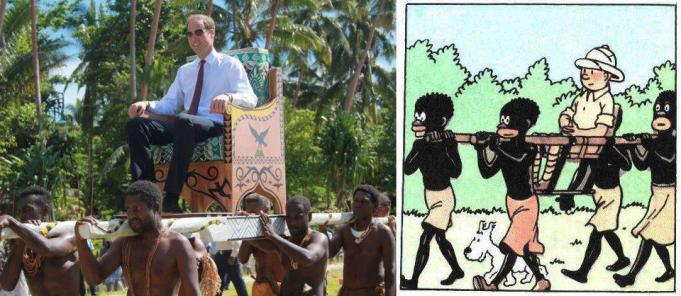
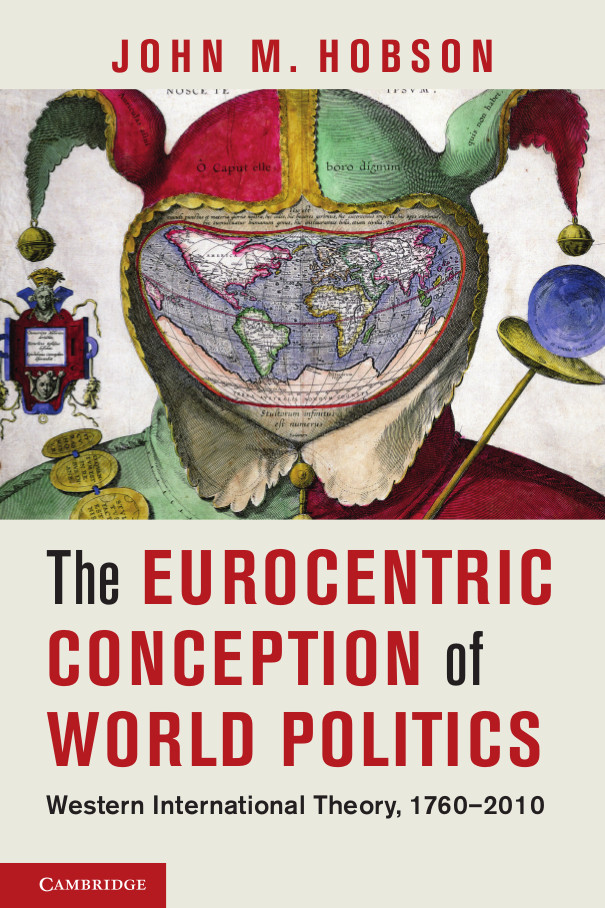
The Disorder of Things is delighted to welcome a post from John M. Hobson, which kicks off a blog symposium on his new book The Eurocentric Conception of World Politics: Western International Theory, 1760-2010. Over the next few weeks there will be a series of replies from TDOT’s Meera and Srdjan, as well as special guest participant Brett Bowden, followed finally by a response from John himself. [Images by Meera]

Update: Meera’s response, Srjdan’s response and Brett’s response are now up. 

Introduction

As I explain in the introduction to The Eurocentric Conception of World Politics, my book produces a twin-revisionist narrative of Eurocentrism and international theory.[i] The first narrative sets out to rethink the concept of Eurocentrism – or what Edward Said famously called ‘Orientalism’ – not so much to critique this founding concept of postcolonial studies but rather to extend its reach into conceptual areas that it has hitherto failed to shed light upon.[ii] My central sympathetic-critique of Said’s conception is that it is reductive, failing to perceive the anti-imperialist face of Eurocentrism on the one hand while failing to differentiate Eurocentric institutionalism or cultural Eurocentrism from scientific racism on the other hand. As such, this narrative is one that is relevant to the many scholars who are located throughout the social sciences and who are interested in exploring the discursive terrain of ‘Eurocentrism’. These, then, would include those who are located in International Relations of course but also those in Politics/Political theory, Political Economy/IPE, political geography, sociology, literary studies, and last but not least, anthropology.

The second narrative rethinks international theory as it has developed across a range of disciplines. It stems back to the work of Adam Smith in the 1760s and then moves forwards down to 1945 through the liberals such as Kant, Cobden/Bright, Marx, Angell and J.A. Hobson, Zimmern, Murray and Wilson, onto the Marxists such as Marx and Engels, Lenin, Bukharin, and Luxemburg, and culminating with the realists who include Mahan and Mackinder, Giddings and Powers, Ratzel, Kjellén ,Spykman, von Bernhardi, von Treitschke and, not least, Hitler. After 1945 I include chapters on neo-Marxism (specifically neo-Gramscianism and world-systems theory), neo-liberalism (the English School and neoliberal institutionalism) and realism (classical-realism, hegemonic stability theory and Waltzian neorealism). This takes the story upto 1989. I then have two chapters on the post-Cold War era which examine what I call ‘Western-realism’ and ‘Western-liberalism’. The final chapter provides an overview of the changing discursive architecture of Eurocentrism and scientific racism, while also revealing how international theory has, in various ways, always conceived of the international system as hierarchic rather than anarchic. Although this is clearly a highly controversial and certainly counter-intuitive claim, it nonetheless in effect constitutes the litmus test for the main claim of the book: that international theory for the most part rests on various ‘Eurocentric/racist’ metanarratives. And ultimately my grand claim posits that international theory in the last quarter millennium has not so much explained international politics in an objective, positivist and universalist manner but has sought, rather, to parochially celebrate and defend or promote the West as the pro-active subject of, and as the highest or ideal normative referent in, world politics.

Continue reading

Navigating Neoliberalism: Political Aesthetics in an Age of Crisis

For those who are interested, here’s a copy of the talk I gave last weekend on the technological sublime, machine perception, and cybernetic economies. Held in the beautiful Treignac area at The Matter of Contradiction: Ungrounding the Object event, it was a lot of fun and filled with some fascinating discussions. Many thanks to the Treignac Projet for inviting me and organizing the event. Check out more of their work here.

The Irruption of the Event

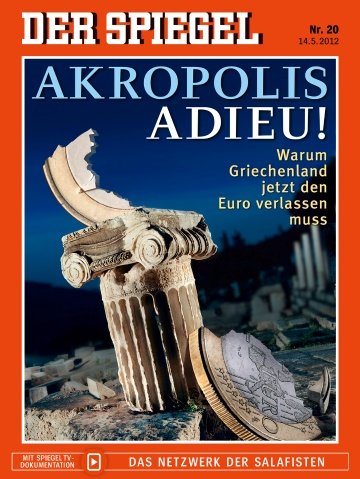
As the inevitable Greek exit from the eurozone seemingly approaches, it’s worth comparing current statements about Greece to how the financial press and regulators considered Lehman Brothers the week before its collapse set the global markets into panic mode. (See below for a selection of illuminating comments from officials about Lehman Brothers pre-collapse and about Greece pre-exit.) Reading these misplaced predictions, one thing becomes clear: the contemporary financial system is far too complex and opaque for anyone to determine the precise consequences of a Greek exit. Add into that the unpredictable nature of crisis politics (e.g. today sees rumors of Greek governing coalitions flying all over the place), and one has a system that quickly surpasses our capacities for forecasting. In this regard it’s interesting to read reports about the current Greek exit fears versus the reports in February when it also looked like Greece might leave (prior to the second of ECB’s long-term refinancing operations (LTROs) that managed to calm markets for a short while). In the earlier reports many commentators considered that French and German banks had largely separated themselves from Greek exposure, while the initial LTRO had purportedly given the financial system the flexibility it needed to survive any temporary disruption. Intriguingly, today’s fears about Greece, after the failure of the LTROs to significantly improve the situation and combined with fears over Spain’s banking system, are much more apocalyptic than in February.

The unfortunate truth is that while a Greek exit will be devastating to the Greek people (of this everyone is confident), it is still a better option than the continued austerity regime. Even the most optimistic IMF estimates of Greece’s economy under the austerity regime only see them returning to 120% debt-to-GDP ratio by 2020 – i.e. the same level that so worries commentators about Italy today. What is being asked of Greece is a state of permanent austerity and permanent social chaos. 

Milos Bicanski/Getty Images

September 9, 2008 – http://www.nytimes.com/2008/09/10/business/10place.html?pagewanted=all

Unlike Bear Stearns, which effectively collapsed when customers fled for the exits and the firm could not finance itself, Lehman Brothers has more sources of long-term financing and like other broker-dealers, access to emergency financing from the Federal Reserve. Mr. Fuld said that the existence of that lending facility should take any question of Lehman facing a liquidity crisis “off the table.

September 12, 2008 – http://www.ft.com/intl/cms/s/0/b3506214-80d5-11dd-82dd-000077b07658.html#axzz1mXeJ33ET

While the crisis at Bear stunned the markets, other financial institutions have had six months to prepare for the possible failure of Lehman. In the Bear crisis, the risks were extreme in part because they were unknown and unmanaged. The New York Fed has conducted extensive stress tests in order to attempt to evaluate the impact of a Lehman failure on markets such as the CDS market and it believes the systemic risk is quantifiable and lower than the risk that was posed by the imminent collapse of Bear back in March. Regulators have also evaluated the risk mitigation strategies put in place by other banks and the authorities believe them to be robust. That suggests the risk that a Lehman collapse could trigger a domino effect of failures at other financial institutions ought not to be great.

September 14, 2008 – http://www.ft.com/intl/cms/s/0/f3586ede-80ca-11dd-82dd-000077b07658.html#axzz1mXeJ33ET

Mr Paulson believes that the systemic risks associated with the potential failure of Lehman have been reduced because the market has had time to prepare for its possible demise, and a new Fed funding facility would assist an orderly unwinding of its positions.

February 15, 2012 – http://blogs.channel4.com/faisal-islam-on-economics/eurozone-reaches-its-lehman-moment-as-germany-insults-greece/16278

All the while, the chatter in euro policy circles, as I wrote on Monday, is that the Greek rot will not infect the rest of the euro area. A default could be managed. Even the odd French bank has managed to dispose of much of its exposure. We’ve had months to prepare. And, so the Lehman moment comes full circle. Three and a half years ago we were told exactly the same by Hank Paulson and co re Lehmans: The system, we were told, was strong enough. Finns, Dutch and some Germans increasingly think the same about a Greek default.

What We Talked About At ISA: Researching Sexuality in ‘Difficult’ Contexts

In September 2009, Ugandan Parliamentarian David Bahati introduced a draft ‘Anti Homosexuality Bill’ that proposed enhancing existing punishments for homosexual conduct in the Ugandan Penal Code, introducing new ‘related offences’ including ‘aiding and abetting’ homosexuality, ‘conspiracy to engage’ in homosexuality, the ‘promotion of homosexuality’, or ‘failure to disclose the offence’ of homosexuality to authorities within 24 hours, and mandating the death penalty for a select class of offences categorized as ‘aggravated homosexuality’. The bill remained bottled up in parliamentary committees for the duration of the 8th Parliament, thanks in large part to a sophisticated local campaign that sought to bring international pressure to bear on the government of President Yoweri Museveni, but has since been reintroduced in the current 9th Parliament and therefore remains a live concern. In August 2010, I travelled to Uganda to interview a range of actors associated with ongoing debates over sexuality in the country. Rather than commenting on the urgent and pressing substantive concerns at issue in these debates, at an ISA panel entitled ‘Researching sexuality in difficult contexts’, I chose to reflect on some of the methodological dilemmas I encountered in the field, for which my training in international relations had left me unprepared. Emboldened by recent ISA panels on storytelling and auto-ethnography (and utterly bored by what passes for mainstream IR), these reflections take the form of excerpts from my diary (italicized), interspersed with the more censorious, academic voice that I trotted out at ISA. (I make no apology for not writing about the more ‘serious’ issues at stake—on this occasion—because it occurs to me that where sexuality is concerned, the pursuit of fun can raise deadly serious questions, making distinctions between the trivial and the serious difficult to sustain.)

Uganda, August 2010: I am here to do interviews and I spend most of my day setting them up, preparing for them, travelling to or from them, or conducting them. The rest of the time I hang out, people watch, trying to piece together a picture of how life outside heteronormativity survives in a climate that seems—on the surface at least—as inhospitable as Uganda is supposed to be. On Friday, Al (name changed, and this account provided with permission) invited me to a strip-tease. This was going to be a straight strip-tease, but one that some of the gay men went to so that they could watch the straight men getting off on watching the women strip. It sounded convoluted, but unmissable. Plus, I’d never been to a straight strip-tease, so it seemed important to plug this gaping orifice in my sexual history. We entered a dimly lit hall and took seats at the back in a group near the bar. I think I was the only brown man there. There was also one white man in the whole place, in our group. He had evidently been to the place before, and because he came with the same motivations as Al, he had been traumatized on a previous occasion by the way the women flocked to him (money?). So Al was instructed to tell the emcee (a short guy dressed in a white track suit) to make sure that the women didn’t come to our corner. The real attraction, from the point of view of the gay guys, was that the women sometimes got the straight guys to get on stage and strip. Al told the emcee to do his best to encourage this possibility. Call it Straight Guy for the Queer Eye. I was impressed by the brazenness with which Al communicated all this to the emcee. As for the show, let’s just say it took the ‘tease’ out of strip-tease. The first woman (girl? all the performers looked like they were in their 30s, but they could have been younger and prematurely aged by their work) danced to some vaguely familiar Western pop number. She was followed by another woman with bigger hips. Somebody in the group, setting himself up as my informant, tells me that she is ‘a real African woman’. She danced to Shania Twain’s ‘From this Moment On’ (a song I played to my last (and final, I think) girlfriend on the first day I met her, after a year-long correspondence). Just when Shania reached the second verse, the woman dropped her panties. None of the performers took off their bras. ‘African men aren’t interested in breasts’, my self-appointed informant intones. The next half-hour is a blur of female anatomy. So here I am, in a country that people have been calling ‘conservative’ and that American evangelist Rick Warren has decided is ripe for transformation into the world’s first ‘purpose driven’ nation, looking at more naked women in ten minutes than I have seen in ten years, to the soundtrack of my failed romantic history.

Continue reading

What We Talked About At ISA: The U.S. Military-Industrial Complex, Part 2

Part two of a post on my presentation at this year’s ISA. Part one is here.


So what would be the normative-political case for the Military-Industrial Complex (MIC)? As Ledbetter notes, the defence industry never had a shortage of defenders, proponents, beneficiaries, and apologists. Various critiques of the MIC notwithstanding, numerous American commentators are now firmly united in the belief that their country needs a large defence budget in order to protect and project its identities and interests in the world. According to Maddow, this collective belief had a lot to do with the discursive and institutional success of the infamous “Team B” reports on Soviet power, which so profoundly enthused Ronald Reagan and his administration, leading to the gigantic military buildup in the 1980s. Maddow’s assessment is worth citing at length:

The Think Tanks and Very Important Committees of the permanent national security peanut gallery are now so mature and entrenched that almost no one thinks they’re creepy anymore, and national security liberals have simply decided it’s best to add their own voices to them rather than criticize them. But like we lefties learned in trying (and failing) to add a liberal network to the all-right-wing, decades-old medium of political talk radio, the permanent defense gadfly world can’t really grow a liberal wing. It’s an inherently hawkish enterprise. Where’s the inherent urgency in arguing that the threats aren’t as bad as the hype, that military power is being overused, that the defense budget could be safely and wisely scaled back, that maybe this next war doesn’t need us? The only audience for defense wonkery is defense enthusiasts, and they’re not paying the price of admission to hear that defense is overrated.

But knotted into the right-wing discourse on defence spending is a number of corollary arguments that are associated with a variety of lefty positions in the U.S. context.  America’s mainstream media outlets rarely fail to acknowledge how the twinning of the country’s economic and armed forces not only creates high-skilled jobs, but also – and critically – keeps them in the country. The move is mainly rhetorical. Not only have successive U.S. administrations encouraged American defence industry to globalize, but there is also little evidence to suggest that defence spending creates more jobs relative to spending on, say, health care or education (see, for example, Pollin and Garrett-Peltier, 2011). I would suggest, then, that what lies behind contemporary pro-MIC arguments is, in fact, a creative and complex combination of certain economic theories, (realist?) beliefs in war (or the threat of war) as a manifest destiny of the international system, as well as an overarching (liberal?) commitment to a powerful, sovereign state capable of exercising global leadership (aka., a “force for good”, in still favoured New Labour parlance.)

Let us revisit the pro-MIC rhetoric from the era of “Team B.” In a footnote, Ledbetter directs the reader to The Lonely Warriors (1970) by John Stanley Baumgartner, who is described as “one notable true defender of the MIC.” Written by an expert in public management and business administration, Baumgartner’s book makes three arguments for the MIC: 1) defending the free world is a moral thing to do (“Sputnik is only one example of the reasons for MIC”); 2) by definition, defence is a big enterprise and all big enterprises (directly or indirectly, the MIC employs one in ten Americans) occasionally make big mistakes, especially when they respond to the murky and changing specifications set by the government (“the tiger” or “the monster”) and its contracting officers; and last, 3) “unconscionable profit” is not so unconscionable in comparative terms (profit on sales, profit on investment, price/earning ratios etc. tend to be below the industrial average).

Continue reading

What We Talked About At ISA: The U.S. Military-Industrial Complex, Part I

Earlier this year, the U.S. government set out to reduce its vast defence budget. On 5 January, Barack Obama became the first U.S. president to hold a press conference at the Pentagon. What prompted it was the release of Sustaining U.S. Global Leadership: Priorities for 21st Century Defence, a “strategic guidance” document outlining the national blueprint for “deterring and defeating aggression,” while reducing record budget deficits “through a lower level of defence spending.” (The document also attracted much media attention because it offered a rare glimpse into the strategic thinking of a president who seems to refuse to be associated with a “doctrine.”) In his State of the Union address three weeks later, Obama reinstated his belief that paring defence sending could help “pay down our debt.” The Pentagon’s FY2013 budget projection followed on 13 February, with a request for $614 billion in funding: $525 billion for the base budget and $88 billion for the so-called overseas contingency operations. FY2012 budget request, the Pentagon noted, was bigger.

Pundits in the US have been debating the meaning of the coming defence cuts, starting with the question of whether there will, in fact, be any cuts in the first place. This debate will probably intensify as the election date approaches, although, indicatively, Obama’s strategic guidance contains no “East of Suez” moments, and his Pentagon speech was a candid expression about the need to stay the course: “Over the next 10 years, the growth in the defence budget will slow, but the fact of the matter is this: It will still grow, because we have global responsibilities that demand our leadership… I firmly believe, and I think the American people understand, that we can keep our military strong and our nation secure with a defence budget that continues to be larger than roughly the next 10 countries combined” (emphasis mine; also, “10” appears to be way too low).

Much remains to be said about the type, magnitude, and sequence of the coming changes to America’s defence, and the electoral 2012 will be too short to say it all. The first round of projected budget cuts (“$487 billion”) takes into consideration the provisions of the self-flagellating Budget Control Act from August 2011. The second round of cuts (“$500 billion”) refers the so-called automatic sequestration cuts, also specified in the Act, which will take effect in January 2013 if Congress does find “alternative” ways to control the budget. U.S. Secretary of Defense Leon Panetta described these automatic cuts as the “doomsday scenario,” a label that Congress’s bipartisan supercommittee will no doubt keep in mind as it looks for those alternatives (such as, for example, legislation to reverse the Act). In the end, what will change is the ordering of America’s military priorities, but not the militarization of America’s “global responsibilities” (to use Obama’s own label) as such. Behind it, after all, are multiple and reinforcing structural factors that make real cuts difficult. One of them is “defence industry,” which some pundits and watchdog organizations like to call, somewhat retrospectively, the “military-industrial complex” (MIC).

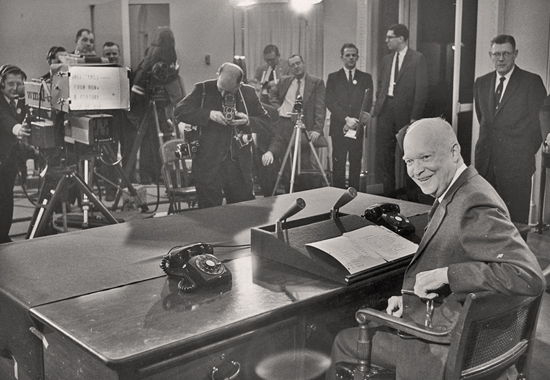
As a conceit, the MIC goes back at least to World War I, but it is popularly dated to Eisenhower’s ‘Farewell Address’ in 1961. As far as US presidential speeches/speechwriting goes, Eisenhower’s was a tour de force in every respect, but the reason why we read it today – or, rather, search for it on YouTube – is for the parts where the president urges the American citizens to pay attention to the “conjunction of an immense military establishment and a large arms industry [that is] new in the American experience,” while advising the American government to “guard against the acquisition of unwarranted influence, whether sought or unsought, by the military-industrial complex.”

Continue reading

Call for Contributions: The Global Political Economy of the 1%

Tim Di Muzio (Wollongong) is putting together an edited volume on The Global Political Economy of the 1% which Disordered readers might be interested in contributing to. The full call is here. Abstracts of 250 words or less are due by 30 April 2012 with first full drafts by 1 November 2012. Tim can be emailed with submissions or for more details here.

While the internationalized Occupy Wall Street movement faces many strategic and organizational challenges, one of its major accomplishments has been its ability to draw global attention to the massive disparity of income, wealth and privilege held by 1% of the population. Such attention comes amidst a relatively synchronized global financial crisis, a mounting first world debt crisis in parts of Europe and the United States and the intensification of neoliberal policies. While political science and sociological study has shed light on elites and the wealthy in the past, with some recent popular exceptions, there has been a dearth of research on the culture, politics, built environments and psychology of the global rich in the new gilded age.

To redress this gap in the literature, this edited volume calls for a more focused and engaged study on what could be called the global political economy of the 1%. Such a project could help shed light on the massive chasm between this elite class of wealth holders and the rest of the global working class – the majority of whom subsist on less than US$2 a day and increasingly live in informal settlements as the dialectic of dispossession and urbanization continues its historical dance. Of course, it should be emphasized that a global political economy of the 1% does not preclude (and nor should it) the unavoidable social relations between the 1% and the 99%. However, recent literature has already enriched our understanding of how poverty, unprotected workers, and the everyday life practices of the seemingly mundane impact upon the wider global political economy. So a keen, yet nonrestrictive, focus on the political economy of 1% and the global income/wealth hierarchy is welcome.

All abstracts will be accepted and reviewed with sincerity. Selections for inclusion in the volume will be evaluated on the basis of original content, coherence and consistency with the general theme as well as the necessity of creating coherent sub-themes. Sub-themes are suggested here to organize research questions but are not necessarily the themes of the volume (contingent upon contributions).

Topics and questions that could be addressed in such a volume include but are not limited to the following: The Usual Suspects: Identifying the 1%The Social Reproduction of the 1%; Culture, Consumption and the 1%; and Power, Resistance and the 1%.

Dr Roccu, I Presume?

The second of us to achieve doctorhood since the inception of The Disorder Of Things, our very own Roberto this afternoon survived interrogation by Charles Tripp and Toby Dodge to become a fully certified Doctor of Philosophy in International Relations. His thesis being entitled Gramsci in Cairo: Neoliberal Authoritarianism, Passive Revolution and Failed Hegemony in Mubarak’s Egypt, 1991-2010. Timely and on trend, awarded sans corrections.

How is Rape a Weapon of War?

This post summarises a piece for the European Journal of International Relations just published online. An inconsequentially different pre-publication version is also available for anyone unable to breach the pay wall.

UPDATE (8 March): Sage have kindly made the full EJIR paper open access until early April, so you can now get it directly that way too.


I’m sure you have reasons
A rational defence
Weapons and motives
Bloody fingerprints
But I can’t help thinking
It’s still all disease.

Fugazi, ‘Argument’ (2001)

‘Weapon of War’ could be many explanations and I’m not sure of any of them.

UNHCR official, Goma, Democratic Republic of Congo, June 2010

1. War Rape in the Feminist Imaginary

Rape is a weapon of war. Such is the refrain of practically all contemporary academic research, political advocacy and media reporting on wartime sexual violence. Once considered firmly outside the remit of foreign policy, rape is today labelled as a ‘tactic of war’ by US Secretaries of State who pledge to eradicate it and acknowledged as a war crime and constituent act of genocide at the highest levels of international law and global governance, a development which for some amounts to the ‘international criminalization of rape’. This idea of rape as a weapon of war has a distinctly feminist heritage. Opposed to the historical placement of gendered violence within the hidden realm of the private, feminist scholarship was the first to draw out the connections between sexual violence and the history of war, just as feminists fought to make rape in times of nominal peace a matter for public concern. Feminist academics have, then, pioneered a view of sexual violence as a form of social power characterised by the operations and dynamics of gender. Sexual violence under feminist inquiry is thus politicised, and forced into the public sphere.

But the consensus that rape is a weapon of war obscures important, and frequently unacknowledged, differences in our ways of understanding and explaining it. Continue reading