Capital, The State and War: Rethinking the Geopolitics of Capitalist Modernity in the Era of the Two World Wars

A guest post from Alex Anievas to inaugurate a brief symposium on his book anievasCapital, the State, and War: Class Conflict and Geopolitics in Thirty Years’ Crisis, 1914-1945 (Michigan University Press, 2014), which will unfold over the next few days. Alex is a Leverhume Early Career Researcher at the Department of Politics and International Studies at the University of Cambridge. He is editor or co-editor of numerous books (including Race and Racism in International Relations and The Longue Durée of the Far-Right, both of which have previously previewed at The Disorder). His work has also appeared in the European Journal of International Relations, the Cambridge Review of International Affairs, Millennium and the Review of International Studies.


The manuscript that would become Capital, the State, and War: Class Conflicts and Geopolitics in the Thirty Years’ Crisis, 1914-1945 developed, like so many first books, out of my PhD thesis[1] In its final form, Capital, the State, and War endeavours to offer nothing less than a systematic and radical reinterpretation and historical sociological reconceptualisation of some of the main geopolitical and socioeconomic fault-lines of the 1914-1945 period. It does so through the theoretical prism of uneven and combined development, demonstrating in the process the various problems with extant historiographical interpretations and IR theorisations of this crucial epoch in the development and remaking of modern world politics. But given the rather substantial differences between what I had originally envisioned the PhD thesis to be and what it became, it’s worth briefly discussing the origins of the project and how it changed in the process of researching and writing it.

I. Origins

My PhD project was originally conceived as an intervention into the contemporary debates on the ‘resurgence’ of US imperialism in the wake of the wars in Afghanistan and Iraq – very much a radicalising moment in my own intellectual and political trajectory – and the concomitant return to Marxist theories of imperialism and empire. My aim then was to essentially rethink and ‘update’ the classical Marxist theories of imperialism and, in particular, Lenin and Bukharin’s theory of inter-imperial rivalry which, whatever its faults, still captured an essential aspect of contemporary imperialism. I was then heavily influenced by a number recent Marxist works on imperialism, particularly David Harvey’s 2003 The New Imperialism (along with his earlier, more theoretically sophisticated The Limits to Capital) and Alex Callinicos’ The New Mandarins of American Power.

Both studies, in their different ways, sought to retain the fundamental insights of the classical Marxist theories of imperialism (e.g. the persistence of historically-differentiated forms of inter-imperial rivalries rooted within the inherently competitive dynamics of capital accumulation), whilst dispensing with their more economically determinist and instrumentalist features. They did so, in particular, by reconceptualising imperialism as the intersection of two analytically distinct, but historically interconnected, ‘capitalist’ and ‘territorial’ logics of economic and geopolitical competition. While critical of certain aspects of this kind of approach – particularly, Harvey and Callinicos’ relatively undigested incorporation of a ‘proto-realist’ conception of ‘the international’ – my initial thought was that, if rooted in a stronger conception of the spatio-temporal dynamics of capitalist development and expansion that produced the somewhat porous but nonetheless identifiable ‘territorial logic of power’ – regionality – inherently arising out of the processes of capital accumulation in space and time, this perspective could provide a more adequate historical materialist theory of geopolitics.[2] At this stage in the development of the project, this is how I originally envisaged the role of Trotsky’s concept of ‘uneven and combined development’ – a kind of supplementary theory that could be employed in capturing the spatio-temporal dynamics of capitalist development in reconstructing a modified Marxist theory of imperialism. Add in a more attentive focus to the relations between capitalists and state managers and the role of ideology in structuring foreign policymaking processes and I thought this would do.
Continue reading

The Quiet Port is Logistics’ Nightmare

Dispatch #2 from Charmaine’s ethnography of a container ship comes to us from the port of Tacoma, where the ship is currently experiencing severe delays. Continue to follow the Ever Cthulhu with the tag ‘Slow Boat to China’.


Source: author

Source: author

It is 3am on a Wednesday when we pick up the Port Angeles pilot who will take the ship through the Puget Sound. All day, we have been sailing through a fog that has hung so thickly around the ship that it has seemed we are drifting through clouds. The fog has delayed our pilot by four hours: sailing through the Puget Sound’s narrow channel is already a formidable task, made Herculean by the fact that no one can see past the ship’s nose. Take that, multiply it by the fact that the port of Tacoma is situated in a tight bottleneck of an inlet, that an unusual volume of vessels are docked in anchorages clogging passage to the port, and that the captain is being hounded by the charterer to get us to berth on time, and you get the shipper’s molotov cocktail. Short of risking navigating by radar, avoiding ships via yellow blips on a screen, waiting the fog out is the best option. At dinner, the captain sighs. “Fog, congestion, work slowdowns: at this rate, we will never get to China.”

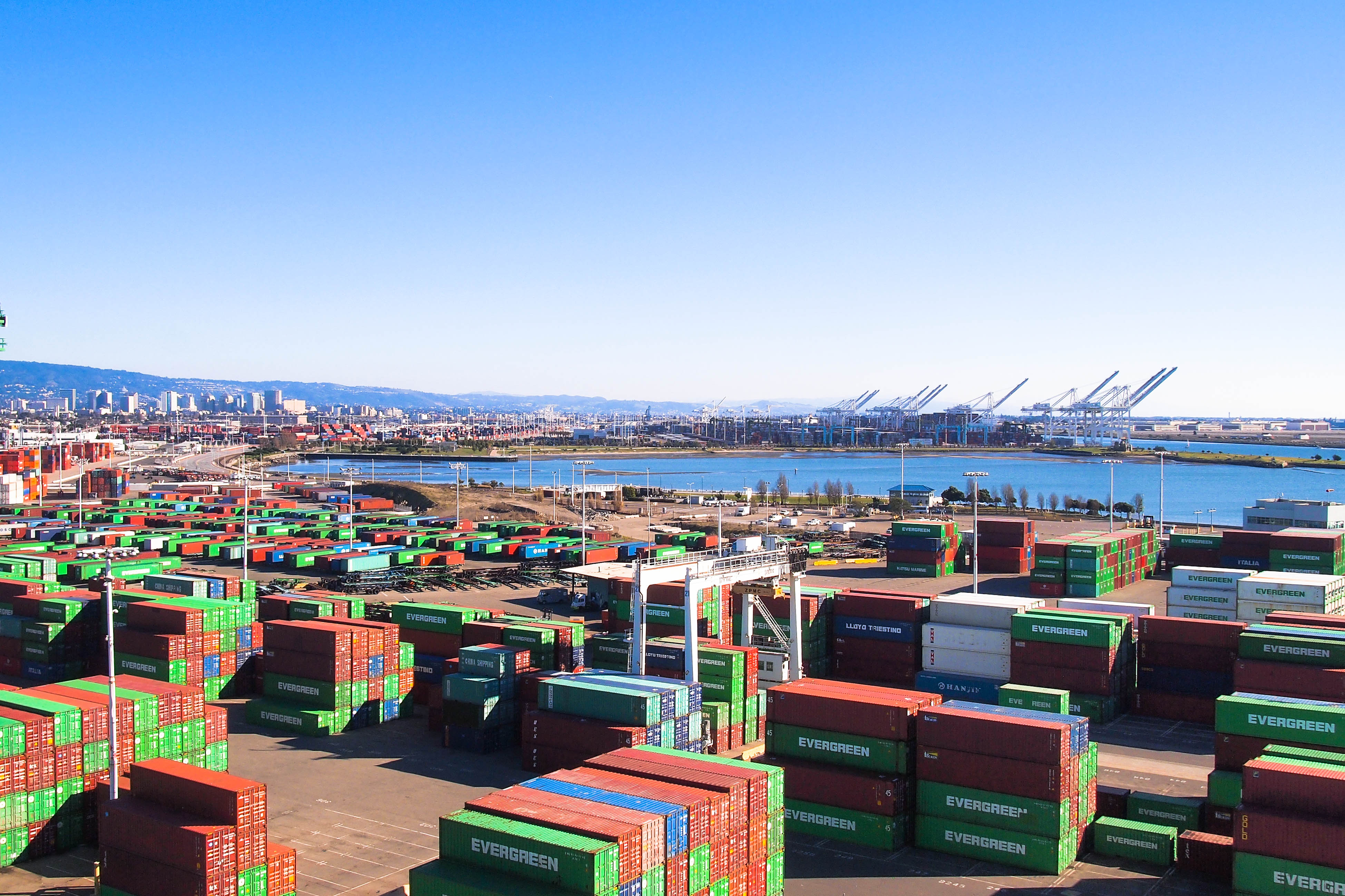
There is a massive traffic jam on the ocean, and the Ever Cthulhu is stuck in the thick of it. Already, we have been delayed for almost two weeks: the ship stayed for five days longer than the forecasted two in both Oakland and Los Angeles, and is expected to be in Tacoma for ten. Regularity, it turns out, can no longer be expected in the logistics industry, and my 26-day trip on the Ever Cthulhu is turning into a 40-day one. All along the West Coast, ports and berths have been choked with vessels in every terminal, and waiting ships have crowded into anchorages for days in far higher numbers than the captain has ever seen. Imagine the ripple effects of all this congestion: if a single ship takes six days longer than the usual 2.5 to be unloaded at berth, and ships that have been waiting experience those same delays when their turn at berth arrives, those backlogs reverberate outward in unfathomable ways, affecting ships’ travel times to other ports around the world, trucking rates inland, air freight pricing, rail service delays across the U.S., and the availability of empty containers in China.

The reasons for this coast-wide congestion are unclear. In July, when the current International Longshore and Warehouse Union (ILWU) contract ran out, more than 70 multinational maritime companies and ocean carriers represented by the Pacific Maritime Association (PMA) began to negotiate a new contract with the ILWU for the 29 U.S. West Coast ports in its jurisdiction. The process soon turned ugly. The PMA blamed the increasing port congestion on an organised work slowdown by the union, alleging that the ILWU was deliberately not dispatching enough gangs to the waterfront. The union vehemently denied this, and countered that the PMA was deliberately mounting a smear campaign against them by cutting the number of workers at terminals and cancelling critical night shifts that would speed the cargo operations. The media, of course, lapped this all up, blaming rotten agricultural productions, anchored ships, and delayed shipment arrivals on the ILWU, one outlet going so far as to ask whether longshoremen were “spoiling Christmas”.

Continue reading

The Slow Boat to China

The following post is the first in a series of oceanic dispatches from Disorder member Charmaine Chua. She is currently on a 46-day journey on board a 100,000 ton Evergreen container ship starting in Los Angeles, going across the Pacific Ocean and ending in Taipei. Follow her ethnographic adventures with the tag ‘Slow Boat to China’.


“In civilizations without boats, dreams dry up, espionage takes the place of adventure, and the police take the place of pirates.”

– Foucault, Of Other Spaces

cc_EPL2_IMG_0666

Source: Author

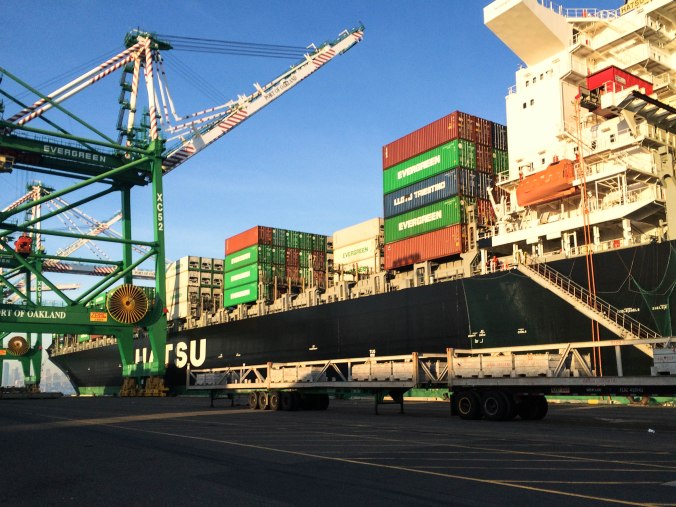
There is uncanny beauty in the monstrous. This, at least, is the feeling that seizes me as I stand under the colossal Ever Cthulhu[1] berthed in the Port of Los Angeles. The ship’s hull alone rises eight stories into the air; even from a distance, I am unable to capture its full length or height within a single camera frame. In describing the ship to my friends and my family, I have sought to make adequate comparisons between its size and more familiar objects: The Ever Cthulhu is 333 meters (1,100 ft) long, 43 meters (141 ft) across, and 70 meters (230 ft) high. It is taller than an eighteen-story building, the Arc De Triomphe, or Niagara Falls. It as long as a line of seventy cars, the Eiffel Tower tipped on its side, two Roman Colosseums, four New York City blocks, or six and half White Houses. I’ve had a lot of practice picturing this ship. Even so, when I am finally at the foot of its immense mass, I can scarcely believe that this monstrosity will be my home for the next 36 days.

I have entered the port’s gateway with very little fuss. As a Singaporean who has lived in the US for the last ten years, I am well acquainted with long lines, laborious checkpoints, and stern homeland security agents who scrutinize my passport with wary questions. This time, I banter with two female security guards at the Evergreen terminal in the port of Los Angeles whose only suspicion is why anyone would want to take the journey I’m on, and board a shuttle bus that drives down a lane flanked by multi-colored containers stacked four high and scores deep, forming long passages along which trucks and cranes stop to pick up their loads. We pass forklifts, spreaders, and trucks with empty chassis, which sweep past in well-oiled synchrony. Less than a 2-minute drive later, I am deposited at the foot of the ship, and I still haven’t shown anyone a passport. Staring up at the vessel, feeling dwarfed by the legs of the gantry cranes that loom far above us, I am directed to a steep and narrow metal gangway ascending seven stories to the deck – the only connection between the ship and land – which shakes and bounces as I drag my suitcase up its 59 steps.

Continue reading

Modelling Worlds: The Politics of Simulation

A guest post from Nathan Coombs who is an incoming Leverhulme Early Career Research Fellow at the University of Edinburgh. He edits the Journal of Critical Globalisation Studies, and is the author of the forthcoming book, Politics of the Event: From Marxism to Contemporary French Theory (Edinburgh University Press, 2015). His current research interests are in financial algorithms and financial regulation. He can be contacted at n.coombs (at) fastmail.co.uk


hft

Over the last decade, scholars have become increasingly interested in what we do when we make use of models and simulations. An emerging consensus – often legitimated through reference to Bruno Latour’s Actor-Network Theory – is that mathematical models and computer simulations are not passive tools but rather a material force in their own right. Agents may employ such technologies in order to achieve pre-determined ends, but the technologies themselves have an effectivity that exceeds their users’ intentions, and set in place path-dependencies that serve to proscribe the range of political and economic possibility.

This concern with the politics of technology cuts across multiple disciplines including Sociology, Communication Studies, International Relations, International Political Economy, and Management Studies. However, the Social Studies of Finance (SSF) has perhaps gone furthest in exploring the practical implications of modelling and simulation technologies. Applying Austinian and Barnesian notions of performativity, researchers in this field have sought to grasp the way in which economic models shape markets, and to dig into the mathematical and technical details that underpin this process.

Donald MacKenzie’s book An Engine, Not a Camera (2008) is exemplary of this approach, and a common point of reference for scholars in SSF and all the aforementioned disciplines. In his analysis of the development and uptake of the Black-Scholes option-pricing model in the 1970s, MacKenzie aims to show how the model’s employment of the efficient market hypothesis – where stock prices are considered to accurately reflect their risk – led to a period in which the pricing of options came to reflect that predicted by the model. The point of MacKenzie’s analysis is not to endorse the neoclassical economic assumptions codified in the model. Rather, it is to point out how models serve to socially facilitate evaluation practices in the face of complexity, uncertainty, and epistemological opacity. On this basis a model can also contribute to financial instability when it is both widely employed and based on assumptions that are confounded by ‘real world’ contingencies.

Continue reading

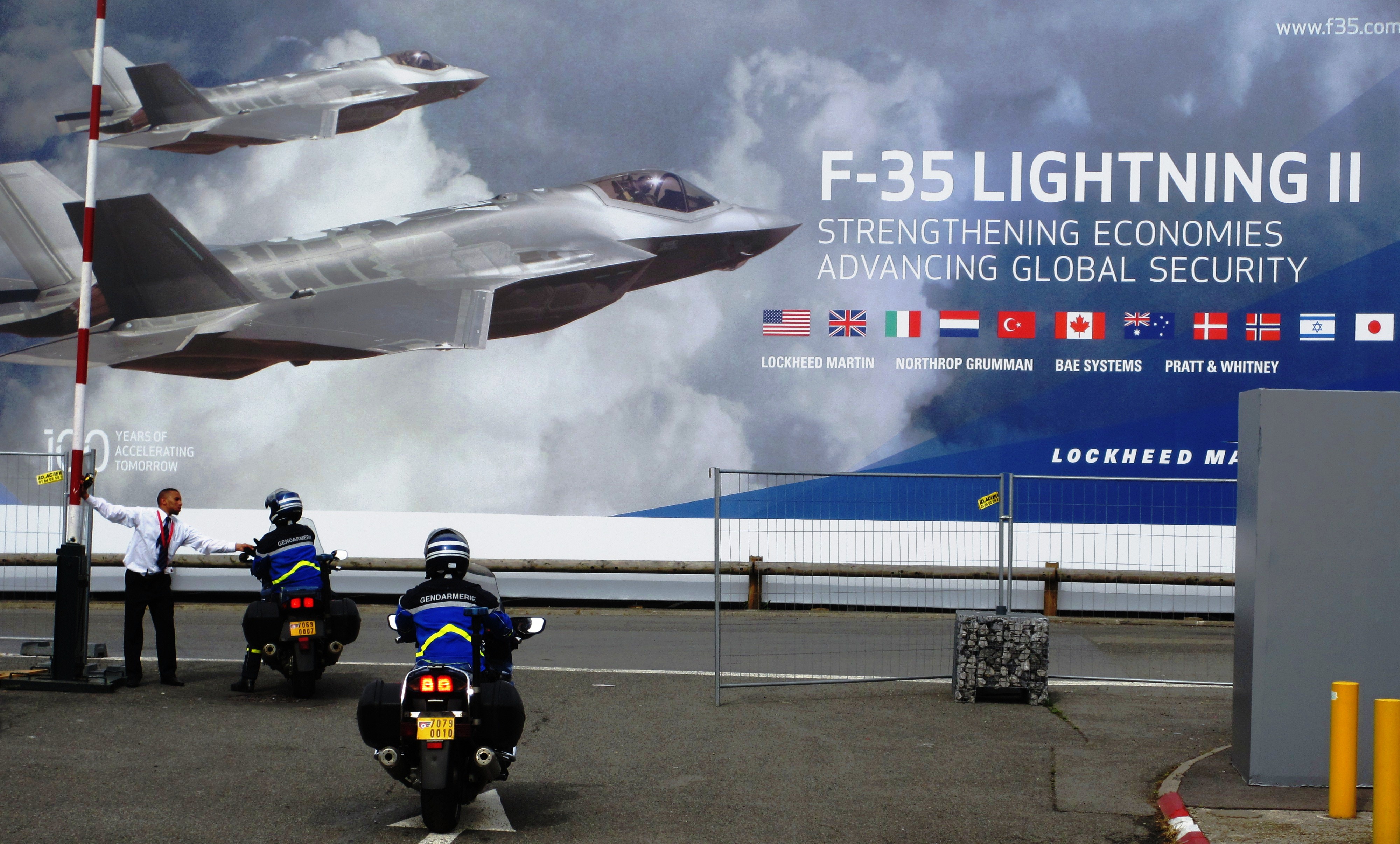
Aircraft Stories: The F-35 Joint Strike Fighter (Part II)

This is the second part of a single post about the F-35 as actor-network. The first part is here 

wbbuca 013

Strike

This word is meant to convey the F-35’s identity as a proper multirole fighter, a machine rigged to conduct both air superiority and strike missions, the latter defined as tactical attacks on a ground or naval target with a particular focus on “initial blow” or “first day of attack” operations.  All three variants of the F-35 fighter family hold this capability: the conventional A version designed for use by the U.S. Air Force and allied air forces; the Short Take-Off, Vertical Landing (STOVL) or B variant for the U.S. Marines Corps as well as the UK’s Royal Navy, as well as the conventional carrier-based edition for the U.S. Navy, the F-35C.

Airstrike, or strike for short, shapes, and is shaped by, the evolving structure of international politics in important ways.  Pax Americana, defined in terms of successive hegemonic or hierarchical international and regional orders centered on Washington, D.C., can be regarded as an assemblage made possible by the so-called global strike, among other smaller assemblages.  Since the middle years of the twentieth century warplanes have transformed themselves into multirole, fighter-bomber machines capable of ever-greater lethality and survivability.  What makes U.S. strike aircraft especially formidable is the surrounding stuff—assets like ballistic and cruise missiles plus countless “force enablers” such as ground bases, aircraft carrier groups, logistics depots, a large tanker force and aerial refueling know-how, interlinked information and communication systems, the ability to generate and sustain the use-of-airspace deals on relatively short notice and so on.

Continue reading

Aircraft Stories: The F-35 Joint Strike Fighter (Part I)

bourget

How big is the F-35 Joint Strike Fighter? By one set of measures, it is three times bigger than the Eisenhower Interstate Highway System, ten times bigger than either the Apollo Project or the International Space Station or Hurricane Katrina, or one hundred times bigger than the Panama Canal. These comparisons are only moderately outlandish. US$1.45 trillion is the Pentagon’s own December 2010 estimate of lifetime operating and supporting costs for the 2,443 copies of the F-35 currently on order by the United States government, which we can then compare to the known price tags, in 2007 dollars, of these five projects.[i] Costs—also variously prefaced as procurement, actual, sunk, fly-away, upgrade, true and so on—and their contestations are central to a discourse of accountancy that surrounds all projects that require large-scale mobilization of public power. But enormous as they are, these numbers still cannot capture the size of this particular weapons program. To understand just how big the F-35 is, I wish to suggest in this two-part post, we ought to conceive it as a proper assemblage—a heterogeneous association of human and nonhuman elements that is at once split, processual, emergent, and, most importantly, constitutive of the modern international.

Continue reading

Struggling with Precarity: From More and Better Jobs to Less and Lesser Work

Once a French neologism, precarity is now a household name describing in equal measure the fate of low-wage, part-time holders of bullshit jobs, seasonal and migrant workers, creative entrepreneurs of the self, “graduates with no future,” foreclosed homeowners, debtors and increasingly even segments of the salaried bourgeoisie. At its most basic, a term for the economic uncertainty and existential angst associated with the dissolution of fixed employment, precarity also suggests the disintegration of stable societal bonds, occupational identities, social protections and a sense of entitlement and belonging characteristic of the old proletariat. In short, then, precarity is the experiential dimension of the crisis of the society of work dating back to the 70s and 80s.

Diego Rivera Detroit Industry Mural 1923

Increasingly advanced production methods, introduced since the 70s to tame shop-floor insubordination as well as reap the untapped potentials of global competition, have caused a decline in growth rates, which no amount of privatization, financialization and austerity measures has been able to make up for since. Andrew Kliman and others have argued that it is this real crisis in capitalist productivity that lies at the heart of the current slump, and not simply unrestrained financial gluttony, as the more short-termist analysis offer. As capitalist production develops, machines replace people and the rate of profitability, which is given by the human labor theory of value, drops, causing sluggish investment and slow growth. This is essentially Marx’s theory of economy crisis, aka the tendency of the profit rate to fall, but also a story we should know by now from Autonomist accounts about the transition from Fordism to post-Fordism (Hardt and Negri) or from profit extraction to rent-becoming-profit (Christian Marazzi), and from David Harvey’s accumulation by dispossession.

If we shift the scale of our focus from capital to labor, though, we see that the crisis of capitalist productivity is, in fact, a crisis of work or a crisis of a society built around work as the only legitimate point of access for income, status and citizenship rights. Again, Marx is instructive here: “Capital itself is the moving contradiction, [in] that it presses to reduce labour time to a minimum, while it posits labour time, on the other side, as sole measure and source of wealth.” Socially necessary labor is reduced to a minimum (through things like automation, outsourcing, and financialization) at the same time that human participation in paid work continues to remain our only measure and source of wealth. Work doesn’t disappear as a result. It becomes fragmented, devalued, and wasteful, ceasing to provide a social identity or a collective language of experience.

Image

Precarity is a word for our time. It describes the slow disintegration of the historic bond between capitalism, democracy and the welfare state. But it also entails a rallying cry to reverse this situation. Continue reading

(Dis)Embodied Methodology in International Political Economy

Nicki Smith

Following some previous discussion on similar themes, a guest post by Nicola Smith. Nicki is Senior Lecturer in Political Science at the University of Birmingham and has published on a diversity of issues surrounding globalisation and social justice. She is currently writing a monograph on Queer Sexual Economies for Palgrave and has published articles in Sexualities, Third World Quarterly and the British Journal of Politics and International Relations. Other related publications include Body/State and Queer Sex Work. The following piece has been developed as part of a book project on methods in critical International Political Economy, edited by Johnna Montgomerie, and a version of it was recently presented at the semi-plenary session on ‘The body in/and international relations’ at the 8th Pan-European Conference on International Relations in Warsaw.


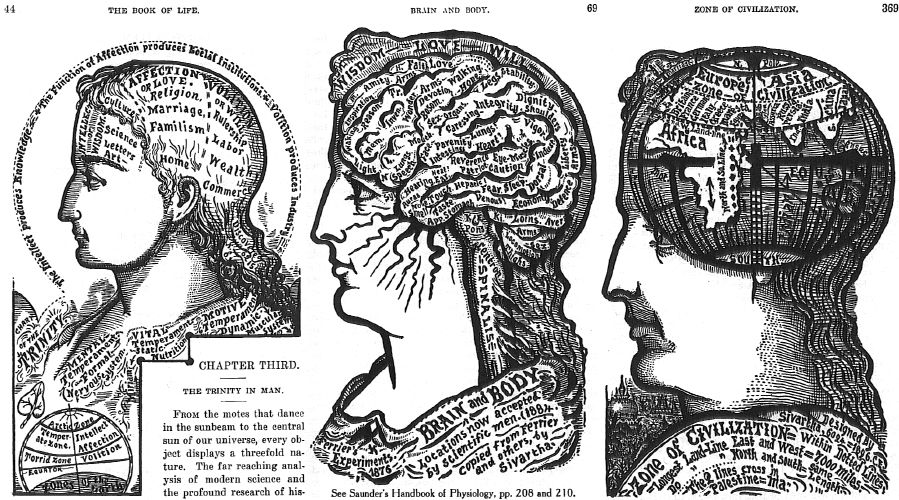
The Book of Life - Brain and Body - Zone of Civilization

There was a time when I understood International Political Economy (IPE) to mean ‘bodies of thought’ (realism, liberalism, Marxism, etc.) and so, not knowing which body to have, I tried each of them on for size. Realism didn’t fit (too tight); liberalism felt wrong (unethically-sourced materials); Marxism looked good (but I lacked the discipline to maintain it). Social constructivism suited my friends and felt pretty comfortable, so this was the body I decided to have. As a social constructivist, I did a lot of work on ideas (‘discourse’) and thought a lot about other bodies of thought. But what I didn’t do was to engage in thought about bodies. Bodies didn’t seem to happen in IPE; they appeared to exist somewhere else entirely, to be accessed only via metaphor (as in the above description) but always somewhere ‘over there’, never as the living, breathing stuff of the discipline. Bodies – or so I assumed – were off the cards.

In other contexts, though, I was thinking a lot about bodies: from the personal (‘will my body be able to produce another body, a child?’) to the professional (‘do I under-perform in job interviews because I gesticulate wildly when nervous?’) and the political, too (‘the government should de-criminalise the sale of sexual services’). Indeed, while I was writing a PhD and then monograph about states and markets – globalisation, economic development and social justice in the Irish Republic – it was bodies that I loved talking, reading, arguing about. I just didn’t see them as ‘IPE’.

In fact, bodies had been there all along; I hadn’t seen them because I hadn’t been looking.

Continue reading

Obama’s Ohio Report

My Ohioans did it again.  In every election since 1964 (and almost every time since 1904), the winner of this state ended up taking the presidency – hence the clichés “America’s bellwether” and “as Ohio goes, so goes America”.  Having spent six years of my life studying politics at The Ohio State University not so long ago, I can’t help but identify and sympathize with Buckeye voters, a group of people that every four years gets to decide the fate of the U.S. and, some might add, the world. This is a heavy burden for many reasons, including being exposed to the fanfare of presidential candidate fly-ins (82 of them this time), thousands of attack-counterattack TV ads (that typically target only “undecideds” and/or “independents”), as well as dozens of phone calls and door knocks reminding you to get out and vote for the right person (in the final week of the 2008 campaign, Team Obama said it knocked on a million Ohio doors per day).

The phrase “key battleground state” that every news outlet likes to attach to Ohio refers to its electoral-college vote clout (the 2010 Census reapportionment gives it 18 votes until 2020) as well as its recent record in presidential elections, which is marked by small margin-of-victory numbers (4.6 percentage points in 2008, 2 in 2004, etc.). The state has a remarkable red-blue balance overall; since 1998, the state voted for three Democratic and three Republican candidates each). Also remarkable were the results of pre-election state polling in October, which showed a tied (or at least tightening) race between President Barack Obama and his GOP challenger Mitt Romney (see, for example, the discussion of the RCP poll of polls from 30 October).

To be sure, electoral pathologists – those friends of yours obsessing about assorted ‘paths to presidency’ – had probably explained to you that each candidate could have won an electoral majority without Ohio (e.g. Obama would have had to grab one or two bigger states considered tossups plus all reliably blue states, and Romney would have had to hold onto all normally red states while pulling off multiple upsets elsewhere). This type of electoral math is both fun and fantastic, but reason tends to swiftly restore the status quo ante: it’s all about “Ohio, Ohio, Ohio!

Tuesday’s drama ended right after 11 pm Eastern Time, when the news organizations called Ohio for Obama; less than two hours later, Romney conceded the race.  To examine this outcome, let us begin with two issues identified by the media as key to this election: the auto and coal industries, and the thousands of jobs each of them provides to the state. (Compare, The Globe and Mail’s Ohio postcard of 25 October or The Economist of 27 October to the endorsement editorials in The Columbus Dispatch [Romney], The Cincinnati Enquirer [Romney], The Plain Dealer [Obama], or my favourite OH newspaper, The Blade [Obama]). In a nutshell, while some Ohioans liked what the president did with the former (that 2009 bailout of GM and Chrysler helped the manufacturing sector in the northern part of the state), others hated what he did with the latter. (Being viewed as too green on energy was expected to hobble Obama’s re-election chances in the coal-mining counties of the Appalachian part of the state).

Whatever the explanatory merits of simple storylines like these, unofficial returns bear this one out. The website of Ohio Secretary of State’s office has Obama winning by about 2 percentage points, which is lower than in 2008. The president indeed carried the populous Cuyahoga County (centered on Cleveland) plus a string of smaller counties in the northeast by sufficiently large margins, while Romney won large parts of the coal country.  What went on elsewhere in the state was more important, however. Though Romney ran strong in most traditionally Republican rural areas, he severely underperformed in the remaining half dozen big urban counties, which account for almost 40% of the statewide vote. Even Hamilton County (Cincinnati), historically a GOP bastion, went to Obama by about 20,000 votes again. (For the county-by-county comparisons over time, see Rich Exner’s page at The Plain Dealer; U.S. politics junkies might also consult a map of the 2008 precinct-by-precinct results provided by Stanford’s Spatial Social Science Lab).

Demographically, Obama probably carried the state in the same manner as he did four years ago.  How many Ohioans voted will not be known until late-arriving absentee ballots and provisional ballots are counted, but the turnout (about 68%) can safely be described as well above average. This surely helped the president: by getting its base to register and ballot (including via early in-person voting), the Obama campaign succeeded in maximizing Ohio’s Democratic potential once again (against a stream of ‘voter fraud’ legislation targeting qualified minority voters). What exit polls seem to be suggesting is that the president bested his challenger among female, young, college-educated as well as minority voters.  And what of Ohio’s white working class males (those without a university degree), who sit at the center of any “annoying, all-purpose pet theory” of U.S. presidential elections? Here, it appears that the president succeeded in avoiding a large margin of defeat, and it will be interesting to see why. The success in capitalizing on Romney’s casino capitalism sounds like a plausible hypothesis (and a nice extension of the auto bail-out storyline); but let’s recall that in 2008 Obama won 56% of votes from union households, which was lower than the national average.

What about the role played by ‘non-fundamentals’, specifically Obama’s race? Estimating this particular effect is challenging at any level of analysis, but both survey-based and non-survey-based studies have suggested that in 2008 Obama lost about 5 percentage points of the national popular vote due to racial intolerance on the part of some voters. A meaningful decline in this number would be my candidate for a feel-good story of the 2012 election.


Note: Cross-posted at the CIPS Blog, and meant to be read in conjunction with “Pre-Election Facebook Rants, #652

Eurocentrism, Racism: What’s In A Word?: A Response to Bowden, Sabaratnam and Vucetic

The fifth and final post in our symposium on John M. Hobson’s The Eurocentric Conception of World Politics: a reply from John himself, responding to the commentaries from Meera, Srdjan and Brett. John’s original summary post is, of course, still available too.


Introduction: All for one and one for all?

I would like to begin by thanking most sincerely my three blog interlocutors for having gone to the trouble of reading my new book, never mind taking the time to write up their extremely thoughtful and interesting blog responses. Of course, the cynic reading all of this might be forgiven for thinking that such a blog forum is hardly a ‘testing environment’ for Hobson’s book, given that his interlocutors are either postcolonialists or at least influenced by postcolonialism and have presumably, therefore, been “cherry-picked” for their potentially sympathetic tendencies. Even the titles that they have chosen, so the cynic might think, would appear to be symptomatic of this, with Meera Sabaratnam’s piece proclaiming – extremely generously I must concede – that my book has succeeded in ‘blowing up the disciplinary citadel of International Relations’, while Srdjan Vucetic’s title projects even further the meaning of the front cover of my book to that which I had intended, suggesting that IR is a ‘foolish discipline’ given his resounding agreement that it suffers from a pervading Eurocentrism. In this vein it might be thought that Brett Bowden’s title – ‘Eurocentrism and More’ – chimes in with yet another wholehearted rendition of the now familiar chorus of ‘IR is a Eurocentric discipline’. So why the fuss about all this and is there much point in reading on? For it would seem that we’re all agreed and there’s nothing to debate, right?

Well no, not quite all for one and one for all. Continue reading