Ethical Encounters – Parsing the Pluriverse: empathy and deliberation in a post-MDG ethics of international development

DSC00921

Our fifth post in the forum is a guest post from Diego de Merich. Diego got his PhD from LSE and is now an LSE 100 Fellow and a research associate at the Institute for Intersectionality Research and Policy at Simon Fraser University. His work focuses on human empathy and the ethics of care in service of alternative frameworks for International Development (post-Millennium Development Goals). For earlier posts in the forum do look for Myriam’s here, Joe’s here, Elke’s here and Jillian’s here. Kim’s discussion post can be found here.


With the Millennium Development Goals (MDGs) set to expire in 2015, focus has turned to a new framework which might replace them. Heavily influenced by the Human Capabilities Approach (HCA), the MDGs and the recently-proposed ‘Golden Thread’ frameworks posit a relatively monolithic, liberal understanding of what ‘development’ is meant to signify. As such, each new iteration of an international agreement on development seems destined to miss the potential for more creative and context-appropriate political action in response to the shortcomings of the approaches which preceded them. Using as a starting point Arturo Escobar’s Encountering Development, I suggest that his notion of the pluriverse – which stands in opposition to the ‘universal and homolingual thrust of modernity’ – both challenges the post-2015 discourse and implies the need for different ethical practices upon which ‘development’ might instead be re-cast. Realisation of the pluriverse and notions of care, responsibility, democracy and pluralism would require that closer attention be paid to narrative voice and to the role that empathic processes should play in the deliberation surrounding development.

The ‘promise’ of empathy in pursuit of a post-MDG development practice can be understood by contrasting two approaches to deliberative democracy – one which would hold the HCA as its guiding ethical impulse and one which suggests that an ethics of care and responsibility in international development requires a better appreciation for the role that empathy and narrative play in understanding the development possibilities and realities of the constituent elements of Escobar’s pluriverse. Here, the focus of ethical enquiry is shifted from a more abstract notion of social justice to a recognition of shared/lived vulnerability, alternatively-imagined ways of being and thus, to an ‘international development’ which is differently understood and practiced.


Untitled Continue reading

Ethical Encounters – The Special Ambiguity of Humanity

This is the second post in a series reflecting on contemporary global ethics that was originally organised as the Ethical Encounters in a Changing World panel for the 2015 ISA convention in New Orleans. Myriam Fotou’s original post can be accessed here, Elke’s is here, and Jillian’s here. Kim’s discussion post is here.


Encountering Humanity

Humanity is special. This sounds like a very conventional claim. We are used to hearing appeals to our common humanity. The appeal works on the presumption that there is something in human beings that we not only share as humans but which also calls us to respond in particular ways when we encounter each other. We are said to have human rights that exceed any of our particular belongings to states, faiths or ethnicities. We intervene to protect human beings beset by violence and catastrophe, disregarding the norms of sovereignty that prevent outside interference. We appeal to our common humanity to solicit resources for distant strangers, often depicted in their suffering as vulnerable human bodies to shake us from our everyday disregard. Humanity is appealed to as a matter of routine, but what does our humanity consist in?

Reflection on the meaning of humanity is less common than our appeals to it, yet this deeper rumination also comes with practiced ease. Knowing what our humanity is has long been a matter of divining what is distinctive about human beings and then moving to grant our distinctively human capacities an exalted status, claiming it as our essential nature. Humanity, as something to which we appeal, is conventionally a judgment on what is prized in human nature, marking out what is elevated amongst all the contradictions of our all too human nature.

Huge Manatee

Humanity then works not only as an appeal – “for the love of humanity!” – but also as a standard to which we should be held. Knowing what is properly human provides a guide to our interactions. What do we owe each other? To be treated in accordance with our essential nature. In a typically modern and Western formulation: to be treated as rational beings, to have our individual freedom respected. These sorts of claims have long echoes and many sources. They also have dissonant reverberations because the standard of humanity not only marks off the human from the animal or the divine, but also differences between those human beings recognised as fully and properly human and those denied recognition, and in their denial degraded as sub-human, primitive and savage. This exclusion from full humanity of the non-human negates the appeal and standard of humanity, opening up the non-human to forms of violence, degradation and abuse. Women, savages, barbarians, Jews, Muslims, Asians, Africans, queers, lunatics, cripples; a brutal list of exceptions to the defining standard, such that even its partial enumeration raises questions about humanity as a standard. Nearly as insidious is the way the self-appointed arbiters of humanity use such distinctions to exculpate themselves. Those who fight for humanity against savagery are always noble in their own eyes. Continue reading

International Relations is Not an American Discipline (Well, Maybe It Is, A Little)

Helen TurtonA guest post on the state of the discipline by Helen Louise Turton. Helen is a University Teacher in International Relations and Security Studies at the University of Sheffield. She received her PhD from Exeter in 2013 for a dissertation on ‘The Sociology of a Diverse Discipline’, and next year Routledge will publish her International Relations and American Dominance: A Diverse Discipline. She also has work on marginality and hegemony in IR forthcoming in the Journal of International Relations and Development (with Lucas Freire) and is beginning a larger project on ‘Rereading European IR Theory’ (with Knud Erik Jørgensen and Felix Rösch). Helen is also the co-convenor of the BISA Working Group on IR as a Social Science. If you wish to join the working group please follow the link.


Gary Hilliard

It has been said on more than one occasion that International Relations is an American dominated discipline, or that the US IR community is hegemonic. In fact, one could even go so far as to say that the disciplinary image of IR being dominated by the US has become a disciplinary truism, with many academics reproducing this characterisation time and time again. The TRIP survey that has just been sent to academics in 33 different countries even poses the question “Please indicate the extent to which you agree or disagree with the statement: The discipline of international relations is an American dominated discipline” to ascertain the degree to which IR scholars around the globe feel dominated by the US. Furthermore, other empirical surveys of the discipline have sought to demonstrate the seeming continued disciplinary dominance of the American academy, pointing to the different ways in which the US is able to exercise its disciplinary hegemony.

In my new book International Relations and American Dominance I challenge the claim that IR is an American dominated discipline because the underlying question is itself deeply problematic. Asking whether IR is dominated by the US presupposes a yes or no answer. We are therefore presented with an either or option which overlooks the possibility that the discipline may be dominated by the US in some ways but not in others. This then leads us to unpack what it means to be dominant. When scholars claim that IR is an American dominated discipline we first need to assess how they understand disciplinary dynamics and relationships of dominance. Are dominance claims being made because it is perceived that American methods populate the discipline? Or do certain American theories dominate global IR? Perhaps the US is stated to be dominant because it is American IR scholars who are in positions of power? Maybe scholars have argued that IR is dominated by the US because there are more American IR scholars than those from other national IR communities? Or does the discipline subscribe to an American agenda and American understanding of what ‘international relations’ is?

The reality is that all these grounds have been used to state that the US IR community is hegemonic. Academics have implicitly drawn on different understandings of dominance and explicitly drawn attention to the different implications of US dominance, but often this is done without first clarifying what is meant or implied by American disciplinary dominance. Often scholars are speaking about one form of dominance on one page of a text, and then refer to a different understanding on another page. What this means is that the word dominance when in the context of claims stating ‘IR is an American dominated discipline’ or ‘IR is no longer an American enterprise’ is used in many different ways, taking on many different forms and measured in numerous modes despite the fact that it is presented as ‘one size fits all’ form of dominance. What this means is that although certain scholars may agree that the US is dominant they may be talking at cross-purposes about how and why America dominates. Whilst there may be agreement in one sense, there will be different answers to the crucial questions of how and why America allegedly became and remains disciplinarily dominant.

Continue reading

Want to Deprovincialize Your Political Theory Syllabus a Little? What I Learned at APSA

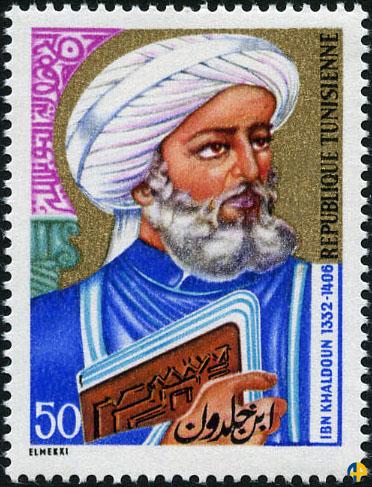
ibn_khaldoun_timbr

American Political Science Association (APSA) annual conventions typically offer a rich selection of pre-conference short courses. This time I went to “Deparochializing Political Theory.” Sponsored by Steven Johnston and Michaele Ferguson and organized by Emily Beausoleil, this course offered two excellent sessions on how to enrich your political theory syllabus with ‘non-western’ content. Loubna El-Amin spoke about Chinese political thought, and Michaelle Browers on Arab and Islamic political thought. These are my course notes from last week, in a Q&A form. My gratitude goes to Michaelle and Loubna for letting me copy/paste from their course materials.

Continue reading

How Many Buddhists Are There in Northern Ireland?

Danny Boyle’s Olympics opening extravaganza was many things, but one thing it was not was a history lesson. If you were looking for any acknowledgement of the place of empire in the British national narrative, you would have had to concentrate quite ferociously during the hauntingly beautiful Abide With Me section, sung by Emeli Sandé, to see Akram Khan’s dance troupe mime the whipping of slaves (1:21:04 into the BBC’s coverage of the event). It’s possible that I simply imagined this because I was looking so hard. Anachronistically, moments before, Empire Windrush had arrived on stage, without context, like a Caribbean cruise ship blown off course (Columbus revenge). Two moments that you would have missed if you’d blinked, leaving you mystified about how the opening ceremony, Team GB, and indeed Britain itself had become such a multiracial spectacle.

In the reams of mostly laudatory commentary that has followed the ceremony, some have suggested that it might not have been appropriate to stage imperial conquest and plunder on an occasion that was meant to welcome the world to London. The insinuation that opening ceremonies should be mind-numbingly ‘fun’ is belied precisely by what made this one meaningful. Boyle deserves credit for trying to do history—any history at all, however potted—and indeed what makes his exclusions telling and problematic was precisely the emotional depth and maturity with which he was able to stage historical trauma (the Industrial Revolution, the World Wars, 7/7) and individual vulnerability (children in hospital, the references to children’s literature evoking the darkness of growing up) without detracting from the spirit of celebration. Yet some traumas are clearly easier to commemorate, some dead easier to remember, than others. Boyle’s history was curiously blinkered, resolutely domestic, almost wilfully blind to anything that happened outside this ‘green and pleasant land’. (An alternative potted history entitled ‘How to Keep Your Land Green and Pleasant’ might read ‘Step 1: export surplus population, preferably of the lower orders, preferably to places quite far away; Step 2: export dirty industries; Step 3: repeat step 2 for as long as you are able to.) The problem may have begun with the title—Isles of Wonder—that foreshadowed the geographically circumscribed view of history with which we were presented. Indeed the extraordinary, infuriating and continuing dilemma of British identity is that only the cultural right does geographical justice to Britain’s role in forging the modern world, albeit in registers of racism and supremacism. If Boyle’s historical imagination is anything to go by, the left, it would seem, prefers amnesia.

Continue reading

What We Talked About At ISA: @Hannah_Arendt – A Hypothetical Exploration of Hannah Arendt in Cybersphere

‘Social Media Drawing’ by Tjarko Van Der Pol

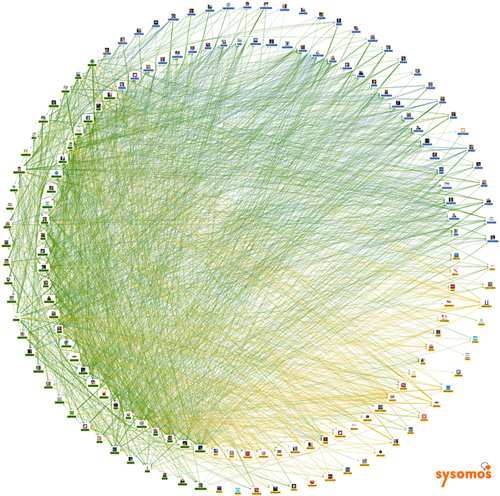
This year’s general conference theme for ISA in San Diego centred on ‘Power, Principles and Participation in the Global Information Age’ and, expectedly, gave rise to a proliferation of papers on the value, consequences and effectiveness of platforms such as Facebook, Twitter and other social media in the context of international relations and global politics. Having spent the past three years trying to disentangle the thoughts of one of the more intriguing political theorists on power and politics – Hannah Arendt – it has always struck me that she might have had a word or two to say about the supernova that is social networking as such. I couldn’t help picturing her vigorously engaging with a medium like Twitter, firing off Tweets to relevant interlocutors – @karlmarx no, I think that’s where you’re wrong and dangerous: #history is not ‘made’ by men and #violence not the midwife for a new society! Perhaps even: Yep: RT @karljaspers When #language is used without true significance, it loses its purpose as a means of communication and becomes an end in itself – hashtag and all. Or, on the other hand, flatly dismissing platforms such as Facebook as vanity spheres of little or no substance for political interaction. So I pitched in my paper as a playful thought experiment as to how she might have loved or loathed online social networks as viable platforms and public spheres for the creation of power and conduct of politics proper. This is a somewhat abbreviated version of the full-length paper, which can be found here.

The potency of social networking sites, as channels of communication and a medium for people from all corners of the world to meet in a virtual realm and engage with shared ideas – political or otherwise – has become indisputable. Not least since the Arab Spring uprisings of 2011, where bodies and voices were galvanized to part-take in various acts of revolt and revolution in Egypt, Tunisia, Syria and Libya, facilitated through online networks like Twitter and Facebook, have people discovered the enormous potential for a transnational coming-together in a shared cause. These networks thus appear to present themselves as a global public realm in a virtual space, transcending geographic limitations and boundaries, broadening the scope of possible political impact considerably. But with such a young medium it is perhaps wise to take a step back from the hype and ask how effective are these networks in creating actual political power? In how far can we understand the possibility to mobilize and plan in a non-spatial realm, through social networks, to constitute the generation of power and the actualization of political action? My paper sought to address these questions with an Arendtian lens – for better or for worse.

Inside the Political Twittersphere. Sysomos

Continue reading

Human Rights Contested – Part II

This is a continuation of my previous post

Who Are Human Rights For?

All of the authors take account of the ambiguous history of human rights, in which they can be said to have inspired the Haitian, American and French revolutions, while also justifying the counterrevolutionary post-Cold War order dominated by the United States. Yet recognising this ambiguity without also acknowledging the distinctive reconstruction of contemporary human rights that makes them part of a neo-liberal international order and the unequal power that makes such a quasi-imperial order possible would be irresponsible. A primary contribution made collectively by these texts is that they clearly diagnose the way human rights have been used to consolidate a particular form of political and economic order while undercutting the need for, much less justification of, revolutionary violence. Williams says of Amnesty International’s prisoners of conscience, who serve as archetypal victims of human rights abuse,

the prisoner of conscience, through its restrictive conditions, performs a critical diminution of what constitutes “the political.” The concept not only works to banish from recognition those who resort to or advocate violence, but at the same time it works to efface the very historical conditions that might come to serve as justifications – political and moral – for the taking up of arms.

Human rights, then, are for the civilised victims of the world, those abused by excessive state power, by anomalous states that have not been liberalised – they are not for dangerous radicals seeking to upset the social order.

Continue reading

Dalston: A Worm’s Eye View

(…cheers…) Please welcome, in your traditional way, the latest in the expanding list of Disorder-ed contributors. Rahul Rao, currently Lecturer in International Security at SOAS, author most recently of the fascinating Third World Protest: Between Home and the World, as well as a number of articles on cosmopolitanism, world order and empire. He is currently working on projects aimed at provincialising Westphalia and introducing queer theory to IR.


There is a great deal that I don’t understand about the world, but I do know a little about that part of it where the Kingsland Road becomes Stoke Newington Road (London N16/E8, if that’s how you work). As the dust clears from what BBC Panorama recently called The August Riots – as if to distinguish them from those to come in September, October, November and December – it is difficult to walk around without wondering whether everyone is judging everyone else on the basis of age, race, class and sartorial preference. Multiculturalism in Dalston can sometimes feel like a polite version of separate-but-equal with the hipsters (mostly white, but equal opportunity for those with the right facial hair, skinny jeans, loafers with no socks, university education, fixie bikes and Apple accoutrements) patronising hipster cafés, the Turks hanging out in members-only social clubs, the Caribbeans in venues such as Open the Gate. Everyone goes to the Turkish restaurants, but gastronomy has always been the least challenging site for racial mixing. As gentrification has proceeded apace – a phenomenon driven by middle class professionals like myself – I cannot help but notice that Dalston Superstore is always full and the Caribbean restaurant in Centerprise (East London’s oldest and most famous black bookshop) often empty. (Oddly, the spell check on this blog thinks that the word ‘gentrifying’ does not exist and suggests replacing it with ‘petrifying’. There might be something to that.)

On August 8 when the riots reached Hackney, Dalston hit the headlines as the place where the riots caused little damage, its Turkish and Kurdish business owners much feted for their role in beating back the rioters. I have to confess to an immediate reaction (always a betrayal of one’s class identification) of gratitude to a local community of people who trusted and knew each other well enough to work together at a moment’s notice – a community to which I do not belong, but on whose efforts I was able to free-ride (like Zoe Williams, I watched these events on a live feed, it never having occurred to me that I could have gone on to my high street to defend anything). In the cold light of dawn, second thoughts: when the facade of the Leviathan had cracked, security had become a function of ethnic solidarity. Welcome to Sarajevo.

The reaction of the local business owners in Dalston poses two questions. Continue reading

Reading violence: what’s political about the London riots(?)

To reiterate somewhat, there is a politics to these riots. Panicking, political leaders and many others, have queued up to deny this, labelling it “pure violence,” “criminality, pure and simple“, or “mindless violence“. Over and over again, the distance between the rioters and the ‘community’ or ‘Londoners’ has been set up and reinforced. This is not without some public backing. After all, many Londoners are, rightly, angry, frightened, upset, frustrated, shocked and saddened by the sight of homes and businesses not just smashed but burning voraciously into the night whilst looters showed off their new gear. We were a world away, it seemed, from the specific, dignified, coherent demands for justice being made by Mark Duggan’s family and their supporters. Many asked themselves: what do they want? The answer seemed to be: trainers. What could be political about stealing from Foot Locker?

First things first. This post is not about constructing a narrative of social apologia via moral determinism – i.e. the idea that people couldn’t help themselves, or were bound to do it by their economic status etc. Between this and the ‘mindless violence’ line of argument, there are plenty of fools (sadly many, powerful, wealthy, and in charge of your country) trading in pretty stupid accounts of human behaviour and social causation. Continue reading

What We (Should Have) Talked About at ISA: The Politics of Humanity and The Ambiguous History of Human Rights – Part III

This is the final post in a series laying out a set of interrelated arguments I presented at this year’s ISA conference. The first post looked at the nature of human rights claims, while the second considered how rethinking human rights in terms of contestation over the ambiguous meaning of humanity as a political identity affects our understanding of the history of human rights. In the final post I suggest a positive ethos, enabled by attending to human rights in terms of agonism and pluralism.

Human Rights as a Democratising Ethos

In part 1, I analysed human rights as an attempt to offer a universal moral justification of political authority. This is a perennial political question, but one which is reconfigured by talk of “human rights”, as the political identity of humanity opens up question over who is included in political community, as well as the boundaries that define such communities. The stakes of the question of human rights – offering a universal account of who is included as a rights bearing member of the political community, and the legitimate order of that community – lead to a profound anxiety over justifications. The moral reasons we have to uphold human rights should be weighty, powerful and certain – or so the logic dictates.

What emerges from this logic is an essentially legislative understanding of human rights, in which moral principles give justification for the necessary and minimal law to grant legitimacy to the universal vision of both individual and community. If this moral law is to be more than an imposition of power, a merely effective positive law, it must involve a universal moral appeal that cannot be denied in order to secure human rights as the necessary law of legitimate authority. In this regard Habermas’ defense of moral universality and human rights are indicative and sophisticated examples. (Habermas 1992, 1998)

Continue reading