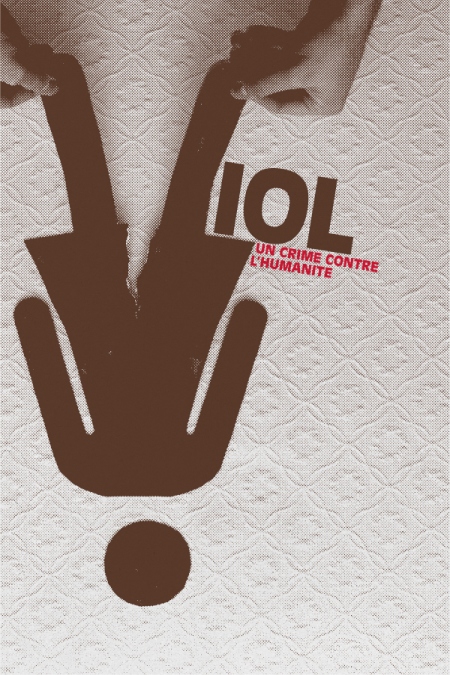
How is Rape a Weapon of War?

This post summarises a piece for the European Journal of International Relations just published online. An inconsequentially different pre-publication version is also available for anyone unable to breach the pay wall.

UPDATE (8 March): Sage have kindly made the full EJIR paper open access until early April, so you can now get it directly that way too.


I’m sure you have reasons
A rational defence
Weapons and motives
Bloody fingerprints
But I can’t help thinking
It’s still all disease.

Fugazi, ‘Argument’ (2001)

‘Weapon of War’ could be many explanations and I’m not sure of any of them.

UNHCR official, Goma, Democratic Republic of Congo, June 2010

1. War Rape in the Feminist Imaginary

Rape is a weapon of war. Such is the refrain of practically all contemporary academic research, political advocacy and media reporting on wartime sexual violence. Once considered firmly outside the remit of foreign policy, rape is today labelled as a ‘tactic of war’ by US Secretaries of State who pledge to eradicate it and acknowledged as a war crime and constituent act of genocide at the highest levels of international law and global governance, a development which for some amounts to the ‘international criminalization of rape’. This idea of rape as a weapon of war has a distinctly feminist heritage. Opposed to the historical placement of gendered violence within the hidden realm of the private, feminist scholarship was the first to draw out the connections between sexual violence and the history of war, just as feminists fought to make rape in times of nominal peace a matter for public concern. Feminist academics have, then, pioneered a view of sexual violence as a form of social power characterised by the operations and dynamics of gender. Sexual violence under feminist inquiry is thus politicised, and forced into the public sphere.

But the consensus that rape is a weapon of war obscures important, and frequently unacknowledged, differences in our ways of understanding and explaining it. Continue reading

Reality Mining for Population-Centric Computational Counterinsurgency; Or, Feedback Loops Meet Hermeneutic Circles

Drizzled between the gun battles were occasional accounts of villages stabilized and town elders met. But, written as random notes, the accounts were hard to insert into a database. There was nothing consistent, nothing you could plot as a trend over time.

‘These were intelligence reports, not measurable data,’ the source says. ‘The population-centric information wasn’t to be found there.’

So the team widened their search, without much luck. The most reliable data they could find was weekly fruit prices from Jalalabad, a city in northeastern Afghanistan. At least those could be measured over time.

“One assumed there was some secret mound of data to be exploited. But it’s just not true,” the source adds.

Noah Shachtman, ‘Inside Darpa’s Secret Afghan Spy Machine’

Albright has noted that Iran has material to build only 12,000-15,000 centrifuges, and if 1,000 to 2,000 were destroyed, this would hasten the demise of its stockpile. But his and other organizations have also noted that after the centrifuges were replaced, Iran stepped up its enrichment program and its overall production of uranium had actually increased in 2010, despite any effects Stuxnet may have had.

Stuxnet required an enormous amount of resources to produce, but its cost-benefit ratio is still in question. While it may have helped set Iran’s program back to a degree, it also altered the landscape of cyberattacks…In the end, Stuxnet’s creators invested years and perhaps hundreds of thousands of dollars in an attack that was derailed by a single rebooting PC, a trio of naive researchers who knew nothing about centrifuges, and a brash-talking German who didn’t even have an internet connection at home.

Kim Zetter, ‘How Digital Detectives Deciphered Stuxnet, the Most Menacing Malware in History’

These domestic images must be more than simply one more form of distancing, one more way to remove oneself from the grisly reality behind the words; ordinary abstraction is adequate to that task. Something else, something very peculiar, is going on here. Calling the pattern in which bombs fall a ‘footprint’ almost seems a wilful distorting process, a playful, perverse refusal of accountability – because to be accountable is to be unable to do this work.

These words also serve to domesticate, to tame the wild and uncontrollable forces…The metaphors minimize; they are a way to make phenomena that are beyond what the mind can encompass smaller and safer, and thus they are a way of gaining mastery over the unmasterable. The fire-breathing dragon under the bed, the one who threatens to incinerate your family, your town, your planet, becomes a bet you can pat.

Carol Cohn, ‘Sex and Death in the Rational World of Defense Intellectuals’ (1987)

The ways of thinking embodied in institutions govern the way the members of the societies studied by the social scientist behave. The idea of war, for instance, was not simply invented by people who wanted to explain what happens when societies come into armed conflict. It is an idea that provides the criteria of what is appropriate in the behaviour of members of the conflicting societies. Because my country is at war there are certain things which I must do and certain things which I must not do. My behaviour is governed, one could say, by my concept of myself as a member of a belligerent country. The concept of war belongs essentially to my behaviour. But the concept of gravity does not belong essentially to the behaviour of a falling apple in the same way: it belongs rather to the physicist’s explanation of the apple’s behaviour. To recognise this has nothing to do with a belief in ghosts behind the phenomena.

Peter Winch, The Idea Of A Social Science And Its Relation to Philosophy (1958)

How Much Rape Is There In The Congo (DRC)? And How Does It Matter?

Dominique Strauss-Kahn has been accused of a sex crime. After a week of free gossip about sordid secrets concealed by superinjunctions, and in the wake of the Assange controversy, the combination of a high profile financier-cum-left-winger with the whiff of sexualised domination has proved sufficient to displace attention from the Democratic Republic of Congo, which had earned a spike in coverage from a new report on the extent of sexual violence there.

The numbers are appropriately horrifying. Although I can’t access the full American Journal of Public Health paper from my usual entry points (itself frustrating: why lock up your vital statistical research behind a paywall while the media is reporting on it far and wide?), the abstract suggests the following: based on a representative household survey of 3,345 female informants from a 2007 survey added to some population estimates, it is suggested that some 1.7-1.8 million women in Congo have been raped during their lifetimes, and that between 407,000-434,000 (to the nearest thousand) of those have been raped in the last 12 months. A total of 3.1-3.4 million women are estimated to have been victims/survivors of ‘intimate partner sexual violence’, which I assume means not raped by strangers or officially ‘enemy’ soldiers.

Jason Stearns provides some useful context to argue that these numbers are not surprising given previous surveys, if somewhat more solid in methodological terms. The UN has been calling the DRC ‘the rape capital of the world’ for some time now, and there are a significant number of organisations working on these issues in situ. Indeed, the sheer scale of attention to rape in the DRC is spoken of as a logistical problem among those working there. While conducting fieldwork in Goma last year, I spoke to a UNOCHA representative who put their figures (which were not comprehensive) for agencies working on sexual violence in Eastern DRC at 80 international NGOs and over 200 local NGOs, as well as multiple elements of the UN system itself. Properly coordinating work between such a mass of groups (with wildly varying levels of skill and funding) in situations of violence and funding uncertainty is as difficult as you might expect.

This gestures towards one of a number of complexities and problems in the analysis and politics of wartime sexual violence.

Continue reading

What We Talked About At ISA: The Decline of Cognitive Mapping (Part II)

This is the second of a three-part series on ‘what we talked about at ISA’. The first part on technology in International Relations can be found here. This section examines a particular effect of technology that has largely gone unacknowledged by IR.


If the major crises of the modern world are symptomatic of anything today, it is the banality that our world is complex. Compared to previous periods of history our world is more interconnected (spreading crises further and less predictably), more dynamic (diffusing risks at a quicker pace), and more fragmented (with experts becoming specialized in solving local problems rather than systemic problems). This complexity involves a massive amount of elements, non-linear dynamics, unintended effects, and feedback loops. These features of complex systems strain the limits of the human mind’s finite and embodied capacities. The 2008 financial crisis, the ongoing climate change crisis, the 2010 Deepwater Horizon oil spill, the 2003 North American electrical blackout – all of these point to massively complex systems which already surpass human capacities to cognize. Moreover, if rational action is premised upon the capacity to represent the problems to be confronted, then the complex systems of today’s world are threatening to undermine the cognitive basis of political action.

The relationship between the world and our capacities to think it and act in it are not entirely asymmetrical though. While the world has become increasingly complex, our capacities to work in it have also expanded.

Continue reading

What We Talked About At ISA: Technology and World Politics (Part I)

The presentation I gave at the International Studies Association (ISA) conference was on the broad topic of technology and world politics, with more specific reference to the use of crisis mapping software in humanitarian situations. One of the main contentions of this research is that the role of technology in world politics tends to get massively overlooked by the field of IR. This is a bit odd considering the important role of technology in issues of world politics – weapons systems, financial systems, communications systems, surveillance technologies, social media tools, etc., etc. In fact, it’s hard to point to a single standard IR issue that isn’t infected with technological aspects. Yet IR remains a science limited to a focus on disembodied individuals. Whether it be rationalists or constructivists, little mention needs to be made of the actual materiality of these actors and their contexts. Instead, international relations is taken to be comprised of these actors alone.

To get a sense of the materiality of the world, you have to turn to alternative fields – political psychology and its attention to our embodied nature; gender studies for focus on the body and its political roles; and in my particular case, science and technology studies (STS) for an understanding of technology’s unique form of agency. Growing out of sociology, STS became known originally for taking a specifically social approach to the study of science. That is to say, it began looking at how scientists operate in practice in order to create facts. In doing so, it created a lot of controversy – first, for its willingness to suspend the truth of scientific claims in order to look purely at how they gain legitimacy. Second, for its undermining of naïve visions of the scientific method (a naivety that plagues IR to this day). Finally – and for the purposes here, the most interesting controversy – was the agency it attributed to nonhuman objects. I won’t go into the nuances here (maybe another time), but the basic point here is that agency is not primarily about intentional action (a problematic claim about human agency anyways), but instead it is about action changing a structural context. [1] In this sense, it seems unproblematic to agree that technical objects do have agency – in other words, they can change structural contexts by being introduced into preexisting assemblages (a term which itself points to the mutual implication of technology and society).

Continue reading

Analytic Political Theory and the Science Question

Building on my post responding to Patrick Jackson’s The Conduct of Inquiry in International Relations, I wanted to highlight a book on methodologies in political theory that I’ve been working my way through.

In my post I suggested that “normative” theorists would object to Jackson’s characterization of their work as essentially the same as political activism or religious speculation – which I stand by.

I struggle to think of an approach to ethical theory whose adherents don’t aspire to be systematic, accountable, and oriented toward discovering or producing practical ethical knowledge. While the meaning of these terms and the methods by which one pursues these aims would obviously differ from those used in strictly empirical investigations, Jackson’s broad practical definition of science raises the possibility that those of us concerned to make ethical evaluations maybe be entitled to declare: “we are scientists!”

I came across a chapter by Daniel McDermott in Political Theory: Methods and Approaches (edited by David Leopold and Marc Stears) that illustrates my point extremely well. In the chapter, “Analytical Political Philosophy,” McDermott says the following:

Analytical political philosophy is a complement to social science. Whereas social scientists aim to determine the empirical facts about human behaviour and institutions, political philosophers aim to determine what ought to be done in light of that information… There are a number of different ways to characterize it, but probably the best is that analytical political philosophy is an approach to gaining knowledge that falls into the same broad category as science.

McDermott goes on to draw parallels between the natural and social sciences and analytical political philosophy, which he admits depends upon the reality of moral facts. He avoids the controversies surrounding this issue by distinguishing metaethics from political philosophy, drawing a further comparison between science.

This leads to a deeper, and more interesting, version of the objection to the political philosopher’s project: there simply are no moral facts, ever. The theories political philosophers develop really are theories about nothing, like those medieval theologians developed about the number of angels that could fit on the head of a pin. This is a genuine worry, but it is the kind of metaethical worry that is none of the political philosopher’s business. In philosophy, as in most intellectual endeavours, progress depends in part upon a successful division of labour. All of biology, for example, is ultimately physics, but that does not mean biologists should become physicists. Nor would they allow worries about the origins of the universe to distract them from their projects… My claim is that political philosophers should set aside worries about whether there are moral facts is controversial… Continue reading

Of Consensus and Controversy: The Matrix Reloaded

This is the fourth and final post in a series of responses to Patrick Thaddeus Jackson’s recent book The Conduct of Inquiry in International Relations. Paul began the discussion with comments on the problems of boundary setting, Joe followed up with an interrogation of the nature of Jackson’s pluralism, and Nick most recently gave an exposition of a missing methodological position in the typology.  We look forward to a reply from PTJ himself in the near future.


In this post, with the pleasure and pain of coming last in a hitherto excellent series, I want to tease out several issues that struck me in the reading of Jackson’s Conduct of Inquiry, which specifically relate to the success of the central typology, a possible alternative and the ‘science’ debate in this context.

I confess to having begun my reading of this work very sceptically – although not because of any doubt about the author or importance of the subject matter. Rather, like Joe, I doubted whether there would be much of interest for me as one whose work does not have too much invested in the ‘science’ claim as it stands in the mainstream IR debates. Whilst, along with my colleagues, and as I will discuss below, I remain unconvinced about the use of the term ‘science’ amongst other things, I found the book engrossing, stimulating, erudite and brilliantly argued.  The marketing people are free to recommend it particularly for graduate students, although my own view is that it contains very important intellectual challenges for the whole field at all levels. It is no small achievement that it reaches Jackson’s stated ambition to provide a platform for a much better philosophical conversation about inquiry than we have had thus far.

Perhaps controversially, however, I cannot pretend to have emerged from the book wholeheartedly sharing Jackson’s enthusiasm for the kind of pluralism in the field of IR that he aims to promote. I respect the sentiment and the generosity of spirit in which it is made, and I do recognise that it is essential for keeping important conversations on track, and that this is the best way forward for a less introspective discipline. Yet I feel myself torn, as perhaps critical pluralists are fated to be, between a desire to fight false dogmas and respect reasonable differences.  In some senses, it is Jackson’s own critical reading of different positions that subversively feeds this tension.

I. Of knowing and being: some questions

I was struck in the early set-up of the book by the distinction between scientific and philosophical ontologies upon which the central typology is built. Briefly, according to Jackson, scientific ontologies specify the catalogue of objects of investigation – states, individuals, classes etc. – whilst philosophical ontologies relate to the ‘hook-up’ between mind and world. Jackson presents this in a 2×2 matrix, with which I am sure readers are by now familiar:

Jackson’s key claim is that as researchers our methodologies flow logically from where we sit on these philosophical-ontological issues, and as such should not all be evaluated on neopositivist claims of how valid ‘science’ proceeds. Whilst I accept the broad point, what I want to pursue in more detail is whether this typology does in fact get to the heart of the core wagers that underpin each ontological position in the matrix. Continue reading

Inference and Scientific Progress in International Relations

This is the third in a series of posts by several of us at The Disorder Of Things on Patrick Thaddeus Jackson‘s The Conduct Of Inquiry in International Relations: Philosophy of Science and Its Implications for the Study of World Politics. Paul started things off with his post setting up Jackson’s methodology of politics in order to ask important questions about the politics of Jackson’s methodology. Joe continued with his post and a discussion of the relationship between the scientific and the normative, and their institutionalization within IR. Next week will see a final post, followed by a reply by Jackson himself.

Update (17 Feb): Meera’s post is now up.


Inference and Scientific Progress in International Relations

From a philosophy of science perspective, IR discussions on methodology and epistemology have always struck me as a bit bizarre. The outdated nature of most debates and the odd use of labels like ‘positivism’ have made IR philosophy of science too often seem like a muddled confusion, rather than an insightful debate. So it’s hard to overstate how fantastic it is to see a book like Patrick Thaddeus Jackson’s – precisely because it weaves skillfully through rigorous philosophy of science, and doesn’t remain bound by IR’s idiosyncratic frameworks of debate. I find myself highly sympathetic to a lot of what Jackson argues for in this book, and am a strong proponent of methodological pluralism. There are two major points I think Jackson’s book neglects though – one is more based upon my own philosophical position (an external critique), while the second is a problem more or less within Jackson’s position (an internal critique). In what follows I try to examine some missing elements of Jackson’s book, and suggest what might be an alternative approach. [1]

On Monism and Dualism

Jackson begins by setting out a 2×2 matrix of different fundamental philosophical orientations (‘wagers’). These are considered ideal types that help to clarify the vast field of philosophy of science. The first distinction is between mind-world dualism and mind-world monism. It is a distinction concerning the relationship between the researcher and his or her object. The second distinction is between what Jackson calls phenomenalism and transfactualism – or what might be also known as instrumentalism versus realism about scientific objects. The former sees empirical data as all that can be legitimately said to exist, whereas the latter argues we can deduce the existence of unobservable entities as well.

Phenomenalism Transfactualism
Dualism Neopositivism Critical Realism
Monism Analyticism Reflexivity

The 2×2 matrix: A scholar’s best friend.

As Jackson is clear about the ideal-type nature of this categorization, I don’t want to criticize that aspect. Rather, my point is that in his discussion of mind-world dualism and monism Jackson leaves aside one crucially important position (and the position undertaken by many in the so-called ‘speculative realist’ movement). [2] Whereas Jackson sets the empiricist, explanation-based, ‘scientific’ perspectives on the side of mind-world dualism, he sets the social constructivist, understanding-based perspectives on the side of mind-world monism. The former tries to bridge the gap between mind and world by creating accurate representations. The latter asserts that all of reality is intertwined with linguistic and conceptual baggage. (36) (This is precisely what Quentin Meillassoux will call the ‘correlationist’ position: the reduction of Being to the relation between mind and world. )

Continue reading

Freeing the Pluralist Imagination, or on the wisdom of escaping Weber’s “Iron Cage”

This is the second in a series of posts by several of us at The Disorder Of Things on Patrick Thaddeus Jackson‘s The Conduct Of Inquiry in International Relations: Philosophy of Science and Its Implications for the Study of World Politics. Paul started things off with his post setting up Jackson’s methodology of politics in order to ask important questions about the politics of Jackson’s methodology. The next few weeks will see further posts, followed by a reply by Jackson himself.

Update (3 Feb): Nick’s post is now up, to learn about material monism and the philosophical power of beards read it here.

Update (17 Feb): Meera’s post is now online, in which she threatens the stability of the matrix.


A broad definition of science, by design, does not provide us with any standards for good research, or indeed any specific advice for how to go about doing research, beyond the two basic admonitions to focus on factual knowledge of the world, and to separate this activity logically and conceptually from the promulgation of normative judgments and partisan-political stances. (25)

Patrick Jackson, The Conduct of Inquiry in International Relations

My comments on Jackson’s book need to be put in a personal context. I have no interest in claiming the title of “science” for my work or “scientist” for myself. Further, I do not consider my primary vocation the production of empirical knowledge. Instead, my work is “normative” and focused, most broadly, on how we think about the ethical dimension of world politics. Finally, I do not self-identify as a participant in the discipline of “International Relations,” nor as a “political scientist;” the tradition of scholarly work identified as “International Relations” is compromised by its statist foundations and the historically positivist pretensions that motivated the move to a science of politics are unsustainable in my estimation.

This raises an obvious question: why am I commenting on a book about the conduct of scientific inquiry in International Relations (IR)?

A Personal Anecdote

While at a conference in Ljubljana, Slovenia, I had an argument with my friend, Laust Schouenborg, about the nature of social science. Sitting in a Soviet-era housing block converted into a budget hotel, watching the sun go down behind the park, I was rhetorically ejected from academia.

Our argument began when Laust, after reading Chris Brown’s International Relations Theory: New Normative Approaches, suggested (contra Brown) that because there are no standards of what constitutes a “good” normative argument, the study of ethics had no place in IR, and that scholars concerned with making arguments about how politics should be, had no place in academia.[1] The modern university is a place for scientific study and those who were not practicing science should, he claimed, be relegated to the political and cultural spheres.

This line of reasoning shocked me, but it was only the culmination of a disciplining process I experienced in my first two years as a PhD student in the International Relations Department at the LSE. Even as many members of faculty supported my work, I was constantly asked why I was studying in an IR department and some “colleagues” suggested that my research was value-less as scientific work – whatever its virtues as polemic or sermon.[2]

These experiences have left me with two abiding intellectual concerns about the conduct of social inquiry. The first is to challenge the institutional privilege bestowed upon those conducting their inquiry as “science.” On this concern, Jackson and I share considerable ground, as his critique of exclusive definitions of scientific inquiry deflates dominant pretensions and advocates for a more inclusive study of world politics. And I must give credit where it is due: Jackson doesn’t suggest that my kind be thrown from the ivory tower – just given separate offices. The second concern is deeper and more contentious: to challenge the notion that the ethical questions that interest me can and should be separated from scientific inquiry into world politics. On this point Jackson and I share less ground, and for this reason the bulk of my comments will focus on how and why Jackson separates the “scientific” and the “normative” in his pluralist approach to IR.

Aside from satisfying very personal concerns, I offer this response to Jackson’s book because his generous orientation, stated most forcefully in the concluding chapter, invites engagement. Along with analyzing Jackson’s essentially Weberian account of a pluralist science of IR, and suggesting that a fuller account of social inquiry should bring together ethical and empirical inquiry, my most substantive critique is that the pluralism Jackson defends is partial and continues to discipline the study of world politics in an unsustainable way – a critique that, if correct, undermines a central aim of his project.

Continue reading