Call for Contributions: The Global Political Economy of the 1%

Tim Di Muzio (Wollongong) is putting together an edited volume on The Global Political Economy of the 1% which Disordered readers might be interested in contributing to. The full call is here. Abstracts of 250 words or less are due by 30 April 2012 with first full drafts by 1 November 2012. Tim can be emailed with submissions or for more details here.

While the internationalized Occupy Wall Street movement faces many strategic and organizational challenges, one of its major accomplishments has been its ability to draw global attention to the massive disparity of income, wealth and privilege held by 1% of the population. Such attention comes amidst a relatively synchronized global financial crisis, a mounting first world debt crisis in parts of Europe and the United States and the intensification of neoliberal policies. While political science and sociological study has shed light on elites and the wealthy in the past, with some recent popular exceptions, there has been a dearth of research on the culture, politics, built environments and psychology of the global rich in the new gilded age.

To redress this gap in the literature, this edited volume calls for a more focused and engaged study on what could be called the global political economy of the 1%. Such a project could help shed light on the massive chasm between this elite class of wealth holders and the rest of the global working class – the majority of whom subsist on less than US$2 a day and increasingly live in informal settlements as the dialectic of dispossession and urbanization continues its historical dance. Of course, it should be emphasized that a global political economy of the 1% does not preclude (and nor should it) the unavoidable social relations between the 1% and the 99%. However, recent literature has already enriched our understanding of how poverty, unprotected workers, and the everyday life practices of the seemingly mundane impact upon the wider global political economy. So a keen, yet nonrestrictive, focus on the political economy of 1% and the global income/wealth hierarchy is welcome.

All abstracts will be accepted and reviewed with sincerity. Selections for inclusion in the volume will be evaluated on the basis of original content, coherence and consistency with the general theme as well as the necessity of creating coherent sub-themes. Sub-themes are suggested here to organize research questions but are not necessarily the themes of the volume (contingent upon contributions).

Topics and questions that could be addressed in such a volume include but are not limited to the following: The Usual Suspects: Identifying the 1%The Social Reproduction of the 1%; Culture, Consumption and the 1%; and Power, Resistance and the 1%.
Dr Roccu, I Presume?

The second of us to achieve doctorhood since the inception of The Disorder Of Things, our very own Roberto this afternoon survived interrogation by Charles Tripp and Toby Dodge to become a fully certified Doctor of Philosophy in International Relations. His thesis being entitled Gramsci in Cairo: Neoliberal Authoritarianism, Passive Revolution and Failed Hegemony in Mubarak’s Egypt, 1991-2010. Timely and on trend, awarded sans corrections.

Human Rights Contested – Part II

This is a continuation of my previous post

Who Are Human Rights For?

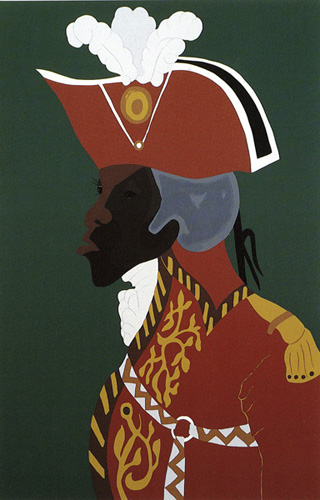
All of the authors take account of the ambiguous history of human rights, in which they can be said to have inspired the Haitian, American and French revolutions, while also justifying the counterrevolutionary post-Cold War order dominated by the United States. Yet recognising this ambiguity without also acknowledging the distinctive reconstruction of contemporary human rights that makes them part of a neo-liberal international order and the unequal power that makes such a quasi-imperial order possible would be irresponsible. A primary contribution made collectively by these texts is that they clearly diagnose the way human rights have been used to consolidate a particular form of political and economic order while undercutting the need for, much less justification of, revolutionary violence. Williams says of Amnesty International’s prisoners of conscience, who serve as archetypal victims of human rights abuse,

the prisoner of conscience, through its restrictive conditions, performs a critical diminution of what constitutes “the political.” The concept not only works to banish from recognition those who resort to or advocate violence, but at the same time it works to efface the very historical conditions that might come to serve as justifications – political and moral – for the taking up of arms.

Human rights, then, are for the civilised victims of the world, those abused by excessive state power, by anomalous states that have not been liberalised – they are not for dangerous radicals seeking to upset the social order.

Continue reading

Book launch: A Liberal Peace?

Tuesday 14th February 2012, 5.30pm-7.00pm

Westminster Forum, 5th Floor, Department of Politics and International Relations, University of Westminster, 32-38 Wells Street, London W1 (nearest tube Oxford Circus)

Panel with Editors David Chandler and Meera Sabaratnam, followed by publisher’s reception

All welcome

The 1990s was a weird decade for all kinds of reasons. The dice that were thrown into the air as the Soviet Union retreated landed in a particularly intriguing configuration for those politicians, public functionaries and academics from wealthy countries and institutions concerned with ‘peace’ and ‘development’. Their missions, marginalised for decades under concerns for national (i.e. military) security, were quite suddenly elevated as symbols of the new world order and installed as defining foreign policy priorities of wealthy states. Continue reading

Precarity Everywhere

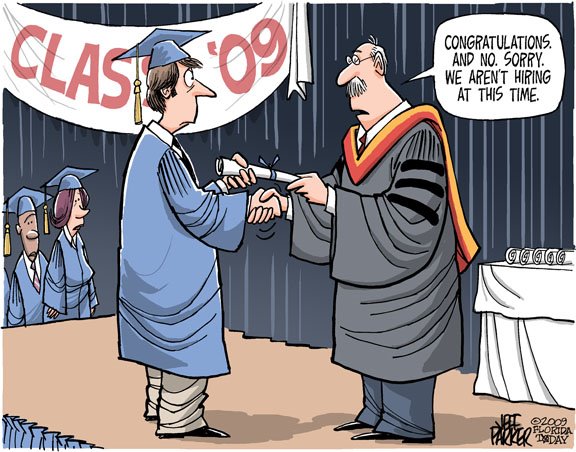
A recent piece by Michael Bérubé highlights one of the invisible problems of higher education in America (and elsewhere) – namely, the rise of the adjunct as the hegemonic form of the modern day academic. This is in both a qualitative way (with flexibility and monetization becoming some of the prime measures for every academic), but also in a quantitative way (Bérubé cites data that shows more than 2 out of every 3 faculty members are now contingent workers).

While American political discourse often portrays academics as highly-paid, impossible-to-fire liberals, the data in fact shows virtually the opposite (though admittedly academics are likely disproportionately “liberals”). Increasingly the expectation of graduate students leaving university is that:

(a) an academic position will be incredibly difficult to find (I have numerous anecdotes of friends applying for hundreds of jobs and only getting 3-5 interviews, let alone job offers)

(b) when a job is found, it will be contract work

(c) when a job is found, it will involve the workload of a full professor

(d) when a job is found, it will pay 20-75% of a full professor’s salary

(e) in a year (perhaps longer depending on the contract), this process will be repeated

Continue reading

‘You, Decorous Bureaucrats Of Angelic Leagues’: A Brief Review of ‘I Melt The Glass With My Forehead’ (2012)

I’ve just seen Martin McQuillan and Joanna Callaghan‘s ‘I Melt The Glass With My Forehead’: A Film About £9,000 Tuition Fees, How We Got Them, and What To Do About It.[1] It does pretty much what it says on the tin, charting the issues talking-heads style. Readers not already deeply involved in the UK higher education system and its various problems will find it particularly enlightening, and the parade of would-be-Ministers making promises soon to be broken is worth the anger-energy alone.

Two things struck me. The first was LSE Public Policy Professor Nick Barr, who, despite making a lonely case for some of the fee changes, nevertheless foregrounded a few crucial issues. Most obviously neglected by higher education activists, there’s the importance of pre-university education, which remains much more important in determining entry, ‘success’ and social mobility than any fee/loan/tax increase. Moreover, as we’ve seen before, there’s the uncomfortable truth that the Browne proposals were more redistributive than the old system, although the Government’s decision to cap fees removed this potential. Linking these dimensions is the fundamental tension of contemporary higher education, which is of matching mass participation with high quality. On Barr’s account, this cannot happen from general taxation alone without something giving. Of course, this only remains a challenge of public policy under certain comparatively narrow parameters, and, as Howard Hotson reminds us, the system being ‘reformed’ for its own good was actually the best in the world when viewed as the combination of overall quality and parity across institutions (and if you haven’t yet read Hotson on the Ivy League, do).

Second, and relatedly, the focus of our reflections seems already to have congealed around fees, and fees alone. Even on the narrow topic of student finances, the question of living costs is almost totally absent. A few voices from another age mention it, but there seems no place in our moral calculus for considering the differential between those who must support themselves and those who have the supporting done for them. But there’s also something evidently arbitrary in discussing fees without a whisper about the REF, or the impact agenda, or the generalised role of the university as a producer of public goods (and I don’t just mean Ancient Norse) in an age of austere retrenchment. Notwithstanding the manifold critiques of Browne and Willetts (charlatanism being primary among them, at least for McQuillan and Callaghan), all this misses the critical perspective provided by Andrew McGettigan, placing the fees SNAFU within a wider ecology of political economy and long-term transformation. We learn just this week of the next stage of this process at London Met, where all in-house admin is being offered for private bidding and where 229 ‘posts’ (read: jobs) are to be abolished across seven faculties (this coming after the closure of 70% of undergraduate courses).

This all matters because the public discussion of the future university is increasing, even amidst our wholesale crisis of economy. In typical academic style, it’s coming too late for the bait-and-switch, but if the renewal of energy around the idea of a public university is to mean anything, it cannot be a mere retreat. Barr’s argument that teaching grant must be restored in the next Parliament seems both commonsensical and strangely unimaginable, but there are other stagnant pits of the old to avoid alongside the risks of the new.


[1] The title is borrowed from a banner at an anti-fees demo, quoting a 1915 poem by Vladimir Mayakovsky mentioned by Dan Hancox in the film. I borrowed ‘You, Decorous Bureaucrats Of Angelic Leagues’ from the same place. It seemed somehow more appropriate.

Has the Left given up on Economics?

With the biggest economic crisis since the Great Depression continuing to slowly unfold, one of the most surprising consequences has been a non-event: the dearth of high-quality economic theorizing in leftist groups. [1] This is in spite of the opportunity the crisis presents for alternative economies, and in spite of the economic conundrum that developed economies find themselves in: too indebted for stimulus and too weak for austerity. This differend between austerity and stimulus indexes the insufficiency of either and yet few have taken up the necessity of thinking proper alternatives.

The leftist response to the economic crisis has instead been mostly been to focus on piecemeal reactions against government policies. The student movement arose as a response to tuition fee and EMA changes; the right to protest movement arose as a response to heavy-handed police treatment; and leftist parties have suggested a mere moderation of existing government policies. The project to bring about a fully different economic system has been shirked in favour of smaller-scale protests. There is widespread critique, but little construction.

Admittedly, the left is not entirely devoid of high-level economic theorizing. Rather, the more specific problem is that those few who do such work are a relatively tiny minority and are typically marginalized within the leftist scene. The attention and effort of the leading intellects of leftism (at least in the UK) are on social issues, race issues, rights issues, and identity issues. All important, to be sure, but there is no equivalent attention paid to economic issues.

Continue reading

On the Abstraction of Contemporary Crisis

On the Abstraction of Contemporary Crisis
Or, Why Today Feels Different From the 1930s

One of the oddities of the ongoing economic crisis is its apparent separation from everyday life.[1] Consumers still consume, luxury items are still produced. Starbucks is still filled with coffee drinkers, and Apple still sells its overpriced goods. Scanning the media, one finds its coverage devoid of lengthy soup lines or surges in tent cities. While most have had to cut back on their indebtedness, there hasn’t been a collapse on the scale of the Great Depression. This is in spite of some measures suggesting the current crisis is as deep in some ways.


Continue reading

And there will be the most beautiful silence never heard

Dinosauria, We

Born like this
Into this
As the chalk faces smile
As Mrs. Death laughs
As the elevators break
As political landscapes dissolve
As the supermarket bag boy holds a college degree
As the oily fish spit out their oily prey
As the sun is masked
We are
Born like this
Into this
Into these carefully mad wars
Into the sight of broken factory windows of emptiness
Into bars where people no longer speak to each other
Into fist fights that end as shootings and knifings
Continue reading

Human Rights as Crisis Morality – a reply

If Anthony will forgive my presumptuousness, it seems that the crisis of human rights that worries him is that while critics have much to offer by highlighting the limitations, paradoxes, silences and aporias of human rights, they fail to offer a moral vision that can inspire or a practical politics that might make the world better. This concern goes beyond the practiced rejection of philosophising as an indulgence in the face of human misery. Anthony is concerned with the deeper problem faced by those critics who identify human rights with the global exertion of Western authority and a depoliticised vision of the individual and society under the conditions of contemporary neo-liberal capitalism. And that problem is that the process of critique itself risks overwhelming the possibility of political action for moral ends – to do good on behalf of, and in solidarity with, the “poor, downtrodden and despised”.

There’s a crude version of this critique that suggests human rights naysayers are obscurantist intellectuals, whose evasive politics demonstrate the bankrupt quietism of the contemporary left – or, as they would say back home, that they are “all hat and no cattle”. In his post Anthony is getting at something more substantive and, I think, very important, which is the difficulty of finding a critical ground for moral action in political life. If one admits the limitations and pernicious aspects of human rights as a broad set of political practices, what alternative justification can be offered for political action?

While supportive of human rights, Anthony is quite clear that the

difficulty here for human rights is that the very rhetoric of the movement, with its built in moralism and boosterism, makes it hard to consider that “human rights might be a bad thing”, or that they may not be the best – and certainly not the only – framework for considering serious problems and issues within the international system.

For this reason he respects the important role that critiques of human rights play in recognising the tendency for moral claims to be co-opted by political power, deconstructing the essentialised account of humanity, tracing the violence done to difference through universal claims and acknowledging the politics inherent in any account of justice. The key question, then, is what happens in the wake of our critical interrogation of human rights? Continue reading