Romancing the River

We now approach the end of our symposium on Joanne Yao’s The Ideal River.

This last commentary is from Dr Ida Roland Birkvad. Ida is a Fellow in Political Theory in the Department of International Relations at London School of Economics and Political Science (LSE). Her research engages with questions related to international political theory, histories of imperialism, and non-Western agency in International Relations.

She previously wrote for us on Judith Butler in Norway.


Two years after laying the foundation stone for the Sardar Sarovar Dam in 1961, India’s first Prime Minister Jawaharlal Nehru proclaimed that hydroelectric dams were the ‘new temples of India, where I worship’ (Yao 2022, 205). Charting the length of the country’s postcolonial history, this infrastructural project of unprecedented scale and ambition was originally conceived of by Nehru’s deputy, Sardar Vallabhbhai Patel, in the years immediately following independence. In 2017, more than seventy years later, the network of dams horizontally spanning over half of India’s interior landscape, following the Narmada River from the state of Madhya Pradesh to the coast of Gujarat, was finally completed.

The romantic flourishes of Nehru’s characterisation, tying rivers and their taming to the spiritual realm, constitutes my starting point for this book symposium. In the following, I place Joanne Yao’s luminous charting of the emergence of environmental politics through the erection of 19th century river commissions into conversation with Dalit and anti-caste critiques of the collusion between Romantic thought, elite politics, and Brahmanical supremacy in the context of the Sardar Sarovar Dam development. Indeed, while Yao’s The Ideal River might seemingly focus rather exclusively on the role of Enlightenment rationality in the taming of the river, I argue that her book allows us to glean the dynamic relationship, at times mutually constitutive and at times in mutual contestation, between Enlightenment thought and the role of the other intellectual movement of modern history, namely Romanticism, in environmentalist thought. 

Displacing an astounding 245 villages and submerging 37,555 hectares of land, the Sardar Sarovar Dam has caused immense debate and uproar, intensifying especially from the late 1980s onwards when its erection began on a mass scale (Rao 2022). However, the grandiose nature of the size and scope of the dam was from the outset rivalled only by the resistance movement forming to stop it. Taking shape in the late 1980s, the Narmada Bachao Andolan (NBA) consisted of a broad coalition of adivasis (India’s indigenous population), farmers, environmentalists, and human rights activists. Organising to both resist the expansion of the dam, as well as to mitigate the consequences for the people whose lives were disturbed and uprooted by it, the NBA constituted one of the largest political resistance movements of its time. Its tactics included rallies, marches, hunger strikes, and perhaps most spectacularly the action of jal samarpan, in which activists stood neck-deep in the river, demonstrating their willingness to drown rather than to leave their lands (ibid.). 

Continue reading


Engineers Rule the World

The second post in our symposium on Joanne Yao’s The Ideal River.

This one is from Dr. Cameron Harrington, an Assistant Professor in International Relations at the School of Government and International Affairs at Durham University. His research centres on the shifting contours of security in the Anthropocene, with a particular focus on the concept and practices of water security. His work has appeared in journals such as Millennium, Global Environmental Politics, Environment and Planning E, Critical Studies on Security, and Water International. He is the co-author of Security in the Anthropocene: Reflections on Safety and Care (2017, Transcript), and is a co-editor of Climate Security in the Anthropocene: Exploring the Approaches of United Nations Security Council Member-States (forthcoming 2023, Springer).


While studying at my alma mater, Western University, in Canada, I would frequently run into the same graffiti scribbled across bathrooms, classroom desks, library walls, and study spaces. 

ERTW

It wasn’t a secret code or the mark of an exclusive academic society. In fact, you could see it emblazoned on the back of t-shirts handed out to hundreds of freshman students every year.

Engineers Rule the World

The idea that engineers – and by extension engineering – are, in fact, responsible for holding society together, is a powerful boast. It certainly helped young undergraduate engineering students construct an image of their studies as immensely important. While the rest of us spent our days studying the words of long-dead philosophers or burrowing deeper into arcane debates about “the international order,” these intrepid future engineers would learn to do the real work of building the world that we all inhabit. No engineers, no world. 

I was reminded of this slogan – ERTW – as I read through Joanne Yao’s book, The Ideal River: how control of nature shaped the international order. Yao’s book is a richly detailed examination of the various imaginaries, schemes, and tools that propelled European efforts across the nineteenth century to tame – to engineer – nature. Yao argues that the desire to control nature reflected and refracted a larger modernist “faith in science and rationality to conquer the messiness of entwined social and natural worlds…” (pg. 36). This ability to control a wild and unpredictable nature was one key standard by which civilization could be judged. Her account focuses on the social and material construction of three specific rivers: the Rhine, the Danube, and the Congo. Though each river was imagined uniquely, they all became embedded within a larger modernist political project of world-building. From these rivers emerged the first modern manifestations of what we now term international organizations. 

This is, then, another story of Enlightenment-bred confidence in the ability to overcome nature’s “limits”.

Continue reading

The Ideal River: An Introduction

The Disorder of Things is back, and with a symposium too. Over the next week we’ll feature a succession of posts on Joanne Yao’s The Ideal River: How Control of Nature Shaped the International Order, followed by a rejoinder from Joanne herself (the full set of posts will be available in one easy spot here). The first post is an introduction to the book and commentaries from George Lawson. George is Professor of International Relations at the Australian National University. He is a global historical sociologist who works primarily on revolutions. His most recent books are: On Revolutions: Unruly Politics in the Contemporary World (with Colin Beck, Mlada Bukovansky, Erica Chenoweth, Sharon Nepstad and Daniel Ritter) (Oxford, 2022), and Anatomies of Revolution (Cambridge, 2019).


Mackenzie River

Writing from the frontline of anthropogenic climate change, in Australia, I don’t need any convincing about the co-implication of nature and politics. I live in Canberra – Australia’s ‘Bush Capital’ – a planned city in the Scottian mould, nestled amidst nature reserves, organised around an artificial lake supported by a major dam project, and home to a large number of predators, both human and otherwise. When I moved to Canberra nearly three years ago, the major (non-artificial) lake that welcomes visitors to and from Sydney, Lake George, was empty – the result of decades of low rainfall generated by human-induced climate change. Following three years of La Nina weather patterns, which has brought persistent rain that locals never tire of telling our family we brought with us from Britain, Lake George looks more like an inland sea. But not for long, it seems. Models suggest that this year will see a return to dry conditions, perhaps even a drought. So: no more Lake George. 

Outside Canberra’s old Parliament House, which was replaced by a snazzy, environmentally friendly upgrade in 1988, can be found the Aboriginal Tent Embassy, the oldest continuous protest site in the world. Some of the demands made by aboriginal Australian groups, including those who people the Embassy, as well as those involved in discussions around the Uluru Statement from the Heart and current debates about a First Nations Voice to Parliament, begin by acknowledging the co-implication of land, custodianship and sovereignty. Understandings of citizenship in Australia are intimately tied up with claims about the relationship between nature and political authority. 

These entanglements between nature and politics are found not only in Australia, of course. As Giulia Carabelli points out in her essay in this symposium, they animate protests in North Dakota and India, have been part of legal debates in Ecuador and Bolivia, and can be found in disputes over the rights of natural objects, including rivers

Continue reading

‘Indian Migration and Empire’: response from Radhika Mongia

This is the final post in our symposium on Radhika Mongia’s Indian Migration and Empire: A Colonial Genealogy of the Modern State, in which Radhika responds to her interlocutors.


Each of my interlocutors foregrounds and engages with different aspects of my book, Indian Migration and Empire: A Colonial Genealogy of the Modern State. In this response, I want to dwell on four interrelated elements they stress: namely, (1) the distinction between free and forced migration, their differential management in migration regimes and the current incarnations of this distinction; (2) the place of processes of racialisation with regard to migration regimes, to understandings of citizenship and to the contours of nationhood; (3) the enduring Eurocentrism of certain disciplinary presuppositions; and, lastly, (4) the relationship between the colonial state and the modern state, that lies at the heart of the book.

One of the central concerns of the book, as I noted in my introductory post, is to interrogate the remaking of ‘freedom’ in the nineteenth century though a consideration of the distinction between ‘free’ and ‘unfree’/‘forced’ migration and their differential regulation. I unpack this distinction in relation to the 1834 abolition of slavery in the British empire and the state-supervised movement of Indian indentured labour that followed in its wake. Slavery and the memory of the slave trade (the latter abolished in 1807) were at the heart of the contentious legal debates on how, and whether, to regulate Indian migration. Animating these debates was an abiding concern with how to legally distinguish slavery from freedom, violation from volition, coercion from consent, and thereby not only enable, but facilitate, a movement that could be coded as ‘free’. At the centre of the regime that regulated indenture was the appearance of a renovated ‘free labour contract’ that elevated the metaphysical notion of ‘consent’ (a variant of ‘intension’ or of ‘will’), diminished concerns with ‘fairness’ and radically transformed understandings of ‘freedom’. Both Luke and Bridget draw out aspects of this theme and how it endures in our present, by directing our attention to how current migration regimes are also structured around the notions of ‘free’ or ‘forced’ movements. But now, as they point out, we see a twist. If, in the nineteenth century, the concern was to facilitate ‘free’ movement (to avoid charges of a second slave trade), the rationale of our prevailing dispensation is to prohibit ‘free’ movement. Currently, in many national-state spaces, it is only those who according to always-shrinking governmental criteria can be characterised as ‘forced’ or, in the new parlance, as ‘refugees’, who are allowed to move. Others, many more, understood as ‘economic migrants’, who attempt intentionally (and, thus, ‘freely’ and ‘willingly’) to escape the depredations of their circumstances are illegalised, rendered interlopers. Reading Luke and Bridget’s engagements alongside my argument concerning ‘historicising freedom’, it is evident that we have seen yet another profound remaking of freedom in the twentieth and twenty-first centuries—one committed to a sedentary bias that demands that ‘freedom’ is best practiced in your ‘assigned’ place. Or, as Nandita Sharma puts it, increasingly, migrants are conceived as ‘people out of place’. Moreover, as both Luke and Bridget point out, a discourse of ‘protection’ underlies and makes possible the current distinction between ‘free’ (economic) and ‘forced’ (refugee) migration. It was precisely a discourse of protection of, on the one hand, Indian indentured migrants and, on the other, the formerly enslaved in the colonies of Mauritius and the Caribbean, that enabled state regulation of Indian indentured migration. Thus, returning to the details of how this regime was put in place (as I do in my book), serves as an important lesson in thinking about current articulations.

Continue reading

‘Indian Migration and Empire’: comment by Sanjay Seth

The third response in our symposium on Radhika Mongia’s Indian Migration and Empire: A Colonial Genealogy of the Modern State is by Sanjay Seth, who is Professor of Politics at Goldsmiths, University of London. He is the author of Marxist Theory and Nationalist Politics: The Case of Colonial India (Sage, 1995), Subject Lessons: The Western Education of Colonial India (Duke University Press, 2007 and Oxford University Press, 2008) and, most recently, Beyond Reason: Postcolonial Theory and the Social Sciences (Oxford University Press, 2020).


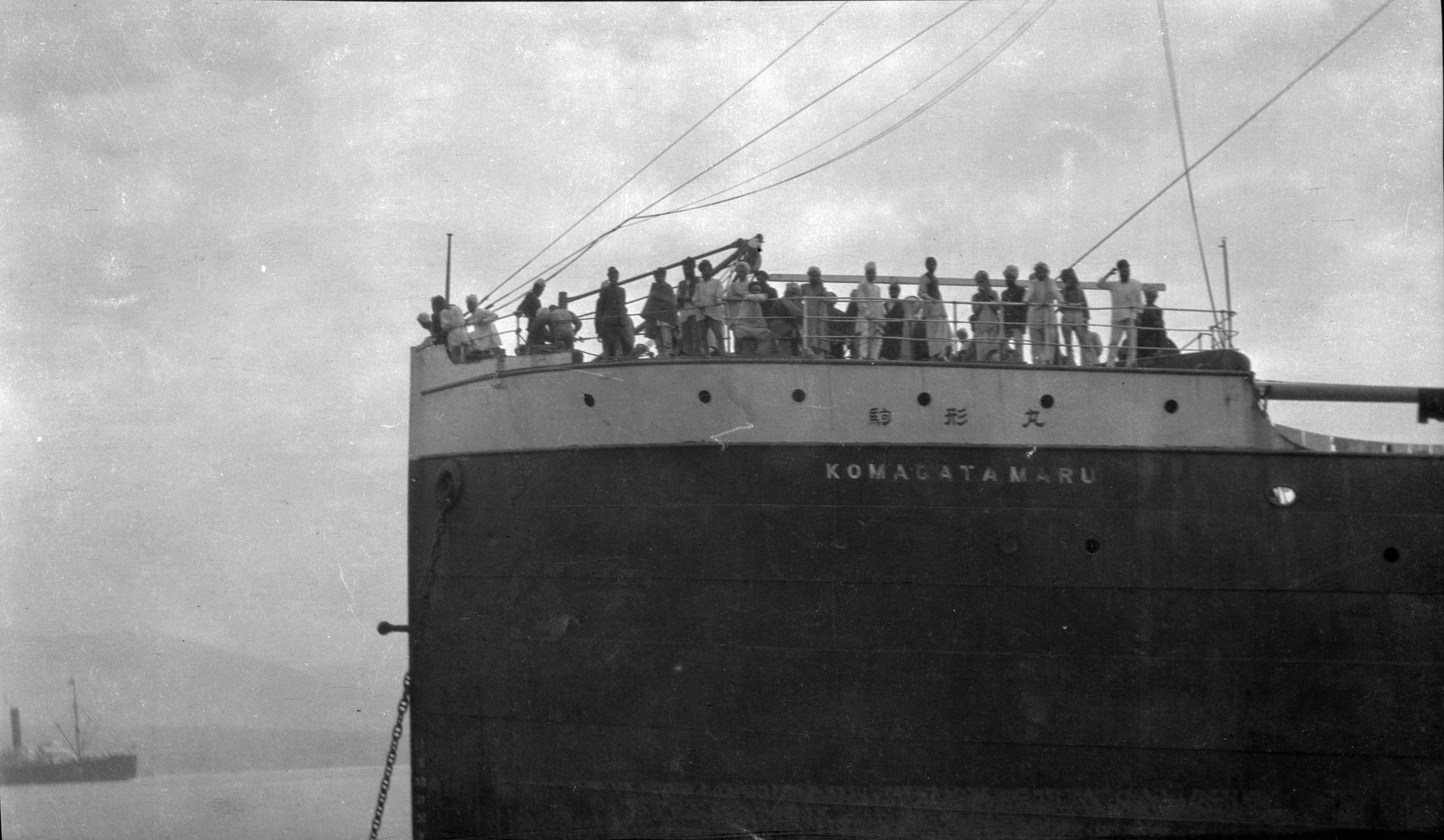
Radhika’s Indian Migration and Empire is subtitled ‘A Colonial Genealogy of the Modern State’, and part of the book’s argument is that while it is assumed that control of migration ‘is a defining, definitive, unchanging, and unchangeable element of (state) sovereignty’ (p. 7), in fact control of migration within the British empire occurred late and helped to produce state sovereignty. In making this argument Radhika traces how, in the wake of the abolition of slavery in 1834, the British empire played an active role in facilitating the movement of its Indian citizens into its ex-slave plantation colonies as much needed indentured labour, and developed elaborate governmental machinery to do so; by contrast, the movement of peoples other than indentured labourers within the British empire was largely unregulated and not constrained. It was in fact the white dominions of the empire that sought to restrict and regulate the entry of non-white imperial subjects, finally achieving their aim following the Komagata Maru incident in 1914. It was only after this that the freedom of British subjects to move from one part of the empire to another was abandoned, and a passport system allowing race-based restriction was introduced. Mongia concludes, ‘control over mobility does not occur after the formation of the nation-state … the very development of the nation-state occurred, in part, to control mobility across the axis of the nation/race’ (p. 139, emphasis in original). The modern sovereign state thus has a colonial and imperial genealogy.

komagata maru

This book is a distinguished addition to a growing literature that requires us to recognise that the conventional picture of the sovereign state as the foundation of certain practices has things the wrong way around. Another recent example is Tarak Barkawi’s Soldiers of Empire (2017), which similarly challenges the assumption that modern wars between states have been fought by the armies of these states, such that we may assume a ‘sovereign territorial package of state, army, and society’. In fact, this has been the exception rather than the rule. The armies that fought in most of the colonial campaigns of the coloniser countries, and in the world wars, were imperial armies, most notably in the cases of France and Britain. The British Indian army numbered some one million men during World War I, and 10% of the soldiers who fought for the British Empire in this war were in the British Indian army; in World War II the Indian army comprised more than two million members and operated across three continents. The nation-state army is in significant measure an outcome of World War II, rather than the basis of it and the mode in which it was fought; it was only well after that war that national armies and sovereign states became isomorphous, and thus, as Barkawi colourfully expresses it, this war ‘consumed one world order and spat out another’.

Although her book crosses many disciplinary boundaries, Radhika writes, I think, above all as a historian (as do I, though interestingly, we are respectively in departments of sociology and politics), and part of the strength of the book is the varied and dispersed archive upon which it is able to draw. But the import of her argument, as she recognises and seeks to develop it, applies to all disciplines and forms of intellectual activity which take the sovereign, territorial state as a given – that is to say, almost all social science and humanities disciplines.

Continue reading

Apocalypse Yesterday?

The first in a series of posts over the coming weeks on the Coronavirus crisis and its multiple aspects, contradictions and possible futures. They will be collected here. This first is from Paul David Beaumont, who is currently finalising his PhD dissertation, The Grammar of International Status Competition, at the Department of International Environmental and Development Studies at the Norwegian University of Life Sciences. Paul tweets @BeaumontPaul​ and his research is available to view on his Academia profile. See also his post from December 18, 2019 on Brexit Futures.


The corona crisis is not the beginning of the apocalypse but a symptom; we have been in the apocalypse for a while now. Akin to how the industrial revolution occurred over a far longer period than we normally associate with “revolutions”, apocalypses seldom occur overnight either. In this regard, humans have systematically misread the paradigmatic apocalypse scenario: the asteroid. Rather than wiping out humanity in one big bang, as Deep Impact would have it, it took decades for the mass extinctions to unfold. Similarly, even if COVID 19 does prompt mass deaths and/or societal collapse, if there are any historians still around to argue over the origins of our demise, they will be unlikely to pay much heed to the Corona outbreak itself.

Instead, I expect they will puzzle over a paradox that did not befall the dinosaurs. How did humans manage to create a society so technologically advanced that they could predict the apocalypse(s), develop the technology to stop it (them), yet adamantly and proudly refuse to do so?

With regards to humankind’s inability to halt climate change or the destruction of the world’s biodiversity, future historians will likely and rightly probably lean heavily on the collective dilemma to explain our failure to act. However, pandemic preparation is not a collective action problem for the state. States can prepare for pandemics without requiring all others to do so too, nor can other states necessarily free-ride from one state’s preparations.

Continue reading

Returning the Gaze: A Reply to The Eye of War Symposium

The final post in our symposium on The Eye of War as Antoine responds to his interlocutors. All the entries in this series are collated here.


I have read each of the fantastic contributions made to the symposium with real pleasure and intellectual thrill. I feel very fortunate to have my work engaged with so thoroughly and generously by four wonderful scholars who each brought something unique to the conversation. Each entry is too rich in suggestive lines of thought to fully do any of them justice here and so I will only be able to selectively engage their contributions. I know however that they will continue to fire synapses for some time to come and I am very grateful to each participant for that gift. Big thanks also go to Paul for suggesting the symposium in the first place and organising it.

Katharine’s comments focus on the book’s early genealogy of the martial gaze, noting the uncommon historical perspective it brings to contemporary accounts of military targeting. It is certainly the case that much of the abundant scholarship produced on drones has a strong presentist feel, often emphasising the alleged revolutionary character of these weapon systems. Some of the best contributions have produced enriching accounts of their antecedents, either through a history of unmanned weapons (Grégoire Chamayou, Ian Shaw) or of aerial bombing (Derek Gregory), but these remain nevertheless conditioned by the starting point of the drone to which such histories lead by design. Notwithstanding its reference in the book’s subtitle (call it a sop to the marketing imperatives of academic publishing), The Eye of War’s enquiry was never motivated by the drone – indeed, the project was initiated before it became an object of sustained academic study – and it only explicitly features fleetingly in the final analysis. Instead, military perception was to be the investigation’s central object with the primary task being to trace its conceptual fundaments and technical milestones as far back as possible.

As outlined in my introductory post, the crucible for the contemporary manifestation of military perception that I settle on is the Italian Renaissance in which we can see an intertwined rationalisation of vision and mathematisation of space cohere. Katharine usefully supplements this account by connecting it to the Cartesian worldview that systematised what was arguably already implicit in the cultural expression of linear perspective (see also her recent article in the special issue on “Becoming Weapon” I had a hand in). As I note in the book, Martin Jay famously identified the originary “scopic regime” of modernity as one of “Cartesian perspectivalism” with its “understanding of vision as monocular, static, fixed and immediate, distant and objectifying, purely theoretic and disincarnated.” The notion of a rapacious drive for mastery over the world underlying modern epistemology is of course itself a well-rehearsed critique, as is the idea that this project has ironically ended up in a supposedly sovereign subject being increasingly dominated by its creations. If The Eye of War has any claim to originality in this regard, it is in underlining that the martial dimension of this reversal is still insufficiently appreciated.

Continue reading

A Martial Gaze Conscious of Itself

Enter the final contributor to our symposium on Antoine’s The Eye of War (University of Minnesota Press). After the author’s opening post and pieces from Katharine HallDan Öberg, and Matthew Ford, our very own Jairus Grove steps up to the plate. Jairus is Associate Professor at the Department of Political Science in the University of Hawai’i at Manoa and the Director of the Hawai’i Research Center for Futures Studies.  His forthcoming book Savage Ecology: War and Geopolitics at the End of the World will be published by Duke University Press in 2019.


Leafing back through The Eye of War’s evocative images of zebra-striped naval destroyers, pigeon-powered targeting systems, and steampunk-worthy ‘binaural acoustic aircraft detectors,’ I am reminded of how vital prototypes, designs, and never deployed gadgets are to Antoine Bousquet’s story of the martial gaze. I want to spend a bit of time thinking through the status of technical things that are more than ideas and less than practical machines with a little help from one of Bousquet’s interlocutors, Gilles Deleuze. At the end of Deleuze’s book on Foucault, he queries what the exact status of the panopticon is. According to Deleuze, the panopticons of Bentham’s dreams were rarely completed, and yet Foucault saw in its schematic the ordering principle of a new historical episteme. Is the panopticon, then, a metaphor, a kind of architectural condensation of discourses in the form of a blueprint? Those who would see ideas at the heart of the matter would hope so. The panopticon in a thinly constructivist reading would be at best the outcome of a changing set of normative relations regarding enclosure, discipline, and reform. 

The reactionary realist would be just as happy with this reading, as they are already prepared to dismiss Foucault as a naïve ideational thinker inured to the formative significance of things. However, Deleuze accepts neither of these positions. He instead describes Foucault’s thought as diagrammatic, that is, “a display of the relations between forces which constitute power… the panoptic mechanism is not simply a hinge, a point of exchange between a mechanism of power and a function; it is a way of making power relations function in a function, and of making a function function through these power relations.” Drawing inspiration from Gilbert Simondon, Deleuze locates Foucault as a machinic thinker investigating “the very tissue of the assemblage” and the “immanent causal” relationship between abstract machines and concrete machines. The diagram or abstract machine of the panopticon comes to inhabit and form what Deleuze calls the “human technology which exists before a material technology” with the concrete machine its execution in the form of schools, factories, prisons, open plan office spaces, ad infinitum. As Deleuze puts it succinctly, “the machines are social before being technical,” where the social is defined by Deleuze, this time drawing from Gabriel Tarde, as any assemblage or collection of relations that exceed, make up, and go beyond the sociology of humans or individuals.

Continue reading

Linear Perspective, the Modern Subject, and the Martial Gaze

The second post in our series on Antoine’s The Eye of War (University of Minnesota Press). Antoine opened the series with a summary of the project earlier this week, and we now welcome Dr Katharine Hall’s contribution. Katharine is Lecturer in Politics and International Relations at Queen Mary, University of London and publishes in the fields of political geography, science and technology studies, and security studies. Her recent works include ‘The Technological Rationality of the Drone Strike’ in Critical Studies on Security and ‘The Emergence of Lethal Surveillance’ in Security Dialogue. Her current projects focus on pilotless aircraft and air power in the interwar period, and on racialised violence and militarised urban policing.


One of the things the distinguishes The Eye of War from many of the books about contemporary drones strikes and military targeting technologies is its historical focus. In analyzing the martial gaze – the linking of perception and destruction, surveillance and targeting – Antoine Bousquet looks not just at the development of this gaze in technologies and practices across the 20th century, but also seeks to situate it within a much longer modern history of perception and representation. The former links Eye of War to a body of critical scholarship attentive to the historical geographies and ‘lines of descent’ of contemporary Western war (ex. Derek Gregory, Caren Kaplan, Ian Shaw, Gregoire Chamayou, Kyle Grayson), while the latter links the investigation into the martial gaze to the birth and development of modern science and the modern (liberal) political subject.

Bousquet calls this historical approach a ‘machinic history.’ This methodology is part assemblage theory, part genealogy, and part intellectual history. The main body of the book is devoted to detailing three functions or logistics of perception: sensing, imaging, and mapping (followed by its opposite: hiding).  Through this investigation he aims to show how perception has become technical, which is the root of his argument. Each of these functions have become increasingly absorbed by and embedded in technical apparatuses, not a new phenomenon but one that has been intensifying. Ultimately this is an argument about the relationship between the human and the technical. Bousquet is concerned with human agency and the removal of this agency from processes of perception, especially where the stakes are so great like in targeted killing. As Bousquet writes, “This book’s ultimate wager is that by plunging into the heart of the machine, we may obtain a truer sense of the potential and limits of our agency within it, political or otherwise.” 

Part of this dive into the machine is to the birth of linear perspective and the Italian renaissance, which Bousquet identifies as the foundational site of the martial gaze. One of the central figures here is Leon Battista Alberti, whose book On Painting details a method for translating what is seen from the eye to the paper, keeping proportions and perspective in scale.  In these foundations (and they aren’t the only ones) is the creation of a system or apparatus to represent the world and to do so through a particular regime of accuracy. In other words what develops from this is a system of seeing and knowing the world – of sensing, imaging, and mapping. The central figure in this system, of course, is the eye.

Continue reading

Lenin Lives! A Disorders Forum: Brave Old World

This is part three in a forum on Philip Cunliffe’s Lenin Lives! Reimagining the Russian Revolution, 1917-2017 (Zero Books, 2017). For the rest of the forum, click here.


Alex Sutton is a Lecturer in Political Economy at Oxford Brookes University. He has previously worked at the Universities of Warwick, St Andrews, Kingston and Chichester. His research focuses on International Political Economy and British imperial history, considering how imperial policy derives from the fractious nature of capitalist social relations.


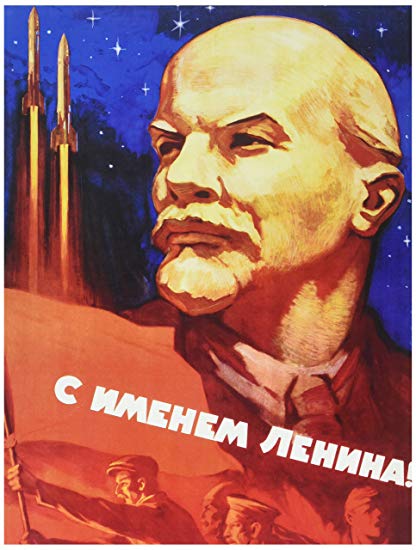
Philip Cunliffe’s Lenin Lives! is a fascinating, and diverting, journey into a counter-factual world of utopian wish-fulfilment. Here, Cunliffe draws on counter-factual history as a ‘critical tool for political action’ (35) to develop an alternative story of human development: what if the socialist revolutions of the early twentieth century had lived up to their promise?

The book makes a disclaimer early on that its goal is to be ‘indicative, demonstrative, and provocative’ (22), as such any criticisms – I hope – are to be taken with a pinch of salt. My fear, however, is that Lenin Lives! has fallen into a trap in fetishizing a past possibility for a future that could not happen. Indeed, Cunliffe describes the book as a ‘future of the past rather than a future of ours’ (34) and distinguishes between the ‘historical world’ – our timeline – and the ‘better world’ that might have been. Lenin Lives! is, in this sense, far too enamoured with saving the promise of the Soviet Union that it does not adequately account for the inherent problems of this vision and its execution. This is not to single out Cunliffe but rather to say that Lenin Lives! unproblematically articulates a view of social change that has been much-debated within radical thought.

Continue reading