Ethical Encounters – Care in Counterinsurgency: Feminist Ethics and the Morality of ‘Winning Hearts and Minds’

Processed with VSCOcam with lv01 preset

This guest post, by Jillian Terry, is the fourth in a series of posts reflecting on contemporary global ethics that was originally organised as the Ethical Encounters in a Changing World panel for the 2015 ISA convention in New Orleans. Jillian is in the final stages of completing her PhD in International Relations at the LSE, where her research explores the relationship between feminist ethics and post-9/11 war. Recently, Jillian has published her research in the International Feminist Journal of Politics and has contributed a chapter to the edited volume Gender and Private Security in Global Politics, edited by Maya Eichler (OUP, 2015). For earlier posts, see Myriam’s here, Joe’s here, Elke’s here and Diego’s here. Kim’s discussion post can be found here.


In thinking of twenty-first century war, questions of ethics in the realm of counterinsurgency are embodied in a wide range of encounters between combatants, civilians, and counterinsurgents. In Afghanistan and Iraq, we have witnessed tactics, strategies, and mechanisms in the name of COIN operations ranging from population control and detention to targeted killings and the implementation of the Human Terrain System, resulting in a set of complex realities about what it means to ‘do’ counterinsurgency in the contemporary era. Nevertheless, much of what we talk about when we think through questions of ethics and counterinsurgency remains tied to its manifestation in formal, legal mechanisms – namely the Counterinsurgency Field Manual (FM 3-24) – and their insistence on counterinsurgency as a practice of ‘winning hearts and minds’. Like much mainstream work on the ethics of war in IR, this has resulted in ethical conversations around counterinsurgency operations that are theorized with respect to just war doctrine, applying principles of jus in bello and jus ad bellum to determine the moral status of counterinsurgency as a means of warfighting. Here, I see a vital disconnect between existing analyses of COIN and how it is actually experienced and felt by insurgents and civilian populations – experiences and encounters that are irreducible to the strict criteria of the just war framework. To bridge this disconnect, I suggest a reorienting of our ethical lens away from just war thinking and towards a feminist ethics premised on care, empathy, and relationality. Such a perspective is more attuned to considering the practical realm of counterinsurgency rather than remaining mired in abstract debates about the semantics and theory of COIN operations. Given that the practical realm is one in which the truly relational nature of counterinsurgency becomes apparent, it is logical to look towards feminist ethics for an alternative viewpoint that prioritizes the lived experiences of individuals over legalistic interpretations of counterinsurgency as it appears on paper. A feminist ethics rooted in understandings of care and relationality will allow us to move beyond the formal articulation of COIN as is found in FM 3-24 and instead think about the encounters of those affected by counterinsurgency operations in a genuine and meaningful way.
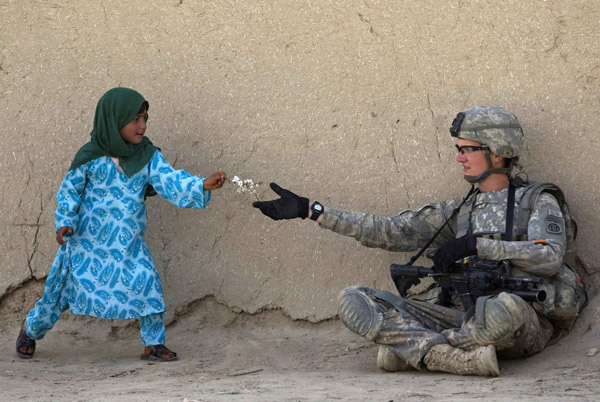

U.S. Army PFC Danny Comley during patrol in Kandahar Province, Afghanistan, February 2010.

Continue reading

Ethical Encounters – Taming of the Infinite: Applying Ethics for Political Violence – A Brief Critique

This is the third post in a series reflecting on contemporary global ethics that was originally organised as the Ethical Encounters in a Changing World panel for the 2015 ISA convention in New Orleans. Myriam’s post can be found here, Joe’s is here, Jillian’s here and Diego’s here. Kim’s discussion post is here.


The relationship between ethics and politics is complex; in theory, as in practice. Against a contemporary background where hitherto morally prohibited acts, such as assassinations by drones strikes in non-military zones, are instituted as legitimate and justifiable practices, it becomes vital to understand anew the relationship between politics, violence and ethics, and its limits, particularly when such acts are underwritten by innovative military technologies that open new horizons for ethical considerations in international politics.

Ethics, in the context of politics – including international politics – is presently predominantly conceived in terms of applied ethics and chiefly concerned with the search for an ethical theory that can be arrived at through abstraction and applied to real world ethical dilemmas. While burgeoning poststructuralist scholarship in the late 1990s sought to address ethics in terms that consider aspects of contingency, alterity and potentiality, the events unfolding in the aftermath of 9/11 appear to have given way to a more practically oriented approach to thinking about ethics in international politics, giving priority to the application of ethical principles of warring. Such practical approaches often mirror scientific processes, or algorithmic logics in trying to find ‘correct’ outcomes.

While just war traditions of ethics in war have always had a close relationship with the analytical procedures and structures of international law, the practical turn in contemporary political ethics means that concerns addressed in the international and global context are primarily framed in terms of finding and applying appropriate principles, codes and rules in trying to resolve ‘real moral problems’. Problem solving through rational procedures, and scientific rationales thus stands at the heart of practical considerations of the ethics of political violence and war. This is exemplified in the IF/THEN logic of current discourses on the ethics of war or in the structures of target selections for lethal drone strikes. Among others, Seth Lazar’s recent work on the morality of war, presented at a philosophy workshop at the LSE in 2013 for example, considers approaches to moral decision making in uncertainty in the following terms: “one plausible approach to decision-making under uncertainty is to determine the expected moral value (EV) of the outcomes available to me, and to choose the best one. So, I am permitted to ƒ if and only if EV(ƒ) ³ EV(¬ƒ)”. Similarly, Bradley Strawser’s defence of the ethical obligation to use drones as a weapon of choice relies on a selection of variables (X, Y, G) and principles (principle of unnecessary risk – PUR) that, combined, serve to confirm the hypothesis, namely that using drones is an ethical obligation. This procedural algorithmic logic speaks to a technoscientific-subjectivity with which ethical outcomes are ascertained, problems solved. Ethics becomes a technical matter that can be solved through procedures and thus has natural limits. It is only able to assess, whether an outcome was achieved through the correct logical theoretical trajectory, not through the particularities of the moment.

Stuart Kinlough/Getty Images

Stuart Kinlough/Getty Images

Continue reading

What We Talked About At ISA: Weaponising Geography and the Global Striations of Military Targeting

In the context of a panel I put together on “Turning Ploughshares into Swords: Weapons and Weaponizations”, the ISA’s annual conference was the occasion for me to present some of the research I have undertaken as part of my long term project into the logistics of military perception. The central aim of that project is to uncover the genealogy and operation of the functional constituents of contemporary targeting practices as they increasingly span the globe. I submit that we can outline three distinct, if profoundly intertwined, functions of sensing, imaging and mapping that respectively gather sensorial information, visually represent and disseminate it, and relate it to geospatial frameworks. It is the last of these operations that was the focus of my paper, with particular attention paid to the way in which the planet has increasingly been enframed within systems of geographic coordinates permitting the geolocation and thereby targeting of any entity caught within their mesh.

While the role of cartography in European colonial expansion from the fifteenth century on is well-known, my main interest here lies in the even more intimate relationship between the histories of weapons targeting and techniques of geospatialisation. From the outset, the development of artillery in the early modern era was closely bound up with that of surveying techniques for the measurement of distances by visual means. Indeed, the range-finding exercises of gunners relied on the same trigonometric methods that underpinned the rise of modern cartography.

Continue reading

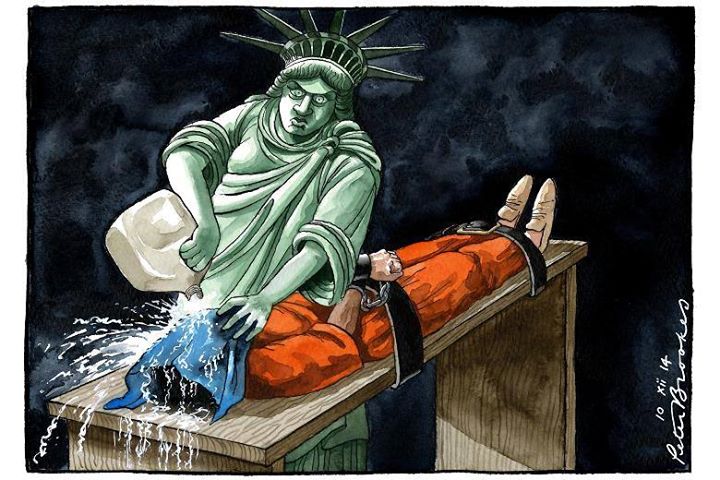
Why Torture When Torture Does Not Work? Orientalism, Anti-Blackness and the Persistence of White Terror

A guest post from Melanie Richter-Montpetit, responding to the disclosure of the Senate Torture Report in December. Melanie is currently lecturer in international security at the University of Sussex, having recently gained her PhD from York University in Toronto. Her work on issues of subjectivity, belonging and political violence has also been published in Security Dialogue and the International Feminist Journal of Politics.


a land on which no slave can breathe.

– Frederick Douglass (1846)[i]

I had to leave; I needed to be in a place where I could breathe and not feel someone’s hand on my throat.

– James Baldwin (1977)[ii]

I can’t breathe.

– Eric Garner (2014)

 America Waterboards

No, bin Laden was not found because of CIA torture.[iii] In fact, the US Senate’s official investigation into the CIA’s post-9/11 Detention and Interrogation program concludes that torture yielded not a single documented case of “actionable intelligence.” If anything, the Senate Torture Report[iv] – based on the review of more than six million pages of CIA material, including operational cables, intelligence reports, internal memoranda and emails, briefing materials, interview transcripts, contracts, and other records – shows that the administration of torture has led to blowbacks due to false intelligence and disrupted relationships with prisoners who cooperated. What went “wrong”? How is it possible that despite the enormous efforts and resources invested in the CIA-led global torture regime, including the careful guidance and support by psychologists[v] and medical doctors, that the post-9/11 detention and interrogation program failed to produce a single case of actionable data? Well, contrary to the commonsense understanding of torture as a form of information-gathering, confessions made under the influence of torture produce notoriously unreliable data, and the overwhelming majority of interrogation experts and studies oppose the collection of intelligence via the use of torture. This is because most people are willing to say anything to stop the pain or to avoid getting killed and/or are simply unable to remember accurate information owing to exhaustion and trauma.[vi]

So if torture is known not work, how come, then, that in the wake of 9/11 the U.S. at the highest levels of government ran the risk of setting up a torture regime in violation of international and domestic law? Why alienate international support and exacerbate resentments against “America” with the public display of controversial incarceration practices, as in Guantánamo Bay, instead of simply relying on the existing system of secret renditions? Furthermore, in the words of a former head of interrogations at Guantánamo Bay, most of the tortured and indefinitely detained are “Mickey Mouse” prisoners,[vii] reportedly known not to be involved in or not to have any information on criminal or terrorist activity against the U.S. and its allies. Drawing on previously published work, I will explore this puzzle by addressing two key questions: What is the value of these carceral practices when they do not produce actionable intelligence? And, what are some of the affective and material economies involved in making these absurd and seemingly counterproductive carceral practices possible and desirable as technologies of security in the post-9/11 Counterterrorism efforts?

Against the exceptionalism[viii] of conceiving of these violences as “cruel and unusual,” “abuse” or “human rights violations”[ix] that indicate a return to “medieval” methods of punishment, the post-9/11 US torture regime speaks to the constitutive role of certain racial-sexual violences in the production of the US social formation. Contrary to understandings of 9/11 and the authorization of the torture regime as a watershed moment in U.S. history “destroying the soul of America,”[x] the carceral security or pacification practices documented in the Senate Torture Report and their underpinning racial-sexual grammars of legitimate violence and suffering have played a fundamental role in the making of the US state and nation since the early days of settlement.[xi] The CIA Detention and Interrogation program[xii] targeting Muslimified subjects and populations was not only shaped by the gendered racial-sexual grammars of Orientalism, but – as has been less explored in IR[xiii]is informed also by grammars of anti-Blackness, the capture and enslavement of Africans and the concomitant production of the figure of the Black body as the site of enslaveability and openness to gratuitous violence.[xiv]

Continue reading

The Global Colonial 1914-18: A Public Roundtable

This is the fourth and final post in our series on The Global Colonial 1914-18, which is the video and transcript of the public event which took place at SOAS on September 18th 2014. Links to previous posts and the series as a whole can be found here. Many thanks to our speakers Hakim Adi, Catriona Pennell, Parmjit Singh, Martin Spafford and Charles Tripp for their contributions, as well as the audience for their incisive questions.

Global Colonial 1914 poster


M = Meera Sabaratnam

C = Charles Tripp

H = Dr Hakim Adi

P = Parmjit Singh

CP = Catriona Pennell

MS = Martin Spafford

M:       Okay. Hello, everybody and welcome. Thanks very much for coming. My name is Meera Sabaratnam, I’m a lecturer here at SOAS in international relations. And tonight we’re delighted to host a roundtable on the Global Colonial 1914-18. So obviously this is triggered by a number of contemporary events, not least the centenary of World War One, which you’ll have seen all over the news. But one of the stories I suppose, that gets told less often is the role of the wider world in the way that the war unravelled but also as a theatre of war. And in the place of where the war stood as part of the global context. So what else was going on, multiple revolutions, uprisings. So this is a moment in which the war is an important part of a global order which is undergoing substantial amounts of change. I should say this event is also sponsored…has been organised through the British International Studies Association and their working group on colonial, post-colonial and de-colonial research questions.

And this particular group tries to look at the elements of coloniality and colonialism in how the modern world came to be and what that means for when we understand globalisation and global history. I’m delighted to have a roster of speakers here tonight covering not just all of the sort of main areas, the regions that we’re studying in SOAS, namely Asia, Africa and Middle East. But also researchers and teachers who have been involved in how World War One is remembered in the classroom as a form of public cultural memory. Each of our speakers is going to speak for about 10 minutes. And then after that we’ll open it up for questions. Please do be forthcoming with your questions and we hope to have a good discussion afterwards, okay. I’d first like to welcome Professor Charles Tripp who is professor of Middle East here at SOAS. Thanks.

C:        Thank you very much, Meera. It sounds rather grand, I’m not the professor of Middle East, I’m professor of politics in the Middle East. But why not, grander? I was asked to talk today about the relationship between what was happening in the Middle East and what happened to the Middle East in and around the First World War. And I must admit straight off, I’m not a historian, so I don’t work on the first war particularly but clearly anybody who works in the politics of the Middle East is well aware of the fact that legacies of the First World War and what happened to the region are still very much there and indeed are being revived in the press in one form or another as they talk about Syria and Iraq at the moment. But what I wanted to really try and do is to pick out two themes if I can, in the time allotted. One is the notion that as with many other parts of the world, much was happening before the First World War that the First World War changed the course of, if you like. So in a sense one of the dangers of looking, which of course happens now to some extent in the press and elsewhere, is to see the Middle East purely as the Middle East as a political entity, whatever that is, as a kind of creation of European intervention, the First World War.

But what I’m trying to argue is that actually there were processes long before that that had been going on and that in some ways the European intervention set back in various significant ways that had an effect for the future as well. So the first part is really to think about what had been happening in the 50 years or so before the First World War in the region, we now think of as the Middle East, the Ottoman Empire, Qajar, Iran, North Africa. And I want to look at two themes which are intertwined but really revolve around the same emerging idea and notion which is the idea of the autonomous citizen, which again was quite a novel, a radical idea with hugely radical implications for the dispensations of power. But the two themes that they were intertwined with was, one, the struggle against despotism and the other, struggle against colonialism, both of these seemed to be deeply repressive of the idea of the autonomous citizen. And in some senses therefore what you’re looking at in the long…well, the period before the First World War in the 40 or 50 years, whether it’s in the Ottoman Empire, the Qajar Empire, Iran, in Egypt, you have a struggle against local despotism for constitutionalism. A precarious constitutionalism which is often of course therefore sabotaged by those who would rather not see it. But nevertheless very powerful in the mobilisation of the politics of these regions. Continue reading

Toward a Racial Genealogy of the Great War

dusan-bjelic-portretA second guest post in our series on The Global Colonial 1914-18 from Dušan I. Bjelić. Dušan received both his B.A. (1976) and M.A. (1981) in Sociology from the University of Belgrade and then earned his Ph.D in Sociology from Boston University in 1989, joining the University of Southern Maine Department of Sociology and Criminology in 1990. His area of interest is the colonizing application of psychoanalysis and psychiatry to the Balkans. Professor Bjelić co-edited Balkan as Metaphor: Between Globalization and Fragmentation with Obrad Savić (Cambridge, MA: The MIT Press, 2002). He has also published two books of his own: Galileo’s Pendulum: Science, Sexuality and the Body-Instrument Link, (SUNY Press, 2003) and Normalizing the Balkans: Geopolitics of Psychiatry and Psychoanalysis (Ashgate, 2011). His published works can be accessed at Academia.edu.


“Just as there is no wedding dinner without meat so there is no war without slaves.”

Serb soldier on the Balkan Front.[1]

A man was looking for something he had lost under the street lights; another man, the joke goes, approached and asked him what he was looking for. “I am looking for my lost keys,” “Did you lose them here?” “No,” the first man responded, “I lost them on the dark side of the street.” “But, why are you looking here?” “Because this is where the light is.” This joke illustrates well the paradox of the national paradigm in European historiography of the Great War. The assumption that the European sovereign nation is the sole agent of modern history naturally motivates European historiography to frame the Great War within a national paradigm and foreclose its colonial dimension. A related trope to the above joke pertains to race and its relation to the national histories of Europe; the black face of a slave, according to Frantz Fanon, can be seen during the night only under the porch light of the master, but when the slave goes into the dark his face becomes invisible. The deployment of colonial soldiers in the Great War as “warrior races” or, “martial races” to fight on behalf of their masters, and the absence of the Black history of slavery from the history of the Great War is in fact the history written from the master’s porch. While the invisibility of the black face foreclosed Black history from the national paradigm of the Great War, it was nonetheless useful as a racial weapon in the war.

By deploying almost a million non-white troops in the European theater of war—France’s 500,000 Africans and Asians, Britain’s 200,000 Indians and Africans, America 200,000 black soldiers, Germany’s 11,000 Africans (only in East Africa)—race was used as a “weapon of war” to advance an unprecedented slaughter among the white nations. [2] R. J. Vincent socked it to the revisionist historians when he wrote, “not only were the whites laying to rest the notion of their instinctive comity by butchering each other in such unprecedented numbers, but they were also showing their neglect of race in favour of nation in using non-white troops to advance the slaughter.”[3] Those historians committed to the national paradigm acknowledge the contribution of colonial solders in the Great War only as an auxillary force rather than as the point of the return of race as the constitutive violence of European Modernity. Many of the former slaves forcefully recruited and disciplined as racial instruments of forced labour, punishment and extermination became the site of colonial violence and operated as a microcosm for the War. The colonial soldier was the cause and the consequence of the Great War. Continue reading

The Colonial Armed Peace: Was the Great War a Failure of Imperialism?

LukeThis is a guest post from Lucian M. Ashworth, and the first in our series on The Global Colonial 1914-18. Lucian is Professor and Head of the Department of Political Science at Memorial University of Newfoundland. His current research focuses on the history of international Relations (IR) theory, and on the disciplinary history of IR. This builds on a number of previous interventions on the politics and history of the inter-war period (including on the absent idealists, the early feminist IR of Helen Swanwick, and Halford MacKinder as League supporter). He is the author most recently of A History of International Thought. From the Origins of the Modern State to Academic International Relations, published by Routledge in 2014.


Entente Cordiale

A common response from many opponents of Michael Gove’s ill-informed presentation of the First World War as a just cause has been to write the war off as one that was caused by the imperialism of the great powers. In this view those who died were victims of an imperial system.[1] By seeing the war as primarily an imperialist conflict it is possible to simultaneously denounce the pre-1914 imperial order and also to oppose the war. It is, therefore, a handy position that avoids any moral dilemmas.

At the same time, it is interesting that amongst all these debates about the causes and nature of the war few scholars have seen fit to examine one form of evidence: the writings of international experts before the war. This gap is even more surprising in International Relations (IR), as these pre-war writers are IR’s forebears. What is interesting about studying these pre-war international writers is that they were well aware of the imperialist nature of their global society (and of the role played by colonial control), but it was not this imperialism that was seen as the source of instability. Rather, a more complex story emerges of a two-tier global system, and the coming of the war is seen as a threat to, not a result of, imperialism.

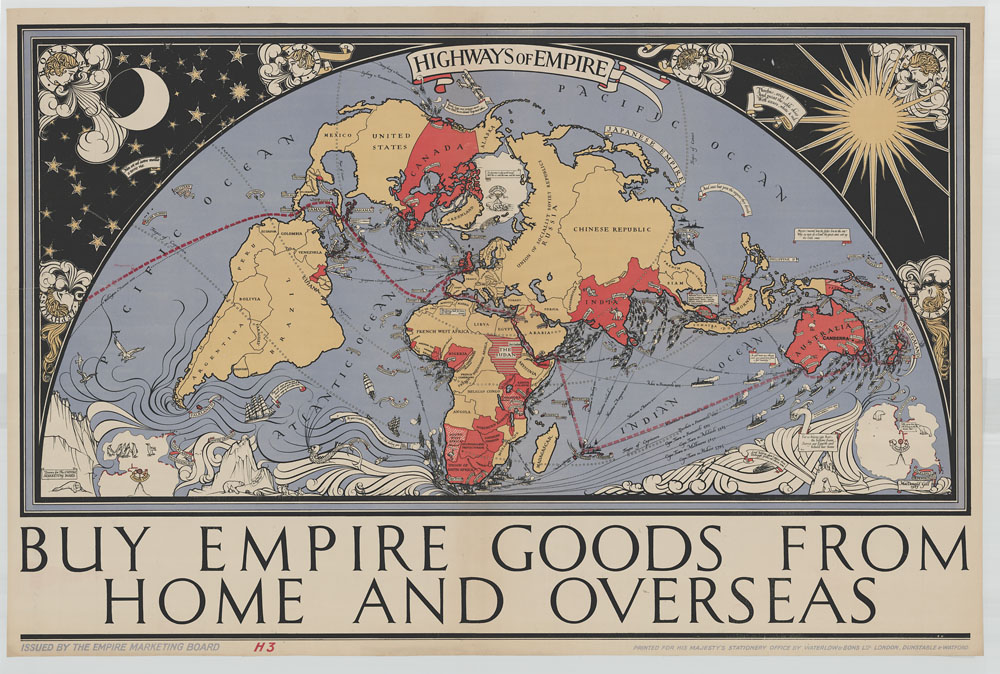
buy-empire-goods

The first point about the pre-1914 world is that this was a thoroughly recent system, and that for many of those writing on international affairs it was novel because for the first time in history there was a truly global order. Whether it was W. T. Stead writing about the movement away from states to a Europe united by transnational links, Paul Reinsch’s examination of the new ‘public international unions’, or Norman Angell’s wonder at the development of the global economy in trade and finance, the common feature was the recognition that the world from the late nineteenth century was global in a way that was thoroughly unprecedented.[2]

Much of this new politico-economic order was built on one product: coal. Timothy Mitchell has outlined how the growing dependence on coal as a concentrated source of energy radically changed society into an industrial ‘hydrocarbon civilisation’. The combination of coal, steel and steam powered railways allowed for the easy extraction, transportation and use of coal in industry.[3] This rapid industrialisation made the new industrialising societies vulnerable in a way they had never been before. The loss of self-sufficiency in food and the requirements of industry for a growing list of raw materials not often available in north-western Europe or eastern North America meant that these societies were dependent on trade with often distant societies. Yet, trade alone was not sufficient to extract these raw materials, so European powers increasingly turned to direct control and the deliberate imperial restructuring of the non-European economies.[4] This creation of a two-tier fully global economy was well-known to the political economists of the time.[5]

Two very different writers who captured the nature of this new global order were the American admiral Alfred Thayer Mahan, and the British journalist and political activist Henry Noel Brailsford. Mahan was an advocate of a higher level of armaments and a notorious racist. Brailsford, by contrast advocated stronger representative international organisations. Despite the wide divergence in their political opinions, both came to not incompatible conclusions about the nature of the global order before the First World War, and both understood the two-tier nature of the global political economy. The major difference in approach was that Mahan supported the imperial status-quo, while Brailsford opposed it. Continue reading

The Global Colonial 1914-18: A mini-series

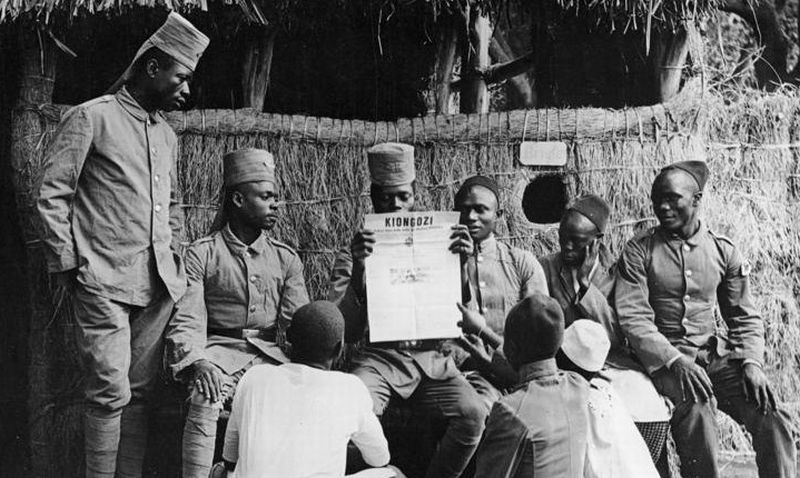
Askaris fighting for Germany listen to the news.

Askaris fighting for Germany listen to the news.

The Disorder of Things hosts a short series of posts connected to the event ‘The Global Colonial 1914-18‘, held at SOAS on 18th September 2014, and co-organised by the Colonial / Postcolonial / De-colonial Working Group of the British International Studies Association.

Our first post is by Lucian M. Ashworth, who discusses the breakdown of the colonial armed peace, as viewed by contemporary observers.

Our second post is by Dušan I. Bjelić, who offers a racial genealogy of the Great War.

Our third post is by Meera Sabaratnam, who suggests a contrapuntal reading of the war based in colonised Mozambique.

Our fourth and final post contains a transcript and video of the public roundtable which took place at the end of the day, featuring Hakim Adi, Catriona Pennell, Parmjit Singh, Martin Spafford and Charles Tripp, in which the colonial dimensions of the war are discussed, as well as their implications for teaching and commemorating the period today.

This post serves as a permanent link for the series.


Kobani: What’s In A Name?

Kamran MatinA guest post from Kamran Matin. Kamran is a senior lecturer in International Relations at the University of Sussex, where he teaches modern history of the Middle East and international theory. He is the author of Recasting Iranian Modernity: International Relations and Social Change (Routledge, 2013), and recently of ‘Redeeming the Universal: Postcolonialism and the Inner-Life of Eurocentrism’ in the European Journal of International Relations (2013). Kamran is also the incoming co-convenor of the BISA Historical Sociology Working Group, and a management committee member at Sussex’s Centre for Advanced International Theory. He is currently working on a paper on the origins of the current crisis in the Middle East, and a larger project on the international history of the Kurdish national liberation movement.


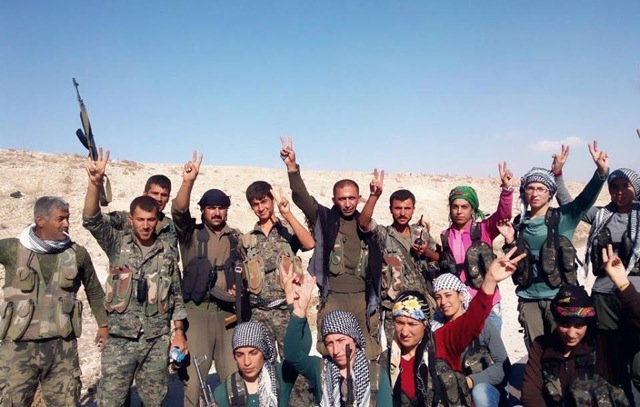
Kobani Fighters

The city of Kobani’s epic resistance against the genocidal assault of the Islamic State (IS) has entered its thirtieth day. So far the response of the western left has been generally one of solidarity. However, the left seems divided on the best way to support Kobani. Invoking anti-imperialist and anti-war principles a considerable part of the left has been shying away from demanding military and logistical support for the main defending force of the city, i.e. People’s Protection Units (YPG) and Women Protection Unites (YPJ), the armed wings of Democratic Union Party (PYD), by the US led anti-IS coalition. Moreover, with some exceptions such as David Graeber, many western leftists have neglected the historical significance and transformative political potentials of the success of Kobani’s resistance.

In what follows I argue that pressuring western powers to provide arms and logistical support to YPG/YPJ is legitimate and justifiable, and that in the battle for Kobani the left has a unique opportunity to contribute to an important shift in the regional balance of power in favour of a radical democratic and egalitarian project with transformative ramifications for the entire Middle East.

Kobani, the Kurds, and the West

With regards to the discomfort of the left with the idea of western military support for YPG/YPJ the important preliminary point to be made is that the Kurds have repeatedly claimed that they do not want or need direct military intervention by either coalition forces or Turkey. They’ve repeatedly said that they only need anti-tank weapons, ammunition and the opening of a corridor for fighters, food and medicine to reach Kobani. This request has been echoed by the UN Special Envoy for Syria, Staffan de Mistura, who warned of a repetition of the fate of Srebrenica in Kobani if such a humanitarian corridor is not established.

In its demand for a limited tactical western military support for YPG/YPJ the left by no means loses sight of the fact that at its root Islamic State is the fascistic faeces of western imperial metabolism, a direct product of the American conquest of Iraq, the deliberate manipulation of sectarian differences, and the destruction of the social fabric of Iraqi society. But surely, none of these should obviate the recognition of the vital significance of protecting an actually existing and functioning radical left experience at the heart of the Middle East from eradication, notwithstanding its unavoidable flaws and limitations.

Continue reading

The Far-Right: Pathology of Capital

A guest post from Rick Saull, who is Senior Lecturer in International Politics at Queen Mary, University of London. He has written on a range of topics from the international relations of revolutions to the Cold War and the geopolitical consequences of the 2008 global economic crisis. More recently he has focused on the international political dimensions of the far-right, co-editing The Longue Durée of the Far-Right (Routledge, 2014) which has just been published, and on which this post draws. He can be contacted here.


The politics of the far-right are unlikely to disappear any time soon. Unlike its historical foe on the left – social democratic or otherwise – which has continued to be characterised by a combination of disintegration and disorientation as it continues to implement neoliberalism, the far-right persists through exercising a toxic but powerful influence on political debate across mature capitalist democracies (and beyond). How are we to make sense of the persistence of the far-right and explain its recent reinvigoration? What analytical framework offers the best, way of explaining the distinct trajectories of far-right currents of politics across different historical periods? This blog post will try to address these questions through outlining an understanding of the contemporary far-right as a pathology of capital best explained through a framework based on an international historical sociology (IHS). Before I do that it makes sense to mention what the main alternative frameworks on the far-right tells us.

The academic discussion of the far-right is dominated by approaches grounded within the mainstream assumptions of bourgeois social science. Thus, it is the methodological nationalism of comparative politics combined with the literature on the history of ideas that are intellectually hegemonic. In the former, the far-right is assessed and compared across different states according to a quantitative grid of electoral performance, voter shares, opinion poll data and definitional attributes centred on ‘Europhobia’, anti-immigration hysteria and ‘welfare nativism’. In the latter, the fetish of definitional taxonomies prevails through the gradations of ‘neo-fascism’, the ‘extreme’, ‘far’, ‘radical’, populist’ and/or ‘reactionary’ right that are dissected via an examination of speeches and pronouncements to gauge the ideological coherence of said party or movement usually related to the core criteria of fascism.

This has resulted in an endless search for an ‘objective’ or ‘minimal’ definition of the far-right – an academic cottage industry in itself – which serves to freeze and simplify the far-right instead of viewing it as an evolving socio-political movement. Further, in spite of the need to treat ideas seriously it has resulted in analytical contortions to the effect that the far-right – in its fascist incarnation at least – can be seen as ‘revolutionary’ phenomena comparable to communism. This can be seen in the way in which the doyens of political science in organizations such as the ‘Extremism and Democracy’ Standing Group of the European Consortium on Political Research appear to mimic the assumptions of Cold War liberalism’s use of the concept of ‘totalitarianism’ by treating the ‘extremist threats to democracy’ from the far-left and far-right as part of the same analytical exercise thus blurring their distinct and antagonist dynamics.

Continue reading