The Patriarchal Dividend At War

Thursday’s Masculinity/Violence Symposium was lovely, thanks for asking. Lots of people came, which was heartening, and they all had great stuff to say, which was exciting. It bodes well for the International Feminist Journal of Politics special issue (*hint*). Here’s more or less what I said on the day, incorporating a splash of revisions and a dollop of answers and critiques provided by the audience. The day itself deserves some kind of report of its own, and I hope to make some time for it, or perhaps just extract some highlights from the papers presented.


Being part of something potent and comprehensible amid chaos, witnessing death and destruction as a participant and testing yourself in the masculine ritual of war remain elemental to the formation of soldierly identity. To tour as a soldier is to become a male exemplar, to take the chance of looking upon horror from the inside, to attempt to neutralize its voyeuristic allure through becoming its agent…The performance of soldiering is plastic and infinitely variable, shifting through the cautious cadences of the defense phase to the aggressive, rolling bounds of the ‘advance to contact’, always to end in ‘the fight-through’. ‘Fighting-through’ is the end of the dance, the culmination point where the dancers become the dance, where the fighting body achieves a sensuous unity with grenades, bullets and the bayonet.

Shane Brighton, ‘The Embodiment of War: Reflections on the Tour of Duty’ (2004)

War is not simply a breakdown in a particular system, but a way of creating an alternative system of profit, power and even protection.

David Keen, The Economic Functions of Violence in Civil Wars (1998)

From prehistoric times to the present, I believe, rape has played a critical function. It is nothing more or less than a conscious process of intimidation by which all men keep all women in a state of fear.

Susan Brownmiller, Against Our Will: Men, Women & Rape (1975)
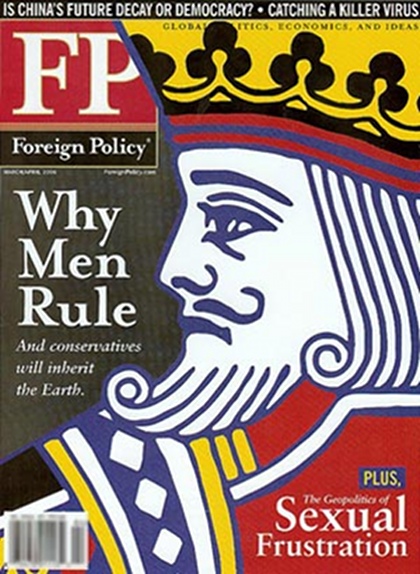
Conceptualising masculinity in terms of relations of hegemony and subordination and marginalisation and authorisation, Raewyn Connell proposed that men receive rewards as participants in male gender orders, and that this takes the form of status, command and material assets. This is the patriarchal dividend. Inequality on the scale observable in contemporary societies is, in Connell’s words, “hard to imagine without violence”, which is taken to have an important enforcement role both in terms of maintaining men’s power over women through acts like rape and in setting patterns among men. Extending this reasoning to the practice of war, it is plausible to see violence in general, and extreme acts like rape in particular, as an instrument of this enforcement, protecting or extending the patriarchal dividend. Soldiers in this sense become the frontline troops for the collective of men, just as domestic violence, street-level intimidation and rape fulfil the same functions outside of the war system.

Evidence from Chris Coulter’s work in Sierra Leone exemplifies how such a process may work. She reports that the majority of those abducted as ‘bush wives’ by the Rebel United Front (RUF) appear to have been raped. The creation of RUF rebel villages where commanders lived and the abducted were taken reflected the sociological structure of ‘peacetime’ arrangements: a pseudo-family structure with commanders at the head of a number of ‘bush wives’, subordinate males and occasionally elderly residents. The forms of labour assigned to women also followed the patriarchal imperatives of reproduction: fetching water and firewood, cleaning, and preparing food. Traditional roles like the ‘mamy queen’, who would look after young girls and prepare them for marriage, were also replicated within the camp structure. These arrangements were stable, to the extent that hierarchies among bush wives also manifested themselves, with the favoured wives of powerful commanders themselves taking on responsibilities for distributing arms and ammunition and holding power over other wives and children within camps.

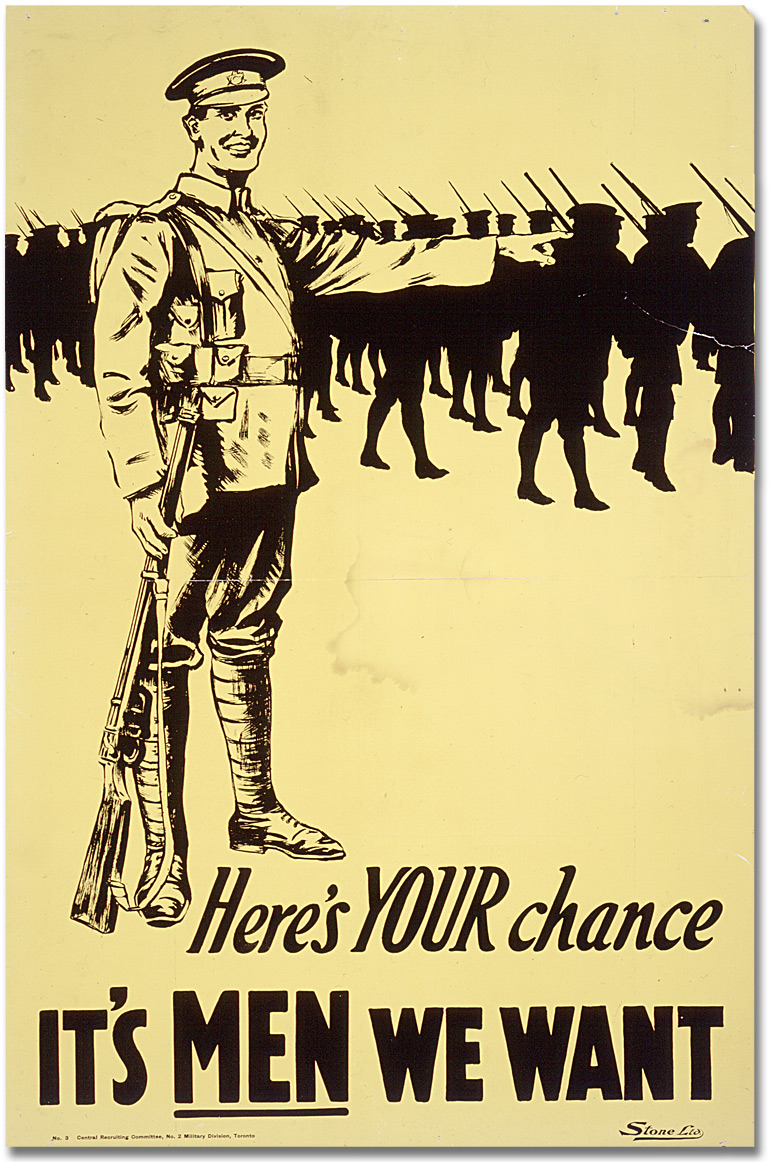
In the context of masculinities, I take this kind of perspective to suggest that there are what we might call enforcer masculinities at work in war. This is to say that there are patterns of behaviour, representations and identities which, in the practice of violence, secure benefits for patriarchy as a system. A Debt Paid in Coin and Sweat.
Continue reading

Sociology Is A Martial Art

A May Day found object (appropriately enough). Pierre Carles’ 2001 documentary on Pierre Bourdieu, in seven connected parts (missing, unfortunately the end). Besides the biographical, cinematic and intellectual value, it may also be of interest to Disordered readers for the scattered touches on science and its relation to politics and on the character and reproduction of inequality.


Rethinking Masculinity & Violence: A Call for Papers

Rethinking Masculinity & Practices of Violence in Conflict Settings

Special Issue of International Feminist Journal of Politics, guest edited by Marsha Henry (Gender Institute, LSE) and Paul Kirby (International Relations Department, LSE)

Actually, it’s critical analysis of men, masculinities and practices of violence that we want. While planning the forthcoming symposium on masculinity and violence (there are still a handful of places available), we thought we might be able to turn the idea into a viable journal special issue. So we asked the International Feminist Journal of Politics (IFjP for ease) and they said yes. And lo! A call for papers (also available as a pdf). Please distribute widely.

Continue reading

Symposium: Rethinking Masculinity

UPDATE (19 April): I’ve just received confirmation that a proposal based on this Symposium has been accepted as a Special Issue for the International Feminist Journal of Politics. All papers will be peer-reviewed. Papers not presented at the Symposium will not only be welcome but are actively encouraged. The deadline for first drafts is likely to be in August 2011 for eventual publication in 2012. Further details to follow…


A call for participation in a one-day Symposium at LSE I’ve been involved in organising. It’s taking place in just over three weeks and promises to be very productive and, yes, exciting. Thanks to some funding, places are free, but do email me if you want to come so we can get a sense of numbers for food. There will also doubtless be continuing discussion afterwards. Please distribute widely.


Rethinking Masculinity & Practices of Violence in Conflict Settings


Thursday 5 May 2011

Room Clem.D702, Clement House (on Aldwych), London School of Economics & Political Science

Keynote: Professor Cynthia Cockburn (City University and University of Warwick)

Sponsored by the British International Studies Association Gender IR Working Group, the LSE Department of International Relations and the LSE Gender Institute.

Thinking about masculinity, maleness and men has always had a place in the interdisciplinary fields of feminist, queer and gender studies. Discussion and debate about the relevance of masculinity as a shifting concept has recently been further developed in the fields of politics and International Relations (IR) where scholars have explicitly tried to address women’s experiences in relation to the persistence of the ‘man question’.

Despite this, masculinity in international politics remains somewhat amorphous. Research has tended to be disconnected, addressing particular wars or media events, rather than masculinity as an organising concept or its role across space and time in its historically variable forms. This symposium (and a proposed journal Special Issue arising from it) therefore seeks to extend and deepen work on the conceptual character and concrete forms taken by masculinity through the lens of violence and conflict settings.

Continue reading

What We Talked About At ISA: The Monstrous Masculine: War Rape, Race/Gender, and the Figure of the Rapacious African Warrior

If there is something in these utterances more than youthful inexperience, more than a lack of factual knowledge, what is it? Quite simply it is the desire – one might indeed say the need – in Western psychology to set Africa up as a foil to Europe, a place of negations at once remote and vaguely familiar in comparison with which Europe’s own state of spiritual grace will be manifest.

Chinua Achebe, ‘An Image of Africa’ (1978)

Sometimes it seems that we’re merely Constructions made out of yarn, paper & wood with threads rising from our toes and fingertips. We pretend to talk and act as though we were alive but actually we don’t have any choice in the matter. Some secret power directs us.

Evan S. Connell, The Diary Of A Rapist (1966)

1. Rape, Ultra-Violence and Beethoven

When we speak of men in feminism, we might speak generally or specifically, of properties of maleness and masculinity or of things done by particular men (and usually some combination of the two). What is at stake is the distinction between masculinity as a set of internal properties and as a set of relational, and hence contingent, ones. Although this can be taken as denying any substance at all to that category ‘man’, it is perhaps just as well to say that we all build our own subdivided orders of maleness – from men we know, knew, or think we are; from our salient models of true and false and ambiguous masculinity; from the postures and poses we take as appropriate towards them; and from the frames we adopt for dealing with variety, with all the space for the exemplar, the exception, the masquerade and the average that they bring.

The monstrous masculine is one such model, or rather a set of models united by family resemblance. An object of horror, the monstrous masculine is a repository for tropes that identify the hideous excesses and obscene pleasures of maleness. Channelling Barbara Creed (and some Sjoberg and Gentry), it is a set of tropes and themes in our imaginaries of social action, frequently evoking, among others, ideas of a limitless and aggressive sexuality, a cold and calculating self-regard and/or a submerged, if frequently actualised, hatred of women and Woman that borders on the instinctual. In accounts of wartime sexual violence, this figure of the rapacious warrior (usually African) comes to be represented in terms of the calculating soldier-strategist (who chooses rape as a hyper-efficient means to an accumulatory end); the angry soldier-rapist (expressing a deep desire and sexuality); or the habitual soldier-ritualist (enacting the memes and symbolic imperatives of a community, culture or even race).

Think of the figure of the unreason-laced psychopath rapist, whether in the version Joanna Bourke examines as the ‘rapacious degenerate’ or that which Susan Brownmiller addresses as the ‘police-blotter rapist’: “[t]he typical American perpetrator of forcible rape…little more than an aggressive, hostile youth who chooses to do violence to women”. Such protagonists are common in popular representations of rape. In A Clockwork Orange, Alex and his droogs prowl the streets and lanes of town and country, opportunistically submitting the unlucky to attacks driven by a relentless juvenile machismo. And in the scandalous Irréversible, rape is also the product of a subterranean drive. ‘Le Tenia’ does not even search his victim for money as an afterthought – his priorities are only to enact his spontaneous lust and be called ‘daddy’ as he does so.

The monstrous masculine unites conceptions and intimations of masculinity as pathology. This is the Real of a “terrifying dimension, as the primordial abyss which swallows everything, dissolving all identities”. Put otherwise, it embodies in its most psychoanalytic inflection the idea (following Nick Cave) that the desire to possess her is a wound.

Continue reading