Decoding Gender in Turkish Foreign Policy: How Ali Bilgic Gets it Right

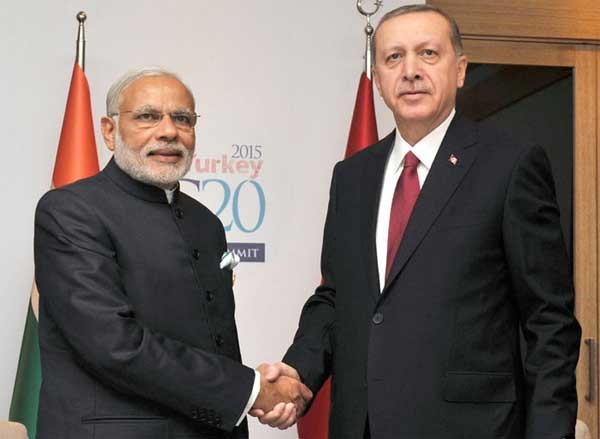
This is the fifth and penultimate post in a series of posts by several guest authors  for The Disorder Of Things symposium on Ali Bilgic‘s new book Turkey, Power and the West: Gendered International Relations and Foreign Policy, released in late 2016. The full series is collected here.  Swati Parashar is a Senior Lecturer in the Peace and Development program, School of Global Studies, University of Gothenburg, Sweden. She is an Adjunct Senior Research Fellow, Monash University, Australia.


There is something fundamentally reassuring about reading a book on gendered hierarchies and foreign policy, at a time when we have just witnessed the inauguration of the Donald Trump Presidency in the United States of America. It is reassuring, because it tells us that the global gendered order of states is not going to be replaced anytime soon and gendered hierarchies will remain at the heart of all political contests, resistance and acts of solidarity. After all the biggest challenge to the Trump presidency is going to come from women’s groups who successfully organized the Global March on 21 January 2017.

Continue reading

Of Malls and Mosques

This is the fourth post in a series of posts by several guest authors The Disorder Of Things on Ali Bilgic‘s new book Turkey, Power and the West: Gendered International Relations and Foreign Policy, released in late 2016. The full series is collected hereAida A. Hozic is an Associate Professor of International Relations at the University of Florida.


The publication of Ali Bilgiç’s book Turkey, Power and the West: Gendered International Relations and Foreign Policy in 2016 could not have been more timely. There are few historical moments in our recent history when politics of gender and race have been so forcefully pushed to the front and center of global conversations. Conflicts, refugee flows, uprisings, coups and counter-coups, populist blowbacks and rising authoritarianism – all seem to be written through, with, and over racialized, gendered bodies of men, women and children, justifying the persecution of some and advocating protection of others. Turkey, as the events (and the trail of bodies) of the last few years tragically confirm, sits at the crossroads of all these trends; civilizational cliché that it is the country where “East meets West” can no longer suffice to explain (and perhaps never could) multiple fissures and violent contradictions of its polity.

Continue reading

The View from Elsewhere Turns the World Inside Out

This is the second post in a series of posts by several guest authors The Disorder Of Things on Ali Bilgic‘s new book Turkey, Power and the West: Gendered International Relations and Foreign Policy, released in late 2016. The full series is collected hereTerrell Carver is a Professor of Political Theory at University of Bristol, UK.


Ali Bilgic’s Turkey, Power and the West contributes in highly significant ways to three literatures not normally brought together. Firstly, foreign policy studies, approached from what – for Anglophone writers and readers – is a novel, de-centred vantage point. Secondly, gender studies and feminist research, using masculinity as a highly relevant and essential analytical ‘lens’. Thirdly, postcolonial perspectives, from which the East/West binary is reimagined and pluralized (which, quite naturally, plays into the de-centred approach to foreign policy studies).

Continue reading

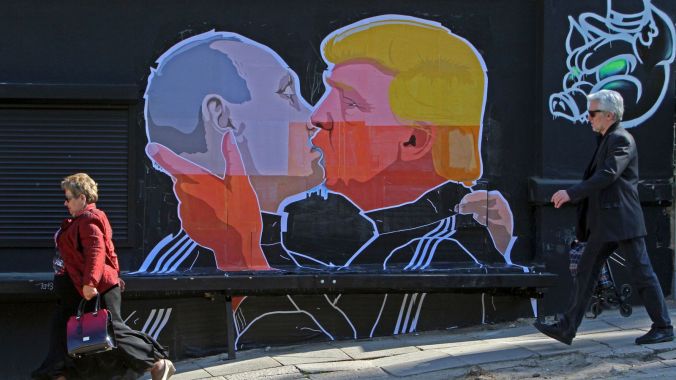
Fantastic Mr President: The Hyperrealities of Putin and Trump

Screen Shot 2016-08-30 at 21.56.56This is a guest post by Maria Brock. Maria is about to commence a postdoctoral fellowship at the Centre for Baltic and East European Studies and the School of Cultural and Critical Theory at Södertörn University (Stockholm). She has a PhD in Psychosocial Studies from Birkbeck and has perviously published on the role of negative affect in reactions to the case of Pussy Riot, and the status of memory objects and ‘museums of the everyday’ in the proliferation of post-socialist nostalgia.


In July 2016 – more than 15 years into his time in office – Vladimir Vladimirovich Putin’s approval rating was at 82%, a figure made all the more remarkable by the fact that the country is experiencing a palpable and lengthy economic downturn. Some commentators have favoured an explanation that treats this as proof that a larger-than-life president is more in line with ‘what Russians want’, as Putin “satisfied a yearning for a strong leader who could make the Russian family proud”. However, concretising a Russian ‘national desire’ is less than helpful if we seek to understand the reasons behind Putin’s continued popularity. Equating a historical past with an inherent propensity to follow strong-men is an exercise in oversimplification, as it treats nations and groups as essentially static, prone to repeat the same historical patterns over and over again. Similarly, a focus on the more overt parallels with the earlier ‘Cults of Personality’ neglects the fact that the underlying ‘conditions of possibility’ that produced the two phenomena are different. Such comparisons also fail to explain the appeal of similarly larger-than-life politicians in countries with a longer democratic tradition. Clearly, an emphasis on national psychological propensities is not productive. Instead, an analysis of the appeal of such leader figures that taps into less conscious mechanisms is worthwhile. By simultaneously looking at the phenomenon of Donald Trump’s remarkable rise, a number of parallels pertaining to the creation of their public personae become apparent. In fact, such an analysis can serve to illuminate overarching principles structuring the successful creation of their outsized public personae.

2016-07-25-1469472310-3744164-gettyimages531157596e1463172570228

The popular support these politicians attract demonstrates that they hold a kind of libidinal appeal that should not be underestimated, lest we render a large part, if not the majority, of a country’s population politically incompetent. While one cannot discount the real inequalities, as well as the real and imagined grievances that opened up the space for less established political figures to gain support, it is nevertheveless worthwhile to examine why these particular kinds of candidates hold such appeal. Their reliance on spectacle and well-orchestrated exploits which combine the hypermasculine with the hyperreal enabled them to set in motion processes of identification that transcend the need for a coherent, well articulated political agenda. Instead, while seeming unsubtle to the point of being crass, they simultaneously operate on a more subliminal level, remaining oblique enough to become conduits for the electorate’s personal hopes and grievances. While this piece centres on the representational mechanisms employed by Vladimir Putin and his team of PR advisers, it is possible to identify a number of parallels with other contemporary leader figures – chief among them Donald Trump – each of whom appears to rely on a kind of hypermasculine charisma to suture a political field that is otherwise characterised by cynicism towards established politics.

Continue reading

Home-ology; Being a Comment On Patriarchs and Patriarchy in Economy of Force

This is the second contribution to a forum on Patricia Owens’ Economy of Force. More to follow in the coming days.


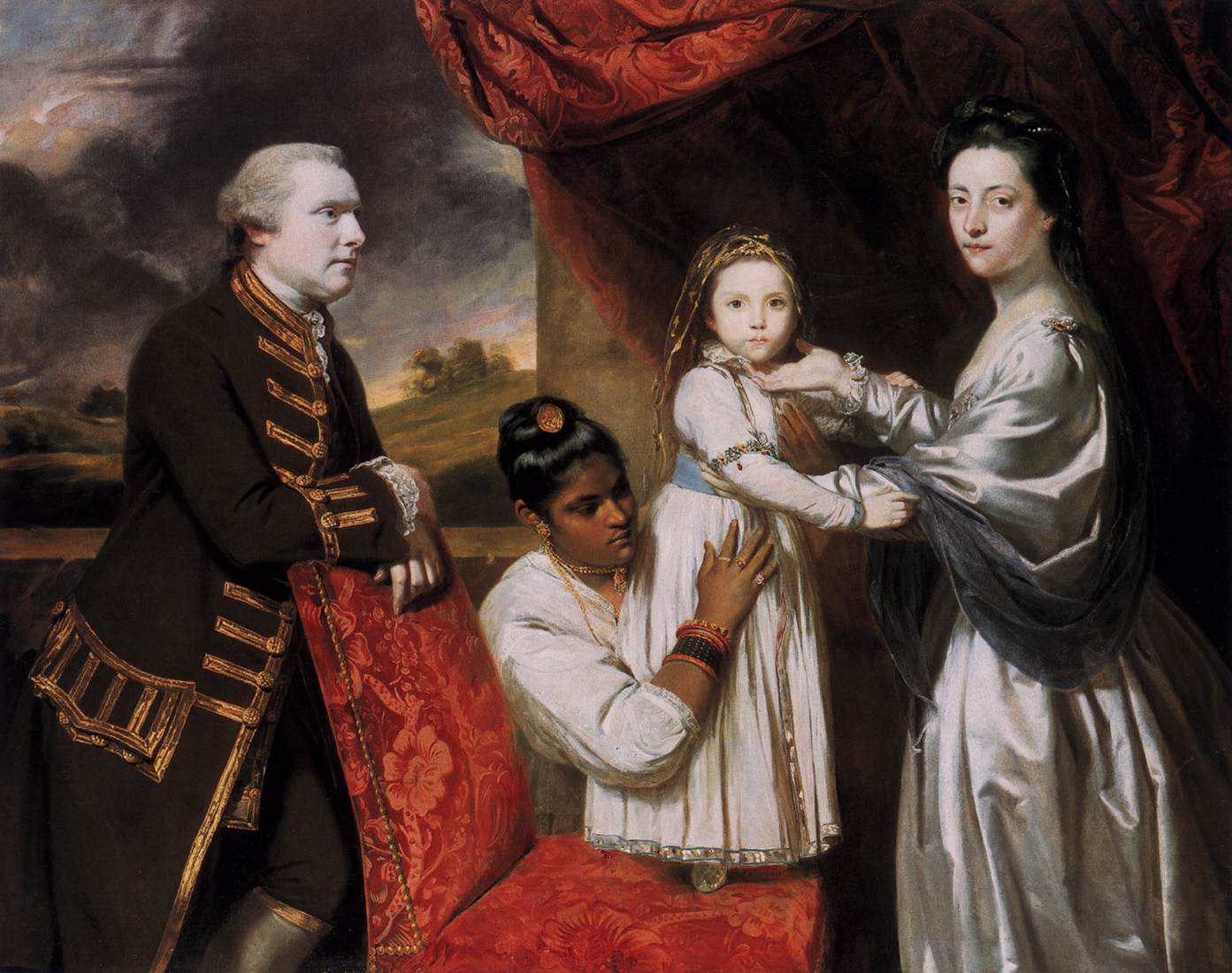
Joshua Reynold's portrait of Clive of India, director of the East India Company, c. 1765

Joshua Reynold’s portrait of Clive of India, director of the East India Company, c. 1765

What to say about Economy of Force, Patricia Owens’ wildly ambitious contribution to international political theory?[1] A book that threatens to overwhelm, whether with the vast literature it marshals or in its brazen assault on (almost all) social theory. A book that consistently degrades the “intellectual crutch” of sociality, offers an arresting agenda for historical and political analysis, and then delivers a revisionist account of late colonial and ‘post-colonial’ counterinsurgency of its own. Amidst the parade of detail and argument, a book in which you will also discover a nascent theory of patriarchy. Arguably more, Economy of Force presages nothing less than the groundwork for a unification of feminist and international political theory.

As we have already seen, Owens’ critique of ‘the social’ as a category of thought and practice involves reviving the alternative to it: oikonomia, economy in its original sense. More precisely, Economy of Force dispenses with the usual distinction between a time when the family household was the primary site of power (feudal, certainly pre-modern, personalist, and status-based) and the contemporary distribution of political, economy and civil power in something we call ‘society’ (properly modern, bureaucratic or networked, and contract-based). Instead of telling stories in which the household is overcome by society, we should, on this account, recognise that ‘the social’ is a historical transformation of the household form. The change in the form of household governance is real, but the stories told about the change are fictions. The current hegemonic story – social theory itself – has as its effect the obscuring of power as domestication. In other words, our conventional narrative of how the household disappeared provides ideological cover for the fact that the household is still very much with us.

Oikonomia, or household governance, is rule characterised by a father figure (paterfamilias) whose power is more or less that of a despot. Since despot means ‘master of the house’, you might expect International Relations scholars to have noticed, or to be alert to their own repeated tendency to name as ‘domestic’ whatever is not part of global politics proper. Instead, these threads must be uncovered, recovered, constructed and mapped anew.

Continue reading

Knowing Like A Jinetera

The last commentary post in our forum on Megan’s From Cuba With Love, following contributions from Megan herself, Rahul, Dunja Fehimovic and Nivi. Megan’s rejoinder will be up imminently.
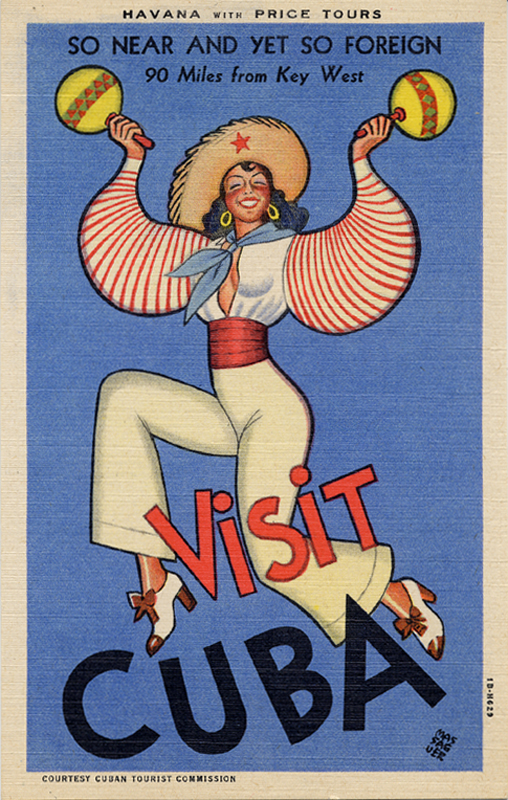

Visit Cuba Poster

So near and yet so foreign! declares the advert. Intimate and exotic, Cuba as a repository for fantasy and self-discovery, the neighbour with the mixed-race charms, the imagined nation Cindy Weber once analysed so relentlessly as “the near colony and certain feminine complement” of the United States. Megan’s new, and first, book – From Cuba With Love – exposes the same kind of dynamic, although from a different standpoint.[1] Hers is a near-seamless blend of reportage and feminist IR, moving from autobiography to testimony to political theory, translating from events on the Malecón (the long waterside promenade in Havana dubbed “Cuba’s great sofa”) to the masculine histories of the Cuban state and back again. It is also – for those seduced by such things – a book beautiful to look at, and to hold (which is a way of saying that you should buy a hard copy). It is a book about evasion, repression and muddled motives, but is itself a model of generosity and clarity.

The central figure throughout is the ‘jinetera’, superficially close to the idea of a ‘prostitute’ but evidently much more ambiguous in definition and shifting in practice. As Megan explains, the term ‘jinetera’ and the general practice ‘jineterismo’ are plays on ‘jockeying’, meaning to manoeuvre for advantage and also to have sex, both connotations clearly playful, if also risky (see the previous posts in the forum for more discussion on the meaning and forms of jineterismo).[2] It is with a curiosity about jineterismo that Megan starts. But where we end up is inside an indispensable guide to the ‘sexual-affective economy’, a bold innovation in disciplinary writing, and a testament to the difference gender analysis makes in studying the global political.

From Cuba With Love does what a certain kind of post-structural feminist IR does best, dissecting the identities created by, and in, a concrete historical system. Not the narrow ‘identity politics’ critics abhor, but identity as the fullness of lived experience shot through with power, subjectivities which are at once deeply personal (love, hope, desire, sex) and interwoven with the most brute forms of political violence (the state, the prison camp, the rehabilitation centre, the police system, imperialism and resistance, exclusion and poverty). It is a study that is undeniably ‘global’ in its scope, even about inter-national relations in a rather precise sense, given how often the admixture of sex and money circles the desires of the (usually) western male for a ‘local’ rendezvous, and how implicated notions of race, nation, difference, rivalry, trade, progress, savagery, miscegenation, and geopolitical virility are in that. A kind of diplomacy, even. This is an encounter with ‘the Other’, and a negotiation of the foreign, in its most visceral possible form. Or, as one key informant more bluntly puts it:

It’s different if one goes to bed with a foreigner, or a mountain of foreigners…Do we have to carry such chauvinistic patriotism with us in our pussies too? Is it obligatory to make use of a mambí dick? Or are they trying to avoid alienating penetrations?

Yet From Cuba With Love is not just a great success on those terms. It is also in many ways the stand-out example of ‘narrative IR’, that vague but increasingly popular sub-field (or is it a method?) devoted to exploring world politics from the situated perspective of someone experiencing it (that someone usually being the researcher themselves). Continue reading

Why Torture When Torture Does Not Work? Orientalism, Anti-Blackness and the Persistence of White Terror

A guest post from Melanie Richter-Montpetit, responding to the disclosure of the Senate Torture Report in December. Melanie is currently lecturer in international security at the University of Sussex, having recently gained her PhD from York University in Toronto. Her work on issues of subjectivity, belonging and political violence has also been published in Security Dialogue and the International Feminist Journal of Politics.


a land on which no slave can breathe.

– Frederick Douglass (1846)[i]

I had to leave; I needed to be in a place where I could breathe and not feel someone’s hand on my throat.

– James Baldwin (1977)[ii]

I can’t breathe.

– Eric Garner (2014)

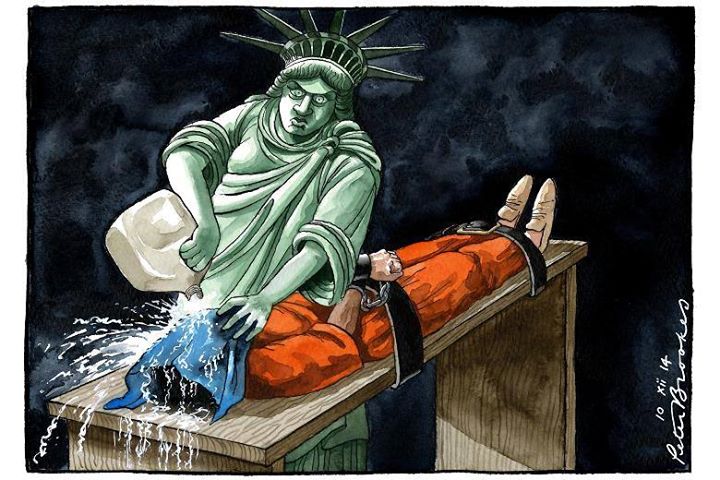
 America Waterboards

No, bin Laden was not found because of CIA torture.[iii] In fact, the US Senate’s official investigation into the CIA’s post-9/11 Detention and Interrogation program concludes that torture yielded not a single documented case of “actionable intelligence.” If anything, the Senate Torture Report[iv] – based on the review of more than six million pages of CIA material, including operational cables, intelligence reports, internal memoranda and emails, briefing materials, interview transcripts, contracts, and other records – shows that the administration of torture has led to blowbacks due to false intelligence and disrupted relationships with prisoners who cooperated. What went “wrong”? How is it possible that despite the enormous efforts and resources invested in the CIA-led global torture regime, including the careful guidance and support by psychologists[v] and medical doctors, that the post-9/11 detention and interrogation program failed to produce a single case of actionable data? Well, contrary to the commonsense understanding of torture as a form of information-gathering, confessions made under the influence of torture produce notoriously unreliable data, and the overwhelming majority of interrogation experts and studies oppose the collection of intelligence via the use of torture. This is because most people are willing to say anything to stop the pain or to avoid getting killed and/or are simply unable to remember accurate information owing to exhaustion and trauma.[vi]

So if torture is known not work, how come, then, that in the wake of 9/11 the U.S. at the highest levels of government ran the risk of setting up a torture regime in violation of international and domestic law? Why alienate international support and exacerbate resentments against “America” with the public display of controversial incarceration practices, as in Guantánamo Bay, instead of simply relying on the existing system of secret renditions? Furthermore, in the words of a former head of interrogations at Guantánamo Bay, most of the tortured and indefinitely detained are “Mickey Mouse” prisoners,[vii] reportedly known not to be involved in or not to have any information on criminal or terrorist activity against the U.S. and its allies. Drawing on previously published work, I will explore this puzzle by addressing two key questions: What is the value of these carceral practices when they do not produce actionable intelligence? And, what are some of the affective and material economies involved in making these absurd and seemingly counterproductive carceral practices possible and desirable as technologies of security in the post-9/11 Counterterrorism efforts?

Against the exceptionalism[viii] of conceiving of these violences as “cruel and unusual,” “abuse” or “human rights violations”[ix] that indicate a return to “medieval” methods of punishment, the post-9/11 US torture regime speaks to the constitutive role of certain racial-sexual violences in the production of the US social formation. Contrary to understandings of 9/11 and the authorization of the torture regime as a watershed moment in U.S. history “destroying the soul of America,”[x] the carceral security or pacification practices documented in the Senate Torture Report and their underpinning racial-sexual grammars of legitimate violence and suffering have played a fundamental role in the making of the US state and nation since the early days of settlement.[xi] The CIA Detention and Interrogation program[xii] targeting Muslimified subjects and populations was not only shaped by the gendered racial-sexual grammars of Orientalism, but – as has been less explored in IR[xiii]is informed also by grammars of anti-Blackness, the capture and enslavement of Africans and the concomitant production of the figure of the Black body as the site of enslaveability and openness to gratuitous violence.[xiv]

Continue reading

For the Joy It Brings: Hashtag Activism and Little Wins

I do it for the joy it brings
because I’m a joyful girl
because the world owes me nothing
and we owe each other the world

Ani Difranco, ‘Joyful Girl

So unless you were unplugged last week (and it’s fine if you were, I’m not judging), you would have seen the hashtag #takedownjulienblanc trending on Twitter. Julien Blanc, to whom the hashtag refers, is a self-styled ‘Pick Up Artist’ who charges actual money – between one thousand and three thousand dollars, by all accounts – for the privilege of listening to his advice on how to ‘pick up’ women. For the privilege of listening to his white, male, privilege, actually, given that the (TW) video that caught the attention of the activist community showed Blanc assaulting Japanese women in a highly sexualised way and commenting that ‘when you go to Tokyo, when you’re a white male, you can do what you want’.

Blanc was clearly paying attention in class when they studied Peggy McIntosh’s ‘invisible backpack’; the trouble is, he thought it was a primer rather than a cautionary tale. This is not the only time Blanc has confused genres in this way. Earlier this year, he tweeted a chart mapping out various abusive relationship dynamics, from intimidation to coercion and threats, with the caption ‘May as well be a checklist’ (though the image has since been taken down, along with Blanc’s entire Twitter account). Blanc’s website actively encourages men to use ‘male privilege, isolation and emotional abuse’ to attract women.

The hashtag was started by ‘shitty artist, intersectional feminist’ Jennifer Li.

Li has explained why she started the hashtag, saying that she was moved to start the hashtag because Blanc is actively perpetuating ‘toxic masculinity’, sexism and racism through his website, social media usage, and ‘Real Social Dynamics’ seminars. The hashtag existed, as all hashtags do, to catch the attention of Twitter users, to make explicit Li’s critique of Blanc and to encourage other Twitter users to do their own research into Blanc and his vile misogyny so that they might support efforts to get Blanc’s seminars shut down.

Dear readers, it worked. Continue reading

Tracing the Threads: Queer IR and Human Rights

Originally commissioned by the Editors of E-IR, who have very kindly allowed it to be cross posted. Click here in order to view the E-IR version.


International politics understood as a fabric of the world is shot through with queer threads. Relatively few IR theorists look for and recognise these threads; fewer still explicate the forms and patterns such threads constitute, or discuss their varied significance and meanings. These threads are not somehow marginal to the fabric of international politics – like ornamental figures in out of the way corners. Rather, they pattern the day to day matters of the discipline. A project in which I am presently involved (and from which this post is derived) seeks to show that when we are willing to trace these threads, a whole set of new understandings opens out before us (Picq & Thiel, 2015).

This is the queer claim that when we study IR directly through sexuality and gender politics, the conceptual realignments and reinterpretations which follow will have general significance for the field; that if we don’t analyse in this queer way we will misinterpret the putative subject of the discipline. The study of international sexuality and gender politics is of consequence for IR in general, not just those activists and academics concerned about specific cases of cross border human rights abuse of queers, or the like. Indeed, the always already present nature of these elements applies to both sexuality and gender politics, and human rights: both often get pushed to the margins and are dismissed as specialty interests. Both, however, suffuse the “routine” subject matter of IR as an academic discipline. IR as a discipline however neglects or resists queer theory, and so the analysis takes place elsewhere. A putative concern with the human rights of LGBTQ people – in foreign policy or via human rights programmes – is often as far as IR gets with its concerns for international sexuality politics. But such gestures – however well meant and executed – are tokens; they are indicative of an intellectual failure to grapple with the full strength of the claims made about the centrality of sexuality politics to international relations.

Scholarship on this topic within IR is becoming more prominent. (Readers should keep an eye out for a forthcoming forum on Queer IR in International Studies Review (Sjoberg & Weber, 2015)) To this point, the claim has been explored most directly and pointedly for IR theory by Cynthia Weber in a recent article in the European Journal of International Relations. Weber engages in a sustained critique of IR scholarship, utilizing a diverse array of resources from queer theory. Let me outline the starting point of her argument against IR. Continue reading

The War Rages On: Women in the British Military and the De-Politicisation of War in ‘Our Girl’ (2014)

A guest post on military gender in popular culture from Harriet Gray. Harriet is a PhD student in the Gender Institute at the London School of Economics, working on intimate partner abuse in the British military. She has also written on female combat roles in the American military, consent, and celebrity intimate partner violence, and can also be found on Twitter.


their war her battle

The five part BBC drama series Our Girl (and the 90 minute TV film which preceded it) centres around the experiences of Private Molly Dawes, a young medic serving in the British Army. Molly is assigned to a unit referred to as ‘2 Section’ as a combat casualty replacement, and with them deploys to Afghanistan. Her colleague in 2 Section, Private Dillon “Smurf” Smith, and their leader Captain Charles James, an experienced officer on his fourth tour of Afghanistan, form the two other principle characters in the series.

Our Girl was broadcast at a time when women’s roles in the British armed forces are once again under review. At present, women – who make up 10% of British regular military personnel – are able to serve in most roles in the British military with the exception of ‘combat roles’, defined as “ground combat units where the primary role is to close with and kill the enemy”. Previous reviews of the ban in 2002 and 2010 have concluded that while many women may well possess the physical and psychological capacities to serve in any military role, the impact of women’s presence on unit cohesion and therefore on combat effectiveness cannot be fully understood without taking the risk of sending mixed combat teams into battle; a risk which the MOD and the armed forces were not at the time of these reviews prepared to take. That is, women’s continued exclusion from combat roles was justified not on the basis of what women were capable of doing, but, as I have argued elsewhere, of who (what?) they are.

The current review, ordered by (then) Defence Secretary Phillip Hammond in the spring of 2014 and due to conclude by the end of the year, will once again prioritise the delivery of operational effectiveness in deciding whether women will be admitted to combat roles, but it is widely expected that this time, the ban will be lifted, in particular because the review has been brought forward to report earlier than the 2018 deadline required under EU equality laws, and following the lifting of a similar ban in the US armed forces in early 2013. While women are soon likely to be able to serve in all roles in the British armed forces, however, this is unlikely to mean that the masculinised culture and male domination within the British military itself will be undermined any time soon; it is likely that it will continue to be the case that, as Victoria Basham puts it, “it is gender-conforming for men to want to join the military or engage in paramilitary activities, but gender-nonconforming for women”.

As Cynthia Enloe also suggests, the definition as ‘combat’ of the roles from which women are excluded has long been largely ideological as opposed to practical – and Molly’s experience in the series reflects this. While as a medic, she is not in a combat role – indeed, as could be considered gender-conforming for a woman since her primary purpose is to preserve life rather than to end it – she is certainly not portrayed as a “beautiful soul” and her role requires her to be very much in the thick of the action. She is shown on patrol with her section, firing her weapon, and being on the receiving end of gunfire with the men alongside her, although she, unlike her comrades, shows some anguish and regret at her own perpetration of violence. While Molly’s role is not a combat role, then, her experiences with 2 Section illustrate many of the well-hashed arguments both for and against the growing presence of women in Western militaries.

Continue reading