How is Rape a Weapon of War?

This post summarises a piece for the European Journal of International Relations just published online. An inconsequentially different pre-publication version is also available for anyone unable to breach the pay wall.

UPDATE (8 March): Sage have kindly made the full EJIR paper open access until early April, so you can now get it directly that way too.


I’m sure you have reasons
A rational defence
Weapons and motives
Bloody fingerprints
But I can’t help thinking
It’s still all disease.

Fugazi, ‘Argument’ (2001)

‘Weapon of War’ could be many explanations and I’m not sure of any of them.

UNHCR official, Goma, Democratic Republic of Congo, June 2010

1. War Rape in the Feminist Imaginary

Rape is a weapon of war. Such is the refrain of practically all contemporary academic research, political advocacy and media reporting on wartime sexual violence. Once considered firmly outside the remit of foreign policy, rape is today labelled as a ‘tactic of war’ by US Secretaries of State who pledge to eradicate it and acknowledged as a war crime and constituent act of genocide at the highest levels of international law and global governance, a development which for some amounts to the ‘international criminalization of rape’. This idea of rape as a weapon of war has a distinctly feminist heritage. Opposed to the historical placement of gendered violence within the hidden realm of the private, feminist scholarship was the first to draw out the connections between sexual violence and the history of war, just as feminists fought to make rape in times of nominal peace a matter for public concern. Feminist academics have, then, pioneered a view of sexual violence as a form of social power characterised by the operations and dynamics of gender. Sexual violence under feminist inquiry is thus politicised, and forced into the public sphere.

But the consensus that rape is a weapon of war obscures important, and frequently unacknowledged, differences in our ways of understanding and explaining it. Continue reading

Book launch: A Liberal Peace?

Tuesday 14th February 2012, 5.30pm-7.00pm

Westminster Forum, 5th Floor, Department of Politics and International Relations, University of Westminster, 32-38 Wells Street, London W1 (nearest tube Oxford Circus)

Panel with Editors David Chandler and Meera Sabaratnam, followed by publisher’s reception

All welcome

The 1990s was a weird decade for all kinds of reasons. The dice that were thrown into the air as the Soviet Union retreated landed in a particularly intriguing configuration for those politicians, public functionaries and academics from wealthy countries and institutions concerned with ‘peace’ and ‘development’. Their missions, marginalised for decades under concerns for national (i.e. military) security, were quite suddenly elevated as symbols of the new world order and installed as defining foreign policy priorities of wealthy states. Continue reading

TRIP-ing the Geek Fantastic: A Note On Surveying Disciplinary International Relations

The preliminary results of the 2011 Teaching and Research in International Politics (TRIP) Survey for the US are out (this is a way of saying that if you’re not an IR geek, you’ll likely find what follows boring and/or incomprehensible). As well as feeding into the usual list fetishism for “those looking to run the world” (*barf*), there are also a number of questions pumping faculty for predications, threat listings and popularity contests (turns out Professors of International Relations rate George Bush Snr. as a better President than Obama, but have almost nothing but contempt for young W.).

The self-image of the discipline continues to shift within the American heartland, not least with respect to the Big Other of Realism. The 2009 TRIP Survey recorded the percentage of self-identified Realists among US respondents at 21%, with Liberals at 20% and Constructivists at 17%. Things have progressed some way since then, with only just over 16% now willing to call themselves Realist against a steady 20% of Liberals and a narrowly triumphant 20.4% of Constructivists (and given the rankings awarded to Wendt within the ‘top four scholars’ sections, the shorter TRIPS may be rendered more simply as: ALEXANDER WENDT MADE ME A CONSTRUCTIVIST). Agnostics and Refuseniks together continue to outnumber these main categories with 11.5% naming themselves ‘Other’ and a further 25.7% declining to name any paradigmatic preference (a slight increase, but essentially the same levels as in 2008).

Continue reading

Colouring Lessons: Bet 115 and the End of Racism

…(fireworks)… Please welcome, in our now well-established way, another new contributor to The Disorder Of Things. Srdjan Vucetic is currently Assistant Professor at the Graduate School of Public and International Affairs at the University of Ottawa. He is most recently the author of The Anglosphere: A Genealogy of a Racialized Identity in International Relations (on which he may blog soon), as well as of a number of articles on the ‘special relationship’, ‘Anglo’ coalitions of the willing and genealogy as a research tool in IR. Images by Pablo.


The problem of the twentieth century is the problem of the color line; the relation of the darker to the lighter races of men in Asia and Africa, in America and the islands of the sea.

W.E.B. Du Bois’ lucid remark, published in The Atlantic in 1901 (and elsewhere), continues to unify and motivate thinking on race and racism in International Relations. ‘Colouring Lessons: Race, Colour, Nation and Colony in Contemporary IR Theory’, an upcoming BISA-ISA conference panel featuring Meera, Omar, Pablo, Robbie, and myself, will consider how the “problem of the color line” might lead us to think differently about the structure and processes of world politics today. There are many good questions to cover; so many, in fact, that we best start our discussions early. Here’s one: when will racism end?

Let us begin by locating the question in the wonderful world of popular online betting. Thanks to the internet it is now possible to make and take wagers on almost anything, including on the future of phenomena such as racism. Recorded in May 2003 by a certain Bill Moore under the title ‘Bet 115’, one such wager can be found on the Long Bets website (Long Bets is run by a California-based non-profit foundation specializing in public education, including “enjoyably competitive predictions, of interest to society, with philanthropic money at stake”). It goes like this: “By 2100 racism will no longer be a significant phenomenon in most countries of the world”. The author qualified his thinking thus:

This prediction simply puts a date to a trend that is well underway. Racism is a set of learned attitudes and behaviour, and as such it can be eliminated. There has been a great deal of movement toward the elimination of racism in the past century. Racism plays a much less significant role in access to employment, housing, education, in distribution of wealth, etc., than it did 100 years ago. Racist attitudes are no longer acceptable in any mainstream, political, social, religious, corporate, or other public figure.

At the time of this writing, Bet 115 goes unchallenged, but thirty or so comments posted by assorted visitors to the site provide us with an interesting repository of ordinary and extraordinary language definitions of race and racism. (A discussion of the boundary conditions of the prediction follows one on human nature, which in turns follows an exchange regarding the “semantics and scope”). Also interesting is that 68% of the registered users of Long Bets (N=249) have voted “against” the prediction, suggesting that the majority expects the global colour line to outlast the end of the twentieth first century, two hundred years after Du Bois wrote (voting has been “temporarily disabled” this fall).

So what would the recent philosophical and socio-historical research on the subject say about Bet 115?

Continue reading

Affect! Biopolitics! Technology! Ecology!: A Call for Papers

A brief pre-holiday announcement of the next Millennium annual conference, to be convened on the theme of Materialism and World Politics. Full details below the fold. The range of suggested topics looks both fascinating and much-needed, and I am assured by well-placed sources that there will also be some stellar speakers, for those who are tempted by such things. As always, papers submitted in the wake of the conference which survive the rigours of peer review will be published in a resulting special issue (Vol. 41, No. 3). Also, don’t forget about the Northedge Essay Competition (deadline 30 January 2012).

Continue reading

Body Politics: Corporeal Suffering, Memes and Power/Resistance, with Special Reference to #Occupy, Tahrir Square, ‘Hunger’ (2008) and Rage Against The Machine

*some extremely disturbing images ahead* (and some humorous deployments of Impressionism and Leonardo DiCaprio).


Two weeks ago, Karin Fierke presented a paper at our theory workshop on self-immolation as speech act (part of a forthcoming book entitled The Warden’s Dilemma: Self-Sacrifice, Agency and Emotion in Global Politics with Cambridge University Press). She focused principally on Thich Quang Duc, the South Vietnamese Buddhist monk who set himself alight and burned to death, silent and still, in Saigon in June of 1963, and on Norman Morrison, an American Quaker who copied Duc’s example in November 1965 by combusting his own flesh outside the Pentagon office of Robert McNamara, then the United States Secretary of Defence implementing Operation Rolling Thunder, the rain of fire which infamously unleashed a greater tonnage of bombs on Vietnams North and South than the total dispatched during the entirety of the Second World War.

This mimesis, an affinity not only of form but also of sacrificial politics, was cited as a mechanism for rupturing the symbolic order. Both Duc and Morrison engaged in a corporeal self-violence so forceful that it not only offended senses, but in fact extended a certain community. An act, substituting for speech, argument or manifesto, which forced itself on high politics and forged an international sensibility until that point lacking. One more contemporary dimension of that imitation and repetition is that many must have encountered the image the same way I did, which was via the front cover of Rage Against The Machine’s pugnacious, convulsively political eponymous debut in 1992. And not just the image, but a vague sense of the story imparted by sleeve notes (and lyrics today associated both with opposition to the media grip of Simon Cowell and with visions of the riotous encounter).

Self-immolation persists in a certain tradition of struggle, but the relevance of these themes – the body, sacrifice, the edifice of politics and protest, the circulation of images – has coalesced potently in the wake of recent events (on which more in a moment). Continue reading

Rewriting International Relations

A small cascade of Millennium-related news and IR from Elsewhere. First, our very own Nick was recently elected as Co-Editor (with Edmund H. Arghand and Maria Fotou) to oversee the journal for Volume 41 (2012-2013) on the basis of a conference proposal on ‘Materialism and World Politics’ (full CfP details forthcoming soon). Second, the Millennium blog has had a facelift (ongoing tweaks to be made to its façade), so go have a look.

Third, and perhaps most importantly, the Northedge Essay Competition is now open. So if you’re a post-graduate student (PhD or advanced Masters) in IR or cognate fields, and you have some exceptional work lying fallow, spruce it up and submit. The deadline is 30 January 2012, and the winning essay will appear in Millennium 41(1). Previous winners have been very good indeed.

Fifth, the journal’s social media tentacles are growing, so do the following thing on Twitter and the liking thing on Facebook, if you are of that bent. Finally, a reminder that Millennium‘s weekly Editorial Board meetings are open to all LSE postgraduates (MSc and PhD) who are engaged and interested. If you fit that description and for some reason aren’t already involved, do email the Editors for details.

Elsewhere, BISA’s Historical Sociology and IR Working Group also has a new look, and a particularly awesome and growing resources page. And there’s now an Occupy IR Theory blog and associated hashtag (#occupyirtheory, natch), which is worth both a virtual engagement and a flesh-world contribution. Similarly, if for any reason you are unaware of David Campbell’s blog on visual culture and international politics, rectify yourselves!

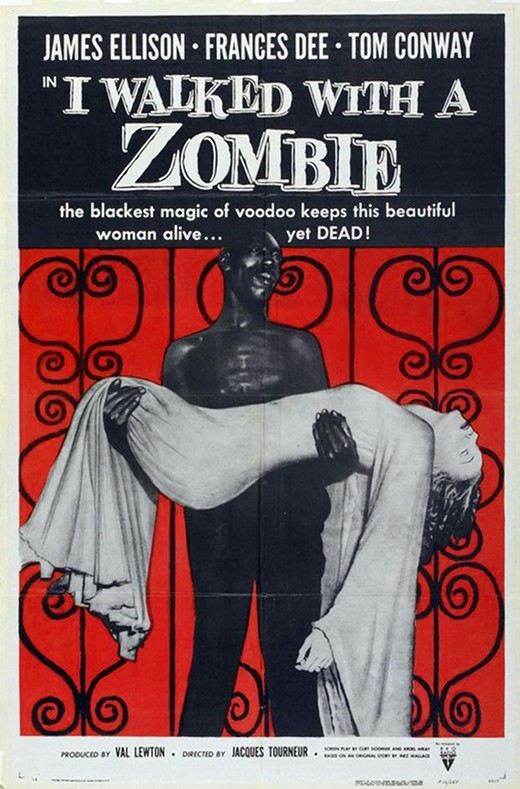
The Living Dead: On the Strange Persistence of Zombie International Relations

A guest post by George Lawson, Lecturer in International Relations at the London School of Economics & Political Science. He is the author of Negotiated Revolutions: The Czech Republic, South Africa and Chile, Co-Editor of The Global 1989: Continuity and Change in World Politics and has written a number of articles on historical sociology, revolution and world order. He is currently a Co-Editor of Review of International Studies and a Convener of the BISA Working Group on Historical Sociology and International Relations. He is currently working on a monograph on the anatomy of revolutions. Images by Pablo.


Daniel Drezner is no fool. This is a scholar who produces major publications, who teaches at a major institution, and who contributes to a major International Relations blog. So you have to wonder why he wrote Theories of International Politics and Zombies. Because this is, by any criteria I can come up with, a very foolish book.

Every now and again, I come across films, music or books and wonder how, in a world where so many talented people fail to make the grade, it can be possible to create, develop, sanction and, ultimately, sell products that are so banal. Often, the answer is simple – money. Perhaps that is the case here too. But I have a feeling that something else is involved in this book as well – Drezner, and plenty of others, seem to think that the connection between zombies and IR theory is uproariously, hilariously, side-splittingly funny. Judging by much of the commentary on the book – and listening via podcast to the guffaws of the audience at a panel devoted to the book at the 2011 International Studies Association Convention – many people clearly share Drezner’s sense of humour. So perhaps I am the curmudgeon here. Because I found this book diverting only in a way popularised by a recent headline in The Onion: ‘Time Between Thing Being Amusing, Extremely Irritating Down To 4 Minutes’. I lasted about half that long with Theories of International Politics and Zombies.

Why is it that so much hoo-hah has been made about this book (10,000 copies sold within six months of publication)?

Continue reading

Renounce Spoonfeeding!; Or, What’s Wrong With International Relations Textbooks Anyway?

Term is upon us, and with it new cohorts of students eager for the accumulated wisdom of IR condensed into textbook form. e-IR recently promoted two such texts, and I took gentle exception.

But what’s so wrong with textbooks anyway? It’s not so much the simplification itself. All theory (including some much-lauded high theory) does that. Nor is it any particular problem with the qualifications of the authors (the contributors to Baylis, Smith and Owens, for example, are pretty well the dominant names in their respective sub-fields).

Still, textbooks do seem to take on a strange epistemic authority, at least in undergraduate study. Confused by the relationship between ethics and self-interest in Morgenthau? Settle it with some bullet-points! IR is a young discipline, and none of its canonical texts approach the difficulty of, say, political, social or cultural theory proper. Any competence is going to come from understanding those texts, so why not do it sooner rather than later? Moreover, the relentless simplifications of the ‘paradigms’ debates (can we drop the mutilation of Kuhn yet?) provide an easy tool for obliterating complexity. This is not unrelated to a patronising attitude towards students, gently shepherded through the early years before being told harsher truths.

Textbooks, especially ones recommended at the start of courses as the intellectual crutches of choice, reinforce those dynamics. But it gets worse. Textbooks also lie.

Continue reading

Nothing Is Authentic Anymore: Disavowed Selves and the Lure of Realpolitik in ‘Tinker, Tailor, Soldier, Spy’ (2011) and ‘In The Loop’ (2009)

Know this: *great clunking spoilers ahead*.


The critical praise heaped on Tomas Alfredson’s version of Tinker, Tailor, Soldier, Spy reflects more than the hunger of intelligent audiences for post-Inception thrillers. Nor can it be explained merely by the excessive parade of grand thesps (Benedict Cumberbatch and the under-rated Stephen Graham both wasted, the former with a sub-Sherlock performance and the latter with a paper-thin bit-part, given historical fidelity by bad hair alone). Its visual and affective qualities are seductive and occasionally beautiful, but then so is its submerged vision of espionage and realpolitik.

The antithesis of Bond and Bourne, Tinker, Tailor offers up the almost forgotten Cold War as the stage for its intrigues. Although the voices are softer and the principals older, there is a more deadly game afoot. As Kermode comments, there will be large swathes of the audience who don’t know the political context at all. Not that it matters, since the detail (Hungary, the parallels with Guy Burgess, Anthony Blunt et al.) are but window-dressing for the appeal of George Smiley (silent, menacing, magnificent Gary Oldman). Contra the brashness of post-9/11 global political allegory-fictions, we are gently ushered into an epic game of chess, played by men. Men whose tools are wit, logic and cunning. Men from an analog age who use little pieces of card to alert them to potential break-ins.

Our contemporary operatives, even those of clear intellect and cunning are, like Bob Barnes in Syriana, always eventually compelled to revert to Hollywood expectations (explosions, gun fights, fisticuffs) to bring matters to their appropriate climax. Not in Tinker, Tailor. At one stage Smiley and co. require small handguns but, although drawn, they are never used. Barring the quasi-orgasmic final exchange between Bill Haydon and Jim Prideaux, our other vivid encounters with slaughter and disembowelment are after the fact, still, frozen scenes, crowned by flies. As if painted by Goya. We gulp and turn away, but what beautiful mutilations!

Continue reading