Is it Time to Abandon International Interventions and International Relations? A Response to Sabaratnam

This post is part of a symposium on Meera Sabaratnam’s Decolonising Intervention. Meera’s original post, with links to the other contributions, is here. If tweeting, please use #DecolonisingIntervention! [Photo selection – LJ]


Megan MackenzieMegan Mackenzie is an Associate Professor in the Department of Government and International Relations at the University of Sydney. Her research is broadly- and humbly- aimed at reducing and, eventually ending war; it bridges feminist theory, critical security studies, and critical/post development studies. Megan has contributed research on topics including sexual violence in war, truth and reconciliation commissions, military culture, images and international relations, and women in combat.


When I was briefly living in Sierra Leone I was invited on a boat trip off the coast of Freetown with a range of women, including a translator at the Special Court for Sierra Leone, a “high-ranking” official within the World Bank who was visiting for three days, a photographer, and a “low-ranking” UN staffer. At one point on the boat trip, we passed what is known as Kroo Bay or Kroo Town, one of the largest “slums” in central Freetown. The Nigerian World Bank official clucked her tongue, seemingly irritated, and said “things just don’t get better here – I don’t get it.” The rest of us sat in silence, including the local male boat driver, who may in fact have lived in the area. This woman was not asking why things “don’t get better,” what “better” might look like, or for responses from those of us in the boat – not least from the driver, who was silent the entire trip. She was making a declaration: “things just don’t get better”, period.

I’ve often thought back to this trip and wondered what this woman did for the rest of her three-day visit to Freetown and what other “poor” country she visited afterward. This small interaction remains a signal to me of two endemic features of both international intervention and international relations. First, it is easy to ask silly questions and draw simple conclusions when you are sitting in a boat looking into a community from the outside. In this story, we were a group of privileged women floating by Freetown. Similarly, I often think of the “discipline” of International Relations (IR) as this boat. IR scholars rely on the stability of “established” knowledge and approaches from which to ask questions and observe “the international.” Second, the encounter signalled the complex relationship between “interveners” and “locals.” The World Bank official was objectively the most powerful person in the boat. Her confidence was impressive, yet she asked no questions, stuck to her set research and work agenda, made many assumptions, and dismissed the local Sierra Leonean as an ignorant worker who should, and did, remain silent. When it comes to powerful IR scholars and approaches, I still can’t help but see the comparisons.

boat

Meera Sabaratnam’s Decolonising Intervention: International Statebuilding in Mozambique calls out IR scholars for continually floating by “case” countries and concluding, with a “tsk, tsk”, that “interventions keep failing”. What is remarkable and inspiring about Sabaratnam’s contribution is the way she weaves several rich intellectual contributions together. First, she makes the case that existing work on international interventions (including critical, “edgy” work) conducts uninspired, repetitive, and theoretically light analyses that ignore the history of intervention and its roots in imperial, racist logics. Second, Sabaratnam speaks back to the discipline of IR by mapping out IR’s commitment to a) Eurocentrism, b) “core” approaches, c) a laughably generous reading of its own history. Sabaratnam argues that these features of IR limit the study not just of international interventions, but of – well, international relations. In other words, Sabaratnam reminds us of the ways that IR scholars remain fiercely committed to a discipline that is parochial, provincial, and often unhelpful in understanding global politics. In short, IR often doesn’t help us understand international relations. This echoes Ann Tickner infamous conclusion: “International Relations is neither international nor relational.”

Continue reading

Intervention, Protagonismo and the Complex Sociology of Difference: A Response to Sabaratnam

This post is part of a symposium on Meera Sabaratnam’s Decolonising Intervention. Meera’s original post, with links to the other contributions, is here. If tweeting, please use #DecolonisingIntervention! [Photo selection – LJ]


amyAmy Niang is Senior Lecturer in International Relations at the University of the Witwatersrand, Johannesburg. Her research is informed by a broad interest in the history of state formation, peace and conflict, and Africa’s international relations. Her work has been published in Alternatives, Politics, African Studies, Journal of Ritual Studies, African Economic History, Afrique contemporaine and many edited collections. Her forthcoming publications include “Rehistoricising the sovereignty principle with reference to Africa: stature, decline, and anxieties of a foundational norm”, in Zubairu Wai and Marta Iniguez de Heredia (eds.) Bringing Africa “Back In”: World Politics and Theories of Africa’s Nonfulfillment (Palgrave Macmillan).

A Methodology of Critique

In Decolonising Intervention, Meera Sabaratnam shows how putatively critical perspectives in the intervention literature are not immune to complacency, in part because of an obsession with the intellectual endeavour for its own sake, and their tendency to revisit “the genealogies, contradictions and trajectories of intellectual traditions associated with the West” (p.23) as the key object of intellectual concern. Such conceptualisations of intervention often paper over, if they don’t ignore or invisibilise people as targets of intervention.

Often justified by methodological rationales based on flawed assumptions, these accounts reproduce, intentionally or unintentionally, very bad habits. By doing so, they reinforce the status of Western agency “as the terrain – or ontology – of the political” (p.25). But one’s methodological choices are inseparable from one’s ontological commitments, and therefore one’s political and ideological outlook. Sabaratnam uses a multidimensional, decolonial approach, beginning and ending with ethnographic and empirical recalibrations that are attentive to the life-worlds of targets of intervention, a methodology often scorned in international relations scholarship for its lack of “objective” scientificity.

mario_macilau

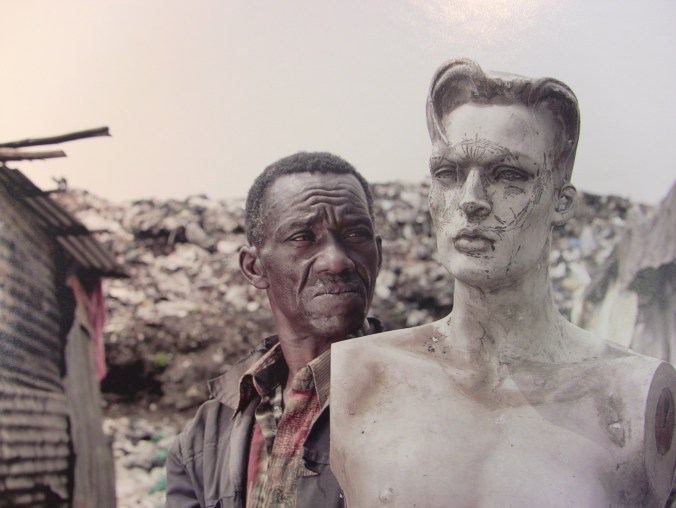
Mario Macilau, A Falha Humana (human failure), 2014

Continue reading

The Limits of Decolonising Intervention: A Response to Sabaratnam

This post is part of a syposium on Meera Sabaratnam’s Decolonising Intervention. Meera’s original post, with links to the other contributions, is here. If tweeting, please use #DecolonisingIntervention!


Postcolonial/ decolonial research seems to be entering into what might be called a “second generation”, moving past early, de-constructive critiques of the IR discipline as racist and colonial, and into showing the “value added” of a decolonial approach in studying concrete problems in international politics. Decolonising Intervention is an important contribution to this effort.

Sabaratnam’s basic argument is quite straightforward. Like many critical scholars of intervention, she documents multiple failures of Western statebuilding interventions (SBIs) to resolve the problems they (allegedly) seek to address. Unlike them, however, she attributes these recurrent failures – persistent, despite widespread acknowledgement, even among interveners, and within a gargantuan “lessons learned” literature – to the “colonial” structure of global politics. Put simply: Western donors feel superior to the targets of intervention, and so simply cannot learn from their mistakes. They are obsessed with their own starring role (protagonismo), making them congenitally incapable of deferring to their targets’ concerns, ideas, knowledge or demands. They garner the lion’s share of donor funds, scarcely caring if interventions work or not, implicitly seeing targets’ time and resources as “disposable”. Dependent recipients have little choice but to engage, or lose what resources are offered.

49563_600 Continue reading

Of Privileged Viewpoints and Representation of Subordinated Experiences: A Response to Sabaratnam

This guest post, from Marta Iñiguez de Heredia, is part of our symposium on Meera Sabaratnam’s Decolonising Intervention. Meera’s opening post is here.  If tweeting, please use #DecolonisingIntervention! [Photo selection – LJ]


person_boxMarta Iñiguez de Heredia is a Marie-Sklodowska Curie Fellow at the Institute Barcelonaof International Studies. She holds a PhD from the London School of Economics and Political Science (LSE). She has taught at the University of Cambridge, the LSE, Rouen Business School, Deakin University and La Trobe University.  Her research concentrates on the historical sociology of peacebuilding processes, with a focus on the relationship between order, violence, state-making and resistance, and on Africa in particular. She draws on historical sociology, critical Africanist and practice literatures, as well as on extensive fieldwork. Current research is focused on EU’s peacebuilding policies, the militarisation of peacebuilding and political transitions through the emergence of African social movements.

In his opening chapter of The Invention of Africa, V.Y. Mudimbe states that a very basic question animating the book is “to what extent can one speak of an African knowledge, and in what sense?” (p.88) By unearthing what he calls African gnosis (“structured, common, and conventional knowledge”), Mudimbe seeks to explore the conditions of the possibility of knowing Africa otherwise; that is, outside the colonial library, that body of knowledge that keeps negating all that Africa is by constructing it as the ultimate other of Europe. What Mudimbe incisively captures is the politics of knowledge whereby, as Ngũgĩ wa Thiong’o puts it, “how we view ourselves, our environment even, is very much dependent on where we stand in relationship to imperialism in its colonial and neo-colonial stages.”

Decolonising Intervention theorises intervention from the perspective of relations of race and empire. Through the case of Mozambique, the global colonial structure of power is revealed not just in how interveners put in place programmes that debilitate state institutions, go to waste, or do not address actual material needs, but also in how the literature has theorised intervention so far. The “habit” of disregarding the historicity and politics of subjects and of thinking from the West is directly linked to how hierarchies of being and having are reproduced. Decolonising Intervention not only helps us looking at intervention in critical, decolonial ways, it also makes a crucial contribution to taking IR out of its colonial, Eurocentric origins and turning it into a critical tool for social change. This is all the more compelling due to the rich and nuanced theoretical framework it uses, by the detailed, impressive and thorough empirical research it draws upon, and by the refreshing writing style that makes the pages flow. Continue reading

Feminist Allies: The Good, The Bad and The Ugly?

Profile photo

Columba

AG photo

Amy

We welcome a guest post from Columba Achilleos-Sarll and Amy Galvin-Elliott from Warwick. Columba is an ESRC funded PhD student at the University of Warwick in the Politics and International Studies department. Her research lies at the intersection between feminist and postcolonial theory, UK foreign policy and the Women, Peace and Security (WPS) agenda. She recently published in the Journal of International Women’s Studies: Reconceptualising Foreign Policy as Gendered, Sexualised and Racialised: Towards a Postcolonial Feminist Foreign Policy (Analysis). Amy is completing her PhD in the History department at the University of Warwick. Her project on female experience of parliamentary spaces is generously funded by the ESRC and is jointly supervised by Warwick and the Parliamentary Archives. Her main research interests include gendered experiences of space and the 19th century political culture of Britain.


This year’s International Feminist Journal of Politics conference (IFJP) provoked serious thought about a question that was posed during a plenary session by Professor. Brooke A. Ackerly from Vanderbilt University: “How can I be a ‘good’ feminist ally, and is it better for me to be a ‘bad’ feminist ally than no ally at all?”

Feminism promotes equality, tolerance, understanding, and facilitates a space for the voices of those otherwise oppressed or marginalised. However, as academics, Ackerly’s question requires us to hold a mirror to our professional selves and ask just how far our work within the academy creates a space for the narratives of marginalised groups? And, where it does, do we allow them to speak for themselves? The very nature of academia serves to ‘legitimise’ certain forms of knowledge production, deciding, based on an assumed authority, whose voices are recorded and whose are not. As feminist scholars operating in and beyond academia, how can we conduct ourselves in a way that makes us a ‘good’ ally? And, what does it even mean to be a ‘good’ ally?

Responses to Professor Ackerly’s question were complex and a thoughtful reminder of how we, as academics and/or activists, position ourselves in relation to others. Perhaps this quote from Panellist Anasuya Sengupta best summarises the tensions around feminist allyship:

The conversation that followed prompted a number of questions: Who is a feminist ally? How are they produced? Where are alliances formed? Who has the power to be a feminist ally? And, what distinguishes a ‘good’ from a ‘bad’ feminist ally? Continue reading

Decolonising Intervention: A Symposium

The Disorder of Things‘ own founding contributor, Meera Sabaratnam, has published her first book: Decolonising Intervention: International Statebuilding in Mozambique, with Rowman and Littlefield International. We are delighted to host a symposium on the book, starting with Meera’s opening post, and to be followed over the next week or so by reviews from Marta Iñiguez de Heredia, Lee Jones, Amy Niang and Megan Mackenzie, and a final response from the author. If tweeting, please use #DecolonisingIntervention! The book is available as an Open Access free PDF download here. -LJ

Update: posts by Marta, Lee, Amy, Megan and Meera are now available. The whole symposium is available here.


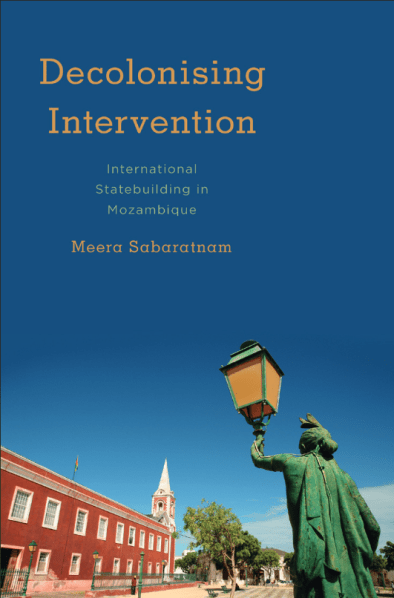
Cover of the book Decolonising Intervention, which features the former Governor's house on Ilha de Moçambique, now a museum, plus a rusting colonial lamp-post

Things look different depending on where you stand.

This is a simple proposition, but one which, if pursued a little further, deeply challenges dominant approaches to social science, many of which are premised on ignoring or denying the partial character of the social-scientific gaze.

I don’t disagree with the ambition per se of attempting to open up our own understanding of a phenomenon through deep and wide-ranging research; indeed this is what I love about being a scholar. Furthermore, just because things look different depending on where you stand, does not mean you cannot learn more about something, or learn to understand it better. I do not reject the possibility of a better and wider understanding just because points of departure are always partial.

Yet, the first step for studying complex social phenomena must be a recognition of and a grappling with this proposition.

Beyond this, various feminist, anti-colonial and Marxist thinkers have advanced a further proposition: that power relations can be better understood when you look at them ‘from below’, i.e. from the perspective of the disempowered parties.

This stems from the idea that relations of power put different cognitive demands on people by virtue of that relationship.

Grizelda cartoon

Patricia Hill Collins for example points out that domestic labourers must acquire an intimacy both with the ways of thinking of their employers/masters, and with their own sense of how to navigate and survive in this system.

And W.E.B. Du Bois famously drew attention to what many continue to call ‘double consciousness’ – that is, the idea that African-Americans had to apprehend and negotiate the racist negations of mainstream American society, whilst simultaneously cultivating a distinctive intellectual tradition rooted in historical and contemporary attempts at flourishing.

If they are right, then scholars engaging with relations of power from any field of study – and particularly in the field of ‘political science’ – should be especially interested in the perspectives and experiences of the relatively disempowered as a point of departure for analysis. Continue reading

‘This House Believes Britain Should Be Ashamed of Churchill’

Below is a slightly expanded text of a ten-minute speech I gave at the Oxford Union for the proposition ‘This House Believes Britain Should Be Ashamed of Churchill’. The bits in square brackets are things I didn’t have time to say, or hadn’t thought of saying at the time, or reflections on what happened later. Shoulda coulda woulda: that’s what blogs are for. 

In April 2016, Boris Johnson (while still mayor of London) wrote a curious article for the Sun. The article was timed to coincide with a visit to the UK by President Obama, who was widely expected to appeal to the British people to vote to remain in the European Union in the upcoming referendum. As a leading spokesperson for the Leave campaign, Boris wanted to pre-empt Obama. He tried to do this by invoking Churchill in two ways. First, he drew attention to one of Obama’s first acts upon entering the Oval Office, when he returned a bust of Churchill to the British embassy in Washington. Speculating on why Obama might have done this, he suggested—with more than a hint of Trumpian Birtherism—that this might have been ‘a symbol of the part-Kenyan President’s ancestral dislike of the British empire—of which Churchill had been such a fervent defender.’ See, Obama’s grandfather had been arrested and tortured for his alleged participation in the Mau Mau insurgency in Kenya, which began during Churchill’s postwar premiership. Having tried to discredit Obama by reminding us of his dislike for Churchill and the British empire, Boris then invoked Churchill in a more positive vein as a symbol of the struggle against dictatorship in Europe who might similarly inspire the efforts of Leavers in their own struggle against the dictatorship of the European Union. In this strange little article and its intersecting oppositions—Boris v. Barack, Leave v. Remain, Churchill v. the empire—we have all the ingredients that might explain why this House, in 2018, is being asked to consider whether to express shame in a long dead British Prime Minister.

Continue reading

What We Talked About at ISA: Arms Exports and Feminist Foreign Policy

In recent years, we’ve seen a number of depressing political shifts in the Euro-Atlantic area — but the rise of feminist foreign policies is not among them.

The trend was set in 2014 when Margot Wallström was named foreign minister in Sweden’s new centre-left coalition government. First came the sound bites: Helping provide women everywhere with 3 Rs —resources, representation and rights, for example. Four years later, there is an actual policy in place, one that is being closely watched, analyzed and in some cases imitated — one that contains lessons for Canada in its own efforts to enact feminist foreign policies. The policy reads:

Equality between women and men is a fundamental aim of Swedish foreign policy. Ensuring that women and girls can enjoy their fundamental human rights is both an obligation within the framework of our international commitments, and a prerequisite for reaching Sweden’s broader foreign policy goals on peace, and security and sustainable development.

Continue reading

Decolonising International Relations – some Pedagogical Reflections

This is a guest post by Maïa Pal and Doerthe Rosenow, Senior Lecturers in International Relations, Department of Social Sciences at Oxford Brookes University.  Maïa is working on a co-edited volume for Routledge on The Extraterritoriality of Law: History, Theory, Politics and on a monograph for Cambridge University Press on Jurisdictional Accumulation: An Early Modern History of Law, Empires, and Capital. She is also an editor for the journal Historical Materialism: Research in Critical Marxist Theory. Doerthe has recently published the book Un-making Environmental Activism: Beyond Modern/Colonial Binaries in the GMO Controversy and a series of articles about critique and its limits. 


On 22 February 2018, Dr Meera Sabaratnam, Lecturer in Politics and International Studies at SOAS appeared on the BBC Radio4 Today programme [2.53 onwards] to discuss ‘What is decolonisation?’ and what it means to ‘decolonise the curriculum’. She faced David Aaronovitch, columnist at the Times, who complained about the problem with the word ‘decolonise’, stating it was ‘not the job of university studies to decolonise or recolonise’. Instead, he suggested, universities should ‘think critically’ and not look ‘like a political project’ that imposes a particular view on students. In other words, Aaronovitch claims that a university education should – and can – consist in a neutral, open, apolitical transfer of knowledge from the teacher to the student, and definitely not the other way round. He is shocked at ‘this business of’ students participating in the elaboration of curricula – no pun apparently intended, but Aaronovitch is obviously a natural. His sentiment is amplified by the current 9K fee system because if students are paying so much, they should expect to get a service delivered exclusively by teachers.

The underlying scandal here is that Aaronovitch is actually complaining about teachers whom he thinks are asking students to do their jobs for them – in spite of Sabaratnam reminding him in her introduction that most of university teachers and other professional staff are currently on strike to defend their pensions from being made dependent on the fluctuations of the stock market, which could result in a 25% pay cut. So behind a poorly constructed and intentionally naïve critique of decolonial education as a political project (which surely Aaronovitch himself does not believe in, since he must be well versed in debates about the objectivity and/or neutrality of epistemology stretching back to ancient philosophies, Western and non-Western) is the old conservative refrain of counter-establishment or radical projects being the product of lazy lefties, in this case teachers skiving by getting students to write their syllabi. Continue reading

Living on the Wrong Side of the Redline

On Valentine’s day 2018, Admiral Harry Harris revealed that an evacuation plan for Non-essential personnel and military dependents was being developed for South Korea. A few weeks earlier the public was given a brief preview of this policy when almost-U.S. Ambassador to South Korea, Victor Cha, announced that he was dismissed by the Trump administration in part because of his resistance to undertaking an evacuation.  In his words, an evacuation would provoke North Korea and hasten the pace of invasion plans by the White House. Admiral Harris’ testimony before congress confirmed Cha’s incredulity regarding such a plan as he described the unrealistic logistics of moving thousands of American military dependents and potentially hundreds of thousands of U.S. citizens residing primarily in Seoul. Adm. Harris’ testimony is not encouraging, particularly in light of Trump’s ominous foreshadowing of a worldthreatening “phase II” if another round of sanctions do not produce complete nuclear disarmament on the part of North Korea.

unnamed

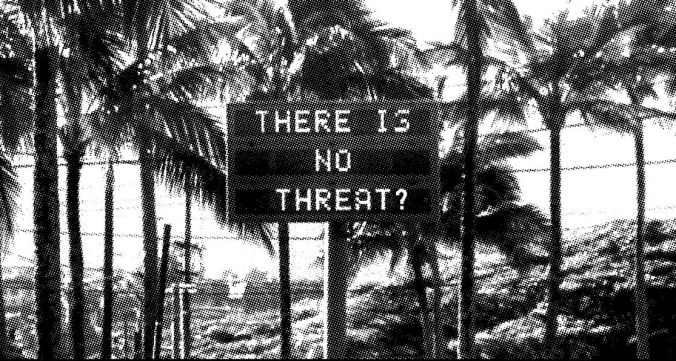
From the island of Oahu the response is: what about us? Seoul is 5 to 10 minutes from North Korean retaliation but Honolulu is only 15 minutes further away by ICBM. Where is our evacuation plan? The already unimpressive track record of U.S. nuclear interceptors has been joined by another very public failure of an interceptor test here in Hawai’i. Add to this the lingering collective dread after our mistaken missile alert on January 13th of this year, and we want to know where our militaryassisted evacuation plans are. Unlike South Korea which has thousands of bomb shelters, Honolulu has no approved public bomb shelters. This is a fact reinforced by recent statements by state civil defense authorities recommending that we all shelter in place despite the fact that most Honolulu homes are of wooden construction and do not have basements. We have nowhere to go, nowhere to hide, and we have received a taste of what it is like to wait for unstoppable death with those we love most.

What makes our collective vulnerability all the more terrifying is the palpable panic on the faces of our active duty service personnel in our communities, classrooms, and families. They are being told to prepare themselves to die for their country in Korea, are being issued a new generation of body armor, trained for tunnel warfare, and tasked to move the last of the necessary tactical equipment to South Korea. States move B-2 bombers to Guam to send a signal to North Korea. They move body armor to Seoul to prepare for invasion. Here in Hawai`i, we take the Trump administration at its word when they say there is no ‘bloody nose strike’ in the works. That is because we can see a full scale attack is being planned. If this seems unthinkable on the mainland, consider how often you have said Donald Trump’s behavior was unthinkable just before he proved you wrong.

Continue reading