Kony 2012 and The Choir of Saviors: You got a song you wanna sing for me?

You got a song you wanna sing for me?
Sing a song, singing man.
Sing another song, singing man.
Sing a song for me.
One for the pressing, two for the cross,
Three for the blessing, four for the loss.
Kid holdin’ a weapon, walk like a corpse
In the face of transgression, military issue Kalash
Nikova or machete or a pitchfork.
He killing ’cause he feel he got nothin’ to live for
In a war taking heads for men like Charles Taylor
And never seen the undisclosed foreign arms dealer.
Thirteen-year-old killer, he look thirty-five,
He changed his name to Little No-Man-Survive.
When he smoke that leaf shorty believe he can fly.
He loot and terrorize and shoot between the eyes.
Who to blame? Its a shame the youth was demonized.
Wishing he could rearrange the truth to see the lies
And he wouldn’t have to raise his barrel to target you,
His heart can’t get through the years of scar tissue.

-“Singing Man“, The Roots

60 million people and counting have now heard about Invisible Children’sKony 2012“. Criticism of the group has been substantial and judicious. The group has defended themselves. Humorous memes are proliferating. Over-exposure has already begun to create awareness fatigue. Yet there is a serious issue largely unaddressed: the most troubling elements of the “Kony 2012” phenomenon are not unique to Invisible Children, but reflect serious moral and political problems with the pursuit of international criminal justice, and in particular the mission and politics of the International Criminal Court and their controversial prosecutor, Luis Moreno-Ocampo.

To put it bluntly: while Jason Russell addresses his audience in the same way he addresses his five-year-old son Gavin, which is clearly inappropriate given the complexity of the issues he’s asking us to consider, Russell’s framing of the evil of Joseph Kony and “our” responsibility to stop him is importantly similar to the narrative of international criminal law, and Ocampo in particular. We should not be too quick to denounce the moral idiocy of Russell as a personal failing – his sentimental and messianic film represents a revealing apotheosis rather than a transgressive break from our sense of international justice. There are unpleasant resonances between Russell and Ocampo – the ICC prosecutor has already praised the group, saying,

“They’re giving a voice to people who before no-one knew about and no-one cared about and I salute them.”
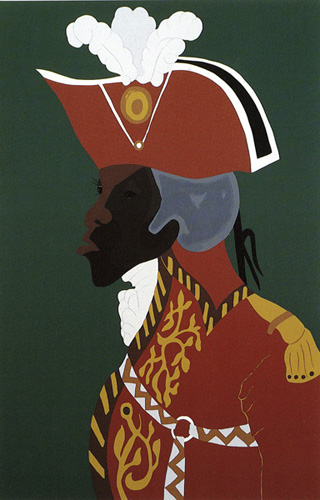
But the commonalities run deeper than a strategic endorsement and should give us pause before we conclude that while Invisible Children may be unscrupulous and ill-informed, some form of outside intervention is needed to save the children of the Great Lakes region of Africa (to say  nothing of the adults being killed) – and yes, an arrest warrant and possible trial by the ICC is as much an intervention as a military invasion. Russell’s call to “stop Kony” is disturbing beyond his narcissism and the organisation’s inept policies and campaigns, his messianic moralising, in which he positions himself (and those like him who just need to be roused to action) as the hero for the powerless victim, is a single melody line in the score that guides the choir singing for international justice. His self-regarding indignation, and our discomfort, should inspire introspection into the desires that lead us to demand that Kony stand trial at the ICC or to insist that “we” must do something to stop the evil that besets that part of Africa.

Continue reading

Human Rights Contested – Part II

This is a continuation of my previous post

Who Are Human Rights For?

All of the authors take account of the ambiguous history of human rights, in which they can be said to have inspired the Haitian, American and French revolutions, while also justifying the counterrevolutionary post-Cold War order dominated by the United States. Yet recognising this ambiguity without also acknowledging the distinctive reconstruction of contemporary human rights that makes them part of a neo-liberal international order and the unequal power that makes such a quasi-imperial order possible would be irresponsible. A primary contribution made collectively by these texts is that they clearly diagnose the way human rights have been used to consolidate a particular form of political and economic order while undercutting the need for, much less justification of, revolutionary violence. Williams says of Amnesty International’s prisoners of conscience, who serve as archetypal victims of human rights abuse,

the prisoner of conscience, through its restrictive conditions, performs a critical diminution of what constitutes “the political.” The concept not only works to banish from recognition those who resort to or advocate violence, but at the same time it works to efface the very historical conditions that might come to serve as justifications – political and moral – for the taking up of arms.

Human rights, then, are for the civilised victims of the world, those abused by excessive state power, by anomalous states that have not been liberalised – they are not for dangerous radicals seeking to upset the social order.

Continue reading

Human Rights Contested – Part I

This post (presented in two parts) is drawn from a review article that will be forthcoming in The Journal of Intervention and Statebuilding, which looks at a recent set of critical writings on human rights in order to consider the profound limitations and evocative possibilities of the contested idea and politics of human rights.

Human Rights in a Posthuman World: Critical Essays by Upendra Baxi. Oxford: Oxford University Press, 2009.

Surrendering to Utopia: An Anthropology of Human Rights by Mark Goodale. Stanford, CA: Stanford University Press, 2009.

The Divided World: Human Rights and Its Violence by Randall Williams. Minneapolis, MN and London: University of Minnesota Press, 2010.

After Evil: A Politics of Human Rights by Robert Meister. New York, NY: Columbia University Press, 2011.

The central tension of human rights is that they propagate a universal and singular human identity in a fragmented political world. No one writing about human rights ignores this tension, but the most important question we face in judging the value of human rights is how to understand this tension and the divisions it creates. The expected divisions between good and evil, between moral universalists and dangerous relativist, between dignified interventionists and cowardly apologists, have long given shape to human rights, as both an ideal and a political project. Seeing the problems of (and for) human rights in these habituated ways has dulled our capacity for critical judgment, as few want to defend evil or violent particularisms or advocate passivity in the face of suffering. Even among serious and determined critics our inherited divisions are problematic (and increasingly over rehearsed), whether we think of human rights as the imposition of Western cultural values, or in terms of capitalist ideology serving the interests of neo-liberal elites, or as an expression of exceptional sovereign power at the domestic and global levels. The ways that these divisions deal with the tension at the heart of human rights misses the ambiguity of those rights in significant ways.

     Rather than trying to contain the tensions between singularity and pluralism, between commonality and difference, in a clear and definitive accounting, the authors of the texts reviewed here allow them to proliferate. Rather than trying to resolve the problem of human rights, they attempt to understand human rights in their indeterminate dissonance while exploring what they might become. To create and invoke the idea of humanity is not a political activity that is unique (either now or in the past) to the ‘West’. The people most dramatically injured by global capitalism sometimes fight their oppression by innovating and using the language and institutions of human rights. Political exceptions – the exclusion of outsiders, humanitarian wars and imperialist conceits – are certainly enabled by the same sovereign power that grants rights to its subjects, which is a metaphorical drama all too easily supported by human rights, but it is only a partial telling of the tale, a telling that leaves out how human rights can reshape political authority and enable struggles in unexpected ways. The work of these authors pushes us to reject the familiar divisions we use to understand the irresolvable tension at the centre of human rights and see the productive possibilities of that tension. If human rights will always be invoked in a politically divided world, and will also always create further divisions with each declaration and act that realises an ideal universalism, then our focus should be on who assumes (and who can assume) the authority to define humanity, the consequences for those subject to such power, and the ends toward which such authority is directed. Continue reading

Looking Beyond Spring for the Season: Echoes of Time Before Tahrir Square

This is the fifth and last part in a series of posts from Siba Grovogui, Professor of International Relations and Political Theory at John Hopkins University. The first part is here; the second here; the third here; the fourth here. The series considers the character and dimensions of the tension between the African Union and ‘the West’ over interventions in Africa. As before, responsibility for visuals adheres solely to Pablo K.


It would be disingenuous to relate events in North Africa and the Middle East (or MENA) today without reference to the media. Here too, there are many possible angles to examine. I will focus on the institutional support that the media provide in shaping consensus in support of foreign policy. In this regard, so-called mainstream Western media and networks (BBC, CNN, Fox, RFI and the like) have played a significant role in generating domestic support for the Libyan campaign. The media find themselves in the contradictory positions of both providing sustenance to foreign policy rationales and reporting on government actions. In this role the media either wittingly or unwittingly assumed the position of justifying contradictory Western foreign policy aims while trying to satisfy the needs of their audiences (especially domestic constituencies and home governments) for information from the front. Consistently, the media often generate sympathy for foreign actors or entities that either support Western interests or have affinities for Western values.

This role is not without a cost, especially when foreign policy actions, including wars, fail to attain their objectives. When the outcome of foreign policy proves disastrous, Western media also have an inexhaustible capacity to either ignore their prior support for the underlying causes or to reposition themselves as mere commentators on events over which they had no control or could not prevent. Increasingly, these tendencies have spread around the world as evidenced in the techniques and styles that have propelled the Qatari-based Al Jazeera into prominence as key contender in the emergent game of production, circulation, and consumption of foreign policy-concordant images for their affective and ideological effects.

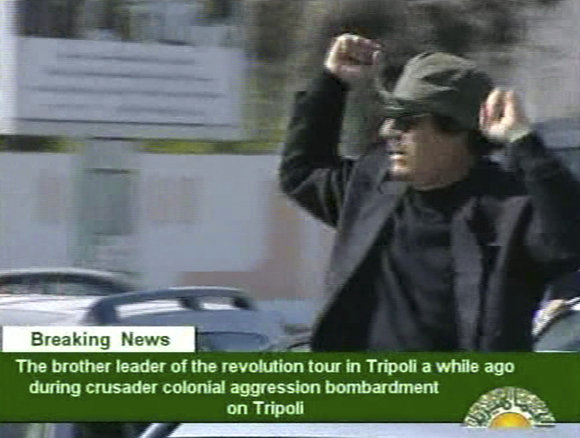
So it is not surprising that the backdrop and background scenarios for most reporting on the 2011 revolts in MENA are dimensions of Orientalism, of which they are many. But the most constant is one of autocratic ‘barbarism’. In this regard, the discourses and media techniques for creating and supporting sympathetic figures are just as constant (or invariable) as Western states rationales for intervention. The media-hyped stories of Oriental despotism that preceded Operation Desert Storm, when the US expelled Iraq from Kuwait, have provided the template. During that event, for instance, media feted their viewers with stories of invading Iraqi hordes storming through hospital only to disconnect incubators and let helpless infants die a slow death. These and many stories of heroic bids by US soldiers to prevent such barbarism were later discredited but not the other horrific stories which convinced US citizens of the need to wage war on Saddam Hussein’s occupying army. In the Libyan case today, one of the earlier images of the aura of impunity created by Gaddafi was that of a Libyan female lawyer who was allegedly raped by Gaddafi’s forces. There was also a reported event of military takeover of a hospital.

Continue reading

Looking Beyond Spring for the Season: Democratic and Non-Democratic Cultures

This is the fourth part in a series of five posts from Siba Grovogui, Professor of International Relations and Political Theory at John Hopkins University. The first part is here; the second here; the third here. The series considers the character and dimensions of the tension between the African Union and ‘the West’ over interventions in Africa. As before, responsibility for visuals adheres solely to Pablo K.


It is not accurate to say that the African Union has been indifferent to the conflict in Libya. If there has been silence in Africa, it has to do with the extent to which the ‘maverick’ Colonel (Gaddafi) has angered some of his peers over the years by interfering in the affairs of such states as Nigeria, Liberia, Burkina Faso, Sierra Leone and others, with disastrous effects. Even when, as in Sudan and Uganda, officeholders have welcomed his entreaties, large segments of the populations have not appreciated them. Yet, regardless of their personal views of Gaddafi and their political differences with him, African elites and populations have yearned for a more positive, conciliatory, and participatory solution to outright regime change or the removal of Gaddafi preferred by the West. This variance, I surmise, comes from a positive understanding of postcoloniality that include forgiveness, solidarity, and democracy and justice, as exhibited in post-apartheid South Africa and post-conflict Liberia, Angola, Mozambique, and the like.

In opting for negotiated mediation and a new constitutional compact, therefore, the African Union (or AU) aimed to foster a different kind of politics in Libya – admittedly one that has escaped many of the states endorsing that position. As articulated by Jean Ping, the Secretary General of the AU, the Libyan crisis offered an opportunity “to enhance a self-nourishing relationship between authority, accountability and responsibility” in order to “reconstitute African politics from being a zero sum to a positive sum game” toward one “characterized by reciprocal behavior and legitimate relations between the governors and the governed.” Mr. Ping added two other dimensions to his vision. The first is an acknowledgement that events in Libya point to the fact that all Africans “yearn for liberty and equality’ and this yearning is “something more consequential than big and strong men.” The second is that Africa’s destiny should be shaped by Africans themselves based on an actualized “sense of common identity based, not on the narrow lenses of state, race or religion, but constructed on Africa’s belief in democracy, good governance and unity as the most viable option to mediate, reconcile and accommodate our individual and collective interests.”

Coming from a politician, these words may read like slogans. But the uniform refusal of the AU to endorse Western intervention tells another story. Continue reading

Looking Beyond Spring for the Season: An African Perspective on the World Order after the Arab Revolt

The first of a series of posts by Siba Grovogui, Professor of International Relations and Political Theory at John Hopkins University (followed by a second, third, fourth and fifth installment). He is the author of Sovereigns, Quasi-Sovereigns and Africans: Race and Self-Determination in International Law and of Beyond Eurocentrism and Anarchy: Memories of International Orders and Institutions, as well as a number of articles on race, sovereignty, postcoloniality and human rights and what the history of slavery tells us about the contemporary discourse of international politics. Reposted from The Contemporary Condition. Images by Pablo.


There is much misunderstanding today about the decision of African Union (AU) to not endorse the military intervention in Libya undertaken by France, Great Britain, and the United States in conjunction with a few Arab States. Speculations abound as to whether the uniform decision coming out of Africa indicates that the African Union is out of step with the spirit of freedom sweeping across North Africa and the Arab World; or whether the absence of Africa in the battlefield of Libya merely suggest military ineptitude and political bankruptcy. In fact, it is not accurate that the African Union has been indifferent to the conflict in Libya. The AU opted for mediation and negotiated constitutional compact, with the aim of fostering a different kind of politics. The uniform refusal of the AU to endorse Western intervention has two main explanations. The first is the practice of consensus in decision-making which has long history within Africa. The other is profound unease on the continent about the form and foundation of the intervention itself.

I suggest that there is continent-wide scepticism in Africa about Western leadership in the eras of global governance, the rule of (international) law, the status of international morality, and the future of global democracy. This development is the result of continental experiences with the modes of enactment and execution interventions in Africa. The African position arises therefore from doubt that the coalition of Western powers leading the military effort in Libya today can be trusted to not abuse legitimate anti-Gaddafi sentiments; to not instrumentalize international law and morality; and to not subvert UN procedures and the mechanisms of global governance in order to advance hegemonic agendas and parochial ‘strategic’ interests. In short, underlying the African objection to military intervention is a long-standing tension between international organizations that represent Africa and the self-identified ‘West’ around the representations of the will of the international community, the resulting global democratic deficit in times of intervention, and their effects on international morality, including the principles of humanitarianism.

In relating this conflict, I do not wish to speak for a uniformly-defined ‘Africa’ and/or for all African entities. Continue reading

Human Rights In Crisis?

UPDATE (8 September 2014): Anthony is now with us permanently, but originally wrote this as a guest post after a stint as a Senior Visiting Fellow at the LSE in 2010, where most of us met him. It was in London that he presented an early version of this argument to the IR theory seminar. A response by our own Joe followed shortly afterwards.


One should not judge a book by its cover, but it is certainly possible to get some sense of the state of a field of study on the basis of the titles of recent books. In the case of the study of human rights, this is quite an interesting exercise: at a time when many claim that human rights proponents have never had it better – the term now has great political respectability and legitimacy; human rights NGOs are thriving; the study of human rights takes place in all the great centres of learning and is taken seriously by previously sceptical disciplines (philosophy, anthropology, international relations). At such a time, one of apparent triumph, there has been a spate of titles which give precisely the opposite impression.

Can human rights survive? What is the future for human rights? Who believes in human rights? Does God believe in human rights? At least two titles claim that human rights are in crisis with one of these playing telos off against demise in questioning the end of human rights. This theme is continued with the important but ironic idea that human rights have been silenced – ironic and paradoxical given their loud presence in all manner of global fora. For many, the success of human rights is a triumph of appearance over substance, and what is often most disturbing to commentators (apart from the obvious hypocrisies of human rights politics) is the absence of a coherent theoretical basis for human rights – a question which in turn can only really be answered by going back to more basic questions regarding the idea of justice.

Continue reading

‘Like A Machete’: Is Viagra A Weapon Of War Rape In Libya?

My friend and colleague Mark Kersten has been drawing my attention over the last weeks to a spate of stories about Libya in which it is claimed Gaddafi has been distributing Viagra as an inducement to sexual violence against ‘enemy’ civilian populations. Colum Lynch reported in late April that Ambassador Susan Rice had cited the use of Viagra and evidence of sexual violence during a meeting of the UN Security Council (although this itself is at least third hand – Lynch seems to have picked up the details from Reuters who were passed the information by a UN diplomat who was in the room). The story seems to have originated, or first surfaced, at The Daily Mail, which claimed “numerous reports” of Viagra use.

The testimony of Suleiman Refadi, an Ajdabiya surgeon, in this Al Jazeera piece is the closest thing to a direct claim that Viagra has been distributed to troops. But, as Lynch points out, Human Rights Watch followed up his allegations and say that Refadi had “no direct evidence”, which I assume means either that he himself hadn’t seen the Viagra and condoms, or that some had been found, but not in any pattern that would associate them with a strategy of war rape. Human Rights Watch have a number of reports and commentaries addressing rape in Libya, but do not seem to have found the Viagra claims credible enough to include. Now the International Criminal Court is investigating. Luis Moreno-Ocampo intimates that he has solid evidence for the claims and declares: “It’s like a machete…It’s new. Viagra is a tool of massive rape.”

That kind of blanket statement makes me suspicious. Reports are so far conflating (or not sufficiently distinguishing) two different claims: 1) that government forces are engaged in rape in Libya; and 2) that Viagra (and sometimes condoms) are handed out as an incentive or aid for that. Claim 1 is entirely plausible and there is already good evidence for it in the case of Libya. Elisabeth Jean Wood has done some important early work on the question of variation in wartime sexual violence and her early conclusions are that there are some contexts in which rape doesn’t occur in war. But the number of such cases is very small. Rape in war is overwhelmingly the norm. This should lead us to a number of questions about type, degree, form, causes and the exact sense in which we mean ‘tool’, ‘weapon’ and ‘strategy’. But reports of rape by soldiers are not in themselves at all surprising.

What is new is the second claim. Continue reading

What We (Should Have) Talked About at ISA: The Politics of Humanity and The Ambiguous History of Human Rights – Part II

In part I of this series I outlined an alternative analysis of human rights – one that focuses on rights as the institutionalisation of particular values and relationships, specifically as responses to the question of what obligations and privileges grant political authority legitimacy. This leads to a focus on the act of claiming rights as a way of reconstructing the social order. To clarify and develop this analysis of rights I look at the drafting of the Universal Declaration of Human Rights (UDHR), which is taken by supporters and critics alike as the foundational text of the international human rights regime. This historical inquiry is intended to achieve two ends: first, to clarify how an account of rights that takes contestation and ambiguity as inherent and productive aspects of the idea of human rights alters our understanding of the development of human rights; and second, to use two key conceptual debates that dominated the drafting of the UDHR to further develop my agonistic analysis of rights by illustrating the way that claiming human rights  generates contestation over the moral significance of humanity as a political identity and the reconstruction needed to produce a legitimate international/world politics.

Narratives of Consensus and Imposition

The fundamental debate over human rights has been, and continues to be, over whether human rights are universal or not. There are clearly identifiable camps on both sides of the issue – those convinced of the universality of human rights and anxious to move past such basic questions on one side, and on the other those who think human rights are a compromised project born of an assimilative Western universalism that is best overcome or abandoned – and these opposing views of human rights strongly affect how we understand their historical development. History does not speak for itself, this much we know, but the history of human rights in particular suffers from a lack of awareness – an awareness of how our understanding of what rights are and how they are justified affects our understanding of historical events.

In the paper presented at ISA I trace out these contrasting narratives more carefully, but the broad strokes can be made in terms of consensus and imposition. In the consensus narrative, the UDHR, and the post-WWII period more broadly, represent a moment of consensus in which a fundamental moral truth was discovered (or constructed), which affirmed a comprehensive list of rights possessed by all members of the human family and which served (and continues to serve) as an ideal we should strive to implement through reform of international politics. The counter narrative of imposition re-frames the consensus achieved in the UN General Assembly vote in 1948 as a moment of Western liberal imposition, suggesting that the victors of WWII declared the universality of liberal values and politics by fiat,i mposing them upon the rest of humanity. Continue reading

What We Talked About At ISA: The Monstrous Masculine: War Rape, Race/Gender, and the Figure of the Rapacious African Warrior

If there is something in these utterances more than youthful inexperience, more than a lack of factual knowledge, what is it? Quite simply it is the desire – one might indeed say the need – in Western psychology to set Africa up as a foil to Europe, a place of negations at once remote and vaguely familiar in comparison with which Europe’s own state of spiritual grace will be manifest.

Chinua Achebe, ‘An Image of Africa’ (1978)

Sometimes it seems that we’re merely Constructions made out of yarn, paper & wood with threads rising from our toes and fingertips. We pretend to talk and act as though we were alive but actually we don’t have any choice in the matter. Some secret power directs us.

Evan S. Connell, The Diary Of A Rapist (1966)

1. Rape, Ultra-Violence and Beethoven

When we speak of men in feminism, we might speak generally or specifically, of properties of maleness and masculinity or of things done by particular men (and usually some combination of the two). What is at stake is the distinction between masculinity as a set of internal properties and as a set of relational, and hence contingent, ones. Although this can be taken as denying any substance at all to that category ‘man’, it is perhaps just as well to say that we all build our own subdivided orders of maleness – from men we know, knew, or think we are; from our salient models of true and false and ambiguous masculinity; from the postures and poses we take as appropriate towards them; and from the frames we adopt for dealing with variety, with all the space for the exemplar, the exception, the masquerade and the average that they bring.

The monstrous masculine is one such model, or rather a set of models united by family resemblance. An object of horror, the monstrous masculine is a repository for tropes that identify the hideous excesses and obscene pleasures of maleness. Channelling Barbara Creed (and some Sjoberg and Gentry), it is a set of tropes and themes in our imaginaries of social action, frequently evoking, among others, ideas of a limitless and aggressive sexuality, a cold and calculating self-regard and/or a submerged, if frequently actualised, hatred of women and Woman that borders on the instinctual. In accounts of wartime sexual violence, this figure of the rapacious warrior (usually African) comes to be represented in terms of the calculating soldier-strategist (who chooses rape as a hyper-efficient means to an accumulatory end); the angry soldier-rapist (expressing a deep desire and sexuality); or the habitual soldier-ritualist (enacting the memes and symbolic imperatives of a community, culture or even race).

Think of the figure of the unreason-laced psychopath rapist, whether in the version Joanna Bourke examines as the ‘rapacious degenerate’ or that which Susan Brownmiller addresses as the ‘police-blotter rapist’: “[t]he typical American perpetrator of forcible rape…little more than an aggressive, hostile youth who chooses to do violence to women”. Such protagonists are common in popular representations of rape. In A Clockwork Orange, Alex and his droogs prowl the streets and lanes of town and country, opportunistically submitting the unlucky to attacks driven by a relentless juvenile machismo. And in the scandalous Irréversible, rape is also the product of a subterranean drive. ‘Le Tenia’ does not even search his victim for money as an afterthought – his priorities are only to enact his spontaneous lust and be called ‘daddy’ as he does so.

The monstrous masculine unites conceptions and intimations of masculinity as pathology. This is the Real of a “terrifying dimension, as the primordial abyss which swallows everything, dissolving all identities”. Put otherwise, it embodies in its most psychoanalytic inflection the idea (following Nick Cave) that the desire to possess her is a wound.

Continue reading