Atrocity Porn, the Resource Curse and Badvocacy in ‘Unwatchable’ (2011)

Lest it need saying, *trigger warning*.


Unwatchable lasts just over 6 minutes, but is intended to linger far longer. A project of Save The Congo, it was apparently turned down by larger charities on the grounds that it was too extreme. Deploying liberal doses of slo-mo and orchestral overture, it shows an armed assault on a whiter-than-white (and blonder-than-blonde) family somewhere in rural England. The teenage daughter is gang-raped on the kitchen table while her father is forced to watch, and her parents are eventually mutilated and killed on their front lawn while the soldiers laugh and film them on mobile phones. At one point we see a soldier cowering to avoid the scenes wrought by his comrades. The youngest daughter is killed trying to escape. In other words, a BBFC 18-rated piece of atrocity porn doubling as a viral advocacy campaign.

A small clickable box sits screen top-right throughout. It reads: ‘Make It Stop’. The tagline: ‘Warning: this film contains sexualised violence you and your mobile phone manufacturer may find disturbing’. The pay off being that this is really about the DRC, but that it will take this happening to white people for you to notice. Yes, this is another campaign about the resource curse and another entry in the catalogue of rape atrocity ratcheting, now with the obligatory twitter hashtag (#bloodminerals) and a petition demanding: a) that EU companies be forced into transparent supply chains for coltan and the like; and b) that ‘swift and severe’ action be taken against any party responsible for violence.

Kate at Wronging Rights picks up on the incoherence of Save the Congo’s accompanying claims:

W…T…F…? Rape is cheaper and much more effective than guns or bullets??? No.  Rape is not a “cheap” coercive strategy.  It’s time-consuming and it exposes the perpetrators to injury and potential STD infection. Armed groups absolutely use it anyway, but not because it’s cheaper than bullets.

And, [i]f armed groups were to raid a village and force the population to leave by shooting at them, NGOs could be alerted and the UN would have to react??  This is surely news to the scores of NGOs, both local and international, who have worked tirelessly to document and publicize the use of rape as a weapon of war throughout the last decade and a half of conflict in the region.

Look, I realize that grassroots activism often plays a fundamental role in political change, and has been particularly important to the history of the human rights movement, but seriously, this “the news made me sad / I can haz NGO?” nonsense has got to stop.  Time to invoke Amanda’s “Love Actually Test” on a wider scale, I think.

Bizarre and untenable as such ideas may be (say what?), the key points of Save the Congo’s analysis are ones now commonly repeated as part of the general ‘weapon of war’ narrative. Continue reading

Killing is the New ‘Justice’: The Murky Morality of Target Killings

Today’s news of the killing of US citizen Anwar al-Awlaki by US drones sparked a much overdue flurry of criticism and questions on the ethics and legality of Obama’s death-by-drone programme in the war on terror. Awlaki, al-Qaeda’s alleged ‘chief of external operations’ in Yemen (an upgraded title he received posthumously by officials at the White House and the CIA – previously he was by reputation and status merely a radical Muslim cleric) is the first US citizen to have been assassinated in President Obama’s brand of the fight against terrorism. The drones programme is by no means a recent tool in the American war chest, nor has it been particularly reserved in its remit of eliminating specified targets in this interminable ‘war’ effort. What is new, however, is that the US has today eliminated one of it’s own citizens, without due process, stripping said citizen of his 5th Amendment rights and rendering him nothing if not unworthy of living. The fact that a public outcry against the extra-judicial assassination of a human being becomes audible (aside from the controversial killing of enemy #1 Bin Laden of course) only when a US citizen is concerned starkly highlights the normalised extra-judicial status of all foreign drone targets in the perception of the international public. The gloves that came off during the Bush administration are still off and killing as the new justice is beginning to supersede the norm against assassinations.

The norm against political assassinations has been in serious peril since the Bush administration first overtly conceded the strategic use of target killings, framed as a military act to weed out and eliminate high-level Al-Qaeda members, in 2002. This norm continues to deteriorate with Obama at the helm, who has stepped up the drones programme considerably since he took over from Bush junior in 2008. Today, there are roughly double the number of drone attacks per week in regions deemed terrorist hotbeds, specifically Pakistan. Since 2004, these drone strikes are reported to have killed between 1,579 and 2,490 individuals, whereby some analyses estimate the civilian casualty rate among these statistics to be as high as 20%. The vast majority of these deaths have occurred in 2010. While the policy originated as a programme to “capture and kill” a small number of high value terrorist leaders in the G.W. Bush years, the programme has expanded its remit considerably: up to 2,000 killings can hardly be described as a small number, no less if we accept that the total number of military leaders killed was a mere 35 since 2004.

Leaving aside the sovereignty issue that glaringly stares us in the face in a situation where the US decides to engage militarily within a non-war party, such as Pakistan or Yemen, this is a highly concerning development, as it represents not only the gradual erosion of the norm against assassinations but also the very acceptance of the ethics of the targeted killing of persons on a growing scale. Continue reading

Understanding Peacekeeper Sexual Violence

Why do soldiers rape? When footage of peacekeepers from MINUSTAH, the UN mission in Haiti, gang-raping an 18-year old boy surfaced earlier this month, that question resurfaced with it. Official declarations have predictably stressed how unfortunate it is that the actions of ‘a few’ should taint the efforts of ‘the many’, although 108 Sri Lankan peacekeepers were expelled from Haiti for sexual exploitation in 2007, and another Uruguayan soldier was recently discharged for sexual relations with a Haitian minor. Certainly, patterns of similar abuse are not restricted to the Haitian mission. One of the more disturbing points in my brief fieldwork in the Democratic Republic of Congo was when an international human rights official told me, with an almost confessional seriousness, that they had feared more for their sexual integrity while travelling with UN peacekeepers than when interviewing Congolese soldiers.

When discussing rapacious African warriors, it is common to interpret sexual violence as part of a drive to accumulate resources or as the reflection of communal hatred in war. Peacekeeper sexual violence constitutes something of a control case in such debates, since it is much harder to link rape to these dynamics. There is no genocidal project for which peacekeepers are the foot soldiers, and they cannot really be said to be frustrated by poor pay and conditions. Certainly there have been links between sexual exploitation by UN peacekeepers and a kind of trade, although in the opposite direction than usually posited. In the case of UN missions, it has been peacekeepers who have exchanged goods for sex with locals, rather than using rape as a means of accessing additional resources for themselves (although they have also been implicated in other criminal networks for financial gain). Peacekeeper practices of sexual abuse are thus closer to sex trafficking and prostitution on a continuum of gendered exploitation than to models of rape as a tool of terror to facilitate resource capture.

Continue reading

Human Rights as Crisis Morality – a reply

If Anthony will forgive my presumptuousness, it seems that the crisis of human rights that worries him is that while critics have much to offer by highlighting the limitations, paradoxes, silences and aporias of human rights, they fail to offer a moral vision that can inspire or a practical politics that might make the world better. This concern goes beyond the practiced rejection of philosophising as an indulgence in the face of human misery. Anthony is concerned with the deeper problem faced by those critics who identify human rights with the global exertion of Western authority and a depoliticised vision of the individual and society under the conditions of contemporary neo-liberal capitalism. And that problem is that the process of critique itself risks overwhelming the possibility of political action for moral ends – to do good on behalf of, and in solidarity with, the “poor, downtrodden and despised”.

There’s a crude version of this critique that suggests human rights naysayers are obscurantist intellectuals, whose evasive politics demonstrate the bankrupt quietism of the contemporary left – or, as they would say back home, that they are “all hat and no cattle”. In his post Anthony is getting at something more substantive and, I think, very important, which is the difficulty of finding a critical ground for moral action in political life. If one admits the limitations and pernicious aspects of human rights as a broad set of political practices, what alternative justification can be offered for political action?

While supportive of human rights, Anthony is quite clear that the

difficulty here for human rights is that the very rhetoric of the movement, with its built in moralism and boosterism, makes it hard to consider that “human rights might be a bad thing”, or that they may not be the best – and certainly not the only – framework for considering serious problems and issues within the international system.

For this reason he respects the important role that critiques of human rights play in recognising the tendency for moral claims to be co-opted by political power, deconstructing the essentialised account of humanity, tracing the violence done to difference through universal claims and acknowledging the politics inherent in any account of justice. The key question, then, is what happens in the wake of our critical interrogation of human rights? Continue reading

Looking Beyond Spring for the Season: Echoes of Time Before Tahrir Square

This is the fifth and last part in a series of posts from Siba Grovogui, Professor of International Relations and Political Theory at John Hopkins University. The first part is here; the second here; the third here; the fourth here. The series considers the character and dimensions of the tension between the African Union and ‘the West’ over interventions in Africa. As before, responsibility for visuals adheres solely to Pablo K.


It would be disingenuous to relate events in North Africa and the Middle East (or MENA) today without reference to the media. Here too, there are many possible angles to examine. I will focus on the institutional support that the media provide in shaping consensus in support of foreign policy. In this regard, so-called mainstream Western media and networks (BBC, CNN, Fox, RFI and the like) have played a significant role in generating domestic support for the Libyan campaign. The media find themselves in the contradictory positions of both providing sustenance to foreign policy rationales and reporting on government actions. In this role the media either wittingly or unwittingly assumed the position of justifying contradictory Western foreign policy aims while trying to satisfy the needs of their audiences (especially domestic constituencies and home governments) for information from the front. Consistently, the media often generate sympathy for foreign actors or entities that either support Western interests or have affinities for Western values.

This role is not without a cost, especially when foreign policy actions, including wars, fail to attain their objectives. When the outcome of foreign policy proves disastrous, Western media also have an inexhaustible capacity to either ignore their prior support for the underlying causes or to reposition themselves as mere commentators on events over which they had no control or could not prevent. Increasingly, these tendencies have spread around the world as evidenced in the techniques and styles that have propelled the Qatari-based Al Jazeera into prominence as key contender in the emergent game of production, circulation, and consumption of foreign policy-concordant images for their affective and ideological effects.

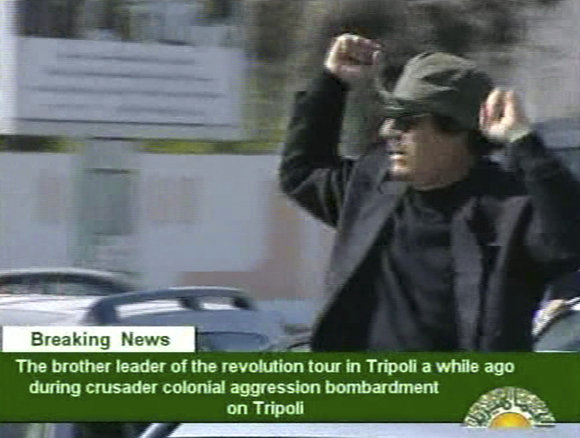
So it is not surprising that the backdrop and background scenarios for most reporting on the 2011 revolts in MENA are dimensions of Orientalism, of which they are many. But the most constant is one of autocratic ‘barbarism’. In this regard, the discourses and media techniques for creating and supporting sympathetic figures are just as constant (or invariable) as Western states rationales for intervention. The media-hyped stories of Oriental despotism that preceded Operation Desert Storm, when the US expelled Iraq from Kuwait, have provided the template. During that event, for instance, media feted their viewers with stories of invading Iraqi hordes storming through hospital only to disconnect incubators and let helpless infants die a slow death. These and many stories of heroic bids by US soldiers to prevent such barbarism were later discredited but not the other horrific stories which convinced US citizens of the need to wage war on Saddam Hussein’s occupying army. In the Libyan case today, one of the earlier images of the aura of impunity created by Gaddafi was that of a Libyan female lawyer who was allegedly raped by Gaddafi’s forces. There was also a reported event of military takeover of a hospital.

Continue reading

Looking Beyond Spring for the Season: Democratic and Non-Democratic Cultures

This is the fourth part in a series of five posts from Siba Grovogui, Professor of International Relations and Political Theory at John Hopkins University. The first part is here; the second here; the third here. The series considers the character and dimensions of the tension between the African Union and ‘the West’ over interventions in Africa. As before, responsibility for visuals adheres solely to Pablo K.


It is not accurate to say that the African Union has been indifferent to the conflict in Libya. If there has been silence in Africa, it has to do with the extent to which the ‘maverick’ Colonel (Gaddafi) has angered some of his peers over the years by interfering in the affairs of such states as Nigeria, Liberia, Burkina Faso, Sierra Leone and others, with disastrous effects. Even when, as in Sudan and Uganda, officeholders have welcomed his entreaties, large segments of the populations have not appreciated them. Yet, regardless of their personal views of Gaddafi and their political differences with him, African elites and populations have yearned for a more positive, conciliatory, and participatory solution to outright regime change or the removal of Gaddafi preferred by the West. This variance, I surmise, comes from a positive understanding of postcoloniality that include forgiveness, solidarity, and democracy and justice, as exhibited in post-apartheid South Africa and post-conflict Liberia, Angola, Mozambique, and the like.

In opting for negotiated mediation and a new constitutional compact, therefore, the African Union (or AU) aimed to foster a different kind of politics in Libya – admittedly one that has escaped many of the states endorsing that position. As articulated by Jean Ping, the Secretary General of the AU, the Libyan crisis offered an opportunity “to enhance a self-nourishing relationship between authority, accountability and responsibility” in order to “reconstitute African politics from being a zero sum to a positive sum game” toward one “characterized by reciprocal behavior and legitimate relations between the governors and the governed.” Mr. Ping added two other dimensions to his vision. The first is an acknowledgement that events in Libya point to the fact that all Africans “yearn for liberty and equality’ and this yearning is “something more consequential than big and strong men.” The second is that Africa’s destiny should be shaped by Africans themselves based on an actualized “sense of common identity based, not on the narrow lenses of state, race or religion, but constructed on Africa’s belief in democracy, good governance and unity as the most viable option to mediate, reconcile and accommodate our individual and collective interests.”

Coming from a politician, these words may read like slogans. But the uniform refusal of the AU to endorse Western intervention tells another story. Continue reading

Looking Beyond Spring for the Season: The West, The African Union, and International Community

This is the third part in a series of five posts from Siba Grovogui, Professor of International Relations and Political Theory at John Hopkins University. The first part is here; the second here. The series considers the character and dimensions of the tension between the African Union and ‘the West’ over interventions in Africa. As before, responsibility for visuals adheres solely to Pablo K.


The oblivion of commentators to these possible African objections has been less than helpful to understanding the actualized Western intervention itself; emergent African ideas on democracy and security; and the actual place of international morality in international affairs. Underlying the African apprehension to military intervention is a long-standing tension between international organizations that represent Africa, on one hand, and self-identified representatives of the West, on the other, over the meaning of international community as well as the source, nature, and proper means of implementation of the collective will. The dispute over the meaning of international community and the collective will has been particularly salient in Africa because, as a political space, Africa has been more subject to military interventions than any other geopolitical space in the modern era. These interventions have reflected contemporaneous relations of power, permissible morality, and objects of desire: from proselytism to fortune-seeking, trade, extraction of raw material, and the strategic pursuit of hegemony. Indeed, it is hard to remember a time since the onset of the slave trade when there was no open conflict between the majority of its states and the West over some dimensions of global governance that implicated the notion of the commons or international community.

The postcolonial era has not brought about any change to this situation. Since the end of World War II and the institution of the United Nations system, the plurality of African political entities have confronted self-appointed representatives of the West over the ethos of UN procedures (involving transparency and open access to the channels of decision-making) and the mechanisms of dispute mediation (including the determination of the principles and applicability of humanitarian interventions in a number of cases). One need only recall the political, legal, and military confrontations between African states and former Western colonial powers over Apartheid South Africa’s mandate over South West (which involved the legality and morality of colonial trusteeship); the French war on Algeria (which involved the legality and legitimacy of settler colonialism); the wars of decolonization in the former Portuguese colonies of Angola, Guinea Bissau, and Mozambique (which involved the principles of majority rule through open elections which communists might win); the unilateral declaration of independence by the white minority in Southern Rhodesia (which involved the principle of white-minority rule in postcolonial Africa); and the legality and morality of apartheid (which involved the principle of self-determination and majority rule). The underlying antagonisms contaminated deliberations throughout the UN system (particularly General Assembly proceedings) and involved all major issues from the Palestine Question to the Law of the Sea to other matters of trade and intellectual property. They reached a climax at the time of exit of the US and Great Britain from UNESCO, which was then directed by Ahmadou Mathar Mbow, a Senegalese diplomat and statesman.

These and other contests have shared a few singular features. One is a Western insistence on representing the essential core and therefore will of something called international community. In any case, the label of international community has often been reserved for Western entities in relations to others, who remain the object of intervention on behalf of the international community. This is to say that the term ‘international community’ has had political functionality in relations of power and domination in which Europe (and later The West) subordinated ‘Africa’. The relevant tradition can be traced back to the opening moments of the modern era, particularly during the ascension of The West to global hegemony. While it has undergone changes over time, the embedded imaginary of international community and its will have been built around artificially fixed identities and politically potent interests. Accordingly, the identity of the West, and therefore the international community, flows from a theology of predestination, formally enunciated as the Monroe doctrine in the US or the Mission Civilizatrice in France.

Continue reading

Looking Beyond Spring for the Season: Common and Uncommon Grounds

This is the second part in a series of five posts from Siba Grovogui, Professor of International Relations and Political Theory at John Hopkins University. The first part is here. The series will consider the character and dimensions of the tension between the African Union and ‘the West’ over interventions in Africa. Responsibility for visuals adheres solely to Pablo K.


As I indicated in my last post, the decision by the African Union (or AU) to not endorse the current military campaign in Libya has been mistaken by many observers and commentators alternatively as a sign of African leaders’ antipathy to political freedom and civil liberties; a reflexive hostility to former colonial powers, particularly France and Great Britain; a suspicion of the motives of the United States; and more. The related speculations have led to the equally mistaken conclusion that the African Union is out of step with the spirit of freedom sweeping across the Middle East and North Africa (or MENA). The absurdity of the claim is that the only entity that imposed any outline of solution agreeable to Gaddafi has been the African Union and this is that Gaddafi himself would not be part of any future leadership of the country. But the AU has insisted on an inclusive negotiated settlement. The purpose of this series of essays is not therefore to examine the meaning and implications of the absence of ‘Africa’ on the battlefield of Libya, but to point to the larger geopolitical implications of the intervention for international order, global democratic governance, and the promotion of democratic ideals and political pluralism in the region undergoing revolution and beyond.

To begin, it is not just ‘Africa’, ‘African indecision’, and ‘African non-Normativity’ that are at stake in the characterization of African actions or inactions. Much of what is construed as ‘lack’ or ‘absence’ in Africa is also intended to give sustenance to the idea of the indispensability of the West – composed on this occasion by France, Great Britain, the United States, and tangentially Canada – to the realization of the central ends of the MENA Spring. The myth of the centrality of the West to the imaginary of freedom everywhere is inscribed in the name given to the events under description. In the US at least, the Arab Spring evokes many other ‘Springs’ all located in the West (including the 1968 Prague Spring or the 1989 collapse of the Soviet Union and its satellite states). Likewise, ‘Jasmine’, the emblem of the Tunisian revolt has been advanced as evocative of the Ukrainian ‘Orange’ and other colour-coded European events. These allusions have justifications but they are seldom evoked comparatively to elucidate the originality and specificity of the MENA revolutions. In this latter regard, even the suggestion of an Arab Spring assumes that the majorities in the countries involved are Arab. This is not always the case in North Africa but Orientalism obliges!

The fact is that the ongoing revolutions in MENA are at once specific and universal in their own ways. Continue reading

Looking Beyond Spring for the Season: An African Perspective on the World Order after the Arab Revolt

The first of a series of posts by Siba Grovogui, Professor of International Relations and Political Theory at John Hopkins University (followed by a second, third, fourth and fifth installment). He is the author of Sovereigns, Quasi-Sovereigns and Africans: Race and Self-Determination in International Law and of Beyond Eurocentrism and Anarchy: Memories of International Orders and Institutions, as well as a number of articles on race, sovereignty, postcoloniality and human rights and what the history of slavery tells us about the contemporary discourse of international politics. Reposted from The Contemporary Condition. Images by Pablo.


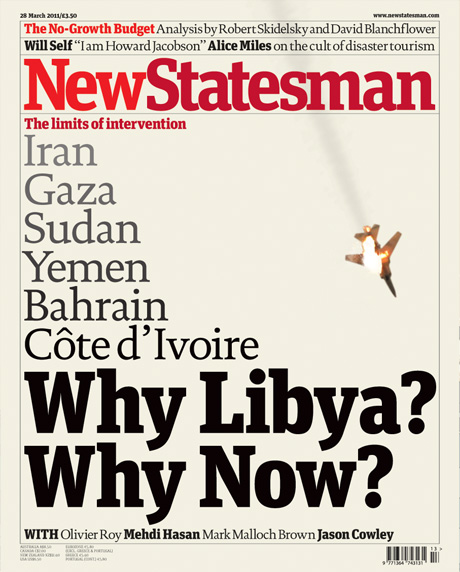
There is much misunderstanding today about the decision of African Union (AU) to not endorse the military intervention in Libya undertaken by France, Great Britain, and the United States in conjunction with a few Arab States. Speculations abound as to whether the uniform decision coming out of Africa indicates that the African Union is out of step with the spirit of freedom sweeping across North Africa and the Arab World; or whether the absence of Africa in the battlefield of Libya merely suggest military ineptitude and political bankruptcy. In fact, it is not accurate that the African Union has been indifferent to the conflict in Libya. The AU opted for mediation and negotiated constitutional compact, with the aim of fostering a different kind of politics. The uniform refusal of the AU to endorse Western intervention has two main explanations. The first is the practice of consensus in decision-making which has long history within Africa. The other is profound unease on the continent about the form and foundation of the intervention itself.

I suggest that there is continent-wide scepticism in Africa about Western leadership in the eras of global governance, the rule of (international) law, the status of international morality, and the future of global democracy. This development is the result of continental experiences with the modes of enactment and execution interventions in Africa. The African position arises therefore from doubt that the coalition of Western powers leading the military effort in Libya today can be trusted to not abuse legitimate anti-Gaddafi sentiments; to not instrumentalize international law and morality; and to not subvert UN procedures and the mechanisms of global governance in order to advance hegemonic agendas and parochial ‘strategic’ interests. In short, underlying the African objection to military intervention is a long-standing tension between international organizations that represent Africa and the self-identified ‘West’ around the representations of the will of the international community, the resulting global democratic deficit in times of intervention, and their effects on international morality, including the principles of humanitarianism.

In relating this conflict, I do not wish to speak for a uniformly-defined ‘Africa’ and/or for all African entities. Continue reading

Human Rights In Crisis?

UPDATE (8 September 2014): Anthony is now with us permanently, but originally wrote this as a guest post after a stint as a Senior Visiting Fellow at the LSE in 2010, where most of us met him. It was in London that he presented an early version of this argument to the IR theory seminar. A response by our own Joe followed shortly afterwards.


One should not judge a book by its cover, but it is certainly possible to get some sense of the state of a field of study on the basis of the titles of recent books. In the case of the study of human rights, this is quite an interesting exercise: at a time when many claim that human rights proponents have never had it better – the term now has great political respectability and legitimacy; human rights NGOs are thriving; the study of human rights takes place in all the great centres of learning and is taken seriously by previously sceptical disciplines (philosophy, anthropology, international relations). At such a time, one of apparent triumph, there has been a spate of titles which give precisely the opposite impression.

Can human rights survive? What is the future for human rights? Who believes in human rights? Does God believe in human rights? At least two titles claim that human rights are in crisis with one of these playing telos off against demise in questioning the end of human rights. This theme is continued with the important but ironic idea that human rights have been silenced – ironic and paradoxical given their loud presence in all manner of global fora. For many, the success of human rights is a triumph of appearance over substance, and what is often most disturbing to commentators (apart from the obvious hypocrisies of human rights politics) is the absence of a coherent theoretical basis for human rights – a question which in turn can only really be answered by going back to more basic questions regarding the idea of justice.

Continue reading