From Global to Transnational: Reading Global Justice through W. E. B. Du Bois

s200_in_s.valdezThis is a guest post by Inés Valdez, assistant professor in political science at The Ohio State University. She works on the political theory of immigration, critical race theory, and cosmopolitanism and her articles have appeared in the American Political Science Review, Political Studies, and Politics, Groups, and Identities, among others outlets.Her book manuscript in progress is on Kant and W. E. B. Du Bois’s cosmopolitanisms. This post is based on a recent workshop paper that will be appearing in a collection on empire, race, and global justice edited by Duncan Bell.


An emerging literature in the field of history has made clear that transnational connections between black Americans and anti-colonial movements in the Caribbean and Asia were prominent in the twentieth century (see, among many others, Slate 2012). These connections resulted in more or less institutionalized forms of communication, exchange, and solidarity that influenced politically how these groups understood their own history of injustice and struggle.

These connections indicate that groups within the West saw their marginalization as connected to groups within what we today call the global South and saw the potential of realms of politics beyond the nation as sites of emancipation and justice.

Despite this literature, and the relatively recent events that they cover, the global justice literature is largely unconcerned with them. There are many disagreements within the global justice literature but one assumption is common: that wealthy countries are homogeneously prosperous and poor countries homogeneously poor. Moreover, whenever scholars do note the inequality within the West, they do so to posit that addressing it should take priority over obligations to the non-West. While scholars tend to disagree on the question of whether the West has a duty of justice toward the non-West, neither those who favor a duty to distribute (cosmopolitans), nor those who disagree with it (social liberals), pause to reflect on the potential affinities between marginalized groups within and outside the West.
Continue reading

White World Order, Black Power Politics: The Author’s Response

Bob’s response to Naeem, NiviSrdjan, and Meera completes our symposium on White World Order, Black Power Politics.


Four critical IR theorists have taken time away from other tasks to read my book carefully, generously, and thoughtfully. What a gift. The brevity of this response will appear stingy by comparison, but I don’t mean it to be. Rather, I am typing with my wrist in a splint, and it hurts, while I am also due to leave in the morning for a two-week vacation. Perhaps there will be another chance to show my gratitude. Many of the questions that Nivi, Naeem, Srdjan, and Meera raise have to do either with the book’s and my relationship to theory or with the limitations of my research strategy, as I anticipated and sought, self-servingly, to head off.

Continue reading

Solidarity with Academics for Peace: An Open Letter

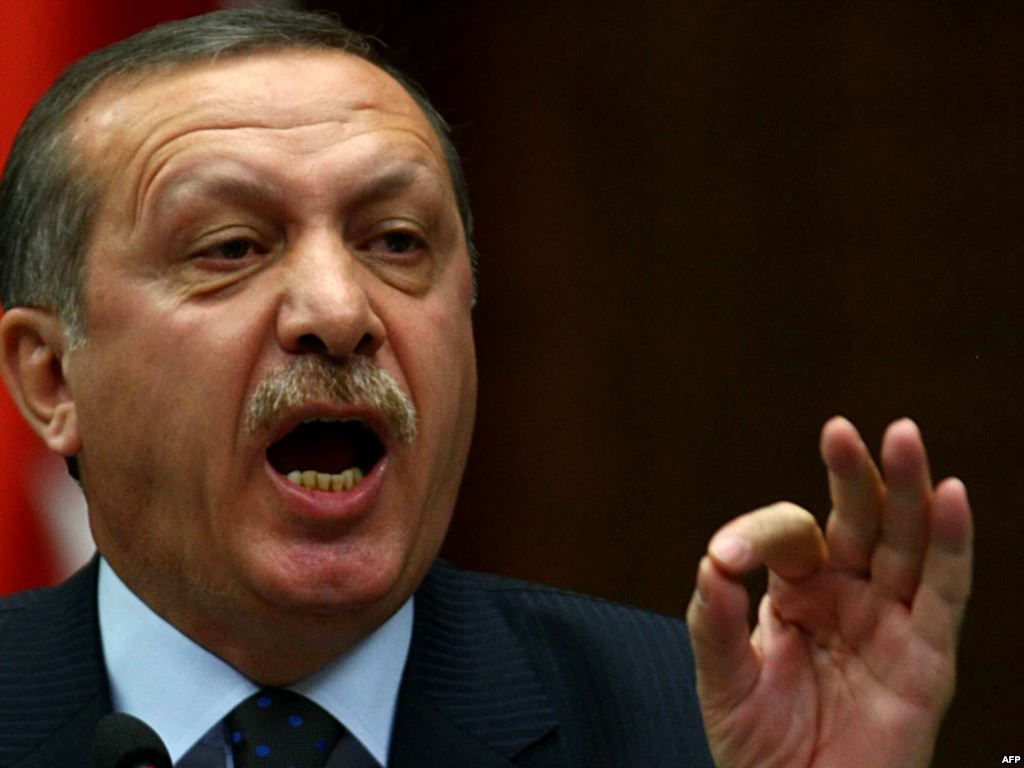
Academic freedom and freedom for political dissent is under serious threat in Turkey. Following the publication of a statement signed by Turkish and Kurdish academics, condemning Turkish state violence against Kurds, 1,128 of the original signatories have been subjected to sustained attacks and threats from the Turkish state and fascist groups.

Erdogan

The Disorder of Things is proud to publish the following letter, signed by 1,211 academics, offering international support of those facing persecution in Turkey. This letter follows multiple statements criticising the Turkish state from research bodies and associations including, within the field of International Relations, ISA, EISA and BISA.

This is one of many such letters of international support for academics in Turkey. A comprehensive collection can be found here.

Continue reading

Between Truth-Telling and Doom-Saying: Sanctions and Activism

933This is the fourth in a series of posts on Lee Jones’ Societies Under Siege: Exploring How International Economic Sanctions (Do Not) Work. We are delighted to welcome Dr Katie Attwell, she is the Capstone Co-ordinator at Sir Walter Murdoch School of Public Policy and International Affairs, Murdoch University. Her book, Jewish-Israeli National Identity and Dissidence: The Contradictions of Zionism and Resistance, considers the contradictions faced by left-wing Israeli Jews trying to connect with their Palestinian Other. Ethnicity, nationalism and identity politics remain her fundamental academic interest, but she now focuses on health policy, pursuing research into how to engage with vaccine-hesitant parents. Lee’s original post can be found here. With responses from Dr Elin Hellquist here, and Dr Clara Portela here.


I became familiar with the project that would become Societies Under Siege in 2013. A mutual friend shared a conference paper by Lee Jones, reflecting on the Boycott, Divestment and Sanctions (BDS) campaign called for by Palestinian nationalist activists, and eagerly adopted by their international counterparts. I was one such international enthusiast, in addition to being a political scientist researching how progressive Israeli Jews were attempting to reform their society from the inside. My work took a different approach to Lee’s, looking at how discourses of identity, nationalism and ethnicity constrain notions of what is morally and politically possible. I never saw much crossover between our approaches, though some of my subjects were BDS advocates. I suppose my work could contribute to an understanding of the kind of impact that sanctions might have (or not) on a fraction of the target society.

I was far more captivated by what Lee’s early conference paper meant for activism. Outside of academia, I wanted to talk about Palestine with anyone who’d listen, and I had been inspired to join a tiny collective of mostly radical leftists in my home city of Perth, Western Australia. Working within this collective, I believed that the first step to changing minds was education and awareness, and soon BDS became the catchphrase by which we’d do this. Or so we thought.

By the time I read Lee’s paper – soon to be a chapter in Sanctioning Apartheid: Comparing the South African and Palestinian BDS Campaigns, edited by David Feldman and out next year with Palgrave Macmillan – I had dropped out of activism for Palestine somewhat, primarily due to life (a young family and a PhD) getting in the way. But the fire still burned within. I read Lee’s contribution with eagerness and interest. It elicited in me the same sentiments that followed my consumption of Societies Under Siege: enlightenment and admiration, combined with frustration. Thanks to this work, I understand the world in ways that I did not before – which has to turn on any academic who genuinely enjoys engaging with inquiry, wherever it may lead. However, thanks to that new understanding, I also understand – to quote another colleague’s rather jaded perspective on Social Conflict Analysis – that everything is f$*#ed. This is somewhat less a cause for celebration. Continue reading

Societies Under Siege: Exploring How International Economic Sanctions (Do Not) Work

This is the first in a series of posts on Lee Jones’ Societies Under Siege: Exploring How International Economic Sanctions (Do Not) Work. Responses will follow from guest authors Elin Hellquist, Clara Portela and Katie Attwell over the next few days.


It doesn’t seem to matter what the international crisis is: be it an inter-state war (Russia-Ukraine), civil strife (Syria), gross violations of human rights (Israel), or violent non-state actors on the rampage (ISIS, al-Qaeda), the ‘answer’ from governments and civil society always seems to be the same: impose economic sanctions. In the mid-20th century, only five countries were targeted by sanctions; by 2000, the number had increased tenfold. Once an obscure, rarely used and widely dismissed form of statecraft, sanctions are now clearly central to the exercise of power in international relations – particularly when dominant powers are reluctant to put ‘boots on the ground’.

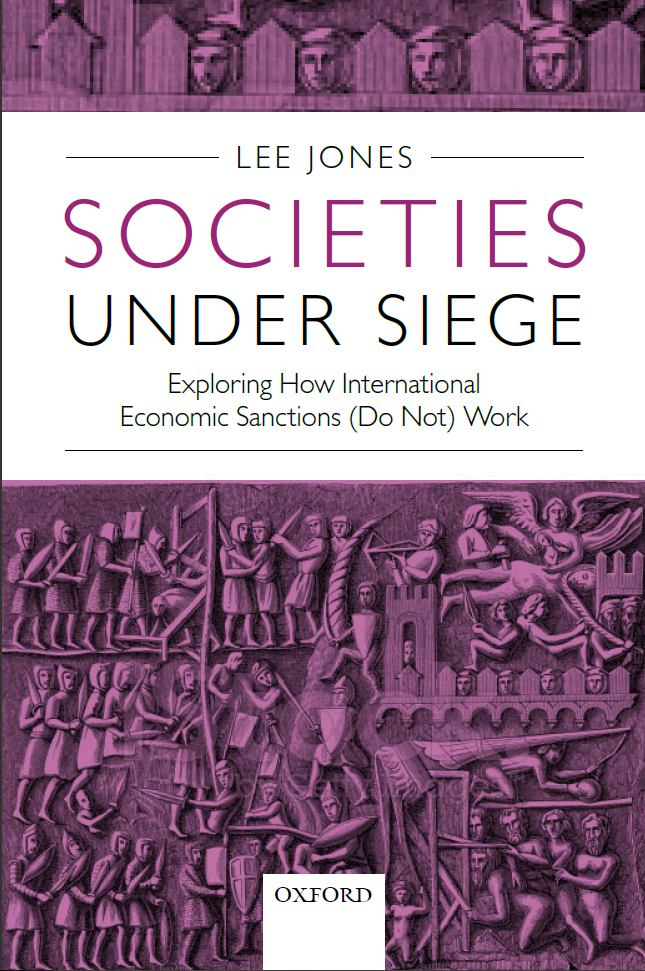
My new book, Societies Under Siege: Exploring How International Economic Sanctions (Do Not) Work, is the first comparative effort to explore how these sanctions ‘work’ in practice – on the ground, in target states. This post introduces the book and the forum that will follow.

Societies Under Siege cover. The image is an engraving of a (failed) siege during the Albigensian crusade.

Societies Under Siege cover. The image is an engraving of a (failed) siege during the Albigensian crusade.

Continue reading

Tracing the Threads: Queer IR and Human Rights

Originally commissioned by the Editors of E-IR, who have very kindly allowed it to be cross posted. Click here in order to view the E-IR version.


International politics understood as a fabric of the world is shot through with queer threads. Relatively few IR theorists look for and recognise these threads; fewer still explicate the forms and patterns such threads constitute, or discuss their varied significance and meanings. These threads are not somehow marginal to the fabric of international politics – like ornamental figures in out of the way corners. Rather, they pattern the day to day matters of the discipline. A project in which I am presently involved (and from which this post is derived) seeks to show that when we are willing to trace these threads, a whole set of new understandings opens out before us (Picq & Thiel, 2015).

This is the queer claim that when we study IR directly through sexuality and gender politics, the conceptual realignments and reinterpretations which follow will have general significance for the field; that if we don’t analyse in this queer way we will misinterpret the putative subject of the discipline. The study of international sexuality and gender politics is of consequence for IR in general, not just those activists and academics concerned about specific cases of cross border human rights abuse of queers, or the like. Indeed, the always already present nature of these elements applies to both sexuality and gender politics, and human rights: both often get pushed to the margins and are dismissed as specialty interests. Both, however, suffuse the “routine” subject matter of IR as an academic discipline. IR as a discipline however neglects or resists queer theory, and so the analysis takes place elsewhere. A putative concern with the human rights of LGBTQ people – in foreign policy or via human rights programmes – is often as far as IR gets with its concerns for international sexuality politics. But such gestures – however well meant and executed – are tokens; they are indicative of an intellectual failure to grapple with the full strength of the claims made about the centrality of sexuality politics to international relations.

Scholarship on this topic within IR is becoming more prominent. (Readers should keep an eye out for a forthcoming forum on Queer IR in International Studies Review (Sjoberg & Weber, 2015)) To this point, the claim has been explored most directly and pointedly for IR theory by Cynthia Weber in a recent article in the European Journal of International Relations. Weber engages in a sustained critique of IR scholarship, utilizing a diverse array of resources from queer theory. Let me outline the starting point of her argument against IR. Continue reading

Resistance to Global LGBT Norms

International Relations is not normally thought of as the go-to place for lessons on the protection of gays, lesbians, trans, bi and queer people. But in recent times, it has been possible to get the impression that something about the practice of international politics has changed; that norms regarding sexual orientation and gender identity were gaining prominence and exerting discernible influence. In politics and policy making, one could point to the Yogyakarta principles. In mainstream IR theory, one could assess the steady stream of work that has arisen from theories of norm change and entrepreneurship and consider how they might apply to the LGBT case.

yogyakarta-principles

The Secretary General of the United Nations has launched a campaign for the protection of the human rights of LGBT people (with its own Bollywood movie clip!) He has said that the protection of human rights is “one of the great, neglected human rights challenges of our time.” In 2011, the UN released its first ever report (pdf) into the human rights of LGBT people. It states that:

a pattern of human rights violations emerges that demands a response. Governments and inter-governmental bodies have often overlooked violence and discrimination based on sexual orientation and gender identity. The mandate of the Human Rights Council requires it to address this gap: the Council should promote “universal respect for the protection of all human rights and fundamental freedoms for all, without distinction of any kind and in a fair and equal manner. (see here, paragraph 2)

The question of how “Governments and inter-governmental bodies” might go about looking at and responding to violence and rights abuse against LGBT people is a complex one. Knee-jerk responses that impose aid conditionality measures, such as that suggested by UK PM David Cameron in the case of Uganda, are probably the least helpful route. Nonetheless, some form of conditionality, or assessment of the rights afforded to LGBT peoples, has become a standard within the repertoire of pro-LGBT rights states and their foreign policy advocates. Continue reading

Activism, Academia and Black Community Struggles

A little while ago Adam Elliot Cooper from Ceasefire Magazine interviewed Stafford Scott, along with myself, on Black community struggles, activism and academia in Britain. Stafford Scott was a co-founder of the Broadwater Farm Defence Campaign in 1985, and is now a consultant on racial equality and community engagement as well as co-ordinator of Tottenham Rights. The interview revolved around a one day workshop run by Dr Joy de Gruy in Tottenham last October, funded by Tottenham Rights and the Centre for Public Engagement, Queen Mary University of London.


Adam: Black community struggle has been an integral part of the way in which we understand the politics of race, class and empire in Britain today. Black communities and activists have led this struggle. But academics have played a role too. Stafford, in October 2013 you brought Dr Joy de Gruy over from the US to Tottenham to run a one day workshop on Post-Traumatic Slave Syndrome. Why Dr Joy, and why Tottenham?

ScreenHunter_18 Apr. 17 19.50Stafford: It’s relatively simple to be quite honest. Why Tottenham? Because in 2011 parts of Tottenham burned as a result of the shooting of a young black male called Mark Duggan. It hit the headlines. As a result of some of us going to the police station rioting broke out and then spread across the country. We saw the media and the government’s reactions to those riots and it really was to dismiss the youths as feral criminals looking to make money out of someone’s death. It was dismissed as an opportunity for people’s materialistic natures to come out. What I wanted to do was put a total different perspective to it – a historical perspective. So I wanted to look at why rioting broke out. I was there, and I don’t believe that it was simply about Mark Duggan’s killing and the way in which his family was treated. I believe that there was a history – a context – to it, that some people chose not to examine. Duggan’s killing was the straw that broke the camel’s back.

We had different events in 2013. One was about the uprising that took place on Broadwater Farm and the killing of Cynthia Jarrett, the killing of Joy GardnerRoger Sylvester and Mark Duggan – four people who died in Tottenham, with involvement of the police. So this was to help the community come to terms with recent traumatic events. We brought Dr Joy over to look at historic events that have caused us great trauma.

ScreenHunter_17 Apr. 17 19.50Adam: Dr Joy, a professor of social work, is famous for developing an analytical framework called Post-Traumatic Slave Syndrome and for developing practical programmes that address the challenges of Black communities in the United States. So Dr Joy’s work is not only based on scholarship in the traditional sense but also research that has come out of participating in the struggles that Black communities face in the United States. Robbie, do you see similar work happening in Britain?

Robbie: I think historically there certainly was, you could see that kind of thing happening. Today I think it’s far less the case and that’s to do with a number of significant transformations in British society and in academia. Continue reading

Every Ghetto, Every City

Really insightful video on displacement in Washington DC from Al Jazeera English. This piece traces a dynamic that is seen across the US and around the globe – including example of residents fighting for a human right to housing and featuring One DC.


And some tunes to go along with the news…


Stop and Search: Race and the Politics of Suspicion

banksy-searchStop and search at Notting Hill carnival

BETWEEN me and the other world there is ever an unasked question: unasked by some through feelings of delicacy; by others through the difficulty of rightly framing it. All, nevertheless, flutter round it. They approach me in a half-hesitant sort of way, eye me curiously or compassionately, and then, instead of saying directly, How does it feel to be a problem? they say, I know an excellent colored man in my town; or, I fought at Mechanicsville; or, Do not these Southern outrages make your blood boil? At these I smile, or am interested, or reduce the boiling to a simmer, as the occasion may require. To the real question, How does it feel to be a problem? I answer seldom a word.

– W. E. B. Du Bois, The Souls of Black Folk, (1905)

Video from excellent activist group Stop-Watch.

The political pause over Stop and Search

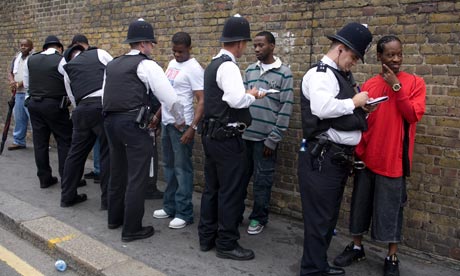
The riots of 2011, and the research that was conducted afterwards, have had multiple political effects. Of these, one of the most important has been a clearer public exposure of the deep animosities generated by police use of stop and search powers against young people and especially those of black and Asian backgrounds. Whilst the idea that stop and search causes animosity is not news to anyone interested in British race relations or human rights, it has unusually become the focus of increasing political attention. For many years the Independent Police Complaints Commission has warned that the use of stop and search powers may be being exercised in a discriminatory and unaccountable way, and the Equalities and Human Rights Commission have been investigating police forces on this front.  Yet it was only following the riots that the Metropolitan Police Commissioner Sir Bernard Hogan-Howe began a large overhaul of the use of the power in London in 2012. Following this, parliamentary briefings were issued which pointed to the broader ineffectiveness and abuse of the powers, and the Home Office has launched a consultation into the use of stop and search. In launching this consultation, equality-sceptic Home Secretary Theresa May acknowledged, in very measly terms, the discriminatory ways in which these powers had been exercised:

The official statistics show that, if someone is from a black or minority ethnic background, they are up to seven times more likely to be stopped and searched by the police than if they are white. Now we should not rush to conclusions about those statistics, but everybody involved in policing has a duty to make sure that nobody is ever stopped just on the basis of their skin colour or ethnicity. The law is clear that in normal circumstances, stop and search should only ever be used where there is a reasonable suspicion of criminality—and that is how it should be. I am sure we have all been told stories by constituents and members of the public about what it is like to be a young, law-abiding black man who has been stopped and searched by the police on more than one occasion. If anybody thinks it is sustainable to allow that to continue, with all its consequences for public confidence in the police, they need to think again.

House of Commons Debate, 2 July 2013 Continue reading