The Ideal International Institution: A Response

The concluding post from the author herself, drawing our symposium on The Ideal River to a close. Dr Joanne Yao is Senior Lecturer in International Relations in the School of Politics and International Relations at Queen Mary, University of London. Previously, Joanne taught at Durham University and the LSE, where she completed her PhD in 2017. Joanne was also one of three editors of Millennium: Journal of International Studies for Volume 43 (2014-2015) and is currently a member of Millennium’s Board of Trustees.Her research centers on environmental history and politics, historical international relations, international hierarchies and orders, and the development of early international organizationsThe Ideal River is her first book; Joanne’s next project focuses on the history of Antarctica and early outer space exploration.


One question that repeatedly comes up from readers of this book is about its disciplinary identity. On the one hand, this is one of the book’s strengths – it seems to shapeshift across disciplinary boundaries and some of the central conclusions, particularly on the desire to control nature as a marker of a Western-led (imposed) modernity, might have been arrived at from a variety of different disciplinary starting points. On the other hand, this question puzzles me since the book is self-consciously situated in International Relations which is a clear path-dependent consequence of the intellectual riverbeds my own thinking has flown through. Perhaps what they wish to know is how did someone who started her academic life with the ‘Great Debates’ of IR end up contemplating the physical and metaphysical river (especially since I might have gotten ‘here’ more quickly and eloquently from elsewhere). But like all aspects of social and political life, we don’t get to re-run the experiment, and so this book is here, with its IR-warts and all. 

But aside from my own intellectually situatedness, this book is a work of IR because, alongside the three rivers, international institutions are also pivotal characters in my story. Perhaps starting from IR, this point is obvious, and I felt the harder sell was to illuminate my three rivers as worthy protagonists in a story about international order. For this, I might have neglected my other characters. 

Continue reading
In Praise of Undisciplined Knowledge: The Epistemic Entanglements of the River

The third post in our series on Joanne Yao’s The Ideal River, today brought to you by Dr Kiran Phull. Kiran is a Lecturer in International Relations at the Department of War Studies, King’s College London. Her research centres on the politics of global knowledge production and the rise of opinion polling. She takes a critical and interdisciplinary approach to the study of public opinion, focusing on the ways that epistemic technologies (polls, surveys, population data) create and shape the conditions for governing social and political life. Previously, she was a Postdoctoral Fellow at the London School of Economics, where she received her PhD in IR exploring the history of scientific inquiry into Middle Eastern publics and the emergence of local emancipatory methods practices. 


What does it mean to know a river? In its investigation of the taming of nature in the service of the modern international order, Joanne Yao’s The Ideal River reveals how international history is coursed by rivers. Yao’s meticulous weaving of institutional and imperial histories of the Rhine, the Danube, and the Congo offers a view of global governance that is both novel and necessary. By underscoring the co-conspiratorial relationship between science and empire, we learn how the construction of the ideal river was sustained by imperial infrastructures acting in concert with western scientific knowledge and practices. In exploring the development and institutionalization of these complex European river commissions as the first international organizations, The Ideal River asks us to contend with the centrality of scientific knowledge in configuring modern hydrological power relations. With a focus on cartographic representations, investigative commissions, scientific measurements, and industrial techniques of control, Yao deftly traces the epistemic drive that propelled empire ever-further downstream.

A core tension explored in the book is the unsettled dualism between science and nature. Here, Yao shows how the disciplining of nature’s waterways was implicated in the architecting of a global standard of sovereign rule and political legitimacy from the eighteenth and nineteenth centuries. In the context of Europe’s colonial ambitions, to know the river was to tame and lay claim to it. This reductionist view of progress through conquest was rooted in a Baconian scientific understanding of the world that sanctioned domination over nature in the service of human development. The discursive moves that allowed for modern scientific techniques and practices “to ‘force’, ‘compel’, ‘shackle’, and ‘tame’ the river” in pursuit of civilizational superiority reshaped these waterways into conduits for political power. Through Yao’s careful study of the disciplining of the “disorderly” Rhine and civilizing of the “mighty” Danube, it becomes clear how the construction of “the ideal river” was anchored in forms of knowledge that drained the river of its agentic lifeforce.

But how can we know a river if a river is never one thing?

Continue reading

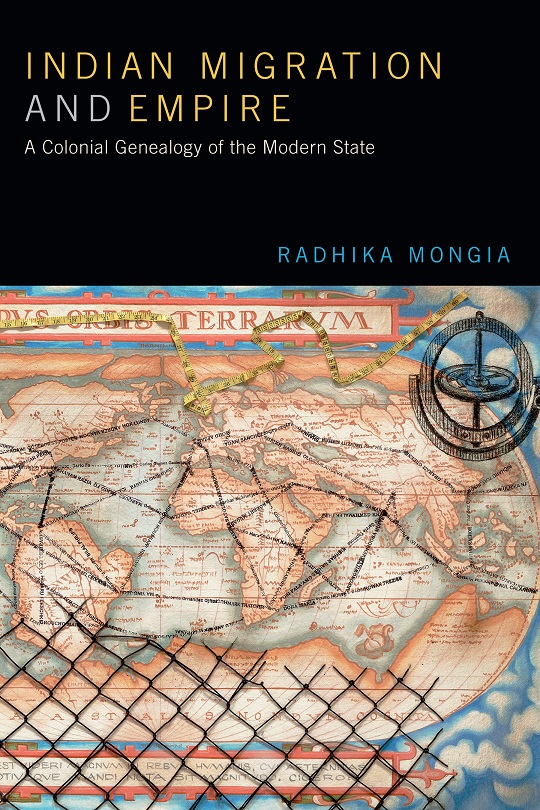
‘Indian Migration and Empire’: response from Radhika Mongia

This is the final post in our symposium on Radhika Mongia’s Indian Migration and Empire: A Colonial Genealogy of the Modern State, in which Radhika responds to her interlocutors.


Each of my interlocutors foregrounds and engages with different aspects of my book, Indian Migration and Empire: A Colonial Genealogy of the Modern State. In this response, I want to dwell on four interrelated elements they stress: namely, (1) the distinction between free and forced migration, their differential management in migration regimes and the current incarnations of this distinction; (2) the place of processes of racialisation with regard to migration regimes, to understandings of citizenship and to the contours of nationhood; (3) the enduring Eurocentrism of certain disciplinary presuppositions; and, lastly, (4) the relationship between the colonial state and the modern state, that lies at the heart of the book.

One of the central concerns of the book, as I noted in my introductory post, is to interrogate the remaking of ‘freedom’ in the nineteenth century though a consideration of the distinction between ‘free’ and ‘unfree’/‘forced’ migration and their differential regulation. I unpack this distinction in relation to the 1834 abolition of slavery in the British empire and the state-supervised movement of Indian indentured labour that followed in its wake. Slavery and the memory of the slave trade (the latter abolished in 1807) were at the heart of the contentious legal debates on how, and whether, to regulate Indian migration. Animating these debates was an abiding concern with how to legally distinguish slavery from freedom, violation from volition, coercion from consent, and thereby not only enable, but facilitate, a movement that could be coded as ‘free’. At the centre of the regime that regulated indenture was the appearance of a renovated ‘free labour contract’ that elevated the metaphysical notion of ‘consent’ (a variant of ‘intension’ or of ‘will’), diminished concerns with ‘fairness’ and radically transformed understandings of ‘freedom’. Both Luke and Bridget draw out aspects of this theme and how it endures in our present, by directing our attention to how current migration regimes are also structured around the notions of ‘free’ or ‘forced’ movements. But now, as they point out, we see a twist. If, in the nineteenth century, the concern was to facilitate ‘free’ movement (to avoid charges of a second slave trade), the rationale of our prevailing dispensation is to prohibit ‘free’ movement. Currently, in many national-state spaces, it is only those who according to always-shrinking governmental criteria can be characterised as ‘forced’ or, in the new parlance, as ‘refugees’, who are allowed to move. Others, many more, understood as ‘economic migrants’, who attempt intentionally (and, thus, ‘freely’ and ‘willingly’) to escape the depredations of their circumstances are illegalised, rendered interlopers. Reading Luke and Bridget’s engagements alongside my argument concerning ‘historicising freedom’, it is evident that we have seen yet another profound remaking of freedom in the twentieth and twenty-first centuries—one committed to a sedentary bias that demands that ‘freedom’ is best practiced in your ‘assigned’ place. Or, as Nandita Sharma puts it, increasingly, migrants are conceived as ‘people out of place’. Moreover, as both Luke and Bridget point out, a discourse of ‘protection’ underlies and makes possible the current distinction between ‘free’ (economic) and ‘forced’ (refugee) migration. It was precisely a discourse of protection of, on the one hand, Indian indentured migrants and, on the other, the formerly enslaved in the colonies of Mauritius and the Caribbean, that enabled state regulation of Indian indentured migration. Thus, returning to the details of how this regime was put in place (as I do in my book), serves as an important lesson in thinking about current articulations.

Continue reading

‘Indian Migration and Empire:’ comment by Nadine El-Enany

The fourth post in our symposium on Radhika Mongia’s Indian Migration and Empire: A Colonial Genealogy of the Modern State is by Nadine El-Enany, who is Reader in Law at Birkbeck School of Law and Co-Director of the Centre for Research on Race and Law. She is author of(B)ordering Britain: Law, Race and Empire (Manchester University Press, 2020), co-author of Empire’s Endgame: Racism and the British State (Pluto, 2021) and co-editor of After Grenfell: Violence, Resistance and Response (Pluto, 2019).


It is a pleasure to be part of this symposium, especially because Radhika’s work has been such an inspiration to me. Unfortunately for me, her book came out just as I was finishing my own book, (B)ordering Britain: Law, Race and Empire. Though I managed to include some engagement with her work, I wished I’d had her book when writing my own. I have learned so much from it and can see various exciting links and possibilities for conversations with my own. For that reason, I’m particularly glad to have a chance to be part of this symposium. 

Radhika’s book takes the apparent ‘unremarkability’ of the monopoly states exercise over the movement of people and shows how, in actual fact, there is much to be said about this status quo that might lead us to rethinking and rearticulating scholarly and, indeed, activist approaches towards migration in a context of violently protected national boundaries. For me, one of the most salient contributions of the book is the revelation of the relationship between the metropolitan or modern state and the colonial state – in particular, the way in which the former has been shaped by the latter. The contours of Anglo-European nation-states, which once had empires ranging in scope and size, are historically contingent, having been moulded in the course of the formation and implementation of colonial migration regulations. In tracing the transition ‘from a world dominated by empire-states into a world dominated by nation-states’ (p. 1), Radhika thus points to a ‘fundamental colonial genealogy of the modern (nation-)state, in both the metropoles and the colonies’ (p. 3).

Radhika and I share an interest in drawing out and subjecting to analysis ‘the formation of key techniques and technologies for regulating migration’ (p. 3). For Radhika, such a focus enables the illumination of the relation between ‘patterns of migration’ which would otherwise be ‘held distinct’ (p. 3). Crucially, this approach allows for the undoing of ‘methodological nationalism’, which, as Radhika writes, ‘sees the national as the privileged site and scale for investigating migration, and, thereby, misunderstands how definitions of the “national” are necessarily implicated in, and emerge from, non-national, cross-statal, transcolonial, and inter- and intra-imperial forces’ (p. 3).

To my mind, this is a crucial project – to begin to unsettle the methodological nationalism which pervades mainstream scholarship on migration. Those of us who teach migration law from a critical perspective, will be familiar with the wide-eyed looks from students who are asked to question the legitimacy of the supposedly sovereign states they have come to take for granted, both as having always existed, or always destined to somehow come into existence, and crucially, as the only way of organising human life politically and geographically. However, when we begin to chisel away at this seemingly unshakeable status quo, as Radhika’s book does so powerfully, the geographical and political remnants of empire begin to surface, and like re-found jigsaw puzzle pieces, create a much clearer picture of seemingly separate sovereign nation-states as, in fact, embedded in their colonial pasts, and I would argue, suffering from a crisis of legitimacy.

Continue reading

‘Indian Migration and Empire’: comment by Sanjay Seth

The third response in our symposium on Radhika Mongia’s Indian Migration and Empire: A Colonial Genealogy of the Modern State is by Sanjay Seth, who is Professor of Politics at Goldsmiths, University of London. He is the author of Marxist Theory and Nationalist Politics: The Case of Colonial India (Sage, 1995), Subject Lessons: The Western Education of Colonial India (Duke University Press, 2007 and Oxford University Press, 2008) and, most recently, Beyond Reason: Postcolonial Theory and the Social Sciences (Oxford University Press, 2020).


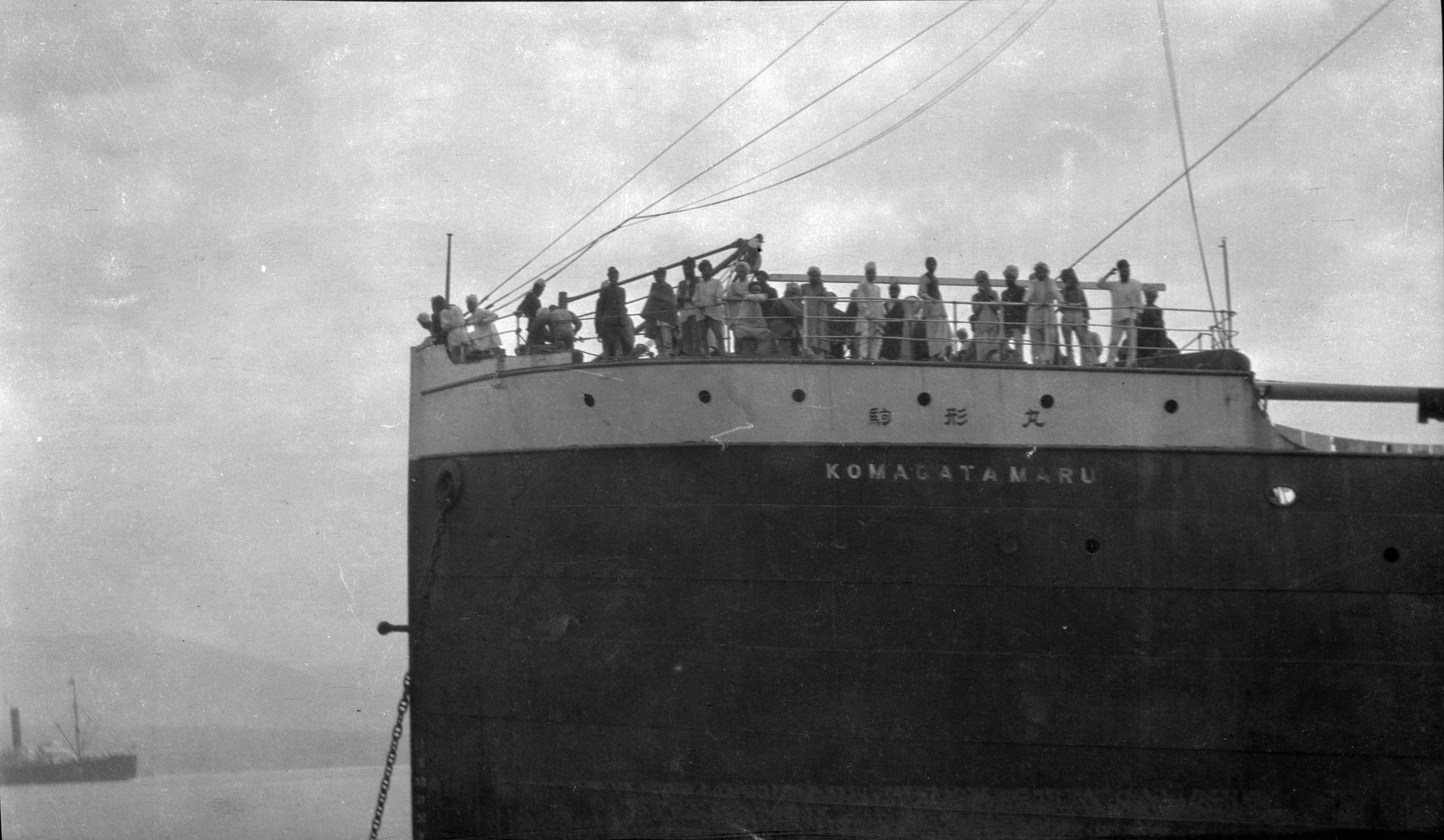
Radhika’s Indian Migration and Empire is subtitled ‘A Colonial Genealogy of the Modern State’, and part of the book’s argument is that while it is assumed that control of migration ‘is a defining, definitive, unchanging, and unchangeable element of (state) sovereignty’ (p. 7), in fact control of migration within the British empire occurred late and helped to produce state sovereignty. In making this argument Radhika traces how, in the wake of the abolition of slavery in 1834, the British empire played an active role in facilitating the movement of its Indian citizens into its ex-slave plantation colonies as much needed indentured labour, and developed elaborate governmental machinery to do so; by contrast, the movement of peoples other than indentured labourers within the British empire was largely unregulated and not constrained. It was in fact the white dominions of the empire that sought to restrict and regulate the entry of non-white imperial subjects, finally achieving their aim following the Komagata Maru incident in 1914. It was only after this that the freedom of British subjects to move from one part of the empire to another was abandoned, and a passport system allowing race-based restriction was introduced. Mongia concludes, ‘control over mobility does not occur after the formation of the nation-state … the very development of the nation-state occurred, in part, to control mobility across the axis of the nation/race’ (p. 139, emphasis in original). The modern sovereign state thus has a colonial and imperial genealogy.

komagata maru

This book is a distinguished addition to a growing literature that requires us to recognise that the conventional picture of the sovereign state as the foundation of certain practices has things the wrong way around. Another recent example is Tarak Barkawi’s Soldiers of Empire (2017), which similarly challenges the assumption that modern wars between states have been fought by the armies of these states, such that we may assume a ‘sovereign territorial package of state, army, and society’. In fact, this has been the exception rather than the rule. The armies that fought in most of the colonial campaigns of the coloniser countries, and in the world wars, were imperial armies, most notably in the cases of France and Britain. The British Indian army numbered some one million men during World War I, and 10% of the soldiers who fought for the British Empire in this war were in the British Indian army; in World War II the Indian army comprised more than two million members and operated across three continents. The nation-state army is in significant measure an outcome of World War II, rather than the basis of it and the mode in which it was fought; it was only well after that war that national armies and sovereign states became isomorphous, and thus, as Barkawi colourfully expresses it, this war ‘consumed one world order and spat out another’.

Although her book crosses many disciplinary boundaries, Radhika writes, I think, above all as a historian (as do I, though interestingly, we are respectively in departments of sociology and politics), and part of the strength of the book is the varied and dispersed archive upon which it is able to draw. But the import of her argument, as she recognises and seeks to develop it, applies to all disciplines and forms of intellectual activity which take the sovereign, territorial state as a given – that is to say, almost all social science and humanities disciplines.

Continue reading

Symposium On Radhika Mongia’s ‘Indian Migration And Empire: A Colonial Genealogy Of The Modern State’

The Disorder of Things is pleased to host a symposium on Radhika Mongia’s Indian Migration and Empire: A Colonial Genealogy of the Modern State (Duke University Press, 2018 and Permanent Black Press, 2019), the introduction to which can be read here. Radhika Mongia is Associate Professor in the Department of Sociology at York University, Toronto. Her current research examines recent transformations in the citizenship regime in India. In this introductory post, she outlines some of the key arguments of the book.


This set of blog posts on my book, Indian Migration and Empire: A Colonial Genealogy of the Modern State, is the result of a panel held at Birkbeck, University of London, in the halcyon days before the Covid-19 pandemic. My very sincere thanks to Sarah Keenan and, especially, Nadine El-Enany, co-directors of the Centre for Race and Law at Birkbeck, for organising the panel, to the panelists, Bridget Anderson, Luke de Noronha, Nadine El-Enany and Sanjay Seth, for their generous and generative readings of the book, and to the audience for their astute engagements. Unfortunately, it isn’t possible to capture the warmth and conviviality of the evening in these remarks. My thanks also to the forum provided by The Disorder of Things, to respond in more depth, and with more care, to the panel’s provocations, which I do in the closing post. In this introductory post, I briefly outline some of the chief arguments of the book.

Indian Migration and Empire: A Colonial Genealogy of the Modern State is an investigation into the history of state control over migration. At the heart of the book are two main questions: First what histories can we chart of the increasing and incremental state control over migration that culminate, by the early decades of the twentieth century, in a state monopoly over migration? Second, what can these histories tell us about state formation, inter-state relations, state sovereignty and modern subject constitution? The book considers colonial Indian migration from about 1834, when Britain abolished slavery in its plantation colonies, up to about 1914, when, with the onset of World War I, the world confronted a new geopolitical reality. In the course of less than a century, we see profound transformations in the logics, rationales, institutions and legal forms of state control over mobility. My analysis argues that the formation of colonial migration regulations was dependent upon, accompanied by and generative of profound changes in normative understandings of the modern state. Traversing a diverse array of British colonial formations, including Mauritius, the Caribbean, India, Canada and South Africa, the book foregrounds the analytical modality of co-production to inquire into the relational processes, across these varied sites, that produced a state monopoly over migration. This monopoly, accompanied by the ‘nationalisation’ of migration, is an integral part of a fundamental shift, in the twentieth century, from a world composed of empire-states to a world composed of nation-states.

Mongia Cover Small

Studies of Indian indentured migration note that the system followed the abolition of slavery. However, with rare exceptions, the scholarship has simply seen abolition as a mere backdrop and not adequately examined what the regulation of indenture can tell us about state (trans)formation or how indenture was implicated in redrawing the contours of the central antinomy that haunted and shaped the nineteenth century: the distinction between freedom and slavery. By tracking how slavery was at the heart of the contentious legal debates on how to facilitate Indian migration in the aftermath of abolition, the book shows how various features of ‘freedom’ were thoroughly recalibrated. In particular, we see a decidedly profound change in what constituted a valid ‘free labour’ contract, where the nebulous, metaphysical notion of ‘consent’ becomes the most significant characteristic of the contract and of freedom—dispensing with notions of ‘fairness’ or ‘equality-in-exchange’, as minor elements. In other words, the regulation of Indian indentured migration that followed in the wake of abolition would irrevocably transform both the meaning of freedom and the extent of state authority in regulating migration.

Continue reading

The Meaning of Genocide and the Political Stakes of Naming

Following Ben Meiches’s introductory post yesterday to our symposium on his new book The Politics of Annihilation,  we welcome a first guest contribution from Jelena Subotic. Jelena is Professor of Political Science at Georgia State University, Atlanta. She is the author of two books: Hijacked Justice: Dealing with the Past in the Balkans (Cornell University Press, 2009) and Yellow Star, Red Star: Holocaust Remembrance after Communism (Cornell University Press, forthcoming, 2019). She is the author of more than twenty scholarly articles on memory politics, national identity, human rights, and the politics of the Western Balkans.


In his deeply thoughtful book, The Politics of Annihilation, Benjamin Meiches invites us to reconsider one of the fundamental concepts in the contemporary study of mass violence – the concept of genocide. He then asks us to separate the construction of the term genocide from its political usage. Meiches carefully traces the development of the concept of genocide, and in the process challenges the conventional narrative that situates the birth of the term squarely with the individual entrepreneurship of Raphael Lemkin in the mid-1940s. Instead, Meiches demonstrates, Lemkin built on a vast array of already existing scholarship in philosophy and international law. The concept of genocide – and Lemkin’s understanding of it – was immediately contested both theoretically and politically and has remained an unsettled field of meaning, prone to politicization.

It is this political power of the concept of genocide that truly bothers Meiches and that forms the heart of the book. As The Politics of Annihilation persuasively demonstrates, the fluidity of the concept of genocide has allowed for pervasive international hypocrisy – where only some conflicts, in some countries, among some groups, in some time periods get to be understood and processed as genocide, while many other instances of mass atrocity, brutality, and political murder do not earn the same designation, leaving them outside political conversation but, much more important, also outside any meaningful political response.

Continue reading

The case against Woodrow Wilson, after 100 years

This guest post is a collective statement, written by Philip Conway in consultation with several other current and former PhD candidates at the Aberystwyth University Department of International Politics. It is co-signed by a number of current and former Aber PhD candidates, not all of whom were directly involved in the drafting process. It does not, therefore, necessarily present a consensus. However, it does, we hope, present a constructive and forceful contribution to an important debate.

At Aberystwyth University, the year 2019 marks the Centenary of the Department of International Politics. A century, that is, since the philanthropists David, Gwendoline, and Margaret Davies donated a sum of £20,000—more than £1m in today’s money—in order to establish a Chair of International Politics (the first of its kind in the world). The Chair was established “in memory of the fallen students of our University.”[1] It was to be named after the then-current US President, Woodrow Wilson.

This was, and is, an appellation heavy with significance. At the end of the War, as Lord David Davies himself later wrote:

“Among the protagonists of the new Jerusalem stood President Wilson, towering head and shoulders above them all. […] By all those who sincerely desired a permanent peace and were prepared to sacrifice their imperialistic conceptions, he was acclaimed as the leader.”[2]

On 25th October last year, as part of the Department’s Centenary celebrations, a roundtable seminar was held, titled “Reflections on Woodrow Wilson.” It was instigated by the current incumbent of the Woodrow Wilson Chair of International Politics, Andrew Linklater.

This instigation had, in turn, been prompted by a student request to take the occasion of the Centenary as an opportunity to re-evaluate the Department’s association with this particular historical figure.

Continue reading

The Internationalist Disposition and US Grand Strategy

img_3010A guest post from Stephen Pampinella, continuing our occasional series on left/progressive foreign policy in the 21st century. Stephenis Assistant Professor of Political Science and International Relations at the State University of New York (SUNY) at New Paltz. His research interests include US state building interventions, hierarchy in international relations, race and postcolonialism, US grand strategy, and national security narratives. He is on leave from SUNY New Paltz during Spring 2019 and is conducting research on the practice of diplomacy in the Ecuadorian Foreign Ministry in Quito, Ecuador.


Alex Colás’ “The Internationalist Disposition” provides an excellent framework for evaluating foreign policy debates in the Democratic Party. The failures of the War on Terror combined with the emergence of economic and environmental threats have led many to engage in a far-reaching reappraisal of US foreign relations based on left critiques. This new approach toward foreign affairs is called progressive internationalism. It attempts to resolve the tension between adopting greater military restraint and remaining engaged in global governance.

But in recent weeks, establishment voices have sought to reassert their control over foreign policy debates by arguing for the necessity of US hegemony and classic liberal internationalist forms of cooperation. Colás’ methodological internationalism illustrates why traditional US foreign policy approaches will fail to provide actual security for ordinary Americans. It also suggests (somewhat counterintuitively) what kinds of grand strategies could do so. A great power concert strategy, in which the United States pursues a balance of power among its rivals while committing to more democratic forms of international cooperation, can best resolve the non-state threats to US democracy generated by its own liberal order.

Continue reading

Lenin Lives! A Disorders Forum: Author’s Response

This post wraps up our forum on Philip Cunliffe’s Lenin Lives! Reimagining the Russian Revolution, 1917-2007 (Zero Books, 2017). See here for the introduction and responses from Jamie Allinson and Alex Sutton.


I am delighted not only by Jamie Allinson’s and Alex Sutton’s intellectual generosity, but also their careful attention to the detail of the inverted counter-factualism. Both Allinson and Sutton take me to task in seeking to create a Marxist ‘social science fiction’, Allinson for the lack of ‘verisimilitude’. Sutton takes these criticisms further. He enjoins me not only to identify what we might call the Singularity of the Left – that point at which things went decisively wrong – but also criticises me for not agonising in sufficient detail over the political problems of my counter-factual world as well the actually existing world. Sutton asks, for example, which specific institutional body would be responsible for deciding to annihilate a fictional puppet-state of West Germany ensconced in the post-war Rhineland by a counter-revolutionary League of Nations that I portray in the book.

Yet I explicitly set myself against any attempt to construct the ‘verisimilitude’ of a counter-factual history in every precise detail. This was partly a stylistic choice, heeding Ken Macleod’s warning against the tedious introverted detail that preoccupies ‘alt history’ Internet chat forums. More than this, though, it was also an intellectual choice, chosen in opposition to that notorious, barren search for the single moment at which things definitively ‘went wrong’. As Slavoj Žižek has said, this is one of the most insidious traps for the left. Loren Goldner’s summing up of these debates cannot be bested, and is worth quoting at length:

Into the mid-1970’s, the ‘Russian question’ and its implications was the inesca­pable ‘paradigm’ of political perspective on the left, in Europe and the US, and yet 15 years later seems like such ancient history. This was a political milieu where the minute study of the month-to-month history of the Russian revolution and the Comintern from 1917 to 1928 seemed the key to the universe as a whole. If someone said they believed that the Russian Revol­ution had been defeated in 1919, 1921, 1923, 1927, or 1936, or 1953, one had a pretty good sense of what they would think on just about every other political question in the world: the nature of the Soviet Union, of China, the nature of the world communist parties, the nature of Social Democracy, the nature of trade unions, the United Front, the Popular Front, national liberation movements, aesthetics and philosophy, the relationship of party and class, the significance of soviets and workers’ councils, and whether Luxemburg or Bukharin was right about imperialism.

Continue reading