Decolonising the Anglosphere

Alex at Red Fort

A guest post from Alexander Davis, who is a PhD candidate in international relations at the University of Adelaide, Australia. Alex holds a research MA on India’s international colonial history from the University of Tasmania and his PhD dissertation is a postcolonial examination of India’s relationship with the Anglosphere, supervised by Priya Chacko, Kaniskha Jayasuriya and Carol Johnson. This post provides an outline of his critique of the ‘Anglosphere’, which follows from previous discussion on The Disorder of Things by our own Srdjan Vucetic, and acts as an introduction to the themes of his forthcoming dissertation. Alex can also be found over at Twitter.[1]


Why India? Why the Anglosphere?

The term ‘Anglosphere’ refers to a distinctly murky combination of states, peoples or cultures with an implication of both cultural superiority and closer international relationships on the basis of a shared identity. Even dictionary definitions of the term illustrate the difficult. For some, Anglosphere is based simply on the English language, for others it includes the ‘cultural values’ associated with the political development of Great Britain. Srdjan’s recent book on the Anglosphere shows excellently how the idea of the Anglosphere is rooted in its colonial history and is an expression of Anglo-western superiority. Because of my previous research and teaching interest in India’s colonial history, the idea of the ‘Anglosphere’ struck me as an assertion of cultural superiority and dominance, suspiciously similar to colonial justifications for imperial rule. Once we realize this, India, just as it was central to the British empire, becomes central to understanding contemporary discourse on ‘Anglosphere’. The first question I asked, sensibly enough I thought, was ‘is India in the Anglopshere?’ I have since realized deep inadequacies of this question, which in turn has led me towards to believe in need for a decolonisation of the Anglosphere subject.
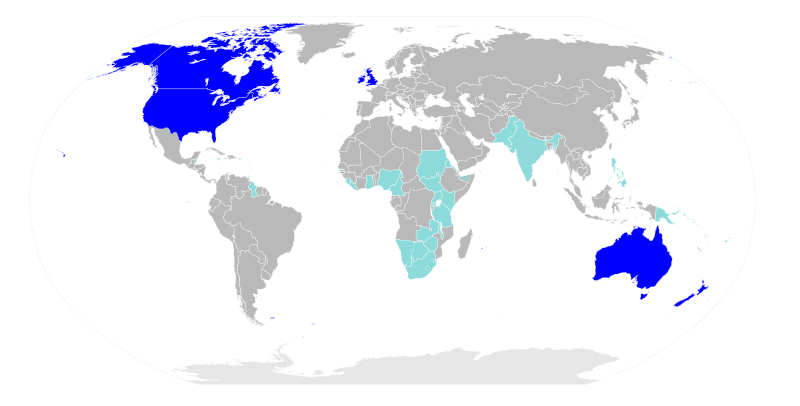
800px-Anglospeak_svg

Thinking the Anglosphere through India

In order to understand contemporary Anglosphere discourse, and the position in which India fits within the concept, we first need to understand its historical context. An early form of contemporary Anglosphere debates on India can be in England on the future of the British empire at the turn of the 20th century which turned into a discussion on the concept of ‘Greater Britain’. This idea was to be federation between Britain and her colonies might look like. Some thinkers at this time saw India as central to the empire, and therefore central to any ‘Greater Britain’. Sir Charles Dilke originally began to use ‘Greater Britain’ as shorthand for the British empire as a whole, but later argued it should only be the ‘English-speaking, white-inhabited, and self-governed lands’. Others, such as historian John Seeley, took up the idea, initially including India on the inside as a territory of the Crown. However, later, in the same book, he argued Greater-Britain needed to be racially homogenous, declaring India to be ‘…all past and, I may almost say, has no future’.

Winston Churchill’s work on the ‘English-Speaking Peoples’, itself an echo of Alfred Taylor’s ‘English Speaking Races’, emphasizes the supposed superiority and unity of these peoples. Conservative historian Andrew Roberts has recently taken it upon himself to follow up on Churchill’s work. Roberts cuts down the magnitude of his chosen topic by ignoring English-speakers outside the geographical centers of the Anglosphere. His approach to India and colonial history is revealed by his depiction, and ultimate defense, of General Dyer’s massacre at Amritsar. This is the worst example of ‘imperial’ history I can think of. Roberts goes so far as to defend Dyer from the propaganda of the nasty Indian nationalists. Even the British government no longer defends this event, though on a recent trip to India, David Cameron declined to apologize for it. Roberts defends the massacre even though many of Dyer’s victims were English-speaking. Leaving the victims out of the ‘English-Speaking peoples’ is a final act of humiliation and dehumanization.

Just as the debaters over ‘Greater Britain’ were unsure of where India might fit with the concept, contemporary Anglospherists are unsure of what to do with India. Continue reading

What We Talked About At ISA: Rhythm, Time and History

With thanks to Elisabetta Brighi and Xavier Guillaume for putting together the Rhythms of the International roundtable and their inspiring contributions, to Robbie Shilliam for his song, and Kyle Grayson for his spirited and thoughtful engagement. And by no means least, to the pleasingly sizeable and lively crowd who gave the last panel of the last day such a buzz.

Below is a write-up of my contribution to the roundtable, in which I reflected on the relationship of rhythm and history, and drew out some of the potential disruptions that a different rhythmic sensibility might have on our conception of history.


What is rhythm?

To my shame, colleagues, and partly out of curiosity, I looked it up in the dictionary. Shame, because if you are looking something up in a dictionary before giving a talk on it, you probably shouldn’t be giving a talk on it. Curiosity, because I wanted to know how they would define ‘rhythm’ in words rather than in noises.

The dictionary answers were not particularly edifying. One definition spoke of ‘repeated, regular beats’, another of a ‘regulated succession’ of beats. Thud, thud, thud. Boom, boom, boom. Boom, thud, boom, thud. These definitions felt flat, and rather forbidding. But I suppose this is because they were the generic definitions of all kinds of ‘rhythm’, and not just the samba playing in my head.

Using some thinking developed earlier in some work on music and politics, I started again, with a different question:

What is the relationship of rhythm and time?

This yielded a much more direct answer: it is the production of rhythm that makes time itself knowable. In the making of music, rhythm generates movement and flow, and makes it possible for sounds to synchronise and arrange themselves. Continue reading

Notes on Ex-Yu Justice, Part II

Following Part I, and in advance of Part III.


The court is political  

The smartass response goes something likes this: “Of course it’s political; what’s not political? Haven’t you read the ICTY’s website? It says clearly that the tribunal was established for explicitly political reasons, too, by the UNSC, which is political by definition.” But the smartass response is a rude interruption. The above assertive prefaces monologue, not dialogue. The monologue is a story about world politics as a dog-eat-dog contest in which the strong always devour the weak with a focus on the origins of the ICTY. “Of course an international judicial institution cannot be created on the basis of an UNSC resolution alone. Of course Chapter VII of the UN Charter does not specify the conditions under which war crimes tribunals can be set up. Of course the ICTY quickly discovered that it could not bother with the question of own legality. But when have great powers ever cared about law and institutions? Might makes right, right? The ICTY is based on the consent of states – big states, not our banana republics.”

This story varies in terms of breadth and depth, but its modal conclusion is that the tribunal cannot represent anything but “victor’s justice” and/or Western and specifically American oppression of those living on the periphery. As for the motive, the supposedly aggressive prosecution of Bosno-Serbo-Croat baddies practiced by the ICTY is a function of the desire for retribution for every case of ex-Yu insolence in recent history, starting with the Trieste crisis of 1945. As discipline and punishment at once, trials are also meant to serve as a warning to the rest of the peripheral and semi-peripheral world. This type of theorizing could be described as a cross between pop-realism and pop-Marxism with a whiff of the crudest forms of pop-anti-Americanism and some other, far less respectable prejudices. While it is not exactly a closed loop, for every new newstory indexing Western and specifically American double standards and double visions in international law, the theory gains strength. Who in the former Yugoslavia doesn’t have an informed opinion on the “Hague Invasion Act”?

imgfrontisThe two accounts of the origins of the ICTY that I have on my shelf make something of an opposite case. Pierre Hazan’s book, subtitled ‘The True Story Behind the ICTY’, suggests that the weak (international justice activists) outfoxed the strong (realist diplomats and state-centric lawyers) and, against all odds, managed to turn the tribunal into such a revolutionary achievement (more on this below). Hazan is no theorist of norms and transnational advocacy networks, but there are more than a few parallels with this literature. The second account is Rachel Kerr’s 2004 book, which begins and ends with the thorny issue of “politicization,” including the issue of “prosecutorial discretion” as its special subset. Kerr has the ICTY walking on a tightrope. Sidle up too closely to justice, and you alienate those who rule the world; let politics in, even to manipulate it for judicial ends, and you lose credibility. While infinitely more nuanced than Hazan’s, Kerr’s framework for analyzing politics (it, too, chimes with 1990s IR theory, namely the “bringing international law back in” literature) follows the same binary – let me personify it a little as a contest between “realists” versus “legalists” – and it reaches the same conclusion. And judging by both the quotidian operation of the court as well as its key decisions up to 2002-3, Kerr finds, “legalists” had the upper hand.

I am not sure what stock-taking exercises based on the realist vs. legalist framework look like today (again, this post is my attempt to reconnect with the literature I stopped following years ago), but what struck me in my conversations is how adamant my interlocutors were in rejecting even the most carefully drawn legalist claims. It’s simple, the typical response goes, the ICTY is subject to constant political pressures and it shouldn’t be surprising to see so much judicial malpractice. Lest one is keen to dismiss this as “typical” ex-communist (and transitionalist) disdain for the notion that law serves to ensure that valuable social goods are distributed in ways that protect equal respect for everyone, note that some of the most critical arguments about the “hopelessly political court” are drawn from the texts left behind by bona fide ICTY insiders like Antonio Cassese (he of  those great international law textbooks), Gabrielle Kirk McDonald, Louise Arbour, Graham Blewitt, Carla Del Ponte, Serge Brammerz, and Florence Hartmann (more below). Anyone can cherry-pick a few memorable lines from a few memoirs and journalistic accounts (Hartmann, if I recall correctly: “the ICTY was formed so that war criminals could negotiate on the level of their innocence”), but what I find interesting is that these types of arguments have gained more and more adherents over the years.

Continue reading

Eurocentrism, Racism: What’s In A Word?: A Response to Bowden, Sabaratnam and Vucetic

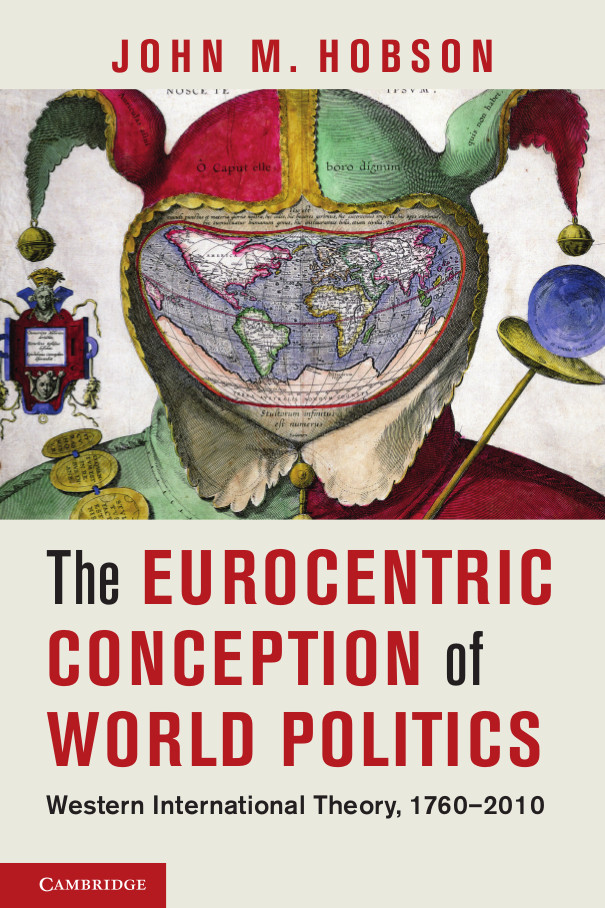
The fifth and final post in our symposium on John M. Hobson’s The Eurocentric Conception of World Politics: a reply from John himself, responding to the commentaries from Meera, Srdjan and Brett. John’s original summary post is, of course, still available too.


Introduction: All for one and one for all?

I would like to begin by thanking most sincerely my three blog interlocutors for having gone to the trouble of reading my new book, never mind taking the time to write up their extremely thoughtful and interesting blog responses. Of course, the cynic reading all of this might be forgiven for thinking that such a blog forum is hardly a ‘testing environment’ for Hobson’s book, given that his interlocutors are either postcolonialists or at least influenced by postcolonialism and have presumably, therefore, been “cherry-picked” for their potentially sympathetic tendencies. Even the titles that they have chosen, so the cynic might think, would appear to be symptomatic of this, with Meera Sabaratnam’s piece proclaiming – extremely generously I must concede – that my book has succeeded in ‘blowing up the disciplinary citadel of International Relations’, while Srdjan Vucetic’s title projects even further the meaning of the front cover of my book to that which I had intended, suggesting that IR is a ‘foolish discipline’ given his resounding agreement that it suffers from a pervading Eurocentrism. In this vein it might be thought that Brett Bowden’s title – ‘Eurocentrism and More’ – chimes in with yet another wholehearted rendition of the now familiar chorus of ‘IR is a Eurocentric discipline’. So why the fuss about all this and is there much point in reading on? For it would seem that we’re all agreed and there’s nothing to debate, right?

Well no, not quite all for one and one for all. Continue reading

Eurocentrism and More

For this fourth post in our symposium on John M. Hobson’s The Eurocentric Conception of World Politics, TDOT is delighted to welcome a response from Brett Bowden, Associate Professor of History and Political Thought at the University of Western Sydney.  The first three posts included an introduction from the author, and responses by TDOT’s Meera and Srdjan. In the next few days we look forward to a response from the author.


Let me begin by stating what will soon become obvious: this is not a book review of John Hobson’s The Eurocentric Conception of World Politics. The earlier posts from Meera and Srdjan have done an admirable job of engaging with the book in greater depth than I intend to here. Given that this is a blog, I will lay my cards on the table upfront – I’m a fan of John Hobson’s work. And I’m a big fan of The Eurocentric Conception of World Politics, which probably comes as no surprise to anyone remotely familiar with my own Empire of Civilization (all three of you). More specifically, I largely agree with the general tone and thrust of John’s book and the larger points he seeks to make about Eurocentrism. I don’t always agree with the details or finer points, but I too don’t want to split hairs. For instance, as John notes, I am not so kind to Kant, as I think his Lectures on Geography cast a doubt on some of his cosmopolitan claims and anti-imperialist credentials. But this is a minor difference of opinion that has no real bearing on the larger points being made about Eurocentrism and the study of world politics, or more specifically, international theory, for there is a difference.

As noted in an earlier posting, similar observations could be made about the humanities and social and behavioural sciences more generally, which is where, as an undergrad, I was first struck by Eurocentrism, albeit probably without knowing it by name. I can’t recall all of the details, but it was in a small seminar (only three students and a lecturer) on political philosophy where something we were reading and some comments on it struck me as rather odd; I made a point of raising my objections, which were dismissed by my three interlocutors, and I recall thinking to myself: ‘Wow, people still think like that’ – and well-educated people at that. Yes, Eurocentrism, along with a few other accompanying -centrisms are alive and well. This book won’t be the death of Eurocentrism, but hopefully it will shine a light in to some of the darker corners of the discipline and help to open the eyes and ears of a new generation of students and scholars. Which brings me to my purpose here; given that I’ve said I’m not exactly reviewing the book.  The Eurocentric Conception of World Politics and some of John’s earlier work has done a great service in bringing contentious issues to the fore where they can be debated openly – and now that John has opened up the can of worms, I’m going to jump on the bandwagon, get on my soapbox and ride on his coattails. Continue reading

Re-visioning Eurocentrism: A Symposium

The Disorder of Things is delighted to welcome a post from John M. Hobson, which kicks off a blog symposium on his new book The Eurocentric Conception of World Politics: Western International Theory, 1760-2010. Over the next few weeks there will be a series of replies from TDOT’s Meera and Srdjan, as well as special guest participant Brett Bowden, followed finally by a response from John himself. [Images by Meera]

Update: Meera’s response, Srjdan’s response and Brett’s response are now up. 


Introduction

As I explain in the introduction to The Eurocentric Conception of World Politics, my book produces a twin-revisionist narrative of Eurocentrism and international theory.[i] The first narrative sets out to rethink the concept of Eurocentrism – or what Edward Said famously called ‘Orientalism’ – not so much to critique this founding concept of postcolonial studies but rather to extend its reach into conceptual areas that it has hitherto failed to shed light upon.[ii] My central sympathetic-critique of Said’s conception is that it is reductive, failing to perceive the anti-imperialist face of Eurocentrism on the one hand while failing to differentiate Eurocentric institutionalism or cultural Eurocentrism from scientific racism on the other hand. As such, this narrative is one that is relevant to the many scholars who are located throughout the social sciences and who are interested in exploring the discursive terrain of ‘Eurocentrism’. These, then, would include those who are located in International Relations of course but also those in Politics/Political theory, Political Economy/IPE, political geography, sociology, literary studies, and last but not least, anthropology.

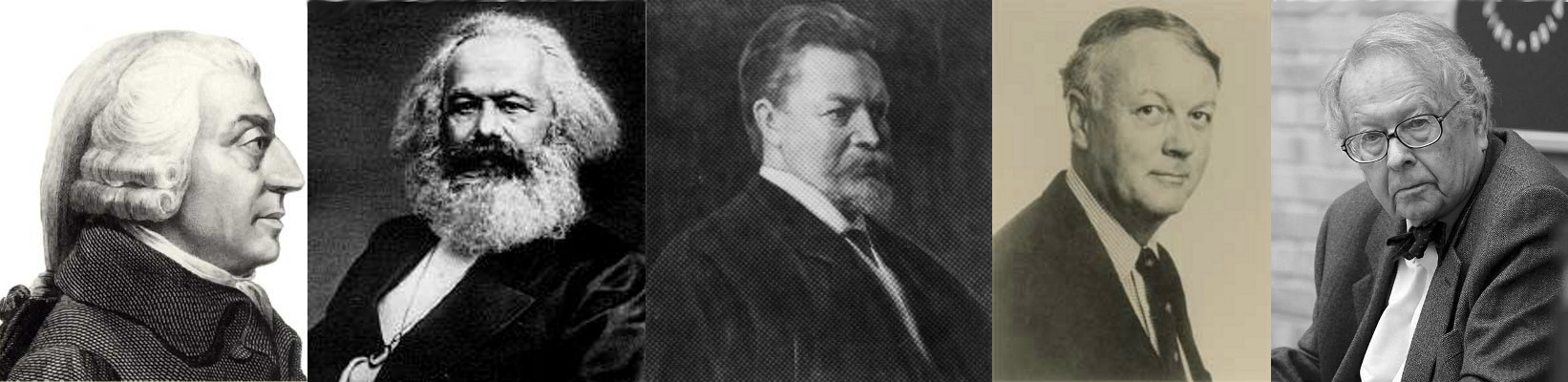
The second narrative rethinks international theory as it has developed across a range of disciplines. It stems back to the work of Adam Smith in the 1760s and then moves forwards down to 1945 through the liberals such as Kant, Cobden/Bright, Marx, Angell and J.A. Hobson, Zimmern, Murray and Wilson, onto the Marxists such as Marx and Engels, Lenin, Bukharin, and Luxemburg, and culminating with the realists who include Mahan and Mackinder, Giddings and Powers, Ratzel, Kjellén ,Spykman, von Bernhardi, von Treitschke and, not least, Hitler. After 1945 I include chapters on neo-Marxism (specifically neo-Gramscianism and world-systems theory), neo-liberalism (the English School and neoliberal institutionalism) and realism (classical-realism, hegemonic stability theory and Waltzian neorealism). This takes the story upto 1989. I then have two chapters on the post-Cold War era which examine what I call ‘Western-realism’ and ‘Western-liberalism’. The final chapter provides an overview of the changing discursive architecture of Eurocentrism and scientific racism, while also revealing how international theory has, in various ways, always conceived of the international system as hierarchic rather than anarchic. Although this is clearly a highly controversial and certainly counter-intuitive claim, it nonetheless in effect constitutes the litmus test for the main claim of the book: that international theory for the most part rests on various ‘Eurocentric/racist’ metanarratives. And ultimately my grand claim posits that international theory in the last quarter millennium has not so much explained international politics in an objective, positivist and universalist manner but has sought, rather, to parochially celebrate and defend or promote the West as the pro-active subject of, and as the highest or ideal normative referent in, world politics.

Continue reading

The Anglosphere, Part Two: Of Liberal Leviathans and Global Turns

Viewed from the perspective of liberal IR, Britain’s globe-spanning empire can be described as “Liberal Internationalism 1.0.” According to G. John Ikenberry, the “liberal ascendancy” had everything to do with the “growth and sheer geopolitical heft of the world’s liberal democracies.” The British may have been the first to harmonize national interest with the stability, openness and rule-following in the international systems, but it was the Americans who “fused” them. “If the liberal order was built after World War II primarily within the West, the end of the Cold War turned that order into a sprawling global system” [1].

The question that has always fascinated me is how we got from Liberal Internationalism 1.0 to Liberal Internationalism 2.0, or how, to freely borrow from Ikenberry, power shifted between two liberal Leviathans, Britain and the U.S. What is puzzling here is the absence of the Wars of Anglophone Succession. Instead of fighting each other at least once or twice, the two empires first found ways to cooperate and coordinate their imperial activities around the globe, then engaged in what can be described as a pacted transition, even as a corporate merger. Here’s one verdict, taken from “The imperialism of decolonizationpiece by Wm Roger Louis and Ronald Robinson:

The British were welcoming the Americans back into the British family of nations and, informally at least, into the Commonwealth . . . [the post-war empire operated] as part of the Anglo- American coalition . . . like a multinational company.

Putting aside the historiography debates about its scope, timing and sequencing, this historical process was no doubt of momentous importance for the evolution of the liberal order, both in terms of the accumulation of hegemonic power, and in terms of social and institutional learning. The Anglosphere, in other words, begins here. So how do we explain it? Strategic calculus and/or a putatively liberal predilection for cooperation, compromise, and conciliation (last word Churchill’s) are only parts of this story, as Charles Kupchan notes in his How Enemies Become Friends:

British appeasement of the United States and the practice of reciprocal restraint that followed cleared the way for rapprochement. But it was the emergence of a new discourse on both sides of the Atlantic – one that propagated notions such as a “shared Anglo-Saxon race” and an “Anglo-American family” – that produced a compatible identity, consolidated stable peace, and laid the foundations for the strategic partnership that exists to this day.

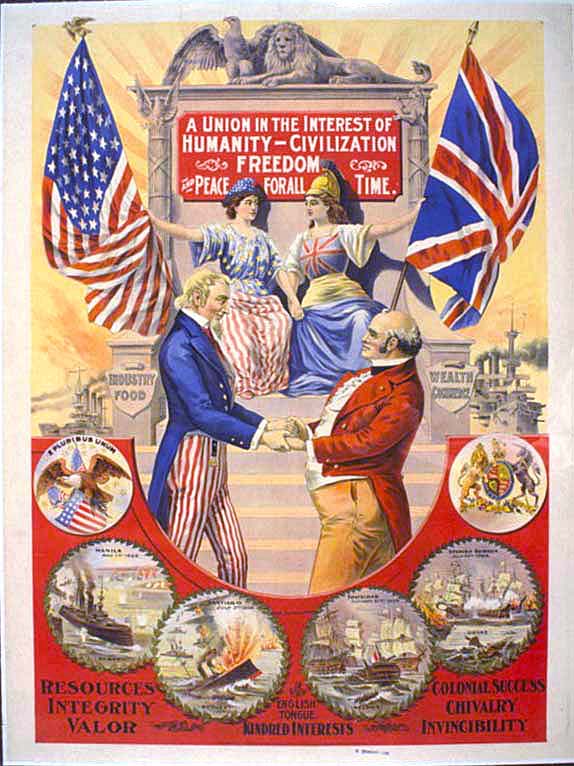
I could not agree more. Racialized identities operate as social structures of power, and this was a time when they explicitly authorized unity and superiority for Us against Them in ways that had profound consequences for the evolution of the so-called liberal international order. Anglo-Saxonism enabled the U.S. and Britain – or their elites – not only to position themselves favourably vis-à-vis each other at the turn of the twentieth century, but also with respect to the rest of the world and in a longer term. The Anglo-American rapprochement was no “global turn” of the sort that Kupchan talks about in his latest book, but it arguably comes close to it in macro-historical term. For one, the paths, pace and outcomes of the 1945-1951 international institution-building spree – that foundation of Liberal Internationalism 2.0 –followed the patterns of UK-U.S. cooperation first established during the colonial wars and near-wars in the 1890s. The much-disclaimed “special relationship” has its origins in this period – something to keep in mind next time we hear that U.S.-hugging remains in someone’s national interest, as General Sir David Richards, the head of Britain’s armed forces, argued last week.

This story I wish to tell can be expanded and contracted empirically (Anglo-Saxonism is dead today, but its effects can be found everywhere from university scholarships to contemporary military alliances) and theoretically (through, say, an account of core-periphery relations that made global capitalism possible), but the main substantive point remains the same, and that is that we cannot fully understand the “liberal ascendancy” without pausing (as Siba Grovogui might say) over the pervasiveness and power of racialized identities that connected Liberal Internationalism 1.0 and 2.0 [2]. Continue reading

The Anglosphere, Part One: What’s in a Name?

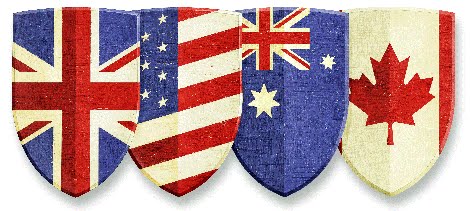
What do you get when you intersect indices that rank top two dozen nations of the world by political freedoms, GDP per capita, productivity, literacy, and patent applications in late 2000s? The answer is you get some kind of an “Anglosphere” – usually the quartet of Australia, Canada, the UK, and the U.S., but also, depending on the underlying measures and thresholds, New Zealand, Ireland, Singapore and so on.

Using data from the World Development Indicators, The Economist Intelligence Unit, and International Labour Organisation, among others sources, I’ve played this game in my research methods classes quite a bit. No methods textbook endorses such mindless empiricism, but students, from what I can tell, tend to appreciate the loose structure of the exercise. This is because the objective – familiarizing students with comparison, measurement, scaling, and so on – almost always shifts onto the “why?” questions, at which point everyone (ok, not everyone) tries to come up with his/her social scientific narrative on what makes this or that grouping “interesting,” “different,” or “special.”

Joel Kotkin, one of America’s premier demographers, and his nine collaborators have shown me how this game can be played at an infinitely more sophisticated level. Their argument – developed primarily in a collection of the Legatum Institute papers entitled “The New World Order”, but also in two shorter pieces penned by Kotkin and Shashi Parulekar at NewGeography.com and in City Journal – is that globalized economy by and large operates in and through three large “tribal groupings” or “spheres”: the Indosphere, the Sinosphere, and the Anglosphere [1]. As the authors note, their narrative can claim a formidable intellectual pedigree: “we have followed the great Arab historian Ibn Khaldun’s notion that ethnic and cultural ties are more important than geographic patterns or levels of economic development.”

Kotkin et al offer no shortage of interesting and novel observations and analytical points, but one of the project’s key punchlines is in the title of the Anglosphere section in the New World Order: “We are not dead yet.” The project’s foil, in other words, is the current wave of American declinism:

The era of unipolar domination by the United States and its key allies — which dates from the fall of the Soviet Union — has come to an end. Yet despite this, the core Anglosphere remains by far the largest cohesive economic bloc in the world. Overall it accounts for more than 18 trillion dollars, one quarter of the world’s GDP, far more than any other cohesive global grouping.

Continue reading

What We Talked About At ISA 2012: How Music Brings Meaning to Politics

At this year’s ISA conference, I presented on the panel ‘The Social Technologies of Protest’, with George Lawson, Eric Selbin, Robbie Shilliam and our discussant Patrick Jackson. The full text of the draft paper is available here. Thanks go to the panel and audience for some fascinating questions and discussions.


Music is a world within itself
With a language we all understand
With an equal opportunity
For all to sing, dance and clap their hands
But just because a record has a groove
Don’t make it in the groove
But you can tell right away at letter A
When the people start to move

–          ­‘Sir Duke’, Stevie Wonder, Songs in the Key of Life (1976)

Music is an old and effective technology of politics. This was highly visible in both the recent uprisings and the attempts at counter-revolution; whilst from the beginning Tunisian activists sang their national anthem in the street in anti-regime protest, Assad blasted the Syrian anthem into the cities as a reminder of his position. Rappers and older musicians shared platforms in Tahrir Square, and DJs parodically remixed Gaddafi’s final public speeches into technotronic nonsense. Whilst not all political music is sung of course, songs and the act of singing are particularly powerful in political situations as means and symbols of mobilisation and unification.  Moreover, songs tend to linger in the brain.

But there are at least two ways of thinking about the relationship between politics and music. The question which is perhaps most often asked and answered is: how, when and where is music political? So, why did the Tunisian protesters sing the national anthem in front of the courthouse, how did music support the anti-apartheid struggle, and why did the Haitian revolutionaries sing the Marseillaise? How did the musical character of these expressions facilitate a particular kind of political act? Lots of excellent writers, both scholarly and otherwise, have turned their attentions to the nature of political music, and especially protest music, in a variety of times and places.

However, the question that I want to focus on mainly here though is slightly different: how, when and where is politics musical? This question was stimulated by the general observation that when we try to make sense of politics, we often use metaphors related to music. A common phrase is that a political statement or value ‘struck a chord’ with an audience, or that protesters are ‘banging a drum’. Politicians may or may not be ‘in tune’ with publics, and relations may be ‘harmonious’ or not. Coups will be ‘orchestrated’.

Perhaps surprisingly, in moving from vernacular to scholarly modes of understanding politics, the metaphors of music are no less important. In fact, in some cases they seem to be more important. The genre-defining work of the historical sociologist Charles Tilly in the study of contentious politics is a revealing and fascinating case in point.

Continue reading

Rewriting International Relations

A small cascade of Millennium-related news and IR from Elsewhere. First, our very own Nick was recently elected as Co-Editor (with Edmund H. Arghand and Maria Fotou) to oversee the journal for Volume 41 (2012-2013) on the basis of a conference proposal on ‘Materialism and World Politics’ (full CfP details forthcoming soon). Second, the Millennium blog has had a facelift (ongoing tweaks to be made to its façade), so go have a look.

Third, and perhaps most importantly, the Northedge Essay Competition is now open. So if you’re a post-graduate student (PhD or advanced Masters) in IR or cognate fields, and you have some exceptional work lying fallow, spruce it up and submit. The deadline is 30 January 2012, and the winning essay will appear in Millennium 41(1). Previous winners have been very good indeed.

Fifth, the journal’s social media tentacles are growing, so do the following thing on Twitter and the liking thing on Facebook, if you are of that bent. Finally, a reminder that Millennium‘s weekly Editorial Board meetings are open to all LSE postgraduates (MSc and PhD) who are engaged and interested. If you fit that description and for some reason aren’t already involved, do email the Editors for details.

Elsewhere, BISA’s Historical Sociology and IR Working Group also has a new look, and a particularly awesome and growing resources page. And there’s now an Occupy IR Theory blog and associated hashtag (#occupyirtheory, natch), which is worth both a virtual engagement and a flesh-world contribution. Similarly, if for any reason you are unaware of David Campbell’s blog on visual culture and international politics, rectify yourselves!