Accelerationism Without Accelerationism

The second post in our forum on Nick and Alex Williams’ Inventing the Future, from Steven Shaviro. Steven is the DeRoy Professor of English at Wayne State University. He blogs at The Pinocchio Theory.


The term accelerationism was coined by Benjamin Noys in 2010, in order to designate a political position that he rejected. In Noys’ account, accelerationism is the idea that things have to get worse before they can get better. The only way out of capitalism is the way through. The more abstract, violent, inhuman, contradictory, and destructive capitalism becomes, the closer it gets to tearing itself apart. Such a vision derives, ultimately, from the famous account of capitalism’s inherent dynamism in the Communist Manifesto. For Marx and Engels, capitalism is characterized by “constant revolutionising of production, uninterrupted disturbance of all social conditions, everlasting uncertainty and agitation… All that is solid melts into air, all that is holy is profaned.” Far from deploring such developments, Marx and Engels see them as necessary preconditions for the overthrow of capitalism itself.

The trouble with accelerationism, according to Noys, is that it celebrates “uncertainty and agitation” as revolutionary in its own right. It doesn’t have any vision of a future beyond disruption. In the 1970s, Deleuze and Guattari suggest that we need, not to withdraw from capitalism, but “to go still further… in the movement of the market, of decoding and deterritorialization,” At the same time, Jean-François Lyotard exults over capitalism’s “insane pulsions” and “mutant intensities.‟ By the 1990s, Nick Land ecstatically anticipates the dissolution of humanity, as the result of “an invasion from the future” by the “cyberpositively escalating technovirus” of finance capital. Today, transhumanists see Bitcoin, derivatives, algorithmic trading, and artificial intelligence as tools for destroying the social order altogether, and for freeing themselves from the limits of the State, of collectivity, and even of mortality and finitude. This is what happens when “creative destruction” – as Joseph Schumpeter calls it, in his right-wing appropriation of Marx – is valued in and of itself.

In 2013, responding to all these currents, Nick Srnicek and Alex Williams published their “#Accelerate: Manifesto for an Accelerationist Politics.” In this text, they seek to reclaim accelerationism as a genuine project for the left – one that can pick up the tools of capitalist modernity, and detourn them to liberatory ends. This is not a matter of celebrating disruption for its own sake; Srnicek and Williams emphatically reject Nick Land’s “myopic yet hypnotising belief that capitalist speed alone could generate a global transition towards unparalleled technological singularity.” Instead, Srnicek and Williams return to Marx’s own suggestion that Continue reading

Ethics in the Service of Violence in Israel/Palestine

A guest post from James Eastwood. James is a PhD candidate at the School of Oriental and African Studies (SOAS). This post is partly based on his latest article, ‘”Meaningful Service”: Pedagogy at Israeli Pre-Military Academies and the Ethics of Militarism’, forthcoming in the European Journal of International Relations.


Die you fuck, die you son of a whore, die, die, die you son of 66 whores.

These are the words that Ahmad Salih Manasra, a 13-year-old Palestinian boy, heard as he lay bleeding in the street on 12th October 2015. The insults were yelled by an Israeli passer-by, who recorded the child on video as he lay helpless on the ground. Ahmad was taken to hospital in a critical condition. His cousin Hasan Khalid, who was shot at the same time, is dead.

Israeli police later released a video depicting the alleged chain of events leading up to these incidents. It shows two young boys carrying knives attempting to attack a passer-by, followed by an alleged stabbing which takes place off-camera. In the ensuing pursuit, the elder of the two boys – Hasan – appears to run at the police with a knife. They shoot him dead, without attempting to immobilise him. According to Israeli media, Ahmad was hit by a car as he ran away. But the video circulated on social media shows him lying some distance from the road on a tramline. Palestinian news sources, which had originally claimed that Ahmad was shot dead, now suggest that he was run down by an Israeli patrol car and then beaten.

The graphic video of Ahmad Manasra is only the most shocking to emerge from a series of shootings of Palestinians by Israeli police and soldiers as they scramble to respond to a spate of un-coordinated knife-attacks. 50 Palestinians have been shot dead since the beginning of October, with hundreds more injured. Meanwhile, 9 Israelis have been killed in stabbing and traffic ramming incidents, with dozens more wounded. Last Tuesday witnessed the most serious escalation of the attacks, with separate incidents occurring almost simultaneously across Israel and the occupied territories. Protests have erupted in the West Bank and Gaza, while Israeli authorities have ramped up police and military presences and have introduced checkpoints and barriers around Palestinian neighbourhoods in East Jerusalem.

The wave of public panic over the stabbings has re-ignited a longrunning controversy in Israel over the rules of engagement for police officers and soldiers dealing with suspects, wanted assailants, and protestors.

Continue reading

Thinking Internationally About The Arms Trade

A guest post, following our recent podcast on the arms trade and its discontents, from Anna Stavrianakis. Anna is a Senior Lecturer in International Relations at the University of Sussex. Her research focuses on the arms trade, arms transfer control and militarism.


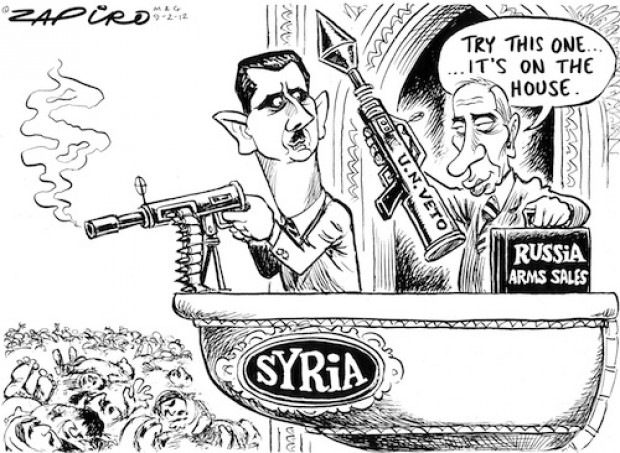
Zapiro - Russia Syria Arms Trade

September 2015, ExCel Centre, London: Stop The Arms Fair activists block the road and prevent military vehicles entering the Defence and Security Equipment International (DSEI) exhibition. They are protesting against one of the largest arms fairs in the world – sending a message to the UK government and arms companies that “inviting representatives of repressive regimes and their armed forces to hob-nob and do dodgy deals at DSEI … with representatives from the UK government and unscrupulous arms companies from around the world IS NOT OK.” Two weeks previously, Cancun, Mexico: Control Arms activists build a life-size sand sculpture of a Stormer 30 tank on Baracuda Beach, Cancun, calling on states to save lives! by ensuring the toughest possible standards at the first Conference of State Parties to the Arms Trade Treaty, the biggest game in town for contemporary international arms transfer control.

These two campaigns share the language of “dodgy deals” but are otherwise quite different visions of the arms trade and its control. The Control Arms campaign focuses on encouraging, informing and embarrassing diplomats into agreeing a multilateral treaty that enshrines higher common international standards and establishes stronger norms against arms transfers that violate human rights and international humanitarian law. The Stop The Arms Fair coalition, meanwhile, takes direct action to halt the operation of arms fairs in the UK by physically blockading the exhibition centre, in protest at the relationship between arms companies and the UK government, and the relationships between the UK government and authoritarian, repressive and war-fighting foreign governments.

I’ve written in the past about the international politics of NGO and campaign group strategy – whether reformist, insider approaches are more effective than transformist, outsider ones – in the context of debates about global civil society. Yet what continues to trouble me, intellectually and politically, is a raft of questions about the operation of the arms trade itself. Namely: where, or with whom, does political responsibility lie for the negative effects of the arms trade in a world of formally national states that are home to internationalising arms companies and operate in a multilateral system based on sovereignty? What social forces drive the arms trade, how does their power operate, what is the character of the problems they generate, and how should scholars and activists best respond? Competing understandings of the operation of the arms trade can be seen in the varied activist responses to it: is the problem one of lack of regulation, the need for improved multilateral action, improved normative standards and international law, as per the Arms Trade Treaty? Or is the problem the relationship between the state and arms capital, and government promotion of the trade, as per the anti-DSEI protests? In the case of DSEI, how are we to understand the operation of internationalising arms capital that has an intimate yet fractious relationship with national states? And in the case of the Arms Trade Treaty, how should we make sense of efforts to create a level playing field of respect for human rights and humanitarian law in the context of a vastly asymmetric and hierarchical world military order?

Thinking theoretically, I have come to see that a large part of the difficulty in answering these questions lies in the grip that methodological nationalism continues to hold on IR as a discipline. Continue reading

Ivory Towers and Sleeping Beauties: On the Importance of Political Activism in Academia at EISA 2015

FCasoA guest post from Federica Caso on the recently created petition from academics to EU decision makers on the ongoing refugee/migrant crisis (you can see it and sign it), which has also been subject to discussion by Federica and Tiina Vaittinen over at the Feminist Academic Collective. Federica is a doctoral candidate in International Relations at the University of Queensland, where she is working on embodiment and the aesthetics of militarism in the context of the militarisation of society. Her research is informed by feminism and queer theory.


What can we do as academics and political subjects in face of the humanitarian crisis that is unfolding in Europe? Probably not much, but I would like to take the time and energy to tell why I think signing the petition by IR academics and community to address the EU to open safe channels of entry and mobility for asylum seekers is important, and suggest what can be done to mobilise at EISA.

So, does it take a picture of a dead boy on the shore of Turkey to awaken political consciousness? These days, tons of memes about Aylan Kardi circulate on the internet. Even those who oppose what has been called ‘trauma porn’ of sharing pictures of dead bodies cannot do anything but see these images on their social networks feeds. Megan Mackenzie, Annick Wibben, and Tiina Vaittinen have provided some insights into the debate surrounding the ethics of sharing these pictures. Most importantly, they all have raised important issues about what academics and scholars can and must do. As has been rightly pointed out in the context of images of refugees, we need to understand how they shape our emotional and ethical attitude, we need more insights, but we also need more political action. When considering the political impact that an image can have, Tiina Vaittinen says “To share an image of a dead child’s body on your Facebook page! It is truly immoral – while simultaneously it may also be the most moral act to do”, to the extent that it is the act that starts the much needed political mobilisation.

Academia and the discipline of IR have long been accused of being at loss with political action, or better, with the ability to speak to real world problems in a timely and effective way, which I see as academia’s political action. The gap debate in the discipline of IR is quite well known to all of us. Academia provides for a comfortable Ivory Tower from which the academic speaks, and this voice feeds the clouds rather than address an actual audience. Continue reading

Fragments from a Critical Geography Conference: ICCG Ramallah, July 2015

A guest post from Lisa Tilley. Lisa is a GEM Doctoral Fellow at Warwick and ULB. Her research has taken place in sites of extraction (urban slums and rural settlements) in Indonesia and draws on political ecology and political economy, as well as postcolonial and decolonial thought. An earlier version of this post is also available at the wonderful new resource that is Global Social Theory.


If this farm had not been ravaged
I could have become an olive tree
or a geography teacher
or an expert of the kingdom of ants
or a guardian of echoes

– From Mahmoud Darwish’s The Dice Player (visual version here)

Writing/Speaking/Thinking the Global Palestine

The settler colonial condition can be fully understood only by those who live it. But the rest of us can at least bear witness in the place (Palestine) where it is most legible.

Since the Nakba (catastrophe) of 1948 when 800,000 Palestinians were expelled and 536 towns and villages were deleted from the map the fast and slow erasure of Palestine has continued as an active political project.[1] Zionist leader Chaim Weizmann encapsulated the unrelenting strategy of everyday dispossession in the phrase: “another goat and another acre”.[2] This has been paralleled too by fast and slow memoricide, the deleting of the artistic, historical and cultural existence of Palestine.[3] Tahrir Hamdi calls these the “two movements” of erasure, the cultural and the material.[4] Two movements working not towards the goal of Palestine no longer is but towards the goal of Palestine never was.

Doing a geography conference (ICCG) in Ramallah was therefore an organised act of defiance against Palestinian erasure (“Welcome to Palestine […] its geography lives”).[5] Continue reading

Three Theses on ISIS: The Universal, the Millenarian, and the Philistine

Nimer SultanyA warm welcome to Nimer Sultany who brings us a guest post on thinking about ISIS. Nimer is Lecturer in Public Law, School of Law, SOAS, University of London. He holds an SJD from Harvard Law School. He practiced human rights law in Israel/Palestine, and was the director of the Political Monitoring Project at Mada al-Carmel – The Arab Research Center for Applied Social Research. His recent publications include: “The State of Progressive Constitutional Theory: The Paradox of Constitutional Democracy and the Project of Political Justification” in the Harvard Civil Rights – Civil Liberties Law Review and “Religion and Constitutionalism: Lessons from American and Islamic Constitutionalism” in the Emory International Law Review.


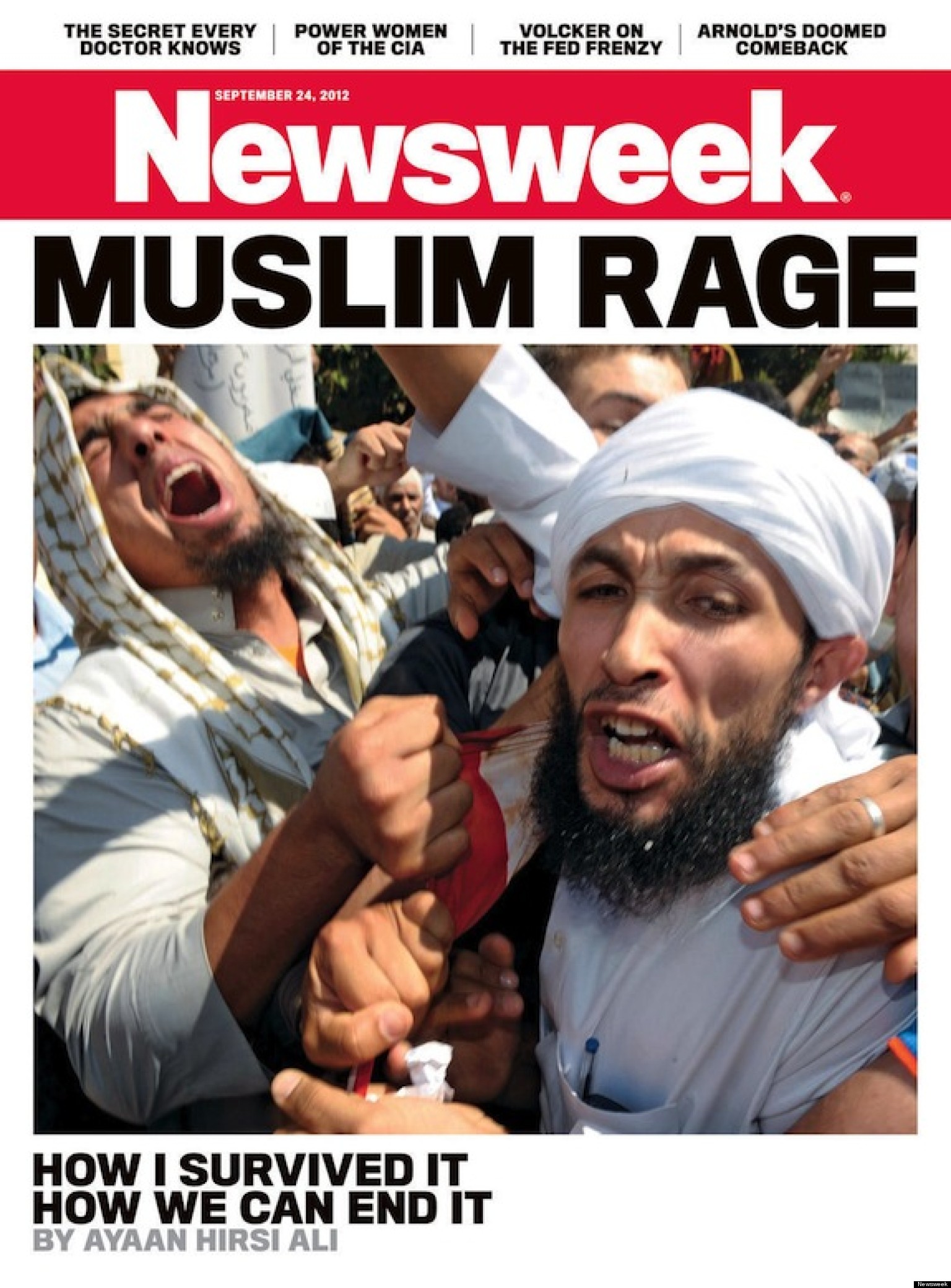
The ruthless brutality of the Islamic State in Iraq and Syria (ISIS or ISIL) unfolds before our eyes on the screens. As commentators struggle to explain and understand it, it becomes convenient to revive old Orientalist tropes. Beyond the spectacular brutality, the reason that ISIS invites attention (both fascination and fear) is that it seems easy to fit in confrontational narratives of Islam (us v. them, anti-American, etc.). Muslims are clearly angry at something. In his infamous article “The Roots of Muslim Outrage”, Bernard Lewis simplistically explained that Muslims are envious of, and angry at, Western modernity and secularism. The U.S. magazine Newsweek illustrated this knee jerk reaction, and recourse to run of the mill thinking patterns, in a Muslim Rage cover in September 2012.

o-NEWSWEEK-MUSLIM-COVER-facebook

In his book “Covering Islam” (1981) Edward Said has effectively critiqued these binary simplifications that dominate not only journalistic discourse about “Islam”, but also expert-talk about Islam. For Said, all attempts to conceptualise other cultures are a value-laden interpretive exercise. He showed the deficiencies of orthodox writings on—and views of—Islam, and called for “antithetical knowledge” to challenge the orthodoxy’s claims of value-free objectivity.

It seems little has changed, however, since Said wrote his book in the wake of the Iranian revolution. In this brief commentary I want to examine three attempts to understand ISIS. These are long treatments in respected liberal media outlets. To use Said’s phrase, these are treatments that fit in different “communities of interpretation.” These three essays are all aware of the need to provide “context” for ISIS. However, their contextualisation differs. The success of this contextualisation in shedding a light on ISIS varies. Let me call these interpretive techniques: universalization; Millenarian confrontation; and intellectual bewilderment. These three attempts operate mostly on the ideational/ cultural domain.

Continue reading

Steal This Conference

A guest post from the Ray Hudson Posse.


If you were to ask a handful of early career scholars for their impressions of the recent British International Studies Association (BISA) conference in London they would probably say: “I wasn’t there”. The reason for the dearth in young attendees is that the conference (like all conferences) was prohibitively priced. Its four days costs a whopping £120 for early birds and £150 otherwise. For undergrads and postgrads the fee is £100 (early bird) and £130 (late). Membership to BISA is compulsory, which costs another £30 a year. It’s a hell of an entry fee into the Ivory Tower.

The way in which the structures of academia are chewing up and spitting out the next generation of scholars-with-no-future is most clearly expressed in the ‘conference trap’, characterised by a double-fuckery – those most in need of attending are precisely those most priced out. While for established academics conferences are little more than an opportunity to blow research budgets on a piss-up with the lads, for aspiring researchers these events are crucial to bolstering the CV and (*shudder*) networking. That is, they are crucial to obtaining a job that will provide them with the means – a proper wage, research budgets, time off teaching etcetera – needed to go to conferences! (And, also, to live).

But it is precisely early career scholars in fractional, contract or zero-hours employment that have limited/ no research budgets and therefore struggle to attend. It is precisely early career scholars that are underpaid and thus unable to pay out of their own pocket. These structural constraints tend to be ratcheted up if you’re a person of colour, not-male, working class, and/or from the global south. On the one hand we can’t afford to go; on the other hand we can’t afford not to go. We need a job to go; we need to go to get a job. Something has to give.

We went to BISA. We didn’t pay. We stole this conference. You can too. Here’s how.
Continue reading

Ethical Encounters – Encountering Ethics

kimhutchings

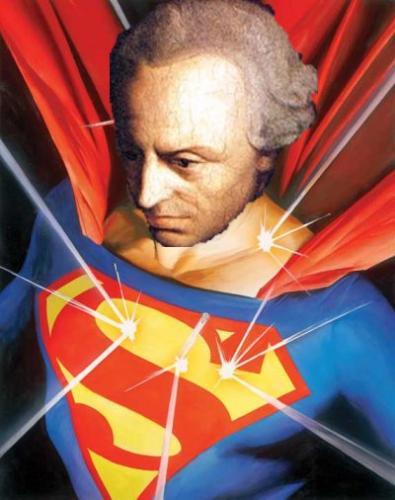
Our final post reflecting on the forum itself is from Professor Kimberly Hutchings, she is Professor of Politics and International Relations at Queen Mary University of London. She is a leading scholar in international relations theory. She has extensively researched and published on international political theory in respect to Kantian and Hegelian philosophy, international and global ethics, Feminist theory and philosophy, and politics and violence. Her work is influenced by the scholarly tradition that produced the Frankfurt School and Critical Theory. Previous posts can be found here: Myriam, Joe, Elke, Jillian and Diego.  *Note: all images provided by Joe – Kim bears no responsibility for the cheap visual gags!


Ethics as a term encompasses every-day and more specialised meanings. It is used to refer to existing moral commitments, standards and values embedded in actual contexts and influencing or governing practice. It is also used to refer to philosophical justifications of moral standards and values. One encounters ethics in both senses in reflecting on the contributions to ‘Ethical Encounters’. All of these encounters seek to speak to dimensions of practice: war, development, migration, rights claims in the name of humanity. All of them also seek to shift the philosophical assumptions and implications of predominant approaches to international ethics. In summary, they all ask ethical questions about doing ethics in theory and practice. For all of the contributors encountering ethics is itself an ethical encounter. Of course they do not all say the same thing, and in what follows I want to pick out some of the commonalities and some of the differences between them. This will not be in order to resolve or transcend differences, or to develop a synthesis of the views expressed, but rather to bear further witness to what Elke calls the ‘ethicality of ethics’, which I want to suggest is intimately related to unresolvable but also unavoidable questions of authority and judgment.

Myriam, Joe, Elke, Jillian and Diego are all against a certain kind of international ethics, which they see as globally dominant in theory and practice in the worlds of the western academy and liberal international policy. They are against ethics understood ultimately as a matter of universal truths, which can be translated into the terms of binding prescriptive rules, laws and codes of practice. It is pretty clear, although he is not necessarily named, that Public Enemy Number One is Kant, with Bentham a close second, followed of course by the recent deontological, contractarian and utilitarian inspired generation of cosmopolitan moral and political theorists and their allies in law and policy.

kant_superman Continue reading

O (fuck you) Canada!

Our very first guest rant, courtesy of Sankaran Krishna of the University of Hawai`i at Manoa.


Fuck Canada

Okay, I need to get something off my chest. I am sick and tired of the way “Canada” is positioned as a beacon of progressive socialistic state policies and a peaceful, enlightened citizenry. I am sick and tired of hearing white, liberal colleagues assert during every Presidential election in the United States that if “… Dole/ Bush / McCain / Romney … wins, I am moving to Canada.” I am also sick of the way Canada’s educational system, its health care system, its gun control policies, and a variety of other practices are contrasted favorably with the United States and held up to the latter as a model worth emulating. I am sick of American tourists abroad putting Canada stickers on their backpacks as a way of immunizing themselves from opprobrium. I am sick of all the evocations of Canadian politeness and niceness and what not, conveniently forgetting that in every war-making venture the United States has been in since its founding, the Canadians have been there right alongside. I am sick of all this for at least three reasons.

One, it effaces the conjoined history of both the United States and Canada as settler-colonial societies constructed on the violent usurpation of the lands of indigenous peoples and continued into the present through their ongoing dispossession and marginalisation. Do people not realize the enormous privilege inhering in the idea that you can just move to another country because you don’t agree with election results in your own? That the very idea of such a movement reenacts the originary violence that created both societies?

Two, in this entire imaginary that depicts the US and Canada as contrasts (as distinct from being overwhelmingly similar settler colonies), the unspoken locus of enunciation is white. How does the alleged contrast between the two societies look like from the perspective of someone from one of the pre-contact indigenous groups in either of these nations? What does it look like from Black or South Asian or East Asian or other immigrant (or “arrivant” as Jodi Byrd terms them) perspectives? These questions do not seem to be within the frame of analysis when Canada is presented as a liberal wet-dream in contrast to the United States.

Third, instead of contrasting them, might it not be better to see Canada as the alibi that normalises the extremity that is the United States? And the US as the egregious violence that sanitizes and renders more benign the incredible violence that is Canada? To twist Baudrillard, in different ways Canada and the US serve towards each other the same function that Disneyland does in rendering the rest of Los Angeles real.

So the next time you hear some allegedly liberal colleague, friend, whatever of yours praise Canada and offer it as a salutary contrast to the benighted United States, say something like “a pox on both (y)our houses” – and you can add any expletives that seem appropriate and tactically permissible at that moment.

The Global Transformation: A Response

The final post in our forum on The Global Transformation, in which Barry Buzan and George Lawson respond to the points raised by Julian Go, Jeppe Mulich and Jamie Allinson. The original post, summarising the book is available here. The book will also be discussed further at the ISA conference in New Orleans and a launch at LSE.

[Editor’s note: The authors are not responsible for the images in this post. But it’s Friday.]


Given the ‘excess’ of contemporary academic production, it is a rare treat to have colleagues engage seriously with your work. We therefore offer our heartfelt thanks to Julian Go, Jeppe Mulich and Jamie Allinson for their close reading of our book and for their thoughtful critiques of it. We offer our equally heartfelt thanks to the editors of The Disorder of Things, particularly Meera Sabaratnam, for investing a considerable amount of time in organising and publishing these commentaries.

The interventions by Go, Mulich and Allinson raise two main issues: the first relates to our use of, and contribution to, theoretical debates, particularly those around imperialism, and uneven and combined development (UCD); the second concerns the relationship between history and theory, most notably our use of macro-historical frames such as ‘modernity’. We discuss these issues in turn.

On theory

Julian Go is right that The Global Transformation ‘expressly rejects any grand theoretical narratives or systems’. He is also right that we do not use ‘categories derived from a larger and more comprehensive theoretical system’. And, however tiresome it is to keep agreeing with your critics, Go is once more right in saying that our use of uneven and combined development is not meant to correct this shortcoming – as we discuss below, we use UCD as an analytical shorthand rather than as a theoretical schema containing a range of causal claims.

Why is this the case? The first reason is strategic. At the beginning of the project, we had several choices to make: whether to pitch the book primarily to an IR audience or whether to also take some swings at cognate disciplines; whether to get drawn into internal debates associated with particular theoretical schemas or seek out a position in-between, or perhaps above, the fray; how to balance big picture and fine-grained historical analysis, and more. In each of these instances we chose the easy option – easy not in the sense of being straightforward to do, but in the sense of ‘less is more’. For example, rather than spend much time on the shortcomings of disciplinary historical sociology when it comes to its ‘occlusion of the global’, we concentrated on what historical sociology (and economic and world history) contributes to IR debates. Given that the answer to this was ‘quite a lot’, we made this our primary concern. Similarly, rather than distract ourselves – and readers – with the minutiae of debates internal to the whys and wherefores of ‘the global transformation’, we constructed a composite argument that assembled diverse storylines into a single narrative. To be clear – we are not saying that we neither built on, nor took a stand on, many of these debates, not least around the ‘internalism’ and Eurocentrism of many existing accounts. Rather, we made a deliberate decision to take an ecumenical approach, building on insights from a variety of theoretical churches rather than sticking to a single tradition.

Hindu-Jesus Continue reading