This post is part of a symposium on Meera Sabaratnam’s Decolonising Intervention. Meera’s original post, with links to the other contributions, is here. If tweeting, please use #DecolonisingIntervention! [Photo selection – LJ]
 Megan Mackenzie is an Associate Professor in the Department of Government and International Relations at the University of Sydney. Her research is broadly- and humbly- aimed at reducing and, eventually ending war; it bridges feminist theory, critical security studies, and critical/post development studies. Megan has contributed research on topics including sexual violence in war, truth and reconciliation commissions, military culture, images and international relations, and women in combat.
When I was briefly living in Sierra Leone I was invited on a boat trip off the coast of Freetown with a range of women, including a translator at the Special Court for Sierra Leone, a “high-ranking” official within the World Bank who was visiting for three days, a photographer, and a “low-ranking” UN staffer. At one point on the boat trip, we passed what is known as Kroo Bay or Kroo Town, one of the largest “slums” in central Freetown. The Nigerian World Bank official clucked her tongue, seemingly irritated, and said “things just don’t get better here – I don’t get it.” The rest of us sat in silence, including the local male boat driver, who may in fact have lived in the area. This woman was not asking why things “don’t get better,” what “better” might look like, or for responses from those of us in the boat – not least from the driver, who was silent the entire trip. She was making a declaration: “things just don’t get better”, period.
I’ve often thought back to this trip and wondered what this woman did for the rest of her three-day visit to Freetown and what other “poor” country she visited afterward. This small interaction remains a signal to me of two endemic features of both international intervention and international relations. First, it is easy to ask silly questions and draw simple conclusions when you are sitting in a boat looking into a community from the outside. In this story, we were a group of privileged women floating by Freetown. Similarly, I often think of the “discipline” of International Relations (IR) as this boat. IR scholars rely on the stability of “established” knowledge and approaches from which to ask questions and observe “the international.” Second, the encounter signalled the complex relationship between “interveners” and “locals.” The World Bank official was objectively the most powerful person in the boat. Her confidence was impressive, yet she asked no questions, stuck to her set research and work agenda, made many assumptions, and dismissed the local Sierra Leonean as an ignorant worker who should, and did, remain silent. When it comes to powerful IR scholars and approaches, I still can’t help but see the comparisons.

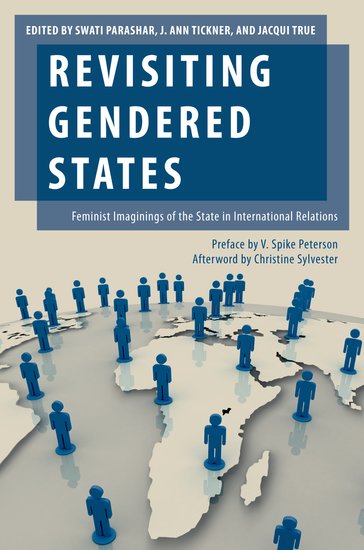
Meera Sabaratnam’s Decolonising Intervention: International Statebuilding in Mozambique calls out IR scholars for continually floating by “case” countries and concluding, with a “tsk, tsk”, that “interventions keep failing”. What is remarkable and inspiring about Sabaratnam’s contribution is the way she weaves several rich intellectual contributions together. First, she makes the case that existing work on international interventions (including critical, “edgy” work) conducts uninspired, repetitive, and theoretically light analyses that ignore the history of intervention and its roots in imperial, racist logics. Second, Sabaratnam speaks back to the discipline of IR by mapping out IR’s commitment to a) Eurocentrism, b) “core” approaches, c) a laughably generous reading of its own history. Sabaratnam argues that these features of IR limit the study not just of international interventions, but of – well, international relations. In other words, Sabaratnam reminds us of the ways that IR scholars remain fiercely committed to a discipline that is parochial, provincial, and often unhelpful in understanding global politics. In short, IR often doesn’t help us understand international relations. This echoes Ann Tickner infamous conclusion: “International Relations is neither international nor relational.”
Continue reading →


 The Disorder Of Things