This is the final post in our symposium on Radhika Mongia’s Indian Migration and Empire: A Colonial Genealogy of the Modern State, in which Radhika responds to her interlocutors.
Each of my interlocutors foregrounds and engages with different aspects of my book, Indian Migration and Empire: A Colonial Genealogy of the Modern State. In this response, I want to dwell on four interrelated elements they stress: namely, (1) the distinction between free and forced migration, their differential management in migration regimes and the current incarnations of this distinction; (2) the place of processes of racialisation with regard to migration regimes, to understandings of citizenship and to the contours of nationhood; (3) the enduring Eurocentrism of certain disciplinary presuppositions; and, lastly, (4) the relationship between the colonial state and the modern state, that lies at the heart of the book.
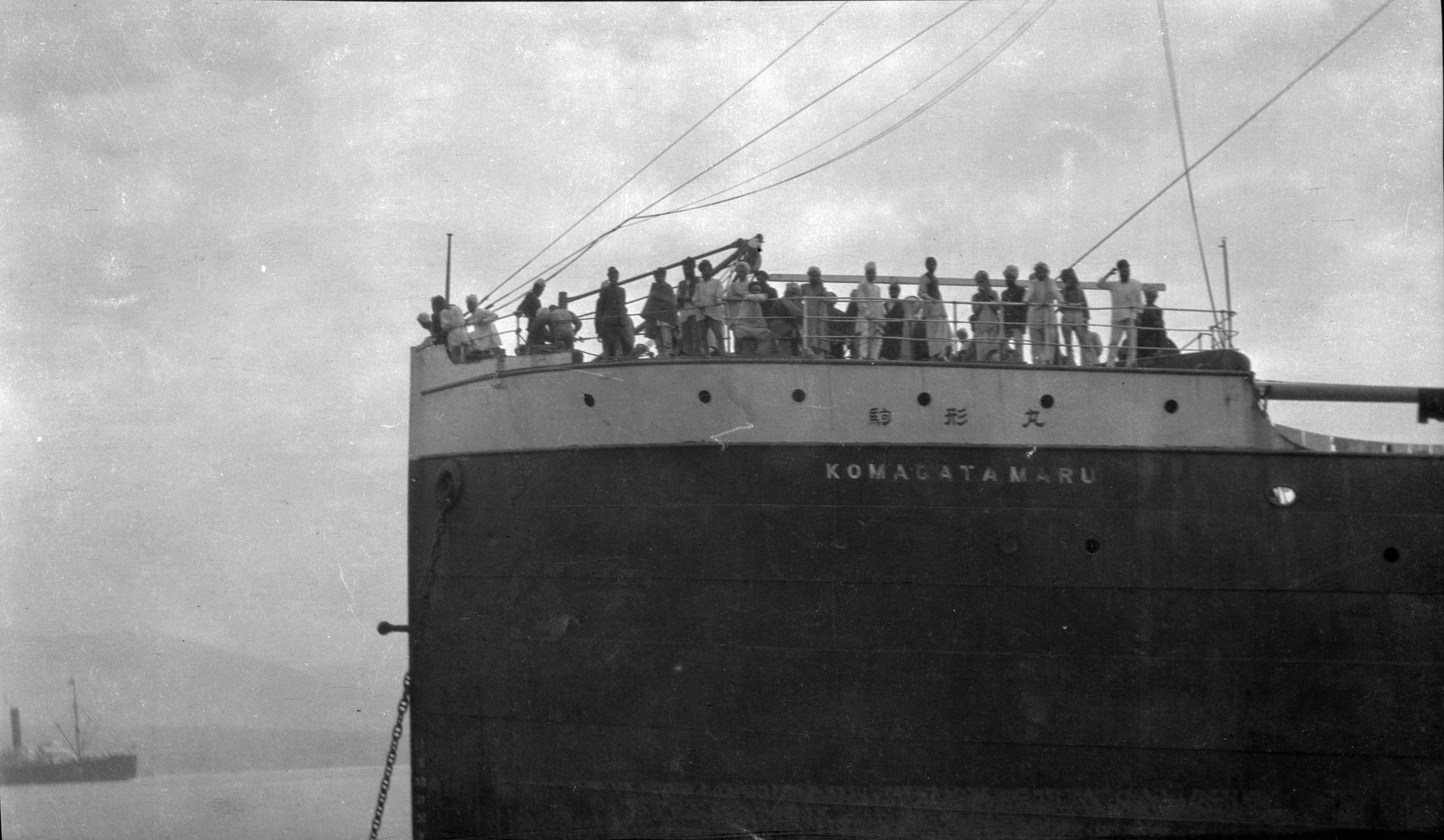
One of the central concerns of the book, as I noted in my introductory post, is to interrogate the remaking of ‘freedom’ in the nineteenth century though a consideration of the distinction between ‘free’ and ‘unfree’/‘forced’ migration and their differential regulation. I unpack this distinction in relation to the 1834 abolition of slavery in the British empire and the state-supervised movement of Indian indentured labour that followed in its wake. Slavery and the memory of the slave trade (the latter abolished in 1807) were at the heart of the contentious legal debates on how, and whether, to regulate Indian migration. Animating these debates was an abiding concern with how to legally distinguish slavery from freedom, violation from volition, coercion from consent, and thereby not only enable, but facilitate, a movement that could be coded as ‘free’. At the centre of the regime that regulated indenture was the appearance of a renovated ‘free labour contract’ that elevated the metaphysical notion of ‘consent’ (a variant of ‘intension’ or of ‘will’), diminished concerns with ‘fairness’ and radically transformed understandings of ‘freedom’. Both Luke and Bridget draw out aspects of this theme and how it endures in our present, by directing our attention to how current migration regimes are also structured around the notions of ‘free’ or ‘forced’ movements. But now, as they point out, we see a twist. If, in the nineteenth century, the concern was to facilitate ‘free’ movement (to avoid charges of a second slave trade), the rationale of our prevailing dispensation is to prohibit ‘free’ movement. Currently, in many national-state spaces, it is only those who according to always-shrinking governmental criteria can be characterised as ‘forced’ or, in the new parlance, as ‘refugees’, who are allowed to move. Others, many more, understood as ‘economic migrants’, who attempt intentionally (and, thus, ‘freely’ and ‘willingly’) to escape the depredations of their circumstances are illegalised, rendered interlopers. Reading Luke and Bridget’s engagements alongside my argument concerning ‘historicising freedom’, it is evident that we have seen yet another profound remaking of freedom in the twentieth and twenty-first centuries—one committed to a sedentary bias that demands that ‘freedom’ is best practiced in your ‘assigned’ place. Or, as Nandita Sharma puts it, increasingly, migrants are conceived as ‘people out of place’. Moreover, as both Luke and Bridget point out, a discourse of ‘protection’ underlies and makes possible the current distinction between ‘free’ (economic) and ‘forced’ (refugee) migration. It was precisely a discourse of protection of, on the one hand, Indian indentured migrants and, on the other, the formerly enslaved in the colonies of Mauritius and the Caribbean, that enabled state regulation of Indian indentured migration. Thus, returning to the details of how this regime was put in place (as I do in my book), serves as an important lesson in thinking about current articulations.

 Megan Mackenzie is an Associate Professor in the Department of Government and International Relations at the University of Sydney. Her research is broadly- and humbly- aimed at reducing and, eventually ending war; it bridges feminist theory, critical security studies, and critical/post development studies. Megan has contributed research on topics including sexual violence in war, truth and reconciliation commissions, military culture, images and international relations, and women in combat.
 Amy Niang is Senior Lecturer in International Relations at the University of the Witwatersrand, Johannesburg. Her research is informed by a broad interest in the history of state formation, peace and conflict, and Africa’s international relations. Her work has been published in Alternatives, Politics, African Studies, Journal of Ritual Studies, African Economic History, Afrique contemporaine and many edited collections. Her forthcoming publications include “Rehistoricising the sovereignty principle with reference to Africa: stature, decline, and anxieties of a foundational norm”, in Zubairu Wai and Marta Iniguez de Heredia (eds.) Bringing Africa “Back In”: World Politics and Theories of Africa’s Nonfulfillment (Palgrave Macmillan).
 Marta Iñiguez de Heredia is a Marie-Sklodowska Curie Fellow at the Institute Barcelonaof International Studies. She holds a PhD from the London School of Economics and Political Science (LSE). She has taught at the University of Cambridge, the LSE, Rouen Business School, Deakin University and La Trobe University. Her research concentrates on the historical sociology of peacebuilding processes, with a focus on the relationship between order, violence, state-making and resistance, and on Africa in particular. She draws on historical sociology, critical Africanist and practice literatures, as well as on extensive fieldwork. Current research is focused on EU’s peacebuilding policies, the militarisation of peacebuilding and political transitions through the emergence of African social movements.
 The Disorder Of Things