What’s In A Name?

A guest post from Knud Erik Jørgensen. Knud Erik is Professor of Political Science at Aarhus University and the author of many works on European foreign policy, the European Union and European IR theory. He is also former Chair of the ECPR Standing Group on International Relations (2010-2013) and current President of the Governing Council of the European International Studies Association (EISA). This is the first in a short series on naming, representation and power in the discipline of IR.


In a Duck of Minerva blogpost about the 9th Pan-European Conference on International Relations, Cai Wilkinson got most things wrong and three things right. Regarding the latter, the conference and section chairs did indeed manage to produce the probably most diverse programme in the world and they have rightly been highly praised for this accomplishment. I can therefore imagine it took Saara Särmä, the Tumblr artist/activist and admirer of David Hasselhoff a really long search to find something to admonish but then, finally, in a moment of triumph, she spotted 18 of the 32 meeting rooms. Second, greater diversity in organisational structures does not necessarily result in a different politics. This is probably correct but does not demonstrate much insight into policy-making processes within associations or address the issue why one would expect that greater diversity in governance structures would produce a politics that is favoured by Wilkinson. Third, diversity does not just exist along a single axis and the naming of rooms in Sicily illustrates neatly how multiple axes of diversity produce numerous encounters and compete for attention and space.


Wilkinson got most things wrong and therefore claims injury and insult. The rooms in question were not renamed but named. If Wilkinson had asked the organizing committee or for that matter attended the conference she could have learned that 18 converted guest rooms had numbers but got names. Room 5115 became Zimmern and room 5114 became Wolfers, etc. During the conference some panel rooms were unofficially renamed.

Continue reading

Societies Under Siege: A Reply

I am extremely grateful to Elin, Clara and Katie for writing such thoughtful and  thought-provoking engagements with Societies Under Siege, and to Joe Hoover for kindly organising this forum. It is not easy to set aside the time during a busy teaching term. Here is my reply!

Continue reading

Shoddy Sanctions

photoEH

This is the second in a series of posts on Lee Jones’ Societies Under Siege: Exploring How International Economic Sanctions (Do Not) Work. We are delighted to welcome Dr Elin Hellquist, a Swedish Research Council International Postdoctoral Fellow at the Freie Universität, Berlin and the Department of Political Science, Stockholm University. Elin’s research is currently focused on the historical origins of different regional sanctions policies. She is also interested in the prospect that sanctions used by regional organizations against members could mature to take ground from foreign policy sanctions, as well as the implications of such a development for international relations at large.  Her most recent article is in International Relations.

Further responses will follow from guest authors Clara Portela and Katie Attwell over the next few days. You can find Lee’s original post here.


The debate about the effectiveness of sanctions is among the most tired in international relations scholarship. Rather than tackling the big political, social and ethical issues related to the practice of punishing one another in international relations, the literature has relentlessly debated what percentage of sanctions cases have been successful. Articles on sanctions in our finest journals have battled measurement technicalities and how to design maximally efficient sanctions instruments. In the real world, change always comes. Sooner or later, with or without sanctions, regimes fall, political prisoners are released, nuclear deals are made, and elections are held. If sanctions are involved, sanctions optimists are quick to attribute such changes to their use. Yet, it is hardly ever possible to say whether sanctions specifically, among an infinite number of co-existing factors, have caused a certain political outcome.

At first view, Lee Jones’ book Societies under Siege might appear yet another book on sanctions effectiveness. It is not. Instead, Lee brings us behind the scenes of three of the most influential sanctions cases in modern times: South Africa, Burma/Myanmar, and Iraq. Relying on a thorough historical-sociological analysis, we are led deep into these societies to understand how sanctions have worked to reshape social conflicts and thereby possibly influence politics (for better or worse).  The message is clear: in order to understand sanctions we have to understand the domestic context inside out. This message is both timely and timeless. It is an extremely timely wake-up call reminding any remaining intervention optimists of the moral and practical responsibility that follows from using sanctions without a qualified idea of how they will work on the ground. Highlighting the importance of local conditions is also a timeless message to an IR audience that far too often disregards qualitative difference in the search for quantifiable measurements. Sanctions do transform societies, Lee argues, but they can only be expected to contribute to political change if a number of favourable conditions allow so (e.g. the South African case).

This post will not repeat or summarize the arguments that Lee makes with wit and skill. Buy the book, or ask your library to do so. You will have the pleasure to read an unusually elegant and thought-provoking piece of solid scholarly work. What I would like to do is to pick up the ball where I think that Lee left it and draft a few propositions that complement and sometimes challenge Societies under Siege. I will propose that beyond their workings in the target states, sanctions also operate by (re)drawing normative boundaries in international relations. I will use the example of blacklists to underscore how sanctions work through a combination of material and symbolic features. Finally, I will follow-up on Lee’s discussion of the ethics of sanctions. In light of his findings, I will argue that the use of foreign policy sanctions should be minimized in accordance with the ‘harm principle’. Continue reading

Let’s Talk About the “Ugly Briton”: Shashi Tharoor on Winston Churchill

October is always a good time to catch up on one’s correspondence from July.  “FYI,” noted a friend though FB’s messaging system, linking to this:

The video’s title, “Dr Shashi Tharoor MP – Britain Does Owe Reparations,” sums it up.  The other videos from the same debate event are worth watching, too, but Tharoor’s is quite simply a must-see for anyone interested in the British Empire.  Indeed, you have probably seen it already.  With 3 million views, 6000+ comments plus what seem to be hundreds of reactions by all kinds of people in all kinds of media of communication, this one 15-minute video alone can legitimate Oxford Union Society claim’s that it aims “to promote debate and discussion not just in Oxford University, but across the globe.”

Why is it that Oxford Union struck social media gold with this debate but not with some others (“socialism does (not) work,” anyone)?  Even if it is safe to assume that “many” people would be familiar the reparations argument in general and even that “some” would be familiar with Britain’s reparations to the Maori, the fact is that “no one” had given a fig about the case for Indian reparations [1].  My scare quotes are meant to signal that these quantifications are relative.  It was a century ago that Dadabhai Naoroji, known to some as the Grand Old Man of India, argued that “immediate” self-government, a.k.a. swaraj, would constitute Britain’s “reparation”.  But this is precisely the point: reparations-talk becomes itself only when subjected to a sufficient degree of metropolization or mainstreaming [2].  White academics like Boris Bittker started paying attention to the legal argument for “black reparations” only in 1969, after James Forman famously stood up in a New York City church to argue that white churches owed a lot of money to a lot of people.

Continue reading

Ethics in the Service of Violence in Israel/Palestine

A guest post from James Eastwood. James is a PhD candidate at the School of Oriental and African Studies (SOAS). This post is partly based on his latest article, ‘”Meaningful Service”: Pedagogy at Israeli Pre-Military Academies and the Ethics of Militarism’, forthcoming in the European Journal of International Relations.


Die you fuck, die you son of a whore, die, die, die you son of 66 whores.

These are the words that Ahmad Salih Manasra, a 13-year-old Palestinian boy, heard as he lay bleeding in the street on 12th October 2015. The insults were yelled by an Israeli passer-by, who recorded the child on video as he lay helpless on the ground. Ahmad was taken to hospital in a critical condition. His cousin Hasan Khalid, who was shot at the same time, is dead.

Israeli police later released a video depicting the alleged chain of events leading up to these incidents. It shows two young boys carrying knives attempting to attack a passer-by, followed by an alleged stabbing which takes place off-camera. In the ensuing pursuit, the elder of the two boys – Hasan – appears to run at the police with a knife. They shoot him dead, without attempting to immobilise him. According to Israeli media, Ahmad was hit by a car as he ran away. But the video circulated on social media shows him lying some distance from the road on a tramline. Palestinian news sources, which had originally claimed that Ahmad was shot dead, now suggest that he was run down by an Israeli patrol car and then beaten.

The graphic video of Ahmad Manasra is only the most shocking to emerge from a series of shootings of Palestinians by Israeli police and soldiers as they scramble to respond to a spate of un-coordinated knife-attacks. 50 Palestinians have been shot dead since the beginning of October, with hundreds more injured. Meanwhile, 9 Israelis have been killed in stabbing and traffic ramming incidents, with dozens more wounded. Last Tuesday witnessed the most serious escalation of the attacks, with separate incidents occurring almost simultaneously across Israel and the occupied territories. Protests have erupted in the West Bank and Gaza, while Israeli authorities have ramped up police and military presences and have introduced checkpoints and barriers around Palestinian neighbourhoods in East Jerusalem.

The wave of public panic over the stabbings has re-ignited a longrunning controversy in Israel over the rules of engagement for police officers and soldiers dealing with suspects, wanted assailants, and protestors.

Continue reading

The European Gaze and the EISA Asylum Seekers Campaign

Gulsah

Gulsah

ayse

Ayse

A reply to Federica’s recent post on the asylum crisis by Zeynep Gülşah Çapan from Bilkent University and Ayşe Zarakol at the University of Cambridge. Gulsah is a Post-Doctoral researcher at Bilkent University. Her research focuses on Eurocentrism in international relations theory and postcolonial and decolonial thought. Ayşe is a Lecturer in International Relations at the University of Cambridge. Her research focuses on social hierarchies in world politics. Her first book After Defeat: How the East Learned to Live with the West explored the responses of defeated non-Western powers to stigmatisation.


The increasing attention to the European refugee crisis in Western media has also galvanized the IR academic community into thinking about possible ways to address the issue. There have been blog posts and Twitter discussions (On Doing ‘Something’ as AcademicsWant to Help the Refugees? Teach Migration as part of IRHow to Speak Out As An Academic Community? Help Needed!) about possible actions, especially with respect to the EISA conference that will be held in Sicily in two weeks. On September 11th, EISA section chairs received an email urging them 1) to sign and circulate an open letter to EU policy makers penned in the name of “the academic community”, 2) to bring up the issue in EISA panels and 3) to wear black ribbons/armbands as a sign of mourning and protest.

We applaud the motivations that led to this effort and agree that EU countries could be doing much more to help refugees. We also concur that European scholars could do much more to raise awareness about the complicity of their own governments in various global political crises. Nevertheless, for the reasons detailed below, we have some reservations about both the desire to frame this effort as an EISA effort involving section chairs and the claim to speak in the name of the entire “academic community”. In the blog post Ivory Towers and Sleeping Beauties that discusses these efforts the author urges the “academic community” to do two things; to check their privilege and make themselves feel uncomfortable. These are suggestions that we completely agree with and this post is an effort to continue the dialogue on how we might think of issues in the international system in a way that checks our privileges and makes us feel uncomfortable.

To begin with, the refugee crisis is not new and it is not primarily a European problem that can be solved by some small gesture from the EU. Most refugees from the Syrian War, for instance, are hosted in non-European countries. According to Amnesty International, more than 95% of the refugees (4 million) are in five countries: Turkey (1.9 million), Lebanon (1.2 million), Jordan (650000), Egypt (249,463), Iraq (132,375). Another region hosting huge numbers of refugees is East Africa – based on UNHCR’s latest numbers, Chad hosts about 450000 refugees, Ethiopia hosts 650000 and Kenya has 550000. In fact, almost every world region except Europe is hosting hundreds of thousands to millions of refugees and has been doing so for far longer than Western newspapers have been covering “the refugee crisis”. By most estimates, there are sixty million refugees in the world at the moment.

We understand why European colleagues may want to pressure their own governments to change policy and we wholeheartedly support their individual and/or collective efforts to do so. But to organise a professional effort only now (and without providing any of the larger context) in the name of the entire “academic community”  may actually reinforce the Western public misperception that this is a recent or a uniquely European problem or that European countries that have agreed to take comparatively small numbers of refugees are doing something unusually selfless. Continue reading

Ivory Towers and Sleeping Beauties: On the Importance of Political Activism in Academia at EISA 2015

FCasoA guest post from Federica Caso on the recently created petition from academics to EU decision makers on the ongoing refugee/migrant crisis (you can see it and sign it), which has also been subject to discussion by Federica and Tiina Vaittinen over at the Feminist Academic Collective. Federica is a doctoral candidate in International Relations at the University of Queensland, where she is working on embodiment and the aesthetics of militarism in the context of the militarisation of society. Her research is informed by feminism and queer theory.


What can we do as academics and political subjects in face of the humanitarian crisis that is unfolding in Europe? Probably not much, but I would like to take the time and energy to tell why I think signing the petition by IR academics and community to address the EU to open safe channels of entry and mobility for asylum seekers is important, and suggest what can be done to mobilise at EISA.

So, does it take a picture of a dead boy on the shore of Turkey to awaken political consciousness? These days, tons of memes about Aylan Kardi circulate on the internet. Even those who oppose what has been called ‘trauma porn’ of sharing pictures of dead bodies cannot do anything but see these images on their social networks feeds. Megan Mackenzie, Annick Wibben, and Tiina Vaittinen have provided some insights into the debate surrounding the ethics of sharing these pictures. Most importantly, they all have raised important issues about what academics and scholars can and must do. As has been rightly pointed out in the context of images of refugees, we need to understand how they shape our emotional and ethical attitude, we need more insights, but we also need more political action. When considering the political impact that an image can have, Tiina Vaittinen says “To share an image of a dead child’s body on your Facebook page! It is truly immoral – while simultaneously it may also be the most moral act to do”, to the extent that it is the act that starts the much needed political mobilisation.

Academia and the discipline of IR have long been accused of being at loss with political action, or better, with the ability to speak to real world problems in a timely and effective way, which I see as academia’s political action. The gap debate in the discipline of IR is quite well known to all of us. Academia provides for a comfortable Ivory Tower from which the academic speaks, and this voice feeds the clouds rather than address an actual audience. Continue reading

The Corbyn Effect

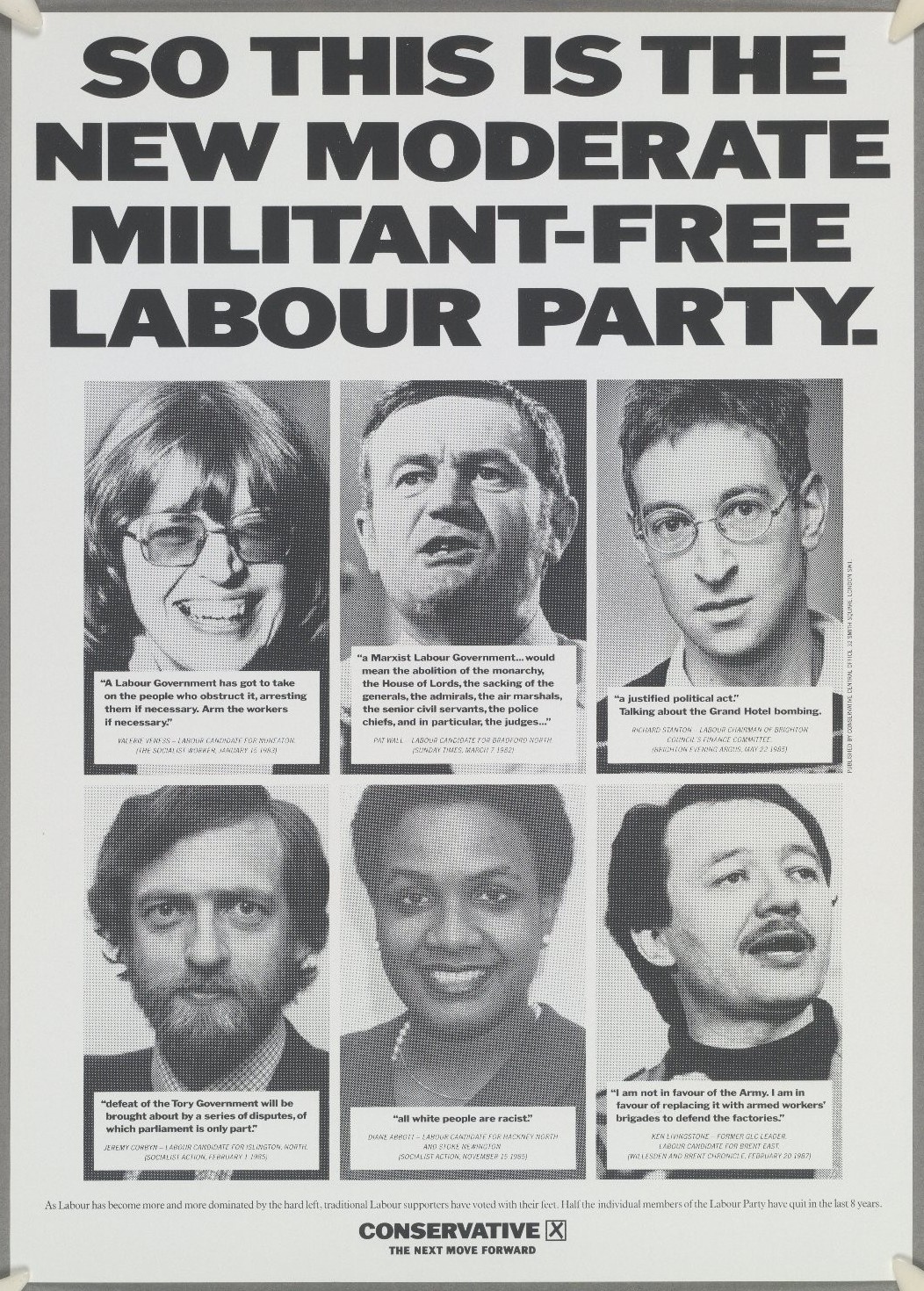
Moderate Militant-Free Labour Conservative Poster

In the last days, the Labour mainstream has not so much fallen as fully leapt into a fit of apoplexy. The cause an opinion poll – by no means solid, by no means a guarantee of future stock value – placing Jeremy Corbyn as the likely winner of the party’s leadership contest. Labour MPs, some now publicly flagellating themselves, nominated Corbyn for a ‘balanced debate’, but apparently couldn’t countenance that it might actually lead anyone to, you know, debate. Corbyn’s moment of popularity is thus sketched as, among other things, “the emotional spasm…an apocalyptic tendency”. John McTernan – a prime mover in the utter implosion of Labour in Scotland – was invited to hold forth on national TV as an oracle nevertheless, where he showed off his great talent in persuasion by calling Labour supporters “morons”. John Rentoul, that other great passé hack, thought recognising the left-wing appeal of the SNP as a factor in Labour’s defeat was like believing in space lizard conspiracy theories.

There was an equal portion of patronising bullshit to go with the name-calling. “Do some research” before you dare to a preference, chided Anne Perkins. Don’t be a “petulant child”, admonished Chuka Umunna. Sunny Hundal came at logic with customary cack-handedness, transforming the clear articulation of principles into a pathology. These are some of the same people who bemoan the detachment of politicians from real people, the decline in party membership, and so on, only to rise up as vengeful furies when a candidate dares to stir energies. All down to an unsavoury populism, natch. This, says Helen Lewis, is ‘purity leftism’, nothing like the necessary compromises of opposition, where you have to be bold enough to endorse 2% defence spending (something “the public” indeed likes, although hardly top of their polled priorities). Blair, of course, can only relate in the terms of triangulation, regurgitating the 1990s whilst pretending to the terrain of the future.

It doesn’t matter that Corbyn’s record is one of social democracy (remember that?). It doesn’t matter that there are trends in his favour. It doesn’t matter that his economic policies are comparatively bold and redistributive. It doesn’t even matter that many of Corbyn’s policies are popular. One line of Blair’s intervention was widely cited: “I wouldn’t want to win on an old fashioned leftist platform”. Few completed the quote: “…even if it was the route to victory“. This is not political argument, nor even Machiavellian electoral planning, but the tantrum-jitters of the self-appointed aristocracy. Having passed out lectures on loyalty and collective responsibility on Monday during the second reading of the Welfare Bill, the dauphins were by Thursday pre-declaring a coup should Corbyn win and practically spitting on their own activists besides. They saw no contradiction. Labour’s experts advocate not political communication but political manipulation, impersonating the enemy to take their place in our collective consciousness.

And so it will go on if any of the appeasement candidates win. Continue reading

Ethical Encounters – Encountering Ethics

kimhutchings

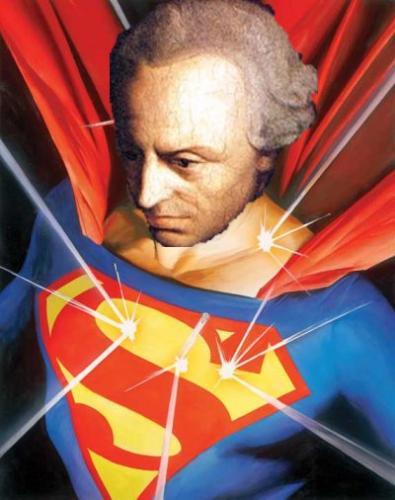
Our final post reflecting on the forum itself is from Professor Kimberly Hutchings, she is Professor of Politics and International Relations at Queen Mary University of London. She is a leading scholar in international relations theory. She has extensively researched and published on international political theory in respect to Kantian and Hegelian philosophy, international and global ethics, Feminist theory and philosophy, and politics and violence. Her work is influenced by the scholarly tradition that produced the Frankfurt School and Critical Theory. Previous posts can be found here: Myriam, Joe, Elke, Jillian and Diego.  *Note: all images provided by Joe – Kim bears no responsibility for the cheap visual gags!


Ethics as a term encompasses every-day and more specialised meanings. It is used to refer to existing moral commitments, standards and values embedded in actual contexts and influencing or governing practice. It is also used to refer to philosophical justifications of moral standards and values. One encounters ethics in both senses in reflecting on the contributions to ‘Ethical Encounters’. All of these encounters seek to speak to dimensions of practice: war, development, migration, rights claims in the name of humanity. All of them also seek to shift the philosophical assumptions and implications of predominant approaches to international ethics. In summary, they all ask ethical questions about doing ethics in theory and practice. For all of the contributors encountering ethics is itself an ethical encounter. Of course they do not all say the same thing, and in what follows I want to pick out some of the commonalities and some of the differences between them. This will not be in order to resolve or transcend differences, or to develop a synthesis of the views expressed, but rather to bear further witness to what Elke calls the ‘ethicality of ethics’, which I want to suggest is intimately related to unresolvable but also unavoidable questions of authority and judgment.

Myriam, Joe, Elke, Jillian and Diego are all against a certain kind of international ethics, which they see as globally dominant in theory and practice in the worlds of the western academy and liberal international policy. They are against ethics understood ultimately as a matter of universal truths, which can be translated into the terms of binding prescriptive rules, laws and codes of practice. It is pretty clear, although he is not necessarily named, that Public Enemy Number One is Kant, with Bentham a close second, followed of course by the recent deontological, contractarian and utilitarian inspired generation of cosmopolitan moral and political theorists and their allies in law and policy.

kant_superman Continue reading

Ethical Encounters – Parsing the Pluriverse: empathy and deliberation in a post-MDG ethics of international development

DSC00921

Our fifth post in the forum is a guest post from Diego de Merich. Diego got his PhD from LSE and is now an LSE 100 Fellow and a research associate at the Institute for Intersectionality Research and Policy at Simon Fraser University. His work focuses on human empathy and the ethics of care in service of alternative frameworks for International Development (post-Millennium Development Goals). For earlier posts in the forum do look for Myriam’s here, Joe’s here, Elke’s here and Jillian’s here. Kim’s discussion post can be found here.


With the Millennium Development Goals (MDGs) set to expire in 2015, focus has turned to a new framework which might replace them. Heavily influenced by the Human Capabilities Approach (HCA), the MDGs and the recently-proposed ‘Golden Thread’ frameworks posit a relatively monolithic, liberal understanding of what ‘development’ is meant to signify. As such, each new iteration of an international agreement on development seems destined to miss the potential for more creative and context-appropriate political action in response to the shortcomings of the approaches which preceded them. Using as a starting point Arturo Escobar’s Encountering Development, I suggest that his notion of the pluriverse – which stands in opposition to the ‘universal and homolingual thrust of modernity’ – both challenges the post-2015 discourse and implies the need for different ethical practices upon which ‘development’ might instead be re-cast. Realisation of the pluriverse and notions of care, responsibility, democracy and pluralism would require that closer attention be paid to narrative voice and to the role that empathic processes should play in the deliberation surrounding development.

The ‘promise’ of empathy in pursuit of a post-MDG development practice can be understood by contrasting two approaches to deliberative democracy – one which would hold the HCA as its guiding ethical impulse and one which suggests that an ethics of care and responsibility in international development requires a better appreciation for the role that empathy and narrative play in understanding the development possibilities and realities of the constituent elements of Escobar’s pluriverse. Here, the focus of ethical enquiry is shifted from a more abstract notion of social justice to a recognition of shared/lived vulnerability, alternatively-imagined ways of being and thus, to an ‘international development’ which is differently understood and practiced.

Untitled Continue reading