In this magisterial work, Buzan and Lawson make two overarching claims: 1. the nineteenth century saw a fundamental “global transformation” in the “international order”, creating the essential aspects of the “global modernity” we inhabit today, and 2. disciplinary IR needs to recognize this transformation and reconfigure its identity and agenda accordingly. As a historical sociologist, I feel less certain about judging the second claim but more certain about the first. Was there a fundamental transformation in the nineteenth century that has shaped our contemporary global modernity? Yes. And Buzan and Lawson painstakingly and persuasively chart this transformation like none other.
What, then, to say about this important book – a book, by the way, which every serious historical social scientist needs to read? A book which, in my estimation, belongs among the great works of historical sociology like those of Wallerstein, Tilly, and Mann? Pushed to say something critical, I will instead say something didactic. More precisely, I will comment on two things: the relative absence of theory and the remarkable presence of empire. Put differently: what is the theoretical frame or theoretical considerations mobilized in the work? And why isn’t empire the fundamental organizing analytic category? Or, put simply: are Buzan and Lawson closet postcolonialists? Continue reading →
The core argument of The Global Transformation is straightforward: during the 19th century, a ‘global transformation’ remade the basic structure of international order. This transformation involved a complex configuration of industrialization, rational state-building, and ideologies of progress. What do we mean by these terms?
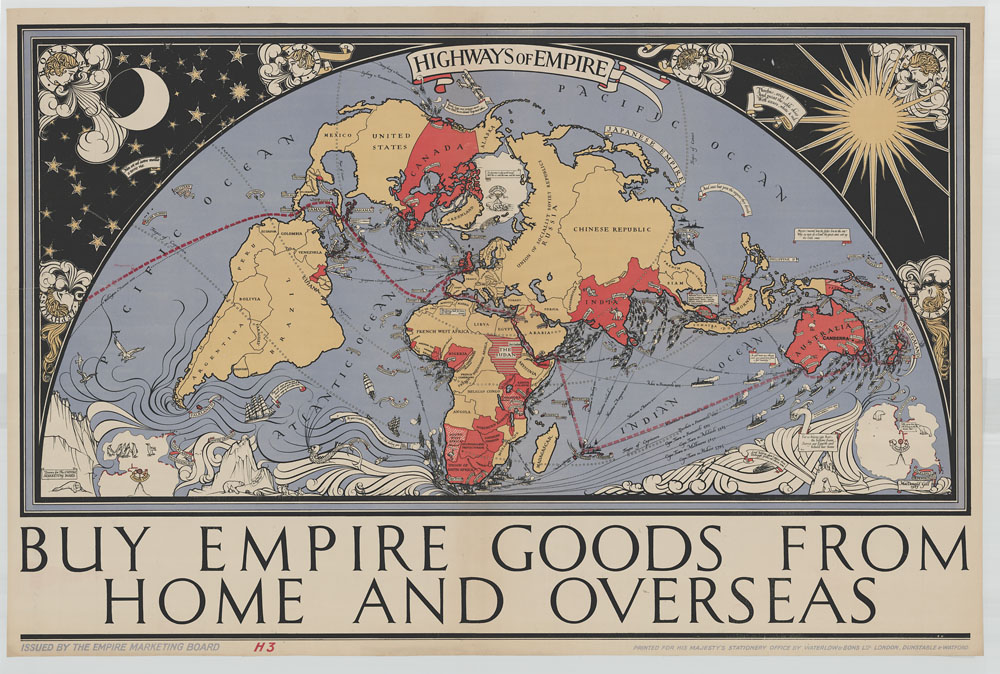
By industrialization we mean both the commercialization of agriculture and the two-stage industrial revolution, which together both shrank the planet and generated an intensely connected system of global capitalism. The extension of capitalism brought new opportunities for accumulating power, not least because of the close relationship between industrialization and dispossession. Indeed, industrialization in some places (such as Britain) was deeply interwoven with the forceful de-industrialization of others (such as India).
By rational state-building, we mean the process by which administrative and bureaucratic competences were accumulated and ‘caged’ within national territories. This process was not pristine. Rather, as we show in the book, processes of rational state-building and imperialism were co-implicated – most 19th century nation-states in the West were imperial nation-states, and imperialism ‘over there’ fed into rational state-building ‘at home’: the modern, professional civil service was formed in India before being exported to Britain; techniques of surveillance, such as fingerprinting and file cards, were developed in colonies and subsequently imported by the metropoles; cartographic techniques used to map colonial spaces were reimported into Europe to serve as the basis for territorial claims,. Domestically, rational states provided facilitative institutional frameworks for the development of industry, technological innovations, weaponry and science; abroad, they provided sustenance for imperial policies. Both functions were underpinned by ‘ideologies of progress’.
By ‘ideologies of progress’, we mean assemblages of beliefs, concepts and values that address how polities, economies and cultural orders relate to each other, how individuals and groups fit into these assemblages, and how human collectivities should be governed. In the book, we highlight the impact of four such ideologies: liberalism, socialism, nationalism and ‘scientific racism’, all of which were rooted in ideas of classification, improvement, control and progress (including ‘scientific racism’, many of whose proponents favoured a ‘forward policy’ in which European imperialism was hardened, both to safeguard white gains and to combat miscegenation with ‘backward’ peoples). Again, there was a dark side to these ideologies (and not just with ‘scientific racism’) – the promise of progress was linked closely to a ‘standard of civilization’ which served as the legitimating currency for coercive practices against ‘barbarians’ (understood as peoples with an urban ‘high culture’ – the ‘Oriental Despotisms’ of the Ottomans, Indians, Chinese, etc.) and ‘savages’ (understood as peoples without an urban ‘high culture’ – virtually everyone else). These ideas ended the long dominance of the dynastic state and defined the social framework of modernity. Nothing of comparable weight has come into being since, so these ideas, and the interplay amongst them, not only defined the dynamics of legitimacy and conflict during the 20th century, but continue to dominate the 21st
The three components of the global transformation were mutually reinforcing. Continue reading →
A guest post from Melanie Richter-Montpetit, responding to the disclosure of the Senate Torture Report in December. Melanie is currently lecturer in international security at the University of Sussex, having recently gained her PhD from York University in Toronto. Her work on issues of subjectivity, belonging and political violence has also been published in Security Dialogueand the International Feminist Journal of Politics.
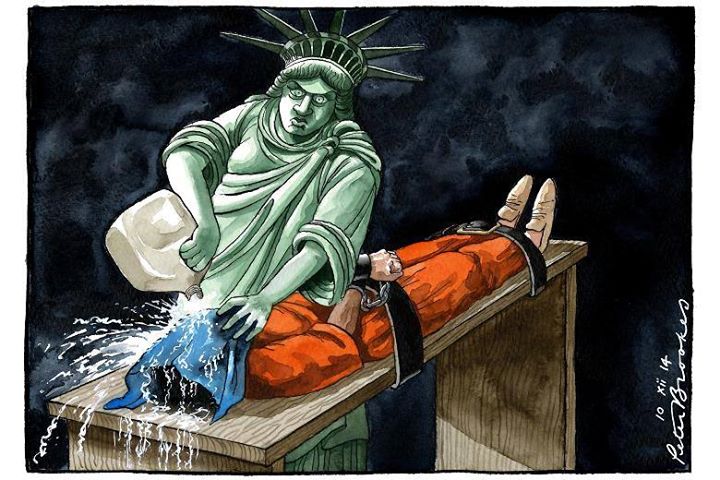
No, bin Laden was not found because of CIA torture.[iii] In fact, the US Senate’s official investigation into the CIA’s post-9/11 Detention and Interrogation program concludes that torture yielded not a single documented case of “actionable intelligence.” If anything, the Senate Torture Report[iv] – based on the review of more than six million pages of CIA material, including operational cables, intelligence reports, internal memoranda and emails, briefing materials, interview transcripts, contracts, and other records – shows that the administration of torture has led to blowbacks due to false intelligence and disrupted relationships with prisoners who cooperated. What went “wrong”? How is it possible that despite the enormous efforts and resources invested in the CIA-led global torture regime, including the careful guidance and support by psychologists[v] and medical doctors, that the post-9/11 detention and interrogation program failed to produce a single case of actionable data? Well, contrary to the commonsense understanding of torture as a form of information-gathering, confessions made under the influence of torture produce notoriously unreliable data, and the overwhelming majority of interrogation experts and studies oppose the collection of intelligence via the use of torture. This is because most people are willing to say anything to stop the pain or to avoid getting killed and/or are simply unable to remember accurate information owing to exhaustion and trauma.[vi]
So if torture is known not work, how come, then, that in the wake of 9/11 the U.S. at the highest levels of government ran the risk of setting up a torture regime in violation of international and domestic law? Why alienate international support and exacerbate resentments against “America” with the public display of controversial incarceration practices, as in Guantánamo Bay, instead of simply relying on the existing system of secret renditions? Furthermore, in the words of a former head of interrogations at Guantánamo Bay, most of the tortured and indefinitely detained are “Mickey Mouse” prisoners,[vii] reportedly known not to be involved in or not to have any information on criminal or terrorist activity against the U.S. and its allies. Drawing on previously published work, I will explore this puzzle by addressing two key questions: What is the value of these carceral practices when they do not produce actionable intelligence? And, what are some of the affective and material economies involved in making these absurd and seemingly counterproductive carceral practices possible and desirable as technologies of security in the post-9/11 Counterterrorism efforts?
Against the exceptionalism[viii] of conceiving of these violences as “cruel and unusual,” “abuse” or “human rights violations”[ix] that indicate a return to “medieval” methods of punishment, the post-9/11 US torture regime speaks to the constitutive role of certain racial-sexual violences in the production of the US social formation. Contrary to understandings of 9/11 and the authorization of the torture regime as a watershed moment in U.S. history “destroying the soul of America,”[x] the carceral security or pacification practices documented in the Senate Torture Report and their underpinning racial-sexual grammars of legitimate violence and suffering have played a fundamental role in the making of the US state and nation since the early days of settlement.[xi] The CIA Detention and Interrogation program[xii] targeting Muslimified subjects and populations was not only shaped by the gendered racial-sexual grammars of Orientalism, but – as has been less explored in IR[xiii] – is informed also by grammars of anti-Blackness, the capture and enslavement of Africans and the concomitant production of the figure of the Black body as the site of enslaveability and openness to gratuitous violence.[xiv]
Our edited volume Race and Racism in International Relations: Confronting the Global Colour Line has now been published. We asked some of the contributors to give us their thoughts on what has been (both deliberately and unwittingly) overlooked by the discipline of International Relations with regard to questions of race and racism; the challenges posed by (re)centring these vital questions; and how IR may atone for its implication in empire. At your service, Sankaran Krishna, Debra Thompson, Srdjan Vucetic and John Hobson.
What has been the least investigated aspect of race and racism in IR?
Sankaran Krishna
The question makes me want to laugh because to me mainstream IR is all about how not to talk about race and racism while constantly appearing to talk about the relations between different kinds of peoples and countries. I came to IR only at the PhD level. My masters in modern history had acquainted me with the history of colonialism, racism, genocide, man-made holocausts like the Great Bengal famine, the slave trade, and other such events, on a world-scale in the post-Columbian (ie; post-1492) era. In my first IR courses in the United States the focus seemed to be on how can we understand the social world through models that pretend humans are unthinking molecules or inanimate entities. Stuff like Bueno de Mesquita’s War Trap (I kept waiting for someone to tell me that was a joke, like they do on Candid Camera.) It was a few years later that I realized that the penchant for abstract theorization, distaste for historical specificity and woolly stuff like ideology, and fetish for numbers – all voiced in deep manly intonations about analytical rigor – were nothing but an assiduous refusal to face the world in all its racial violence and splendor. In other words it’s the absence of considerations of race and racism that coheres the discipline.
When you widen the frame beyond mainstream IR and include those at the margins – thinkers like DuBois immediately come to mind – and especially take into account writings over the last few decades, the picture is a lot better. From my point of view, there has been a tendency in self-proclaimed dissident literatures to be inadequately critical of the racial conditions of their own emergence: invocations of the Global South or postcoloniality or marginality or the colour line can themselves become fetishized and serve as screens preempting a closer inquiry into racial difference and the consequences of othering. Continually calling out the protean forms in which race and racism manifest themselves historically and contemporarily seems, to me at any rate, a worthwhile vocation.
What is the most important theoretical challenge to IR posed by an engagement with race and racism?
A Doctor of Philosophy was made this day. Our own Nivi, for her thesis on Imagining Afghanistan: The History and Politics of Imperial Knowledge Production, received from the University of Cambridge. An analysis ranging from the imagined border to the constructed tribe, from gender to sexuality and back again, from the post-colonial to the homonationalist, and from the 19th century to present. Duly tested and found more than able by Dr Sharath Srinivasan and Professor Jutta Weldes. Granted without corrections. From this point forth, Dr Manchanda.
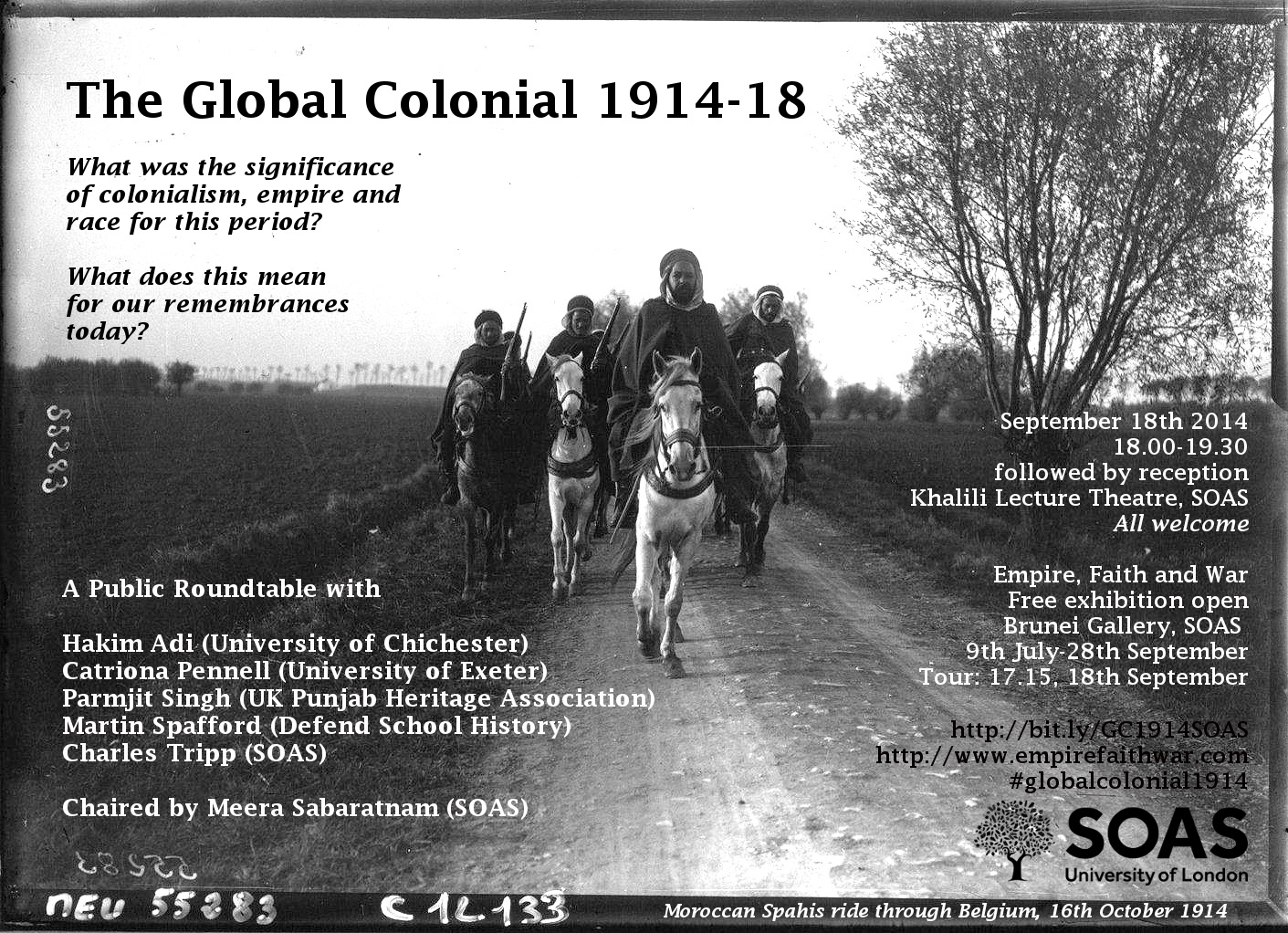
M: Okay. Hello, everybody and welcome. Thanks very much for coming. My name is Meera Sabaratnam, I’m a lecturer here at SOAS in international relations. And tonight we’re delighted to host a roundtable on the Global Colonial 1914-18. So obviously this is triggered by a number of contemporary events, not least the centenary of World War One, which you’ll have seen all over the news. But one of the stories I suppose, that gets told less often is the role of the wider world in the way that the war unravelled but also as a theatre of war. And in the place of where the war stood as part of the global context. So what else was going on, multiple revolutions, uprisings. So this is a moment in which the war is an important part of a global order which is undergoing substantial amounts of change. I should say this event is also sponsored…has been organised through the British International Studies Association and their working group on colonial, post-colonial and de-colonial research questions.
And this particular group tries to look at the elements of coloniality and colonialism in how the modern world came to be and what that means for when we understand globalisation and global history. I’m delighted to have a roster of speakers here tonight covering not just all of the sort of main areas, the regions that we’re studying in SOAS, namely Asia, Africa and Middle East. But also researchers and teachers who have been involved in how World War One is remembered in the classroom as a form of public cultural memory. Each of our speakers is going to speak for about 10 minutes. And then after that we’ll open it up for questions. Please do be forthcoming with your questions and we hope to have a good discussion afterwards, okay. I’d first like to welcome Professor Charles Tripp who is professor of Middle East here at SOAS. Thanks.
C: Thank you very much, Meera. It sounds rather grand, I’m not the professor of Middle East, I’m professor of politics in the Middle East. But why not, grander? I was asked to talk today about the relationship between what was happening in the Middle East and what happened to the Middle East in and around the First World War. And I must admit straight off, I’m not a historian, so I don’t work on the first war particularly but clearly anybody who works in the politics of the Middle East is well aware of the fact that legacies of the First World War and what happened to the region are still very much there and indeed are being revived in the press in one form or another as they talk about Syria and Iraq at the moment. But what I wanted to really try and do is to pick out two themes if I can, in the time allotted. One is the notion that as with many other parts of the world, much was happening before the First World War that the First World War changed the course of, if you like. So in a sense one of the dangers of looking, which of course happens now to some extent in the press and elsewhere, is to see the Middle East purely as the Middle East as a political entity, whatever that is, as a kind of creation of European intervention, the First World War.
But what I’m trying to argue is that actually there were processes long before that that had been going on and that in some ways the European intervention set back in various significant ways that had an effect for the future as well. So the first part is really to think about what had been happening in the 50 years or so before the First World War in the region, we now think of as the Middle East, the Ottoman Empire, Qajar, Iran, North Africa. And I want to look at two themes which are intertwined but really revolve around the same emerging idea and notion which is the idea of the autonomous citizen, which again was quite a novel, a radical idea with hugely radical implications for the dispensations of power. But the two themes that they were intertwined with was, one, the struggle against despotism and the other, struggle against colonialism, both of these seemed to be deeply repressive of the idea of the autonomous citizen. And in some senses therefore what you’re looking at in the long…well, the period before the First World War in the 40 or 50 years, whether it’s in the Ottoman Empire, the Qajar Empire, Iran, in Egypt, you have a struggle against local despotism for constitutionalism. A precarious constitutionalism which is often of course therefore sabotaged by those who would rather not see it. But nevertheless very powerful in the mobilisation of the politics of these regions. Continue reading →
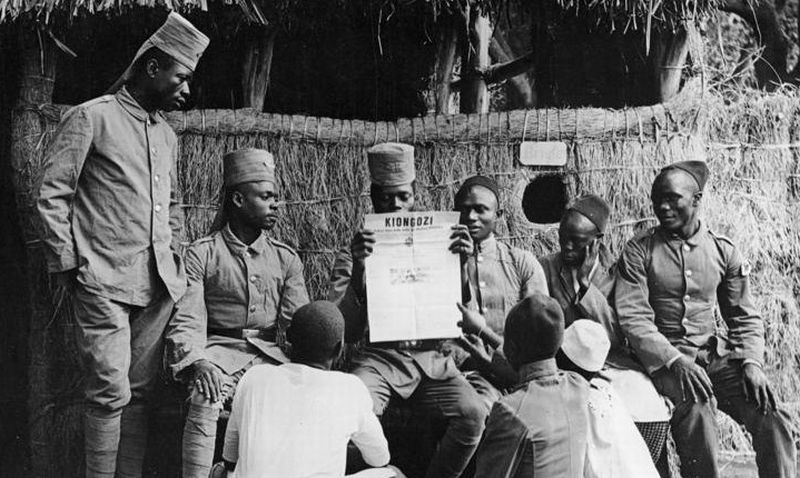
A man was looking for something he had lost under the street lights; another man, the joke goes, approached and asked him what he was looking for. “I am looking for my lost keys,” “Did you lose them here?” “No,” the first man responded, “I lost them on the dark side of the street.” “But, why are you looking here?” “Because this is where the light is.” This joke illustrates well the paradox of the national paradigm in European historiography of the Great War. The assumption that the European sovereign nation is the sole agent of modern history naturally motivates European historiography to frame the Great War within a national paradigm and foreclose its colonial dimension. A related trope to the above joke pertains to race and its relation to the national histories of Europe; the black face of a slave, according to Frantz Fanon, can be seen during the night only under the porch light of the master, but when the slave goes into the dark his face becomes invisible. The deployment of colonial soldiers in the Great War as “warrior races” or, “martial races” to fight on behalf of their masters, and the absence of the Black history of slavery from the history of the Great War is in fact the history written from the master’s porch. While the invisibility of the black face foreclosed Black history from the national paradigm of the Great War, it was nonetheless useful as a racial weapon in the war.
By deploying almost a million non-white troops in the European theater of war—France’s 500,000 Africans and Asians, Britain’s 200,000 Indians and Africans, America 200,000 black soldiers, Germany’s 11,000 Africans (only in East Africa)—race was used as a “weapon of war” to advance an unprecedented slaughter among the white nations. [2] R. J. Vincent socked it to the revisionist historians when he wrote, “not only were the whites laying to rest the notion of their instinctive comity by butchering each other in such unprecedented numbers, but they were also showing their neglect of race in favour of nation in using non-white troops to advance the slaughter.”[3] Those historians committed to the national paradigm acknowledge the contribution of colonial solders in the Great War only as an auxillary force rather than as the point of the return of race as the constitutive violence of European Modernity. Many of the former slaves forcefully recruited and disciplined as racial instruments of forced labour, punishment and extermination became the site of colonial violence and operated as a microcosm for the War. The colonial soldier was the cause and the consequence of the Great War. Continue reading →
At the same time, it is interesting that amongst all these debates about the causes and nature of the war few scholars have seen fit to examine one form of evidence: the writings of international experts before the war. This gap is even more surprising in International Relations (IR), as these pre-war writers are IR’s forebears. What is interesting about studying these pre-war international writers is that they were well aware of the imperialist nature of their global society (and of the role played by colonial control), but it was not this imperialism that was seen as the source of instability. Rather, a more complex story emerges of a two-tier global system, and the coming of the war is seen as a threat to, not a result of, imperialism.
The first point about the pre-1914 world is that this was a thoroughly recent system, and that for many of those writing on international affairs it was novel because for the first time in history there was a truly global order. Whether it was W. T. Stead writing about the movement away from states to a Europe united by transnational links, Paul Reinsch’s examination of the new ‘public international unions’, or Norman Angell’s wonder at the development of the global economy in trade and finance, the common feature was the recognition that the world from the late nineteenth century was global in a way that was thoroughly unprecedented.[2]
Much of this new politico-economic order was built on one product: coal. Timothy Mitchell has outlined how the growing dependence on coal as a concentrated source of energy radically changed society into an industrial ‘hydrocarbon civilisation’. The combination of coal, steel and steam powered railways allowed for the easy extraction, transportation and use of coal in industry.[3] This rapid industrialisation made the new industrialising societies vulnerable in a way they had never been before. The loss of self-sufficiency in food and the requirements of industry for a growing list of raw materials not often available in north-western Europe or eastern North America meant that these societies were dependent on trade with often distant societies. Yet, trade alone was not sufficient to extract these raw materials, so European powers increasingly turned to direct control and the deliberate imperial restructuring of the non-European economies.[4] This creation of a two-tier fully global economy was well-known to the political economists of the time.[5]
Two very different writers who captured the nature of this new global order were the American admiral Alfred Thayer Mahan, and the British journalist and political activist Henry Noel Brailsford. Mahan was an advocate of a higher level of armaments and a notorious racist. Brailsford, by contrast advocated stronger representative international organisations. Despite the wide divergence in their political opinions, both came to not incompatible conclusions about the nature of the global order before the First World War, and both understood the two-tier nature of the global political economy. The major difference in approach was that Mahan supported the imperial status-quo, while Brailsford opposed it. Continue reading →
Our fourth and final post contains a transcript and video of the public roundtable which took place at the end of the day, featuring Hakim Adi, Catriona Pennell, Parmjit Singh, Martin Spafford and Charles Tripp, in which the colonial dimensions of the war are discussed, as well as their implications for teaching and commemorating the period today.
This post serves as a permanent link for the series.
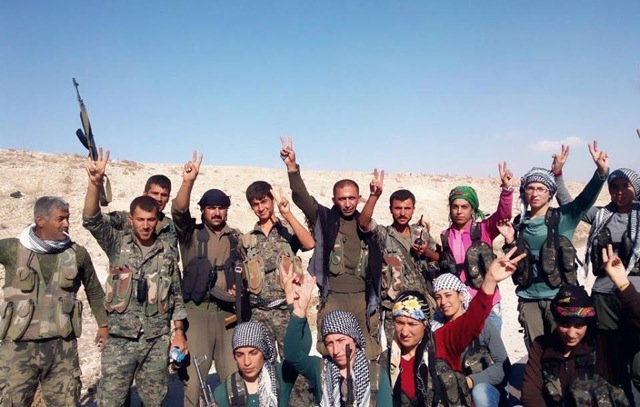
The city of Kobani’s epic resistance against the genocidal assault of the Islamic State (IS) has entered its thirtieth day. So far the response of the western left has been generally one of solidarity. However, the left seems divided on the best way to support Kobani. Invoking anti-imperialist and anti-war principles a considerable part of the left has been shying away from demanding military and logistical support for the main defending force of the city, i.e. People’s Protection Units (YPG) and Women Protection Unites (YPJ), the armed wings of Democratic Union Party (PYD), by the US led anti-IS coalition. Moreover, with some exceptions such as David Graeber, many western leftists have neglected the historical significance and transformative political potentials of the success of Kobani’s resistance.
In what follows I argue that pressuring western powers to provide arms and logistical support to YPG/YPJ is legitimate and justifiable, and that in the battle for Kobani the left has a unique opportunity to contribute to an important shift in the regional balance of power in favour of a radical democratic and egalitarian project with transformative ramifications for the entire Middle East.
Kobani, the Kurds, and the West
With regards to the discomfort of the left with the idea of western military support for YPG/YPJ the important preliminary point to be made is that the Kurds have repeatedly claimed that they do not want or need direct military intervention by either coalition forces or Turkey. They’ve repeatedly said that they only need anti-tank weapons, ammunition and the opening of a corridor for fighters, food and medicine to reach Kobani. This request has been echoed by the UN Special Envoy for Syria, Staffan de Mistura, who warned of a repetition of the fate of Srebrenica in Kobani if such a humanitarian corridor is not established.
In its demand for a limited tactical western military support for YPG/YPJ the left by no means loses sight of the fact that at its root Islamic State is the fascistic faeces of western imperial metabolism, a direct product of the American conquest of Iraq, the deliberate manipulation of sectarian differences, and the destruction of the social fabric of Iraqi society. But surely, none of these should obviate the recognition of the vital significance of protecting an actually existing and functioning radical left experience at the heart of the Middle East from eradication, notwithstanding its unavoidable flaws and limitations.
 This is the second post in our symposium on The Global Transformation by Buzan and Lawson. We are delighted to welcome Julian Go, Professor of Sociology and Director of Graduate Studies at Boston University, and Editor of Political Power and Social Theory. Julian’s recent books include American Empire and the Politics of Meaning (Duke University Press, 2008) and Patterns of Empire: the British and American Empires, 1688 to Present (Cambridge University Press, 2011), both of which have won numerous prestigious awards in various disciplines. He is currently working on a manuscript provisionally entitled Postcolonial Theory and Social Thought and a volume on Global Historical Sociology co-edited with George Lawson.





 The Disorder Of Things