The Global Transformation: A Response

The final post in our forum on The Global Transformation, in which Barry Buzan and George Lawson respond to the points raised by Julian Go, Jeppe Mulich and Jamie Allinson. The original post, summarising the book is available here. The book will also be discussed further at the ISA conference in New Orleans and a launch at LSE.

[Editor’s note: The authors are not responsible for the images in this post. But it’s Friday.]


Given the ‘excess’ of contemporary academic production, it is a rare treat to have colleagues engage seriously with your work. We therefore offer our heartfelt thanks to Julian Go, Jeppe Mulich and Jamie Allinson for their close reading of our book and for their thoughtful critiques of it. We offer our equally heartfelt thanks to the editors of The Disorder of Things, particularly Meera Sabaratnam, for investing a considerable amount of time in organising and publishing these commentaries.

The interventions by Go, Mulich and Allinson raise two main issues: the first relates to our use of, and contribution to, theoretical debates, particularly those around imperialism, and uneven and combined development (UCD); the second concerns the relationship between history and theory, most notably our use of macro-historical frames such as ‘modernity’. We discuss these issues in turn.

On theory

Julian Go is right that The Global Transformation ‘expressly rejects any grand theoretical narratives or systems’. He is also right that we do not use ‘categories derived from a larger and more comprehensive theoretical system’. And, however tiresome it is to keep agreeing with your critics, Go is once more right in saying that our use of uneven and combined development is not meant to correct this shortcoming – as we discuss below, we use UCD as an analytical shorthand rather than as a theoretical schema containing a range of causal claims.

Why is this the case? The first reason is strategic. At the beginning of the project, we had several choices to make: whether to pitch the book primarily to an IR audience or whether to also take some swings at cognate disciplines; whether to get drawn into internal debates associated with particular theoretical schemas or seek out a position in-between, or perhaps above, the fray; how to balance big picture and fine-grained historical analysis, and more. In each of these instances we chose the easy option – easy not in the sense of being straightforward to do, but in the sense of ‘less is more’. For example, rather than spend much time on the shortcomings of disciplinary historical sociology when it comes to its ‘occlusion of the global’, we concentrated on what historical sociology (and economic and world history) contributes to IR debates. Given that the answer to this was ‘quite a lot’, we made this our primary concern. Similarly, rather than distract ourselves – and readers – with the minutiae of debates internal to the whys and wherefores of ‘the global transformation’, we constructed a composite argument that assembled diverse storylines into a single narrative. To be clear – we are not saying that we neither built on, nor took a stand on, many of these debates, not least around the ‘internalism’ and Eurocentrism of many existing accounts. Rather, we made a deliberate decision to take an ecumenical approach, building on insights from a variety of theoretical churches rather than sticking to a single tradition.

Hindu-Jesus Continue reading

Modernity Is Everything; Empires Are Everywhere

JMulich_squareJeppe Mulich brings us the third post in our forum on The Global Transformation by Buzan and Lawson. Jeppe is a doctoral candidate at the Department of History at New York University. He works on comparative empires, global history, and colonialism in world politics. His research on regionalism, law, and intercolonial networks in the eighteenth and nineteenth centuries has been published in the Journal of Global History and in the anthology The Uses of Space in Early Modern History (Palgrave Macmillan, 2015).

The authors’ original post, Julian’s response, Jamie’s response and the authors’ rejoinder are now live.


Let me start off by stressing that The Global Transformation is a fantastic book. Buzan and Lawson manage to pack a host of information and analysis into a relatively short and very readable book, while at the same time keeping their fundamental argument sharp and coherent. It is one of those works that leave you wondering why it has not already been written, particularly in a discipline so intent on retelling the wrong stories over and over again.[1] It is also, incidentally, a book that strongly argues in favor of the relevance of my own field, something that any aspiring scholar should welcome with open arms. With this in mind, my comments and critiques in the following piece might come off as nitpicky, but if they do this is only because I agree with so very much of Buzan and Lawson’s core argument. I am not trying to offer a counterargument or even a corrective to their account, but rather a few friendly jabs and perhaps an opening for further research into and discussion of some of the wider themes and implications of this important book.

I will primarily provide comments on the book from the perspective of a historian, with the theoretical underpinnings which that classification implies. My comments are divided into three broad sections. The first section will deal with issues of thinking in time, in particular how to date the type of global shifts that Buzan and Lawson are interested it and, related to this, how to disentangle the historical forces of change and continuity. The second section will delve more into the specific substance of the global transformation – namely the notion of modernity and the potential problems and benefits of using this nebulous concept. The third section will focus more on a particular part of the puzzle of the nineteenth century – that of colonial configurations and the multitude of state-forms emerging at this time – and consider this phenomenon vis-à-vis Buzan and Lawson’s treatment of rational state-building.

Periodization and Eurocentric Narratives

BelleyWhile Hobsbawm (1962) introduced the idea of a long nineteenth century more than half a century ago, in the first of his three books covering the period from 1789 to 1914, the past decade and a half has witnessed a resurgence of interest among historians and historical sociologists. Unlike Hobsbawm’s work, which focused almost entirely on events and developments within Europe, many of these new accounts are in various ways attempting to grapple with the inherent Eurocentrism of earlier histories. Such projects are often accomplished by telling decidedly global stories of the nineteenth century, with the most widely read example being C. A. Bayly’s The Birth of the Modern World, joined in the past year by Jürgen Osterhammel’s 1000-page behemoth The Transformation of the World.[2]

What the works of Bayly, Osterhammel, and Buzan and Lawson have in common is their focus on the transformative nature of the nineteenth century, apparent with just a cursory glance at their titles. While these authors might be interested in a certain kind of big history, their work focuses on shifts, breaks, origins, and turning points – not on continuities and long trajectories. This is in many ways true for most academic history, which often ends up as an exhausting chase to find the origins of specific phenomena or practices or, when coupled with the peculiar obsession with modernity, an endless argument over when and where the first example of a truly modern state/revolution/economy/philosophy/society/ideology/science/war should be found. Increasingly relegated to the sidelines are the crotchety old contrarians who insist that nothing much ever changed anyhow.[3] Continue reading

Closet Postcolonialists? On Buzan and Lawson’s Global Transformation

julianaugust13This is the second post in our symposium on The Global Transformation by Buzan and Lawson. We are delighted to welcome Julian Go, Professor of Sociology and Director of Graduate Studies at Boston University, and Editor of Political Power and Social Theory. Julian’s recent books include American Empire and the Politics of Meaning (Duke University Press, 2008) and Patterns of Empire: the British and American Empires, 1688 to Present (Cambridge University Press, 2011), both of which have won numerous prestigious awards in various disciplines. He is currently working on a manuscript provisionally entitled Postcolonial Theory and Social Thought and a volume on Global Historical Sociology co-edited with George Lawson.

Update: Jeppe’s response, Jamie’s response and the authors’ rejoinder are now also live. Original post here.


In this magisterial work, Buzan and Lawson make two overarching claims: 1. the nineteenth century saw a fundamental “global transformation” in the “international order”, creating the essential aspects of the “global modernity” we inhabit today, and 2. disciplinary IR needs to recognize this transformation and reconfigure its identity and agenda accordingly. As a historical sociologist, I feel less certain about judging the second claim but more certain about the first. Was there a fundamental transformation in the nineteenth century that has shaped our contemporary global modernity? Yes. And Buzan and Lawson painstakingly and persuasively chart this transformation like none other.

What, then, to say about this important book – a book, by the way, which every serious historical social scientist needs to read? A book which, in my estimation, belongs among the great works of historical sociology like those of Wallerstein, Tilly, and Mann? Pushed to say something critical, I will instead say something didactic. More precisely, I will comment on two things: the relative absence of theory and the remarkable presence of empire. Put differently: what is the theoretical frame or theoretical considerations mobilized in the work? And why isn’t empire the fundamental organizing analytic category? Or, put simply: are Buzan and Lawson closet postcolonialists? Continue reading

The Global Transformation: The Making of the Modern World

This guest post by Barry Buzan and George Lawson marks the beginning of a symposium on their book The Global Transformation: History, Modernity and the Making of International Relations (Cambridge University Press, 2015). Barry is a Fellow of the British Academy, Emeritus Professor in the LSE Department of International Relations and a Senior Fellow at LSE IDEAS. He was formerly Montague Burton professor in the Department of International Relations, LSE. Among his books are, with Richard Little, International Systems in World History (2000); with Ole Wæver, Regions and Powers (2003); From International to World Society? (2004); with Lene Hansen, The Evolution of International Security Studies (2009); and An Introduction to the English School of International Relations (2014). George Lawson is an Associate Professor of International Relations at LSE. His research focuses on the interface between International Relations and Historical Sociology, and on processes of radical change, most notably revolutions. He is the author of Negotiated Revolutions (2005) and the editor (with Chris Armbruster and Michael Cox) of The Global 1989 (2010).

Team BG

Update: Julian’s response, Jeppe’s response, Jamie’s response and the authors’ rejoinder are now live.


The core argument of The Global Transformation is straightforward: during the 19th century, a ‘global transformation’ remade the basic structure of international order. This transformation involved a complex configuration of industrialization, rational state-building, and ideologies of progress. What do we mean by these terms?

  • By industrialization we mean both the commercialization of agriculture and the two-stage industrial revolution, which together both shrank the planet and generated an intensely connected system of global capitalism. The extension of capitalism brought new opportunities for accumulating power, not least because of the close relationship between industrialization and dispossession. Indeed, industrialization in some places (such as Britain) was deeply interwoven with the forceful de-industrialization of others (such as India).
  • By rational state-building, we mean the process by which administrative and bureaucratic competences were accumulated and ‘caged’ within national territories. This process was not pristine. Rather, as we show in the book, processes of rational state-building and imperialism were co-implicated – most 19th century nation-states in the West were imperial nation-states, and imperialism ‘over there’ fed into rational state-building ‘at home’: the modern, professional civil service was formed in India before being exported to Britain; techniques of surveillance, such as fingerprinting and file cards, were developed in colonies and subsequently imported by the metropoles; cartographic techniques used to map colonial spaces were reimported into Europe to serve as the basis for territorial claims,. Domestically, rational states provided facilitative institutional frameworks for the development of industry, technological innovations, weaponry and science; abroad, they provided sustenance for imperial policies. Both functions were underpinned by ‘ideologies of progress’.
  • By ‘ideologies of progress’, we mean assemblages of beliefs, concepts and values that address how polities, economies and cultural orders relate to each other, how individuals and groups fit into these assemblages, and how human collectivities should be governed. In the book, we highlight the impact of four such ideologies: liberalism, socialism, nationalism and ‘scientific racism’, all of which were rooted in ideas of classification, improvement, control and progress (including ‘scientific racism’, many of whose proponents favoured a ‘forward policy’ in which European imperialism was hardened, both to safeguard white gains and to combat miscegenation with ‘backward’ peoples). Again, there was a dark side to these ideologies (and not just with ‘scientific racism’) – the promise of progress was linked closely to a ‘standard of civilization’ which served as the legitimating currency for coercive practices against ‘barbarians’ (understood as peoples with an urban ‘high culture’ – the ‘Oriental Despotisms’ of the Ottomans, Indians, Chinese, etc.) and ‘savages’ (understood as peoples without an urban ‘high culture’ – virtually everyone else). These ideas ended the long dominance of the dynastic state and defined the social framework of modernity. Nothing of comparable weight has come into being since, so these ideas, and the interplay amongst them, not only defined the dynamics of legitimacy and conflict during the 20th century, but continue to dominate the 21st

The three components of the global transformation were mutually reinforcing. Continue reading

Confronting the Global Colour Line

Race and Racism in IR

Our edited volume Race and Racism in International Relations: Confronting the Global Colour Line has now been published. We asked some of the contributors to give us their thoughts on what has been (both deliberately and unwittingly) overlooked by the discipline of International Relations with regard to questions of race and racism; the challenges posed by (re)centring these vital questions; and how IR may atone for its implication in empire. At your service, Sankaran Krishna, Debra Thompson, Srdjan Vucetic and John Hobson.

What has been the least investigated aspect of race and racism in IR?

Sankaran Krishna

The question makes me want to laugh because to me mainstream IR is all about how not to talk about race and racism while constantly appearing to talk about the relations between different kinds of peoples and countries. I came to IR only at the PhD level. My masters in modern history had acquainted me with the history of colonialism, racism, genocide, man-made holocausts like the Great Bengal famine, the slave trade, and other such events, on a world-scale in the post-Columbian (ie; post-1492) era. In my first IR courses in the United States the focus seemed to be on how can we understand the social world through models that pretend humans are unthinking molecules or inanimate entities. Stuff like Bueno de Mesquita’s War Trap (I kept waiting for someone to tell me that was a joke, like they do on Candid Camera.) It was a few years later that I realized that the penchant for abstract theorization, distaste for historical specificity and woolly stuff like ideology, and fetish for numbers – all voiced in deep manly intonations about analytical rigor – were nothing but an assiduous refusal to face the world in all its racial violence and splendor. In other words it’s the absence of considerations of race and racism that coheres the discipline.

When you widen the frame beyond mainstream IR and include those at the margins – thinkers like DuBois immediately come to mind – and especially take into account writings over the last few decades, the picture is a lot better. From my point of view, there has been a tendency in self-proclaimed dissident literatures to be inadequately critical of the racial conditions of their own emergence: invocations of the Global South or postcoloniality or marginality or the colour line can themselves become fetishized and serve as screens preempting a closer inquiry into racial difference and the consequences of othering. Continually calling out the protean forms in which race and racism manifest themselves historically and contemporarily seems, to me at any rate, a worthwhile vocation.

What is the most important theoretical challenge to IR posed by an engagement with race and racism?

Debra Thompson Continue reading

The Global Colonial 1914-18: A Public Roundtable

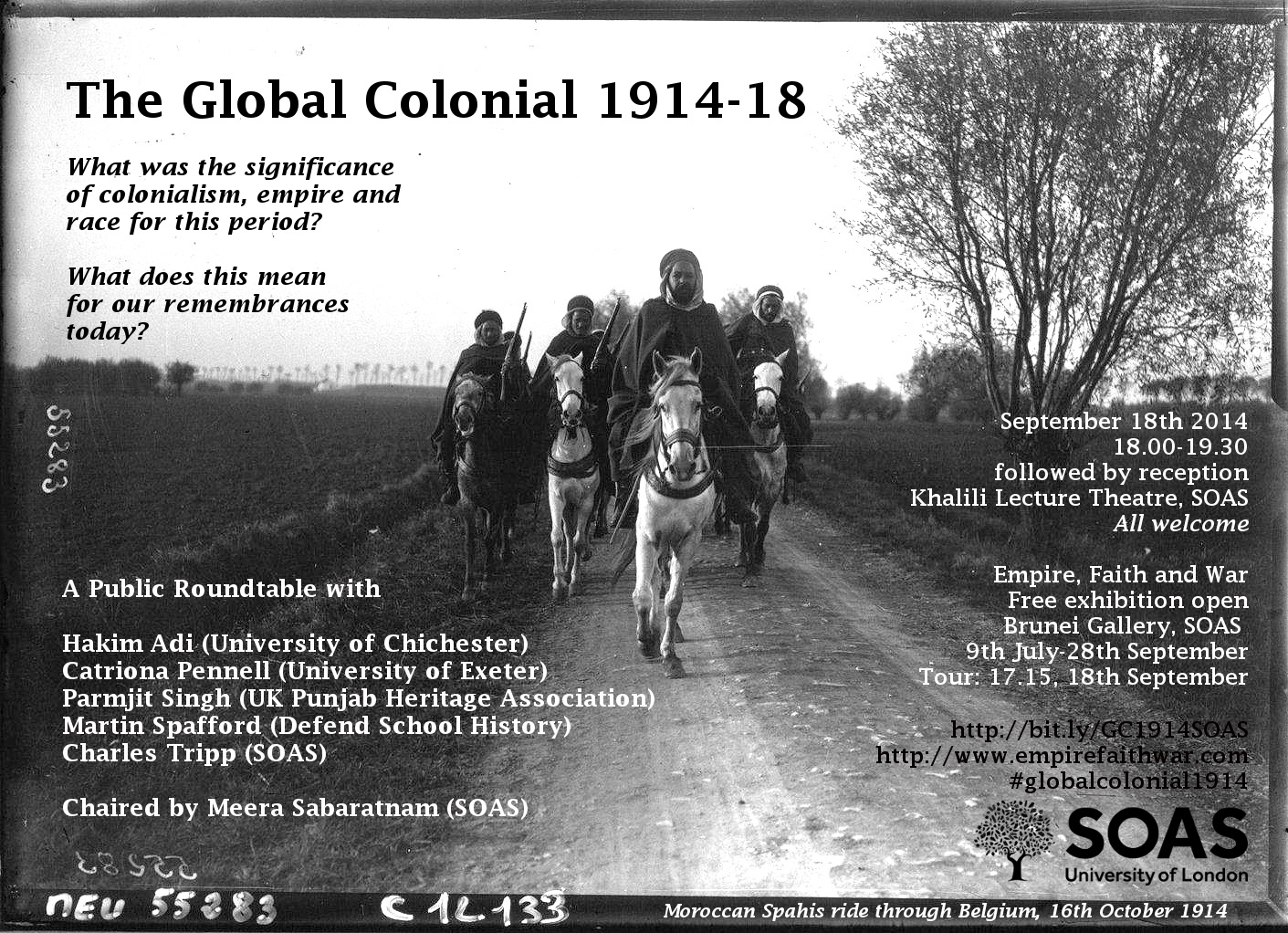
This is the fourth and final post in our series on The Global Colonial 1914-18, which is the video and transcript of the public event which took place at SOAS on September 18th 2014. Links to previous posts and the series as a whole can be found here. Many thanks to our speakers Hakim Adi, Catriona Pennell, Parmjit Singh, Martin Spafford and Charles Tripp for their contributions, as well as the audience for their incisive questions.

Global Colonial 1914 poster


M = Meera Sabaratnam

C = Charles Tripp

H = Dr Hakim Adi

P = Parmjit Singh

CP = Catriona Pennell

MS = Martin Spafford

M:       Okay. Hello, everybody and welcome. Thanks very much for coming. My name is Meera Sabaratnam, I’m a lecturer here at SOAS in international relations. And tonight we’re delighted to host a roundtable on the Global Colonial 1914-18. So obviously this is triggered by a number of contemporary events, not least the centenary of World War One, which you’ll have seen all over the news. But one of the stories I suppose, that gets told less often is the role of the wider world in the way that the war unravelled but also as a theatre of war. And in the place of where the war stood as part of the global context. So what else was going on, multiple revolutions, uprisings. So this is a moment in which the war is an important part of a global order which is undergoing substantial amounts of change. I should say this event is also sponsored…has been organised through the British International Studies Association and their working group on colonial, post-colonial and de-colonial research questions.

And this particular group tries to look at the elements of coloniality and colonialism in how the modern world came to be and what that means for when we understand globalisation and global history. I’m delighted to have a roster of speakers here tonight covering not just all of the sort of main areas, the regions that we’re studying in SOAS, namely Asia, Africa and Middle East. But also researchers and teachers who have been involved in how World War One is remembered in the classroom as a form of public cultural memory. Each of our speakers is going to speak for about 10 minutes. And then after that we’ll open it up for questions. Please do be forthcoming with your questions and we hope to have a good discussion afterwards, okay. I’d first like to welcome Professor Charles Tripp who is professor of Middle East here at SOAS. Thanks.

C:        Thank you very much, Meera. It sounds rather grand, I’m not the professor of Middle East, I’m professor of politics in the Middle East. But why not, grander? I was asked to talk today about the relationship between what was happening in the Middle East and what happened to the Middle East in and around the First World War. And I must admit straight off, I’m not a historian, so I don’t work on the first war particularly but clearly anybody who works in the politics of the Middle East is well aware of the fact that legacies of the First World War and what happened to the region are still very much there and indeed are being revived in the press in one form or another as they talk about Syria and Iraq at the moment. But what I wanted to really try and do is to pick out two themes if I can, in the time allotted. One is the notion that as with many other parts of the world, much was happening before the First World War that the First World War changed the course of, if you like. So in a sense one of the dangers of looking, which of course happens now to some extent in the press and elsewhere, is to see the Middle East purely as the Middle East as a political entity, whatever that is, as a kind of creation of European intervention, the First World War.

But what I’m trying to argue is that actually there were processes long before that that had been going on and that in some ways the European intervention set back in various significant ways that had an effect for the future as well. So the first part is really to think about what had been happening in the 50 years or so before the First World War in the region, we now think of as the Middle East, the Ottoman Empire, Qajar, Iran, North Africa. And I want to look at two themes which are intertwined but really revolve around the same emerging idea and notion which is the idea of the autonomous citizen, which again was quite a novel, a radical idea with hugely radical implications for the dispensations of power. But the two themes that they were intertwined with was, one, the struggle against despotism and the other, struggle against colonialism, both of these seemed to be deeply repressive of the idea of the autonomous citizen. And in some senses therefore what you’re looking at in the long…well, the period before the First World War in the 40 or 50 years, whether it’s in the Ottoman Empire, the Qajar Empire, Iran, in Egypt, you have a struggle against local despotism for constitutionalism. A precarious constitutionalism which is often of course therefore sabotaged by those who would rather not see it. But nevertheless very powerful in the mobilisation of the politics of these regions. Continue reading

Toward a Racial Genealogy of the Great War

dusan-bjelic-portretA second guest post in our series on The Global Colonial 1914-18 from Dušan I. Bjelić. Dušan received both his B.A. (1976) and M.A. (1981) in Sociology from the University of Belgrade and then earned his Ph.D in Sociology from Boston University in 1989, joining the University of Southern Maine Department of Sociology and Criminology in 1990. His area of interest is the colonizing application of psychoanalysis and psychiatry to the Balkans. Professor Bjelić co-edited Balkan as Metaphor: Between Globalization and Fragmentation with Obrad Savić (Cambridge, MA: The MIT Press, 2002). He has also published two books of his own: Galileo’s Pendulum: Science, Sexuality and the Body-Instrument Link, (SUNY Press, 2003) and Normalizing the Balkans: Geopolitics of Psychiatry and Psychoanalysis (Ashgate, 2011). His published works can be accessed at Academia.edu.


“Just as there is no wedding dinner without meat so there is no war without slaves.”

Serb soldier on the Balkan Front.[1]

A man was looking for something he had lost under the street lights; another man, the joke goes, approached and asked him what he was looking for. “I am looking for my lost keys,” “Did you lose them here?” “No,” the first man responded, “I lost them on the dark side of the street.” “But, why are you looking here?” “Because this is where the light is.” This joke illustrates well the paradox of the national paradigm in European historiography of the Great War. The assumption that the European sovereign nation is the sole agent of modern history naturally motivates European historiography to frame the Great War within a national paradigm and foreclose its colonial dimension. A related trope to the above joke pertains to race and its relation to the national histories of Europe; the black face of a slave, according to Frantz Fanon, can be seen during the night only under the porch light of the master, but when the slave goes into the dark his face becomes invisible. The deployment of colonial soldiers in the Great War as “warrior races” or, “martial races” to fight on behalf of their masters, and the absence of the Black history of slavery from the history of the Great War is in fact the history written from the master’s porch. While the invisibility of the black face foreclosed Black history from the national paradigm of the Great War, it was nonetheless useful as a racial weapon in the war.

By deploying almost a million non-white troops in the European theater of war—France’s 500,000 Africans and Asians, Britain’s 200,000 Indians and Africans, America 200,000 black soldiers, Germany’s 11,000 Africans (only in East Africa)—race was used as a “weapon of war” to advance an unprecedented slaughter among the white nations. [2] R. J. Vincent socked it to the revisionist historians when he wrote, “not only were the whites laying to rest the notion of their instinctive comity by butchering each other in such unprecedented numbers, but they were also showing their neglect of race in favour of nation in using non-white troops to advance the slaughter.”[3] Those historians committed to the national paradigm acknowledge the contribution of colonial solders in the Great War only as an auxillary force rather than as the point of the return of race as the constitutive violence of European Modernity. Many of the former slaves forcefully recruited and disciplined as racial instruments of forced labour, punishment and extermination became the site of colonial violence and operated as a microcosm for the War. The colonial soldier was the cause and the consequence of the Great War. Continue reading

The Colonial Armed Peace: Was the Great War a Failure of Imperialism?

LukeThis is a guest post from Lucian M. Ashworth, and the first in our series on The Global Colonial 1914-18. Lucian is Professor and Head of the Department of Political Science at Memorial University of Newfoundland. His current research focuses on the history of international Relations (IR) theory, and on the disciplinary history of IR. This builds on a number of previous interventions on the politics and history of the inter-war period (including on the absent idealists, the early feminist IR of Helen Swanwick, and Halford MacKinder as League supporter). He is the author most recently of A History of International Thought. From the Origins of the Modern State to Academic International Relations, published by Routledge in 2014.


Entente Cordiale

A common response from many opponents of Michael Gove’s ill-informed presentation of the First World War as a just cause has been to write the war off as one that was caused by the imperialism of the great powers. In this view those who died were victims of an imperial system.[1] By seeing the war as primarily an imperialist conflict it is possible to simultaneously denounce the pre-1914 imperial order and also to oppose the war. It is, therefore, a handy position that avoids any moral dilemmas.

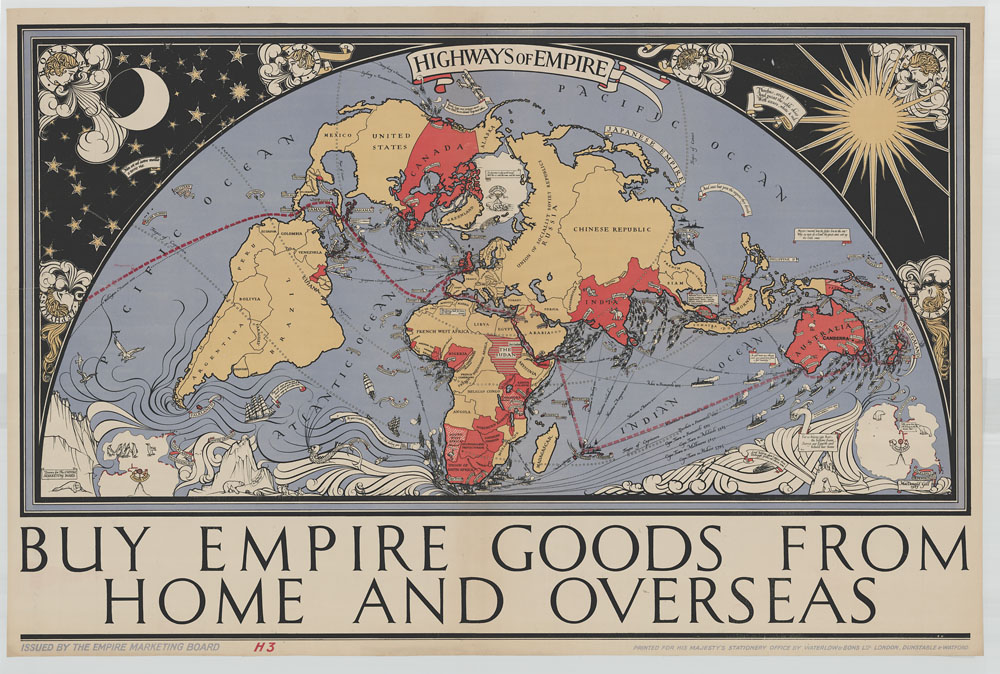
At the same time, it is interesting that amongst all these debates about the causes and nature of the war few scholars have seen fit to examine one form of evidence: the writings of international experts before the war. This gap is even more surprising in International Relations (IR), as these pre-war writers are IR’s forebears. What is interesting about studying these pre-war international writers is that they were well aware of the imperialist nature of their global society (and of the role played by colonial control), but it was not this imperialism that was seen as the source of instability. Rather, a more complex story emerges of a two-tier global system, and the coming of the war is seen as a threat to, not a result of, imperialism.

buy-empire-goods

The first point about the pre-1914 world is that this was a thoroughly recent system, and that for many of those writing on international affairs it was novel because for the first time in history there was a truly global order. Whether it was W. T. Stead writing about the movement away from states to a Europe united by transnational links, Paul Reinsch’s examination of the new ‘public international unions’, or Norman Angell’s wonder at the development of the global economy in trade and finance, the common feature was the recognition that the world from the late nineteenth century was global in a way that was thoroughly unprecedented.[2]

Much of this new politico-economic order was built on one product: coal. Timothy Mitchell has outlined how the growing dependence on coal as a concentrated source of energy radically changed society into an industrial ‘hydrocarbon civilisation’. The combination of coal, steel and steam powered railways allowed for the easy extraction, transportation and use of coal in industry.[3] This rapid industrialisation made the new industrialising societies vulnerable in a way they had never been before. The loss of self-sufficiency in food and the requirements of industry for a growing list of raw materials not often available in north-western Europe or eastern North America meant that these societies were dependent on trade with often distant societies. Yet, trade alone was not sufficient to extract these raw materials, so European powers increasingly turned to direct control and the deliberate imperial restructuring of the non-European economies.[4] This creation of a two-tier fully global economy was well-known to the political economists of the time.[5]

Two very different writers who captured the nature of this new global order were the American admiral Alfred Thayer Mahan, and the British journalist and political activist Henry Noel Brailsford. Mahan was an advocate of a higher level of armaments and a notorious racist. Brailsford, by contrast advocated stronger representative international organisations. Despite the wide divergence in their political opinions, both came to not incompatible conclusions about the nature of the global order before the First World War, and both understood the two-tier nature of the global political economy. The major difference in approach was that Mahan supported the imperial status-quo, while Brailsford opposed it. Continue reading

The Global Colonial 1914-18: A mini-series

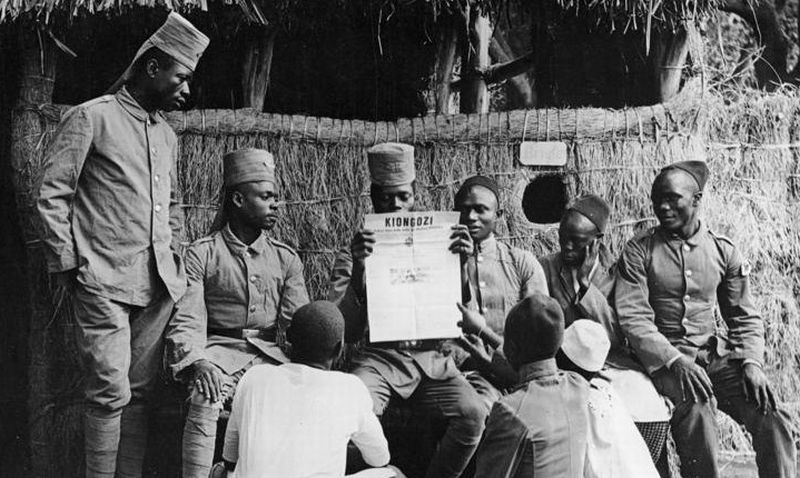
Askaris fighting for Germany listen to the news.

Askaris fighting for Germany listen to the news.

The Disorder of Things hosts a short series of posts connected to the event ‘The Global Colonial 1914-18‘, held at SOAS on 18th September 2014, and co-organised by the Colonial / Postcolonial / De-colonial Working Group of the British International Studies Association.

Our first post is by Lucian M. Ashworth, who discusses the breakdown of the colonial armed peace, as viewed by contemporary observers.

Our second post is by Dušan I. Bjelić, who offers a racial genealogy of the Great War.

Our third post is by Meera Sabaratnam, who suggests a contrapuntal reading of the war based in colonised Mozambique.

Our fourth and final post contains a transcript and video of the public roundtable which took place at the end of the day, featuring Hakim Adi, Catriona Pennell, Parmjit Singh, Martin Spafford and Charles Tripp, in which the colonial dimensions of the war are discussed, as well as their implications for teaching and commemorating the period today.

This post serves as a permanent link for the series.


The Causes of the Great War: An Autobiographic Take

The assassination of Franz Ferdinand and his wife Sophia on June 28, 1914 set of a chain of events that a few weeks later led to an all-out war involving virtually all key European powers and their enormous overseas empires at the time.   How did this happen?

AmericanSplendor01-1

As a born and raised Sarajevan, I was socialized from an early age to think about the causes of the Great War – a question that happens to be one of the most studied in all of human history.  I vividly recall my first primary school trip to “Princip’s footsteps” – markings embedded into the sidewalk signifying the spot from where the assassin, Gavrilo Princip, fired at the Viennese couple.  We boys took turns to stand in the footprints and re-enacted the killing; the girls giggled.  There was no doubt that this behaviour was desirable:  with our teachers we read out the message on a nearby plaque that explained, in solemn Cyrillic script and even more solemn Aorist, how the assassin’s shots expressed the will of “our people” to be free of foreign tyranny.  Is it true that Sophia was pregnant?, a classmate asked.   Yes, said one teacher, but this was an accident. Princip’s bullet hit her only after it ricocheted off the car.  It was intended for General Potiorek, Austria’s military governor.

Continue reading