 This is a guest post from Nimer Sultany. Nimer is is Senior Lecturer in Public Law, SOAS, University of London. His book Law and Revolution: Legitimacy and Constitutionalism After the Arab Spring won the 2018 Book Award of the International Society of Public Law, and is shortlisted for the Society of Legal Scholars’ Peter Birks Prizes for Outstanding Legal Scholarship.
Imagine the uproar if the leader of the Labour Party Jeremy Corbyn were to cite Mahatma Gandhi on the question of Palestine (November 1938): “But my sympathy [to Jews’ conditions in Europe] does not blind me to the requirements of justice. The cry for the national home for the Jews does not make much appeal to me… Palestine belongs to the Arabs in the same sense that England belongs to the English or France to the French.” It is unlikely that Corbyn would cite Gandhi on this, however. According to the controversial IHRA definition of anti-Semitism, which the Labour Party is set to adopt in full, “denying the Jewish people their right to self-determination” is anti-Semitic.
The timing of this suppression of free speech is troubling. At the very time the Israeli government is implementing ever more extreme policies that solidify Jewish supremacy vis-à-vis Palestinian citizens inside Israel like me, Corbyn’s critics seek to expand the definition of anti-Semitism to the extent that it would stifle criticism of these very racist policies. At the time Israel routinely kills scores of Palestinians with impunity, Corbyn’s critics seek to deny him the ability to express unwavering solidarity with the Palestinian struggle for freedom and equality, and deny us Palestinians the means by which we can express our suffering and name our oppression.
Whereas Corbyn’s critics seek to portray him as “palling with terrorists”, they have no qualms about celebrating, as Mark Regev did, Zionist leaders like Menachem Begin who was the leader of a breakaway alt-right group that murdered British officials and Palestinian civilians. Begin’s actions were part of the Zionist movement’s audacious armed robbery of the Palestinian people’s homeland to establish an ethnocracy.
Are Corbyn and his critics equally selective? Are Begin and Arafat both terrorists-turned-to-peacemakers? This discourse that makes Corbyn on the defensive is one that supports the violence that maintains colonialism and apartheid but condemns violence that seeks to resist it. It sanctions violence that sustains the longest military occupation since World War II. Yet, it is anti-colonial militants who seek to put an end to this systematic violence who are routinely condemned. The context in which violence occurs is eradicated.
Zionists like Andrew Feldman, the former chair of the Conservative Party, reduce Zionism to “Jewish national self-determination” in order to equate anti-Zionism with anti-Semitism. Yet, the opposition to Zionism is precisely because it is not “a national self-determination” movement, but rather a settler-colonial movement. Continue reading
 Amy Niang is Senior Lecturer in International Relations at the University of the Witwatersrand, Johannesburg. Her research is informed by a broad interest in the history of state formation, peace and conflict, and Africa’s international relations. Her work has been published in Alternatives, Politics, African Studies, Journal of Ritual Studies, African Economic History, Afrique contemporaine and many edited collections. Her forthcoming publications include “Rehistoricising the sovereignty principle with reference to Africa: stature, decline, and anxieties of a foundational norm”, in Zubairu Wai and Marta Iniguez de Heredia (eds.) Bringing Africa “Back In”: World Politics and Theories of Africa’s Nonfulfillment (Palgrave Macmillan).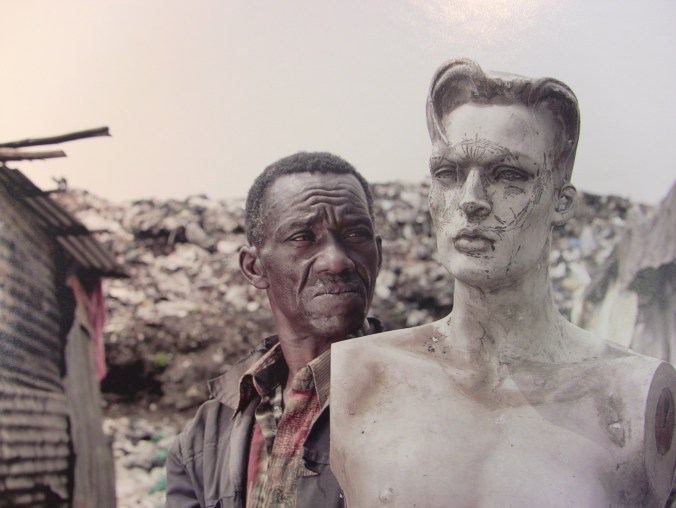

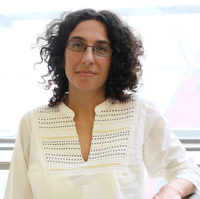 Marta Iñiguez de Heredia is a Marie-Sklodowska Curie Fellow at the Institute Barcelonaof International Studies. She holds a PhD from the London School of Economics and Political Science (LSE). She has taught at the University of Cambridge, the LSE, Rouen Business School, Deakin University and La Trobe University. Her research concentrates on the historical sociology of peacebuilding processes, with a focus on the relationship between order, violence, state-making and resistance, and on Africa in particular. She draws on historical sociology, critical Africanist and practice literatures, as well as on extensive fieldwork. Current research is focused on EU’s peacebuilding policies, the militarisation of peacebuilding and political transitions through the emergence of African social movements.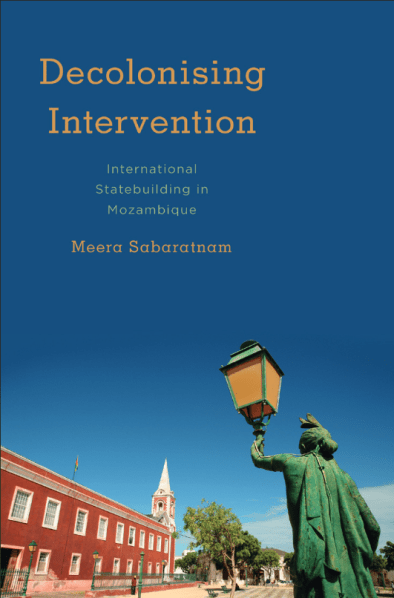





 The Disorder Of Things