Governing the Feminist Peace to Deflect from Decolonial Peace in Africa

This third contribution to our symposium on Governing the Feminist Peace comes from Mohamed Sesay. Mohamed is Associate Professor and Coordinator of the African Studies Program in the Department of Social Science at York University in Canada. His research and teaching interests are in development, transitional justice, international criminal justice, rule of law, customary justice, peacebuilding, and post-conflict reconstruction particularly in sub-Saharan Africa. He is co-investigator for a UKRI GCRF project titled Land Policy, Gender Justice, and Dual Legal Systems. Earlier posts in the symposium can be found here and here.


Let me start by a somewhat unfamiliar account of conflict and violence in Africa. After almost a century of European colonization, anti-colonial struggles resulted in the political independence of African states, particularly in the post-World War II era. However, the end of direct colonialism did not amount to the decolonization of the structures established by violent colonial administrations. Rather, what followed the attainment of juridical-political independence is what postcolonial scholars call coloniality, i.e., “various colonial-like power relations existing today in zones that experienced direct colonialism” (Quijano 2007: 170). Independent nations in Africa did not effect any major ideological or structural break with the colonial state and all they did “was to expand the former colonial administrative and economic infrastructures” (Ogot and Ochieng 1995: XIII). Just as colonial governments relied on coercive structures to rule over their colonies, so too did their African successors embrace violence and militarism as the mechanism to shore up legitimacy deficits in the modern state. In the transition to the postcolony, “the predatory paradigm of governance was conveniently adopted…by the local political, economic, civil, and military elites” (Yusuf 2018:257). This underlining post/neocolonial condition as well as the paradigm of violence it engenders (Ndluvo-Gatsheni 2012, 2015) has remained not only at the root of many conflicts in Africa but also central to what makes peace elusive for ordinary Africans (Zondi 2017). Thus, Fonken Achankeng notes:

If the causes and consequences of the conflicts have their roots in colonialism, the process of decolonization and state formation and the ensuing crisis of nation-building, then any attempt to resolve the conflict must also transcend the concepts of new institutions that will increase participation, legitimacy, and redistribution, and good governance recipes to also address the root causes of the problem (Achankeng 2013:14)

To what extent does the feminist peace, promised by the Women Peace and Security agenda, account for this historical and contemporary reality of conflict and violence in Africa is the question I had in mind as I read Governing the Feminist Peace by Paul Kirby and Laura J. Shepherd. As the authors aptly note, Africa is a central part of the WPS ecosystem, with the Maputo Protocol to the African Charter on Human and People’s Rights on the Rights of Women in Africa, the Solemn Declaration on Gender Equality, and the Dar-es-Salaam Declaration on Peace, Security, Democracy, and Development becoming the earliest policymaking moves to institutionalize Resolution 1325 outside the United Nations. In addition to 32 national action plans (NAPs) adopted by African governments, regional organizations in Africa account for about half of the policy documents issued beyond the UN and its member states as the authors report. Indeed, this massive policy commitment makes Africa a “terrain of reproduction and contestation” of WPS beyond the “narrow diffusionist model” (p. 69) and I appreciate the authors’ efforts to represent Africa from this critical perspective. I cannot agree more that in the African context, policymaking moves such as NAPs can become a “key part of governing,” functioning as “a way of stultifying feminist peace, or interloping WPS into the machinery of the state” (p.119). Unlike women’s rights groups and activists who may contribute to WPS as a means to challenge domestic patriarchy, when the political class in Africa is at the forefront of promoting an agenda aimed at challenging their power, it is often a governing strategy to hijack its radical transformative mission.

Women serving in militaries that are part of US Africa Command (AFRICOM), 2017

That said, the post/neocolonial condition in Africa has not received the due attention it deserves in this book.

Continue reading
The Ideal International Institution: A Response

The concluding post from the author herself, drawing our symposium on The Ideal River to a close. Dr Joanne Yao is Senior Lecturer in International Relations in the School of Politics and International Relations at Queen Mary, University of London. Previously, Joanne taught at Durham University and the LSE, where she completed her PhD in 2017. Joanne was also one of three editors of Millennium: Journal of International Studies for Volume 43 (2014-2015) and is currently a member of Millennium’s Board of Trustees.Her research centers on environmental history and politics, historical international relations, international hierarchies and orders, and the development of early international organizationsThe Ideal River is her first book; Joanne’s next project focuses on the history of Antarctica and early outer space exploration.


One question that repeatedly comes up from readers of this book is about its disciplinary identity. On the one hand, this is one of the book’s strengths – it seems to shapeshift across disciplinary boundaries and some of the central conclusions, particularly on the desire to control nature as a marker of a Western-led (imposed) modernity, might have been arrived at from a variety of different disciplinary starting points. On the other hand, this question puzzles me since the book is self-consciously situated in International Relations which is a clear path-dependent consequence of the intellectual riverbeds my own thinking has flown through. Perhaps what they wish to know is how did someone who started her academic life with the ‘Great Debates’ of IR end up contemplating the physical and metaphysical river (especially since I might have gotten ‘here’ more quickly and eloquently from elsewhere). But like all aspects of social and political life, we don’t get to re-run the experiment, and so this book is here, with its IR-warts and all. 

But aside from my own intellectually situatedness, this book is a work of IR because, alongside the three rivers, international institutions are also pivotal characters in my story. Perhaps starting from IR, this point is obvious, and I felt the harder sell was to illuminate my three rivers as worthy protagonists in a story about international order. For this, I might have neglected my other characters. 

Continue reading

What Difference Does a River Make?

Post #5 in our symposium on Joanne Yao’s The Ideal River, from Dr Giulia Carabelli. Giulia is a lecturer in Sociology and Social Theory in the School of Politics and International Relations at Queen Mary, University of London. She is interested in affect theory, nonhuman agencies, and social justice. Her current research project, Care for Plants, explores the shaping of affective and intimate relationships between humans and houseplants during the Covid-19 pandemic.


There are three protagonists in The Ideal River: the Rhine, the Danube, and the Congo. We meet them at different times in history when they become crucial agents in the (re)making of international orders. These three rivers illustrate different yet analogous processes of intervention aimed at domesticating what escapes human control (nature) to establish order as a matter of “progress”. As Yao argues, the taming of rivers exemplifies the “fulfilment of the Enlightenment promise that humanity stood together as masters over nature”, which is rooted in an unquestioned “optimism toward international progress” (186). The Rhine is the “internal European highway”, the Danube “the connecting river from Europe to the near periphery” and the Congo “the imperial river of commerce” (10). From the outset, the book sets expectations for nonhuman actors to take centre-stage in the recounting of history and to reveal their obscured roles in the development of global (human) politics. My reflections thus aim to discuss how the book foregrounds nonhuman agencies and to advance an argument for centring care and love to appreciate the potentially disrupting roles of rivers in reshaping political imaginaries, which become more and more urgent as that optimism towards human control flails.

1. The image of the river

I start from the cover of this book; an image taken by NASA/USGS Landsat 8 depicting the Mackenzie River in Canada. From above, this river is rendered through solid shades of blues, browns, and greens. This river does not flow. Similarly, when we imagine rivers on a two-dimensional map, they appear as homogeneous streams, whose ability to connect and serve human settlements we value. Such rivers become boundaries, obstacles, or opportunities to facilitate the movement of people, goods and capital, while ignoring their much more complex life as eco-systems in a constant process of change. These static representations of rivers, so instrumental to human life and its “progress”, become protagonists of the historical conferences discussed in the book. These rivers are ideals of what a river can become when understood as precious, yet disposable, resource.

Rivers on maps are what humans have long attempted to tame, because, as Yao discusses, to exercise control over nature ultimately proves, and provides, human progress. It drives and tests advancement in technology whilst gratifying the assertion of moral superiority. Clearly, this perspective results from thinking “human” and “nature” as dramatically different whereby the former is always standing above the ‘Other’; and to tame the Other for the sake of progress. The history of global politics, as shown vividly in this book, can be framed as the history of taming rivers. This is also the history of human faith in science and technology as the desperate attempt to prove that rationality is what sets us above all other species. It is the history of “transform[ing] irrational nature and society into economically productive and morally progressive units of governance” (200). 

Continue reading

Unmaking Property: The River as Amniotechnics

Day four in the Disorder symposium on Joanne Yao’s The Ideal River, where we are joined by Dr Ida Danewid, who has visited with us before.

Ida is Lecturer in Gender and Global Political Economy at the University of Sussex. Her first monograph, Resisting Racial Capitalism: An Antipolitical Theory of Refusal, is forthcoming with Cambridge University Press. Ida’s research interests are in anticolonial political thought, Marxism, and intellectual history. Her work has previously appeared in Third World Quarterly, Millennium, European Journal of International Relations, International Political Sociology, Security Dialogue and with the Black Mediterranean Collective.


Lake Kariba would soon become a river. The dam would become a waterfall. And miles away, the Lusaka plateau… would become an island.

In The Old Drift, Namwali Serpell writes about the history of colonialism in southern Africa and its global ripples in the present. Told as a story about three families (European, African, and Indian) and spanning three generations, the novel centers around the Zambezi river and the adjacent Kariba dam that transforms the currents of the river (its “drift”) into hydropower. Originally commissioned by the British controlled Federation of Rhodesia and Nyasaland (now Zambia, Zimbabwe, and Malawi) in the 1950s, the dam was built at a place well known to Dr. Livingstone and countless other colonial explorers. (As Serpell notes, “This is the story of a nation—not a kingdom or people—so it begins, of course, with a white man.”) Throughout the novel, Serpell cleverly uses the dam as a symbol of empire, enclosure, and extraction. When the book finally ends, the dam has burst and flooded its surroundings. As the great Zambezi flows freely again, Victoria Falls in more than one way. 

I was reminded of Serpell’s novel when I read Joanne Yao’s breathtaking new book The Ideal River: How Control of Nature Shaped International Order. Straddling historical sociology, international theory, and environmental politics, Yao explores the relationship between empire and the control of nature, or what some scholars have recently termed hydrocolonialism. Focusing on the 19th century projects to domesticate three different rivers—the Rhine, Danube, and Congo—Yao examines how the mastery of wilderness was central to the rise and development of the modern/colonial world system. The dream of the ideal river, it here turns out, drifts straight through the heart of empire.

Yao’s immediate focus is on how and why this desire to domesticate the wild became such a central tenet of the imperial standard of civilization. She frames this as a story about the Enlightenment and its commitment to ideas of linear progress, order, rationality, and science. By following the river upstream, she demonstrates how European empires saw the “failure” to conquer, improve, and control nature as a sign of “barbarism” and, thus, as “being too close to nature.” Colonialism, Yao explains, unfolded as a project of eliminating “the barbarity of swampy disuse.” Over time, this mission would come to engulf the globe, ranging from “the floodplains of the Arno River… to the wetlands of the Danube delta and the megadams of the Indian subcontinent and American West.” This desire to master nature has remained a central tenet of coloniality, despite the formal end of empire. In the mid mid-20th century, many newly independent states in the global South chose to showcase their rising power and status precisely through the control of rivers and construction of megadams. Today, the quest for green and renewable energy forms part of yet another attempt to plunder and domesticate the wild.

Continue reading

In Praise of Undisciplined Knowledge: The Epistemic Entanglements of the River

The third post in our series on Joanne Yao’s The Ideal River, today brought to you by Dr Kiran Phull. Kiran is a Lecturer in International Relations at the Department of War Studies, King’s College London. Her research centres on the politics of global knowledge production and the rise of opinion polling. She takes a critical and interdisciplinary approach to the study of public opinion, focusing on the ways that epistemic technologies (polls, surveys, population data) create and shape the conditions for governing social and political life. Previously, she was a Postdoctoral Fellow at the London School of Economics, where she received her PhD in IR exploring the history of scientific inquiry into Middle Eastern publics and the emergence of local emancipatory methods practices. 


What does it mean to know a river? In its investigation of the taming of nature in the service of the modern international order, Joanne Yao’s The Ideal River reveals how international history is coursed by rivers. Yao’s meticulous weaving of institutional and imperial histories of the Rhine, the Danube, and the Congo offers a view of global governance that is both novel and necessary. By underscoring the co-conspiratorial relationship between science and empire, we learn how the construction of the ideal river was sustained by imperial infrastructures acting in concert with western scientific knowledge and practices. In exploring the development and institutionalization of these complex European river commissions as the first international organizations, The Ideal River asks us to contend with the centrality of scientific knowledge in configuring modern hydrological power relations. With a focus on cartographic representations, investigative commissions, scientific measurements, and industrial techniques of control, Yao deftly traces the epistemic drive that propelled empire ever-further downstream.

A core tension explored in the book is the unsettled dualism between science and nature. Here, Yao shows how the disciplining of nature’s waterways was implicated in the architecting of a global standard of sovereign rule and political legitimacy from the eighteenth and nineteenth centuries. In the context of Europe’s colonial ambitions, to know the river was to tame and lay claim to it. This reductionist view of progress through conquest was rooted in a Baconian scientific understanding of the world that sanctioned domination over nature in the service of human development. The discursive moves that allowed for modern scientific techniques and practices “to ‘force’, ‘compel’, ‘shackle’, and ‘tame’ the river” in pursuit of civilizational superiority reshaped these waterways into conduits for political power. Through Yao’s careful study of the disciplining of the “disorderly” Rhine and civilizing of the “mighty” Danube, it becomes clear how the construction of “the ideal river” was anchored in forms of knowledge that drained the river of its agentic lifeforce.

But how can we know a river if a river is never one thing?

Continue reading

The Ideal River: An Introduction

The Disorder of Things is back, and with a symposium too. Over the next week we’ll feature a succession of posts on Joanne Yao’s The Ideal River: How Control of Nature Shaped the International Order, followed by a rejoinder from Joanne herself (the full set of posts will be available in one easy spot here). The first post is an introduction to the book and commentaries from George Lawson. George is Professor of International Relations at the Australian National University. He is a global historical sociologist who works primarily on revolutions. His most recent books are: On Revolutions: Unruly Politics in the Contemporary World (with Colin Beck, Mlada Bukovansky, Erica Chenoweth, Sharon Nepstad and Daniel Ritter) (Oxford, 2022), and Anatomies of Revolution (Cambridge, 2019).


Mackenzie River

Writing from the frontline of anthropogenic climate change, in Australia, I don’t need any convincing about the co-implication of nature and politics. I live in Canberra – Australia’s ‘Bush Capital’ – a planned city in the Scottian mould, nestled amidst nature reserves, organised around an artificial lake supported by a major dam project, and home to a large number of predators, both human and otherwise. When I moved to Canberra nearly three years ago, the major (non-artificial) lake that welcomes visitors to and from Sydney, Lake George, was empty – the result of decades of low rainfall generated by human-induced climate change. Following three years of La Nina weather patterns, which has brought persistent rain that locals never tire of telling our family we brought with us from Britain, Lake George looks more like an inland sea. But not for long, it seems. Models suggest that this year will see a return to dry conditions, perhaps even a drought. So: no more Lake George. 

Outside Canberra’s old Parliament House, which was replaced by a snazzy, environmentally friendly upgrade in 1988, can be found the Aboriginal Tent Embassy, the oldest continuous protest site in the world. Some of the demands made by aboriginal Australian groups, including those who people the Embassy, as well as those involved in discussions around the Uluru Statement from the Heart and current debates about a First Nations Voice to Parliament, begin by acknowledging the co-implication of land, custodianship and sovereignty. Understandings of citizenship in Australia are intimately tied up with claims about the relationship between nature and political authority. 

These entanglements between nature and politics are found not only in Australia, of course. As Giulia Carabelli points out in her essay in this symposium, they animate protests in North Dakota and India, have been part of legal debates in Ecuador and Bolivia, and can be found in disputes over the rights of natural objects, including rivers

Continue reading

Batman, White Saviourism and International Politics: A Colloquium

In this post we welcome a discussion by guest authors on the recent volume Batman Saves the Congo: How Celebrities Disrupt the Politics of Development, by Alexandra Budabin and Lisa Ann Richey (University of Minnesota Press, 2021). The authors appreciate the critical feedback from Johanna Jarvela on this discussion.


Alexandra Cosima Budabin is senior researcher at the Human Rights Center, University of Dayton, and contract professor in the Programme in Media, Communication, and Culture at the Free University of Bolzano.
Lisa Ann Richey @BrandAid_World  is Professor of Globalization in the Department of Management, Society and Communication at the Copenhagen Business School in Denmark.

This book analyses what celebrity strategic partnerships are doing to disrupt humanitarian space by focusing on the relationships celebrities create with other donors, implementers, and Congolese recipients. The main argument is that while celebrity strategic partnerships claim to disrupt the usual politics of development and humanitarianism, they instead lay bare the practices of elite networking, visibility, and profitable helping that characterize these fields of North–South relations.

Celebrities like Ben Affleck accompany the increasing presence of other private actors in international politics with the ability to attract new funding, ideas, and support to establish their own organizations. These celebrity-led organizations have impacts, both material and representational, on the other actors in the development and humanitarian space and, even more consequentially, on the beneficiaries themselves. A deeper understanding of these new actors and alliances contributes to contemporary discussions across scholarly fields.  First, international development scholarship would suggest that in these new and “disruptive” celebrity strategic partnerships, celebrity humanitarians on the ground might have acted differently from experienced, old-fashioned, traditional donors and implementers. Instead, our book shows how celebrities and their partners (corporations, capital asset management firms, and philanthropists) are elite players in an elitist field who disrupt very little. Second, studies of celebrity politics would lead us to expect that the institutionalization of a long-term investment and collaboration in celebrity strategic partnerships would make them more accountable than the more commonly found short sighted celebrity do-gooding. Our book explains why they are not. Finally, understandings of global politics might have suggested that celebrity strategic partnerships’ ability to bring together a broader range of shareholders to direct the enterprise of development would have led to better representation of Congolese voices among them. This was not the case; instead, the post democratic politics of North–South relations was cloaked in the attractive guise of partnership. While celebrity strategic partnerships claim to disrupt the usual politics of development and humanitarianism, they instead lay bare the practices of elite networking, visibility, and profitable helping that now characterize North–South relations. This short intervention is excerpted from a panel from the International Studies Association in 2022 around the book, Batman Saves the Congo: How Celebrities Disrupt the Politics of Development (Budabin and Richey 2021).

Continue reading

‘Indian Migration and Empire’: response from Radhika Mongia

This is the final post in our symposium on Radhika Mongia’s Indian Migration and Empire: A Colonial Genealogy of the Modern State, in which Radhika responds to her interlocutors.


Each of my interlocutors foregrounds and engages with different aspects of my book, Indian Migration and Empire: A Colonial Genealogy of the Modern State. In this response, I want to dwell on four interrelated elements they stress: namely, (1) the distinction between free and forced migration, their differential management in migration regimes and the current incarnations of this distinction; (2) the place of processes of racialisation with regard to migration regimes, to understandings of citizenship and to the contours of nationhood; (3) the enduring Eurocentrism of certain disciplinary presuppositions; and, lastly, (4) the relationship between the colonial state and the modern state, that lies at the heart of the book.

One of the central concerns of the book, as I noted in my introductory post, is to interrogate the remaking of ‘freedom’ in the nineteenth century though a consideration of the distinction between ‘free’ and ‘unfree’/‘forced’ migration and their differential regulation. I unpack this distinction in relation to the 1834 abolition of slavery in the British empire and the state-supervised movement of Indian indentured labour that followed in its wake. Slavery and the memory of the slave trade (the latter abolished in 1807) were at the heart of the contentious legal debates on how, and whether, to regulate Indian migration. Animating these debates was an abiding concern with how to legally distinguish slavery from freedom, violation from volition, coercion from consent, and thereby not only enable, but facilitate, a movement that could be coded as ‘free’. At the centre of the regime that regulated indenture was the appearance of a renovated ‘free labour contract’ that elevated the metaphysical notion of ‘consent’ (a variant of ‘intension’ or of ‘will’), diminished concerns with ‘fairness’ and radically transformed understandings of ‘freedom’. Both Luke and Bridget draw out aspects of this theme and how it endures in our present, by directing our attention to how current migration regimes are also structured around the notions of ‘free’ or ‘forced’ movements. But now, as they point out, we see a twist. If, in the nineteenth century, the concern was to facilitate ‘free’ movement (to avoid charges of a second slave trade), the rationale of our prevailing dispensation is to prohibit ‘free’ movement. Currently, in many national-state spaces, it is only those who according to always-shrinking governmental criteria can be characterised as ‘forced’ or, in the new parlance, as ‘refugees’, who are allowed to move. Others, many more, understood as ‘economic migrants’, who attempt intentionally (and, thus, ‘freely’ and ‘willingly’) to escape the depredations of their circumstances are illegalised, rendered interlopers. Reading Luke and Bridget’s engagements alongside my argument concerning ‘historicising freedom’, it is evident that we have seen yet another profound remaking of freedom in the twentieth and twenty-first centuries—one committed to a sedentary bias that demands that ‘freedom’ is best practiced in your ‘assigned’ place. Or, as Nandita Sharma puts it, increasingly, migrants are conceived as ‘people out of place’. Moreover, as both Luke and Bridget point out, a discourse of ‘protection’ underlies and makes possible the current distinction between ‘free’ (economic) and ‘forced’ (refugee) migration. It was precisely a discourse of protection of, on the one hand, Indian indentured migrants and, on the other, the formerly enslaved in the colonies of Mauritius and the Caribbean, that enabled state regulation of Indian indentured migration. Thus, returning to the details of how this regime was put in place (as I do in my book), serves as an important lesson in thinking about current articulations.

Continue reading

‘Indian Migration and Empire:’ comment by Nadine El-Enany

The fourth post in our symposium on Radhika Mongia’s Indian Migration and Empire: A Colonial Genealogy of the Modern State is by Nadine El-Enany, who is Reader in Law at Birkbeck School of Law and Co-Director of the Centre for Research on Race and Law. She is author of(B)ordering Britain: Law, Race and Empire (Manchester University Press, 2020), co-author of Empire’s Endgame: Racism and the British State (Pluto, 2021) and co-editor of After Grenfell: Violence, Resistance and Response (Pluto, 2019).


It is a pleasure to be part of this symposium, especially because Radhika’s work has been such an inspiration to me. Unfortunately for me, her book came out just as I was finishing my own book, (B)ordering Britain: Law, Race and Empire. Though I managed to include some engagement with her work, I wished I’d had her book when writing my own. I have learned so much from it and can see various exciting links and possibilities for conversations with my own. For that reason, I’m particularly glad to have a chance to be part of this symposium. 

Radhika’s book takes the apparent ‘unremarkability’ of the monopoly states exercise over the movement of people and shows how, in actual fact, there is much to be said about this status quo that might lead us to rethinking and rearticulating scholarly and, indeed, activist approaches towards migration in a context of violently protected national boundaries. For me, one of the most salient contributions of the book is the revelation of the relationship between the metropolitan or modern state and the colonial state – in particular, the way in which the former has been shaped by the latter. The contours of Anglo-European nation-states, which once had empires ranging in scope and size, are historically contingent, having been moulded in the course of the formation and implementation of colonial migration regulations. In tracing the transition ‘from a world dominated by empire-states into a world dominated by nation-states’ (p. 1), Radhika thus points to a ‘fundamental colonial genealogy of the modern (nation-)state, in both the metropoles and the colonies’ (p. 3).

Radhika and I share an interest in drawing out and subjecting to analysis ‘the formation of key techniques and technologies for regulating migration’ (p. 3). For Radhika, such a focus enables the illumination of the relation between ‘patterns of migration’ which would otherwise be ‘held distinct’ (p. 3). Crucially, this approach allows for the undoing of ‘methodological nationalism’, which, as Radhika writes, ‘sees the national as the privileged site and scale for investigating migration, and, thereby, misunderstands how definitions of the “national” are necessarily implicated in, and emerge from, non-national, cross-statal, transcolonial, and inter- and intra-imperial forces’ (p. 3).

To my mind, this is a crucial project – to begin to unsettle the methodological nationalism which pervades mainstream scholarship on migration. Those of us who teach migration law from a critical perspective, will be familiar with the wide-eyed looks from students who are asked to question the legitimacy of the supposedly sovereign states they have come to take for granted, both as having always existed, or always destined to somehow come into existence, and crucially, as the only way of organising human life politically and geographically. However, when we begin to chisel away at this seemingly unshakeable status quo, as Radhika’s book does so powerfully, the geographical and political remnants of empire begin to surface, and like re-found jigsaw puzzle pieces, create a much clearer picture of seemingly separate sovereign nation-states as, in fact, embedded in their colonial pasts, and I would argue, suffering from a crisis of legitimacy.

Continue reading

‘Indian Migration and Empire’: comment by Sanjay Seth

The third response in our symposium on Radhika Mongia’s Indian Migration and Empire: A Colonial Genealogy of the Modern State is by Sanjay Seth, who is Professor of Politics at Goldsmiths, University of London. He is the author of Marxist Theory and Nationalist Politics: The Case of Colonial India (Sage, 1995), Subject Lessons: The Western Education of Colonial India (Duke University Press, 2007 and Oxford University Press, 2008) and, most recently, Beyond Reason: Postcolonial Theory and the Social Sciences (Oxford University Press, 2020).


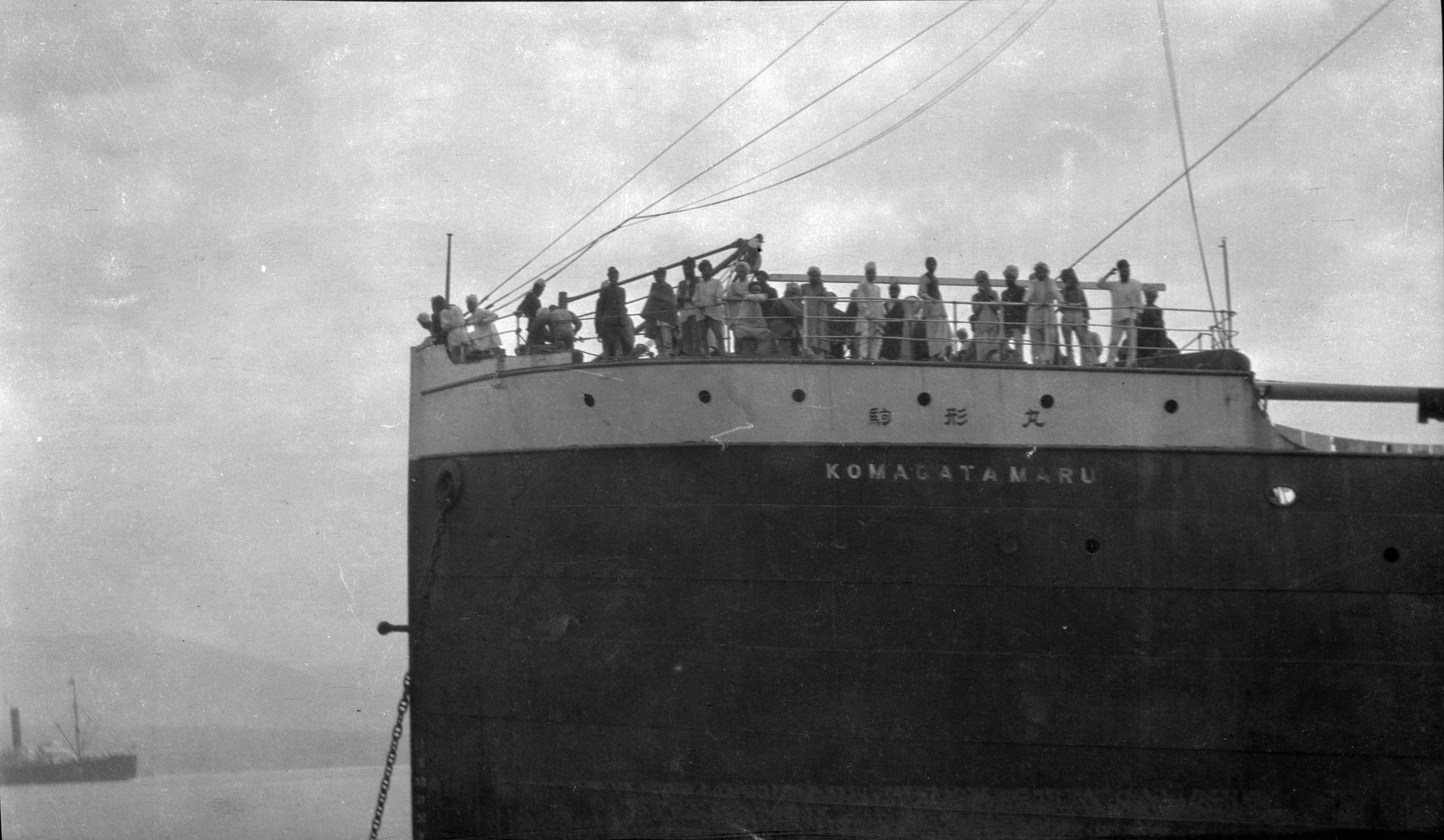
Radhika’s Indian Migration and Empire is subtitled ‘A Colonial Genealogy of the Modern State’, and part of the book’s argument is that while it is assumed that control of migration ‘is a defining, definitive, unchanging, and unchangeable element of (state) sovereignty’ (p. 7), in fact control of migration within the British empire occurred late and helped to produce state sovereignty. In making this argument Radhika traces how, in the wake of the abolition of slavery in 1834, the British empire played an active role in facilitating the movement of its Indian citizens into its ex-slave plantation colonies as much needed indentured labour, and developed elaborate governmental machinery to do so; by contrast, the movement of peoples other than indentured labourers within the British empire was largely unregulated and not constrained. It was in fact the white dominions of the empire that sought to restrict and regulate the entry of non-white imperial subjects, finally achieving their aim following the Komagata Maru incident in 1914. It was only after this that the freedom of British subjects to move from one part of the empire to another was abandoned, and a passport system allowing race-based restriction was introduced. Mongia concludes, ‘control over mobility does not occur after the formation of the nation-state … the very development of the nation-state occurred, in part, to control mobility across the axis of the nation/race’ (p. 139, emphasis in original). The modern sovereign state thus has a colonial and imperial genealogy.

komagata maru

This book is a distinguished addition to a growing literature that requires us to recognise that the conventional picture of the sovereign state as the foundation of certain practices has things the wrong way around. Another recent example is Tarak Barkawi’s Soldiers of Empire (2017), which similarly challenges the assumption that modern wars between states have been fought by the armies of these states, such that we may assume a ‘sovereign territorial package of state, army, and society’. In fact, this has been the exception rather than the rule. The armies that fought in most of the colonial campaigns of the coloniser countries, and in the world wars, were imperial armies, most notably in the cases of France and Britain. The British Indian army numbered some one million men during World War I, and 10% of the soldiers who fought for the British Empire in this war were in the British Indian army; in World War II the Indian army comprised more than two million members and operated across three continents. The nation-state army is in significant measure an outcome of World War II, rather than the basis of it and the mode in which it was fought; it was only well after that war that national armies and sovereign states became isomorphous, and thus, as Barkawi colourfully expresses it, this war ‘consumed one world order and spat out another’.

Although her book crosses many disciplinary boundaries, Radhika writes, I think, above all as a historian (as do I, though interestingly, we are respectively in departments of sociology and politics), and part of the strength of the book is the varied and dispersed archive upon which it is able to draw. But the import of her argument, as she recognises and seeks to develop it, applies to all disciplines and forms of intellectual activity which take the sovereign, territorial state as a given – that is to say, almost all social science and humanities disciplines.

Continue reading