Seeing Class through Race: Britain’s Racialized Moral Economy and the Construction of a ‘White Working Class’

This post, guest authored by Rick Saull, is part of a symposium on Robbie Shilliam’s new book Race and the Undeserving Poor: From Abolition to Brexit and follows related contributions by Robbie, Sara Salem, Naeem Inayatullah, and Luke de Noronha.

Race and the Undeserving Poor: From Abolition to Brexit, is a major and timely intervention that addresses the development of Britain’s social order and class relations through the vectors of empire and race. Shilliam offers a distinct and compelling account of the racialized moral economy that has defined Britain from ‘abolition to Brexit’ and through which he seeks to historicize, contextualize and explain the Brexit referendum result. However, there is much more in this book – and far more than I can do justice to in this contribution – than an explanation of Brexit. In a prose infused with both a scholarly clarity and a burning sense of social justice, Shilliam charts the way in which race and racial signifiers have been deployed as a means of determining those who are included and excluded as ‘deserving’ of political recognition and access to welfare goods.

Continue reading

The mobility of deservingness: race, class and citizenship in the wake of the ‘Windrush scandal’

This post, guest authored by Luke De Noronha, is part of a symposium on Robbie Shilliam’s new book Race and the Undeserving Poor: From Abolition to Brexit and follows related contributions by Robbie, Sara Salem, and Naeem Inayatullah.

My core argument, then, is that elite actors have racialized and re-racialized the historical distinction between the deserving and the undeserving poor through ever more expansive terms that have incorporated working classes, colonial “natives” and nationalities. Elite actors have always been driven in this endeavour by concerns for the integrity of Britain’s imperial – and then postcolonial – order. That has been the case from Abolition to Brexit.

(Shilliam, 2018)

Robbie Shilliam’s book – Race and the Undeserving Poor: From Abolition to Brexit – offers a rich genealogy of race and class in British politics. It helps us read Brexit, and the widespread invocations of the ‘white working class’ as ‘left behind’ with renewed historical perspective. The book offers up some co-ordinates for a richer critique of the times we are in, providing ‘a history of political domination told through the moralizing discourses and rhetoric of the undeserving poor’. Shilliam’s analysis is sharp and clear, his writing to the point, and his insights profoundly generative for those of us wrestling with cognate questions. He states:

“Deservedness” is a racialized discourse and rhetoric that works to consistently offset the disorders necessarily engendered in the pursuit of empire’s capital. Put another way, political domination in (post)colonial commercial society leaves its trace in the racialization of the underserving poor.

In my reflections on the book, I will not try to summarise its many arguments or its elegant movement through historical periods. Instead, I want to think about its argument in relation to the ‘Windrush scandal’. For me, this is not just about adding a postscript to the text, which was written before the Windrush debacle, but is intended to open up some additional questions about race, class and deservingness in relation to mobility.

Continue reading

Wooden Stakes: In Response to Robbie Shilliam’s Race and the Undeserving Poor

This post, guest authored by Naeem Inayatullah, is part of a symposium on Robbie Shilliam’s new book Race and the Undeserving Poor: From Abolition to Brexit and follows related contributions by Robbie and Sara Salem.

Wooden Stakes[1]

I devote most of my words to Robbie’s conclusion because it is only here that I can play the role of academic critic rather than the admiring fan that I really am.  I don’t mind being the appreciative follower.  But on a first reading of this book, I worried that I would have little to say except for delivering a kind of abstract praise.  I am not one of those readers who understands everything all at once.  I need to re-read books.  For example, it is only on the third reading that I am coming to terms with Robert Vitalis’ White World Order, Black Power Politics.  I built a course around Bob’s book so I could re-read it.  And, I am re-organizing my “Introduction to International Relations” course so that it synchronizes with how Vitalis presents the history of race relations and the history of political economy.

Continue reading

Race, nation and welfare: Eugenics and the problem of the ‘anti-social’ citizen

This post, guest authored by Sara Salem, is part of a symposium on Robbie Shilliam’s new book Race and the Undeserving Poor: From Abolition to Brexit

Deservedness is a racialized discourse and rhetoric that works to consistently offset the disorders necessarily engendered in the pursuit of empire’s capital. Political domination in (post)colonial commercial society leaves its trace in the racialization of the undeserving poor.

The 2016 Brexit vote brought to the surface of British politics issues of race, migration, economic inequality and sovereignty. In particular, a narrative around the “white working class” quickly became a central focus point of many Brexit debates, most often in an attempt to understand why a certain demographic voted leave. Not only did this obscure the largely middle-class support for Brexit, thereby displacing what was in hindsight seen as a regressive political decision, but it also took the category of the “white working class” as an empirical given. Robbie Shilliam’s new book, Race and the Undeserving Poor: From Abolition to Brexit, is an impressive and comprehensive attempt to trace the genealogy of this concept, and to place it within legacies of British imperialism.

Continue reading

Race and the Undeserving Poor

I didn’t plan to write this book. After the Black Pacific, my next book was going to be on Ethiopianism and the gestation of a political tradition of anti-colonial anti-fascism during the inter-war period. June 23rd 2016 interrupted all that, and I wrote Race and the Undeserving Poor instead.

I don’t usually focus my narrations primarily on political domination. Those who have read a bit of my work might know that I am more invested in stories of creatively surviving besides, despite and over and against political domination. But I was deeply disturbed when right-wing demagogues used the return of the “deserving white working class” to push forward a deregulation agenda. I was almost as disturbed by the weaknesses in much (but not all) leftist argumentation, which compromised a clear and comprehensive confrontation of such demagoguery. I felt I had to contribute to a sharpening those critical tools – for myself as much as anyone else.

Not that sufficient tools and narratives haven’t already been crafted by prior generations of intellectuals and activists, especially in Britain and its imperial and postcolonial hinterlands. For example, it is impossible to talk about race and populism without recalling Stuart Hall. And it is – or rather should be – impossible to talk about class-and/as-race without talking about the intellectual activists who took over the Institute of Race Relations in the early 1970s. To be honest, part of the purpose in writing Race and the Undeserving Poor was to bring these existing traditions up-to-date for our current Brexit conjuncture. I started with a blog or two and over the course of a year it turned into the book, which I finished in December 2017.

Continue reading

On Situatedness, Knowledges and Absences: A Response to the Symposium on Decolonising Intervention

The final post in our symposium on Decolonising Intervention. A massive thanks to Lee for organising and editing; errors in this final part are mine.  If tweeting, please use #DecolonisingIntervention. The earlier posts can be seen here: my introduction, Marta’s response, Lee’s response, Amy’s response and Megan’s response. The whole book is available for free Open Access download here.


My sincere thanks to all the contributors to this symposium for reading the book and responding with such thoughtfulness, seriousness and robustness. I respect them all enormously as scholars and have learned a great deal from their own work – a learning process which continues through this symposium as well. Moreover, the space for deep reading, critical feedback, intellectual argument and reflection is something that the structures of the neoliberal academy increasingly accumulate against; my pleasure and gratitude is deepened by the knowledge that the contributors have all actively managed to hold the door open in spite of this.

My response to their contributions will principally focus on the questions they raise and points of contestation. However, I was happy to see that the basic argument and conclusion of the book – that intervention is intimately structured by relations of colonial difference – is one with which they appear to agree and find compelling as an explanation for the continuation of failure. A primary hope of mine in writing this up was that one could not read this book and look at intervention in post-conflict or ‘fragile’ states, and its various ‘implementation problems’, without this understanding in mind. Having done this work, I find it now very difficult to read assessments of post-conflict state-building or development practice that continue to reproduce various forms of technocratic fantasy about how exactly it is that institutions, polities and economies are ‘built’ or ‘improved’.

Screen Shot 2018-06-23 at 17.40.35.png

This conclusion and the analysis supporting it has been reached through an engagement with the experiences and perspectives of intervention’s targets in Mozambique. Thus, the book is also concerned with how we study what we study in the field of International Relations – specifically how we cultivate what Niang deftly describes as the ‘value of uncanonical insights of subjects whose absence would otherwise give an incomplete account of the game of intervention’. The contributors had different reactions to this proposition and the way it was taken forward in the book, which I will look at below. Notwithstanding the challenges and complexities of this, I feel that if we are to practice a scholarship which is both more ‘scientific’ and more democratic, this kind of epistemic and methodological re-positioning of scholars vis-à-vis structures of power is absolutely critical. Continue reading

Is it Time to Abandon International Interventions and International Relations? A Response to Sabaratnam

This post is part of a symposium on Meera Sabaratnam’s Decolonising Intervention. Meera’s original post, with links to the other contributions, is here. If tweeting, please use #DecolonisingIntervention! [Photo selection – LJ]


Megan MackenzieMegan Mackenzie is an Associate Professor in the Department of Government and International Relations at the University of Sydney. Her research is broadly- and humbly- aimed at reducing and, eventually ending war; it bridges feminist theory, critical security studies, and critical/post development studies. Megan has contributed research on topics including sexual violence in war, truth and reconciliation commissions, military culture, images and international relations, and women in combat.


When I was briefly living in Sierra Leone I was invited on a boat trip off the coast of Freetown with a range of women, including a translator at the Special Court for Sierra Leone, a “high-ranking” official within the World Bank who was visiting for three days, a photographer, and a “low-ranking” UN staffer. At one point on the boat trip, we passed what is known as Kroo Bay or Kroo Town, one of the largest “slums” in central Freetown. The Nigerian World Bank official clucked her tongue, seemingly irritated, and said “things just don’t get better here – I don’t get it.” The rest of us sat in silence, including the local male boat driver, who may in fact have lived in the area. This woman was not asking why things “don’t get better,” what “better” might look like, or for responses from those of us in the boat – not least from the driver, who was silent the entire trip. She was making a declaration: “things just don’t get better”, period.

I’ve often thought back to this trip and wondered what this woman did for the rest of her three-day visit to Freetown and what other “poor” country she visited afterward. This small interaction remains a signal to me of two endemic features of both international intervention and international relations. First, it is easy to ask silly questions and draw simple conclusions when you are sitting in a boat looking into a community from the outside. In this story, we were a group of privileged women floating by Freetown. Similarly, I often think of the “discipline” of International Relations (IR) as this boat. IR scholars rely on the stability of “established” knowledge and approaches from which to ask questions and observe “the international.” Second, the encounter signalled the complex relationship between “interveners” and “locals.” The World Bank official was objectively the most powerful person in the boat. Her confidence was impressive, yet she asked no questions, stuck to her set research and work agenda, made many assumptions, and dismissed the local Sierra Leonean as an ignorant worker who should, and did, remain silent. When it comes to powerful IR scholars and approaches, I still can’t help but see the comparisons.

boat

Meera Sabaratnam’s Decolonising Intervention: International Statebuilding in Mozambique calls out IR scholars for continually floating by “case” countries and concluding, with a “tsk, tsk”, that “interventions keep failing”. What is remarkable and inspiring about Sabaratnam’s contribution is the way she weaves several rich intellectual contributions together. First, she makes the case that existing work on international interventions (including critical, “edgy” work) conducts uninspired, repetitive, and theoretically light analyses that ignore the history of intervention and its roots in imperial, racist logics. Second, Sabaratnam speaks back to the discipline of IR by mapping out IR’s commitment to a) Eurocentrism, b) “core” approaches, c) a laughably generous reading of its own history. Sabaratnam argues that these features of IR limit the study not just of international interventions, but of – well, international relations. In other words, Sabaratnam reminds us of the ways that IR scholars remain fiercely committed to a discipline that is parochial, provincial, and often unhelpful in understanding global politics. In short, IR often doesn’t help us understand international relations. This echoes Ann Tickner infamous conclusion: “International Relations is neither international nor relational.”

Continue reading

Intervention, Protagonismo and the Complex Sociology of Difference: A Response to Sabaratnam

This post is part of a symposium on Meera Sabaratnam’s Decolonising Intervention. Meera’s original post, with links to the other contributions, is here. If tweeting, please use #DecolonisingIntervention! [Photo selection – LJ]


amyAmy Niang is Senior Lecturer in International Relations at the University of the Witwatersrand, Johannesburg. Her research is informed by a broad interest in the history of state formation, peace and conflict, and Africa’s international relations. Her work has been published in Alternatives, Politics, African Studies, Journal of Ritual Studies, African Economic History, Afrique contemporaine and many edited collections. Her forthcoming publications include “Rehistoricising the sovereignty principle with reference to Africa: stature, decline, and anxieties of a foundational norm”, in Zubairu Wai and Marta Iniguez de Heredia (eds.) Bringing Africa “Back In”: World Politics and Theories of Africa’s Nonfulfillment (Palgrave Macmillan).


A Methodology of Critique

In Decolonising Intervention, Meera Sabaratnam shows how putatively critical perspectives in the intervention literature are not immune to complacency, in part because of an obsession with the intellectual endeavour for its own sake, and their tendency to revisit “the genealogies, contradictions and trajectories of intellectual traditions associated with the West” (p.23) as the key object of intellectual concern. Such conceptualisations of intervention often paper over, if they don’t ignore or invisibilise people as targets of intervention.

Often justified by methodological rationales based on flawed assumptions, these accounts reproduce, intentionally or unintentionally, very bad habits. By doing so, they reinforce the status of Western agency “as the terrain – or ontology – of the political” (p.25). But one’s methodological choices are inseparable from one’s ontological commitments, and therefore one’s political and ideological outlook. Sabaratnam uses a multidimensional, decolonial approach, beginning and ending with ethnographic and empirical recalibrations that are attentive to the life-worlds of targets of intervention, a methodology often scorned in international relations scholarship for its lack of “objective” scientificity.

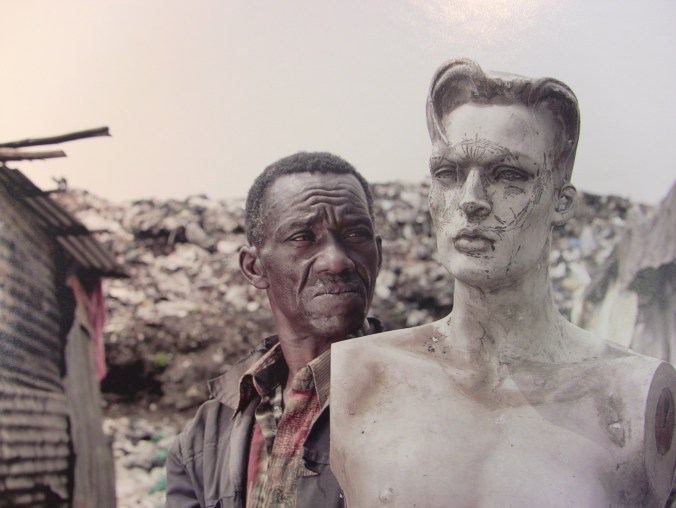
mario_macilau

Mario Macilau, A Falha Humana (human failure), 2014

Continue reading

The Limits of Decolonising Intervention: A Response to Sabaratnam

This post is part of a syposium on Meera Sabaratnam’s Decolonising Intervention. Meera’s original post, with links to the other contributions, is here. If tweeting, please use #DecolonisingIntervention!


Postcolonial/ decolonial research seems to be entering into what might be called a “second generation”, moving past early, de-constructive critiques of the IR discipline as racist and colonial, and into showing the “value added” of a decolonial approach in studying concrete problems in international politics. Decolonising Intervention is an important contribution to this effort.

Sabaratnam’s basic argument is quite straightforward. Like many critical scholars of intervention, she documents multiple failures of Western statebuilding interventions (SBIs) to resolve the problems they (allegedly) seek to address. Unlike them, however, she attributes these recurrent failures – persistent, despite widespread acknowledgement, even among interveners, and within a gargantuan “lessons learned” literature – to the “colonial” structure of global politics. Put simply: Western donors feel superior to the targets of intervention, and so simply cannot learn from their mistakes. They are obsessed with their own starring role (protagonismo), making them congenitally incapable of deferring to their targets’ concerns, ideas, knowledge or demands. They garner the lion’s share of donor funds, scarcely caring if interventions work or not, implicitly seeing targets’ time and resources as “disposable”. Dependent recipients have little choice but to engage, or lose what resources are offered.

49563_600 Continue reading

Of Privileged Viewpoints and Representation of Subordinated Experiences: A Response to Sabaratnam

This guest post, from Marta Iñiguez de Heredia, is part of our symposium on Meera Sabaratnam’s Decolonising Intervention. Meera’s opening post is here.  If tweeting, please use #DecolonisingIntervention! [Photo selection – LJ]


person_boxMarta Iñiguez de Heredia is a Marie-Sklodowska Curie Fellow at the Institute Barcelonaof International Studies. She holds a PhD from the London School of Economics and Political Science (LSE). She has taught at the University of Cambridge, the LSE, Rouen Business School, Deakin University and La Trobe University.  Her research concentrates on the historical sociology of peacebuilding processes, with a focus on the relationship between order, violence, state-making and resistance, and on Africa in particular. She draws on historical sociology, critical Africanist and practice literatures, as well as on extensive fieldwork. Current research is focused on EU’s peacebuilding policies, the militarisation of peacebuilding and political transitions through the emergence of African social movements.


In his opening chapter of The Invention of Africa, V.Y. Mudimbe states that a very basic question animating the book is “to what extent can one speak of an African knowledge, and in what sense?” (p.88) By unearthing what he calls African gnosis (“structured, common, and conventional knowledge”), Mudimbe seeks to explore the conditions of the possibility of knowing Africa otherwise; that is, outside the colonial library, that body of knowledge that keeps negating all that Africa is by constructing it as the ultimate other of Europe. What Mudimbe incisively captures is the politics of knowledge whereby, as Ngũgĩ wa Thiong’o puts it, “how we view ourselves, our environment even, is very much dependent on where we stand in relationship to imperialism in its colonial and neo-colonial stages.”

Decolonising Intervention theorises intervention from the perspective of relations of race and empire. Through the case of Mozambique, the global colonial structure of power is revealed not just in how interveners put in place programmes that debilitate state institutions, go to waste, or do not address actual material needs, but also in how the literature has theorised intervention so far. The “habit” of disregarding the historicity and politics of subjects and of thinking from the West is directly linked to how hierarchies of being and having are reproduced. Decolonising Intervention not only helps us looking at intervention in critical, decolonial ways, it also makes a crucial contribution to taking IR out of its colonial, Eurocentric origins and turning it into a critical tool for social change. This is all the more compelling due to the rich and nuanced theoretical framework it uses, by the detailed, impressive and thorough empirical research it draws upon, and by the refreshing writing style that makes the pages flow. Continue reading