Bodies, What Matter?

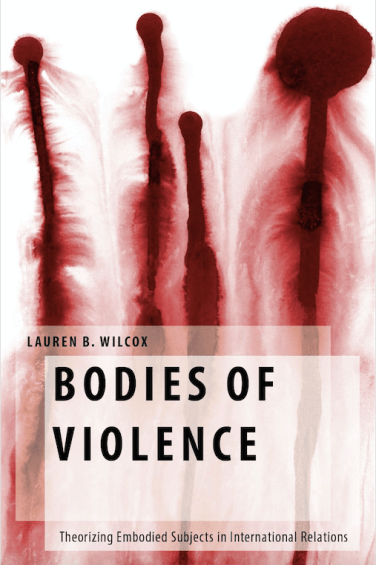
And now, the fourth post in our symposium on Lauren Wilcox’s Bodies of Violence.[1] It follows Lauren’s opener, Kevin McSorley’s take on embodiment and Alison Howell on the value of feminist IR in such a project. Posts by Antoine and a rejoinder from Lauren follow.


Type Any Name Bodies

Lauren Wilcox seeks something like a theory of the body (and embodiment, crucially different) in international political violence. The body not as inert or as the mere vehicle for mind, but malleable, and indeed “deeply political”. As she puts it early on in Bodies of Violence, we therefore require a conceptual framework for seeing “how bodies are enabling and generative of war and practices of political violence more broadly”. And it is part of her case that such a theory of bodies – or, at least, a theoretical inquiry into violent embodiment – would be among the first in the discipline of International Relations, which has thus far failed to understand how bodies matter, how bodies are produced, and how violence acts upon and through bodies, even as it claims to be the discipline most concerned with human survival in the face of organised violence. And despite IR being in thrall to an unsustainable individualism, which might at least be expected to bias it towards discrete human experience.[2]

In short, international theory is disembodied, and the body an “absent presence” (aptly put, and true). Since we all have bodies, and can only encounter the world through our bodies, we should thus in some sense seek to include – perhaps even ‘centre’ – the body in theory. Even as poststructural scholarship evades the injunction to produce systematic theory, it is able to reveal the absence of bodies in our dominant paradigms. Wilcox pushes us in the same direction, arguing that, as subjects, we are embodied, precarious and have physical forms that are both produced by, and are in turn productive of, the world of ‘politics’. This is both a conceptual and a normative question, since those who have been considered improperly bodied have historically been excluded from politics, from the means of social reproduction and autonomy, and from recognition as human itself.

To not see the body is thus not to entertain a neutral and cerebral vision of the human, but instead to reproduce the historical exclusions by which some bodies (in the familiar refrain, those that are male, white, cisgender, heterosexual, Eurocentric, able-bodied and rational) are taken to be the benchmark by which others (framed as deviant, inadequate, juvenile or dangerous) are measured and found wanting. Bodies of Violence moves through a series of sites (the US Naval Base, Guantanamo; the suicide bomber’s vest; the airport scanner; the drone operator’s screen-throne; the rhetoric of humanitarian intervention), mapping how the body figures in each of them. It is a book thoroughly about bodies, but not therefore necessarily a theory of bodies and embodiment. And it is theory of em-bodies-ment that we may in need of.
Continue reading

Violence, Norms and Embodiment

McSorleyWe are delighted to welcome Kevin McSorley for the second post of our symposium on Lauren Wilcox’s Bodies of Violence. Kevin lectures in Sociology at the University of Portsmouth. His work explores war, violence and militarism through the lens of embodied, emotional and sensory experience. His scholarship has explored contemporary conflicts including those in Chechnya, Iraq and Afghanistan, as well as analysing phenomena including the global arms trade, military fitness regimes, and helmetcam technologies. Recent publications are available at Academia.edu.


Lauren Wilcox’s Bodies of Violence: Theorising Embodied Subjects in International Relations is an extremely welcome addition to a growing corpus of recent scholarship that attempts to foreground the body and embodiment in the analysis of topics such as war, violence and security. Wilcox argues that IR has historically constituted itself as a discipline partly in terms of the exclusion of the detailed consideration of the body and embodiment, concerns which have rarely been admitted as core to a discipline whose interests supposedly lay at higher levels of abstraction. Indeed, the absenting and sequestering of the bodily and particular bodies has been central to the formation and history of many academic disciplines, modern social and cultural formations, and the organisation of much mundane experience. Relatedly, it is often specifically in occurrences and encounters of bodily discomfort, illness, estrangement, harm, failure, violence and pain that the body may assume a renewed experiential salience in everyday life. The under-theorisation of embodiment thus seems particularly paradoxical for a discipline such as IR, whose analytic remit encompasses the organisation of violence and pain for political ends, phenomena which can hardly be adequately understood without attempting to think through the multiple ways that violence and pain are intimately related to the in/abilities of bodies to engage in particular sense-making, meaning-making and worlding practices. Indeed, such under-theorisation may be more than just paradoxical, for abstract strategic thinking that avoids acknowledging bodies has historically been complicit with particular expert modes of knowing and doing violence.

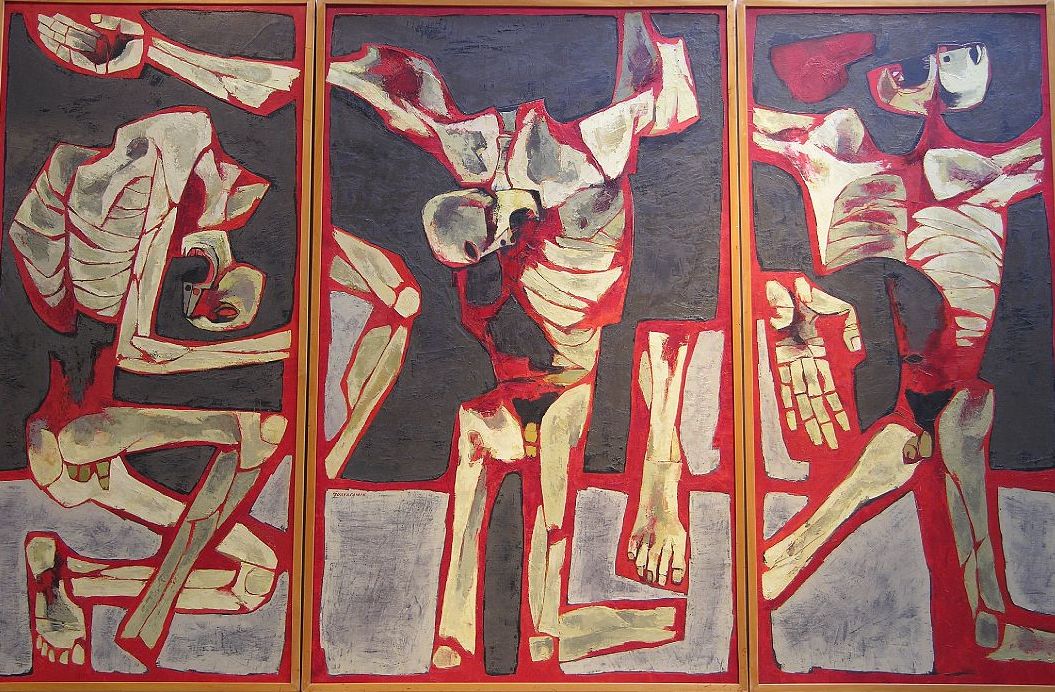
Oswaldo Guayasamín, Los Torturados (1976)

Oswaldo Guayasamín, Los Torturados (1976)

Wilcox’s project is thus a necessary intervention that grapples meaningfully with the disembodied soul of IR and I am thoroughly supportive of its ambitions. The body is one of the most plural and contested concepts in social science but Wilcox initially argues that, when considered at all, the way that it has typically been rendered through the realist and liberal traditions of political thought that inform IR and security studies is as a stable, singular, bounded and natural entity whose flourishing is dependent upon protection from various inevitable risks and threats. This narrow understanding of the body is thus of something essentially thing-like, fixed and existing outside the realm of the political. In contrast, biopolitical and particularly feminist analytics – the latter having a specific tradition of trying to think through women’s subordination in terms of the relationship between bodies, subjects and power – provide the alternative conceptual underpinning for Wilcox’s own analysis.

Continue reading

Bodies of Violence: Theorizing Embodied Subjects in International Relations

photo copyThis opening post by Lauren Wilcox kicks off the symposium dedicated to her new book Bodies of Violence: Theorizing Embodied Subjects in International Relations (Oxford University Press, 2015) with a series of follow-up posts coming over the next few days. Lauren is University Lecturer in Gender Studies and Deputy Director of the Centre for Gender Studies at the University of Cambridge. She was previously a Scarf postdoc in the Department of Political Science at Johns Hopkins University and did her PhD in Political Science at the University of Minnesota.


Bodies of Violence

The impetus for “Bodies of Violence” (which is based on my PhD dissertation) is that there is, or was, no theory of the body in International Relations, or general study of the role of bodies on IR; and this is a problem for the study of political violence as well as for the political implications that a lack of attention to bodies has in the field. The work begins by noting a deep irony in war/security studies, that while war is actually inflicted on bodies, or bodies are explicitly protected, there is a lack of attention to the embodied dynamics of war and security. This seeming ‘disembodiment’ of theory stands in stark contrast to the political dynamics of violence, especially in the particular practices or modes of violence that I discuss in this book.  Drones make it possible to both watch people and bomb them, often killing dozens of civilians as well, while the pilots operating these machines remain thousands of miles away, immune from bodily harm. Suicide bombers seek certain death by turning their bodies into weapons that seem to attack at random. Images of tortured bodies from Guantánamo Bay and Abu Ghraib provoke shock and outrage, and prisoners on hunger-strikes to protest their treatment are force-fed. Meanwhile, the management of violence increasingly entails scrutiny of persons as bodies through biometric technologies and ‘body scanners’.

I: Argument and Main Contributions

While bodies and embodiment are an ‘absent presence’ in studies of war and security, feminist theory has been at the forefront of considering the relationship between subjects, bodies and violence in recent decades. In this work I draw on work in feminist theory that offers a challenge to the policing of boundaries between human bodies and the broader political context. It is here that feminist theory is most incisive, for feminists have struggled with the problems of how to theorize embodiment as a necessary but not exclusive aspect of subjectivity in their own terms, terms which can help us to ‘think the body’ in IR in such a way as to provide new purchase on central concepts such as power, security, vulnerability and violence. For example, violence can be re-thought as something that is productive and not only destructive; vulnerability is not just a condition to be overcome but also a constitutive feature of the embodied subject. I focus on Judith Butler’s work, in conversation with other theorists such as Julia Kristeva, Donna Haraway and Katherine Hayles. I argue, as have others, that there is continuity between her works on “Gender” from Gender Trouble and Bodies that Matter and her more explicitly ethical and political works such as Precarious Life and Frames of War. A central feature of Butler’s concept of bodily precarity is that our bodies are formed in and through violence. The implication of feminist theory’s emphasis on the co-constitution of bodies and political structures is to give IR a new starting point, as theorists can no longer begin with political communities populated by actors whose bodies are undifferentiated and can be transcended.

Continue reading

Ethical Encounters – Taming of the Infinite: Applying Ethics for Political Violence – A Brief Critique

This is the third post in a series reflecting on contemporary global ethics that was originally organised as the Ethical Encounters in a Changing World panel for the 2015 ISA convention in New Orleans. Myriam’s post can be found here, Joe’s is here, Jillian’s here and Diego’s here. Kim’s discussion post is here.


The relationship between ethics and politics is complex; in theory, as in practice. Against a contemporary background where hitherto morally prohibited acts, such as assassinations by drones strikes in non-military zones, are instituted as legitimate and justifiable practices, it becomes vital to understand anew the relationship between politics, violence and ethics, and its limits, particularly when such acts are underwritten by innovative military technologies that open new horizons for ethical considerations in international politics.

Ethics, in the context of politics – including international politics – is presently predominantly conceived in terms of applied ethics and chiefly concerned with the search for an ethical theory that can be arrived at through abstraction and applied to real world ethical dilemmas. While burgeoning poststructuralist scholarship in the late 1990s sought to address ethics in terms that consider aspects of contingency, alterity and potentiality, the events unfolding in the aftermath of 9/11 appear to have given way to a more practically oriented approach to thinking about ethics in international politics, giving priority to the application of ethical principles of warring. Such practical approaches often mirror scientific processes, or algorithmic logics in trying to find ‘correct’ outcomes.

While just war traditions of ethics in war have always had a close relationship with the analytical procedures and structures of international law, the practical turn in contemporary political ethics means that concerns addressed in the international and global context are primarily framed in terms of finding and applying appropriate principles, codes and rules in trying to resolve ‘real moral problems’. Problem solving through rational procedures, and scientific rationales thus stands at the heart of practical considerations of the ethics of political violence and war. This is exemplified in the IF/THEN logic of current discourses on the ethics of war or in the structures of target selections for lethal drone strikes. Among others, Seth Lazar’s recent work on the morality of war, presented at a philosophy workshop at the LSE in 2013 for example, considers approaches to moral decision making in uncertainty in the following terms: “one plausible approach to decision-making under uncertainty is to determine the expected moral value (EV) of the outcomes available to me, and to choose the best one. So, I am permitted to ƒ if and only if EV(ƒ) ³ EV(¬ƒ)”. Similarly, Bradley Strawser’s defence of the ethical obligation to use drones as a weapon of choice relies on a selection of variables (X, Y, G) and principles (principle of unnecessary risk – PUR) that, combined, serve to confirm the hypothesis, namely that using drones is an ethical obligation. This procedural algorithmic logic speaks to a technoscientific-subjectivity with which ethical outcomes are ascertained, problems solved. Ethics becomes a technical matter that can be solved through procedures and thus has natural limits. It is only able to assess, whether an outcome was achieved through the correct logical theoretical trajectory, not through the particularities of the moment.

Stuart Kinlough/Getty Images

Stuart Kinlough/Getty Images

Continue reading

Ethical Encounters – Border Ethics: Autoimmunity as Ethics of Hospitality

s200_myriam.fotouThis guest post, by Myriam Fotou, is the first in a series of posts reflecting on contemporary global ethics that was originally organised as the Ethical Encounters in a Changing World panel for the 2015 ISA convention in New Orleans. Myriam is a PhD candidate in the Department of International Relations at LSE, she is also a visiting lecturer at Royal Holloway and City University London. Joe’s post can be found here, Elke’s is here, Jillian’s here and Diego’s here. Kim’s discussion post is here.


Let us consider this negative sentence: “death has no border”
J. Derrida, Aporias

Framing the problem

In mid-January 2014, approximately five nautical miles off the coast of Turkey and near the Greek islet of Farmakonisi, eleven non-Europeans, including babies and children, were drowned. Amid adverse weather conditions, their boat had capsized during an attempt by the Greek coastguard to tow the old smuggling boat. Accounts of what happened are contradictory: survivors argue that they were being pushed back to Turkey, shouted at and threatened, and that the drowned were not inadvertently killed; Greek authorities, on the other hand, argue that they were towing the boat to Greek waters and safety, that the conditions did not allow for the people on the old, adrift vessel to be taken aboard the coastguard’s vessel, that the “illegal” immigrants coming from Asia did not know anything about the sea and navigating, how to swim or orient themselves. By gathering on one side of the boat after one of them fell overboard, they caused the vessel to capsize themselves. These contradictory stories, which although might not make much of a difference in the end result (almost half of the people on board were drowned), in essence symbolise the contradiction between the law and its application, the inherent violence in both, and in European states’ backpedalling on their hospitality obligations.

Farmakonisi

Continue reading

Dispatches from the Robot Wars; Or, What is Posthuman Security?

Audra MitchellA guest post from Audra Mitchell, who is Senior Lecturer in International Relations at the University of York. Audra is a Fellow of the Independent Social Research Foundation (2014-15) and has held or will hold visiting fellowships at the Universities of Queensland, Edinburgh and Melbourne. She is the author or editor of three books: International Intervention in a Secular Age: Re-enchanting Humanity? (Routledge, 2014); Lost in Transformation: Violent Peace and Peaceful Conflict in Northern Ireland (Palgrave, 2011) and (ed. with Oliver Richmond) Hybrid Forms of Peace: From the ‘Everyday’ to Postliberalism (Palgrave, 2011), as well as articles in Security Dialogue, Review of International Studies, MillenniumBritish Journal of Politics and International Relations, Third World Quarterly, and Alternatives, amongst others. She blogs at Worldy IR. Audra’s current research project explores how mass extinction challenges the ontological and ethical underpinnings of ‘security’.


“So when are the intergalactic robot wars coming?” This is a question I’ve been asked (more than once) by colleagues who’ve heard that I’m working on posthumanist thought and international security. The implication is that what I’m doing is a kind of science fiction. Well, there’s definitely science (including robots – see below) and a rich fictional literature to draw on, but it’s not taking place in a galaxy far, far away. It’s very much rooted in, and attuned to, this planet.

‘Posthuman security’ is an umbrella term I’m using to talk about a recent surge in thinking and writing at the nexus of posthumanist philosophy, security and ethics. It starts from the proposition that international security is not solely a matter of securing human lives and bodies. Diverse beings other than humans are implicated in the conditions of (in)security. Whether other animals, machines, networks, minerals, water, ecosystems or complex assemblages thereof, a wide range of beings other than humans shape the contexts of (in)security and the ways that we define them. This, in turn, challenges the engrained notion that the human is the ultimate referent object of security, ethics and philosophy.

Mojave Desert Ecology

Indeed, another question I get asked frequently is “are you critiquing human security?” The answer is both yes and no. The norm of human security epitomizes a humanist turn in the last two decades of international thought, also reflected in the fields of humanitarianism and norms such as Responsibility to Protect. These frameworks have carved out a space for themselves within international ethics by framing a specific image of the human individual as the focal point of security, ethics and, by extension the universe. So, of course, adopting a post-human (or more-than-human) approach to security means challenging and deconstructing these influential paradigms. But this new discourse is not simply a critique of existing frameworks. Posthuman security thinking offers a number of distinct, positive contributions to international security, ontology and ethics.

The term itself is highly contestable – and should be contested. Continue reading

Dr Schwarz, I Presume?

And so, after some delay due to storm, and just a month after The Disorder Of Things turned three, our own Elke was closely quizzed by Professors Patrick Hayden and Chris Brown. The cause? The defence of her doctoral thesis: The Biopolitical Condition: Rethinking the Ethics of Political Violence in Life-Politics. Arendt, Foucault, and drones. Now passed, certified, set free. Without corrections. Henceforth, Dr Schwarz.

Elke Foucault

Not actually Elke.

(Dis)Embodied Methodology in International Political Economy

Nicki Smith

Following some previous discussion on similar themes, a guest post by Nicola Smith. Nicki is Senior Lecturer in Political Science at the University of Birmingham and has published on a diversity of issues surrounding globalisation and social justice. She is currently writing a monograph on Queer Sexual Economies for Palgrave and has published articles in Sexualities, Third World Quarterly and the British Journal of Politics and International Relations. Other related publications include Body/State and Queer Sex Work. The following piece has been developed as part of a book project on methods in critical International Political Economy, edited by Johnna Montgomerie, and a version of it was recently presented at the semi-plenary session on ‘The body in/and international relations’ at the 8th Pan-European Conference on International Relations in Warsaw.


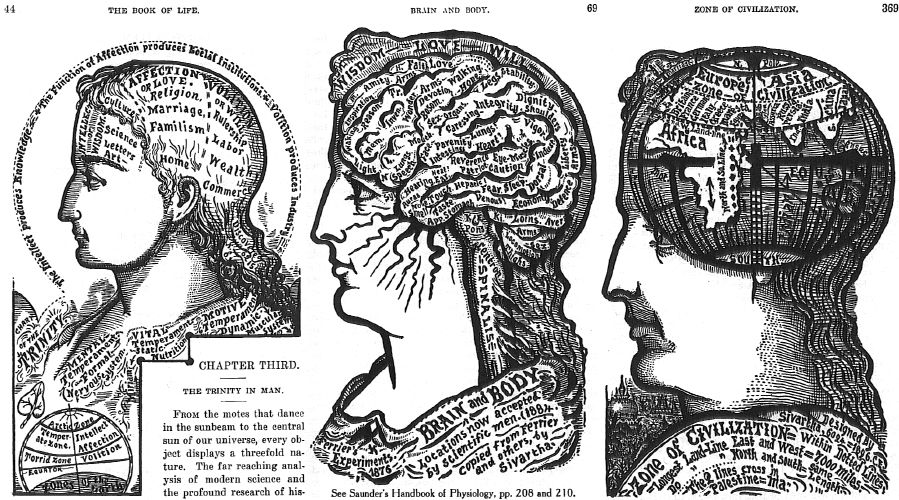
The Book of Life - Brain and Body - Zone of Civilization

There was a time when I understood International Political Economy (IPE) to mean ‘bodies of thought’ (realism, liberalism, Marxism, etc.) and so, not knowing which body to have, I tried each of them on for size. Realism didn’t fit (too tight); liberalism felt wrong (unethically-sourced materials); Marxism looked good (but I lacked the discipline to maintain it). Social constructivism suited my friends and felt pretty comfortable, so this was the body I decided to have. As a social constructivist, I did a lot of work on ideas (‘discourse’) and thought a lot about other bodies of thought. But what I didn’t do was to engage in thought about bodies. Bodies didn’t seem to happen in IPE; they appeared to exist somewhere else entirely, to be accessed only via metaphor (as in the above description) but always somewhere ‘over there’, never as the living, breathing stuff of the discipline. Bodies – or so I assumed – were off the cards.

In other contexts, though, I was thinking a lot about bodies: from the personal (‘will my body be able to produce another body, a child?’) to the professional (‘do I under-perform in job interviews because I gesticulate wildly when nervous?’) and the political, too (‘the government should de-criminalise the sale of sexual services’). Indeed, while I was writing a PhD and then monograph about states and markets – globalisation, economic development and social justice in the Irish Republic – it was bodies that I loved talking, reading, arguing about. I just didn’t see them as ‘IPE’.

In fact, bodies had been there all along; I hadn’t seen them because I hadn’t been looking.

Continue reading

Bodies in Pain: Yasiin Bey and the Force-Feeding of Hunger Strikers at Guantanamo Bay

Lauren WilcoxA guest post from Lauren Wilcox, currently Charles and Amy Scharf Postdoctoral Fellow in the Department of Political Science at Johns Hopkins University. Lauren is starting a new job as a University Lecturer in Gender Studies at the University of Cambridge this fall. Her  work is located at the intersections of international relations, political theory, and feminist/queer theory in investigating the consequences of thinking about bodies and embodiment in the study of international practices of violence and security. She is the author of articles in Security Studies, Politics & Gender and, most recently, International Feminist Journal of Politics. Lauren’s current book manuscript is entitled Practices of Violence: Theorizing Embodied Subjects in International Relations.


Mos Def Nose Tube

Earlier this month, the UK human rights organization Reprieve released a video in which Yasiin Bey, formerly known as Mos Def, a well-known and critically acclaimed American hip-hop artist and actor, underwent (or attempted) the force-feeding procedure undergone by hunger strikers imprisoned at Guantánamo Bay. In this five minute video, Bey dresses in an orange jumpsuit like those worn by prisoners at Guantánamo Bay, and states simply that this is the ‘standard operating procedure’ for force-feeding hunger striking prisoners. He is then shackled to a chair resembling those used to force-feed prisoners (such as those pictured below). Bey is approached and held down by two people who attempt to insert a nasogastric tube down his nasal passage way. The video shows Bey struggling against the nasogastric tube, crying out, protesting, yelling for it to stop, and ultimately the force feeding is not carried out. The video is extremely emotional and difficult to watch. After the attempted force-feeding ends, Bey struggles to describe what it feels like, describing it as ‘unbearable’. It ends as it begins, with Bey stating ‘peace’ and ‘good morning’.

For some background context, 166 prisoners remain in Guantánamo Bay: of these, 126 have been cleared for release as not posing any threat to US national security, but are still being imprisoned. To protest their treatment and indefinite confinement prisoners have engaged in hunger strikes since the prison camp opened in July of 2002, the first wide scale hunger strike reached a peak in June 2005, when between 130-200 out of approximately 500 prisoners at Guantánamo Bay began refusing food. Hunger strikes again reached a peak in the spring and summer of 2013, and are ongoing with around 100 prisoners refusing food, and of those, between 44 and 46 are being force-fed (pictured above is an image of an inmate being hauled to the medical facilities to be force-fed), a number so high that the military had to send a back-up team of medical personnel to assist with the force-feeding of prisoners. While the force-feeding of hunger strikers when virtually unnoticed in the media in 2005/6, and again in 2009, the latest months have brought renewed attention to the plight of those who have been held at Guantánamo Bay, some for over a decade, with seemingly no progress made on holding tribunals or securing release of the remaining prisoners. Prisoners have spoken out, including an op-ed published in the NY Times by Samir Naji al Hasan Moqbel entitled “Gitmo is Killing Me”. While President Obama has recently renewed his pledge to close Guantánamo Bay, and a federal judge has even more recently stated that while she had no power to stop the force-feedings, Obama could himself order the force-feedings stopped.

What are the effects of Bey’s action? Continue reading

Russia’s Anti-Gay Laws: The Politics and Consequences of a Moral Panic

A guest post from Cai Wilkinson on recent LGBTQ developments in Russia. Cai is a Lecturer in International Relations in the School of Humanities and Social Sciences at Deakin University, Australia. Her research interests include critical approaches to security, fieldwork-based securitization studies, norm contestation and resistance, and genders and sexualities in International Relations. Her geographic focus is on the former Soviet Union, and she is currently working on projects about LGBT rights and human rights norms in Kyrgyzstan and Russia. She received her PhD from the University of Birmingham, UK, in 2009 for a thesis entitled Interpreting Security: Grounding the Copenhagen School in Kyrgyzstan, which drew upon seven months of fieldwork conducted in Bishkek and Osh in the aftermath of the 2005 overthrow of the Akaev regime. Her work has been published in Security Dialogue, Central Asian Survey and Europe-Asia Studies, and she has contributed chapters to volumes on securitization theory, statehood in Central Asia, and fieldwork-based research methods. Cai is also Chair of the International Studies Association LGBTQA Caucus.


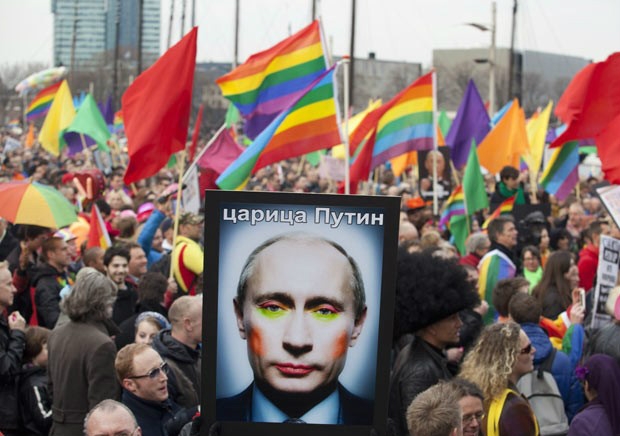
Russia Gay Pride Putin

The issue of LGBT rights in Russia first properly came to mainstream international attention in March 2012, when the St Petersburg Duma passed a law prohibiting “public acts aimed at the propaganda of sodomy, lesbianism, bisexualism and transgenderism amongst minors“. The law provoked an international outcry, including calls for tourists to boycott St Petersburg, sister-cities to consider cut off ties with Russia’s “window on Europe”, and condemnation from the EU, with the European Parliament passing a resolution noting that it was “gravely concerned by developments which restrict freedom of expression and assembly on the basis of misconceptions about homosexuality and transgenderism” and calling on Russia and other countries considering the adoption of similar legislation to “demonstrate, and ensure respect for, the principle of non-discrimination”.

In actual fact, this was not the first “anti-gay” law to be passed in Russia; Ryazan Oblast’s Duma adopted an amendment to local legislation to outlaw the “propaganda of homosexualism” in May 2006, and Arkhangelsk and Kostroma Oblasts followed suit in 2011. Yet the passing of the St Petersburg law proved to be a catalyst for other administrations to introduce similar laws, with a further six subsequently adopting similar legislation and others considering it (so far only the Moscow Regional Duma has rejected legislation). Most significantly, these laws paved the way for consideration of a federal bill outlawing the “propaganda of non-traditional sexual relations to minors”, which the Russian Duma passed on June 11 despite continuing international condemnation and the fierce opposition of local LGBTQ activists and their supporters, who frequently endured physical attacks and arrests while protesting against the law.

Despite being a long-time Russia-watcher, the swiftness at which anti-gay laws have spread and at the ferocity of both popular and state homophobia has been striking. This is not, I should add, simply the result of not paying close enough attention. As a queer undergraduate student studying Russian with a compulsory year abroad to plan for, I was extremely conscious of attitudes towards homosexuality and queerness and the stigma and dangers that local LGBTQ people faced (Laurie Essig’s Queer in Russia was an essential primer), and was extremely careful not to out myself to anyone who wasn’t definitely queer-friendly while living with families first in Krasnoyarsk and then Voronezh in 2001-2002.

At the same time, it appeared until the mid-2000s that slowly but surely Russia was becoming more tolerant. Homosexuality was decriminalised in 1993 without any notable opposition, declassified as a mental illness in 1999, and the percentage of survey respondents advocating for the “liquidation” of homosexuals fell from 31% in 1989 to 22% in 1994 and all of 5% in 2013 (although inevitably survey results are heavily contingent on the phrasing of questions and, as Alexander Kondakov demonstrates, attitudes to homosexuality are no exception). Attempts to recriminalise homosexual relationships between men failed in 2002, 2003 and 2004.

Popular culture in the first half of the 2000s appeared to offer further evidence of the trend: Continue reading