Speaker Vulnerability and The Patriarchal University: A Response and Tribute to Pamela Sue Anderson

Lara ColemanLara Montesinos Coleman is Senior Lecturer in International Relations and International Development at the University of Sussex. This article was originally written for the alumni magazine of Regent’s Park College, Oxford, where Anderson was based before her death and where the author read Philosophy and Theology, and has been featured on the Women in Parentheses blog.


I never quite crossed paths with Pamela Sue Anderson. She returned to Oxford in 2001 to take up a post at my former college the year after I finished my undergraduate studies. In February 2017, we were both invited to speak at a British Academy conference on Vulnerability and The Politics of Care. Anderson’s paper was read by a friend, just weeks before her death.

All of us spoke about vulnerability, but Anderson’s contribution stood out in that she addressed our own vulnerability as speakers. She began by recounting an occasion, earlier in her career, when her audience was unable to receive her as an expert on feminist philosophy. The story stayed with many of us, because it reflected the painful, hidden histories of speakers who do not conform to preconceptions of how a ‘knower’ ought to look, be or think. These stories, if they are told at all, are normally the topic of hushed and anxious conversations, where the speaker’s close friends and colleagues express outrage and reassurance. Anderson, however, put her vulnerability on display.

Her story was about a talk at Durham on feminist philosophy. Before she arrived, the posters announcing the event had been defaced with the image of another Pamela Anderson: the Playboy model and actress who rose to fame in the 1990s. Anderson’s talk was particularly well attended – by mostly male students and philosophers drawn to it by interest in the other Pamela. From the outset, Anderson was not quite believed to be a philosopher because of her name. However, she was also accused by a prominent male philosopher of ‘disappointing’ her audience because of the content of what she said: her account of epistemology was deemed to lack the ‘particularity, concreteness and relationality required for women, and so, for “feminism”’.[1]

Of course, even the most privileged and celebrated speakers can feel vulnerable when addressing an audience. We all depend upon our audiences to hear us and to recognise us as ‘knowers’ and we all run the risk of being silenced when this recognition is absent. Some of us, however, have a greater material and social exposure to being silenced or dismissed. If we are not embodied or do not perform in a way that fits with stereotypes of the philosopher (male, white, well-spoken and able bodied), then we are often not recognisable as ‘a knower who is trustworthy’.[2] The ‘joke’ of ‘Pamela Anderson’ speaking on philosophy is instructive. It relies upon stereotypes that cannot coincide: a ‘model’ is ruled out in advance as a potential ‘philosopher’.

How do we respond when an audience is unable to recognise us as a knower? Continue reading
In defence of the apparently indefensible (or, French ‘intellectuals’ did not ruin the West and can we please stop postie-bashing because it’s not actually terribly helpful thank you)

Note: I decided to write this post because I got tired of trying to explain my position on discourse, reality, truth, and why Foucault is not to blame for the rolling shit-show that is US politics right now on Twitter in 140 characters. And then my 800 word blog post turned into a 4000 word essay. Sorry about that. Tl; dr version: truth is a social construct but that doesn’t mean anything goes. But the long version contains turtles and an Adam Savage gif, so do please read on…

 Let me get a couple of things straight before I begin. First, I am not A Philosopher. I am not (often) a thinker of profound and important thoughts (not nearly often enough, anyway), nor do I consider the work that I do to be in the realm of philosophy, or even ‘grand theory’. I am not A Theorist either; I am, at most, a theorist with a lower-case ‘t’. I theorise, a bit, about the nature of the things that interest me and the relationships between them. It helps me make sense of the world and that’s about as far as it goes. So I am probably woefully underqualified to write this post. But here I am, because being woefully underqualified to write about postmodernism[i], and truth, and facts, and the world in general, doesn’t seem to stop a whole bunch of other people doing it and if they’re having their fun I want some. (Plus, the way you get qualified to write about Stuff is to write about it, amirite?)

Second, I have (quite unfairly, I admit), used bits of Helen Pluckrose’s recent essay on ‘How French “intellectuals” ruined the West: Postmodernism and its impact, explained’ as a sort of intellectual sparring-partner in this post, just because it offers such a full account of the charges laid at the door of postmodernism, and how this intellectual movement has affected truth, and facts, and the world in general. It’s unfair because Pluckrose’s essay is just the latest in a line of similar types of argument, and I could just as easily have chosen to respond to any of those. But I chose this essay because I am lazy and it popped up on my Twitter feed on Saturday morning and when I read it I thought: No. No more. No longer. For this, I cannot stand. So, again, here I am, to address what I see as the four key points of argument she presents in an effort to discuss the things I want to discuss about postmodernism, and truth, and facts, and so on.

1. ‘the roots of postmodernism are inherently political and revolutionary, albeit in a destructive or, as they would term it, deconstructive way’

So there are some issues here. Continue reading

Citizens Of Nowhere

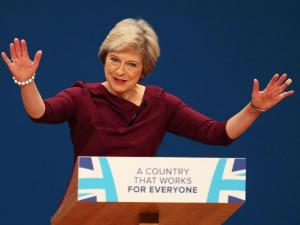
In her speech to the 2016 Conservative Party conference, Theresa May threw down a gauntlet:

…if you believe you’re a citizen of the world, you’re a citizen of nowhere. You don’t understand what the very word ‘citizenship’ means.

For anyone wondering who or what met the cut, May was helpfully expansive, populating this rather arcane placeholder with the figures of the boss who earns a fortune but doesn’t look after his staff, the international company that eludes the snares of tax law, the ‘household name’ that refuses cooperation with anti-terrorist authorities, and the director who takes out massive dividends while knowing that the company pension is about to go bust. Basically, fat cats with the odd public intellectual thrown in. May contrasted the spectre of the rootless cosmopolitan with the ‘spirit of citizenship’, which, in her view, entailed ‘respect [for] the bonds and obligations that make our society work’,theresa-may ‘commitment to the men and women who live around you’, ‘recognizing the social contract that says you train up local young people before you take on cheap labour from overseas.’ And perhaps astonishingly, for a Conservative Prime Minister, May promised to deploy the full wherewithal of the state to revitalize that elusive social contract by protecting workers’ rights and cracking down on tax evasion to build ‘an economy that works for everyone’. Picture the Brexit debate as a 2X2 matrix with ideological positions mapped along an x-axis, and Remain/Leave options mapped along a y-axis to yield four possibilities: Right Leave (Brexit), Left Leave (Lexit), Right Remain (things are great) and Left Remain (things are grim, but the alternative is worse). Having been a quiet Right Remainer in the run-up to the referendum, May has now become the Brexit Prime Minister while posing, in parts of this speech, as a Lexiter (Lexiteer?).

Continue reading

What is This Thing Called IR? A View from Howard U

This is the fourth post in our symposium on Vitalis’ White World Order, Black Power Politics. Naeem’s post is here, and Nivi’s is here. Further responses, including from the author are to follow…


IMG_7430

It was a party for DAAD-funded scholars from all over Germany and our hosts at the Martin Luther University of Halle-Wittenberg invited to us a historical costume play.  It was childish, and therefore well-suited for us international Stipendiat/inn/en, many of whom still struggled with basic German: some students and faculty dressed up as famous scholars from various periods in the university’s 500-year history and said a few things about themselves.  I have now forgotten all of the names but one: Anton Wilhelm Amo. A West African slave of a German duke who in 1734 successfully defended a dissertation in Halle’s philosophy department. The (black) guy who played Amo spoke loudly and clearly, but I recall turning to the (black) DAADer sitting next to me, a fellow poli sci student from France: “1734?” “That’s what I heard, too”, she said, “1734.”

Since this was in the era of the (dial-up) Internet, a few days later I was able to learn more about this Amo fellow, including the details eluded in the university play. Vitalis’ latest book, White World Order, Black Power Politics: The Birth of American International Relations (Cornell, 2015) is a powerful reminder of another lesson I learned then: that work by non-white scholars tends to be “denied”–that is, ignored, temporized, ornamentalized and outright purged [1]. How many students of international law or of the German Enlightenment today know anything about Amo’s “On the Right of Moors in Europe” (1729)?  Not many given that the essay has been lost to history, probably because its copies were deemed unworthy of those meticulously maintained rare book collections.  And this is a huge loss given the relevance of historical “rights of Moors” debates for the constitution of “Europe.”

IMG_7431

Continue reading

No Less A Scream For It Being Artful

Naeem InayatullahAnother guest contribution from Naeem Inayatullah to our symposium on Vitalis’s White World Order, Black Power Politics. Naeem’s research locates the Third World in international relations through history, political economy and method. With David Blaney, he is the co-author of International Relations and the Problem of Difference (Routledge 2004), and Savage Economics: Wealth, Poverty, and the Temporal Walls of Capitalism (Routledge 2010). He is the editor of Autobiographical International Relations: I, IR (Routledge 2011), as well as Narrative Global Politics: Theory, History and the Personal in International Relations (Routledge, 2016) with Elizabeth Dauphinee. His writing, research and talks can be discovered and devoured at his academia.edu page.

*Update* Nivi’s response is here, and Srdjan’s is here.


When I finished reading White World Order, Black Power Politics, I made three decisions.  I would read the book again.  Not because it is theoretically difficult or jargon heavy.  It’s not.  But because I want to absorb its details, re-orient my body through its revelations, savor Bob’s story telling skills, and anticipate his scarce but nevertheless Pharoah Sanders-esque screams.

In addition, I immediately designed a course titled “Race and IR” around Bob’s book.  The course has been approved and I am scheduled to teach it in September.  Third, I’ve suggested Bob’s name to my best students as someone they might consider as a future mentor in graduate study.  So, boom!  Immediate impact.  Could a book and an author want more than this?  Perhaps not.  Still, I suspect Bob has larger ambitions for this book.  It could change our field, if we are lucky.  Count me in for this project as well.

The importance of Vitalis’ book is easy to articulate.  It demonstrates the racist foundations of our discipline (IR).  Bob recounts the narrative as two sides of one tale.  There is the account of those who theorized and practiced white hegemony.  And there is the story of those who rejected it.  Our origin story is not about the three great debates, not the mythical line of realism going back to Machiavelli and Thucydides, not the immaculate conception of a Cold War politics, not anarchy as the founding condition, and not abstractions concerned with statics or dynamics of inter-state relations. Rather, Vitalis demonstrates, it is racist theories and institutions of imperialism constitute the actual origins of our discipline.

Here is how Bob puts it:

What is new and important in this book is the discovery that the intellectuals, institutions, and arguments that constituted international relations were shaped by and often directly concerned with advancing strategies to preserve and extend [the theory and practice of white hegemony against those struggling to end their subjection.  (2)

But also:

…we can’t understand the history of the early decades of the discipline without understanding the long and globe-spanning freedom movements that are central to its intellectual, social, and institutional development. (9)

Each part of the tale is told in equal measure: the ying and the yang, the force and counter-force, imperialism and liberation. Continue reading

White World Order, Black Power Politics: A Symposium

vitalis-e1458738905580This is the first post in the symposium on Robert Vitalis’s, White World Order, Black Power Politics: The Birth of American International Relations (Ithaca: Cornell University Press, 2015). Professor Vitalis (who also answers to ‘Bob’) teaches at the University of Pennsylvania. His first book, When Capitalists Collide: Business Conflict and the End of Empire in Egypt, was published in 1995. His second book, America’s Kingdom: Mythmaking on the Saudi Oil Frontier, published in 2005 was named a book of the year by The Guardian. He has been a fellow at the Woodrow Wilson International Center for Scholars (2009), Rockefeller Foundation (2003), the International Center for Advanced Study, NYU (2002), the American Council of Learned Societies (2002), and the MacArthur-SSRC International Peace and Security Program (1998). He was a MacArthur Award nominee in 1998. Below is his introduction to our symposium.

*Update*

Naeem’s response is here; Nivi’s is here and Srdjan’s is here.


80140100646100L

White World Order, Black Power Politics may well be the only book discussed in this symposium series that isn’t primarily concerned with theory, or at least the only one by an author who does not self identify as a theorist, teaching in a department that does not recognize what I do as “IR.”  It is also less an intellectual history, which might allow it to pass as theory, than it is an institutional history. So I am grateful for the interest in it here.

28522646._UY1280_SS1280_That said, it is indeed a critical history. The records of professors, schools, research organizations, and foundations in the early twentieth century United States reveal a past that bears scant resemblance to the “practitioner histories” or insider accounts of great debates invented about the discipline of international relations in the second half of the century, which are the ones most specialists tell themselves and their students until now. In fact, the more I learned and labored in the archives the more I came to see the problem as similar to the one I wrestled with in my last book, America’s Kingdom: Mythmaking on the Saudi Oil Frontier. The history that U.S. oil companies invented after World War II about their early and unshaken commitment to a “partnership in progress” with the Saudi people, at a moment when criticism of U.S. imperialism was on the rise in the Eastern Province and across the globe, is the one that books repeated uncritically for decades. The firms’ private records though revealed a dramatically different reality. I developed an account of the exploitative order in place in the oil camps, the racial science that justified it in the minds of the American engineers and managers, and the failed efforts of Arab and other workers to bring about its end. I likened what I did in that book to “reverse engineering” particular processes of mythmaking. I’ve done more or less the same thing for a sector of the U.S. academy in White World Order. Continue reading

A measured response to criticisms of the LSE’s new appointments

By way of homage to xkcd: This blog contains strong language, which may be unsuitable for children, and evidence-based arguments, which may be unsuitable for Trump supporters.

Oh, and also, for those who care about these things: I am most definitely posting this in an independent capacity. My views reflect the views of neither of the institutions with which I am affiliated, nor do those institutions swear as much as I do. Probably. Or at least they only do it in private.

Two things happened in my little corner of the interwebs this week. First, a dear friend discovered the (fabulously sweary and very NSFW) website Get In the Sea, and tagged me in a Facebook post to tell me so. For those who are not familiar, it is a site that posts images of, or links to, things, people or events that its creator(s) finds objectionable with a caption exhorting them to ‘get in the fucking sea’ (it’s funnier than it sounds). Naturally, I was delighted by this development; I have long been a follower of the site – there are days on which only its unique blend of righteous indignation and creative profanity seem able to raise a smile for me – but it pleased me greatly to know that for this, among many other things, my friend and I have shared enthusiasm. It is always nice to be reminded of why your friends are your friends: because of the random synchronicity of humour, life experience, outlook, whatever. Apparently we both enjoy succinct critiques of consumer culture and injustice with a side of foul language. This makes me smile.

Sea

The sea, to get in (photo by author)

And, second, my social media feeds were jammed with the news of Angelina Jolie’s appointment at the London School of Economics and Political Science. My construction of that sentence is entirely deliberate: mass news media coverage of the appointment of four new ‘Professors in Practice’ at the LSE Centre for Women, Peace and Security focused almost exclusively on the credentials of Angelina Jolie Pitt (while mostly dropping the Pitt because who cares about calling her by her actual name when we’re busily engaged in tearing her down) to occupy this position, mentioning in passing if at all the other three new appointments (Jane Connors, Director of International Advocacy at Amnesty International Geneva, William Hague, former UK Foreign Secretary, and Madeleine Rees, Secretary General of the Women’s International League for Peace and Freedom, for those of you who managed – understandably – to miss their names). Continue reading

Bernie Sanders For Commander-In-Chief

Jesse headshotA timely guest post from Jesse Crane-Seeber. Jesse  grew up in the woods of Ithaca, New York where he graduated from a democratically run public alternative high school. After a BA in “Resisting Hegemony” (a major of his own design) at Ithaca College, he earned a Ph.D. in International Relations at American University.  His dissertation ‘Making War’ analyzed the occupation of Iraq in terms of how U.S. soldiers’  negotiated and made sense of their surroundings, their missions, and the people they tried to help and/or harm. His research involved participant observation, living with military families, analyzing official documents, and sifting through hundreds of hours of soldier-uploaded video content. He teaches at North Carolina State University, and is currently finishing Fifty Shades of Militarism, a study of the fetishization of all things military in the contemporary United States. The views in the post are those of Jesse Crane-Seeber as a private citizen and do not reflect those of North Carolina State University. Obviously.


“coming of age during the plague
of reagan and bush
watching capitalism gun down democracy
it had this funny effect on me
i guess”

– Ani DiFranco, Your Next Bold Move

In recent months, the United States has seen a substantial rebellion against Hillary Clinton’s status as heir-apparent of the Democratic Party. Combined with the contemporary Republican Party’s confusion about whether to embrace regime change, free-trade, or multilateral institutions (even those like NATO that secure US hegemony in the world), the current election cycle offers US voters an unusual set of choices that may not be fully appreciated by those caught in the horse race and name calling of an expensive election.

It is normal to be cynical about what any individual nation can do, never mind a particular leader. Technological change, ecological collapse, international regime complexes, not to mention economic activity, all help explain the limits of what any nation can do. But the President of the United States is not a generic national leader. As the chief architect of the post-World War II political and economic order, the US retains outsized influence, even as we reach peer-peer levels of economic output with the EU and China.

While Secretary Clinton and Senator Sanders voted alike 93% of the time they were both in the Senate, the contrast in how they might impact global politics is much, much larger. One oft-repeated critique of Sanders has been his lack of foreign policy experience, knowledge, or, well, policy. As Ignatius put it, “Foreign policy is the hole in Sanders’s political doughnut.” Several enterprising writers reached out to foreign policy and IR scholars sympathetic to Sanders’ campaign for comment, while a few political scientists have directly addressed the nature of a future Sanders Administration’s foreign policy.

As a critic of the Washington/New York policy expert class and the ways that US Political Science reproduces and authorizes it, what I find troubling is not what ‘experts’ have been saying, but what they haven’t. With the exception of Charli Carpenter’s embrace of Sanders’ willingness to acknowledge what he doesn’t know about foreign policy, all of these commentators seem to reduce US foreign policy to positions on which countries to bomb, (and maybe relations with Israel). More than once, he has been characterized as a ‘realist’ against Clinton’s hawkish liberal interventionist instincts. While that is basically fair and correct, even if the meaning of ‘realist’ in policy debates has little resemblance to the theories I teach under that name, this discussion has been far too narrow. Just this week, an open letter by 20 ‘foreign policy experts’ has explicitly endorsed Sanders’ approach to foreign policy. Going beyond the standard arguments (which I detail below), they draw attention to a wider range of issues that Sanders can lead on. While their arguments and my own line up fairly neatly, it’s important to have a bit more of an extended discussion of the issues involved than their short statement allowed.

Yielding to the dominant view, if only for a moment, I turn first to the Democratic candidates’  approaches to national security and armed force.

Continue reading

On Statues

Even commentators sympathetic to the aims of Rhodes Must Fall in Oxford (RMFO) have been at pains to point out that the removal of the statue of Cecil Rhodes on the facade of Oriel College is not the most significant element of the campaign’s platform. Amia Srinivasan observes that ‘Neither the Cape Town nor the Oxford campaign has ever been just about statues.’ Amit Chaudhuri laments that ‘it would be…sad if Rhodes Must Fall in Oxford became identified with the statue in Oriel College alone’ because its ambition beyond the removal of the statue, namely that of decolonising education, is more significant. David Olusoga worries that by building their manifestos around calls for the taking down of statues, the more complex and worthy ideas around decolonisation raised by these campaigns have been ‘distorted into a simple right-wrong, yes-no statue debate’. I don’t disagree (much) with these views and indeed, if you want a right-wrong, yes-no answer, this essay will disappoint. But they beg the question of what statues mean and why we keep putting them up if they are so easily relegated to an epiphenomenal register of political discourse.

It’s worth remembering that RMFO itself has never downplayed the significance of the statue in the way that some of those writing in solidarity with it have done. It describes its mission as that of decolonising ‘the institutional structures and physical space in Oxford and beyond’ (emphasis mine) and lists as its first aim the intention to tackle ‘the plague of colonial iconography (in the form of statues, plaques and paintings) that seeks to whitewash and distort history’. In addition, it aims to reform the Eurocentric curricula to which university students continue to be subject and to address the under-representation and lack of welfare provision for black and minority ethnic staff and students at Oxford. One way to think about the place of the statue in this debate is to see it as a means to an end: as Srinivasan rightly notes, ‘complaints of structural racism and calls for curriculum reform don’t draw public attention like the toppling of a statue, and the RMF leaders know this.’ But while clarifying that its campaign is indeed ‘about more than a statue’, RMFO nonetheless insists that

statues and symbols matter; they are a means through which communities express their values. The normalised glorification of a man who for so many is a symbol of their historical oppression is a tacit admission that – as it stands – Oxford does not consider their history to be important. This is incompatible with a community that posits itself as progressive, enlightened and intellectually honest.

Without wanting to suggest that the success of RMFO should be judged by whether the statue falls or endures (it shouldn’t), I want to think with RMFO about what the expressive function of statues entails. Writing in a very different context, Judith Butler has famously worried that the relegation of injustices to the realm of the ‘merely cultural’ effectively downgrades the urgency with which they demand redress. For ‘merely cultural’ read ‘merely symbolic’, and the risk of disappearance of the demand for iconographic decolonisation (exactly what Oriel College might wish for) becomes obvious: if RMFO is about more than ‘just’ a statue and if we all agree that the statue is ‘merely symbolic’, then we might as well get beyond, behind, and beneath the symbol to address its putative ‘real’ while leaving the symbol itself intact. Meanwhile the possibility that the ‘merely symbolic’ has material consequences remains unexplored.

rhodes oxford

***

Continue reading

The Futures Past of the Women, Peace and Security Agenda

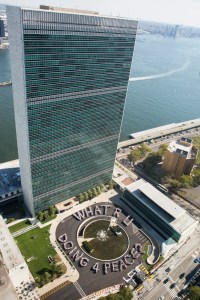
"What are you doing for Peace?" Launch Event

UN Secretariat staff mark the occasion of the 70th anniversary of the United Nations. 17 September 2015. UN Photo/Rick Bajornas.

This essay is a much abridged and lightly edited version of an article of the same name by Paul Kirby and Laura J. Shepherd published on 8 March 2016 in International Affairs.

UNSCR 1325, the foundational resolution of the eight that form the Women, Peace and Security (WPS) policy architecture, has strikingly few critics – or, at least, few who would openly dispute its headline ambition: to achieve global gender equality. It seems particularly appropriate to celebrate the WPS agenda on International Women’s Day, adopted by the United Nations in recognition of the ongoing global struggle for women’s rights. Our modest contribution to IWD celebrations this year is the launch of a special issue of International Affairs, which documents the advances and limits of the WPS agenda. These are traced in the various articles across multiple registers, from the implementation of WPS principles and provisions by regional organizations to the heteronormative dynamics of participation, prevention and protection. And yet, as the contributors show, the much-noted gap between WPS ambitions and current realities is not merely a report on imperfect implementation: rather, it takes us to the heart of what the WPS agenda is, and what it might become.

In our article, we discuss various elements, or ‘pillars’ of the Women, Peace and Security agenda, to evaluate where gains have been made under the auspices of this architecture. The ‘pillars’ are generally identified as ‘protection’, ‘participation’, ‘prevention’ and ‘relief and recovery’, with a fifth – the normative dimension – sometimes included. WPS principles govern activity in each of these domains. Women’s participation in peace agreements, for example, is somewhat more consistent than it was before the WPS agenda was inaugurated, and yet remains disappointing given initial ambitions. From 2005 onwards, there has been a notable increase in the number of peace agreements dealing with multiple aspects of gender security and participation.  The 2015 global study on the implementation of Resolution 1325 found that the proportion of peace agreements since 2000 making reference to women was 27 per cent, more than double the level over the period 1990–2000.  Given the emphasis in the WPS agenda on women as both makers and beneficiaries of peace, this trend towards inclusion is clearly welcome. Yet, as Radhika Coomaraswamy and her colleagues observed: ‘The present programmes put forward by the international community tend to be extremely narrow: just to bring a female body to the table’. Continue reading