“Can I Tell You The Bad Guy’s Name?”: A Virtual Read-In and Comment On #Kony2012 and Badvocacy

UPDATE (10 March): Material is coming thick and fast on #Kony2012, so I’m adding three recent interventions. The first is from Ismael Beah, he of child soldier fame, on CNN (apologies for the awful interviewer).

The second is from Adam Branch (who just has a book out on Uganda, war and intervention) on the wrongness, and also the irrelevance to Northern Ugandans, of Invisible Children:

My frustration with the group has largely reflected the concerns expressed so eloquently by those individuals who have been willing to bring the fury of Invisible Children’s true believers down upon themselves in order to point out what is wrong with this group’s approach: the warmongering, the self-indulgence, the commercialization, the reductive and one-sided story it tells, its portrayal of Africans as helpless children in need of rescue by white Americans, and the fact that civilians in Uganda and Central Africa may have to pay a steep price in their own lives so that a lot of young Americans can feel good about themselves, and a few can make good money. This, of course, is sickening, and I think that Kony 2012 is a case of Invisible Children having finally gone too far. They are now facing a backlash from people of conscience who refuse to abandon their capacity to think for themselves.

The third, from Teddy Ruge, beautiful in its rage:

This IC campaign is a perfect example of how fund-sucking NGO’s survive. “Raising awareness” (as vapid an exercise as it is) on the level that IC does, costs money. Loads and loads of money. Someone has to pay for the executive staff, fancy offices, and well, that 30-minute grand-savior, self-crowning exercise in ego stroking—in HD—wasn’t free. In all this kerfuffle, I am afraid everyone is missing the true aim of IC’s brilliant marketing strategy. They are not selling justice, democracy, or restoration of anyone’s dignity. This is a self-aware machine that must continually find a reason to be relevant. They are, in actuality, selling themselves as the issue, as the subject, as the panacea for everything that ails me as the agency-devoid African. All I have to do is show up in my broken English, look pathetic and wanting. You, my dear social media savvy click-activist, will shed a tear, exhaust Facebook’s like button, mobilize your cadre of equally ill-uninformed netizens to throw money at the problem.

Cause, you know, that works so well in the first world.
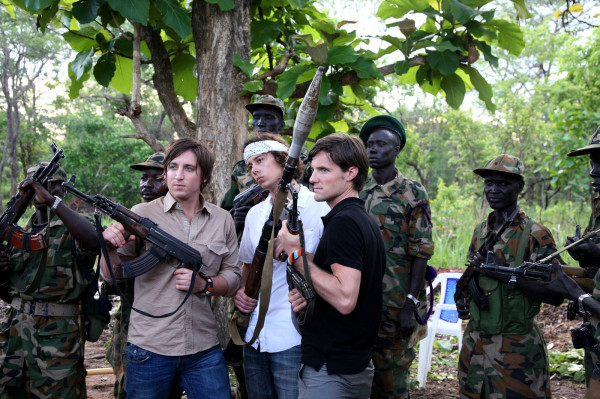

Glenna Gordon‘s 2008 image of the Invisible Children founders in cod-Rambo pose with the Sudan People’s Liberation Army now defines the #Kony2012 backlash. Jason ‘Radical’ Russell – he who speaks excitedly of ‘war rooms’ – and his compatriots have thus far notched up 12 million-odd Vimeo hits and over 32 million YouTube hits with their 30-minute hymn to awareness, social media, atrocity prevention and youth power. A simulacrum of solidarity now not quite besieged, but at least peppered, by an array of critiques and counter-points, almost always from scholars and activists with their own well-established records of engagement and internationalism.

That backlash is now, predictably enough, giving rise to a counter-backlash from newly enlivened global citizens, and the predominant form taken by this response is itself instructive. Comment threads on posts like Mark’s consistently reveal a nascent activist consciousness which is hugely fragile, but also aggressive. Although many presumably did not know of Joseph Kony until this week (and in this minimal sense, #Kony2012 clearly ‘worked’), they are now so outraged at even the hint of complexity or counter-point that they denounce others as self-promoters, ignorami (ignoramuses?), complacent and/or complicit (by some unspecified metric) in human suffering. The juxtaposition is telling: the fresh anger and one-dimensional vigour of discovering atrocity and of being “empowered” (however vaguely) to end it is simply too appealing to withstand reasoned discussion. And so newly-minted ‘doers’ find themselves in the position of having to attack those old established ‘cynics’, Ugandans and Uganda hands among them, in whose very name they “won’t stop”. Say, at what point exactly did common humanity come to mean lecturing Ugandans that they were “ungrateful” and “negative” for pointing out that Museveni is not so nice either?
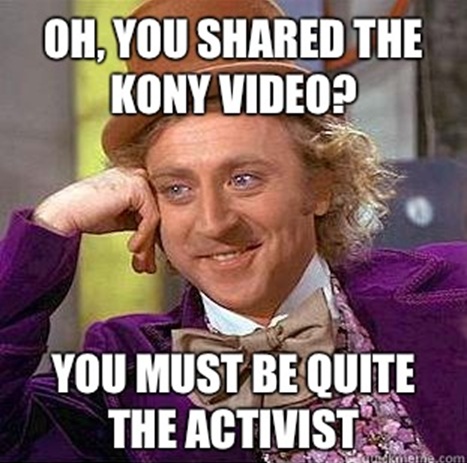
But what has been the content of this unbearable counter-critique? Continue reading

Human Rights Contested – Part II

This is a continuation of my previous post

Who Are Human Rights For?

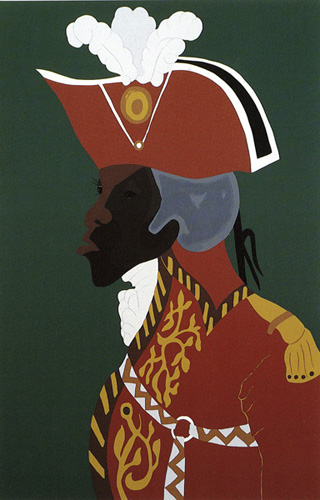
All of the authors take account of the ambiguous history of human rights, in which they can be said to have inspired the Haitian, American and French revolutions, while also justifying the counterrevolutionary post-Cold War order dominated by the United States. Yet recognising this ambiguity without also acknowledging the distinctive reconstruction of contemporary human rights that makes them part of a neo-liberal international order and the unequal power that makes such a quasi-imperial order possible would be irresponsible. A primary contribution made collectively by these texts is that they clearly diagnose the way human rights have been used to consolidate a particular form of political and economic order while undercutting the need for, much less justification of, revolutionary violence. Williams says of Amnesty International’s prisoners of conscience, who serve as archetypal victims of human rights abuse,

the prisoner of conscience, through its restrictive conditions, performs a critical diminution of what constitutes “the political.” The concept not only works to banish from recognition those who resort to or advocate violence, but at the same time it works to efface the very historical conditions that might come to serve as justifications – political and moral – for the taking up of arms.

Human rights, then, are for the civilised victims of the world, those abused by excessive state power, by anomalous states that have not been liberalised – they are not for dangerous radicals seeking to upset the social order.

Continue reading

Atrocity Porn, the Resource Curse and Badvocacy in ‘Unwatchable’ (2011)

Lest it need saying, *trigger warning*.


Unwatchable lasts just over 6 minutes, but is intended to linger far longer. A project of Save The Congo, it was apparently turned down by larger charities on the grounds that it was too extreme. Deploying liberal doses of slo-mo and orchestral overture, it shows an armed assault on a whiter-than-white (and blonder-than-blonde) family somewhere in rural England. The teenage daughter is gang-raped on the kitchen table while her father is forced to watch, and her parents are eventually mutilated and killed on their front lawn while the soldiers laugh and film them on mobile phones. At one point we see a soldier cowering to avoid the scenes wrought by his comrades. The youngest daughter is killed trying to escape. In other words, a BBFC 18-rated piece of atrocity porn doubling as a viral advocacy campaign.

A small clickable box sits screen top-right throughout. It reads: ‘Make It Stop’. The tagline: ‘Warning: this film contains sexualised violence you and your mobile phone manufacturer may find disturbing’. The pay off being that this is really about the DRC, but that it will take this happening to white people for you to notice. Yes, this is another campaign about the resource curse and another entry in the catalogue of rape atrocity ratcheting, now with the obligatory twitter hashtag (#bloodminerals) and a petition demanding: a) that EU companies be forced into transparent supply chains for coltan and the like; and b) that ‘swift and severe’ action be taken against any party responsible for violence.

Kate at Wronging Rights picks up on the incoherence of Save the Congo’s accompanying claims:

W…T…F…? Rape is cheaper and much more effective than guns or bullets??? No.  Rape is not a “cheap” coercive strategy.  It’s time-consuming and it exposes the perpetrators to injury and potential STD infection. Armed groups absolutely use it anyway, but not because it’s cheaper than bullets.

And, [i]f armed groups were to raid a village and force the population to leave by shooting at them, NGOs could be alerted and the UN would have to react??  This is surely news to the scores of NGOs, both local and international, who have worked tirelessly to document and publicize the use of rape as a weapon of war throughout the last decade and a half of conflict in the region.

Look, I realize that grassroots activism often plays a fundamental role in political change, and has been particularly important to the history of the human rights movement, but seriously, this “the news made me sad / I can haz NGO?” nonsense has got to stop.  Time to invoke Amanda’s “Love Actually Test” on a wider scale, I think.

Bizarre and untenable as such ideas may be (say what?), the key points of Save the Congo’s analysis are ones now commonly repeated as part of the general ‘weapon of war’ narrative. Continue reading

Dalston: A Worm’s Eye View

(…cheers…) Please welcome, in your traditional way, the latest in the expanding list of Disorder-ed contributors. Rahul Rao, currently Lecturer in International Security at SOAS, author most recently of the fascinating Third World Protest: Between Home and the World, as well as a number of articles on cosmopolitanism, world order and empire. He is currently working on projects aimed at provincialising Westphalia and introducing queer theory to IR.


There is a great deal that I don’t understand about the world, but I do know a little about that part of it where the Kingsland Road becomes Stoke Newington Road (London N16/E8, if that’s how you work). As the dust clears from what BBC Panorama recently called The August Riots – as if to distinguish them from those to come in September, October, November and December – it is difficult to walk around without wondering whether everyone is judging everyone else on the basis of age, race, class and sartorial preference. Multiculturalism in Dalston can sometimes feel like a polite version of separate-but-equal with the hipsters (mostly white, but equal opportunity for those with the right facial hair, skinny jeans, loafers with no socks, university education, fixie bikes and Apple accoutrements) patronising hipster cafés, the Turks hanging out in members-only social clubs, the Caribbeans in venues such as Open the Gate. Everyone goes to the Turkish restaurants, but gastronomy has always been the least challenging site for racial mixing. As gentrification has proceeded apace – a phenomenon driven by middle class professionals like myself – I cannot help but notice that Dalston Superstore is always full and the Caribbean restaurant in Centerprise (East London’s oldest and most famous black bookshop) often empty. (Oddly, the spell check on this blog thinks that the word ‘gentrifying’ does not exist and suggests replacing it with ‘petrifying’. There might be something to that.)

On August 8 when the riots reached Hackney, Dalston hit the headlines as the place where the riots caused little damage, its Turkish and Kurdish business owners much feted for their role in beating back the rioters. I have to confess to an immediate reaction (always a betrayal of one’s class identification) of gratitude to a local community of people who trusted and knew each other well enough to work together at a moment’s notice – a community to which I do not belong, but on whose efforts I was able to free-ride (like Zoe Williams, I watched these events on a live feed, it never having occurred to me that I could have gone on to my high street to defend anything). In the cold light of dawn, second thoughts: when the facade of the Leviathan had cracked, security had become a function of ethnic solidarity. Welcome to Sarajevo.

The reaction of the local business owners in Dalston poses two questions. Continue reading

Looking Beyond Spring for the Season: Echoes of Time Before Tahrir Square

This is the fifth and last part in a series of posts from Siba Grovogui, Professor of International Relations and Political Theory at John Hopkins University. The first part is here; the second here; the third here; the fourth here. The series considers the character and dimensions of the tension between the African Union and ‘the West’ over interventions in Africa. As before, responsibility for visuals adheres solely to Pablo K.


It would be disingenuous to relate events in North Africa and the Middle East (or MENA) today without reference to the media. Here too, there are many possible angles to examine. I will focus on the institutional support that the media provide in shaping consensus in support of foreign policy. In this regard, so-called mainstream Western media and networks (BBC, CNN, Fox, RFI and the like) have played a significant role in generating domestic support for the Libyan campaign. The media find themselves in the contradictory positions of both providing sustenance to foreign policy rationales and reporting on government actions. In this role the media either wittingly or unwittingly assumed the position of justifying contradictory Western foreign policy aims while trying to satisfy the needs of their audiences (especially domestic constituencies and home governments) for information from the front. Consistently, the media often generate sympathy for foreign actors or entities that either support Western interests or have affinities for Western values.

This role is not without a cost, especially when foreign policy actions, including wars, fail to attain their objectives. When the outcome of foreign policy proves disastrous, Western media also have an inexhaustible capacity to either ignore their prior support for the underlying causes or to reposition themselves as mere commentators on events over which they had no control or could not prevent. Increasingly, these tendencies have spread around the world as evidenced in the techniques and styles that have propelled the Qatari-based Al Jazeera into prominence as key contender in the emergent game of production, circulation, and consumption of foreign policy-concordant images for their affective and ideological effects.

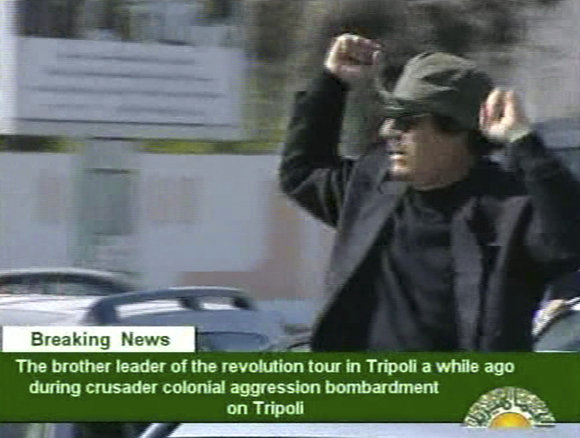
So it is not surprising that the backdrop and background scenarios for most reporting on the 2011 revolts in MENA are dimensions of Orientalism, of which they are many. But the most constant is one of autocratic ‘barbarism’. In this regard, the discourses and media techniques for creating and supporting sympathetic figures are just as constant (or invariable) as Western states rationales for intervention. The media-hyped stories of Oriental despotism that preceded Operation Desert Storm, when the US expelled Iraq from Kuwait, have provided the template. During that event, for instance, media feted their viewers with stories of invading Iraqi hordes storming through hospital only to disconnect incubators and let helpless infants die a slow death. These and many stories of heroic bids by US soldiers to prevent such barbarism were later discredited but not the other horrific stories which convinced US citizens of the need to wage war on Saddam Hussein’s occupying army. In the Libyan case today, one of the earlier images of the aura of impunity created by Gaddafi was that of a Libyan female lawyer who was allegedly raped by Gaddafi’s forces. There was also a reported event of military takeover of a hospital.

Continue reading

Looking Beyond Spring for the Season: Democratic and Non-Democratic Cultures

This is the fourth part in a series of five posts from Siba Grovogui, Professor of International Relations and Political Theory at John Hopkins University. The first part is here; the second here; the third here. The series considers the character and dimensions of the tension between the African Union and ‘the West’ over interventions in Africa. As before, responsibility for visuals adheres solely to Pablo K.


It is not accurate to say that the African Union has been indifferent to the conflict in Libya. If there has been silence in Africa, it has to do with the extent to which the ‘maverick’ Colonel (Gaddafi) has angered some of his peers over the years by interfering in the affairs of such states as Nigeria, Liberia, Burkina Faso, Sierra Leone and others, with disastrous effects. Even when, as in Sudan and Uganda, officeholders have welcomed his entreaties, large segments of the populations have not appreciated them. Yet, regardless of their personal views of Gaddafi and their political differences with him, African elites and populations have yearned for a more positive, conciliatory, and participatory solution to outright regime change or the removal of Gaddafi preferred by the West. This variance, I surmise, comes from a positive understanding of postcoloniality that include forgiveness, solidarity, and democracy and justice, as exhibited in post-apartheid South Africa and post-conflict Liberia, Angola, Mozambique, and the like.

In opting for negotiated mediation and a new constitutional compact, therefore, the African Union (or AU) aimed to foster a different kind of politics in Libya – admittedly one that has escaped many of the states endorsing that position. As articulated by Jean Ping, the Secretary General of the AU, the Libyan crisis offered an opportunity “to enhance a self-nourishing relationship between authority, accountability and responsibility” in order to “reconstitute African politics from being a zero sum to a positive sum game” toward one “characterized by reciprocal behavior and legitimate relations between the governors and the governed.” Mr. Ping added two other dimensions to his vision. The first is an acknowledgement that events in Libya point to the fact that all Africans “yearn for liberty and equality’ and this yearning is “something more consequential than big and strong men.” The second is that Africa’s destiny should be shaped by Africans themselves based on an actualized “sense of common identity based, not on the narrow lenses of state, race or religion, but constructed on Africa’s belief in democracy, good governance and unity as the most viable option to mediate, reconcile and accommodate our individual and collective interests.”

Coming from a politician, these words may read like slogans. But the uniform refusal of the AU to endorse Western intervention tells another story. Continue reading

Looking Beyond Spring for the Season: The West, The African Union, and International Community

This is the third part in a series of five posts from Siba Grovogui, Professor of International Relations and Political Theory at John Hopkins University. The first part is here; the second here. The series considers the character and dimensions of the tension between the African Union and ‘the West’ over interventions in Africa. As before, responsibility for visuals adheres solely to Pablo K.


The oblivion of commentators to these possible African objections has been less than helpful to understanding the actualized Western intervention itself; emergent African ideas on democracy and security; and the actual place of international morality in international affairs. Underlying the African apprehension to military intervention is a long-standing tension between international organizations that represent Africa, on one hand, and self-identified representatives of the West, on the other, over the meaning of international community as well as the source, nature, and proper means of implementation of the collective will. The dispute over the meaning of international community and the collective will has been particularly salient in Africa because, as a political space, Africa has been more subject to military interventions than any other geopolitical space in the modern era. These interventions have reflected contemporaneous relations of power, permissible morality, and objects of desire: from proselytism to fortune-seeking, trade, extraction of raw material, and the strategic pursuit of hegemony. Indeed, it is hard to remember a time since the onset of the slave trade when there was no open conflict between the majority of its states and the West over some dimensions of global governance that implicated the notion of the commons or international community.

The postcolonial era has not brought about any change to this situation. Since the end of World War II and the institution of the United Nations system, the plurality of African political entities have confronted self-appointed representatives of the West over the ethos of UN procedures (involving transparency and open access to the channels of decision-making) and the mechanisms of dispute mediation (including the determination of the principles and applicability of humanitarian interventions in a number of cases). One need only recall the political, legal, and military confrontations between African states and former Western colonial powers over Apartheid South Africa’s mandate over South West (which involved the legality and morality of colonial trusteeship); the French war on Algeria (which involved the legality and legitimacy of settler colonialism); the wars of decolonization in the former Portuguese colonies of Angola, Guinea Bissau, and Mozambique (which involved the principles of majority rule through open elections which communists might win); the unilateral declaration of independence by the white minority in Southern Rhodesia (which involved the principle of white-minority rule in postcolonial Africa); and the legality and morality of apartheid (which involved the principle of self-determination and majority rule). The underlying antagonisms contaminated deliberations throughout the UN system (particularly General Assembly proceedings) and involved all major issues from the Palestine Question to the Law of the Sea to other matters of trade and intellectual property. They reached a climax at the time of exit of the US and Great Britain from UNESCO, which was then directed by Ahmadou Mathar Mbow, a Senegalese diplomat and statesman.

These and other contests have shared a few singular features. One is a Western insistence on representing the essential core and therefore will of something called international community. In any case, the label of international community has often been reserved for Western entities in relations to others, who remain the object of intervention on behalf of the international community. This is to say that the term ‘international community’ has had political functionality in relations of power and domination in which Europe (and later The West) subordinated ‘Africa’. The relevant tradition can be traced back to the opening moments of the modern era, particularly during the ascension of The West to global hegemony. While it has undergone changes over time, the embedded imaginary of international community and its will have been built around artificially fixed identities and politically potent interests. Accordingly, the identity of the West, and therefore the international community, flows from a theology of predestination, formally enunciated as the Monroe doctrine in the US or the Mission Civilizatrice in France.

Continue reading

Looking Beyond Spring for the Season: Common and Uncommon Grounds

This is the second part in a series of five posts from Siba Grovogui, Professor of International Relations and Political Theory at John Hopkins University. The first part is here. The series will consider the character and dimensions of the tension between the African Union and ‘the West’ over interventions in Africa. Responsibility for visuals adheres solely to Pablo K.


As I indicated in my last post, the decision by the African Union (or AU) to not endorse the current military campaign in Libya has been mistaken by many observers and commentators alternatively as a sign of African leaders’ antipathy to political freedom and civil liberties; a reflexive hostility to former colonial powers, particularly France and Great Britain; a suspicion of the motives of the United States; and more. The related speculations have led to the equally mistaken conclusion that the African Union is out of step with the spirit of freedom sweeping across the Middle East and North Africa (or MENA). The absurdity of the claim is that the only entity that imposed any outline of solution agreeable to Gaddafi has been the African Union and this is that Gaddafi himself would not be part of any future leadership of the country. But the AU has insisted on an inclusive negotiated settlement. The purpose of this series of essays is not therefore to examine the meaning and implications of the absence of ‘Africa’ on the battlefield of Libya, but to point to the larger geopolitical implications of the intervention for international order, global democratic governance, and the promotion of democratic ideals and political pluralism in the region undergoing revolution and beyond.

To begin, it is not just ‘Africa’, ‘African indecision’, and ‘African non-Normativity’ that are at stake in the characterization of African actions or inactions. Much of what is construed as ‘lack’ or ‘absence’ in Africa is also intended to give sustenance to the idea of the indispensability of the West – composed on this occasion by France, Great Britain, the United States, and tangentially Canada – to the realization of the central ends of the MENA Spring. The myth of the centrality of the West to the imaginary of freedom everywhere is inscribed in the name given to the events under description. In the US at least, the Arab Spring evokes many other ‘Springs’ all located in the West (including the 1968 Prague Spring or the 1989 collapse of the Soviet Union and its satellite states). Likewise, ‘Jasmine’, the emblem of the Tunisian revolt has been advanced as evocative of the Ukrainian ‘Orange’ and other colour-coded European events. These allusions have justifications but they are seldom evoked comparatively to elucidate the originality and specificity of the MENA revolutions. In this latter regard, even the suggestion of an Arab Spring assumes that the majorities in the countries involved are Arab. This is not always the case in North Africa but Orientalism obliges!

The fact is that the ongoing revolutions in MENA are at once specific and universal in their own ways. Continue reading

Looking Beyond Spring for the Season: An African Perspective on the World Order after the Arab Revolt

The first of a series of posts by Siba Grovogui, Professor of International Relations and Political Theory at John Hopkins University (followed by a second, third, fourth and fifth installment). He is the author of Sovereigns, Quasi-Sovereigns and Africans: Race and Self-Determination in International Law and of Beyond Eurocentrism and Anarchy: Memories of International Orders and Institutions, as well as a number of articles on race, sovereignty, postcoloniality and human rights and what the history of slavery tells us about the contemporary discourse of international politics. Reposted from The Contemporary Condition. Images by Pablo.


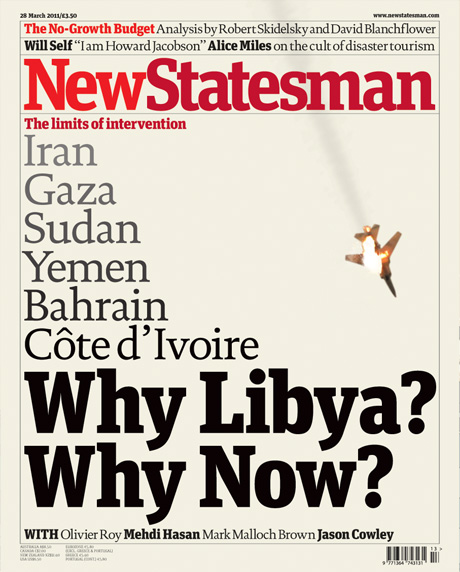
There is much misunderstanding today about the decision of African Union (AU) to not endorse the military intervention in Libya undertaken by France, Great Britain, and the United States in conjunction with a few Arab States. Speculations abound as to whether the uniform decision coming out of Africa indicates that the African Union is out of step with the spirit of freedom sweeping across North Africa and the Arab World; or whether the absence of Africa in the battlefield of Libya merely suggest military ineptitude and political bankruptcy. In fact, it is not accurate that the African Union has been indifferent to the conflict in Libya. The AU opted for mediation and negotiated constitutional compact, with the aim of fostering a different kind of politics. The uniform refusal of the AU to endorse Western intervention has two main explanations. The first is the practice of consensus in decision-making which has long history within Africa. The other is profound unease on the continent about the form and foundation of the intervention itself.

I suggest that there is continent-wide scepticism in Africa about Western leadership in the eras of global governance, the rule of (international) law, the status of international morality, and the future of global democracy. This development is the result of continental experiences with the modes of enactment and execution interventions in Africa. The African position arises therefore from doubt that the coalition of Western powers leading the military effort in Libya today can be trusted to not abuse legitimate anti-Gaddafi sentiments; to not instrumentalize international law and morality; and to not subvert UN procedures and the mechanisms of global governance in order to advance hegemonic agendas and parochial ‘strategic’ interests. In short, underlying the African objection to military intervention is a long-standing tension between international organizations that represent Africa and the self-identified ‘West’ around the representations of the will of the international community, the resulting global democratic deficit in times of intervention, and their effects on international morality, including the principles of humanitarianism.

In relating this conflict, I do not wish to speak for a uniformly-defined ‘Africa’ and/or for all African entities. Continue reading

A Kind Of Blank Spot

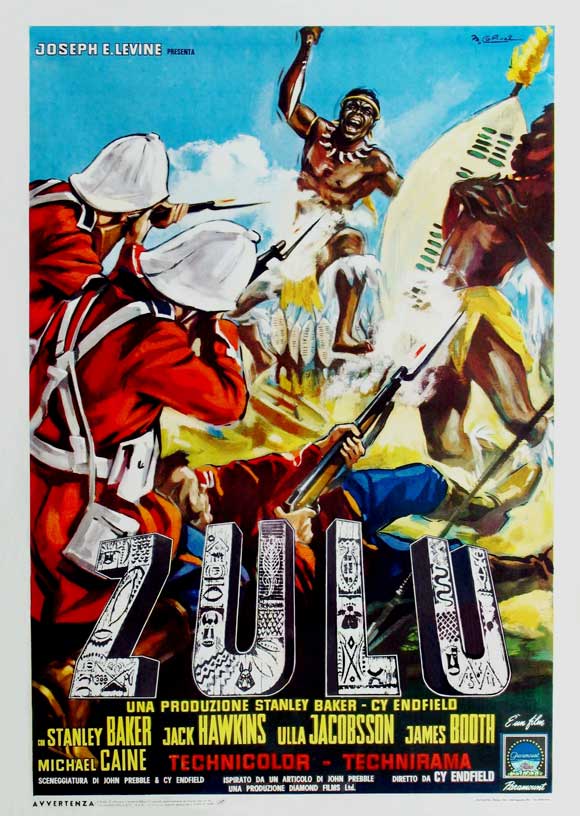
[M]y wife and I realized you cannot pay attention to everything, so I said to myself “one continent that I am going to leave aside is Africa.” I preferred to concentrate on Europe and China. I did a pretty good deal of work on China because I saw it ripe to become one of the most important parts of the world of which I knew nothing. So, I proceeded to do a lot of work on China in order to know something about it. But Africa is kind of a blank spot for me, apart from casual observation. Even though, I would say that the whole notion of anarchy applies very well to Africa.

In fact, a criticism people used to make to me was that Africa was clearly an anarchic arena, and yet African states did not fight much among themselves. How, then, would a Realist like myself explain that? Well, I did by invoking Turney-High’s book in anthropology, which was published—I believe—in the 1920s. There, he made the very valid point that countries have to obtain a certain level of self-consciousness as being a political entity, and a certain level of competence before they are able to fight one another. Turney-High’s illustration was very clear with his study of the peoples he referred to as the “Californians,” who were such a primitive people that they did not have the ability to form groups or fight as a group. A consciousness and competence at a certain level is needed before a group is able to systematically impose on another group—whether in the form of warfare or in other ways. I think that, for a long time, Africa was in that condition, and that, as it proceeds away from that condition, African countries will be able to fight wars against one another. In a historical sense, though, that is an implication of advancement.

Kenneth N. Waltz, ‘Theory Talks #40: The Physiocrat Of International Politics’, 3 June 2011