No Less A Scream For It Being Artful

Naeem InayatullahAnother guest contribution from Naeem Inayatullah to our symposium on Vitalis’s White World Order, Black Power Politics. Naeem’s research locates the Third World in international relations through history, political economy and method. With David Blaney, he is the co-author of International Relations and the Problem of Difference (Routledge 2004), and Savage Economics: Wealth, Poverty, and the Temporal Walls of Capitalism (Routledge 2010). He is the editor of Autobiographical International Relations: I, IR (Routledge 2011), as well as Narrative Global Politics: Theory, History and the Personal in International Relations (Routledge, 2016) with Elizabeth Dauphinee. His writing, research and talks can be discovered and devoured at his academia.edu page.

*Update* Nivi’s response is here, and Srdjan’s is here.


When I finished reading White World Order, Black Power Politics, I made three decisions.  I would read the book again.  Not because it is theoretically difficult or jargon heavy.  It’s not.  But because I want to absorb its details, re-orient my body through its revelations, savor Bob’s story telling skills, and anticipate his scarce but nevertheless Pharoah Sanders-esque screams.

In addition, I immediately designed a course titled “Race and IR” around Bob’s book.  The course has been approved and I am scheduled to teach it in September.  Third, I’ve suggested Bob’s name to my best students as someone they might consider as a future mentor in graduate study.  So, boom!  Immediate impact.  Could a book and an author want more than this?  Perhaps not.  Still, I suspect Bob has larger ambitions for this book.  It could change our field, if we are lucky.  Count me in for this project as well.

The importance of Vitalis’ book is easy to articulate.  It demonstrates the racist foundations of our discipline (IR).  Bob recounts the narrative as two sides of one tale.  There is the account of those who theorized and practiced white hegemony.  And there is the story of those who rejected it.  Our origin story is not about the three great debates, not the mythical line of realism going back to Machiavelli and Thucydides, not the immaculate conception of a Cold War politics, not anarchy as the founding condition, and not abstractions concerned with statics or dynamics of inter-state relations. Rather, Vitalis demonstrates, it is racist theories and institutions of imperialism constitute the actual origins of our discipline.

Here is how Bob puts it:

What is new and important in this book is the discovery that the intellectuals, institutions, and arguments that constituted international relations were shaped by and often directly concerned with advancing strategies to preserve and extend [the theory and practice of white hegemony against those struggling to end their subjection.  (2)

But also:

…we can’t understand the history of the early decades of the discipline without understanding the long and globe-spanning freedom movements that are central to its intellectual, social, and institutional development. (9)

Each part of the tale is told in equal measure: the ying and the yang, the force and counter-force, imperialism and liberation. Continue reading

White World Order, Black Power Politics: A Symposium

vitalis-e1458738905580This is the first post in the symposium on Robert Vitalis’s, White World Order, Black Power Politics: The Birth of American International Relations (Ithaca: Cornell University Press, 2015). Professor Vitalis (who also answers to ‘Bob’) teaches at the University of Pennsylvania. His first book, When Capitalists Collide: Business Conflict and the End of Empire in Egypt, was published in 1995. His second book, America’s Kingdom: Mythmaking on the Saudi Oil Frontier, published in 2005 was named a book of the year by The Guardian. He has been a fellow at the Woodrow Wilson International Center for Scholars (2009), Rockefeller Foundation (2003), the International Center for Advanced Study, NYU (2002), the American Council of Learned Societies (2002), and the MacArthur-SSRC International Peace and Security Program (1998). He was a MacArthur Award nominee in 1998. Below is his introduction to our symposium.

*Update*

Naeem’s response is here; Nivi’s is here and Srdjan’s is here.


80140100646100L

White World Order, Black Power Politics may well be the only book discussed in this symposium series that isn’t primarily concerned with theory, or at least the only one by an author who does not self identify as a theorist, teaching in a department that does not recognize what I do as “IR.”  It is also less an intellectual history, which might allow it to pass as theory, than it is an institutional history. So I am grateful for the interest in it here.

28522646._UY1280_SS1280_That said, it is indeed a critical history. The records of professors, schools, research organizations, and foundations in the early twentieth century United States reveal a past that bears scant resemblance to the “practitioner histories” or insider accounts of great debates invented about the discipline of international relations in the second half of the century, which are the ones most specialists tell themselves and their students until now. In fact, the more I learned and labored in the archives the more I came to see the problem as similar to the one I wrestled with in my last book, America’s Kingdom: Mythmaking on the Saudi Oil Frontier. The history that U.S. oil companies invented after World War II about their early and unshaken commitment to a “partnership in progress” with the Saudi people, at a moment when criticism of U.S. imperialism was on the rise in the Eastern Province and across the globe, is the one that books repeated uncritically for decades. The firms’ private records though revealed a dramatically different reality. I developed an account of the exploitative order in place in the oil camps, the racial science that justified it in the minds of the American engineers and managers, and the failed efforts of Arab and other workers to bring about its end. I likened what I did in that book to “reverse engineering” particular processes of mythmaking. I’ve done more or less the same thing for a sector of the U.S. academy in White World Order. Continue reading

A measured response to criticisms of the LSE’s new appointments

By way of homage to xkcd: This blog contains strong language, which may be unsuitable for children, and evidence-based arguments, which may be unsuitable for Trump supporters.

Oh, and also, for those who care about these things: I am most definitely posting this in an independent capacity. My views reflect the views of neither of the institutions with which I am affiliated, nor do those institutions swear as much as I do. Probably. Or at least they only do it in private.

Two things happened in my little corner of the interwebs this week. First, a dear friend discovered the (fabulously sweary and very NSFW) website Get In the Sea, and tagged me in a Facebook post to tell me so. For those who are not familiar, it is a site that posts images of, or links to, things, people or events that its creator(s) finds objectionable with a caption exhorting them to ‘get in the fucking sea’ (it’s funnier than it sounds). Naturally, I was delighted by this development; I have long been a follower of the site – there are days on which only its unique blend of righteous indignation and creative profanity seem able to raise a smile for me – but it pleased me greatly to know that for this, among many other things, my friend and I have shared enthusiasm. It is always nice to be reminded of why your friends are your friends: because of the random synchronicity of humour, life experience, outlook, whatever. Apparently we both enjoy succinct critiques of consumer culture and injustice with a side of foul language. This makes me smile.

Sea

The sea, to get in (photo by author)

And, second, my social media feeds were jammed with the news of Angelina Jolie’s appointment at the London School of Economics and Political Science. My construction of that sentence is entirely deliberate: mass news media coverage of the appointment of four new ‘Professors in Practice’ at the LSE Centre for Women, Peace and Security focused almost exclusively on the credentials of Angelina Jolie Pitt (while mostly dropping the Pitt because who cares about calling her by her actual name when we’re busily engaged in tearing her down) to occupy this position, mentioning in passing if at all the other three new appointments (Jane Connors, Director of International Advocacy at Amnesty International Geneva, William Hague, former UK Foreign Secretary, and Madeleine Rees, Secretary General of the Women’s International League for Peace and Freedom, for those of you who managed – understandably – to miss their names). Continue reading

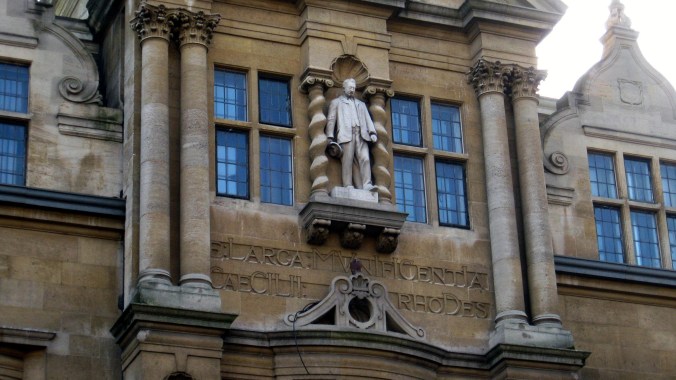
On Statues

Even commentators sympathetic to the aims of Rhodes Must Fall in Oxford (RMFO) have been at pains to point out that the removal of the statue of Cecil Rhodes on the facade of Oriel College is not the most significant element of the campaign’s platform. Amia Srinivasan observes that ‘Neither the Cape Town nor the Oxford campaign has ever been just about statues.’ Amit Chaudhuri laments that ‘it would be…sad if Rhodes Must Fall in Oxford became identified with the statue in Oriel College alone’ because its ambition beyond the removal of the statue, namely that of decolonising education, is more significant. David Olusoga worries that by building their manifestos around calls for the taking down of statues, the more complex and worthy ideas around decolonisation raised by these campaigns have been ‘distorted into a simple right-wrong, yes-no statue debate’. I don’t disagree (much) with these views and indeed, if you want a right-wrong, yes-no answer, this essay will disappoint. But they beg the question of what statues mean and why we keep putting them up if they are so easily relegated to an epiphenomenal register of political discourse.

It’s worth remembering that RMFO itself has never downplayed the significance of the statue in the way that some of those writing in solidarity with it have done. It describes its mission as that of decolonising ‘the institutional structures and physical space in Oxford and beyond’ (emphasis mine) and lists as its first aim the intention to tackle ‘the plague of colonial iconography (in the form of statues, plaques and paintings) that seeks to whitewash and distort history’. In addition, it aims to reform the Eurocentric curricula to which university students continue to be subject and to address the under-representation and lack of welfare provision for black and minority ethnic staff and students at Oxford. One way to think about the place of the statue in this debate is to see it as a means to an end: as Srinivasan rightly notes, ‘complaints of structural racism and calls for curriculum reform don’t draw public attention like the toppling of a statue, and the RMF leaders know this.’ But while clarifying that its campaign is indeed ‘about more than a statue’, RMFO nonetheless insists that

statues and symbols matter; they are a means through which communities express their values. The normalised glorification of a man who for so many is a symbol of their historical oppression is a tacit admission that – as it stands – Oxford does not consider their history to be important. This is incompatible with a community that posits itself as progressive, enlightened and intellectually honest.

Without wanting to suggest that the success of RMFO should be judged by whether the statue falls or endures (it shouldn’t), I want to think with RMFO about what the expressive function of statues entails. Writing in a very different context, Judith Butler has famously worried that the relegation of injustices to the realm of the ‘merely cultural’ effectively downgrades the urgency with which they demand redress. For ‘merely cultural’ read ‘merely symbolic’, and the risk of disappearance of the demand for iconographic decolonisation (exactly what Oriel College might wish for) becomes obvious: if RMFO is about more than ‘just’ a statue and if we all agree that the statue is ‘merely symbolic’, then we might as well get beyond, behind, and beneath the symbol to address its putative ‘real’ while leaving the symbol itself intact. Meanwhile the possibility that the ‘merely symbolic’ has material consequences remains unexplored.

rhodes oxford

***

Continue reading

Solidarity with Academics for Peace: An Open Letter

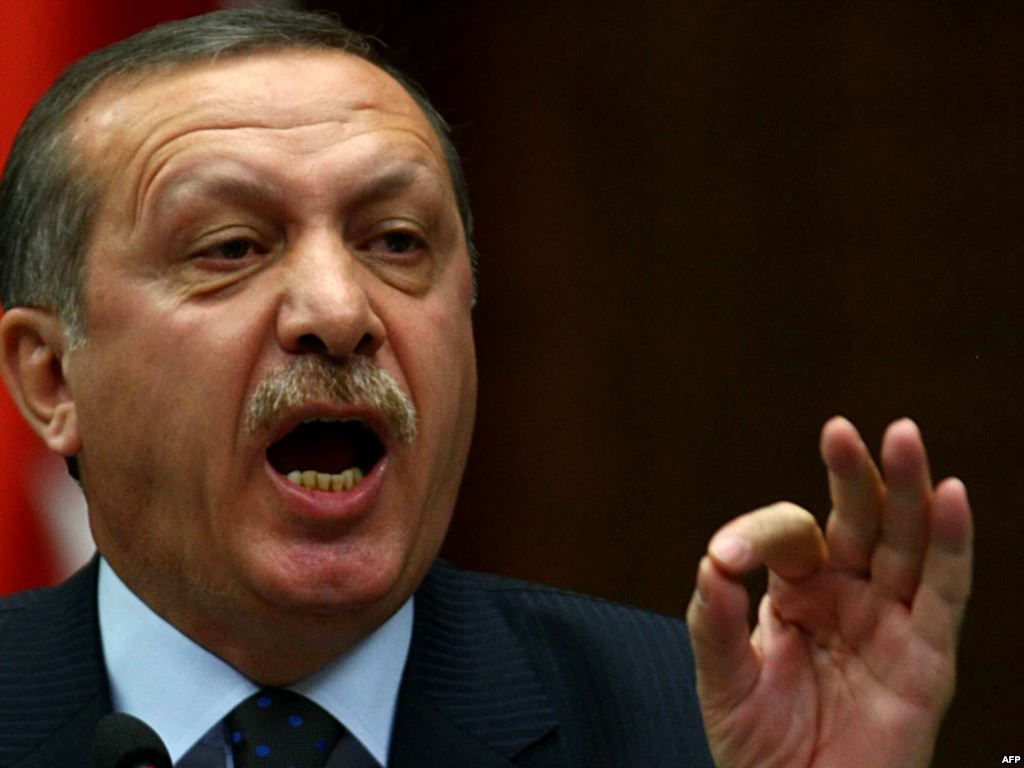
Academic freedom and freedom for political dissent is under serious threat in Turkey. Following the publication of a statement signed by Turkish and Kurdish academics, condemning Turkish state violence against Kurds, 1,128 of the original signatories have been subjected to sustained attacks and threats from the Turkish state and fascist groups.

Erdogan

The Disorder of Things is proud to publish the following letter, signed by 1,211 academics, offering international support of those facing persecution in Turkey. This letter follows multiple statements criticising the Turkish state from research bodies and associations including, within the field of International Relations, ISA, EISA and BISA.

This is one of many such letters of international support for academics in Turkey. A comprehensive collection can be found here.

Continue reading

The Weight of a Man’s Shoe

The third and final piece in a short series on naming and disciplinary representation. Marysia Zalewski is Professor in the School of Social Science at the University of Aberdeen, where she was previously Head of School and Director of Research. Marysia is the author of many text, most recently Feminist International Relations: Exquisite Corpse (Routledge, 2013), and before that Feminism After Postmodernism: Theorising Through Practice (Routledge, 2000) and (edited with Jane Parpart) The “Man” Question in International Relations (Westview, 1998) and Re-thinking the Man Question: Sex, Gender and Violence in International Relations (Zed Press, 2008).


I don’t usually work with definitions of feminism as they so often wrap feminism up too tightly. But this one offers a lot of openings: ‘Feminist theory is one of the ways in which feminism tries to challenge misogyny’s history and refuse its inheritance’ (Morris 1987: 176). I know misogyny isn’t a very comfortable word and not used much contemporarily, but there is something about the idea of challenging work (thinking, ideas, beliefs) which nurture misogyny and its close relations (e.g. sexism), and perhaps more, refusing its inheritance, the trails of which we so consistently witness personally, intellectually, emotionally and politically.

Refusing damaging historical, philosophical and disciplinary inheritances is something that was at the heart of the disquiet at an event planned for the EISA conference in Sicily in September 2015. What was planned was the naming of some of the panel rooms (attaching name plates to doors) after scholars deemed fundamentally important to the founding of the discipline: 18 names in total. All white, all men, all dead. The absence of women in such a list proffers symbolic injury of course; as delegates trooped in and out of panel rooms, constantly being reminded, if subtly, like a ‘casual reminder’ (el Malik, 2015) that the ‘world of international studies’ still belongs to (white) men, even the dead ones. And it’s not as if the spectre of ‘all white/male line-ups’ hadn’t been of serious concern in the year previous to the EISA conference in two of the other professional organisations associated with academic theorising of the international. This was detailed in a letter prepared to send to the EISA organising committee by a group of students and scholars to protest the planned ‘naming event’:

  • The February 2015 International Studies Association annual convention was criticised for the almost complete absence of non-white scholars, and the scarcity of female scholars in its Sapphire Series meant to showcase contemporary International Relations.
  • The April 2015 Political Studies Association annual conference starred an all-male keynote speaker line-up. The Association has since decided to ensure their 2016 conference would have an all-female keynote speaker line-up.

It seems it is still far too easy to readily remember and showcase the already and always remembered, revered and honoured, as Saara Särmä’s ‘All-Male Panels’ tumblr strikingly and creatively illustrates.

Continue reading

“Mansplaining to the Max” or “Know Your Place!”: On How Disciplines Discipline and Police

The second post in a short series on naming and representation in IR spaces. Here Saara Särmä and Cai Wilkinson respond to Knud Erik Jørgensen. Saara is a feminist, scholar and artist. She is the co-founder of the Feminist think tank Hattu and the creator of “Congrats, you have an all male panel!“, “Congrats, you have an all white panel!“, and “Congrats, you did not cite any feminists!“. Cai is Senior Lecturer in International Relations at Deakin University, and has written widely on securitization, international politics in Central Asia and the use of interpretive ethnographic methods in Critical Security Studies. Both Saara and Cai have contributed to The Disorder before.


Knud Erik Jørgensen’s post responding to criticism of the naming of rooms at the EISA conference in September and explaining his rationale does not exactly invite engagement. Indeed, it seems designed to dismiss and silence, the implicit message being that we should know our place in IR and defer to our elders and (by mainstream standards, at least) betters. Feminists, it turns out, might occasionally be seen, but should still not be heard. Nevertheless, we felt that a response is in order.

Our criticism of the all male room decision is, indeed, about issues that are of much more significance than 18 of 32 meeting rooms in Sicily. We share a concern with Jørgensen about the future of IR; we all want to make IR a better place. Why on Earth would we have stayed in IR in the first place, if we didn’t? That’s why we expect more and urge all of us to do better. No-one is perfect and fuck-ups are inevitable. However, this should not prevent us from speaking out when things go wrong. It is axiomatic that we should seek to learn from our mistakes, but this can only happen if we are able to take in criticism and admit responsibility in ways that are productive and open for further engagement, rather than reacting defensively. This is rarely easy.

As the former president of EISA who decided to name the 18 rooms, Jørgensen writes from a position of power. Yet rather than acknowledging his role, he misrepresents what happened by leaving out crucial details about the issue. He purports to be responding to only Särmä and Wilkinson, omitting the fact that there was a letter from BISA Gendering International Relations Working Group, signed by 77 people sent to the EISA board, and that an official reply from the new Executive Committee of EISA acknowledged that the decision to name the rooms was a mistake and lay responsibility in Jørgensen’s hands.

Continue reading

What’s In A Name?

A guest post from Knud Erik Jørgensen. Knud Erik is Professor of Political Science at Aarhus University and the author of many works on European foreign policy, the European Union and European IR theory. He is also former Chair of the ECPR Standing Group on International Relations (2010-2013) and current President of the Governing Council of the European International Studies Association (EISA). This is the first in a short series on naming, representation and power in the discipline of IR.


In a Duck of Minerva blogpost about the 9th Pan-European Conference on International Relations, Cai Wilkinson got most things wrong and three things right. Regarding the latter, the conference and section chairs did indeed manage to produce the probably most diverse programme in the world and they have rightly been highly praised for this accomplishment. I can therefore imagine it took Saara Särmä, the Tumblr artist/activist and admirer of David Hasselhoff a really long search to find something to admonish but then, finally, in a moment of triumph, she spotted 18 of the 32 meeting rooms. Second, greater diversity in organisational structures does not necessarily result in a different politics. This is probably correct but does not demonstrate much insight into policy-making processes within associations or address the issue why one would expect that greater diversity in governance structures would produce a politics that is favoured by Wilkinson. Third, diversity does not just exist along a single axis and the naming of rooms in Sicily illustrates neatly how multiple axes of diversity produce numerous encounters and compete for attention and space.


Wilkinson got most things wrong and therefore claims injury and insult. The rooms in question were not renamed but named. If Wilkinson had asked the organizing committee or for that matter attended the conference she could have learned that 18 converted guest rooms had numbers but got names. Room 5115 became Zimmern and room 5114 became Wolfers, etc. During the conference some panel rooms were unofficially renamed.

Continue reading

The HE Green Paper: (Don’t) Read it and Weep – Part 2: Completing the Market

This post continues where Part 1 left off.

The real goal of the green paper is to accelerate the formation of a fully functioning market in HE – as has already been discussed elsewhere by the brilliant Andrew McGettigan. The opening move was HEFCE’s QA consultation earlier this year which, as I explained on TDOT, was an attempt to dilute quality standards to make it easier for ‘alternative’ (i.e. private) providers to enter the market. Whereas HEFCE hid behind technocratic jargon, however, the green paper openly announces the government’s ‘clear priority’ to ‘widen the range’ of HE providers (p.50). ‘Our aspiration is to remove all unnecessary barriers to entry’ and create a ‘level playing field’ (p.42).

Continue reading

The HE Green Paper: (Don’t) Read it and Weep – Part 1: The TEF & Social Mobility

Britain’s Conservative government recently released its much-awaited (or much-dreaded) ‘green paper’ on higher education (HE), a consultation document that sets out broad ideas for the sector’s future. Masochistically, I have read this document – so you don’t have to. This first post describes and evaluates the centrepiece of the green paper, the Teaching Excellence Framework (TEF), and measures on ‘social mobility’.

Continue reading