One Size Fits All?: Social Science and Open Access

The third post in our small series on open access, publication shifts on the horizon and how it all matters to IR and social science, this time by David Mainwaring  (Pablo’s post was firstthen Colin Wight’s, and following David came Nivi Manchanda, Nathan Coombs and our own Meera). David is a Senior Editor at SAGE with responsibility for journals in politics and international studies. So he oversees journals like Millennium and European Journal of International Relations amongst others (which is how we know him), and can thus offer a close reading of movements within the academic publishing industry. Images by Pablo.


Open Access is the talk of the academic town. The removal of barriers to the online access and re-use of scholarly research is being driven by a cluster of technological, financial, moral and commercial imperatives, and the message from governments and funding agencies is clear: the future is open. What is much less clear is exactly what sort of open future social scientists would benefit from, let alone what steps need to be taken in order to transition away from the existing arrangements of scholarly communication and validation. Here the conversation is in its relative infancy, characterised at this point by a great deal of curiosity, anticipation, confusion, and the shock of the new. What it needs to move towards is a recognition and coordinated response to the fact that although social science may share the same open access goal as the STEM disciplines, the motivations for travelling down that path are not identical, and the context – especially in terms of research funding – is significantly different. The roundtable discussion at the Millennium conference at the LSE on 20th October was an attempt to explore these issues specifically from an IR perspective; further such events (such as those being run by the AcSS and LSE this autumn) are to be warmly welcomed as a means of building broader understanding of the issues among social scientists and facilitating strategic thinking.

Social Science and the Open Access Debate

The long-running debate about how scholarly research communication should be funded and transmitted has been, and remains, a discussion conducted primarily by those working in STEM. Most of the blogosphere’s best-known voices on open access, the likes of Mike Taylor, Michael Eisen, Peter Murray-Rust, Björn Brembs, Cameron Neylon, Kent Anderson, Stephen Curry and Tim Gowers, have backgrounds in STEM research or publishing. (Notable exceptions are the philosopher Peter Suber, who heads the Harvard Open Access Project, and self-archiving advocate Stevan Harnad, a cognitive scientist). To dip into the often heated debates on open access can leave you with the strong impression that, despite the occasional nod to social science and the humanities, the frame of reference is proper, rigorous, natural scientific research, the kind carried out in a laboratory that leads to medical advances and the development of new technologies.

By and large social scientists – and arts and humanities scholars, to whom many of the points raised in this piece apply equally – have had a back seat in this conversation, and the development of open access awareness and capabilities has been slow. Many leading social science journals continue to be distributed in print form due to subscriber demand well over a decade after the launch of their online editions. The American Political Science Association’s 2009 book Publishing Political Science devotes just two out of over 250 pages to open access, and fewer than 10% of the nearly 13,000 signatories of the ‘Cost of Knowledge‘ boycott of Elsevier were social scientists, despite the company’s position as one of the world’s leading publishers of social science journals. That’s not to say that there is nothing going on: the Social Science Research Network has acted as a site for open paper sharing since 1994; there are active ‘open’ movements in disciplines including IR and economics; and the Directory of Open Access Journals lists more than 1,600 social science titles. To date, however, very few of the latter have been able to break into the higher echelons of profile or reputation within their fields.

Social Science and Open Access Mandates

Over the last eighteen months a series of events, including George Monbiot’s polemic in The Guardian and the defeat in the US of the Research Works Act, stirred for the first time a significant consciousness among social scientists about open access. This awareness increased dramatically – in the UK at least – with the publication in June 2012 of the final report of a committee set up by the Government to examine access to published research findings. Continue reading

Open Access Publishing: Potential Unintended Consequences of the Finch Proposals

The second in our series on open access in IR and social science (first post here, third here, fourth here, fifth here, sixth here), this time from Colin Wight. Colin is a Professor in the Department of Government and International Relations at the University of Sydney (having previously been based at Aberystwyth) and is also Editor-in-Chief of the European Journal of International Relations. His work has primarily been in the philosophy of social science (and particularly critical and scientific realism) as applied to IR, and he is currently writing on terrorism, violence and the state. He is the author of Agents, Structures and International Relations Theory: Politics as Ontology and very many articles, including ‘MetaCampbell: The Epistemological Problematics of Perspectivism’‘The Agent-Structure Problem and Institutional Racism’ and ‘A Manifesto for Scientific Realism in IR: Assuming the Can-Opener Won’t Work!’.


The recommendations of Dame Janet Finch in relation to ‘open access’ (OA), seem to represent the first steps in what looks to be an inexorable trend towards a major reform of academic publishing. The OA movement has been gathering momentum and the academic boycott of major Dutch publisher Elsevier, was simply the latest in a series of initiatives aimed at forcing governments, academics and publishers to rethink, not only how research outputs are handled, but also how they are funded.

That the UK Education Secretary, David Willetts, moved so quickly to implementation after the publication of the Finch report, suggests that advocates of OA were knocking at an open door. Most academics are in favour of OA. It makes sense. After all, why should government funded research not be publically available and why should commercial publishers be allowed to fill the coffers of their shareholders on the back of taxpayer funded research?

As a journal editor, I’m also aware of the slow pace of the publishing world in terms of getting pieces to the point of publication after submission. Most journal editors do what they can to speed this process up, but does the publishing system itself, structurally imped the swift publication of research, and if so will OA help speed up this process?

I too am a strong supporter of OA, but the Finch proposals do not deal with all the issues and may, in fact, create more problems than they solve. The swift move to implement the Finch proposals leaves means that there has been a surprising lack of debate between governments, academics and publishers over the potential consequences.

Continue reading

Death To Open Access! Long Live Open Access!

A few weeks ago at the Millennium conference, some of us got together to talk about open access and the political economy of knowledge (re)production in our little corner of academia (“us” being Colin Wight, David Mainwaring, Nivi Manchanda, Nathan Coombs, Meera and me). Over the remainder of this week, we’ll be posting those reflections here for your delectation because, some discussion notwithstanding, labourers in today’s university-factories need to get talking about these things, and fast.


Open Access appears to be here. The Finch Report has recommended it, the Government has endorsed it, and there even seem to be some monies newly available for it. The battle is won, and the age of unfettered academic-public intercourse is upon us. Well, not quite. Finch’s preference for Gold Open Access, in which journals continue to receive revenues and make profits and in which academics (or their institutions) pay a fee of several thousand pounds per article for the pleasure (the so called Article Processing Charge (APC) system, which will receive greater attention in later posts), is deeply problematic (well-reasoned explanations for why available from Stevan Harnad and Peter Coles (Telescoper), with more qualified views, even cautious support, from Stephen Curry and Repository Man). Also, the monies aren’t new, and have instead been extracted from existing research budgets (and what a complete and utter surprise that is).

This is all cause for serious concern, and relates closely to the kinds of arguments that are developed and deployed in favour of Open Access (or, to be more provincial about it, Open IR). There are three kinds of arguments for opening up the journal system, arguments from access, ethics and cost, and we are in danger of letting the first overwhelm the different, and better, cases made in the name of the second and third.

The first set of arguments has to do with the problem of access: that the journal system is broken because it creates barriers to the circulation of academic knowledge. The journal as usually conceived was an ingenious and appropriate method for collating and distributing knowledge in the 18th century, but is now redundant. And yet journals – with their pay walls – remain the only (or at least the principal) vector for success or employment in academic life. This is doubly problematic since the various metrics that journal comparisons and prestige enable themselves then become vectors of discipline and control, even in the face of the many, many reasoned objections to such measures.

Continue reading

Eurocentrism, Racism: What’s In A Word?: A Response to Bowden, Sabaratnam and Vucetic

The fifth and final post in our symposium on John M. Hobson’s The Eurocentric Conception of World Politics: a reply from John himself, responding to the commentaries from Meera, Srdjan and Brett. John’s original summary post is, of course, still available too.


Introduction: All for one and one for all?

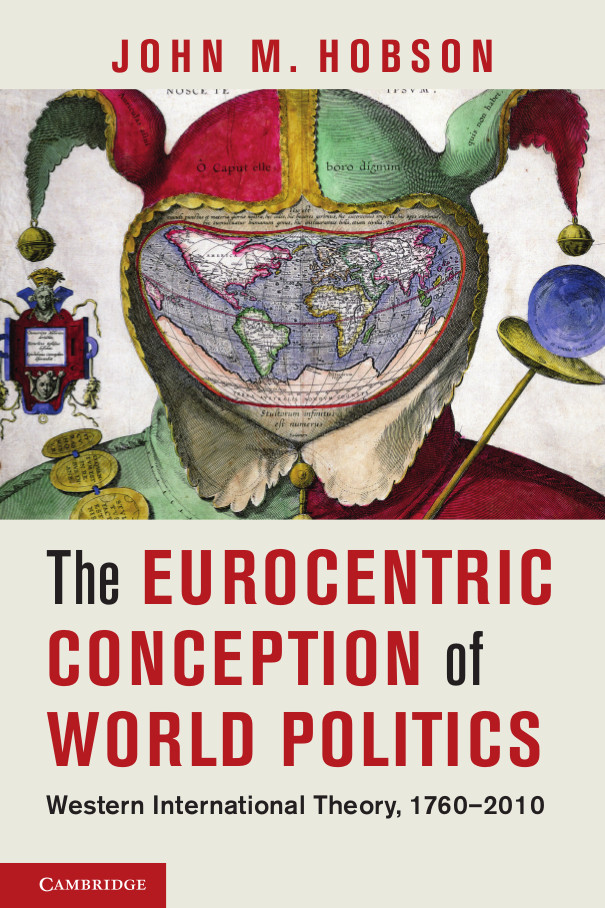
I would like to begin by thanking most sincerely my three blog interlocutors for having gone to the trouble of reading my new book, never mind taking the time to write up their extremely thoughtful and interesting blog responses. Of course, the cynic reading all of this might be forgiven for thinking that such a blog forum is hardly a ‘testing environment’ for Hobson’s book, given that his interlocutors are either postcolonialists or at least influenced by postcolonialism and have presumably, therefore, been “cherry-picked” for their potentially sympathetic tendencies. Even the titles that they have chosen, so the cynic might think, would appear to be symptomatic of this, with Meera Sabaratnam’s piece proclaiming – extremely generously I must concede – that my book has succeeded in ‘blowing up the disciplinary citadel of International Relations’, while Srdjan Vucetic’s title projects even further the meaning of the front cover of my book to that which I had intended, suggesting that IR is a ‘foolish discipline’ given his resounding agreement that it suffers from a pervading Eurocentrism. In this vein it might be thought that Brett Bowden’s title – ‘Eurocentrism and More’ – chimes in with yet another wholehearted rendition of the now familiar chorus of ‘IR is a Eurocentric discipline’. So why the fuss about all this and is there much point in reading on? For it would seem that we’re all agreed and there’s nothing to debate, right?

Well no, not quite all for one and one for all. Continue reading

Eurocentrism and More

For this fourth post in our symposium on John M. Hobson’s The Eurocentric Conception of World Politics, TDOT is delighted to welcome a response from Brett Bowden, Associate Professor of History and Political Thought at the University of Western Sydney.  The first three posts included an introduction from the author, and responses by TDOT’s Meera and Srdjan. In the next few days we look forward to a response from the author.


Let me begin by stating what will soon become obvious: this is not a book review of John Hobson’s The Eurocentric Conception of World Politics. The earlier posts from Meera and Srdjan have done an admirable job of engaging with the book in greater depth than I intend to here. Given that this is a blog, I will lay my cards on the table upfront – I’m a fan of John Hobson’s work. And I’m a big fan of The Eurocentric Conception of World Politics, which probably comes as no surprise to anyone remotely familiar with my own Empire of Civilization (all three of you). More specifically, I largely agree with the general tone and thrust of John’s book and the larger points he seeks to make about Eurocentrism. I don’t always agree with the details or finer points, but I too don’t want to split hairs. For instance, as John notes, I am not so kind to Kant, as I think his Lectures on Geography cast a doubt on some of his cosmopolitan claims and anti-imperialist credentials. But this is a minor difference of opinion that has no real bearing on the larger points being made about Eurocentrism and the study of world politics, or more specifically, international theory, for there is a difference.

As noted in an earlier posting, similar observations could be made about the humanities and social and behavioural sciences more generally, which is where, as an undergrad, I was first struck by Eurocentrism, albeit probably without knowing it by name. I can’t recall all of the details, but it was in a small seminar (only three students and a lecturer) on political philosophy where something we were reading and some comments on it struck me as rather odd; I made a point of raising my objections, which were dismissed by my three interlocutors, and I recall thinking to myself: ‘Wow, people still think like that’ – and well-educated people at that. Yes, Eurocentrism, along with a few other accompanying -centrisms are alive and well. This book won’t be the death of Eurocentrism, but hopefully it will shine a light in to some of the darker corners of the discipline and help to open the eyes and ears of a new generation of students and scholars. Which brings me to my purpose here; given that I’ve said I’m not exactly reviewing the book.  The Eurocentric Conception of World Politics and some of John’s earlier work has done a great service in bringing contentious issues to the fore where they can be debated openly – and now that John has opened up the can of worms, I’m going to jump on the bandwagon, get on my soapbox and ride on his coattails. Continue reading

The Citadel Has Been Blown Up. Hurray! Next? A Response to Hobson

This is the second post in a symposium on John M. Hobson’s new book, The Eurocentric Conception of World Politics. The series began with a post by the author summarising the argument of the book and laying out some provocations for sympathetic readers. In the next few weeks, we will have further posts from Srjdan and Brett Bowden, followed by a reply from John.

Update: Srdjan’s post and Brett’s post are now up.


I was at an IR event last year where the speaker jovially declared that they just did not care about being, and being accused of being, Eurocentric. At the time, I found it both a little shocking and depressing that they could see fit to dispense with that fig leaf of serious acknowledgement that often accompanies discussions of Eurocentrism.  And indeed I thought, glumly, that it perhaps reflected many scholars’ underlying attitudes to the issue – a tokenistic practice of acknowledgement underpinning a wider apathy or disconnection. What only struck me later was also the possibility that the speaker also didn’t really understand the issue which was batted away so carelessly. Indeed, it is unclear that many ‘mainstream’ IR scholars truly understand the problem of Eurocentrism, given the mythologised twin deaths of colonialism and scientific racism in 1945 (or so).

Seriously?

So, Hobson is knocking at the door more loudly, with a bigger stick, and much more paperwork.  Continue reading

Re-visioning Eurocentrism: A Symposium

The Disorder of Things is delighted to welcome a post from John M. Hobson, which kicks off a blog symposium on his new book The Eurocentric Conception of World Politics: Western International Theory, 1760-2010. Over the next few weeks there will be a series of replies from TDOT’s Meera and Srdjan, as well as special guest participant Brett Bowden, followed finally by a response from John himself. [Images by Meera]

Update: Meera’s response, Srjdan’s response and Brett’s response are now up. 


Introduction

As I explain in the introduction to The Eurocentric Conception of World Politics, my book produces a twin-revisionist narrative of Eurocentrism and international theory.[i] The first narrative sets out to rethink the concept of Eurocentrism – or what Edward Said famously called ‘Orientalism’ – not so much to critique this founding concept of postcolonial studies but rather to extend its reach into conceptual areas that it has hitherto failed to shed light upon.[ii] My central sympathetic-critique of Said’s conception is that it is reductive, failing to perceive the anti-imperialist face of Eurocentrism on the one hand while failing to differentiate Eurocentric institutionalism or cultural Eurocentrism from scientific racism on the other hand. As such, this narrative is one that is relevant to the many scholars who are located throughout the social sciences and who are interested in exploring the discursive terrain of ‘Eurocentrism’. These, then, would include those who are located in International Relations of course but also those in Politics/Political theory, Political Economy/IPE, political geography, sociology, literary studies, and last but not least, anthropology.

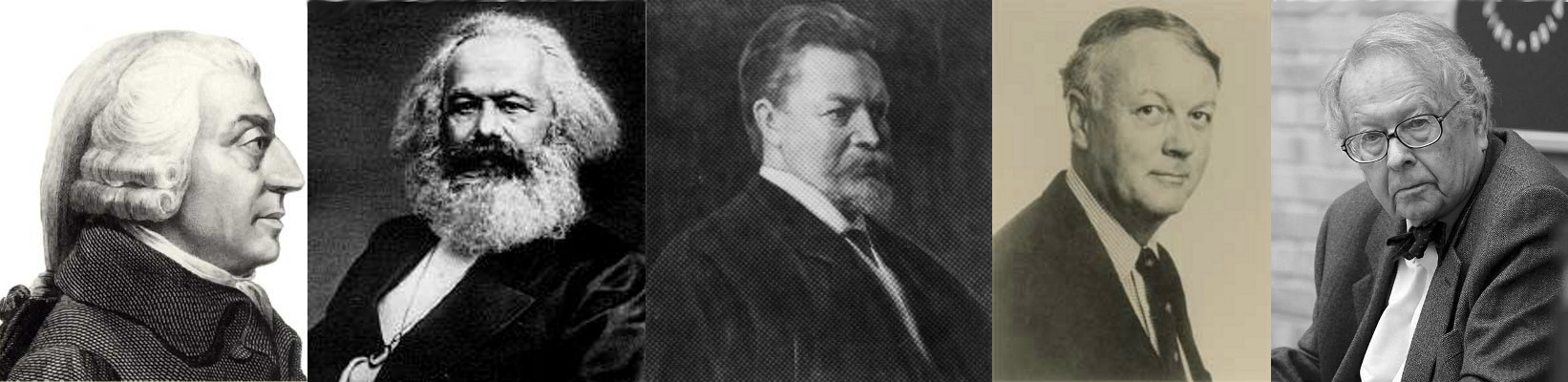
The second narrative rethinks international theory as it has developed across a range of disciplines. It stems back to the work of Adam Smith in the 1760s and then moves forwards down to 1945 through the liberals such as Kant, Cobden/Bright, Marx, Angell and J.A. Hobson, Zimmern, Murray and Wilson, onto the Marxists such as Marx and Engels, Lenin, Bukharin, and Luxemburg, and culminating with the realists who include Mahan and Mackinder, Giddings and Powers, Ratzel, Kjellén ,Spykman, von Bernhardi, von Treitschke and, not least, Hitler. After 1945 I include chapters on neo-Marxism (specifically neo-Gramscianism and world-systems theory), neo-liberalism (the English School and neoliberal institutionalism) and realism (classical-realism, hegemonic stability theory and Waltzian neorealism). This takes the story upto 1989. I then have two chapters on the post-Cold War era which examine what I call ‘Western-realism’ and ‘Western-liberalism’. The final chapter provides an overview of the changing discursive architecture of Eurocentrism and scientific racism, while also revealing how international theory has, in various ways, always conceived of the international system as hierarchic rather than anarchic. Although this is clearly a highly controversial and certainly counter-intuitive claim, it nonetheless in effect constitutes the litmus test for the main claim of the book: that international theory for the most part rests on various ‘Eurocentric/racist’ metanarratives. And ultimately my grand claim posits that international theory in the last quarter millennium has not so much explained international politics in an objective, positivist and universalist manner but has sought, rather, to parochially celebrate and defend or promote the West as the pro-active subject of, and as the highest or ideal normative referent in, world politics.

Continue reading

Queerly Global Politics: Some Events

Normal blogging service soon to be resumed. In the meantime, two gender and world politics events of note. First, on Friday 2 November, a roundtable on gender, militarisation and violence at LSE, featuring Cynthia Enloe, Aaron Belkin, Kim Hutchings,and others. It will be excellent. Second, the call for papers for the 2nd International Feminist Journal of Politics is out. The conference is a way away (17-19 May 2013 at the University of Sussex), but early paper/panel submissions are encouraged. Details below the model military aesthetic.

(Im)possibly Queer International Feminisms

Feminists taught us that the personal is political. International Relations feminists taught us that the personal is international. And contemporary Queer Scholars are teaching us that the international is queer. While sometimes considered in isolation, these insights are connected in complex and sometimes contradictory ways. This conference seeks to bring together scholars and practitioners to critically consider the limits and possibilities of thinking, doing, and being in relation to various assemblages composed of queer(s), international(s), and feminism(s).

Questions we hope to consider include: Who or what is/are (im)possibly queer, (im)possibly international, (im)possibly feminist, separately and in combination? What makes assemblages of queer(s), international(s) and feminism(s) possible or impossible? Are such assemblages desirable – for whom and for what reasons? What might these assemblages make possible or impossible, especially for the theory and practice of global politics?

We are interested in papers and panels that explore these questions through theoretical and/or practical perspectives, be they interdisciplinary or located within the discipline of International Relations. Sub-themes include (Im)Possibly Queer/International/Feminist:

  • Heteronormativities/Homonormativities/Homonationalisms
  • Embodiments/Occupations/Economies/Circulations
  • Temporalities/‘Successes’/‘Failures’
  • Emotions/Desires/Psycho-socialities
  • Technologies/Methodologies/Knowledges/Epistemologies
  • Spaces/Places/Borders/(Trans)positionings
  • States/Sovereignties/Subjectivities — Crossings/Migrations/Trans(gressions)
  • (In)Securities

We invite submissions for individual papers or pre-constituted panels on any topic pertaining to the conference theme and sub-themes. We also welcome papers and panels that consider any other feminist IR-related questions. Send abstracts (250 words) to: Joanna Wood (j.c.wood [at] sussex.ac.uk)

Deadline for submissions: 31 January 2013

Giving Back (Without Giving Up) In Neoliberal Times

A guest post from our sometime co-conspirator Wanda Vrasti. Wanda teaches social studies at the Humbolt University and international politics at the Feie Universitaet in Berlin. Her book Volunteer Tourism in the Global South just came out with Routledge. She has also written on the uses of ethnographic methods in IR (in Millennium, twice) and on questions of global governmentality (in Theory & Event and Review of International Studies). Her current interests (still) include the politics of work and leisure, social movements on the Left, and anarchism and autonomism. Images by Pablo.

UPDATE (9 Nov): Wanda is now happily a member of the Disordered collective. And thus, this is retrospectively no longer a guest post.


Last week my PhD dissertation entitled Volunteer Tourism in the Global South: How to Give Back in Neoliberal Times came out as a book with Routledge’s Interventions series. Publication usually marks the end or the completion of a research project, but in this case I feel like the puzzles that animated it are still very much alive in my mind. Rehashing some of these, at my blog hosts’ invitation (also considering that the book goes for a price I imagine not many people will be able to afford outside university libraries), is an exercise in keeping the thinking and writing that went into this book alive beyond its publication date.

In a sentence, the book is an ethnographic study of volunteer tourism projects in the Global South (Ghana and Guatemala specifically) with a particular focus on the kinds of subjects and social relations this rite of passage cultivates and the reasons why we attach so much value to them. The argument I make in the book is not very different from the common indictment against voluntourism seen in the media. The accusation is that volunteer tourism does more for the Western (in my case exclusively white middle-class) tourists who enrol in these all-inclusive tours of charity than for the impoverished communities they are claiming to serve. Volunteering programs, most of which focus on English teaching, medical assistance or minor construction projects, have neither the trained staff nor the organizational capacity to make a lasting impact upon the lives of developing populations. Often the commercial travel agencies offering these tours fail to deliver even basic assistance goods, let alone encourage grassroots community initiatives that could lead to more sustainable change. What they can offer, however, to Western customers willing to pay $500 to $2,500/month is the chance to travel to places outside the Lonely Planet circuit without being a tourist. A tourist, as we have all experienced it at some point, is a rather pitiable figure reduced to gazing at things or being gazed at, their only meaningful encounter being with the guide book. A volunteer, on the other hand, can live with a local family, get to know traditional cultures, and participate in the collective good. Not surprisingly, the formula has become a growing trend among high-school and college graduates hard pressed to find many opportunities for meaningful participation in the alienated (and austere) market societies they come from.

Sadly, the majority of volunteers I worked with in Ghana and Guatemala did not have their feelings of lack and longing satisfied on these tours. Besides having to cope with all sorts of cultural frustrations and racial tensions, the work we were doing felt boring and useless. Our tour organizers failed to provide work that was challenging and gratifying for the volunteers and socially useful for the local community. Still, most people returned home with an improved sense of self, feeling like these trying circumstances had helped them develop greater confidence and cultural awareness.

Volunteer tourism appears here as yet another form of aesthetic consumption designed to confirm the racial, economic and emotional superiority of white middle-class individuals who are able to afford it. Continue reading

The End Of IR Theory As We Know It…

A guest post on the state of International Relations from Felix Berenskoetter. Felix is Lecturer in International Relations at SOAS, University of London. He holds a PhD from the LSE and works on theories and concepts in IR; politics of space and time; critical approaches to European Security, and dynamics of friendship and estrangement in transatlantic relations. Felix has published articles in various journals, is a former editor of Millennium and co-editor of Power in World Politics (Routledge, 2007). He is also co-founder and current chair of the ISA Theory Section.


In case you missed it, recent ISA and BISA conferences saw panels contemplating whether ‘IR Theory’ has come to an end. This question, posed by the editors of EJIR, was discussed by a range of distinguished scholars whose answers ranged from ‘yes’ to ‘no’, in the process reflecting on the meaning of ‘theory’ and ‘end’. While state of the art exercises can be tiring, the contributions will be worth reading when they appear in an EJIR special issue later this year.

Yet I could not help wondering what the answers would have been had the panels featured not established professors, but junior scholars at the start of their career. Indeed, would it not be more adequate to have the latter group engage this question? After all, they tend to be the ones teaching introductory IR courses, which are expected to give an overview of theoretical arguments and debates. And they enter the profession with a significant research project under their belt (the PhD), which informs their first wave of publications and likely influences future projects that will shape the field. So what does that generation think of ‘IR Theory’? What theories and what kind of theorizing is prevalent in their teaching and writing? Continue reading