By including what violates women under civil and human rights law, the meaning of “citizen” and “human” begins to have a woman’s face. As women’s actual conditions are recognized as inhuman, those conditions are being changed by requiring that they meet a standard of citizenship and humanity that previously did not apply because they were women. In other words, women both change the standard as we come under it and change the reality it governs by having it applied to us. This democratic process describes not only the common law when it works but also a cardinal tenet of feminist analysis: women are entitled to access to things as they are and also to change them into something worth our having.
Thus women are transforming the definition of equality not by making ourselves the same as men, entitled to violate and silence, or by reifying women’s so-called differences, but by insisting that equal citizenship must encompass what women need to be human, including a right not be sexually violated and silenced. This was done in the Bosnian case by recognizing ethnic particularity, not by denying it. Adapting the words of the philosopher Richard Rorty, we are making the word “woman” a “name of a way of being human.” We are challenging and changing the process of knowing and the practice of power at the same time.
-Catharine MacKinnon, “Postmodernism and Human Rights,” Are Women Human?
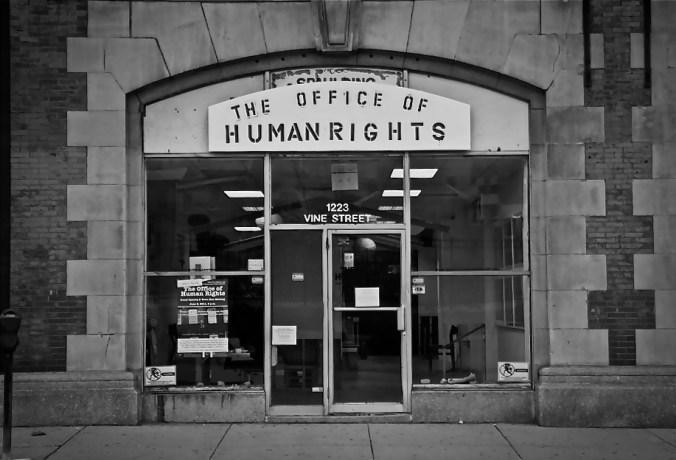
Housing is a Human Right Exhibition, Philadelphia (original photo by Annie Seng)
I ain’t got no home. I’m just a roamin’ round, just a wandering worker, I go from town to town. And the police make it hard wherever I may go. And I ain’t got no home in this world anymore.
My brothers and my sisters they’re stranded on this road. A hot and dusty road that a million feet have trod. Rich man took my home and drove me from my door. And I ain’t got no home in this world anymore.
Was a farmin’ on the shares and always I was poor. My crops I lay into the banker’s store. My wife took down and died upon the cabin floor. And I ain’t got no home in this world anymore.
Now as I look around it’s mighty plain to see this world is such a great and funny place to be. Ah, the gamblin’ man is rich and the working man is poor. And I ain’t got no home in this world anymore.
-“I Ain’t Got No Home in this World” by Woodie Guthrie
Beginnings Are Difficult
How to start something new? This question troubles the academic as well as the activist. At the moment it troubles me both as a question of inquiry and as a meta-question of method.
In my previous work I haveargued that human rights should be judged first and foremost by the consequences they bring about. Do human rights enable new forms of politics? Do they enable politics that increase the control we have over our lives, or that reduce the suffering and humiliation we are exposed to? Or do they confine us in a liberal subjectivity that makes wider visions of justice impossible, which push us to reconcile our beautiful revolutionary dreams to the limited horizon that contemporary liberal capitalism imposes?
I have offered a qualified defense of human rights as a democratising ethos, which suggests that human rights can enable everyday people to challenge the terms of legitimate political authority, including the institutional shape of their government and the makeup of their communities. This is done by formally opening up the identity of “rights holder” to anyone, regardless of their social position. This opening, however, is only formal and in that formality human rights have an ambiguous significance. For this reason, I have argued that to think of human rights as a democratising ethos also requires that we attend to the politics of human rights. This means that ensuring that human rights support democracy and equality is a political struggle as well as an ethical vision.
Imagination is the chief instrument of the good. It is more or less a commonplace to say that a person’s ideas and treatment of his fellows are dependent upon his power to put himself imaginatively in their place. But the primacy of the imagination extends far beyond the scope of direct personal relationships. Except where “ideal” is used in conventional deference or as a name for a sentimental reverie, the ideal factors in every moral outlook and human loyalty are imaginative. The historic alliance of religion and art has its roots in this common quality. Hence it is that art is more moral than moralities. For the latter either are, or tend to become, consecrations of the established order. The moral prophets of humanity have always been poets even though they spoke in free verse or by parable. Uniformly, however, their vision of possibilities has soon been converted into a proclamation of facts that already exist and hardened into semi-political institutions. Their imaginative presentation of ideals that should command thought and desire have been treated as rules of policy. Art has been the means of keeping alive the sense of purposes that outrun evidence and of meanings that transcend indurated habit.
You got a song you wanna sing for me?
Sing a song, singing man.
Sing another song, singing man.
Sing a song for me.
One for the pressing, two for the cross,
Three for the blessing, four for the loss.
Kid holdin’ a weapon, walk like a corpse
In the face of transgression, military issue Kalash
Nikova or machete or a pitchfork.
He killing ’cause he feel he got nothin’ to live for
In a war taking heads for men like Charles Taylor
And never seen the undisclosed foreign arms dealer.
Thirteen-year-old killer, he look thirty-five,
He changed his name to Little No-Man-Survive.
When he smoke that leaf shorty believe he can fly.
He loot and terrorize and shoot between the eyes.
Who to blame? Its a shame the youth was demonized.
Wishing he could rearrange the truth to see the lies
And he wouldn’t have to raise his barrel to target you,
His heart can’t get through the years of scar tissue.
60 million people and counting have now heard about Invisible Children’s “Kony 2012“. Criticism of the group has been substantialandjudicious. The group has defended themselves. Humorousmemes are proliferating. Over-exposure has already begun to create awareness fatigue. Yet there is a serious issue largely unaddressed: the most troubling elements of the “Kony 2012” phenomenon are not unique to Invisible Children, but reflect serious moral and political problems with the pursuit of international criminal justice, and in particular the mission and politics of the International Criminal Court and their controversial prosecutor, Luis Moreno-Ocampo.
To put it bluntly: while Jason Russell addresses his audience in the same way he addresses his five-year-old son Gavin, which is clearly inappropriate given the complexity of the issues he’s asking us to consider, Russell’s framing of the evil of Joseph Kony and “our” responsibility to stop him is importantly similar to the narrative of international criminal law, and Ocampo in particular. We should not be too quick to denounce the moral idiocy of Russell as a personal failing – his sentimental and messianic film represents a revealing apotheosis rather than a transgressive break from our sense of international justice. There are unpleasant resonances between Russell and Ocampo – the ICC prosecutor has already praised the group, saying,
“They’re giving a voice to people who before no-one knew about and no-one cared about and I salute them.”
But the commonalities run deeper than a strategic endorsement and should give us pause before we conclude that while Invisible Children may be unscrupulous and ill-informed, some form of outside intervention is needed to save the children of the Great Lakes region of Africa (to say nothing of the adults being killed) – and yes, an arrest warrant and possible trial by the ICC is as much an intervention as a military invasion. Russell’s call to “stop Kony” is disturbing beyond his narcissism and the organisation’s inept policies and campaigns, his messianic moralising, in which he positions himself (and those like him who just need to be roused to action) as the hero for the powerless victim, is a single melody line in the score that guides the choir singing for international justice. His self-regarding indignation, and our discomfort, should inspire introspection into the desires that lead us to demand that Kony stand trial at the ICC or to insist that “we” must do something to stop the evil that besets that part of Africa.
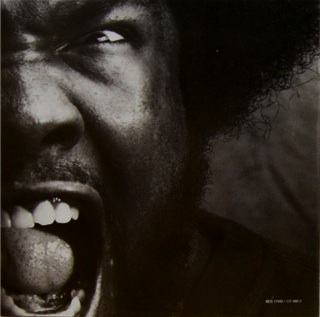
Taken from Phrenology – featuring lyrics by Amiri Baraka, music by The Roots and the unofficial and strangely charming video by a local Philadelphia film maker, Bryan Green. More on this album to come…
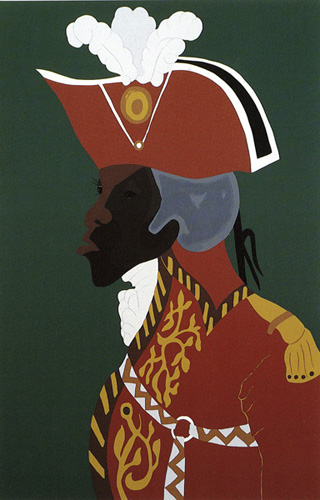
All of the authors take account of the ambiguous history of human rights, in which they can be said to have inspired the Haitian, American and French revolutions, while also justifying the counterrevolutionary post-Cold War order dominated by the United States. Yet recognising this ambiguity without also acknowledging the distinctive reconstruction of contemporary human rights that makes them part of a neo-liberal international order and the unequal power that makes such a quasi-imperial order possible would be irresponsible. A primary contribution made collectively by these texts is that they clearly diagnose the way human rights have been used to consolidate a particular form of political and economic order while undercutting the need for, much less justification of, revolutionary violence. Williams says of Amnesty International’s prisoners of conscience, who serve as archetypal victims of human rights abuse,
the prisoner of conscience, through its restrictive conditions, performs a critical diminution of what constitutes “the political.” The concept not only works to banish from recognition those who resort to or advocate violence, but at the same time it works to efface the very historical conditions that might come to serve as justifications – political and moral – for the taking up of arms.
Human rights, then, are for the civilised victims of the world, those abused by excessive state power, by anomalous states that have not been liberalised – they are not for dangerous radicals seeking to upset the social order.
This post (presented in two parts) is drawn from a review article that will be forthcoming in The Journal of Intervention and Statebuilding, which looks at a recent set of critical writings on human rights in order to consider the profound limitations and evocative possibilities of the contested idea and politics of human rights.
The central tension of human rights is that they propagate a universal and singular human identity in a fragmented political world. No one writing about human rights ignores this tension, but the most important question we face in judging the value of human rights is how to understand this tension and the divisions it creates. The expected divisions between good and evil, between moral universalists and dangerous relativist, between dignified interventionists and cowardly apologists, have long given shape to human rights, as both an ideal and a political project. Seeing the problems of (and for) human rights in these habituated ways has dulled our capacity for critical judgment, as few want to defend evil or violent particularisms or advocate passivity in the face of suffering. Even among serious and determined critics our inherited divisions are problematic (and increasingly over rehearsed), whether we think of human rights as the imposition of Western cultural values, or in terms of capitalist ideology serving the interests of neo-liberal elites, or as an expression of exceptional sovereign power at the domestic and global levels. The ways that these divisions deal with the tension at the heart of human rights misses the ambiguity of those rights in significant ways.
Rather than trying to contain the tensions between singularity and pluralism, between commonality and difference, in a clear and definitive accounting, the authors of the texts reviewed here allow them to proliferate. Rather than trying to resolve the problem of human rights, they attempt to understand human rights in their indeterminate dissonance while exploring what they might become. To create and invoke the idea of humanity is not a political activity that is unique (either now or in the past) to the ‘West’. The people most dramatically injured by global capitalism sometimes fight their oppression by innovating and using the language and institutions of human rights. Political exceptions – the exclusion of outsiders, humanitarian wars and imperialist conceits – are certainly enabled by the same sovereign power that grants rights to its subjects, which is a metaphorical drama all too easily supported by human rights, but it is only a partial telling of the tale, a telling that leaves out how human rights can reshape political authority and enable struggles in unexpected ways. The work of these authors pushes us to reject the familiar divisions we use to understand the irresolvable tension at the centre of human rights and see the productive possibilities of that tension. If human rights will always be invoked in a politically divided world, and will also always create further divisions with each declaration and act that realises an ideal universalism, then our focus should be on who assumes (and who can assume) the authority to define humanity, the consequences for those subject to such power, and the ends toward which such authority is directed. Continue reading →
“In his dreadful lassitude and objectless rage, Cobain seemed to give wearied voice to the despondency of the generation that had come after history, whose every move was anticipated, tracked, bought and sold before it had even happened. Cobain knew that he was just another piece of spectacle, that nothing runs better on MTV than a protest against MTV; knew that his every move was a cliché scripted in advance, knew that even realizing it is a cliche”. (p. 15)
This is as concise and accurate a summary of the dead-end of Nirvana’s nihilism as one could ask for – but as an illustration of the wider impotence of cultural and artistic expression to push beyond a dominant social vision of neo-liberal capitalism it’s not wholly convincing.
Fisher is right about Cobain, but his observation begs the obvious question: is Nirvana the wrong listening choice? If we turn to artistic expression for exemplars of how to begin anew, to think beyond our current moment, to escape the scripted thoughts, words and movements that structure our lives, this is actually a vital question.
Who should we be listening to?
This is a question that overflows beautifully, but here I want to explore the significance of one group – The Roots. This is partly an expression of personal love, but it’s also borne out of two less subjective impulses: (1) The Roots are insufficiently appreciated as an artistic and intellectual resource – they are artists in need of critics and journalists equal to their own insight and intensity; and (2) while I appreciate the efforts of those studying politics in an academic setting to bring in cultural resources, I don’t identify with International Relations’ obsession with Science Fiction (even as I appreciate the significance genre fiction can achieve), nor do I get much out of Political Theory’s tendency to appeal to classicdramas, and themultidisciplinaryuseofcinema, while fascinating, rarely leaves me inspired – so, returning to what one knows and finds inspiring – I want to argue it’s well worth listening to The Roots (and hip hop music) to understand the world and find profound insights.
A simple proposition: The Roots are the most important artists in popular music today – not bigger than Jesus, or the only band that matters – but possibly the best hip-hop group ever and a creative and intellectual force the quality of which is rare in music, especially music that maintains a popular orientation. This proposition matters because understanding and appreciating The Roots’ work over the past thirteen years takes the listener into an artistic world that expresses a very particular experience of the first decade of the 21st century (black, urban and American) through profound musical originality and penetrating intelligence, this experience provides a very different vision that has the potential to disrupt the exhausted and nihilistic sense of inevitability that Fisher so rightly identifies.
“I’m kinda like W.E.B. Du Bois meets Heavy D and the Boyz”
– Dice Raw, “Get Busy”, Rising Down (2008)
W.E.B. Du Bois‘ idea of double-consciousness provides a way of appreciating the importance of The Roots. Double-consciousness is defined by a “sense of always looking at one’s self through the eyes of others, of measuring one’s soul by the tape of a world that looks on in amused contempt and pity.” While this burden threatens to overwhelm a positive sense of self-awareness and confidence, it also enables a second-sight in women and men systematically repressed and whose experiences are devalued, allowing a sharper vision of social violence and providing substantial resources for struggle and emancipation. The Roots carry over this sense of double-consciousness, but rendered more positive and confident by decades of growing black self-awareness, increasing social strength and important political victories in the US and more widely, such that they render the potential psychological weakness of double-consciousness into an incisive and positive vision, one wholly at odds with Cobain’s musical and cultural legacy of frustrated exhaustion.
Speaking of traditions of black music in America, Du Bois says,
“Little of beauty has America given the world save the rude grandeur God himself stamped on her bosom; the human spirit in this new world has expressed itself in vigor and ingenuity rather than in beauty. And so by fateful chance the Negro folk-song—the rhythmic cry of the slave—stands to-day not simply as the sole American music, but as the most beautiful expression of human experience born this side the seas. It has been neglected, it has been, and is, half despised, and above all it has been persistently mistaken and misunderstood; but notwithstanding, it still remains as the singular spiritual heritage of the nation and the greatest gift of the Negro people.”
Black culture in America provides an alternative reservoir of tradition (in the form of hip-hop culture, black musical traditions, political radicalism and distinctive forms of socially engaged religious practice) that not only nourishes the social imagination but is resistant to co-option. Hip-hop music is received by the dominant culture as a threat that must be commodified and tamed, but the refusal of a hip-hop artist to acquiesce to their own commodification need not reduce to an empty and ironic refusal nor solipsistic underground fetishism. The Roots, among others, maintain both a lucrative musical career and a challenging artistic output, at least in part, because of their capacity to occupy multiple subject positions – knowing that the music business is a business, intentionally challenging young, black, urban identities normally associated with hip hop, exploiting the fear of black assertiveness in mainstream culture in the US and working as “working musicians” who write, perform, produce, arrange for multiple artists, across generations and genres. But they are not simply polymaths too nimble to succumb to commodification – they are also self conscious creators of their own musical and intellectual space, shared in common, tied to tradition, and pushing relentlessly outward and forward. It is this quality, so essential to beginnings, that I focus on here.
Over a series of posts I want to consider the visions contained in The Roots music, with a particular focus on the political importance of their work – running from their groundbreaking 1999 album, Things Fall Apart, to their 2011 concept album, undun, I pull out a central theme from each album, which hardly defines the limits of their significance, but rather focuses on some of the insights they offer up with abundance.
Beginning are difficult – this is a simple truth that is particularly pertinent to anyone who feels pressed in by the world as it has been given, who struggles to find fractures in the world that might be expanded far enough to stand up to their full height. Partly this is a struggle to give expression to the discontent one feels – it’s not enough to know, as the early Roots’ records insistently documented, that one’s culture has been distorted, co-opted, defiled and weakened by its basest impulses – we need an analysis, an account of the dynamics that make’s our present condition combustible material for making new worlds.


 The Disorder Of Things