Pacific Redemption Songs

Te Hau

“Te Hau” by Abby Wendy

A few years ago I was reasoning with members of Ras Messengers, a reggae-jazz band who had in 1979 toured Aotearoa New Zealand. The Rastafari musicians recollected their experiences with various Māori communities. Occasionally female Māori elders (kuia), in introducing themselves to the band, would connect their genealogies back to Africa. The kuia did this as part of an indigenous practice called whakapapa, which literally means to “make ground”. It is a practice that allows diverse peoples who might never have met to find a genealogical route through which they are already personally related.

Chauncey Huntley from Ras Messengers showing the Rakau (traditional sticks) that he was gifted thirty years previously

Rastafari also have a practice called “grounding”, which is to collectively reason on the meaning and challenges of contemporary life. Over– or inner- standing (instead of under- standing) is cultivated through the guidance of natural laws and – often with the help of drums, fire and holy herb – the intuition provided by spiritual agencies (Irits) that allows ones to pierce the veil of deathly inequality, oppression and dehumanization so as to redeem living energies and relationships that might help with healing in the present. When I think of Irits I also think of a key concept of Māori cosmology called hau. Overstood by Māori Marsdenhau is the breath or wind of spirit which is infused into the process of birth to animate life and associated with the intention to bind peoples together in righteous living.

A key stone of the Rastafari faith is that adherents collectively redeem their African genealogy so as to breathe life back into their suffering condition and leave behind the death of enslavement and its contemporary legacies. So when I heard of this story of the kuia and Ras Messengers, I imagined how this practice might have given strength to the Ras. After all, in those days (and perhaps still today), peoples of various African heritages were often forced (directly or indirectly) to disavow those connections themselves.

Whakapapa is an art practised collectively. Yet it is not free play, nor is it the manufacturing of fiction. It is a creative retrieval. It could even be a redemptive act.

Keskidee 13

Keskidee perform in New Zealand

This was certainly the intention of those who organized the tour of Ras Messengers alongisde the Black British theatre group, Keskidee (the name of a Guianese bird known for its resilience). The organizers were a group of New Zealand activists that came together under the banner Keskidee Aroha (Aroha being the Māori word for love, sympathy, nurturing affection etc). Their intention was to learn from and work with the artistic tropes of Black Power and Rastafari so as to catalyse a cultural revolution and renaissance amongst young Māori and Pasifika peoples thereby strengthening them in their confrontation with a racist post-settler society.

Continue reading

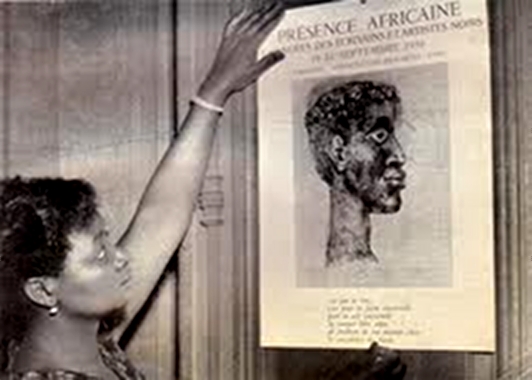
UNESCO and Research Agendas Concerning Race

Antigua was settled by human rubbish from Europe, who used enslaved but noble and exalted human beings from Africa (all masters of every stripe are rubbish, and all slaves of every stripe are noble and exalted; there can be no question about this) to satisfy their desire for wealth and power, to feel better about their own miserable existence, so that they could be less lonely and empty – a European disease … Of course, the whole thing is, once you cease to be a master … you are no longer human rubbish, you are just a human being, and all the things that adds up to. So, too, with the slaves. Once they are no longer slaves, once they are free, they are no longer noble and exalted; they are just human beings.

Jamaica Kincaid suggests that abolition and emancipation are bitter-sweet affairs. For the enslaved, freedom furnishes them with a human being that nevertheless awaits a meaningful personhood. Out of slavery the master fares better, redeeming his human being from being human rubbish. Kincaid’s suggestion is insightful. After all, abolition had a vibrant nineteenth century afterlife. White abolitionists enthusiastically allowed their humanitarianism to colonize Africa so that God’s chosen could sanctify themselves through the act of saving the natives from their selves. Meanwhile, William Wilberforce et al, convinced that slaves were human biologically yet lacked the social and cultural competencies of humanity, looked on fascinated at the experiment of self-government in Haiti. From this point onwards all future failings would be attributed to the epidermis, not the colonial relation. Presently, argues Kincaid, the landscapes of the old Caribbean plantations have been consumed by a white tourist gaze that has once again disavowed the living legacies of enslavement and colonization and denied meaningful personhood to its peoples. What remains of these places and peoples is only an “unreal”, picture-book beauty.

What are our narratives of race and racism? Whom do we follow in order to tell the tale: the masters or the enslaved – the humanitarians or the “sufferers”? Which tale confesses the episteme –the scientifically valid study – of race?

The 1950-51 UNESCO “statements on race” answered such questions in favour of the master’s narrative. Announcing a new era in human understanding after the terrors of war and irrationalities of genocide, the main purpose of the statements was to separate the “biological fact” of race from its “social myth”. The biological fact in and of itself was rendered harmless, pertaining only to “physical and physiological” classifications. Thus genetic inheritance, it was affirmed, could have no bearing on mental or cultural competencies and capabilities. Conversely, the social myth of race was considered extremely dangerous in that it rendered cultural difference as biological thus sundering the “unity of mankind”. This myth had to be dispensed with; hence ethnicity – as a social/cultural classifier – was proposed as a preferable classificatory regime to that of race. Ethnicity, after all, had not been tainted with supremacist hierarchy and could signify instead non-hierarchical diversity.

Although the scientists who collectively produced the statements on race were by no means all white, the majority hailed from Western academies. And the particular kind of anti-racism evident in UNESCO’s statements had already been formulated by famous Western anthropologists such as Franz Boas. They had sought to undermine scientific racism on its own grounds, i.e. by proving the un-scientific nature of the social myth of race. And this endeavour required debunking racialized identity – that which confessed their legal and natural inequality – as myth not fact. However, as part of this manoeuvre these identities had to be subsumed under a harmless social science of ethnic categorization. While this move redeemed white identities, it de-politicized the meanings of the sufferers’ cultural complexes and complexions, extricated them from inherited hierarchies of power, and thus segregated them from the inherited and living struggles against (post-/neo-)masters. In short, as Alana Lentin puts it, the effect of the statements was to separate race from politics.
Continue reading

A Global Story of Psalms 68:31 | Against the Provinciality of the Twenty Years Crisis

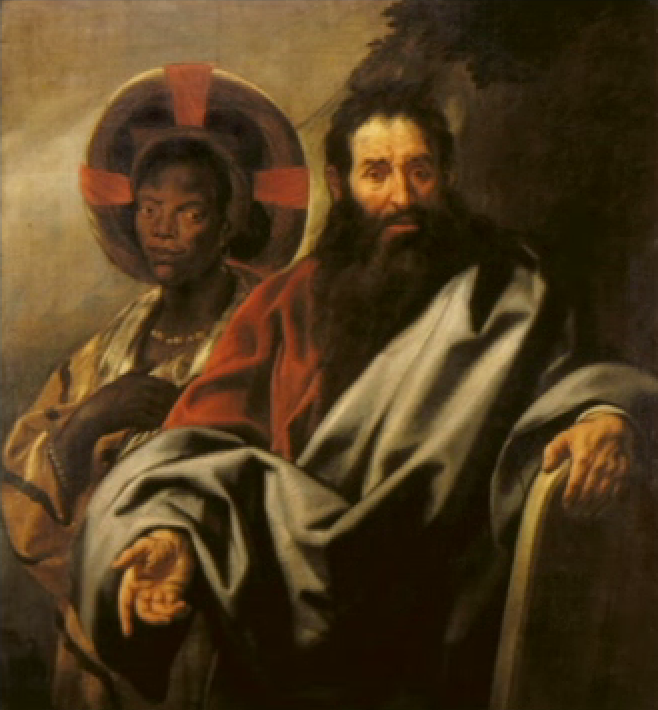
‘Moses and his Ethiopian Wife’, by Jacob Jordaens, c. 1650

Princes shall come out of Egypt; Ethiopia shall soon stretch out her hands unto God

Psalms 68:31 is part of the global story of colonialism, enslavement, the “civilizing mission” and self-liberation. It is a story that is central to the Twenty Years Crisis that constitutes the originating point of International Relations as a self-proclaimed discipline. But it is a story that is largely absent when this originating point is commemorated.

We can pick up the story of Psalms 68:31 with the King James version of the Bible, translated into the vernacular in 1611. At this time it is practice to denote things African through the name Aethiops. More than just a polity south of Egypt, Ethiopia also encompasses Black Africa as a whole. By 1773, catechisms are being developed around Psalm 68:31 that directly address African enslavement in the Americas and the prospects of abolition, emancipation and liberation.

There are two key interpretations. One, cultivated by white abolitionists and subsequently used by Europeans who embark upon an African “civilizing mission”, holds that it is they – white/Europeans – who are God’s children. Hence, it is white/Europeans to whom Ethiopia is stretching for her hands for deliverance from slavery and primitivism. The other, cultivated by the enslaved and their downpressed descendants, holds that the Bible is their story –  the “half never told“. Africans will therefore righteously deliver their own selves from bondage.

The first catechism appears as early as 1773 in the letters of Anthony Benezet, a French-born Quaker living in North America. Scouring through the Bible to find  divine authority for the abolitionist cause, Benezet notes: “beloved friend, the passage we are seeking for is Psalms 68, 31.”; and “the people called Ethiopians are definitely African negros due to Jeremiah 13,23 – “can the Ethiopian change his skin?”. Abolitionists – especially British ones – are most concerned that the enslavement practised by white and European “Christians” would denigrate their status as the most civilized amongst humanity. By Benezet’s time, it is already a belief amongst the intellectual caste of  white/Europeans that they are the people chosen by God to express his Providence, through commerce and colonisation.

Continue reading

The Crisis of Europe and Colonial Amnesia

Recent commentary on the Eurozone crisis has started to pick up the grammar of colonial rule. The centre for Research on Finance and Money at SOAS, for example, has published an influential report wherein northern Europe (Germany especially) is framed as the core and southern Europe (especially Greece) as the periphery. Meanwhile, Ulrich Beck, European cosmopolitan par excellence, wonders whether the European Union will become “a European Empire with a German stamp”. Beck notes that Merkel’s sense of power “conforms to the imperial difference between lender and borrower countries.” At stake, agree many prominent European intellectuals in the pages of The Guardian, Eurozine and Der Spiegel, is no less than the promise of freedom and democracy immanent to the European project itself. All variously agree that, against the imperial sclerosis spread by capitalist and bureaucratic functionaries at the highest levels of governance, what is needed is a rejuvenation of meaningful democracy at a grass-roots level.

Faced with a dismantling of democracy Jürgen Habermas mounts a plea to save the old “biotope of Europe”. The constitutive components of this threatened ecosystem are freedom and democratisation, and its genesis lies in the Second World War and the fight against fascism and “internal” barbarism. The president of the European Central Bank has himself proclaimed that Europe now faces its “most difficult situation since the Second World War”. Alternatively, for many social democratic and leftist commentators, the danger of the situation lies in the loss of the “internal” struggle of labour and capital that defined the Cold War landscape. In the new context of EU institutional “empire” and its neoliberal tentacles, the defeat of labour quickens the erosion of social democracy, thus deciding the fate of the European project.

Europe, then, is perceived to be “colonizing” itself and in the process destroying freedoms and democratic structures that had been hard fought for by the general populace against political oppression and economic exploitation. But this angst-ridden imaginary of European crisis has very little to say about the substantive historical and global dimensions of European colonialism. Does cosmopolitan and social democratic angst cover these legacies and contemporary effects? In fact, in most recent treatises on the crisis the struggle for decolonization is given no integral status, even though these particular struggles were inseparable to and spanned the formative time period of the European project – the Second World War (and the Cold War). Some do mention current issues of migration and xenophobia. Nevertheless the implication, in general, is that colonial legacies are derivative of, or additional to, the core struggle for democracy and freedom in Europe. Fascism, Cold War, class struggle: yes; colonization, imperialism, decolonization and liberation struggle: not really.

Not all intellectuals suffer from this colonial amnesia. A number of scholars including Robert Young, Pal Ahluwalia, Paige Arthur and Alina Sajed have argued that in some key strands of post-War French thought, the issue of colonialism and decolonization was integral to discussions of European re-democratization and humanist concerns. This engagement reached a peak in the Algerian war of independence in the late 50s before falling into abeyance. And this was precisely the same time, we should note, as the Treaty of Rome, which bound European countries together in a tighter economic union simultaneoulsy sought to re-bind (post-)colonial African polities, peoples and resources into this union.

More generally, there has accumulated a significant amount of scholarship that reveals the colonial influences that shaped and were woven into quintessentially “European” intellectual/political movements such as Enlightenment and modernity. Continue reading

Colouring Lessons: Race Is A Structure Of Oppression, And Is Alive And Well

Race is a structure of oppression. So long as the structure remains, so does race. However, while there is plenty of talk about ethnicity and social cohesion, pathological cultures, and broken communities, race is usually mentioned only in its disavowal. And racism? Few would profess to that habit; most would comfortably label racism as a reactionary attitude. But to what imaginary golden mean? It is a privilege to believe that racism is a reaction rather than a catalysing agent of oppression. Meanwhile, all of us are variously implicated in this structure of oppression called race.

Even on the left, race is seen to be somewhat passé, and happily so now that the next world crisis in capital accumulation has arrived and we can all finally re-focus on the real thing: class. But what is the difference between race and class? Is it the difference between superstructure and base? Race does involve identification, both in order to oppress and in order to redeem. Yet in this respect, it is no more or less an identity than class. With the exception of Black Marxism, what the left has historically been unable or unwilling to consider is that, as a structure of oppression, race runs deeper than class.

Marx’s masterful hermeneutic shift from contract to class involved leaving behind the realm of exchange – wherein all things were of equivalent value and all transactions were equitable – and entering into the realm of production – wherein value was consistently expropriated and relations were exploitative. Nevertheless, in the colonial world, Marxism was more often used as a weapon for struggle and less so as a faith to guide contemplation. One reason for this engagement is that class exploitation never quite explained the reality of oppression experienced under the colonial exigencies of the world market.

In truth, Marx did not shift his hermeneutic far enough from liberalism and its obsession with civil society. Continue reading

What We (Should Have) Talked About at ISA: Poststructural and Postcolonial Thought

…(drumroll)… We are collectively joyous at being able to introduce a new contributor to The Disorder Of Things: Robbie Shilliam, currently at the Victoria University of Wellington and author of a slightly staggering array of critical texts (on the impact of German intellectuals on IR; the Black Atlantic in modernity; the Haitian Revolution; race and sovereignty; and the imperatives of decolonial thinking, among others). Cross-posted at Fanon/Deleuze.


At the recent ISA conference in Montreal, I participated in a lively, weighty and difficult roundtable on postcolonial and poststructural approaches to International Relations. Alina Sajed had supplied the panellists with a provocation by way of refuting Dipesh Chakrabarty’s famous injunction that Europe was the inadequate and indispensible to frame the epistemological constellations of “modernity”. Sajed challenged the panellists to debate whether Europe was in fact dispensable as well as inadequate. There was certainly a spectrum of opinions given and positions taken on the function, possibility and desirability of the relationship between poststructural and postcolonial approaches. As a form of reflection I would like to lay out some thoughts by way of clarifying for myself what the stakes at play are in this discussion and where it might productively lead.

For myself I do not read the Europe that Chakrabarty considers in terms of the historical expansion and exercise of material colonial power. I read it in terms of a fantasy that captures the imagination. At stake is a conception of the whys, hows and shoulds of people suffering, surviving, accommodating, avoiding, resisting and diverting the colonial relation and its many neo- and post- articulations. In this particular respect, I take Frantz Fanon’s position and agree with Sajed: “Europe” must be dispensed with. In any case, as Ashis Nandy has shown, the monopolisation of the meaning of Europe by a fascistic figure (rational, male, hyper-patriarchal, white, civilized, propertied) has required the re-scripting of the pasts of peoples in Europe and a concomitant distillation of the traditions of European thought themselves so as to accord to this fantasy figure. Europe is a fantasy through and through, but one that damages different peoples with different intensities. And those who look in a mirror and experience no significant cognitive dissonance when they proclaim “European” can still count themselves, to different degrees, as being a thoughtful protagonist in a contested human drama. For others, there is only the promise of living this drama vicariously through the thought of others. That is why “Europe” is dispensable, even though for some peoples Europe has never been indispensible; regardless, it must be dispensed with.

Let me explain a little more what I mean by all of this. Europe is first and foremost a sense of being that constructs its empathy and outreach in terms of a self whereby all who cannot intuitively be considered of European heritage are categorized into two entities. First, they might be the “other” – foils to the understanding of the self. Their emptied presence is to be filled as the verso to the internal constitution of the European self. If they are lucky, they are given a kind of non-speaking part in the drama. In fact, they usually are lucky. Much critical European thought – and certainly almost all of canonized European thought – speaks volumes about the ”other” but only so as to fill in the European “self” with greater clarity.

Second, they might be the “abject” – the entity that is impossible for the self to bear a relationship to, although even this impossibility will be instructive to the inquiring European self. Abjects, under the European gaze, are reduced to a primal fear out of which an intensity of feeling is engendered that wills the drama of human (European) civilization. Defined in excess to the other/abject, the internal life of the European self can substitute itself for humanity at large in all times and spaces, and develop itself as a richly contradictory being that overflows its meaning and significance.

I do not know whether other colonialisms predating and contemporaneous to the European project matched this audacity. And in a significant sense, it really does not – and should not – matter. After all, the lure of making comparison is the precise methodology through which the European self overflows to define all others by a lack. I do though want to hazard a particular claim at this point, which might or might not bear up to scrutiny: the prime “others” of European colonialism were the indigenous peoples of the Americas. And while we owe much to Kristeva’s work on the term, the prime “abjects” of European colonialism were the enslaved Africans bought over to the Americas.

Continue reading