The Politics of Modi’s Vegetarianism

A guest post by Amit Julka and Medha.

AmitJulkaAmit is a PhD student at the Department of Political Science at the National University of Singapore (NUS), and he is working on India’s engagement with Afghanistan from the perspective of Indian identity formation. Previously he worked as a media specialist with the US Embassy in New Delhi and at the Institute for Defence Studies and Analyses (IDSA), New Delhi. He holds an M.A. in South Asian Area studies from SOAS, and is a computer engineer by training.

MedhaMedha is a research fellow/doctoral student at the German Institute for Global and Area Studies (GIGA), Hamburg.  Her research focus is on the role of Islam in India’s identity and foreign policy. She previously worked at the IDSA, and also as a journalist in India, Germany, the Netherlands and Canada. She holds an M.A. in Media Studies, jointly from Aarhus and Swansea Universities.


Among the many anodyne reports from the South Asian Association for Regional Cooperation (SAARC) summit held in Kathmandu recently, there was a curious piece of news: an article about how the Indian Prime Minister was being served ‘simple vegetarian fare with less spices and oil’ while his Pakistani counterpart was enjoying ‘halal meat dishes’ during their respective stays in Nepal. The next day, on social media, India’s Ministry of External Affairs posted a photograph of a menu with the caption ‘All Vegetarian Fare. For those asking here is what the SAARC leaders are having at the Retreat.’

Twitter_Screenshot

While it may be routine for the media to report about the dishes served during meetings and summits, this emphasis on Modi’s vegetarianism—and his apparent success in making sure all the leaders consume vegetarian food, at least at the Retreat—is particularly noteworthy. Especially when the fact that Modi was fasting for Navratri during his visit to the US was also equally publicised. Was this an attempt at burnishing Modi’s image as the Hindu Hriday Samrat within India as well as the increasingly vocal Indian or more precisely, the Hindu community abroad?

Continue reading

Toward a Racial Genealogy of the Great War

dusan-bjelic-portretA second guest post in our series on The Global Colonial 1914-18 from Dušan I. Bjelić. Dušan received both his B.A. (1976) and M.A. (1981) in Sociology from the University of Belgrade and then earned his Ph.D in Sociology from Boston University in 1989, joining the University of Southern Maine Department of Sociology and Criminology in 1990. His area of interest is the colonizing application of psychoanalysis and psychiatry to the Balkans. Professor Bjelić co-edited Balkan as Metaphor: Between Globalization and Fragmentation with Obrad Savić (Cambridge, MA: The MIT Press, 2002). He has also published two books of his own: Galileo’s Pendulum: Science, Sexuality and the Body-Instrument Link, (SUNY Press, 2003) and Normalizing the Balkans: Geopolitics of Psychiatry and Psychoanalysis (Ashgate, 2011). His published works can be accessed at Academia.edu.


“Just as there is no wedding dinner without meat so there is no war without slaves.”

Serb soldier on the Balkan Front.[1]

A man was looking for something he had lost under the street lights; another man, the joke goes, approached and asked him what he was looking for. “I am looking for my lost keys,” “Did you lose them here?” “No,” the first man responded, “I lost them on the dark side of the street.” “But, why are you looking here?” “Because this is where the light is.” This joke illustrates well the paradox of the national paradigm in European historiography of the Great War. The assumption that the European sovereign nation is the sole agent of modern history naturally motivates European historiography to frame the Great War within a national paradigm and foreclose its colonial dimension. A related trope to the above joke pertains to race and its relation to the national histories of Europe; the black face of a slave, according to Frantz Fanon, can be seen during the night only under the porch light of the master, but when the slave goes into the dark his face becomes invisible. The deployment of colonial soldiers in the Great War as “warrior races” or, “martial races” to fight on behalf of their masters, and the absence of the Black history of slavery from the history of the Great War is in fact the history written from the master’s porch. While the invisibility of the black face foreclosed Black history from the national paradigm of the Great War, it was nonetheless useful as a racial weapon in the war.

By deploying almost a million non-white troops in the European theater of war—France’s 500,000 Africans and Asians, Britain’s 200,000 Indians and Africans, America 200,000 black soldiers, Germany’s 11,000 Africans (only in East Africa)—race was used as a “weapon of war” to advance an unprecedented slaughter among the white nations. [2] R. J. Vincent socked it to the revisionist historians when he wrote, “not only were the whites laying to rest the notion of their instinctive comity by butchering each other in such unprecedented numbers, but they were also showing their neglect of race in favour of nation in using non-white troops to advance the slaughter.”[3] Those historians committed to the national paradigm acknowledge the contribution of colonial solders in the Great War only as an auxillary force rather than as the point of the return of race as the constitutive violence of European Modernity. Many of the former slaves forcefully recruited and disciplined as racial instruments of forced labour, punishment and extermination became the site of colonial violence and operated as a microcosm for the War. The colonial soldier was the cause and the consequence of the Great War. Continue reading

The Colonial Armed Peace: Was the Great War a Failure of Imperialism?

LukeThis is a guest post from Lucian M. Ashworth, and the first in our series on The Global Colonial 1914-18. Lucian is Professor and Head of the Department of Political Science at Memorial University of Newfoundland. His current research focuses on the history of international Relations (IR) theory, and on the disciplinary history of IR. This builds on a number of previous interventions on the politics and history of the inter-war period (including on the absent idealists, the early feminist IR of Helen Swanwick, and Halford MacKinder as League supporter). He is the author most recently of A History of International Thought. From the Origins of the Modern State to Academic International Relations, published by Routledge in 2014.


Entente Cordiale

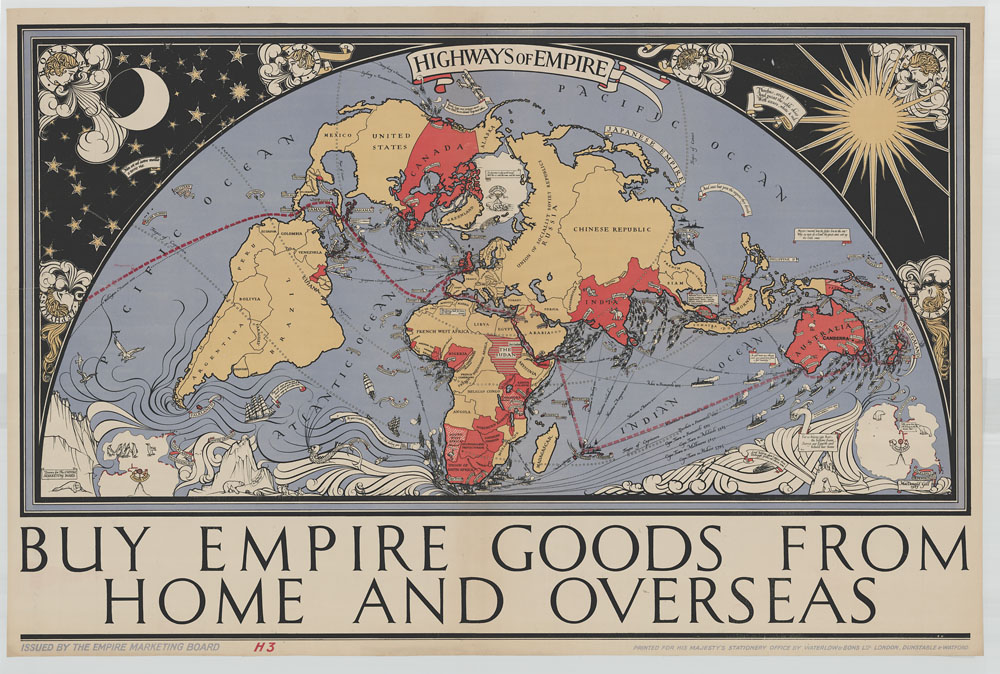
A common response from many opponents of Michael Gove’s ill-informed presentation of the First World War as a just cause has been to write the war off as one that was caused by the imperialism of the great powers. In this view those who died were victims of an imperial system.[1] By seeing the war as primarily an imperialist conflict it is possible to simultaneously denounce the pre-1914 imperial order and also to oppose the war. It is, therefore, a handy position that avoids any moral dilemmas.

At the same time, it is interesting that amongst all these debates about the causes and nature of the war few scholars have seen fit to examine one form of evidence: the writings of international experts before the war. This gap is even more surprising in International Relations (IR), as these pre-war writers are IR’s forebears. What is interesting about studying these pre-war international writers is that they were well aware of the imperialist nature of their global society (and of the role played by colonial control), but it was not this imperialism that was seen as the source of instability. Rather, a more complex story emerges of a two-tier global system, and the coming of the war is seen as a threat to, not a result of, imperialism.

buy-empire-goods

The first point about the pre-1914 world is that this was a thoroughly recent system, and that for many of those writing on international affairs it was novel because for the first time in history there was a truly global order. Whether it was W. T. Stead writing about the movement away from states to a Europe united by transnational links, Paul Reinsch’s examination of the new ‘public international unions’, or Norman Angell’s wonder at the development of the global economy in trade and finance, the common feature was the recognition that the world from the late nineteenth century was global in a way that was thoroughly unprecedented.[2]

Much of this new politico-economic order was built on one product: coal. Timothy Mitchell has outlined how the growing dependence on coal as a concentrated source of energy radically changed society into an industrial ‘hydrocarbon civilisation’. The combination of coal, steel and steam powered railways allowed for the easy extraction, transportation and use of coal in industry.[3] This rapid industrialisation made the new industrialising societies vulnerable in a way they had never been before. The loss of self-sufficiency in food and the requirements of industry for a growing list of raw materials not often available in north-western Europe or eastern North America meant that these societies were dependent on trade with often distant societies. Yet, trade alone was not sufficient to extract these raw materials, so European powers increasingly turned to direct control and the deliberate imperial restructuring of the non-European economies.[4] This creation of a two-tier fully global economy was well-known to the political economists of the time.[5]

Two very different writers who captured the nature of this new global order were the American admiral Alfred Thayer Mahan, and the British journalist and political activist Henry Noel Brailsford. Mahan was an advocate of a higher level of armaments and a notorious racist. Brailsford, by contrast advocated stronger representative international organisations. Despite the wide divergence in their political opinions, both came to not incompatible conclusions about the nature of the global order before the First World War, and both understood the two-tier nature of the global political economy. The major difference in approach was that Mahan supported the imperial status-quo, while Brailsford opposed it. Continue reading

The War Rages On: Women in the British Military and the De-Politicisation of War in ‘Our Girl’ (2014)

A guest post on military gender in popular culture from Harriet Gray. Harriet is a PhD student in the Gender Institute at the London School of Economics, working on intimate partner abuse in the British military. She has also written on female combat roles in the American military, consent, and celebrity intimate partner violence, and can also be found on Twitter.


their war her battle

The five part BBC drama series Our Girl (and the 90 minute TV film which preceded it) centres around the experiences of Private Molly Dawes, a young medic serving in the British Army. Molly is assigned to a unit referred to as ‘2 Section’ as a combat casualty replacement, and with them deploys to Afghanistan. Her colleague in 2 Section, Private Dillon “Smurf” Smith, and their leader Captain Charles James, an experienced officer on his fourth tour of Afghanistan, form the two other principle characters in the series.

Our Girl was broadcast at a time when women’s roles in the British armed forces are once again under review. At present, women – who make up 10% of British regular military personnel – are able to serve in most roles in the British military with the exception of ‘combat roles’, defined as “ground combat units where the primary role is to close with and kill the enemy”. Previous reviews of the ban in 2002 and 2010 have concluded that while many women may well possess the physical and psychological capacities to serve in any military role, the impact of women’s presence on unit cohesion and therefore on combat effectiveness cannot be fully understood without taking the risk of sending mixed combat teams into battle; a risk which the MOD and the armed forces were not at the time of these reviews prepared to take. That is, women’s continued exclusion from combat roles was justified not on the basis of what women were capable of doing, but, as I have argued elsewhere, of who (what?) they are.

The current review, ordered by (then) Defence Secretary Phillip Hammond in the spring of 2014 and due to conclude by the end of the year, will once again prioritise the delivery of operational effectiveness in deciding whether women will be admitted to combat roles, but it is widely expected that this time, the ban will be lifted, in particular because the review has been brought forward to report earlier than the 2018 deadline required under EU equality laws, and following the lifting of a similar ban in the US armed forces in early 2013. While women are soon likely to be able to serve in all roles in the British armed forces, however, this is unlikely to mean that the masculinised culture and male domination within the British military itself will be undermined any time soon; it is likely that it will continue to be the case that, as Victoria Basham puts it, “it is gender-conforming for men to want to join the military or engage in paramilitary activities, but gender-nonconforming for women”.

As Cynthia Enloe also suggests, the definition as ‘combat’ of the roles from which women are excluded has long been largely ideological as opposed to practical – and Molly’s experience in the series reflects this. While as a medic, she is not in a combat role – indeed, as could be considered gender-conforming for a woman since her primary purpose is to preserve life rather than to end it – she is certainly not portrayed as a “beautiful soul” and her role requires her to be very much in the thick of the action. She is shown on patrol with her section, firing her weapon, and being on the receiving end of gunfire with the men alongside her, although she, unlike her comrades, shows some anguish and regret at her own perpetration of violence. While Molly’s role is not a combat role, then, her experiences with 2 Section illustrate many of the well-hashed arguments both for and against the growing presence of women in Western militaries.

Continue reading

Kobani: What’s In A Name?

Kamran MatinA guest post from Kamran Matin. Kamran is a senior lecturer in International Relations at the University of Sussex, where he teaches modern history of the Middle East and international theory. He is the author of Recasting Iranian Modernity: International Relations and Social Change (Routledge, 2013), and recently of ‘Redeeming the Universal: Postcolonialism and the Inner-Life of Eurocentrism’ in the European Journal of International Relations (2013). Kamran is also the incoming co-convenor of the BISA Historical Sociology Working Group, and a management committee member at Sussex’s Centre for Advanced International Theory. He is currently working on a paper on the origins of the current crisis in the Middle East, and a larger project on the international history of the Kurdish national liberation movement.


Kobani Fighters

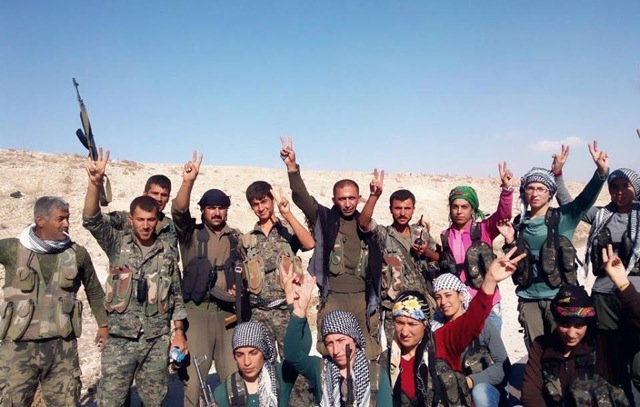
The city of Kobani’s epic resistance against the genocidal assault of the Islamic State (IS) has entered its thirtieth day. So far the response of the western left has been generally one of solidarity. However, the left seems divided on the best way to support Kobani. Invoking anti-imperialist and anti-war principles a considerable part of the left has been shying away from demanding military and logistical support for the main defending force of the city, i.e. People’s Protection Units (YPG) and Women Protection Unites (YPJ), the armed wings of Democratic Union Party (PYD), by the US led anti-IS coalition. Moreover, with some exceptions such as David Graeber, many western leftists have neglected the historical significance and transformative political potentials of the success of Kobani’s resistance.

In what follows I argue that pressuring western powers to provide arms and logistical support to YPG/YPJ is legitimate and justifiable, and that in the battle for Kobani the left has a unique opportunity to contribute to an important shift in the regional balance of power in favour of a radical democratic and egalitarian project with transformative ramifications for the entire Middle East.

Kobani, the Kurds, and the West

With regards to the discomfort of the left with the idea of western military support for YPG/YPJ the important preliminary point to be made is that the Kurds have repeatedly claimed that they do not want or need direct military intervention by either coalition forces or Turkey. They’ve repeatedly said that they only need anti-tank weapons, ammunition and the opening of a corridor for fighters, food and medicine to reach Kobani. This request has been echoed by the UN Special Envoy for Syria, Staffan de Mistura, who warned of a repetition of the fate of Srebrenica in Kobani if such a humanitarian corridor is not established.

In its demand for a limited tactical western military support for YPG/YPJ the left by no means loses sight of the fact that at its root Islamic State is the fascistic faeces of western imperial metabolism, a direct product of the American conquest of Iraq, the deliberate manipulation of sectarian differences, and the destruction of the social fabric of Iraqi society. But surely, none of these should obviate the recognition of the vital significance of protecting an actually existing and functioning radical left experience at the heart of the Middle East from eradication, notwithstanding its unavoidable flaws and limitations.

Continue reading

International Relations is Not an American Discipline (Well, Maybe It Is, A Little)

Helen TurtonA guest post on the state of the discipline by Helen Louise Turton. Helen is a University Teacher in International Relations and Security Studies at the University of Sheffield. She received her PhD from Exeter in 2013 for a dissertation on ‘The Sociology of a Diverse Discipline’, and next year Routledge will publish her International Relations and American Dominance: A Diverse Discipline. She also has work on marginality and hegemony in IR forthcoming in the Journal of International Relations and Development (with Lucas Freire) and is beginning a larger project on ‘Rereading European IR Theory’ (with Knud Erik Jørgensen and Felix Rösch). Helen is also the co-convenor of the BISA Working Group on IR as a Social Science. If you wish to join the working group please follow the link.


Gary Hilliard

It has been said on more than one occasion that International Relations is an American dominated discipline, or that the US IR community is hegemonic. In fact, one could even go so far as to say that the disciplinary image of IR being dominated by the US has become a disciplinary truism, with many academics reproducing this characterisation time and time again. The TRIP survey that has just been sent to academics in 33 different countries even poses the question “Please indicate the extent to which you agree or disagree with the statement: The discipline of international relations is an American dominated discipline” to ascertain the degree to which IR scholars around the globe feel dominated by the US. Furthermore, other empirical surveys of the discipline have sought to demonstrate the seeming continued disciplinary dominance of the American academy, pointing to the different ways in which the US is able to exercise its disciplinary hegemony.

In my new book International Relations and American Dominance I challenge the claim that IR is an American dominated discipline because the underlying question is itself deeply problematic. Asking whether IR is dominated by the US presupposes a yes or no answer. We are therefore presented with an either or option which overlooks the possibility that the discipline may be dominated by the US in some ways but not in others. This then leads us to unpack what it means to be dominant. When scholars claim that IR is an American dominated discipline we first need to assess how they understand disciplinary dynamics and relationships of dominance. Are dominance claims being made because it is perceived that American methods populate the discipline? Or do certain American theories dominate global IR? Perhaps the US is stated to be dominant because it is American IR scholars who are in positions of power? Maybe scholars have argued that IR is dominated by the US because there are more American IR scholars than those from other national IR communities? Or does the discipline subscribe to an American agenda and American understanding of what ‘international relations’ is?

The reality is that all these grounds have been used to state that the US IR community is hegemonic. Academics have implicitly drawn on different understandings of dominance and explicitly drawn attention to the different implications of US dominance, but often this is done without first clarifying what is meant or implied by American disciplinary dominance. Often scholars are speaking about one form of dominance on one page of a text, and then refer to a different understanding on another page. What this means is that the word dominance when in the context of claims stating ‘IR is an American dominated discipline’ or ‘IR is no longer an American enterprise’ is used in many different ways, taking on many different forms and measured in numerous modes despite the fact that it is presented as ‘one size fits all’ form of dominance. What this means is that although certain scholars may agree that the US is dominant they may be talking at cross-purposes about how and why America dominates. Whilst there may be agreement in one sense, there will be different answers to the crucial questions of how and why America allegedly became and remains disciplinarily dominant.

Continue reading

The Far-Right: Pathology of Capital

A guest post from Rick Saull, who is Senior Lecturer in International Politics at Queen Mary, University of London. He has written on a range of topics from the international relations of revolutions to the Cold War and the geopolitical consequences of the 2008 global economic crisis. More recently he has focused on the international political dimensions of the far-right, co-editing The Longue Durée of the Far-Right (Routledge, 2014) which has just been published, and on which this post draws. He can be contacted here.


The politics of the far-right are unlikely to disappear any time soon. Unlike its historical foe on the left – social democratic or otherwise – which has continued to be characterised by a combination of disintegration and disorientation as it continues to implement neoliberalism, the far-right persists through exercising a toxic but powerful influence on political debate across mature capitalist democracies (and beyond). How are we to make sense of the persistence of the far-right and explain its recent reinvigoration? What analytical framework offers the best, way of explaining the distinct trajectories of far-right currents of politics across different historical periods? This blog post will try to address these questions through outlining an understanding of the contemporary far-right as a pathology of capital best explained through a framework based on an international historical sociology (IHS). Before I do that it makes sense to mention what the main alternative frameworks on the far-right tells us.

The academic discussion of the far-right is dominated by approaches grounded within the mainstream assumptions of bourgeois social science. Thus, it is the methodological nationalism of comparative politics combined with the literature on the history of ideas that are intellectually hegemonic. In the former, the far-right is assessed and compared across different states according to a quantitative grid of electoral performance, voter shares, opinion poll data and definitional attributes centred on ‘Europhobia’, anti-immigration hysteria and ‘welfare nativism’. In the latter, the fetish of definitional taxonomies prevails through the gradations of ‘neo-fascism’, the ‘extreme’, ‘far’, ‘radical’, populist’ and/or ‘reactionary’ right that are dissected via an examination of speeches and pronouncements to gauge the ideological coherence of said party or movement usually related to the core criteria of fascism.

This has resulted in an endless search for an ‘objective’ or ‘minimal’ definition of the far-right – an academic cottage industry in itself – which serves to freeze and simplify the far-right instead of viewing it as an evolving socio-political movement. Further, in spite of the need to treat ideas seriously it has resulted in analytical contortions to the effect that the far-right – in its fascist incarnation at least – can be seen as ‘revolutionary’ phenomena comparable to communism. This can be seen in the way in which the doyens of political science in organizations such as the ‘Extremism and Democracy’ Standing Group of the European Consortium on Political Research appear to mimic the assumptions of Cold War liberalism’s use of the concept of ‘totalitarianism’ by treating the ‘extremist threats to democracy’ from the far-left and far-right as part of the same analytical exercise thus blurring their distinct and antagonist dynamics.

Continue reading

Modelling Worlds: The Politics of Simulation

A guest post from Nathan Coombs who is an incoming Leverhulme Early Career Research Fellow at the University of Edinburgh. He edits the Journal of Critical Globalisation Studies, and is the author of the forthcoming book, Politics of the Event: From Marxism to Contemporary French Theory (Edinburgh University Press, 2015). His current research interests are in financial algorithms and financial regulation. He can be contacted at n.coombs (at) fastmail.co.uk


hft

Over the last decade, scholars have become increasingly interested in what we do when we make use of models and simulations. An emerging consensus – often legitimated through reference to Bruno Latour’s Actor-Network Theory – is that mathematical models and computer simulations are not passive tools but rather a material force in their own right. Agents may employ such technologies in order to achieve pre-determined ends, but the technologies themselves have an effectivity that exceeds their users’ intentions, and set in place path-dependencies that serve to proscribe the range of political and economic possibility.

This concern with the politics of technology cuts across multiple disciplines including Sociology, Communication Studies, International Relations, International Political Economy, and Management Studies. However, the Social Studies of Finance (SSF) has perhaps gone furthest in exploring the practical implications of modelling and simulation technologies. Applying Austinian and Barnesian notions of performativity, researchers in this field have sought to grasp the way in which economic models shape markets, and to dig into the mathematical and technical details that underpin this process.

Donald MacKenzie’s book An Engine, Not a Camera (2008) is exemplary of this approach, and a common point of reference for scholars in SSF and all the aforementioned disciplines. In his analysis of the development and uptake of the Black-Scholes option-pricing model in the 1970s, MacKenzie aims to show how the model’s employment of the efficient market hypothesis – where stock prices are considered to accurately reflect their risk – led to a period in which the pricing of options came to reflect that predicted by the model. The point of MacKenzie’s analysis is not to endorse the neoclassical economic assumptions codified in the model. Rather, it is to point out how models serve to socially facilitate evaluation practices in the face of complexity, uncertainty, and epistemological opacity. On this basis a model can also contribute to financial instability when it is both widely employed and based on assumptions that are confounded by ‘real world’ contingencies.

Continue reading

Dispatches from the Robot Wars; Or, What is Posthuman Security?

Audra MitchellA guest post from Audra Mitchell, who is Senior Lecturer in International Relations at the University of York. Audra is a Fellow of the Independent Social Research Foundation (2014-15) and has held or will hold visiting fellowships at the Universities of Queensland, Edinburgh and Melbourne. She is the author or editor of three books: International Intervention in a Secular Age: Re-enchanting Humanity? (Routledge, 2014); Lost in Transformation: Violent Peace and Peaceful Conflict in Northern Ireland (Palgrave, 2011) and (ed. with Oliver Richmond) Hybrid Forms of Peace: From the ‘Everyday’ to Postliberalism (Palgrave, 2011), as well as articles in Security Dialogue, Review of International Studies, MillenniumBritish Journal of Politics and International Relations, Third World Quarterly, and Alternatives, amongst others. She blogs at Worldy IR. Audra’s current research project explores how mass extinction challenges the ontological and ethical underpinnings of ‘security’.


“So when are the intergalactic robot wars coming?” This is a question I’ve been asked (more than once) by colleagues who’ve heard that I’m working on posthumanist thought and international security. The implication is that what I’m doing is a kind of science fiction. Well, there’s definitely science (including robots – see below) and a rich fictional literature to draw on, but it’s not taking place in a galaxy far, far away. It’s very much rooted in, and attuned to, this planet.

‘Posthuman security’ is an umbrella term I’m using to talk about a recent surge in thinking and writing at the nexus of posthumanist philosophy, security and ethics. It starts from the proposition that international security is not solely a matter of securing human lives and bodies. Diverse beings other than humans are implicated in the conditions of (in)security. Whether other animals, machines, networks, minerals, water, ecosystems or complex assemblages thereof, a wide range of beings other than humans shape the contexts of (in)security and the ways that we define them. This, in turn, challenges the engrained notion that the human is the ultimate referent object of security, ethics and philosophy.

Mojave Desert Ecology

Indeed, another question I get asked frequently is “are you critiquing human security?” The answer is both yes and no. The norm of human security epitomizes a humanist turn in the last two decades of international thought, also reflected in the fields of humanitarianism and norms such as Responsibility to Protect. These frameworks have carved out a space for themselves within international ethics by framing a specific image of the human individual as the focal point of security, ethics and, by extension the universe. So, of course, adopting a post-human (or more-than-human) approach to security means challenging and deconstructing these influential paradigms. But this new discourse is not simply a critique of existing frameworks. Posthuman security thinking offers a number of distinct, positive contributions to international security, ontology and ethics.

The term itself is highly contestable – and should be contested. Continue reading

Bad Infinity?: Hans J. Morgenthau’s Double Critique of Depoliticisation

VassiliosA guest post from Vassilios Paipais, Lecturer in International Relations at the University of St. Andrews, Scotland. Vassilios holds a PhD in International Relations from the LSE and has published in Review of International Studies, International Politics and Millennium, and held various teaching posts at the LSE, SOAS, UCL and the University of Edinburgh. His work focuses on International Relations theory and international political theology. He is also co-founder of Euro Crisis in the Press and Associate to the LSE IDEAS Southern Europe International Affairs programme. You can read his Euro Crisis posts here, as well as follow him on Twitter.

This post is based on a recently published article in Millennium where he explores the implications of post-foundational political ontology for IR via a reading of Martin Heidegger and Oliver Marchart.
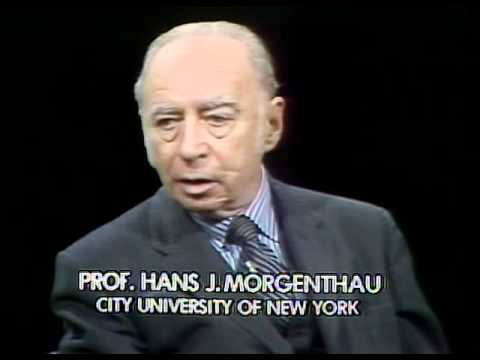

Hans Morgenthau

Post-foundational political thought offers the conceptual tools to theorise the experience of dislocation in politics signified by the difference as such between politics and the political. According to Žižek, the political designates the “moment of openness, of undecidability when the very structuring principle of society, the fundamental form of the social pact is called into question” whereas politics describes the positively determined outcome of that process, a “subsystem of social relations in interaction with other sub-systems”. The difference as such between politics and the political implies that any effort to cancel this gap or gloss it over by using ethical, political, juridical or economic arguments is nothing else but an attempt to hegemonise the social by ideologically displacing politics. The political signifies the moment of grounding/de-grounding of the social that is suppressed or forgotten by the operation of politics but can be reactivated at any time through dislocation and antagonism. Politics is incessantly trying to colonise the political but we are each time painfully reminded that an unbridgeable chasm separates the two. It is exactly the irresolvability of this gap that makes politics the name for a paradoxical enterprise which is both impossible and inevitable – which is why none has ever witnessed ‘pure politics’ either. The political cannot be brought about voluntaristically but, whenever we act, it is as if we always activate it or, better, we are always enacted by it. Both gestures of eliminating the force of the political (post-politics) or of introducing it unmediated into politics (total war, revolutionary terror) end up abolishing the political difference and ultimately result in an ideological displacement of politics.

Against this backdrop, I read the sophisticated realism of Hans Morgenthau as a promising but inconclusive attempt at a post-foundationalism political ontology. In fact, I argue that by equally shunning a facile surrender either to the immanence of power (ultra-politics) or to the technologisation of politics (post-politics), Morgenthau’s theory of the political strove to maintain a reflexive fidelity to the logic of political difference as such. At this point, the question naturally arises: why Morgenthau? Isn’t he the archetypical exponent of a tradition that prioritises a static view of international relations and the adoration of power politics? Well, for those who have been following the recent revisionist literature on classical realism, not really; Morgenthau, in contrast, emerges as an apparent candidate to discuss the crisis of foundationalism in (international) political thought and the paradox of its necessity and impossibility, not least because he is one of those rare thinkers that offers no facile solution to, or redemption from, the existential anxiety caused by the interrogation of ultimate foundations in late modernity.

Such an exercise highlights the strong affinities between Morgenthau and critical historicist currents in social and political theory, but this would come as a surprise only to those who equate Morgenthau’s realism with stasis and conservatism and are ignorant of his debt to the thought of Dilthey, Mannheim and Nietzsche. And yet, why inconclusive? Short answer: because of his failure to be radical enough in his Kantian antinomism or, to put it reversely, in his Nietzschean skepticism. And yet, my intention is not to award or withhold credentials of criticality, nor to indict Morgenthau for failing to live up to standards that he never set for himself. On the contrary, in an authentic act of immanent criticism, one does not seek to oppose the other(s) but, instead, to bring out a certain ‘internal contradiction’ to them, in a sense repeat all that they are saying but for an entirely different reason. The purpose of this critique is not to identify shortcomings in Morgenthau’s arguments but to interrogate the ‘transcendental’ conditions of his discourse: that which is in it more than itself. My thoughts on Morgenthau’s unfinished project then should be seen as a propaedeutic towards an investigation of the conditions and challenges involved in practicing international theory as a constant critique of depoliticisation.

Continue reading