The European Gaze and the EISA Asylum Seekers Campaign

Gulsah

Gulsah

ayse

Ayse

A reply to Federica’s recent post on the asylum crisis by Zeynep Gülşah Çapan from Bilkent University and Ayşe Zarakol at the University of Cambridge. Gulsah is a Post-Doctoral researcher at Bilkent University. Her research focuses on Eurocentrism in international relations theory and postcolonial and decolonial thought. Ayşe is a Lecturer in International Relations at the University of Cambridge. Her research focuses on social hierarchies in world politics. Her first book After Defeat: How the East Learned to Live with the West explored the responses of defeated non-Western powers to stigmatisation.


The increasing attention to the European refugee crisis in Western media has also galvanized the IR academic community into thinking about possible ways to address the issue. There have been blog posts and Twitter discussions (On Doing ‘Something’ as AcademicsWant to Help the Refugees? Teach Migration as part of IRHow to Speak Out As An Academic Community? Help Needed!) about possible actions, especially with respect to the EISA conference that will be held in Sicily in two weeks. On September 11th, EISA section chairs received an email urging them 1) to sign and circulate an open letter to EU policy makers penned in the name of “the academic community”, 2) to bring up the issue in EISA panels and 3) to wear black ribbons/armbands as a sign of mourning and protest.

We applaud the motivations that led to this effort and agree that EU countries could be doing much more to help refugees. We also concur that European scholars could do much more to raise awareness about the complicity of their own governments in various global political crises. Nevertheless, for the reasons detailed below, we have some reservations about both the desire to frame this effort as an EISA effort involving section chairs and the claim to speak in the name of the entire “academic community”. In the blog post Ivory Towers and Sleeping Beauties that discusses these efforts the author urges the “academic community” to do two things; to check their privilege and make themselves feel uncomfortable. These are suggestions that we completely agree with and this post is an effort to continue the dialogue on how we might think of issues in the international system in a way that checks our privileges and makes us feel uncomfortable.

To begin with, the refugee crisis is not new and it is not primarily a European problem that can be solved by some small gesture from the EU. Most refugees from the Syrian War, for instance, are hosted in non-European countries. According to Amnesty International, more than 95% of the refugees (4 million) are in five countries: Turkey (1.9 million), Lebanon (1.2 million), Jordan (650000), Egypt (249,463), Iraq (132,375). Another region hosting huge numbers of refugees is East Africa – based on UNHCR’s latest numbers, Chad hosts about 450000 refugees, Ethiopia hosts 650000 and Kenya has 550000. In fact, almost every world region except Europe is hosting hundreds of thousands to millions of refugees and has been doing so for far longer than Western newspapers have been covering “the refugee crisis”. By most estimates, there are sixty million refugees in the world at the moment.

We understand why European colleagues may want to pressure their own governments to change policy and we wholeheartedly support their individual and/or collective efforts to do so. But to organise a professional effort only now (and without providing any of the larger context) in the name of the entire “academic community”  may actually reinforce the Western public misperception that this is a recent or a uniquely European problem or that European countries that have agreed to take comparatively small numbers of refugees are doing something unusually selfless. Continue reading
Ivory Towers and Sleeping Beauties: On the Importance of Political Activism in Academia at EISA 2015

FCasoA guest post from Federica Caso on the recently created petition from academics to EU decision makers on the ongoing refugee/migrant crisis (you can see it and sign it), which has also been subject to discussion by Federica and Tiina Vaittinen over at the Feminist Academic Collective. Federica is a doctoral candidate in International Relations at the University of Queensland, where she is working on embodiment and the aesthetics of militarism in the context of the militarisation of society. Her research is informed by feminism and queer theory.


What can we do as academics and political subjects in face of the humanitarian crisis that is unfolding in Europe? Probably not much, but I would like to take the time and energy to tell why I think signing the petition by IR academics and community to address the EU to open safe channels of entry and mobility for asylum seekers is important, and suggest what can be done to mobilise at EISA.

So, does it take a picture of a dead boy on the shore of Turkey to awaken political consciousness? These days, tons of memes about Aylan Kardi circulate on the internet. Even those who oppose what has been called ‘trauma porn’ of sharing pictures of dead bodies cannot do anything but see these images on their social networks feeds. Megan Mackenzie, Annick Wibben, and Tiina Vaittinen have provided some insights into the debate surrounding the ethics of sharing these pictures. Most importantly, they all have raised important issues about what academics and scholars can and must do. As has been rightly pointed out in the context of images of refugees, we need to understand how they shape our emotional and ethical attitude, we need more insights, but we also need more political action. When considering the political impact that an image can have, Tiina Vaittinen says “To share an image of a dead child’s body on your Facebook page! It is truly immoral – while simultaneously it may also be the most moral act to do”, to the extent that it is the act that starts the much needed political mobilisation.

Academia and the discipline of IR have long been accused of being at loss with political action, or better, with the ability to speak to real world problems in a timely and effective way, which I see as academia’s political action. The gap debate in the discipline of IR is quite well known to all of us. Academia provides for a comfortable Ivory Tower from which the academic speaks, and this voice feeds the clouds rather than address an actual audience. Continue reading

Fragments from a Critical Geography Conference: ICCG Ramallah, July 2015

A guest post from Lisa Tilley. Lisa is a GEM Doctoral Fellow at Warwick and ULB. Her research has taken place in sites of extraction (urban slums and rural settlements) in Indonesia and draws on political ecology and political economy, as well as postcolonial and decolonial thought. An earlier version of this post is also available at the wonderful new resource that is Global Social Theory.


If this farm had not been ravaged
I could have become an olive tree
or a geography teacher
or an expert of the kingdom of ants
or a guardian of echoes

– From Mahmoud Darwish’s The Dice Player (visual version here)

Writing/Speaking/Thinking the Global Palestine

The settler colonial condition can be fully understood only by those who live it. But the rest of us can at least bear witness in the place (Palestine) where it is most legible.

Since the Nakba (catastrophe) of 1948 when 800,000 Palestinians were expelled and 536 towns and villages were deleted from the map the fast and slow erasure of Palestine has continued as an active political project.[1] Zionist leader Chaim Weizmann encapsulated the unrelenting strategy of everyday dispossession in the phrase: “another goat and another acre”.[2] This has been paralleled too by fast and slow memoricide, the deleting of the artistic, historical and cultural existence of Palestine.[3] Tahrir Hamdi calls these the “two movements” of erasure, the cultural and the material.[4] Two movements working not towards the goal of Palestine no longer is but towards the goal of Palestine never was.

Doing a geography conference (ICCG) in Ramallah was therefore an organised act of defiance against Palestinian erasure (“Welcome to Palestine […] its geography lives”).[5] Continue reading

Love, Discomfort and the Language of the Tribe

This is the third post in our forum on Megan’s new book. We are delighted to welcome Dunja Fehimovic, a doctoral student at the University of Cambridge working on the relationship of film to national identity in Cuba in the 21st century. Dunja is author of a number of investigations of those themes in Journal of Latin American Cultural Studies and Bulletin of Latin American Research, as well as forthcoming in Cuban Cinema Inside Out and The Routledge Companion to World Cinema.


When From Cuba with Love arrived in the post, my first thought was, ‘What a beautiful book.’ It was the kind of book that drew me in – the kind of book, in fact, that might catch the eye of anyone browsing the shelves of their local bookshop. Its cover illustration reminded me of the endlessly-proliferating coffee table books about Cuba, including one I myself own about pre-Revolutionary Cuban advertising and design. It appealed to the vague, pervasive nostalgia for the ‘good old days’, roughly associated with the 1930-50s, that seems to be doing the rounds of late – all cupcakes, vintage posters, Cath Kidston and red lipstick.

From Cuba - Red Cover

But like the señorita in the picture, whose skirt is slashed to show a titillating amount of thigh, this had added appeal. The added sex appeal of Cuba, that is. As reactions to my topic of study have confirmed over time, Cuba is a sexy subject. Sex in Cuba is a very sexy subject. Daigle’s book, then, immediately evokes all of the stereotypical, exotic or erotic associations that we reveal or conceal through our reactions to Cuba as a place and subject of study. From its front cover onwards, it triggered uncomfortable reflections on my own contradictory, complex fascination with the country – a fascination that evolved, tellingly, from a love of salsa music and dancing through to a touristic experience during my undergraduate years and to the present day, as I move towards the completion of my thesis on contemporary Cuban cinema and national identity. In her introduction, Daigle warns that this is not a comfort text. True enough.

When I started reading From Cuba with Love, I got in touch with Megan to say that I had a feeling that this was going to be one of those books I wish I had written. And at certain points, I felt as though I had. The atmosphere and situations she so eloquently describes, particularly in the introduction and conclusion, were all too familiar to me as someone who has also spent time doing research in Cuba. I, too, lived near the Callejón de Hamel, and spent many afternoons pushing through the crowds, fascinated and frustrated in almost equal measure. As the rumba music picks up, Megan tells us, ‘the divide between dancers and onlookers blurs’. Crucially, though, the divide between foreigners and Cubans never does. I’ve never been sure how much of this is caused by my own self-consciousness, and how much is ‘objectively’ evident in the behaviour of people around me. Most likely it’s another case of the chicken and the egg, a self-perpetuating cycle of self-alienation and othering from both sides.

Continue reading

Three Theses on ISIS: The Universal, the Millenarian, and the Philistine

Nimer SultanyA warm welcome to Nimer Sultany who brings us a guest post on thinking about ISIS. Nimer is Lecturer in Public Law, School of Law, SOAS, University of London. He holds an SJD from Harvard Law School. He practiced human rights law in Israel/Palestine, and was the director of the Political Monitoring Project at Mada al-Carmel – The Arab Research Center for Applied Social Research. His recent publications include: “The State of Progressive Constitutional Theory: The Paradox of Constitutional Democracy and the Project of Political Justification” in the Harvard Civil Rights – Civil Liberties Law Review and “Religion and Constitutionalism: Lessons from American and Islamic Constitutionalism” in the Emory International Law Review.


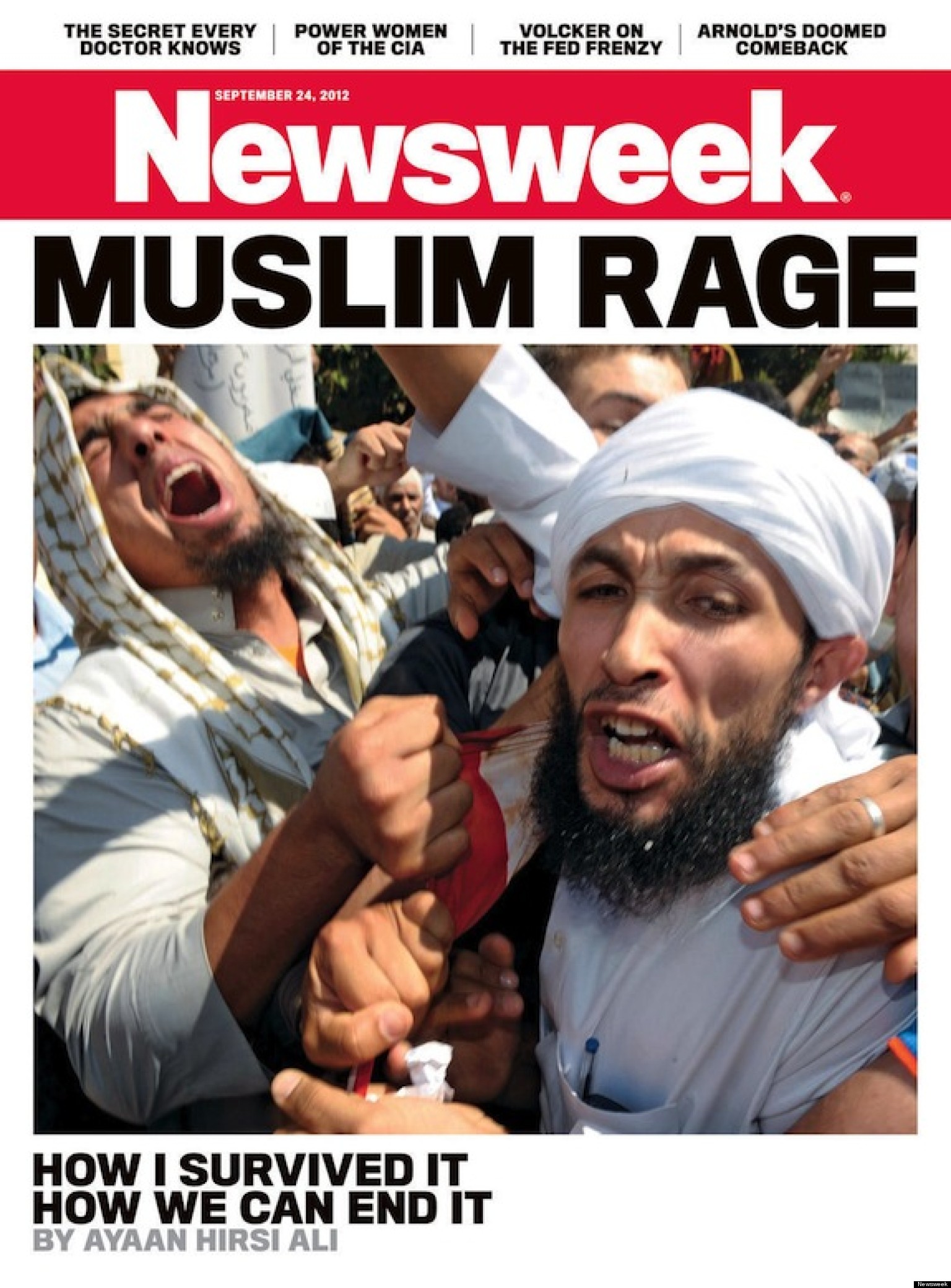
The ruthless brutality of the Islamic State in Iraq and Syria (ISIS or ISIL) unfolds before our eyes on the screens. As commentators struggle to explain and understand it, it becomes convenient to revive old Orientalist tropes. Beyond the spectacular brutality, the reason that ISIS invites attention (both fascination and fear) is that it seems easy to fit in confrontational narratives of Islam (us v. them, anti-American, etc.). Muslims are clearly angry at something. In his infamous article “The Roots of Muslim Outrage”, Bernard Lewis simplistically explained that Muslims are envious of, and angry at, Western modernity and secularism. The U.S. magazine Newsweek illustrated this knee jerk reaction, and recourse to run of the mill thinking patterns, in a Muslim Rage cover in September 2012.

o-NEWSWEEK-MUSLIM-COVER-facebook

In his book “Covering Islam” (1981) Edward Said has effectively critiqued these binary simplifications that dominate not only journalistic discourse about “Islam”, but also expert-talk about Islam. For Said, all attempts to conceptualise other cultures are a value-laden interpretive exercise. He showed the deficiencies of orthodox writings on—and views of—Islam, and called for “antithetical knowledge” to challenge the orthodoxy’s claims of value-free objectivity.

It seems little has changed, however, since Said wrote his book in the wake of the Iranian revolution. In this brief commentary I want to examine three attempts to understand ISIS. These are long treatments in respected liberal media outlets. To use Said’s phrase, these are treatments that fit in different “communities of interpretation.” These three essays are all aware of the need to provide “context” for ISIS. However, their contextualisation differs. The success of this contextualisation in shedding a light on ISIS varies. Let me call these interpretive techniques: universalization; Millenarian confrontation; and intellectual bewilderment. These three attempts operate mostly on the ideational/ cultural domain.

Continue reading

Theorizing Embodiment and Making Bodies ‘Matter’

Bringing to a close our symposium on Bodies of Violence is Lauren’s rejoinder to all our contributors, Kevin McSorley, Ali Howell, Pablo and Antoine.


First, a huge thank you to the (Dis)order of Things and especially Antoine for organizing this forum and to each of the contributors. It’s been a huge honor to have my work read so carefully and responded to so thoughtfully and I welcome the opportunity to try to clarify some of my work and acknowledge where the contributors have pointed out helpful areas for future research.

As Pablo K and others noticed, Bodies of Violence it is not meant to be a general theory of embodiment in IR (I’m not sure such a project is feasible or politically desirable in any event).  It is a more specific intervention with a different ambition: both to speak to ‘mainstream’ concerns about theorizing violence, particularly forms of political violence associated with the ‘war on terror’ and to make not only a theoretical argument about how we might or should theorize embodiment and violence, but also to show that understanding these different ‘modes of violence’ necessitates such an understanding of the relationship between bodies, subjects and violence.  My rationale for using feminist theory to think about the relationship between bodies, subjects and violence in IR was not meant to be exclusive: certainly (other) people working with concepts of biopolitics as well as anti-colonial/anti-racist theorists, disability theorists, phenomenologists and more also have much to say on this topic, some insights of which have been very important in my analysis, if not as fully fleshed out (if you will) as my engagement with feminist theory is.[i] For me, it was a particular reading of feminist theories of embodiment, not solely based on Butler, but on a particular feminist problematic in which women, as a category of those constituted, as Pablo K put it, the “improperly bodied”, are politically disenfranchised and generally excluded from their status as a fully human subject that served as a starting point, but far from an ‘ending’ for thinking about the subject of embodiment.  Rather, it is, as Kevin noted, “the specific tradition of trying to think through women’s subordination in terms of the relationship between bodies, subjects and power” that feminist theory entails that I wanted to use to think about violence and embodiment in ways that I hope will speak not only to feminists in IR but also to other critical and the more pluralistically and trans-disciplinarily minded scholars in IR and beyond as well.

Continue reading

Bodies, and Violence: Thinking With and Beyond Feminist IR

10170814_10203788729029655_7004664852126275170_nOur third post in the symposium on Lauren Wilcox’s Bodies of Violence comes courtesy of Alison Howell (the first two posts can be found here and here). Alison is an Assistant Professor of Political Science at Rutgers University, Newark. She has written on topics relating to the international relations of medicine, health, security and warfare. Her first book, Madness in International Relations examined the role of psychology in global security practices.


I have a confession to make: at the last ISA, swept up in the magic of New Orleans, I rekindled a romance. I should probably clarify that I’m not talking about one of those salacious romances that one hears rumors of on the Hilton elevator. No, I’m talking about my relationship to FTGS specifically, and feminist IR more generally.

tacky rose

When I first started going to the ISA a little over ten years ago, I felt strongly identified with FTGS. Though I consider my research feminist (amongst other things), and though, for that matter, I’ve continued to pay dues to the FTGS section as a kind of hopeful political act – still the romance didn’t last. Partly my intellectual curiosities took me in different directions. I also had trouble articulating some of the problems I had with the deployment of some concepts in feminist IR (especially the concepts of trauma, and also violence, which I’ll return to in a few paragraphs).

But lately I’ve been feeling flirtatious with feminist IR again. In part, this is because I’m finally getting some clarity on why I have disagreements with some feminist thought in IR (and thoughtful disagreement is a kind of engagement). It’s also because I think that feminist IR is beginning to be more diversely peopled and theorized. For these reasons, I was excited to find Lauren Wilcox’s impressive book in my possession, a book that appears as part of Oxford University Press’s Gender and International Relations series, a perch from which it is pushing feminist IR in some new directions.

Wilcox’s book is novel in that it works to systematize an approach to the body in IR. To date, a focus on the body as a site of theoretical concern in IR has been piecemeal, though certainly not absent. Yet what Wilcox achieves in placing the body and embodiment as central conceptual artifacts in Bodies of Violence, is to freshly open up a number of thematic concerns and questions for the study of global politics.

Continue reading

Violence, Norms and Embodiment

McSorleyWe are delighted to welcome Kevin McSorley for the second post of our symposium on Lauren Wilcox’s Bodies of Violence. Kevin lectures in Sociology at the University of Portsmouth. His work explores war, violence and militarism through the lens of embodied, emotional and sensory experience. His scholarship has explored contemporary conflicts including those in Chechnya, Iraq and Afghanistan, as well as analysing phenomena including the global arms trade, military fitness regimes, and helmetcam technologies. Recent publications are available at Academia.edu.


Lauren Wilcox’s Bodies of Violence: Theorising Embodied Subjects in International Relations is an extremely welcome addition to a growing corpus of recent scholarship that attempts to foreground the body and embodiment in the analysis of topics such as war, violence and security. Wilcox argues that IR has historically constituted itself as a discipline partly in terms of the exclusion of the detailed consideration of the body and embodiment, concerns which have rarely been admitted as core to a discipline whose interests supposedly lay at higher levels of abstraction. Indeed, the absenting and sequestering of the bodily and particular bodies has been central to the formation and history of many academic disciplines, modern social and cultural formations, and the organisation of much mundane experience. Relatedly, it is often specifically in occurrences and encounters of bodily discomfort, illness, estrangement, harm, failure, violence and pain that the body may assume a renewed experiential salience in everyday life. The under-theorisation of embodiment thus seems particularly paradoxical for a discipline such as IR, whose analytic remit encompasses the organisation of violence and pain for political ends, phenomena which can hardly be adequately understood without attempting to think through the multiple ways that violence and pain are intimately related to the in/abilities of bodies to engage in particular sense-making, meaning-making and worlding practices. Indeed, such under-theorisation may be more than just paradoxical, for abstract strategic thinking that avoids acknowledging bodies has historically been complicit with particular expert modes of knowing and doing violence.

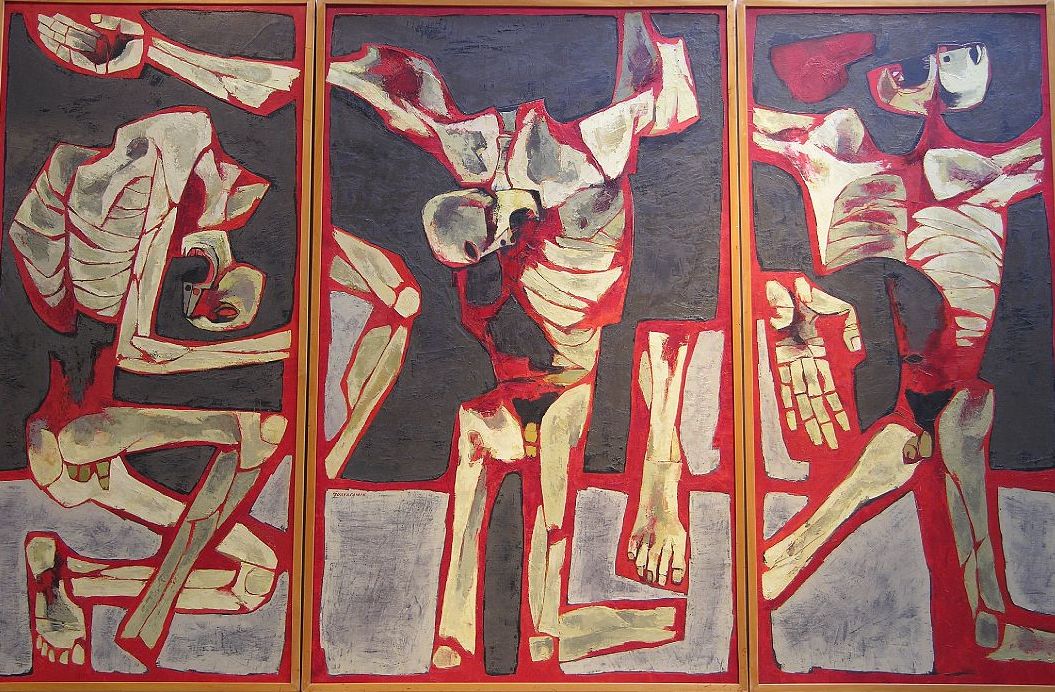
Oswaldo Guayasamín, Los Torturados (1976)

Oswaldo Guayasamín, Los Torturados (1976)

Wilcox’s project is thus a necessary intervention that grapples meaningfully with the disembodied soul of IR and I am thoroughly supportive of its ambitions. The body is one of the most plural and contested concepts in social science but Wilcox initially argues that, when considered at all, the way that it has typically been rendered through the realist and liberal traditions of political thought that inform IR and security studies is as a stable, singular, bounded and natural entity whose flourishing is dependent upon protection from various inevitable risks and threats. This narrow understanding of the body is thus of something essentially thing-like, fixed and existing outside the realm of the political. In contrast, biopolitical and particularly feminist analytics – the latter having a specific tradition of trying to think through women’s subordination in terms of the relationship between bodies, subjects and power – provide the alternative conceptual underpinning for Wilcox’s own analysis.

Continue reading

Bodies of Violence: Theorizing Embodied Subjects in International Relations

photo copyThis opening post by Lauren Wilcox kicks off the symposium dedicated to her new book Bodies of Violence: Theorizing Embodied Subjects in International Relations (Oxford University Press, 2015) with a series of follow-up posts coming over the next few days. Lauren is University Lecturer in Gender Studies and Deputy Director of the Centre for Gender Studies at the University of Cambridge. She was previously a Scarf postdoc in the Department of Political Science at Johns Hopkins University and did her PhD in Political Science at the University of Minnesota.


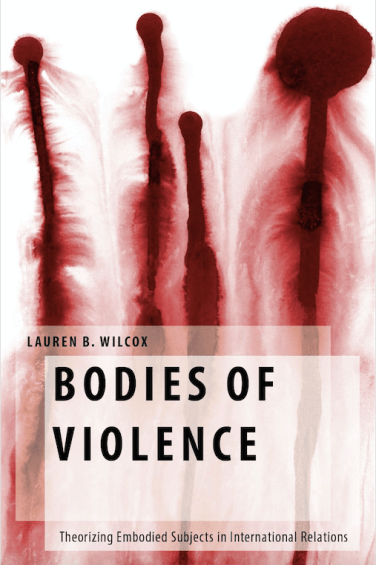
Bodies of Violence

The impetus for “Bodies of Violence” (which is based on my PhD dissertation) is that there is, or was, no theory of the body in International Relations, or general study of the role of bodies on IR; and this is a problem for the study of political violence as well as for the political implications that a lack of attention to bodies has in the field. The work begins by noting a deep irony in war/security studies, that while war is actually inflicted on bodies, or bodies are explicitly protected, there is a lack of attention to the embodied dynamics of war and security. This seeming ‘disembodiment’ of theory stands in stark contrast to the political dynamics of violence, especially in the particular practices or modes of violence that I discuss in this book.  Drones make it possible to both watch people and bomb them, often killing dozens of civilians as well, while the pilots operating these machines remain thousands of miles away, immune from bodily harm. Suicide bombers seek certain death by turning their bodies into weapons that seem to attack at random. Images of tortured bodies from Guantánamo Bay and Abu Ghraib provoke shock and outrage, and prisoners on hunger-strikes to protest their treatment are force-fed. Meanwhile, the management of violence increasingly entails scrutiny of persons as bodies through biometric technologies and ‘body scanners’.

I: Argument and Main Contributions

While bodies and embodiment are an ‘absent presence’ in studies of war and security, feminist theory has been at the forefront of considering the relationship between subjects, bodies and violence in recent decades. In this work I draw on work in feminist theory that offers a challenge to the policing of boundaries between human bodies and the broader political context. It is here that feminist theory is most incisive, for feminists have struggled with the problems of how to theorize embodiment as a necessary but not exclusive aspect of subjectivity in their own terms, terms which can help us to ‘think the body’ in IR in such a way as to provide new purchase on central concepts such as power, security, vulnerability and violence. For example, violence can be re-thought as something that is productive and not only destructive; vulnerability is not just a condition to be overcome but also a constitutive feature of the embodied subject. I focus on Judith Butler’s work, in conversation with other theorists such as Julia Kristeva, Donna Haraway and Katherine Hayles. I argue, as have others, that there is continuity between her works on “Gender” from Gender Trouble and Bodies that Matter and her more explicitly ethical and political works such as Precarious Life and Frames of War. A central feature of Butler’s concept of bodily precarity is that our bodies are formed in and through violence. The implication of feminist theory’s emphasis on the co-constitution of bodies and political structures is to give IR a new starting point, as theorists can no longer begin with political communities populated by actors whose bodies are undifferentiated and can be transcended.

Continue reading

Steal This Conference

A guest post from the Ray Hudson Posse.


If you were to ask a handful of early career scholars for their impressions of the recent British International Studies Association (BISA) conference in London they would probably say: “I wasn’t there”. The reason for the dearth in young attendees is that the conference (like all conferences) was prohibitively priced. Its four days costs a whopping £120 for early birds and £150 otherwise. For undergrads and postgrads the fee is £100 (early bird) and £130 (late). Membership to BISA is compulsory, which costs another £30 a year. It’s a hell of an entry fee into the Ivory Tower.

The way in which the structures of academia are chewing up and spitting out the next generation of scholars-with-no-future is most clearly expressed in the ‘conference trap’, characterised by a double-fuckery – those most in need of attending are precisely those most priced out. While for established academics conferences are little more than an opportunity to blow research budgets on a piss-up with the lads, for aspiring researchers these events are crucial to bolstering the CV and (*shudder*) networking. That is, they are crucial to obtaining a job that will provide them with the means – a proper wage, research budgets, time off teaching etcetera – needed to go to conferences! (And, also, to live).

But it is precisely early career scholars in fractional, contract or zero-hours employment that have limited/ no research budgets and therefore struggle to attend. It is precisely early career scholars that are underpaid and thus unable to pay out of their own pocket. These structural constraints tend to be ratcheted up if you’re a person of colour, not-male, working class, and/or from the global south. On the one hand we can’t afford to go; on the other hand we can’t afford not to go. We need a job to go; we need to go to get a job. Something has to give.

We went to BISA. We didn’t pay. We stole this conference. You can too. Here’s how.
Continue reading