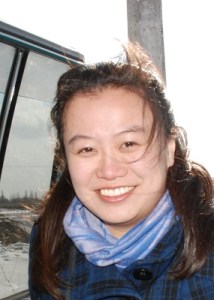
 A guest post from Dr. Joanne Yao and Andrew Delatolla. Joanne recently received her PhD from the LSE’s International Relations Department. Previously, she received her MA in International Relations from Johns Hopkins SAIS and her BA in History and Political Science from the University of Chicago. Her research critically assesses international cooperation and environmental politics through an analysis of the first international institutions established in the 19th century to manage transboundary rivers. She is particularly interested in international cooperation, environmental history and historical institutionalism. Andrew is a final year PhD student at the department of International Relations at the LSE. Andrew has received his MA in Intelligence and International Security from King’s College London, a BA in Political Science from Concordia University, and a BFa in Drawing and Painting from OCAD University. His research is concerned with state formation and state building in the 19th and early 20th century with a focus on Turkey, Lebanon, and Syria. He is particularly interested in the sociological development of the state in the post-colonial regions and the Middle East regional state system.
Discussions of gender and diversity have become a hot topic by the proverbial IR water cooler, having increasingly gained attention at ISA through programs sponsored by the Women’s Caucus (WCIS) and the LGBTQA Caucus – amongst other groups and academics who have brought this topic to the table. However, such discussions are also prominent in scholarly inquiry, including Jeff Colgan’s work on course syllabi and Dawn Teele and Kathleen Thelen’s work. While most studies focus on the gender gap in PhD training or the ‘leaky pipeline’ problem – the problem that despite the gender balance at the graduate level, there are far fewer women in senior positions – we feel that the analysis should be expanded. Putting thought into action, we have embarked on a project of our own to examine not only gender but also diversity in IR pedagogy at the undergraduate, masters, and PhD. Unlike other studies of this type, we have sought to examine gender of authors (under the binary male/female assumption) but also diversity in terms of content. Although final results are forthcoming, our analysis has confirmed the 80-20 split between male and female authors across the IR curriculum as it exists at the London School of Economics and Political Science. With regards to diversity content, our preliminary results have shown that there is indeed a lack of diversity content overall, and especially with regards to content that discusses gender and race.
But why should anyone care? After all, an 80-20 split with regards to gender reflects the gender gap of articles in top IR journals, while the lack of diversity content just means that there is ongoing research that needs to be done, and shouldn’t we have the ‘best’ quality material on our syllabi? Aside from the obvious circular logic surrounding what constitutes as ‘best’; the fact that the 80-20 split does not reflect the near 50-50 split in terms IR/Political Science PhD graduates; and there is no shortage of quality research that speaks to diversity content – we offer three arguments in favour of a more diverse IR curriculum:
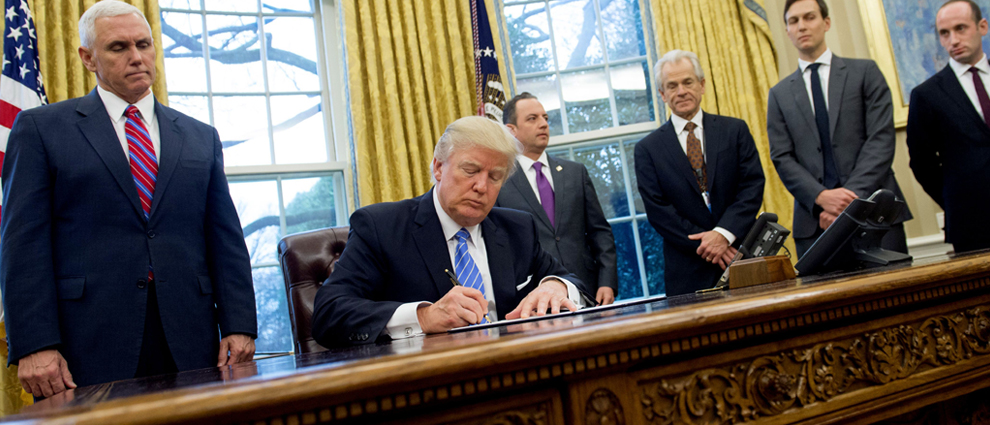


 In our final post centring on the US presidential inauguration,
  The Disorder Of Things