Archive | Europe RSS feed for this section

The Citadel Has Been Blown Up. Hurray! Next? A Response to Hobson

24 Sep

This is the second post in a symposium on John M. Hobson’s new book, The Eurocentric Conception of World Politics. The series began with a post by the author summarising the argument of the book and laying out some provocations for sympathetic readers. In the next few weeks, we will have further posts from Srjdan and Brett Bowden, followed by a reply from John.

Update: Srdjan’s post and Brett’s post are now up.


I was at an IR event last year where the speaker jovially declared that they just did not care about being, and being accused of being, Eurocentric. At the time, I found it both a little shocking and depressing that they could see fit to dispense with that fig leaf of serious acknowledgement that often accompanies discussions of Eurocentrism.  And indeed I thought, glumly, that it perhaps reflected many scholars’ underlying attitudes to the issue – a tokenistic practice of acknowledgement underpinning a wider apathy or disconnection. What only struck me later was also the possibility that the speaker also didn’t really understand the issue which was batted away so carelessly. Indeed, it is unclear that many ‘mainstream’ IR scholars truly understand the problem of Eurocentrism, given the mythologised twin deaths of colonialism and scientific racism in 1945 (or so).

Seriously?

So, Hobson is knocking at the door more loudly, with a bigger stick, and much more paperwork.  Continue reading 

Re-visioning Eurocentrism: A Symposium

17 Sep

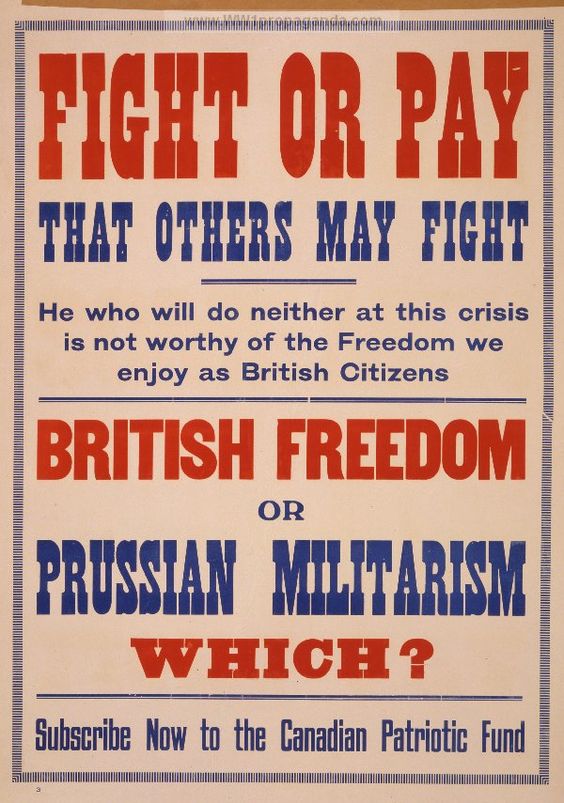
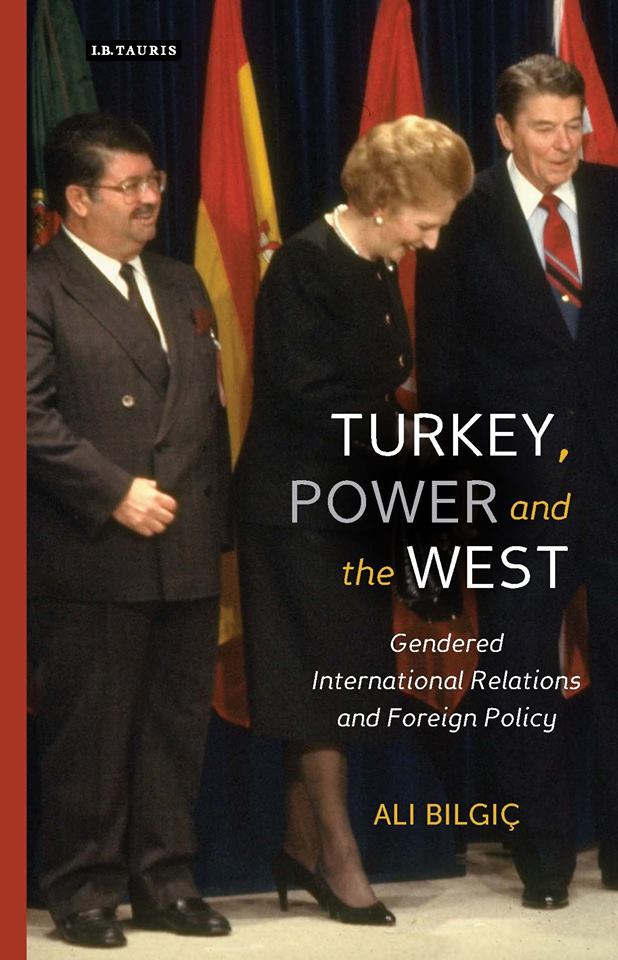
The Disorder of Things is delighted to welcome a post from John M. Hobson, which kicks off a blog symposium on his new book The Eurocentric Conception of World Politics: Western International Theory, 1760-2010. Over the next few weeks there will be a series of replies from TDOT’s Meera and Srdjan, as well as special guest participant Brett Bowden, followed finally by a response from John himself. [Images by Meera]

Update: Meera’s response, Srjdan’s response and Brett’s response are now up. 


Introduction

As I explain in the introduction to The Eurocentric Conception of World Politics, my book produces a twin-revisionist narrative of Eurocentrism and international theory.[i] The first narrative sets out to rethink the concept of Eurocentrism – or what Edward Said famously called ‘Orientalism’ – not so much to critique this founding concept of postcolonial studies but rather to extend its reach into conceptual areas that it has hitherto failed to shed light upon.[ii] My central sympathetic-critique of Said’s conception is that it is reductive, failing to perceive the anti-imperialist face of Eurocentrism on the one hand while failing to differentiate Eurocentric institutionalism or cultural Eurocentrism from scientific racism on the other hand. As such, this narrative is one that is relevant to the many scholars who are located throughout the social sciences and who are interested in exploring the discursive terrain of ‘Eurocentrism’. These, then, would include those who are located in International Relations of course but also those in Politics/Political theory, Political Economy/IPE, political geography, sociology, literary studies, and last but not least, anthropology.

The second narrative rethinks international theory as it has developed across a range of disciplines. It stems back to the work of Adam Smith in the 1760s and then moves forwards down to 1945 through the liberals such as Kant, Cobden/Bright, Marx, Angell and J.A. Hobson, Zimmern, Murray and Wilson, onto the Marxists such as Marx and Engels, Lenin, Bukharin, and Luxemburg, and culminating with the realists who include Mahan and Mackinder, Giddings and Powers, Ratzel, Kjellén ,Spykman, von Bernhardi, von Treitschke and, not least, Hitler. After 1945 I include chapters on neo-Marxism (specifically neo-Gramscianism and world-systems theory), neo-liberalism (the English School and neoliberal institutionalism) and realism (classical-realism, hegemonic stability theory and Waltzian neorealism). This takes the story upto 1989. I then have two chapters on the post-Cold War era which examine what I call ‘Western-realism’ and ‘Western-liberalism’. The final chapter provides an overview of the changing discursive architecture of Eurocentrism and scientific racism, while also revealing how international theory has, in various ways, always conceived of the international system as hierarchic rather than anarchic. Although this is clearly a highly controversial and certainly counter-intuitive claim, it nonetheless in effect constitutes the litmus test for the main claim of the book: that international theory for the most part rests on various ‘Eurocentric/racist’ metanarratives. And ultimately my grand claim posits that international theory in the last quarter millennium has not so much explained international politics in an objective, positivist and universalist manner but has sought, rather, to parochially celebrate and defend or promote the West as the pro-active subject of, and as the highest or ideal normative referent in, world politics.

Continue reading 

The Crisis of Europe and Colonial Amnesia

28 May

Recent commentary on the Eurozone crisis has started to pick up the grammar of colonial rule. The centre for Research on Finance and Money at SOAS, for example, has published an influential report wherein northern Europe (Germany especially) is framed as the core and southern Europe (especially Greece) as the periphery. Meanwhile, Ulrich Beck, European cosmopolitan par excellence, wonders whether the European Union will become “a European Empire with a German stamp”. Beck notes that Merkel’s sense of power “conforms to the imperial difference between lender and borrower countries.” At stake, agree many prominent European intellectuals in the pages of The Guardian, Eurozine and Der Spiegel, is no less than the promise of freedom and democracy immanent to the European project itself. All variously agree that, against the imperial sclerosis spread by capitalist and bureaucratic functionaries at the highest levels of governance, what is needed is a rejuvenation of meaningful democracy at a grass-roots level.

Faced with a dismantling of democracy Jürgen Habermas mounts a plea to save the old “biotope of Europe”. The constitutive components of this threatened ecosystem are freedom and democratisation, and its genesis lies in the Second World War and the fight against fascism and “internal” barbarism. The president of the European Central Bank has himself proclaimed that Europe now faces its “most difficult situation since the Second World War”. Alternatively, for many social democratic and leftist commentators, the danger of the situation lies in the loss of the “internal” struggle of labour and capital that defined the Cold War landscape. In the new context of EU institutional “empire” and its neoliberal tentacles, the defeat of labour quickens the erosion of social democracy, thus deciding the fate of the European project.

Europe, then, is perceived to be “colonizing” itself and in the process destroying freedoms and democratic structures that had been hard fought for by the general populace against political oppression and economic exploitation. But this angst-ridden imaginary of European crisis has very little to say about the substantive historical and global dimensions of European colonialism. Does cosmopolitan and social democratic angst cover these legacies and contemporary effects? In fact, in most recent treatises on the crisis the struggle for decolonization is given no integral status, even though these particular struggles were inseparable to and spanned the formative time period of the European project – the Second World War (and the Cold War). Some do mention current issues of migration and xenophobia. Nevertheless the implication, in general, is that colonial legacies are derivative of, or additional to, the core struggle for democracy and freedom in Europe. Fascism, Cold War, class struggle: yes; colonization, imperialism, decolonization and liberation struggle: not really.

Not all intellectuals suffer from this colonial amnesia. A number of scholars including Robert Young, Pal Ahluwalia, Paige Arthur and Alina Sajed have argued that in some key strands of post-War French thought, the issue of colonialism and decolonization was integral to discussions of European re-democratization and humanist concerns. This engagement reached a peak in the Algerian war of independence in the late 50s before falling into abeyance. And this was precisely the same time, we should note, as the Treaty of Rome, which bound European countries together in a tighter economic union simultaneoulsy sought to re-bind (post-)colonial African polities, peoples and resources into this union.

More generally, there has accumulated a significant amount of scholarship that reveals the colonial influences that shaped and were woven into quintessentially “European” intellectual/political movements such as Enlightenment and modernity. Continue reading 

Looking Beyond Spring for the Season: The West, The African Union, and International Community

11 Aug

This is the third part in a series of five posts from Siba Grovogui, Professor of International Relations and Political Theory at John Hopkins University. The first part is here; the second here. The series considers the character and dimensions of the tension between the African Union and ‘the West’ over interventions in Africa. As before, responsibility for visuals adheres solely to Pablo K.


The oblivion of commentators to these possible African objections has been less than helpful to understanding the actualized Western intervention itself; emergent African ideas on democracy and security; and the actual place of international morality in international affairs. Underlying the African apprehension to military intervention is a long-standing tension between international organizations that represent Africa, on one hand, and self-identified representatives of the West, on the other, over the meaning of international community as well as the source, nature, and proper means of implementation of the collective will. The dispute over the meaning of international community and the collective will has been particularly salient in Africa because, as a political space, Africa has been more subject to military interventions than any other geopolitical space in the modern era. These interventions have reflected contemporaneous relations of power, permissible morality, and objects of desire: from proselytism to fortune-seeking, trade, extraction of raw material, and the strategic pursuit of hegemony. Indeed, it is hard to remember a time since the onset of the slave trade when there was no open conflict between the majority of its states and the West over some dimensions of global governance that implicated the notion of the commons or international community.

The postcolonial era has not brought about any change to this situation. Since the end of World War II and the institution of the United Nations system, the plurality of African political entities have confronted self-appointed representatives of the West over the ethos of UN procedures (involving transparency and open access to the channels of decision-making) and the mechanisms of dispute mediation (including the determination of the principles and applicability of humanitarian interventions in a number of cases). One need only recall the political, legal, and military confrontations between African states and former Western colonial powers over Apartheid South Africa’s mandate over South West (which involved the legality and morality of colonial trusteeship); the French war on Algeria (which involved the legality and legitimacy of settler colonialism); the wars of decolonization in the former Portuguese colonies of Angola, Guinea Bissau, and Mozambique (which involved the principles of majority rule through open elections which communists might win); the unilateral declaration of independence by the white minority in Southern Rhodesia (which involved the principle of white-minority rule in postcolonial Africa); and the legality and morality of apartheid (which involved the principle of self-determination and majority rule). The underlying antagonisms contaminated deliberations throughout the UN system (particularly General Assembly proceedings) and involved all major issues from the Palestine Question to the Law of the Sea to other matters of trade and intellectual property. They reached a climax at the time of exit of the US and Great Britain from UNESCO, which was then directed by Ahmadou Mathar Mbow, a Senegalese diplomat and statesman.

These and other contests have shared a few singular features. One is a Western insistence on representing the essential core and therefore will of something called international community. In any case, the label of international community has often been reserved for Western entities in relations to others, who remain the object of intervention on behalf of the international community. This is to say that the term ‘international community’ has had political functionality in relations of power and domination in which Europe (and later The West) subordinated ‘Africa’. The relevant tradition can be traced back to the opening moments of the modern era, particularly during the ascension of The West to global hegemony. While it has undergone changes over time, the embedded imaginary of international community and its will have been built around artificially fixed identities and politically potent interests. Accordingly, the identity of the West, and therefore the international community, flows from a theology of predestination, formally enunciated as the Monroe doctrine in the US or the Mission Civilizatrice in France.

Continue reading 

Racist Lies, Oslo Edition: Jihadists, Lone-Wolves, and the Far-Right

29 Jul

Last week (Friday 22 July), a man brought a brutal plan to its grim conclusion in Oslo and Utoeya. After years of festering in resentment and roiling with anger, he worked up the conviction to act on his beliefs. He methodically worked out how to make and plant a home-made bomb. He coldly calculated an ambush of young women and men participating in a political summer camp.

He detonated his car bomb and killed 8 people, as well as damaging the prime minister’s office and several buildings in the area. While the city reacted to the terrifying scene, this man calmly made his way to a summer camp on the island of Utoeya dressed as a policeman, armed with an automatic rifle and enough ammunition to carry out an hour-long attack on the residents of the camp. He killed 68 people before surrendering.

Lie No. 1:

As shocking as the attack in Oslo was, it was apparently less shocking than the identity of this angry and violent man. Right-wing media outlets predictably lead with the unconfirmed story that the attack was carried out by Jihadists. But even mainstream commentators and more responsible media outlets ran with the Islamic terror story without evidence and have pushed the angle even after it was revealed that the perpetrator was a white, Christian, “nationalist” from Norway.

Why did the press so quickly and thoroughly misrepresent the story? We can talk about a knee-jerk response or blame faulty reporting, but there’s a simpler and more troubling dynamic at work here. That answer is that “we” expect angry and violent men committing these type of attacks to be Muslim, non-white, non-European.

Even as the true perpetrator of last Friday’s attacks was found and his own racist views made public, the media and the public struggled to accept and understand Anders Breivik because of their own entrenched racism. The hands that commit such violence are supposed to be brown hands, hands that pray to a false and violent God, hands raised in angry protests in far away countries, hands reaching out to choke white victims. Our image of violence reveals the violence of our images.

The blithe accusation of Muslim extremists and the immediate belief that the attacks in Oslo must have been perpetrated by Al-Qaeda, or some other shadowy network, reveal how deeply racist narratives are embedded in “our” understanding of the world.

Continue reading 

The Politics of Austerity: Emergency Economics and Debtocracy

17 Jul

austerity |ôˈsteritē| noun – sternness or severity of manner or attitude

It was possible, therefore, to commit a sin without knowing that you committed it, without wanting to commit it, and without being able to avoid it. Sin was not necessarily something that you did: it might be something that happened to you.

– George Orwell, “Such, Such Were the Joys”

Why what have you thought of yourself?

Is it you then that thought yourself less?

Is it you that thought the President greater than you?

Or the rich better off than you? or the educated wiser than you?

 I do not affirm that what you see beyond is futile, I do not advise that you stop,

I do not say leadings you thought great are not great,

But I say that none lead to greater than these lead to.

– Walt Whitman, “A Song for Occupations,” Leaves of Grass

The Politics of Austerity – Part I

This is the first in a series of posts that look at the political implications of the ongoing global economic crisis. I begin by examining the way that crisis is being used to attack the very idea of democracy through an assertion of the political imperatives of “the market” and the violation, bending and re-writing of the law by capitalist elites. I conclude by laying out how understanding the economic crisis in political terms shapes our ability to respond to it.

In the second post I’ll look at the ethos of austerity, which justifies the pain inflicted on largely innocent people, while suggesting that an affirmative democratic response to the economic crisis must begin with its own ethos, which I suggest should be an ethos of care for the world – which can provide orientation and inspiration for political struggles seeking to address the deeper causes of our current crisis. In the third post, I turn to the structures of the economy and of politics that define the current crisis, looking at the banking crisis, the bailouts, the politics of recovery/austerity and also reflecting of the structural imperatives of capitalism that led us to crisis. This, then, leads to the question of how to respond to the politics of austerity, and of what alternative actions are available to us, which is where the fourth and final post will pick up – with an affirmation of a caring ethos that supports a radically democratic economic vision.

Emergency Economics

In a previous post I briefly highlighted Bonnie Honig’s work, Emergency Politics, to examine the way that the ethical case for austerity is made; most basically, the existence of a supreme emergency, in this case economic, justifies actions that would normally be considered unacceptable. Honig’s work looks at how the appeal to emergency is used to reassert the exceptional political power of the sovereign over and against the law, with a focus on the reassertion of sovereignty witnessed over the past ten years in response to the threat of terrorist attack in the US and Europe.

Rather than accepting the necessarily intractable conflict between the power of the sovereign and the power of the law, Honig attempts to deflate this paradox by turning her attention to the always ongoing contestation that defines democratic politics, a contest over both the content of the law and the institutional embodiment of sovereign power. She suggests, then, that attending to the ambiguities of the “people”, who are both the democratic sovereign and a diffuse multitude, as well as the political element in the law – as new laws come into being through political action – enables us to avoid thinking about emergencies as moments of exception in which the rule of law is lost to the play of political power, while also acknowledging the limits of established law in moments of profound crisis. By undermining the exceptional nature of crises and emergencies Honig alters the challenge we face when circumstances force us to make choices or carry out actions we know are harmful and wrong by asking what we (democratic publics and citizens) can do to survive an emergency with our integrity in tact.

What do we need to do to ensure our continuity as selves and/or our survival as a democracy with integrity? Our survival depends very much on how we handle ourselves in the aftermath of a wrong. We will not recover from some kinds of tragic conflict. But when faced with such situations, we must act and we must inhabit the aftermath of the situation in ways that promote our survival as a democracy.

I continue to find this a useful way to understand our current economic crisis. Appeals to austerity depend upon the exceptional state created by crisis in order to justify the pain inflicted upon masses of people and the priority given to private interests (the markets, investors and bankers) over democratic publics. So, as democratically enacted laws must bow before the sovereign power threatened by exceptional attacks, so economic justice and democratic equality must bow before the commands of market forces, of economic inevitability, in this time of crisis.

The economic version of this argument is stronger still. While the space of political contestation that remains open when we accept the framing of emergency politics is limited, it does exist in the clashing of opposing sovereigns. The prospect of a substantive alternative to neoliberal economic ideology is dim, a light flickering weakly on antiquated appeals for a return to Keynesianism or watered down triangulations of the moderate-middle that sell off dreams of a just economy bit by bit – capitalist realism in action.

Honig awakens us to an important aspects of our current crisis: that “the market” is not in fact supremely sovereign, and the move to re-establish and further neoliberal policies and push through austerity measures requires an engagement in democratic politics – albeit one that undermines the notion of the public itself and seeks to use the power of the law to subvert democracy. Recognising the current crisis in these terms not only challenges us to consider how to survive our current troubles without giving up democratic virtues, it also reinvigorates and clarifies the political challenge we face. Emergency economics – with its assertion of debtocracy over democracy – is not an inevitable response to the crisis, it is a political one that we can, and should, fight against.

Continue reading 

A Kind Of Blank Spot

26 Jun

[M]y wife and I realized you cannot pay attention to everything, so I said to myself “one continent that I am going to leave aside is Africa.” I preferred to concentrate on Europe and China. I did a pretty good deal of work on China because I saw it ripe to become one of the most important parts of the world of which I knew nothing. So, I proceeded to do a lot of work on China in order to know something about it. But Africa is kind of a blank spot for me, apart from casual observation. Even though, I would say that the whole notion of anarchy applies very well to Africa.

In fact, a criticism people used to make to me was that Africa was clearly an anarchic arena, and yet African states did not fight much among themselves. How, then, would a Realist like myself explain that? Well, I did by invoking Turney-High’s book in anthropology, which was published—I believe—in the 1920s. There, he made the very valid point that countries have to obtain a certain level of self-consciousness as being a political entity, and a certain level of competence before they are able to fight one another. Turney-High’s illustration was very clear with his study of the peoples he referred to as the “Californians,” who were such a primitive people that they did not have the ability to form groups or fight as a group. A consciousness and competence at a certain level is needed before a group is able to systematically impose on another group—whether in the form of warfare or in other ways. I think that, for a long time, Africa was in that condition, and that, as it proceeds away from that condition, African countries will be able to fight wars against one another. In a historical sense, though, that is an implication of advancement.

Kenneth N. Waltz, ‘Theory Talks #40: The Physiocrat Of International Politics’, 3 June 2011

What We (Should Have) Talked About at ISA: Poststructural and Postcolonial Thought

24 Apr

…(drumroll)… We are collectively joyous at being able to introduce a new contributor to The Disorder Of Things: Robbie Shilliam, currently at the Victoria University of Wellington and author of a slightly staggering array of critical texts (on the impact of German intellectuals on IR; the Black Atlantic in modernity; the Haitian Revolution; race and sovereignty; and the imperatives of decolonial thinking, among others). Cross-posted at Fanon/Deleuze.


At the recent ISA conference in Montreal, I participated in a lively, weighty and difficult roundtable on postcolonial and poststructural approaches to International Relations. Alina Sajed had supplied the panellists with a provocation by way of refuting Dipesh Chakrabarty’s famous injunction that Europe was the inadequate and indispensible to frame the epistemological constellations of “modernity”. Sajed challenged the panellists to debate whether Europe was in fact dispensable as well as inadequate. There was certainly a spectrum of opinions given and positions taken on the function, possibility and desirability of the relationship between poststructural and postcolonial approaches. As a form of reflection I would like to lay out some thoughts by way of clarifying for myself what the stakes at play are in this discussion and where it might productively lead.

For myself I do not read the Europe that Chakrabarty considers in terms of the historical expansion and exercise of material colonial power. I read it in terms of a fantasy that captures the imagination. At stake is a conception of the whys, hows and shoulds of people suffering, surviving, accommodating, avoiding, resisting and diverting the colonial relation and its many neo- and post- articulations. In this particular respect, I take Frantz Fanon’s position and agree with Sajed: “Europe” must be dispensed with. In any case, as Ashis Nandy has shown, the monopolisation of the meaning of Europe by a fascistic figure (rational, male, hyper-patriarchal, white, civilized, propertied) has required the re-scripting of the pasts of peoples in Europe and a concomitant distillation of the traditions of European thought themselves so as to accord to this fantasy figure. Europe is a fantasy through and through, but one that damages different peoples with different intensities. And those who look in a mirror and experience no significant cognitive dissonance when they proclaim “European” can still count themselves, to different degrees, as being a thoughtful protagonist in a contested human drama. For others, there is only the promise of living this drama vicariously through the thought of others. That is why “Europe” is dispensable, even though for some peoples Europe has never been indispensible; regardless, it must be dispensed with.

Let me explain a little more what I mean by all of this. Europe is first and foremost a sense of being that constructs its empathy and outreach in terms of a self whereby all who cannot intuitively be considered of European heritage are categorized into two entities. First, they might be the “other” – foils to the understanding of the self. Their emptied presence is to be filled as the verso to the internal constitution of the European self. If they are lucky, they are given a kind of non-speaking part in the drama. In fact, they usually are lucky. Much critical European thought – and certainly almost all of canonized European thought – speaks volumes about the ”other” but only so as to fill in the European “self” with greater clarity.

Second, they might be the “abject” – the entity that is impossible for the self to bear a relationship to, although even this impossibility will be instructive to the inquiring European self. Abjects, under the European gaze, are reduced to a primal fear out of which an intensity of feeling is engendered that wills the drama of human (European) civilization. Defined in excess to the other/abject, the internal life of the European self can substitute itself for humanity at large in all times and spaces, and develop itself as a richly contradictory being that overflows its meaning and significance.

I do not know whether other colonialisms predating and contemporaneous to the European project matched this audacity. And in a significant sense, it really does not – and should not – matter. After all, the lure of making comparison is the precise methodology through which the European self overflows to define all others by a lack. I do though want to hazard a particular claim at this point, which might or might not bear up to scrutiny: the prime “others” of European colonialism were the indigenous peoples of the Americas. And while we owe much to Kristeva’s work on the term, the prime “abjects” of European colonialism were the enslaved Africans bought over to the Americas.

Continue reading 

Serious Obstacles; Or, Why Is The UK Government Undermining International Protections Against Gendered Violence?

8 Mar

Today is the 100th International Women’s Day. The Government has been announcing its latest action plan on violence against women and girls (including some bold promises for increased funding for rape crisis centres) accordingly. But The Times reports that British officials have, in the same moment, been deliberately undermining a draft convention against violence against women at the Council of Europe. Specifically:

Britain objects to the words, “violence against women is understood as a violation of human rights”. Instead, it wants “violence against women constitutes a serious obstacle for women’s enjoyment of human rights”.

Even more damningly, our representatives apparently want the convention to apply only to gendered violence carried out in ‘peacetime’ and not to violations in war. Today’s Home Office announcements make reference to various avenues and promises of international ‘co-operation’, but say nothing about this specific charge. Media reports are similarly silent so far.

This is extraordinary. The timing is brutally ironic, although that is likely down to the Editors at The Times. But why would William Hague and co., newly championing freedoms elsewhere, suddenly seek to undermine international cooperation on this front?

Continue reading 

Brothers in Arms: ‘Outside The Law’ (2010) & ‘Of Gods And Men’ (2010)

31 Dec

Strange country that gives the man it nourishes both his splendour and his misery!

Albert Camus, Summer in Algiers (1936)

Many presumed his macabre tone would bring back some much-needed edge to the increasingly commercial sensibilities of the Cannes Film Festival this year, but with Ridley Scott’s revamped Robin Hood picked to open the festival hopes were quickly dampened. Tim Burton, the tousle-haired American director, may have a singular visual imagination and be a favourite amongst cinephiles, but as jury president he failed to appreciate the struggle to build a habitable multicultural Europe that was taking place both on and off screen.

A Screaming Man, by French-Chadian Mahamat-Saleh Haroun, is set during the current civil war in Chad, and tells the story of a former central African swimming champion who sends his son to war so as to regain his position as a security guard at the swimming pool of an expensive European hotel. Taking its title from Aimé Césaire’s collection of poems Return to My Native Land, Haroun’s fragile look into post-colonial conflict captures the bewitching impact of a symbol of Europe’s lasting legacy in Africa. Rachid Bouchareb, the celebrated French-Algerian filmmaker, presented Outside The Law; the latest in a new wave of French-North African films aimed at simultaneously curing France’s colonial amnesia and rupturing the borders of contemporary French culture. The film takes place between 1945 and 1961, and focuses on the contrasting fate of three Algerian brothers who have fled for France in the aftermath of the Sétif massacre. It poignantly ends with the credits anticipating the October 1961 Paris Massacre in which over 200 pro-FLN demonstrators were killed by being beaten unconscious and thrown into the River Seine or tortured in the courtyards of Paris police headquarters. Bouchareb has strategically chosen to set his narrative between two of France’s most notorious – but still officially contested – state-sanctioned crimes. Following on from his previous film, Days of Glory, which deals with the discriminatory treatment of indigènes recruited into the Free French Forces formed to liberate France of Nazi occupation in World War II, Outside The Law continues the prescient struggle over representations of France’s colonial history.

'Algerians Drowned Here'

Although Rachid Bouchareb was considered by most to be the favourite to scoop the Moroccan leather encased prize, the man who recently chose to indulge Alice’s imperial ambitions in 3D, decided to award the Palme d’Or to Of Gods And Men. Xavier Beauvois’ drama is set in the Cistercian monastery in Algeria, whose resident monks are confronted by your archetypal Islamic fundamentalists. Saturated with Christian faith, the film squares the noble patience, love and belief of the monks against the intolerance of Islamic fundamentalists and their apparently regressive, intolerant and bloodthirsty worldview. Despite most of the notable tastemakers – from Philip French, Peter Bradshaw, and even the usually astute Mark Kermode – falling for the film’s quaint charms, Of Gods And Men remains a film that enjoys flirting with both audiences’ assumed prejudices and the intolerably stubborn idea of a clash of civilisations. Dare I say Beauvois’ reverential and holier-than-thou tone could have done with some of Roberto Benigni’s light-hearted but equally annoying flamboyancy.

With the likes of Homi Bhabha and Gayatri Spivak now comfortably donning the robes of academic superstardom, cultural studies no longer holds its former position as rebellious younger child of academia. Having breeched the stuffy walls of Ivy League and redbrick institutions, it has becoming increasingly safe in its approaches to contemporary culture, and thus been unable to find an adequate balance between aesthetic concerns and pressing socio-political contexts. Continue reading 

Follow

Get every new post delivered to your Inbox.

Join 711 other followers

%d bloggers like this: