For the final post in our symposium on Colonial Lives of Property, Brenna Bhandar replies to her interlocutors. Brenna is Senior Lecturer in Law at SOAS, University of London. She is author of Colonial Lives of Property: Law, Land and Racial Regimes of Ownership (DUP: 2018) and co-editor (with Jon Goldberg-Hiller) of Plastic Materialities: Politics, Legality and Metamorphosis in the Work of Catherine Malabou (DUP: 2015). She is currently completing Thinking Liberation: anti-racist feminist practice, a book on critical race feminisms with Rafeef Ziadah.
Thanks to all five contributors for these incredibly thoughtful interventions. It is a real gift to have such expansive and thorough responses to one’s work, and to have been given the opportunity to consider the questions they raise about the potential for some of the ideas in the book to travel into domains unexplored in the text. It is impossible to respond to each of the issues raised, but I have chosen 4 different themes to discuss which I think connect many of the articles.
One of the themes arising from the responses to the book is a question about the extent to which the concept, “racial regimes of ownership” is adequate to grasp the realities of colonialism outside of the sphere of British colonial and imperial rule. To what extent has the co-emergence of racial subjectivities and capitalist property relations been a central part of the advent of colonial modernities beyond the settler colony?
 The fifth post in our symposium on Colonial Lives of Property is by Lisa Tilley. Lisa is Lecturer in Politics and Leverhulme Early Career Fellow at Birkbeck, University of London. She is also co-convenor of the Colonial, Postcolonial, Decolonial Working Group of the British International Studies Association (CPD-BISA); co-founder of the collaborative research project
  The third post in our symposium on Brenna Bhandar’s Colonial Lives of Property is by Sara Salem. Sara is an Assistant Professor in Sociology at the London School of Economics. Sara’s research interests include political sociology, postcolonial studies, Marxist theory, feminist theory, and global histories of empire and imperialism. She is particularly interested in questions of traveling theory, postcolonial/anti-colonial nationalism, and feminist theory. She has recently published articles in journals such as Signs; Interventions: A Journal of Postcolonial Studies; Review of African Political Economy; and the European Journal of Women’s Studies, among others.
 This guest post, from Kerry Goettlich, is the second contribution to our symposium on Brenna Bhandar’s Colonial Lives of Property. Kerry is a PhD candidate in the IR Department at the London School of Economics. His research is on the historical relationship between space and international politics, particularly the origins and consequences of linear borders. His latest work is ‘The rise of linear borders in world politics’ in the European Journal of International Relations. He was also recently co-editor of Millennium: Journal of International Studies.
 The Disorder of Things is delighted to host a symposium on Brenna Bhandar’s new book,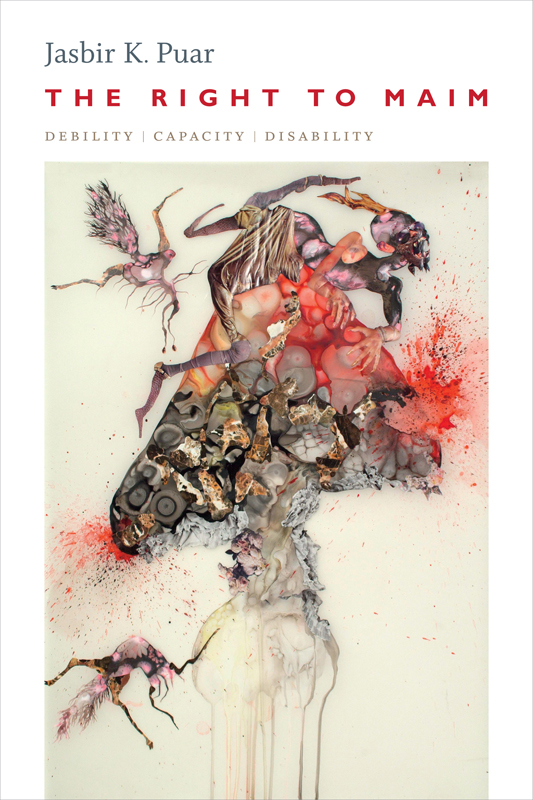
 The Disorder Of Things