Translating Radical Plurality in Pragmatism: A Paradox?

This is the fourth and final commentary in our symposium on Reconstructing Human Rights.The symposium will close with a  rejoinder post by Joe tomorrow. You can catch up on the opening post, the first, second and third commentaries.


As I was reading Reconstructing Human Rights, I found myself nodding in agreement throughout most of the book. This did not come as a surprise; the work Hoover does in his book is close to my own work, and to my heart. giphy-1.gifDisrupting ethical theories that are rooted in abstractions and assumptions of universal moral principles is, I believe, urgently required if we are to better understand the moral responsibility we have toward our fellow human beings, particularly in environments of conflict and violence. And so for me, what resonates most strongly in Reconstructing Human Rights is the ethical project contained within the book. Like Hoover, I am not at all convinced that universalising accounts of morality can adequately address ethical problems in political contexts. And like Hoover, I am concerned with how the quest for certainty and universality shapes how we understand, see, and treat one another in social and political life. What is at stake here, in my view, is nothing less than the capacity for ethical action itself, which is at risk of being entirely subsumed by the pursuit of absolutes, leaving little room for contingency, alterity, uncertainty, or indeed anything unknown that might arise out of the specificity of any one ethical moment.

Continue reading

Jaw-jaw, War and Law

ainley_kirsten_118Our third comment on Reconstructing Human Rights is authored by Kirsten Ainley. Kirsten is Associate Professor in the Department of International Relations and Director of the Centre for International Studies at the London School of Economics. Her research is in the field of global ethics and is concerned very broadly with relationships between politics, law and ethics in world politics. She has published widely on international criminal law, transitional justice, the International Criminal Court and the notion of evil in international relations. Read Joe’s opening post here, Karen’s comment here, and Anthony’s contribution to the symposium here.


Reconstructing Human Rights is a remarkable book. It sets out, in a most compelling way, grounds to support human rights as an ethos – a way to approach politics that has the potential to be genuinely emancipatory. The book does so not from the widely (and rightly) disparaged universalist wing of political theory, but from a critical perspective. This is where the argument is most original and most impressive. There are plenty of us who are critical of many human rights practices, but supportive of the use of human rights language and law in some instances – or at least despairing of an alternative. Hoover provides, in a beautifully staged argument, a reconstruction of rights that weaves together strands from the work of theorists such as Dewey, Connolly and Honig (as well as drawing on Benhabib, Walzer, Habermas and others). Like many theorists, Hoover has a razor-sharp ability to recognise and expose flaws in arguments. More unusually, he treats the work he is responding to with humility and respect, and is thus able to draw his critiques into a constructive treatise. Engaging with the book was as rewarding as it was intellectually demanding, and the humanity with which Hoover thinks through his subject is testament to the potential of his approach.

So, I agree. He’s right. There is virtually nothing of substance in the book that I would take issue with. This realisation left me in something of a bind when it came to writing this post. But it also, after some time reflecting on the implications of the book, left me with a familiar discomfort about the relationship between philosophy and action. Rather than discussing the book’s argument, therefore, I want instead to think about the tensions that become apparent in campaigning for political change using the tool of human rights, in one form or another, if approached from Hoover’s position. Continue reading

Upsetting the Theory: Rights for Housing and Queers

The second post on our forum on Joe Hoover’s Reconstructing Human Rights, from DoT’s Anthony Langlois. You can read Joe’s opening post here and Karen Zivi’s commentary here.


 As I was reading Joseph Hoover’s fabulous new book, a critical debate was going on at the peak human rights institution of the global political system. The Human Rights Council, an institution to which UN Secretary General Ban Ki-moon suggests “all victims of human rights abuse should be able to look…as a forum and springboard for action”, was debating a resolution to establish a UN Independent Expert on Protection Against Violence and Discrimination based on Sexual Orientation and Gender Identity. On June 30, 2016, after extensive debate, in which much opposition was expressed, the Human Rights Council voted in favour of this UN Special Procedure, establishing the office of the Independent Expert on Sexual Orientation and Gender Identity (SOGI).

It is a harsh reality that in many countries around the world, lesbians, gays, bisexuals, trans* and others of queer and diverse sexual orientation, gender identity and expression (LGBTQ) are not able to look to human rights institutions for support and protection, or, those institutions find themselves constrained and unable to offer such support and protection openly, or at all. The creation of the SOGI expert by the UN is in part a recognition of this, and it is seen by many as a critical further step in the UN’s recent activism on this routinely neglected area of human rights concern.

sogiexpertnow

But as well as allegedly being “progress” in the human rights agenda of freedom and emancipation, it should cause us to pause and think. What does it mean that Human Rights have only come lately to queer communities, if at all?

Hoover does not directly consider this question. But the debate about gay rights, human rights for queers more broadly, and their place in IR, plays a role like that which Hoover shows the right to housing to play. Hoover uses the right to housing to destabilise, challenge, pluralize, democratize and reconfigure our received ideas of human rights. I would suggest that this is also precisely what happens, or, at least, what can happen, when human rights meets sexual orientation and gender identity expression, as well. Continue reading

Human Rights: A Love Story?

zivi-headshots-gray-backgroundThis is the first comment, following Joe’s opening post, penned by Karen Zivi. Karen is Associate Professor of Political Science at Grand Valley State University where she teaches courses on rights, democracy, and gender and politics. She is the author of Making Rights Claims: A Practice of Democratic Citizenship (Oxford University Press, 2012) and her work on topics such as LGBT rights, citizenship, and motherhood has appeared in the Journal of Human Rights, American Journal of Political Science, Politics & Gender, and Feminist Studies.


A Longing

As I write this post, I am preparing for the first day of my ‘Introduction to Human Rights’ class. I’ll begin by asking my students to identify a human rights issue of interest to them. I won’t be surprised if they mention the Syrian refugee crisis or police brutality in the United States, religious liberty or reproductive justice, Wikileaks and freedom of the press or Flint and access to clean water (I teach in Michigan after all). I’ll ask them what should be done to address these issues and I won’t be surprised if they advocate for providing humanitarian aid or making new laws that limit or enhance state power. And when I ask them why we should respond one way or another, I won’t be surprised if they make reference to ideas about a common humanity, the meaning of justice, or doing the right thing.

giphy

Not wanting to crush their spirit on the first day, I’ll tell them they are in good company in the way they are thinking about human rights. But over the course of the semester, I’ll tell and show them that political solutions and philosophical justifications disappoint again and again for reasons that go beyond the sheer callousness, greed, or stupidity of human beings. Even when victories are won, as Joe Hoover’s new book makes so astonishingly clear, collateral damage is often unavoidable. My students thus have the difficult task of confronting the reality of human rights’ limitations. I have the task keeping their promise alive, balancing rights realism with rights optimism in ways that motivate my students to engage in making change and yet staves off the kinds of skepticism, despair, and apathy that do nobody any good. I still believe in the power and promise of human rights. And, fortunately, so too does Joe Hoover.

Continue reading

Reconstructing Human Rights

The first in a forum on Joe’s recently released Reconstructing Human Rights: A Pragmatist and Pluralist Inquiry in Global Ethics (Oxford University Press, 2016). A number of commentaries will follow in the coming days.


hoover-reconstructing-human-rights-cover1Earlier this year I visited Sylvia’s Corner, the home of the Focus E15 campaign, to give a talk about the human right to housing. As I shared my research, based on work I had done with housing campaigns in Chicago and Washington DC, I was struck by how this specific moment illustrated what I most hope Reconstructing Human Rights might accomplish—namely, helping to reconstruct human rights as a more democratic idea, and practice.

In London, Focus E15 has been fighting for the human rights of those struggling to secure a decent home for themselves and their families, often struggling against the very public agencies who should be assisting them. Their work not only draws on an ethical and political language of human rights, but it also remakes that language, renders it suitable to their needs and responsive to their experiences. I have witnessed this same process with other campaigns, such as the  Chicago Anti-Eviction Campaign, and with community organising groups like ONE DC in Washington DC. It was revealing to act, even briefly, as a conduit through which the experiences of these distant groups could be relayed. Human rights are constantly being remade, repurposed—reconstructed—to serve the ends of those suffering from injustice. It is this reality that motivates my book, which is at its core an attempt to understand how human rights can be both an instrument of the privileged and powerful, and also a weapon for the oppressed and disempowered. I wrote this book because I wanted to know, what should we make of human rights?

Continue reading

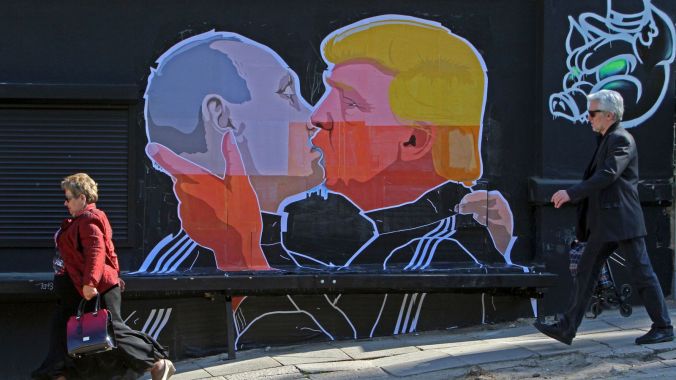
Fantastic Mr President: The Hyperrealities of Putin and Trump

Screen Shot 2016-08-30 at 21.56.56This is a guest post by Maria Brock. Maria is about to commence a postdoctoral fellowship at the Centre for Baltic and East European Studies and the School of Cultural and Critical Theory at Södertörn University (Stockholm). She has a PhD in Psychosocial Studies from Birkbeck and has perviously published on the role of negative affect in reactions to the case of Pussy Riot, and the status of memory objects and ‘museums of the everyday’ in the proliferation of post-socialist nostalgia.


In July 2016 – more than 15 years into his time in office – Vladimir Vladimirovich Putin’s approval rating was at 82%, a figure made all the more remarkable by the fact that the country is experiencing a palpable and lengthy economic downturn. Some commentators have favoured an explanation that treats this as proof that a larger-than-life president is more in line with ‘what Russians want’, as Putin “satisfied a yearning for a strong leader who could make the Russian family proud”. However, concretising a Russian ‘national desire’ is less than helpful if we seek to understand the reasons behind Putin’s continued popularity. Equating a historical past with an inherent propensity to follow strong-men is an exercise in oversimplification, as it treats nations and groups as essentially static, prone to repeat the same historical patterns over and over again. Similarly, a focus on the more overt parallels with the earlier ‘Cults of Personality’ neglects the fact that the underlying ‘conditions of possibility’ that produced the two phenomena are different. Such comparisons also fail to explain the appeal of similarly larger-than-life politicians in countries with a longer democratic tradition. Clearly, an emphasis on national psychological propensities is not productive. Instead, an analysis of the appeal of such leader figures that taps into less conscious mechanisms is worthwhile. By simultaneously looking at the phenomenon of Donald Trump’s remarkable rise, a number of parallels pertaining to the creation of their public personae become apparent. In fact, such an analysis can serve to illuminate overarching principles structuring the successful creation of their outsized public personae.

2016-07-25-1469472310-3744164-gettyimages531157596e1463172570228

The popular support these politicians attract demonstrates that they hold a kind of libidinal appeal that should not be underestimated, lest we render a large part, if not the majority, of a country’s population politically incompetent. While one cannot discount the real inequalities, as well as the real and imagined grievances that opened up the space for less established political figures to gain support, it is nevertheveless worthwhile to examine why these particular kinds of candidates hold such appeal. Their reliance on spectacle and well-orchestrated exploits which combine the hypermasculine with the hyperreal enabled them to set in motion processes of identification that transcend the need for a coherent, well articulated political agenda. Instead, while seeming unsubtle to the point of being crass, they simultaneously operate on a more subliminal level, remaining oblique enough to become conduits for the electorate’s personal hopes and grievances. While this piece centres on the representational mechanisms employed by Vladimir Putin and his team of PR advisers, it is possible to identify a number of parallels with other contemporary leader figures – chief among them Donald Trump – each of whom appears to rely on a kind of hypermasculine charisma to suture a political field that is otherwise characterised by cynicism towards established politics.

Continue reading

Racism, multiculturalism and Brexit

Robbie Shilliam's avatarRobbie Shilliam

I take it as a given (by polls) that the most influential reason why people voted  Brexit was not to restore British sovereignty in the abstract but more precisely to “take it back” in order to stop more of “them” coming over. I also take it as understood that  this statement does not infer that all who voted for Brexit  are racists. Structural racism does not make of every individual a racist but implicates every individual, variously, in the reproduction and/or contestation of racial structures.

I’m sorry I hard to start with Political Theory 101 and Political Reality 101 but I’m afraid that’s the quality of some of the responses to Brexit so far.

Glad that’s over with.

Because I want to move away from an analysis that puts the white English voter at stage-centre and key interlocutor of the Brexit drama. I haven’t got anything that’s too formulated; just some thoughts about the other kinds of…

View original post 1,983 more words

From Global to Transnational: Reading Global Justice through W. E. B. Du Bois

s200_in_s.valdezThis is a guest post by Inés Valdez, assistant professor in political science at The Ohio State University. She works on the political theory of immigration, critical race theory, and cosmopolitanism and her articles have appeared in the American Political Science Review, Political Studies, and Politics, Groups, and Identities, among others outlets.Her book manuscript in progress is on Kant and W. E. B. Du Bois’s cosmopolitanisms. This post is based on a recent workshop paper that will be appearing in a collection on empire, race, and global justice edited by Duncan Bell.


An emerging literature in the field of history has made clear that transnational connections between black Americans and anti-colonial movements in the Caribbean and Asia were prominent in the twentieth century (see, among many others, Slate 2012). These connections resulted in more or less institutionalized forms of communication, exchange, and solidarity that influenced politically how these groups understood their own history of injustice and struggle.

These connections indicate that groups within the West saw their marginalization as connected to groups within what we today call the global South and saw the potential of realms of politics beyond the nation as sites of emancipation and justice.

Despite this literature, and the relatively recent events that they cover, the global justice literature is largely unconcerned with them. There are many disagreements within the global justice literature but one assumption is common: that wealthy countries are homogeneously prosperous and poor countries homogeneously poor. Moreover, whenever scholars do note the inequality within the West, they do so to posit that addressing it should take priority over obligations to the non-West. While scholars tend to disagree on the question of whether the West has a duty of justice toward the non-West, neither those who favor a duty to distribute (cosmopolitans), nor those who disagree with it (social liberals), pause to reflect on the potential affinities between marginalized groups within and outside the West.

Continue reading

White World Order, Black Power Politics: The Author’s Response

Bob’s response to Naeem, NiviSrdjan, and Meera completes our symposium on White World Order, Black Power Politics.


Four critical IR theorists have taken time away from other tasks to read my book carefully, generously, and thoughtfully. What a gift. The brevity of this response will appear stingy by comparison, but I don’t mean it to be. Rather, I am typing with my wrist in a splint, and it hurts, while I am also due to leave in the morning for a two-week vacation. Perhaps there will be another chance to show my gratitude. Many of the questions that Nivi, Naeem, Srdjan, and Meera raise have to do either with the book’s and my relationship to theory or with the limitations of my research strategy, as I anticipated and sought, self-servingly, to head off.

Continue reading

“But What On Earth Is Whiteness That One Should So Desire It?”

This is the fifth post in our symposium on White World Order, Black Power Politics, which will be followed shortly by a response from the author. Earlier responses are here from Naeem, Nivi and Srdjan. This piece expands on, and in some senses muddies, a short review I wrote of the book for a symposium in Perspectives in Politics.


This book is an indispensable and provocative account of the genesis of International Relations in the US as a discipline expressly concerned with the maintenance and expansion of global white supremacy. It is an enormously significant contribution to the understanding of the past, present and future of how we study world politics, which has thus far ‘disappeared’ racism and racial politics from its foundational narratives. [1]  It seems, this time anyway, that people are paying attention – the book is receiving wide acclaim and attention in the roundtables, symposia and review sections of the very journals, conferences and institutions that constitute the historical objects of its narrative. Does this mean that the ‘rising tide’ of calls for the discipline to deal with its racist foundations are being answered?

We will have to wait and see. Vitalis’s book makes some important headway in that direction but the rearguard is already being mobilised. Gideon Rose’s capsule review for Foreign Affairs, the journal once named for Race Development, perfectly captures precisely how this rearguard can function, in the process re-inscribing the ‘norm against noticing’ the operation of racism and white supremacy in both world politics and the discipline (IR) that claims to study it. Marking the book as ‘flawed’ and ‘political’, Rose accepts that the origins of the discipline were racialized and characterized by discussions about race relations. However, his rhetoric effectively consigns the analytic case that there are continuities in these ideas to a conspiratorial form of politics (attributing to Vitalis, bizarrely, a rather childish view of the US as ‘evil’).

Matt Wuerker, The Military Industrial Complex

Matt Wuerker, The Military Industrial Complex

The most prominent of these linkages in the text is Vitalis’s juxtaposition of Lorthrop Stoddard’s The Rising Tide of Color, which foretold of coming race wars in the twentieth century, with Samuel Huntington’s The Clash of Civilizations which does the same for the twenty-first (4, 62-4, 177).  It is true that Vitalis does not work through a point by point analysis of the two texts; however, it is also equally demonstrated that there are clear overlaps in form and content between the arguments. Both are grounded in the belief in coherent civilizations existing in fundamentally antagonistic relations, of which the white (or Western) is the most advanced and against which others will attempt to rise. For Rose to refuse to acknowledge the argumentation at all, even in a capsule review, seems odd until one reads the same reviewer’s graceful, generous assessment of Huntington’s famous work in the same journal in 2013, commemorating the 20th anniversary of its publication:

The origins of “The Clash of Civilizations?” lie in the conjunction of a special scholar and a special time. By the beginning of the 1990s, Samuel P. Huntington was already one of the most important social scientists of the second half of the twentieth century, having authored major works in every subfield of political science. The hallmarks of his efforts were big questions, strong answers, independent thought, and clear expression. The end of the Cold War, meanwhile, had ushered in a new era of international relations along with a host of questions about what would drive it. Drawn, as always, to the major practical and theoretical questions of the day, Huntington set himself the task of limning this new world.

The more he thought about it, the more he decided that most existing analyses were heading in the wrong direction. The future was not likely to be an easy run toward democracy, peace, and harmonious convergence, nor was it likely to be a return to the old games of traditional great-power politics or ideological rivalry. “The great divisions among humankind and the dominating source of conflict will be cultural,” he concluded; “the clash of civilizations will dominate global politics. [Rose, Foreign Affairs, The Clash at 20]

What can we make of this? Continue reading