Dispatches from the Robot Wars; Or, What is Posthuman Security?

Audra MitchellA guest post from Audra Mitchell, who is Senior Lecturer in International Relations at the University of York. Audra is a Fellow of the Independent Social Research Foundation (2014-15) and has held or will hold visiting fellowships at the Universities of Queensland, Edinburgh and Melbourne. She is the author or editor of three books: International Intervention in a Secular Age: Re-enchanting Humanity? (Routledge, 2014); Lost in Transformation: Violent Peace and Peaceful Conflict in Northern Ireland (Palgrave, 2011) and (ed. with Oliver Richmond) Hybrid Forms of Peace: From the ‘Everyday’ to Postliberalism (Palgrave, 2011), as well as articles in Security Dialogue, Review of International Studies, MillenniumBritish Journal of Politics and International Relations, Third World Quarterly, and Alternatives, amongst others. She blogs at Worldy IR. Audra’s current research project explores how mass extinction challenges the ontological and ethical underpinnings of ‘security’.


“So when are the intergalactic robot wars coming?” This is a question I’ve been asked (more than once) by colleagues who’ve heard that I’m working on posthumanist thought and international security. The implication is that what I’m doing is a kind of science fiction. Well, there’s definitely science (including robots – see below) and a rich fictional literature to draw on, but it’s not taking place in a galaxy far, far away. It’s very much rooted in, and attuned to, this planet.

‘Posthuman security’ is an umbrella term I’m using to talk about a recent surge in thinking and writing at the nexus of posthumanist philosophy, security and ethics. It starts from the proposition that international security is not solely a matter of securing human lives and bodies. Diverse beings other than humans are implicated in the conditions of (in)security. Whether other animals, machines, networks, minerals, water, ecosystems or complex assemblages thereof, a wide range of beings other than humans shape the contexts of (in)security and the ways that we define them. This, in turn, challenges the engrained notion that the human is the ultimate referent object of security, ethics and philosophy.

Mojave Desert Ecology

Indeed, another question I get asked frequently is “are you critiquing human security?” The answer is both yes and no. The norm of human security epitomizes a humanist turn in the last two decades of international thought, also reflected in the fields of humanitarianism and norms such as Responsibility to Protect. These frameworks have carved out a space for themselves within international ethics by framing a specific image of the human individual as the focal point of security, ethics and, by extension the universe. So, of course, adopting a post-human (or more-than-human) approach to security means challenging and deconstructing these influential paradigms. But this new discourse is not simply a critique of existing frameworks. Posthuman security thinking offers a number of distinct, positive contributions to international security, ontology and ethics.

The term itself is highly contestable – and should be contested. Continue reading
Acting Time; Or, Ending Sexual Violence in Conflict

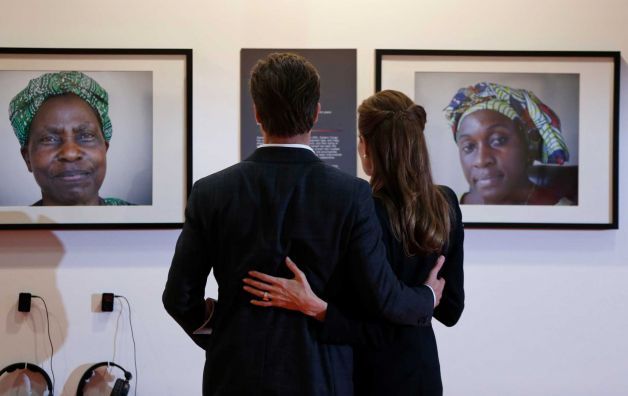
Pitt Jolie ESVC Pictures

The attention lavished on sexual violence in conflict last week was in many ways unprecedented. As well as convening the largest ever gathering of officials, NGOs and other experts for the Global Summit on Ending Sexual Violence in Conflict, co-chairs William Hague (Foreign Secretary of the United Kingdom of Great Britain and Northern Ireland) and Angelina Jolie (Special Envoy of the United Nations High Commissioner on Refugees) also generated very many pages – both print and digital – of commentary. In some myopic quarters, that achievement was in itself a distraction from the really important politics of blossoming conflict in Iraq. Such views should remind us that there are still those who insist on seeing gender violence as marginal to international peace and security. Worthy, yes, “no doubt important”, obviously a cause for concern, and so on, but naturally not the real deal.

Since the Summit’s close on Friday, there have also been criticisms of a different sort. A protest on the first day drew attention to the asylum and refugee policies of Her Majesty’s Government, and the ways in which survivors of sexual violence were being mistreated on the British mainland. The Foreign Office raised awareness in part through one-dimensional stories of crazy monsters in the hinterlands of barbarism. The “weapon of war” framework was ubiquitous, but no less problematic for that (see also). Although the Summit made space for youth delegates, UN entities, amateur hackers, foreign ministers, survivors, doctors, lawyers, celebrities, military officers and the odd NGO, academics (and our directly relevant research) were barely at the table. Some myths were therefore recycled. Delegates insisted on using rape survivors as props for their own journeys of self-discovery. I met a women in Panzi Hospital and what she told me broke my heart, etcetera. Some national representatives seemed only just to have discovered the existence of United Nations Security Council Resolution 1325, which urged the participation of women in military and political settings at all levels. That was, um, 14 years ago. John Kerry, amongst others, appeared to believe that rape in war was not yet illegal, but that we could make it so if we really put our minds to it.

The Fringe events were themselves a source of considerable disappointment. Angelina opened proceedings by assuring us that “our” institutions protected us from rape, and prosecuted it ably when it did occur, whilst “they” (we all know who) need our help because they are confined to refugee camps. There was a staged ‘trial’ of the afore-mentioned Resolution 1325, in which an all-white panel of lawyers and faux-judges, including Cherie Booth QC, took the testimony of African witnesses. You could buy various goods made by (or meant to help) rape survivors in the “bustling” Fringe marketplace, and the official programme recommended that you “treat yourself” by doing so. All of this (including the less appalling and more considered exhibits) seemed removed from the set piece debates upstairs. If the Foreign Secretary really did refuse to meet with four Nobel Laureates – some of whom are themselves survivors of political rape – then clearly civil society (that vague but essential category) was being neglected.

Those accumulated complaints can be dismissed as relatively trivial if the Summit gets even some way to achieving its stated aim of ending sexual violence in conflict.[1]  Continue reading

The Causes of the Great War: An Autobiographic Take

The assassination of Franz Ferdinand and his wife Sophia on June 28, 1914 set of a chain of events that a few weeks later led to an all-out war involving virtually all key European powers and their enormous overseas empires at the time.   How did this happen?

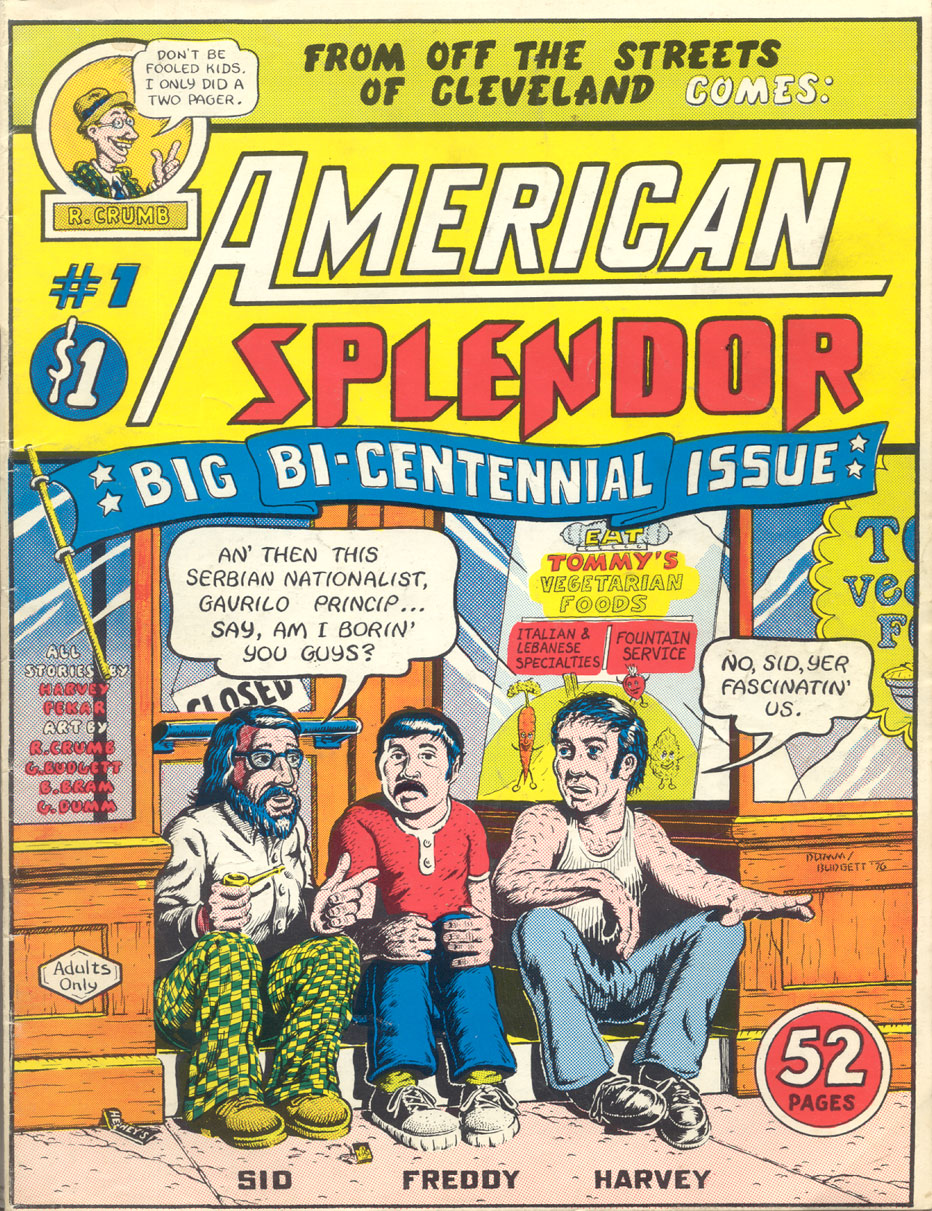
AmericanSplendor01-1

As a born and raised Sarajevan, I was socialized from an early age to think about the causes of the Great War – a question that happens to be one of the most studied in all of human history.  I vividly recall my first primary school trip to “Princip’s footsteps” – markings embedded into the sidewalk signifying the spot from where the assassin, Gavrilo Princip, fired at the Viennese couple.  We boys took turns to stand in the footprints and re-enacted the killing; the girls giggled.  There was no doubt that this behaviour was desirable:  with our teachers we read out the message on a nearby plaque that explained, in solemn Cyrillic script and even more solemn Aorist, how the assassin’s shots expressed the will of “our people” to be free of foreign tyranny.  Is it true that Sophia was pregnant?, a classmate asked.   Yes, said one teacher, but this was an accident. Princip’s bullet hit her only after it ricocheted off the car.  It was intended for General Potiorek, Austria’s military governor.

Continue reading

Ah, Ça Ira, Ça Ira! Iconographies of the French Revolution

Last month, Stanford University and the Bibliothèque Nationale de France jointly released a vast online collection of documents and images from the French Revolution via the French Revolution Digital Archive. With around 14,000 high-resolution images, it is an overwhelmingly large collection but the website is thankfully very user-friendly with content tagged in multiple ways and organised according to various themes. This is undoubtedly a fantastic resource for not only historians but also a wider audience interested in the tumultuous events of the late eighteenth century considered by many to mark the start of political modernity.

Drawn into the archive, I spent quite some time trawling through it with a particular eye for caricatures, satirical illustrations, and other allegorical depictions of the revolution. I have compiled here a selection of those images I found most striking or noteworthy along with translations and contextual information where necessary. Hopefully these will be of some interest to readers of this blog. As I have no academic specialism in this period of history, I am very much approaching the material as a layman. I therefore more than welcome any corrections or additions to my readings of these images that I’ll gladly include in updates.

Chasse patriotique à la grosse bête (1789)

Patriotic Hunt of the Great Beast (1789) [link]

“Posterity will tell us that in 1789 on the 12th July around four o’clock in the evening, several people claimed to have seen in the vicinity of Paris, on the road to Versailles, a Beast of an enormous size and a shape so extraordinary as to have never before seen the like. The news spread universal alarm in the city and put its people in a state of violent agitation. Cries of “to arms, to arms” were heard everywhere without any being found; it seemed that the Beast had swallowed them all along with their munitions. New weapons as extraordinary as the animal that had to be combated were immediately forged. On the 13th, people continued to agitate themselves, arming themselves and running after the Beast without being able to encounter it. On the the following day of the 14th, forever memorable for the France that suffers, a hundred thousand individuals ran to the Hotel des Invalides from which they carried away canons and sixty thousand rifles, such that there were two hundred thousand armed men who tracked down the Beast everywhere. Suspecting that it had retreated to the Bastille, the people flew to it with heroic courage and this lair of Despotism, despite its hundred bronze mouths vomiting fire, was taken by assault in two hours. With this victory appeared the monster with a hundred heads; its hideous form revealed that it was of an aristocratic kind; suddenly our bravest hunters seized upon her from all sides and it was to whom would cut the most heads. This monster that dragged behind it desolation, famine and death disappeared instantly under a hundred different forms and fled languidly abroad, taking with it the despair and shame of its defeat.”

Continue reading

Dr Schwarz, I Presume?

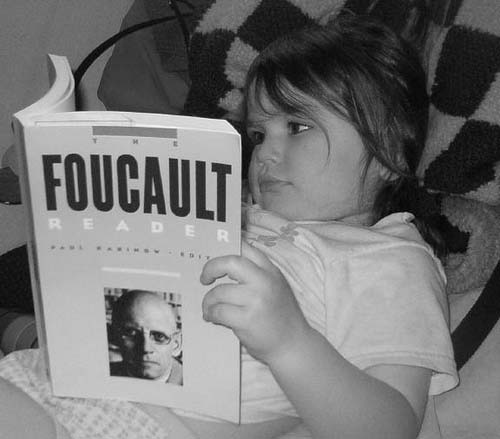
And so, after some delay due to storm, and just a month after The Disorder Of Things turned three, our own Elke was closely quizzed by Professors Patrick Hayden and Chris Brown. The cause? The defence of her doctoral thesis: The Biopolitical Condition: Rethinking the Ethics of Political Violence in Life-Politics. Arendt, Foucault, and drones. Now passed, certified, set free. Without corrections. Henceforth, Dr Schwarz.

Elke Foucault

Not actually Elke.

Assessing Ernst Jünger: Prophet, Mystic, Accelerationist

Following on from the two previous posts (here and here), this final entry will conclude the story of Ernst Jünger’s intellectual trajectory from exalted warrior-poet to withdrawn mystic. I will then propose a brief assessment of Jünger’s legacy and contemporary relevance to our present concerns, notably to a putative political accelerationism. You can find here the full academic article on Ernst Jünger and the problem of nihilism that I published in 2016.

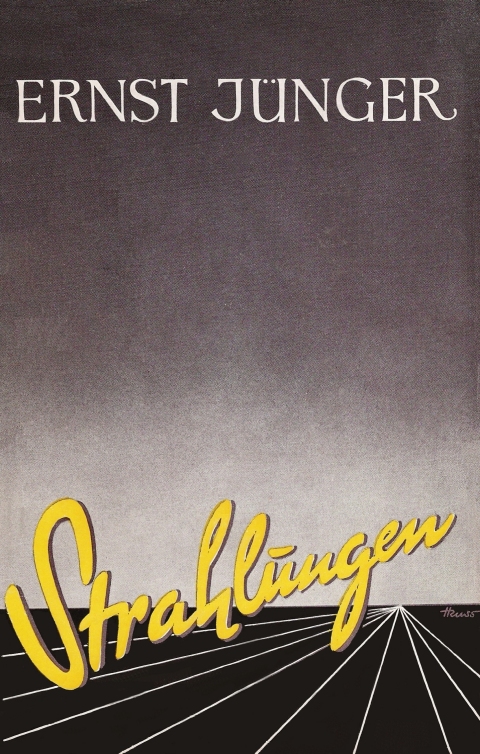
We pick up our story with the entry of Germany into the Second World War and Jünger’s new conscription into military service. Now aged 44, his experience of the war would however be quite different from the one that had so decisively shaped him as a young man. Following the successful French campaign, he would spend most of the war in an administrative posting in Paris where he assiduously frequented the literary and artistic circles, meeting collaborationist figures like Pierre Drieu La Rochelle and Louis-Ferdinand Céline but also Pablo Picasso and Jean Cocteau. As during the first war, Jünger kept a diary that would eventually be published in 1948 under the title of Strahlungen (“Radiations”). However we encounter within it a markedly different tone, reflective of the different circumstances in which he found himself but also indicative of a retreat from the ideas he had espoused up to the early 1930s. Devoid of much enthusiasm for the war, his writings appear at times almost indifferent to the wider drama playing itself out across Europe but become progressively more somber as the fate of Germany darkens, reports of atrocities in the East filter through, and his eldest son is killed in Italy.[1] Already looking ahead to the end of the conflict, Jünger also worked during the war on an essay called The Peace that proposed a vision of a united federal Europe and was circulated among the internal opposition to Hitler in the Wehrmacht. Several of these figures would be subsequently involved in the failed attempt on the Führer’s life in July 1944, a plot Jünger was seemingly aware of but took no direct part in.

ej1949am

The end of the war would nevertheless see Jünger being called to account for his inter-war writings. Having refused to submit to denazification, he would find himself barred from publishing for four years and he returned to live in the German countryside where he would reside until the end of his life. His remarkable longevity would grant him the opportunity for an abundant literary production, penning novels, essays and diaries ranging from science-fiction and magical realism to early ecological thinking and reflections on his multiple experiences with psychedelics. I will however restrict myself here to discussing Jünger’s immediate post-war writings since we find within them a clear statement of both the continuities and breaks with his prior thinking. Of particular importance is the text that he originally composed in 1950 on the occasion of the Festschrift for Martin Heidegger’s sixtieth birthday, Über die Linie (“Over the Line”).

Continue reading

Ernst Jünger on Total Mobilisation in the Age of the Worker

You can find here the full academic article on Ernst Jünger and the problem of nihilism that I published in 2016.

In this post, I will examine Ernst Jünger’s interwar writings, particularly as he moved from his recollections and reflections on the Great War (see earlier post) to a more ambitious analysis of the social and political turmoil that ensued. Sharpening his central problematique of nihilism and its overcoming, he would see in the commotions of his time the sign that the timorous bourgeois liberal societies of the nineteenth century were about to be swept away by a new technological age of total societal mobilisation and armed conflict. Anticipating and heralding the advent of the totalitarian regimes that were germinating as he wrote, the obvious points of convergence between these writings and fascist ideology have unsurprisingly made them Jünger’s most controversial. As objectionable as his political views were in their own right, Jünger was nonetheless never a National Socialist, spurning the advances made to him by the Party and having little truck with its “blood and soil” creed. He did however develop keen insights into the historical escalation of war and accompanying demands of total mobilisation alongside a withering critique of liberal societies’ preeminent concern with security and comfort.

7598547562(2)

Demobilised in 1923, Jünger spent the next three years studying zoology and developing a life-long passion for entomology (he reputedly amassed a collection of 40,000 beetles, even giving his name to a species he is credited with discovering). During those years, he also read philosophy, particularly the works of Nietzsche and Spengler. Departing from the university in 1926, Jünger then began a period of intense writing for nationalist publications and participation in the circles of the Conservative Revolutionary movement, becoming notably close to Ernst Niekisch, the central ideologist of National-Bolshevism. To enter into a detailed consideration of the ideological content of such seemingly paradoxical constellations would take us too far from our central object but it is nonetheless useful to remind ourselves of the ideological complexity and fluidity of Weimar Germany that are all too often repressed when we view the period from a post-WWII standpoint. Jünger’s independent streak also meant his associations ranged more widely than most, frequenting during this time left-wing writers such as Bertolt Brecht, Erich Mühsam, and Ernst Toller. It is within this eclectic milieu and the context of generalised crisis that his political thought was formed, leading to the publication of a series of essays in the first few years of the 1930s. Fascinated by the social and cultural effects of photography, Jünger also put together several collections of photobooks from which I have drawn the images that accompany this post.[1]

Continue reading

Ernst Jünger and the Search for Meaning on the Industrial Battlefield

This is the first in a series of posts on the German war veteran and author Ernst Jünger that draw on research I have presented at seminars at the University of CambridgeUniversity of East Anglia  and University of Sussex over the last year or so.  [Edit: The follow-up posts can now be found here and here]. You can find here the full academic article on Ernst Jünger and the problem of nihilism that I published in 2016.

A complex and controversial character, Ernst Jünger is mostly known today for the vivid autobiographical account of life in the trenches of the Great War he penned in Storm of Steel, one of the defining literary works produced by its veterans. Alongside its unapologetic celebration of war, it contains an unflinching, at times clinical, description of the unprecedented destruction wrought by the advent of modern industrial war. As we approach the centenary of the First World War, the text has lost none of its evocative power and is likely to remain a lasting document of the soldierly experience.

Ernst Jünger in 1919

Ernst Jünger in 1919

Jünger’s subsequent writings, published throughout a long life that ended in 1998 at the ripe old age of 102, are however far less well known in the English-speaking world and many of them remain untranslated to this day. And yet I want to argue that, as problematic a figure as he is, the trajectory of Jünger’s thought and work is worthy of our attention in that it crystallises in a particularly stark and vivid fashion some of the tensions and internecine struggles of the twentieth century. Jünger liked to refer to himself as a seismograph registering the underlying tectonic shifts that prefigured the tremors of his age and in the often exalted and rapturous form that took his writings they can indeed be read as a wilful exacerbation of contemporaneous trends, his failings as much his own as that of his times.

Jünger wrestled in particular with the problem of meaning and human agency in a world increasingly dominated by technology and instrumental rationality that appeared to reach their paroxysm in total war. Inheriting his philosophical outlook from Nietzsche, he understood the problem of the age to be that of nihilism, of the devaluation of all values and the increasing inability to posit any goals towards which life should tend after the ‘death of God.’ He came to view the domination of technique as central to the growth of nihilism, a proposition that appears in an inchoate but nonetheless suggestive form in Nietzsche’s own writings. This Nietzschean perspective would so come to dominate Jünger’s outlook and work that Martin Heidegger would not hesitate to dub him ‘the only genuine continuer of Nietzsche.’[1]

Continue reading

The Queer Art of Whistle Blowing

What should we make of the fact that Bradley Manning has become Chelsea, that Glenn Greenwald is gay, that David Miranda loves a man enough to submit to the harassment incurred by his partner’s work, that Greenwald’s detractors sought to tarnish him by association with—of all things—a porn company? Possibly nothing generalisable, except that gender is doing work here.

There has been no shortage of voices denying a straightforward connection between sexual orientation, gender identity, and patriotism. (Part of the reason I feel compelled to write about this is that there isn’t one.) San Francisco Pride Board notoriously repudiated Manning’s election as a Grand Marshall in the 2013 Pride in that city, declaring: ‘even the hint of support for actions which placed in harms [sic] way the lives of our men and women in uniform—and countless others, military and civilian alike—will not be tolerated by the leadership of San Francisco Pride.’ That statement has not been retracted, notwithstanding its now patent inaccuracy in light of the prosecution’s inability to cite any evidence that Manning’s leaks led to any deaths and the court’s decision finding her not guilty of the charge of ‘aiding the enemy’. Kristin (formerly Chris) Beck, ex-US Navy Seal who recently announced her gender transition, has been harsher in her condemnation of Manning: ‘For this person, whether male or female to use gender identity to act “BADLY” is a slap in the face to me and everyone who does not fit the “Binary Gender Norm.” It is not an excuse for anything illegal or unjust.’ Pablo K is right to point out the dangers of the temptation, for those who see a link between sex/gender and truth-telling, to make the reverse move—’to relegate Beck to a minority report, and so to re-inscribe the hierarchy of authenticity, this time with Manning as the actual face of resistance, and Beck the mere puppet of militarism’—while pointing out, also, that the gap between these contrasting appropriations is constitutive of the space of contemporary politics. So let’s talk politics.

Continue reading

Pacific Redemption Songs

Te Hau

“Te Hau” by Abby Wendy

A few years ago I was reasoning with members of Ras Messengers, a reggae-jazz band who had in 1979 toured Aotearoa New Zealand. The Rastafari musicians recollected their experiences with various Māori communities. Occasionally female Māori elders (kuia), in introducing themselves to the band, would connect their genealogies back to Africa. The kuia did this as part of an indigenous practice called whakapapa, which literally means to “make ground”. It is a practice that allows diverse peoples who might never have met to find a genealogical route through which they are already personally related.

Chauncey Huntley from Ras Messengers showing the Rakau (traditional sticks) that he was gifted thirty years previously

Rastafari also have a practice called “grounding”, which is to collectively reason on the meaning and challenges of contemporary life. Over– or inner- standing (instead of under- standing) is cultivated through the guidance of natural laws and – often with the help of drums, fire and holy herb – the intuition provided by spiritual agencies (Irits) that allows ones to pierce the veil of deathly inequality, oppression and dehumanization so as to redeem living energies and relationships that might help with healing in the present. When I think of Irits I also think of a key concept of Māori cosmology called hau. Overstood by Māori Marsdenhau is the breath or wind of spirit which is infused into the process of birth to animate life and associated with the intention to bind peoples together in righteous living.

A key stone of the Rastafari faith is that adherents collectively redeem their African genealogy so as to breathe life back into their suffering condition and leave behind the death of enslavement and its contemporary legacies. So when I heard of this story of the kuia and Ras Messengers, I imagined how this practice might have given strength to the Ras. After all, in those days (and perhaps still today), peoples of various African heritages were often forced (directly or indirectly) to disavow those connections themselves.

Whakapapa is an art practised collectively. Yet it is not free play, nor is it the manufacturing of fiction. It is a creative retrieval. It could even be a redemptive act.

Keskidee 13

Keskidee perform in New Zealand

This was certainly the intention of those who organized the tour of Ras Messengers alongisde the Black British theatre group, Keskidee (the name of a Guianese bird known for its resilience). The organizers were a group of New Zealand activists that came together under the banner Keskidee Aroha (Aroha being the Māori word for love, sympathy, nurturing affection etc). Their intention was to learn from and work with the artistic tropes of Black Power and Rastafari so as to catalyse a cultural revolution and renaissance amongst young Māori and Pasifika peoples thereby strengthening them in their confrontation with a racist post-settler society.

Continue reading