Why Torture When Torture Does Not Work? Orientalism, Anti-Blackness and the Persistence of White Terror

A guest post from Melanie Richter-Montpetit, responding to the disclosure of the Senate Torture Report in December. Melanie is currently lecturer in international security at the University of Sussex, having recently gained her PhD from York University in Toronto. Her work on issues of subjectivity, belonging and political violence has also been published in Security Dialogue and the International Feminist Journal of Politics.


a land on which no slave can breathe.

– Frederick Douglass (1846)[i]

I had to leave; I needed to be in a place where I could breathe and not feel someone’s hand on my throat.

– James Baldwin (1977)[ii]

I can’t breathe.

– Eric Garner (2014)

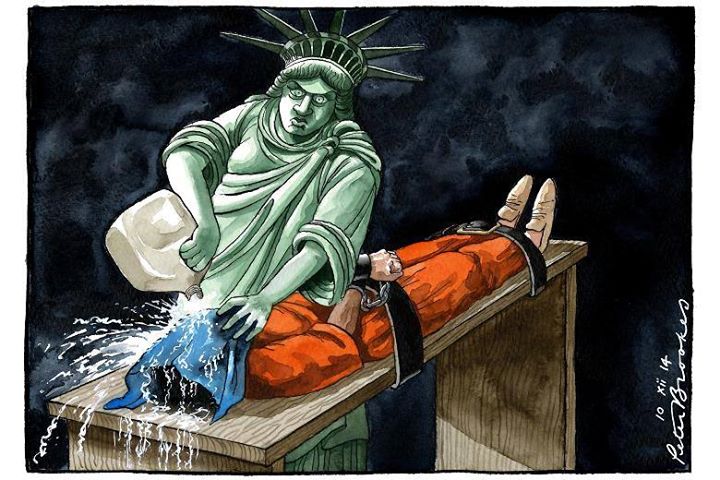
 America Waterboards

No, bin Laden was not found because of CIA torture.[iii] In fact, the US Senate’s official investigation into the CIA’s post-9/11 Detention and Interrogation program concludes that torture yielded not a single documented case of “actionable intelligence.” If anything, the Senate Torture Report[iv] – based on the review of more than six million pages of CIA material, including operational cables, intelligence reports, internal memoranda and emails, briefing materials, interview transcripts, contracts, and other records – shows that the administration of torture has led to blowbacks due to false intelligence and disrupted relationships with prisoners who cooperated. What went “wrong”? How is it possible that despite the enormous efforts and resources invested in the CIA-led global torture regime, including the careful guidance and support by psychologists[v] and medical doctors, that the post-9/11 detention and interrogation program failed to produce a single case of actionable data? Well, contrary to the commonsense understanding of torture as a form of information-gathering, confessions made under the influence of torture produce notoriously unreliable data, and the overwhelming majority of interrogation experts and studies oppose the collection of intelligence via the use of torture. This is because most people are willing to say anything to stop the pain or to avoid getting killed and/or are simply unable to remember accurate information owing to exhaustion and trauma.[vi]

So if torture is known not work, how come, then, that in the wake of 9/11 the U.S. at the highest levels of government ran the risk of setting up a torture regime in violation of international and domestic law? Why alienate international support and exacerbate resentments against “America” with the public display of controversial incarceration practices, as in Guantánamo Bay, instead of simply relying on the existing system of secret renditions? Furthermore, in the words of a former head of interrogations at Guantánamo Bay, most of the tortured and indefinitely detained are “Mickey Mouse” prisoners,[vii] reportedly known not to be involved in or not to have any information on criminal or terrorist activity against the U.S. and its allies. Drawing on previously published work, I will explore this puzzle by addressing two key questions: What is the value of these carceral practices when they do not produce actionable intelligence? And, what are some of the affective and material economies involved in making these absurd and seemingly counterproductive carceral practices possible and desirable as technologies of security in the post-9/11 Counterterrorism efforts?

Against the exceptionalism[viii] of conceiving of these violences as “cruel and unusual,” “abuse” or “human rights violations”[ix] that indicate a return to “medieval” methods of punishment, the post-9/11 US torture regime speaks to the constitutive role of certain racial-sexual violences in the production of the US social formation. Contrary to understandings of 9/11 and the authorization of the torture regime as a watershed moment in U.S. history “destroying the soul of America,”[x] the carceral security or pacification practices documented in the Senate Torture Report and their underpinning racial-sexual grammars of legitimate violence and suffering have played a fundamental role in the making of the US state and nation since the early days of settlement.[xi] The CIA Detention and Interrogation program[xii] targeting Muslimified subjects and populations was not only shaped by the gendered racial-sexual grammars of Orientalism, but – as has been less explored in IR[xiii]is informed also by grammars of anti-Blackness, the capture and enslavement of Africans and the concomitant production of the figure of the Black body as the site of enslaveability and openness to gratuitous violence.[xiv]

Continue reading

#BlackLivesMatter, The New Black Liberation Movement

Maia PalA guest post from Maïa Pal, recently returned from San Francisco. Maïa is currently a Lecturer in International Relations at Oxford Brookes University. Her main research is on the historical sociology of extraterritorial jurisdiction and Marxist theories of international law. She also researches UK student occupations as counter-conduct in the context of a political economy of higher education, and has blogged on student protests in the UK and Québec. And you can follow her on Twitter too.


Photo by Amanda Arkansassy Harris

Photo by Amanda Arkansassy Harris

After all, if someone is lost, and that person is not someone, then what and where is the loss, and how does mourning take place?

10 years after Judith Butler asked this question in her work Precarious Life, San Francisco organisers Thea Matthews, aged 27 and Etecia Brown, aged 24, gave me some answers.[1] ‘Leaderful’, ‘sustainable’, ‘multidimensional’: “BlackLivesMatter is more than a hashtag, logo or slogan, it’s a lifestyle.” Their demands against police brutality are practical, short-term and realistic. The demands consist of ensuring enforcement, transparency, mental health awareness in training, demilitarisation, two-way accountability, and community work. ‘Police should be like fire-fighters, heroes with red trucks!’, we chuckled.

Some of these demands are already being implemented; in Portland, New York, Richmond. As public policy solutions they could be quickly put in place. Nevertheless, it is absolutely clear that such goals, however important and at the core of the movement, barely scratch the surface of the problem. BlackLivesMatter activists want to achieve long-lasting institutional change and an end to the more covert social, political and economic subjugation of black people. They explicitly revive the terms of colonisation and slavery because these do not belong to the past; an experience both organisers have observed and lived through personally. Without equal access to education, jobs, and political representation; with lower life expectancy, socially and in front of a police gun; with mental health conditions, fear and loss of hope in their humanity, black people are still in chains.

The point here is not to engage a discussion on the history and intricate forms of these processes of exploitation, white supremacy and patriarchy. Although necessary and important, this piece discusses instead resistance to these processes, and specifically to what these organisers aptly described as ‘psychological warfare’. This resistance means healing people who are suffering, have lost all power and hope for resisting, and building communities that care for each other beyond the myths of freedom, property and consumerism.

Continue reading

Clinton’s World

As part of the Canada 2020 conference, Hillary Clinton will be giving a lunch-time talk at the Ottawa Convention Center on Oct. 6. The subject of her speech is yet to be announced, but I imagine due attention to “Canada-U.S. relations in a changing world” will be given. I also imagine the event will be sold out despite high ticket prices (495 Canadian dollars per person + sales tax).  The main reason is that the former U.S. Secretary of State—former front-runner for the 2008 Democratic presidential nomination, former U.S. Senator, and former First Lady—is also the most likely person to succeed Barack Obama as POTUS (according to the American and British bookies at least).

By my count, this will be her fourth visit to Canada’s national capital region, and the first since 2010, when she swung by to attend important meetings in nearby Wakefield, Quebec. But where exactly is my city in Clinton’s world?

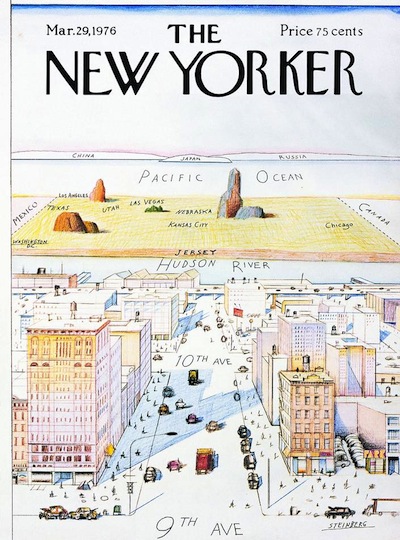
To answer this question, I turned to Hard Choices, her second memoir published earlier this year, and I read it through the lens of Saul Steinberg’s 1976 New Yorker cover, “View of the World from Ninth Avenue,” a famous Manhattanite mappa mundi from the era when the Vietnam War was a fresh trauma and Jimmy Carter was making an unexpected splash in the Democratic presidential primaries.

steinbergnewyorker1976


Continue reading

Aircraft Stories: The F-35 Joint Strike Fighter (Part II)

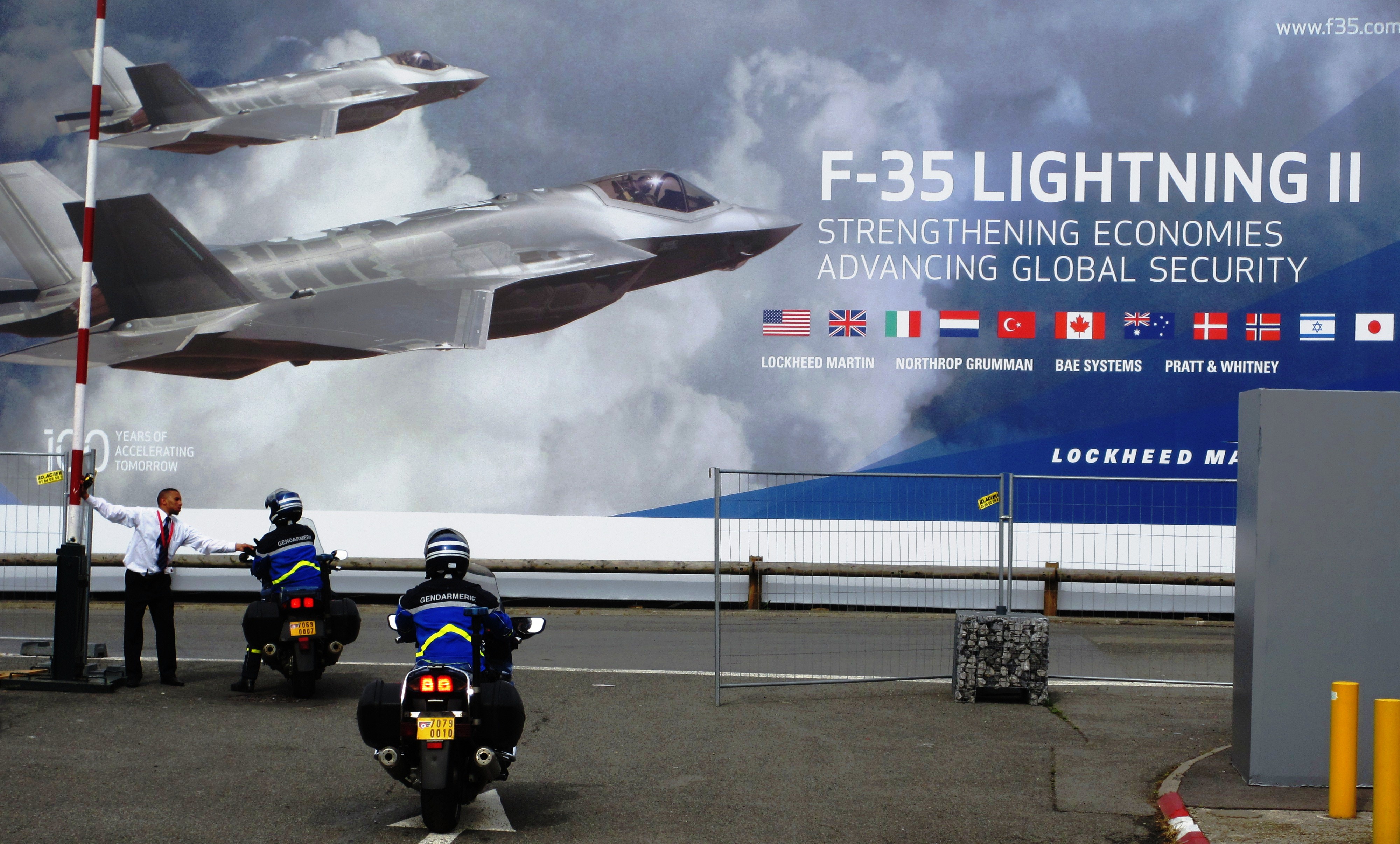
This is the second part of a single post about the F-35 as actor-network. The first part is here 

wbbuca 013

Strike

This word is meant to convey the F-35’s identity as a proper multirole fighter, a machine rigged to conduct both air superiority and strike missions, the latter defined as tactical attacks on a ground or naval target with a particular focus on “initial blow” or “first day of attack” operations.  All three variants of the F-35 fighter family hold this capability: the conventional A version designed for use by the U.S. Air Force and allied air forces; the Short Take-Off, Vertical Landing (STOVL) or B variant for the U.S. Marines Corps as well as the UK’s Royal Navy, as well as the conventional carrier-based edition for the U.S. Navy, the F-35C.

Airstrike, or strike for short, shapes, and is shaped by, the evolving structure of international politics in important ways.  Pax Americana, defined in terms of successive hegemonic or hierarchical international and regional orders centered on Washington, D.C., can be regarded as an assemblage made possible by the so-called global strike, among other smaller assemblages.  Since the middle years of the twentieth century warplanes have transformed themselves into multirole, fighter-bomber machines capable of ever-greater lethality and survivability.  What makes U.S. strike aircraft especially formidable is the surrounding stuff—assets like ballistic and cruise missiles plus countless “force enablers” such as ground bases, aircraft carrier groups, logistics depots, a large tanker force and aerial refueling know-how, interlinked information and communication systems, the ability to generate and sustain the use-of-airspace deals on relatively short notice and so on.

Continue reading

Aircraft Stories: The F-35 Joint Strike Fighter (Part I)

bourget

How big is the F-35 Joint Strike Fighter? By one set of measures, it is three times bigger than the Eisenhower Interstate Highway System, ten times bigger than either the Apollo Project or the International Space Station or Hurricane Katrina, or one hundred times bigger than the Panama Canal. These comparisons are only moderately outlandish. US$1.45 trillion is the Pentagon’s own December 2010 estimate of lifetime operating and supporting costs for the 2,443 copies of the F-35 currently on order by the United States government, which we can then compare to the known price tags, in 2007 dollars, of these five projects.[i] Costs—also variously prefaced as procurement, actual, sunk, fly-away, upgrade, true and so on—and their contestations are central to a discourse of accountancy that surrounds all projects that require large-scale mobilization of public power. But enormous as they are, these numbers still cannot capture the size of this particular weapons program. To understand just how big the F-35 is, I wish to suggest in this two-part post, we ought to conceive it as a proper assemblage—a heterogeneous association of human and nonhuman elements that is at once split, processual, emergent, and, most importantly, constitutive of the modern international.

Continue reading

Every Ghetto, Every City

Really insightful video on displacement in Washington DC from Al Jazeera English. This piece traces a dynamic that is seen across the US and around the globe – including example of residents fighting for a human right to housing and featuring One DC.


And some tunes to go along with the news…


Cavity Searches in Intern(ation)al Relations

In the most darkly comic scene in Mohammed Hanif’s brilliant A Case of Exploding Mangoes, General Zia—the thinly mustachioed dictator of Pakistan from 1977-88—suffering from a bad case of worms, enlists the services of the physician of his Saudi friend Prince Naif. ‘Birather, bend please’, requests Dr. Sarwari, in a strange mixture of Arabic and American accents. Zia unfastens his belt, slips his trousers down and leans forward, laying his right cheek on his desk. His head is between two flags, Pakistan’s national flag and the flag of the Pakistan Army, as Dr. Sirawar slips a lubricated probing finger into his itchy rectum. The allegory is crystal clear: this is Pakistan being fucked by Saudi and US money and weapons during the anti-Soviet jihad in Afghanistan.

In Mohsin Hamid’s The Reluctant Fundamentalist, the terror attacks of September 11 provide the pivotal moment in the transformation of young Pakistani Princeton graduate Changez Khan from Wall Street analyst to Islamist radical. Watching 9/11 unfold on television while away on a work trip, Khan feels something akin to schadenfreude, as if the attacks were payback for the daily humiliation of being Muslim in America, giving vent to a reservoir of grievance hitherto fiercely suppressed, even denied, in his pursuit of the American dream. Returning to the US, Changez can see that Americans see him differently. In Mira Nair’s film version of the book, he is separated from his white colleagues at immigration and subjected to a cavity search: this is Pakistan being fucked by the US in the aftermath of 9/11.

Continue reading

The Queer Art of Whistle Blowing

What should we make of the fact that Bradley Manning has become Chelsea, that Glenn Greenwald is gay, that David Miranda loves a man enough to submit to the harassment incurred by his partner’s work, that Greenwald’s detractors sought to tarnish him by association with—of all things—a porn company? Possibly nothing generalisable, except that gender is doing work here.

There has been no shortage of voices denying a straightforward connection between sexual orientation, gender identity, and patriotism. (Part of the reason I feel compelled to write about this is that there isn’t one.) San Francisco Pride Board notoriously repudiated Manning’s election as a Grand Marshall in the 2013 Pride in that city, declaring: ‘even the hint of support for actions which placed in harms [sic] way the lives of our men and women in uniform—and countless others, military and civilian alike—will not be tolerated by the leadership of San Francisco Pride.’ That statement has not been retracted, notwithstanding its now patent inaccuracy in light of the prosecution’s inability to cite any evidence that Manning’s leaks led to any deaths and the court’s decision finding her not guilty of the charge of ‘aiding the enemy’. Kristin (formerly Chris) Beck, ex-US Navy Seal who recently announced her gender transition, has been harsher in her condemnation of Manning: ‘For this person, whether male or female to use gender identity to act “BADLY” is a slap in the face to me and everyone who does not fit the “Binary Gender Norm.” It is not an excuse for anything illegal or unjust.’ Pablo K is right to point out the dangers of the temptation, for those who see a link between sex/gender and truth-telling, to make the reverse move—’to relegate Beck to a minority report, and so to re-inscribe the hierarchy of authenticity, this time with Manning as the actual face of resistance, and Beck the mere puppet of militarism’—while pointing out, also, that the gap between these contrasting appropriations is constitutive of the space of contemporary politics. So let’s talk politics.

Continue reading

Washington, DC: a human rights city?

Below are some initial reflections on the work I’ve been doing in Washington DC on the human right to housing. They are not terribly substantive and serve as much as a tribute and thank you to those who hosted me as disquisition on the topic. But I wanted to post the piece for those who might be interested in my broader project, or what’s going on in Washington DC. Enjoy.

In December 2008 Washington DC was declared a human rights city. The DC City Council passed the resolution, pushed for by the American Friends Service Committee. While this is a lovely idea, it leaves one wondering what does it mean to be a human rights city. In particular, what does it mean in a city defined by inequality, where more than 15,000 citizens do not have homes, where 20% of the population lives in poverty, where housing is more unaffordable than anywhere in the United States, and where public and affordable housing is under constant threat. Perhaps the declaration of DC as a human rights city would seem less cynical if the DC City Council or the Federal Government had shown themselves committed to protecting the human rights of residents of the District, particularly the right to housing.

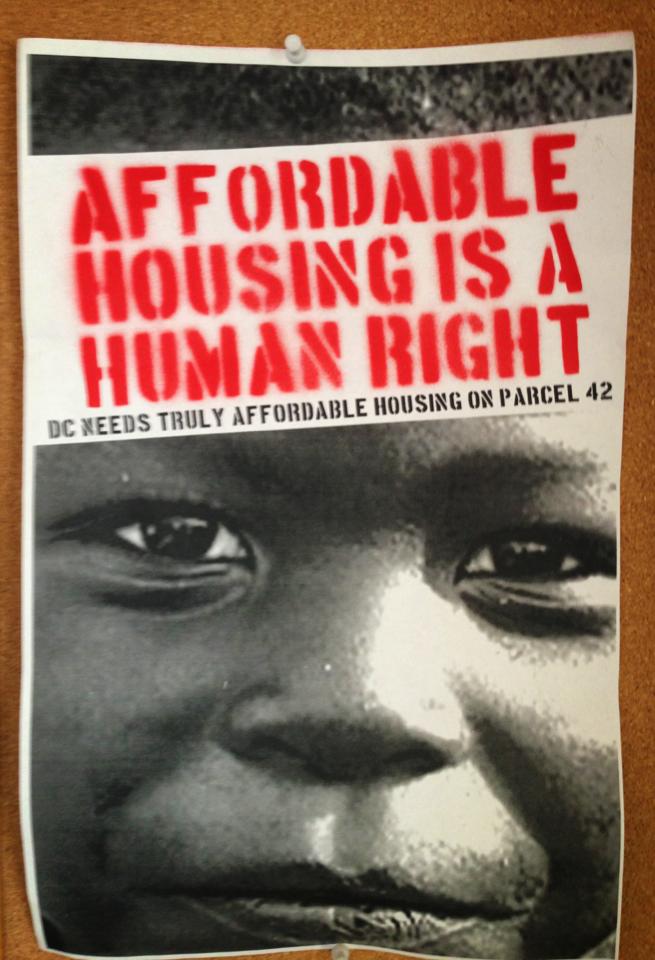
Housing is a Human Right

Human rights promise us many things. The right to housing, however, is perhaps the most fundamental. What do our rights mean if we do not have a place to call home? Article 25 of the Universal Declaration of Human Rights promises that

Everyone has the right to a standard of living adequate for the health and well-being of himself and of his family, including food, clothing, housing and medical care and necessary social services, and the right to security in the event of unemployment, sickness, disability, widowhood, old age or other lack of livelihood in circumstances beyond his control.

The right to housing is fundamental because it is in our homes that we find the space to rest, to pursue wellness, to find love, to raise families, and build communities, to collect our energy and thoughts so that we can participate in democratic politics, and it is where we find the safety, security and privacy that make a dignified life possible. Continue reading

Secrecy and Spectacle in the Overthrow of Mossadegh

Chris Emery LargeA guest post from Christian Emery, Lecturer in International Relations at the University of Plymouth. Chris completed his PhD at the University of Birmingham and has held teaching positions at the University of Warwick and the University of Nottingham. Between 2010 and 2013 he was a Fellow in the Department of International Relations at the London School of Economics. His research covers several areas but is primarily situated at the intersection of International Relations, Diplomatic History, and Foreign Policy Analysis. He is interested in all aspects of post-war US foreign policy, with specific expertise in US policy in Iran. His latest book is US Foreign Policy and the Iranian Revolution (Palgrave Macmillan, coming this October) and he is also the author of pieces in Cold War History, The Iran-Iraq War (Routledge, 2013) and commentary in The Guardian. His next journal article will appear in Diplomacy and Statecraft.


This week an organisation dedicated to expanding public access to US government information, and publishing its former secrets, released documents proving the CIA’s involvement in an illegal covert action. Sound familiar? In this case, however, the authors had no fear of landing themselves in solitary, a foreign embassy, or (worse still) a Russian airport. The organisation lifting the lid was the National Security Archive (I will not indulge in the ironic use of acronyms) which, despite the official sounding name, receives no government funding. The NSA (ok, just once) fights for greater transparency and accountability in US foreign policy within a legal framework. Its primary weapon in fighting for open government is the Freedom of Information Act, and its bluntness may be part of the reason why others have taken more drastic action. I will return to the prescient topic of government secrecy later on, but first a few words on the content of these documents.

The documents are significant for a number of reasons, but the headline news is this: ‘CIA Admits It Was Behind Iran’s Coup.’ The most significant line taken from these documents is from a CIA internal history from the mid-1970s: “the military coup that overthrew Mossadeq and his National Front cabinet was carried out under CIA direction as an act of US foreign policy, conceived and approved of at the highest levels of government.”

A legitimate response is:

Nicholas Cage You Don't Say

Quick historical recap. In August 1953 the CIA (working with MI6) orchestrated the overthrow of Iran’s democratically elected leader Mohammad Mossadegh and installed Muhammad Reza Shah Pahlavi in his place. The specific motivation for the coup (codenamed TPAJAX) was that Mossadegh was attempting to nationalise Iranian oil. The more pressing fear was that his government was unstable and Cold War thinking dictated that this made Iran vulnerable to Soviet influence. This anxiety was heightened by Iran’s huge oil resources, geographic proximity to the Soviet Union, and the existence of a large and well established Iranian communist party (the Tudeh). The plot to topple Mossadegh initially failed, spooking the Shah into premature exile, but a few days later US and UK agents managed through a variety of nefarious tactics to put a decisive number of pro-Shah supporters onto the streets. Mossadegh’s supporters were rounded up and the great man himself was sentenced to death (the sentence was never carried out – he died in Tehran in 1967). After the coup, Iran’s concession to Western oil companies was renegotiated and for the first time American petroleum companies were granted access to draw Iranian oil.

Continue reading