America’s moral crisis

America’s moral crisis

Luke Cooper is Senior Lecturer in Politics at Anglia Ruskin University. He is currently writing a book on the historical sociology of the long nineteenth century.


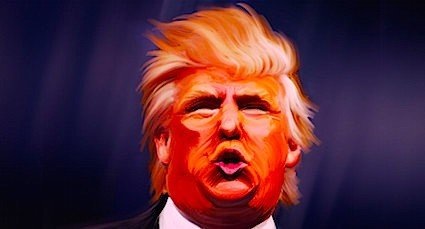
Parallels of Trumpism to some of the darkest moments in America’s past affirm Barak Obama’s recent claim that the ‘fate of the world is at stake’, argues Luke Cooper

It was springtime in America, but the thoughts of citizens were more preoccupied with the fallout from a distant war and an economic recession at home, than they were the change of seasons. Europeans may have looked on anxiously at how the pressures of a brutalised capitalism and great power politics appeared to have toxified a deeply polarised American public debate. But with their own countries facing similar, if not even more egregious, rise in racial populism, they were hardly in a position to judge.

trumpprotest-2

Continue reading

Against the New Phrenology: De-Pathologizing Trumpism

This is a guest post by Dan Boscov-Ellen. Dan is a Ph.Dprofile. student in Philosophy at the New School for Social Research and a Visiting Instructor in Social Science and Cultural Studies at Pratt Institute. His dissertation research involves exploring the political-philosophical implications of capitalist ecological crisis.


One of the most persistent refrains of the US Presidential election has been that of liberal incredulity at the idiocy of Trump voters. Depending on the current status of Nate Silver’s election forecasts, this tends to manifest either as amusement (perhaps chuckling at a Daily Show interview of deluded rally attendees or a screening of Idiocracy), or as disgust and horror (perhaps soberly staring into one’s craft IPA when the debate watch party gets too real). How, liberals wonder, could anyone vote for Cheeto™ Hitler?

VTPxYrNtCj6Brf4hhZ5O_H4Rdl5qqzJe5XMy-SH1bnI.jpg

But of course they do not wonder too hard – it is obvious to most liberals that Trump voters are simply ignorant and stupid, an apparent truism of which comedians, political scientists, neuroscientists, and cognitive psychologists constantly assure us. Everyone knows that Trump supporters are less well-informed than liberals – if only they read the New York Times and listened to NPR instead of watching Fox News! But the deeper problem, allegedly, is that Trump voters are simply not intelligent enough to realize how ignorant they are. Psychologist David Dunning explains that

[t]he knowledge and intelligence that are required to be good at a task are often the same qualities needed to recognize that one is not good at that task — and if one lacks such knowledge and intelligence, one remains ignorant that one is not good at the task. This includes political judgment.

According to neuroscientist Bobby Azarian, this Dunning-Kruger effect “helps explain why even nonpartisan experts — like military generals and Independent former Mayor of New York/billionaire CEO Michael Bloomberg — as well as some respected Republican politicians, don’t seem to be able to say anything that can change the minds of loyal Trump followers.”

At base, then, it is the Trump voters’ fundamental and impenetrable stupidity that causes them to ignore the experts – highly credentialed neoclassical economists, experienced military and intelligence figures, beneficent billionaires, esteemed members of the mainstream American political establishment and independent press, and Neil Degrasse Tyson – who obviously know far better than the plebian masses. Indeed, many liberals secretly believe it might really be better if the experts just ran things and we revoked the cretins’ right to vote.

Continue reading

Fantastic Mr President: The Hyperrealities of Putin and Trump

Screen Shot 2016-08-30 at 21.56.56This is a guest post by Maria Brock. Maria is about to commence a postdoctoral fellowship at the Centre for Baltic and East European Studies and the School of Cultural and Critical Theory at Södertörn University (Stockholm). She has a PhD in Psychosocial Studies from Birkbeck and has perviously published on the role of negative affect in reactions to the case of Pussy Riot, and the status of memory objects and ‘museums of the everyday’ in the proliferation of post-socialist nostalgia.


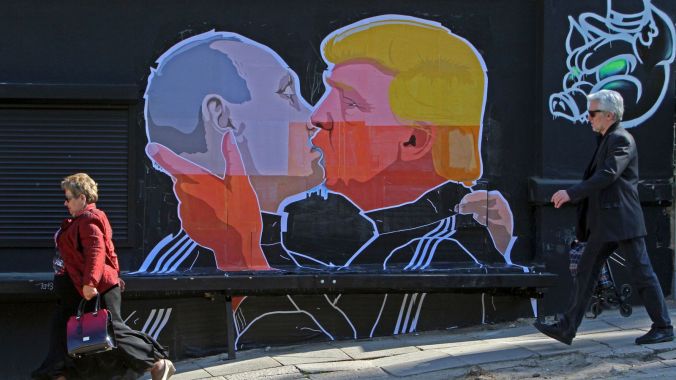
In July 2016 – more than 15 years into his time in office – Vladimir Vladimirovich Putin’s approval rating was at 82%, a figure made all the more remarkable by the fact that the country is experiencing a palpable and lengthy economic downturn. Some commentators have favoured an explanation that treats this as proof that a larger-than-life president is more in line with ‘what Russians want’, as Putin “satisfied a yearning for a strong leader who could make the Russian family proud”. However, concretising a Russian ‘national desire’ is less than helpful if we seek to understand the reasons behind Putin’s continued popularity. Equating a historical past with an inherent propensity to follow strong-men is an exercise in oversimplification, as it treats nations and groups as essentially static, prone to repeat the same historical patterns over and over again. Similarly, a focus on the more overt parallels with the earlier ‘Cults of Personality’ neglects the fact that the underlying ‘conditions of possibility’ that produced the two phenomena are different. Such comparisons also fail to explain the appeal of similarly larger-than-life politicians in countries with a longer democratic tradition. Clearly, an emphasis on national psychological propensities is not productive. Instead, an analysis of the appeal of such leader figures that taps into less conscious mechanisms is worthwhile. By simultaneously looking at the phenomenon of Donald Trump’s remarkable rise, a number of parallels pertaining to the creation of their public personae become apparent. In fact, such an analysis can serve to illuminate overarching principles structuring the successful creation of their outsized public personae.

2016-07-25-1469472310-3744164-gettyimages531157596e1463172570228

The popular support these politicians attract demonstrates that they hold a kind of libidinal appeal that should not be underestimated, lest we render a large part, if not the majority, of a country’s population politically incompetent. While one cannot discount the real inequalities, as well as the real and imagined grievances that opened up the space for less established political figures to gain support, it is nevertheveless worthwhile to examine why these particular kinds of candidates hold such appeal. Their reliance on spectacle and well-orchestrated exploits which combine the hypermasculine with the hyperreal enabled them to set in motion processes of identification that transcend the need for a coherent, well articulated political agenda. Instead, while seeming unsubtle to the point of being crass, they simultaneously operate on a more subliminal level, remaining oblique enough to become conduits for the electorate’s personal hopes and grievances. While this piece centres on the representational mechanisms employed by Vladimir Putin and his team of PR advisers, it is possible to identify a number of parallels with other contemporary leader figures – chief among them Donald Trump – each of whom appears to rely on a kind of hypermasculine charisma to suture a political field that is otherwise characterised by cynicism towards established politics.

Continue reading

White World Order, Black Power Politics: The Author’s Response

Bob’s response to Naeem, NiviSrdjan, and Meera completes our symposium on White World Order, Black Power Politics.


Four critical IR theorists have taken time away from other tasks to read my book carefully, generously, and thoughtfully. What a gift. The brevity of this response will appear stingy by comparison, but I don’t mean it to be. Rather, I am typing with my wrist in a splint, and it hurts, while I am also due to leave in the morning for a two-week vacation. Perhaps there will be another chance to show my gratitude. Many of the questions that Nivi, Naeem, Srdjan, and Meera raise have to do either with the book’s and my relationship to theory or with the limitations of my research strategy, as I anticipated and sought, self-servingly, to head off.

Continue reading

“But What On Earth Is Whiteness That One Should So Desire It?”

This is the fifth post in our symposium on White World Order, Black Power Politics, which will be followed shortly by a response from the author. Earlier responses are here from Naeem, Nivi and Srdjan. This piece expands on, and in some senses muddies, a short review I wrote of the book for a symposium in Perspectives in Politics.


This book is an indispensable and provocative account of the genesis of International Relations in the US as a discipline expressly concerned with the maintenance and expansion of global white supremacy. It is an enormously significant contribution to the understanding of the past, present and future of how we study world politics, which has thus far ‘disappeared’ racism and racial politics from its foundational narratives. [1]  It seems, this time anyway, that people are paying attention – the book is receiving wide acclaim and attention in the roundtables, symposia and review sections of the very journals, conferences and institutions that constitute the historical objects of its narrative. Does this mean that the ‘rising tide’ of calls for the discipline to deal with its racist foundations are being answered?

We will have to wait and see. Vitalis’s book makes some important headway in that direction but the rearguard is already being mobilised. Gideon Rose’s capsule review for Foreign Affairs, the journal once named for Race Development, perfectly captures precisely how this rearguard can function, in the process re-inscribing the ‘norm against noticing’ the operation of racism and white supremacy in both world politics and the discipline (IR) that claims to study it. Marking the book as ‘flawed’ and ‘political’, Rose accepts that the origins of the discipline were racialized and characterized by discussions about race relations. However, his rhetoric effectively consigns the analytic case that there are continuities in these ideas to a conspiratorial form of politics (attributing to Vitalis, bizarrely, a rather childish view of the US as ‘evil’).

Matt Wuerker, The Military Industrial Complex

Matt Wuerker, The Military Industrial Complex

The most prominent of these linkages in the text is Vitalis’s juxtaposition of Lorthrop Stoddard’s The Rising Tide of Color, which foretold of coming race wars in the twentieth century, with Samuel Huntington’s The Clash of Civilizations which does the same for the twenty-first (4, 62-4, 177).  It is true that Vitalis does not work through a point by point analysis of the two texts; however, it is also equally demonstrated that there are clear overlaps in form and content between the arguments. Both are grounded in the belief in coherent civilizations existing in fundamentally antagonistic relations, of which the white (or Western) is the most advanced and against which others will attempt to rise. For Rose to refuse to acknowledge the argumentation at all, even in a capsule review, seems odd until one reads the same reviewer’s graceful, generous assessment of Huntington’s famous work in the same journal in 2013, commemorating the 20th anniversary of its publication:

The origins of “The Clash of Civilizations?” lie in the conjunction of a special scholar and a special time. By the beginning of the 1990s, Samuel P. Huntington was already one of the most important social scientists of the second half of the twentieth century, having authored major works in every subfield of political science. The hallmarks of his efforts were big questions, strong answers, independent thought, and clear expression. The end of the Cold War, meanwhile, had ushered in a new era of international relations along with a host of questions about what would drive it. Drawn, as always, to the major practical and theoretical questions of the day, Huntington set himself the task of limning this new world.

The more he thought about it, the more he decided that most existing analyses were heading in the wrong direction. The future was not likely to be an easy run toward democracy, peace, and harmonious convergence, nor was it likely to be a return to the old games of traditional great-power politics or ideological rivalry. “The great divisions among humankind and the dominating source of conflict will be cultural,” he concluded; “the clash of civilizations will dominate global politics. [Rose, Foreign Affairs, The Clash at 20]

What can we make of this? Continue reading

What is This Thing Called IR? A View from Howard U

This is the fourth post in our symposium on Vitalis’ White World Order, Black Power Politics. Naeem’s post is here, and Nivi’s is here. Further responses, including from the author are to follow…


IMG_7430

It was a party for DAAD-funded scholars from all over Germany and our hosts at the Martin Luther University of Halle-Wittenberg invited to us a historical costume play.  It was childish, and therefore well-suited for us international Stipendiat/inn/en, many of whom still struggled with basic German: some students and faculty dressed up as famous scholars from various periods in the university’s 500-year history and said a few things about themselves.  I have now forgotten all of the names but one: Anton Wilhelm Amo. A West African slave of a German duke who in 1734 successfully defended a dissertation in Halle’s philosophy department. The (black) guy who played Amo spoke loudly and clearly, but I recall turning to the (black) DAADer sitting next to me, a fellow poli sci student from France: “1734?” “That’s what I heard, too”, she said, “1734.”

Since this was in the era of the (dial-up) Internet, a few days later I was able to learn more about this Amo fellow, including the details eluded in the university play. Vitalis’ latest book, White World Order, Black Power Politics: The Birth of American International Relations (Cornell, 2015) is a powerful reminder of another lesson I learned then: that work by non-white scholars tends to be “denied”–that is, ignored, temporized, ornamentalized and outright purged [1]. How many students of international law or of the German Enlightenment today know anything about Amo’s “On the Right of Moors in Europe” (1729)?  Not many given that the essay has been lost to history, probably because its copies were deemed unworthy of those meticulously maintained rare book collections.  And this is a huge loss given the relevance of historical “rights of Moors” debates for the constitution of “Europe.”

IMG_7431

Continue reading

White World Order, Black Power Politics: A Symposium

vitalis-e1458738905580This is the first post in the symposium on Robert Vitalis’s, White World Order, Black Power Politics: The Birth of American International Relations (Ithaca: Cornell University Press, 2015). Professor Vitalis (who also answers to ‘Bob’) teaches at the University of Pennsylvania. His first book, When Capitalists Collide: Business Conflict and the End of Empire in Egypt, was published in 1995. His second book, America’s Kingdom: Mythmaking on the Saudi Oil Frontier, published in 2005 was named a book of the year by The Guardian. He has been a fellow at the Woodrow Wilson International Center for Scholars (2009), Rockefeller Foundation (2003), the International Center for Advanced Study, NYU (2002), the American Council of Learned Societies (2002), and the MacArthur-SSRC International Peace and Security Program (1998). He was a MacArthur Award nominee in 1998. Below is his introduction to our symposium.

*Update*

Naeem’s response is here; Nivi’s is here and Srdjan’s is here.


80140100646100L

White World Order, Black Power Politics may well be the only book discussed in this symposium series that isn’t primarily concerned with theory, or at least the only one by an author who does not self identify as a theorist, teaching in a department that does not recognize what I do as “IR.”  It is also less an intellectual history, which might allow it to pass as theory, than it is an institutional history. So I am grateful for the interest in it here.

28522646._UY1280_SS1280_That said, it is indeed a critical history. The records of professors, schools, research organizations, and foundations in the early twentieth century United States reveal a past that bears scant resemblance to the “practitioner histories” or insider accounts of great debates invented about the discipline of international relations in the second half of the century, which are the ones most specialists tell themselves and their students until now. In fact, the more I learned and labored in the archives the more I came to see the problem as similar to the one I wrestled with in my last book, America’s Kingdom: Mythmaking on the Saudi Oil Frontier. The history that U.S. oil companies invented after World War II about their early and unshaken commitment to a “partnership in progress” with the Saudi people, at a moment when criticism of U.S. imperialism was on the rise in the Eastern Province and across the globe, is the one that books repeated uncritically for decades. The firms’ private records though revealed a dramatically different reality. I developed an account of the exploitative order in place in the oil camps, the racial science that justified it in the minds of the American engineers and managers, and the failed efforts of Arab and other workers to bring about its end. I likened what I did in that book to “reverse engineering” particular processes of mythmaking. I’ve done more or less the same thing for a sector of the U.S. academy in White World Order. Continue reading

Bernie Sanders For Commander-In-Chief

Jesse headshotA timely guest post from Jesse Crane-Seeber. Jesse  grew up in the woods of Ithaca, New York where he graduated from a democratically run public alternative high school. After a BA in “Resisting Hegemony” (a major of his own design) at Ithaca College, he earned a Ph.D. in International Relations at American University.  His dissertation ‘Making War’ analyzed the occupation of Iraq in terms of how U.S. soldiers’  negotiated and made sense of their surroundings, their missions, and the people they tried to help and/or harm. His research involved participant observation, living with military families, analyzing official documents, and sifting through hundreds of hours of soldier-uploaded video content. He teaches at North Carolina State University, and is currently finishing Fifty Shades of Militarism, a study of the fetishization of all things military in the contemporary United States. The views in the post are those of Jesse Crane-Seeber as a private citizen and do not reflect those of North Carolina State University. Obviously.


“coming of age during the plague
of reagan and bush
watching capitalism gun down democracy
it had this funny effect on me
i guess”

– Ani DiFranco, Your Next Bold Move

In recent months, the United States has seen a substantial rebellion against Hillary Clinton’s status as heir-apparent of the Democratic Party. Combined with the contemporary Republican Party’s confusion about whether to embrace regime change, free-trade, or multilateral institutions (even those like NATO that secure US hegemony in the world), the current election cycle offers US voters an unusual set of choices that may not be fully appreciated by those caught in the horse race and name calling of an expensive election.

It is normal to be cynical about what any individual nation can do, never mind a particular leader. Technological change, ecological collapse, international regime complexes, not to mention economic activity, all help explain the limits of what any nation can do. But the President of the United States is not a generic national leader. As the chief architect of the post-World War II political and economic order, the US retains outsized influence, even as we reach peer-peer levels of economic output with the EU and China.

While Secretary Clinton and Senator Sanders voted alike 93% of the time they were both in the Senate, the contrast in how they might impact global politics is much, much larger. One oft-repeated critique of Sanders has been his lack of foreign policy experience, knowledge, or, well, policy. As Ignatius put it, “Foreign policy is the hole in Sanders’s political doughnut.” Several enterprising writers reached out to foreign policy and IR scholars sympathetic to Sanders’ campaign for comment, while a few political scientists have directly addressed the nature of a future Sanders Administration’s foreign policy.

As a critic of the Washington/New York policy expert class and the ways that US Political Science reproduces and authorizes it, what I find troubling is not what ‘experts’ have been saying, but what they haven’t. With the exception of Charli Carpenter’s embrace of Sanders’ willingness to acknowledge what he doesn’t know about foreign policy, all of these commentators seem to reduce US foreign policy to positions on which countries to bomb, (and maybe relations with Israel). More than once, he has been characterized as a ‘realist’ against Clinton’s hawkish liberal interventionist instincts. While that is basically fair and correct, even if the meaning of ‘realist’ in policy debates has little resemblance to the theories I teach under that name, this discussion has been far too narrow. Just this week, an open letter by 20 ‘foreign policy experts’ has explicitly endorsed Sanders’ approach to foreign policy. Going beyond the standard arguments (which I detail below), they draw attention to a wider range of issues that Sanders can lead on. While their arguments and my own line up fairly neatly, it’s important to have a bit more of an extended discussion of the issues involved than their short statement allowed.

Yielding to the dominant view, if only for a moment, I turn first to the Democratic candidates’  approaches to national security and armed force.

Continue reading

Churchill’s “Iron Curtain” Speech (A Black History Month Perspective)

Truman and Churchill in Missouri

Churchill’s Westminster College audience, March 5, 1946 (Life/Getty Images)

This year is the seventieth anniversary of Winston Churchill’s “Iron Curtain” speech, a.k.a. “Sinews of Peace,” a.k.a., the Fulton address, which means that we will soon be hearing all about it once again. The speech is central to the iconography of the Cold War, of anti-communism, and of Anglo-American specialness. Countless historians, biographers and rhetoreticians have examined almost every aspect of it: when and where it was written, whether it was pre-approved by others, including President Truman, and, indeed, how it was received. On the last point, we know that the speech was met with a mixture of cheers and boos. The reactions tended to be politically and ideologically determined. Conservative politicians and the media praised the speech for its realism about the nature of the postwar settlement: at last someone had the courage to publicly say that the victor nations could not forever be friends.  In contrast, most liberals, socialists, and communists condemned the speech as inflammatory. With so many hopes pinned to the newly created United Nations Organization (UNO), the last thing the world needed was geopolitical tension between the Western powers and the Soviet Union, they argued. But that was not all. Some leftists went further still. Churchill’s notion the Anglo-American “special relationship” and “fraternal association” constituted the ultimate sinew of world peace smacked of racial supremacism, they said.

Continue reading

What We Did At ISA 2015: Tripping Over The Color Line

To write poetry after Auschwitz is barbaric. –Adorno

Through all the sorrow of the Sorrow Songs there breathes a hope—a faith in the ultimate justice of things. The minor cadences of despair change often to triumph and calm confidence. Sometimes it is faith in life, sometimes a faith in death, sometimes assurance of boundless justice in some fair world beyond. But whichever it is, the meaning is always clear: that sometime, somewhere, men will judge men by their souls and not by their skins. Is such a hope justified? Do the Sorrow Songs sing true? –Du Bois

plantation map

On the Great River Road that runs along the Mississippi River there is a stretch called Plantation Alley between Baton Rouge and New Orleans. This section of the river had over 300 sugarcane plantations in the middle of the 19th century. Today the Great River Road is actually a complex series of small roads crossing the Mississippi again and again. Those roads are dotted with oil refineries and the occasional small town, but where the roads run along the river front they are dominated by old plantation homes. The antebellum structures attract throngs of visitors, in tour buses and rental cars, searching for an authentic Plantation Adventure and to experience true Southern Splendor. Plantations, it seems, are family friendly fun, providing a window into the rich history and culture of the South. This is an unsettling sales pitch.

While driving to Lafayette, Louisiana, we decided to stop at the Laura Plantation, where their award as “2007’s Best Louisiana Attraction” is prominently displayed. We chose the Laura Plantation because it was billed as a more serious tour, focused on the history of the plantation rather than costumed play acting and antique fetishism that is apparently rife at other plantations.  We arrived in time for the last tour of the day and drifted into the gift shop to buy tickets. We paid our money and were advised to use the toilets before we began. The shop was filled with memorabilia from the plantation itself, from Plantation Alley and the Great River Road, as well as an ambiguous but discernible thing we can call Southern Heritage. As we waited for the tour to begin, watching the other visitors and browsing the extensive collection of inessential collectibles, it was strange to see that no one displayed any signs of discomfort in this setting or with the history about which we were queuing up to learn.  Continue reading