 A brief pre-holiday announcement of the next Millennium annual conference, to be convened on the theme of Materialism and World Politics. Full details below the fold. The range of suggested topics looks both fascinating and much-needed, and I am assured by well-placed sources that there will also be some stellar speakers, for those who are tempted by such things. As always, papers submitted in the wake of the conference which survive the rigours of peer review will be published in a resulting special issue (Vol. 41, No. 3). Also, don’t forget about the Northedge Essay Competition (deadline 30 January 2012).
Social Theory
Pragmatist Notes, part III
In spite of the fact that diversity of political forms rather than uniformity is the rule, belief in the state as an archetypal entity persists in political philosophy and science. Much dialectical ingenuity has been expended in construction of an essence or intrinsic nature in virtue of which any particular association is entitled to have applied to it the concept of statehood. Equal ingenuity has been expended in explaining away all divergences from this morphological type, and (the favored device) in ranking states in a hierarchical order of value as they approach the defining essence. The idea that there is a model pattern which makes a state a good or true state has affected practice as well as theory. It, more than anything else, is responsible for the effort to form constitutions offhand and impose them ready-made on peoples. Unfortunately, when the falsity of this view was perceived, it was replaced by the idea that states “grow” or develop instead of being made. This “growth” did not mean simply that states alter. Growth signified an evolution through regular stages to a predetermined end because of some intrinsic nisus or principle. This theory discouraged recourse to the only method by which alterations of political forms might be directed: namely, the use of intelligence to judge consequences. Equally with the theory which it displaces, it presumed the existence of a single standard form which defines the state as the essential and true article. After a false analogy with physical science, it was asserted that only the assumption of such a uniformity of process renders a “scientific” treatment of society possible. Incidentally, the theory flattered the conceit of those nations which, being politically “advanced,” assumed that they were so near the apex of evolution as to wear the crown of statehood.
– John Dewey, The Public and Its Problems (1927)
Damage, Reincorporated: A Carbon-Based Author Responds

Paul has produced a couple of highly stimulating posts (here and here) reviewing three books concerned with the contemporary interface between war and technology (Manabrata Guha’s Reimagining War in the 21st Century, James Der Derian’s Virtous War and my own The Scientific Way of Warfare) and that involve both pointed comments on the respective texts and some wider considerations of the challenges posed by the study of present transformations in the exercise of collective violence. With so much to reflect upon, a full post is called for in order to respond to the rich lines of thought suggested by Paul and I will attempt to do so here, however incompletely, by taking on specific comments directed at my own work before offering some brief remarks on its relation to the two other books reviewed.
War is War, PERIOD
Paul points to the limitations inherent to the periodisation I propose and I would accept that, for all the caveats and qualifications I have sought to make, the neatness of the technoscientific typology developed inevitably leaves it open to a range of criticisms. It necessarily occludes or minimises the other influences that have impacted military change, it papers over much of the cultural and historical particularities of national military organisations, and it does not really allow for the ebb and flow of different doctrines that cut across different periods. The empirical evidence supporting such a periodisation is likewise obviously selective and, at their weakest, I think the connections I draw between scientific ideas and military practice are more impressionistic than as thoroughly substantiated as I could have wished. Sweeping as it does through four hundred years of history, the work is unabashedly a much more generalising and grand theorising undertaking than the careful and painstakingly detailed studies into the interplay of technoscience and war that have been produced within the field of science and technology studies on topics such as missile guidance or the origins of cybernetics and therefore may well have fallen prey to some of the pitfalls of such a perilous exercise. At the very least though, I would hope the typology is a useful heuristic device for thinking through various tensions inherent to the organisation and application of military force.

In its more forceful defence however, the typology is not intended to imply that in any given period all contemporaneous ideational and social constructs are ruled by the scientific and technological frameworks of the day (something which my use of the term “technoscientific regime” might unfortunately suggest – I remember agonising a long time over the terminology and never settled it to my entire satisfaction). Rather these frameworks act as pregnant sources of meaning among others but with the particularity that they are endowed with the special prestige granted to scientific rationality in modern societies (science in turn being shaped by its wider cultural and institutional settings). In this sense, the notions of metaphor and resonance I employ point to a much more partial and piecemeal role in the shaping of thought than the episteme presented in Foucault’s The Order of Things and in this more limited regard I think the periodisation continues to stand up quite well.
Damage, Unincorporated*, Part Two: War Studies in the Shadow of the Information Bomb

I’m thinking about something much more important than bombs.
I am thinking about computers.
John von Neumann, 1946 (via The Scientific Way of Warfare)
Modern war has become too complex to be entrusted to the intuition of even our most trusted commander. Only our giant brains can calculate all the possibilities.
John Kemeny, 1961 (ditto)
‘Extreme science’ – the science which runs the incalculable risk of the disappearance of all science. As the tragic phenomenon of a knowledge which has suddenly become cybernetic, this techno-science becomes, then, as mass techno-culture, the agent not, as in the past, of the acceleration of history, but of the dizzying whirl of the acceleration of reality – and that to the detriment of all verisimilitude.
Paul Virilio, The Information Bomb (1998)
Non-Consensual Hallucinations
A recent spate of cyber-attacks, and the civilian-military responses to them, have pushed questions of collective violence, technological complexity and the very relation between war and peace into a more mainstream arena. Alongside diagnoses of the political impact of Web 2.0, the analysis of contemporary technoscience and its militarised uses seems less neophiliac marginalia than urgently-required research program. As previously indicated in Part One of this review, a number of recent works have broached this subject, and in the process have addressed themselves to the very relation between bios and technos, sometimes with the implication that the latter is on the verge of overwhelming the former. Skynet gone live!
Critical engagement with the boundaries and possibilities of Network-Centric Warfare (NCW) thus opens a range of complex problems relating to the co-constitution of war and society, the place of ethics in military analysis (and military practice) and the adequacy of standard categories of social science to world-changing inventions. To expect answers to such broad questions is perhaps to overburden with expectation. Yet it is interesting to find that both Guha and (Antoine) Bousquet, who are most concerned with the radical newness of contemporary war, implicitly operate within a rather traditional understanding of its boundaries. For both, ‘war’ means the restricted arena of battlespace, and in particular that battlespace as viewed by the soldiers and generals of the United States of America.
James Der Derian is intrigued by many of the same questions, but his view is more expansive, and his diagnosis of the connection between NCW and international politics generally more comprehensive. Continue reading
Damage, Unincorporated*, Part One: The Chaoplexity of Collective Violence
The below mirrors closely a review essay I recently completed for the Journal of Intervention and Statebuilding, which should appear at some point in the not-too-distant future. The books under discussion are Reimagining War in the 21st Century: From Clausewitz to Network-Centric Warfare by Manabrata Guha (London and New York: Routledge, 2011); The Scientific Way of Warfare: Order and Chaos on the Battlefields of Modernity by Antoine Bousquet (London: Hurst and Co., 2009); and Virtuous War: Mapping the Military-Industrial-Media-Entertainment Network (2nd Edition) by James Der Derian (London and New York: Routledge, 2009). Part two will follow shortly (lookie here).
I am the last in line that started with who?
With John von Neumann
If it’s the end of time so be it
But hey, it was Truman
Who set me free
I am half man
I’m almost like you
But you’ll be god-damned when I’m through
It’s a new day
So open the bay
And set this free
Black Francis, ‘Half Man’ (2008)

War is different now. On this Manabrata Guha, (our very own) Antoine Bousquet and James Der Derian agree. And their parallel accounts of the impact of technology on war – or more precisely, on the purportedly distinct Western way of war – share some other features. As is to be expected, each engages with traditions of thinking about violence and humanity’s remaking of the natural. Clausewitz looms over all three works, which could be said to share an investment in the tension derived from him between war as a kind of friction and war as a kind of instrument. All three also address a looser set of everyday ideas about (post)modern war, whether in the disconnection of bombers from their targets or the science fiction resonances found in near-instant communication, virtual reality targeting and cyborg warriors.
The question concerning technology – to put it in Martin Heidegger’s formulation, one which concerns all three authors to similar degrees – has gained considerable ground in International Relations and cognate disciplines over the last decades. In large part driven by Der Derian’s early work on post-structuralism and speed, theoretical inquiry into the nature and effects of technological progress has more recently been reinforced by considerable ‘real world’ relevance: in the explosion of social networking and its attendant ‘revolutions’, the increasing deployment of unmanned drones by the US military in Afghanistan and Pakistan and the general discourse of post-Cold War security threats from non-state actors in the form of cyber-attacks, miniaturised weapons systems or black market dirty bombs. As the impact of technology apparently spreads and metastasises, scholarly attention is turning to the sociological and ethical dimensions of digitised networks at war.
So what has the information bomb done to the modalities of collective violence?
On Torture: Engraving Power
…(cymbal crash)… We have a new Author of Disorder (or is that Disordered Author?). Please welcome, in your virtual way, Elke Schwarz, a PhD student at the LSE working with Kim Hutchings on Hannah Arendt, Michel Foucault, Walter Benjamin, biopolitics and political violence.
‘How does one man assert his power over another, Winston?’. Winston thought. ‘By making him suffer,’ he said. ‘Exactly. By making him suffer. Obedience is not enough’
George Orwell, Nineteen Eighty-Four (1948)
The killing of Bin Laden last month has given new fuel to the claim that torture, as a tool in the securitization tool kit of a neo-conservative US government, actually has its place and validity in a liberal society. How absurd this artificial claim is has been highlighted in many a news source but incidents like this keep the so-called Torture Debate alive and well, as the normalising process unfolds. The practice of torture has become much more widely seen as a ‘necessary evil’ available to a liberal State in the pursuit of the protection of its population, if not humanity at large. A recent study conducted by the Red Cross has shown that as many as 59% of the American teenagers surveyed and 51% of adults accept torture as a means to garner information. When tyrannies torture, however, it continues to be a widely condemned affair and the international community shows no shortage of outrage.
Torture as a practice of and within otherwise liberal societies can only enter the realm of the morally permissible if it is detached from its illiberal roots and the discourses and practices allow societal norms to be such that a violation of the human bodies of some serves as a means to ensure the survival and proliferation of others in the pursuit of information finding. And it is precisely this clinical mask of the instrumental dimension of torture as an means of truth-gathering that the torturer’s power can be understood in terms of their insecurities and vulnerabilities. Facilitated by the display of the fiction of power, the ultimate objective of torture is one of domination in times where political power is challenged and status disputed.
It is perhaps not surprising that torture should emerge as a radical example of routines of illegal acts enacted in the most corporeal sense for the alleged securitisation and greater good for the greatest number of ‘good’ people whose sanctity of life has become precarious. In the wake of 9/11 this increased precariousness of American life has served as a warrant for the now infamous ‘gloves off’ approach instituted by Bush Junior’s neo-conservative posse. The problem is: the gloves have stayed off, even with Obama in command.
Sociology Is A Martial Art
A May Day found object (appropriately enough). Pierre Carles’ 2001 documentary on Pierre Bourdieu, in seven connected parts (missing, unfortunately the end). Besides the biographical, cinematic and intellectual value, it may also be of interest to Disordered readers for the scattered touches on science and its relation to politics and on the character and reproduction of inequality.
Rethinking Masculinity & Violence: A Call for Papers
Rethinking Masculinity & Practices of Violence in Conflict Settings
Special Issue of International Feminist Journal of Politics, guest edited by Marsha Henry (Gender Institute, LSE) and Paul Kirby (International Relations Department, LSE)
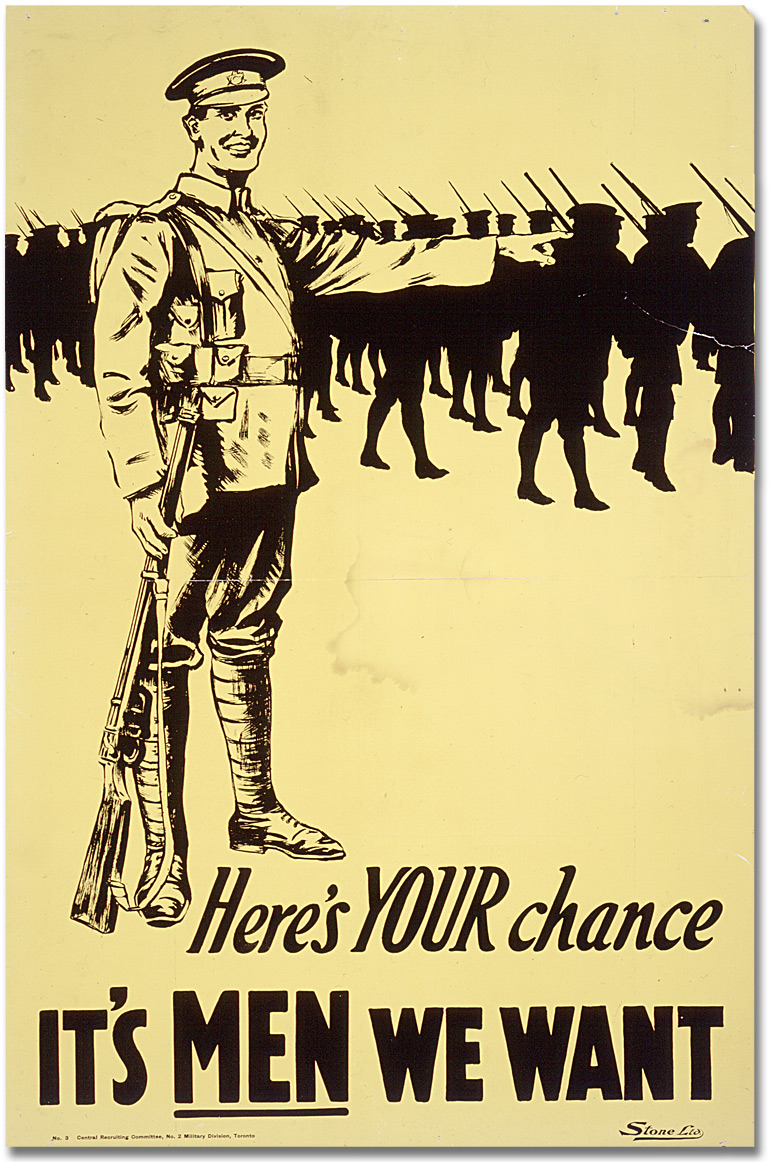 Actually, it’s critical analysis of men, masculinities and practices of violence that we want. While planning the forthcoming symposium on masculinity and violence (there are still a handful of places available), we thought we might be able to turn the idea into a viable journal special issue. So we asked the International Feminist Journal of Politics (IFjP for ease) and they said yes. And lo! A call for papers (also available as a pdf). Please distribute widely.
What We (Should Have) Talked About at ISA: Poststructural and Postcolonial Thought
…(drumroll)… We are collectively joyous at being able to introduce a new contributor to The Disorder Of Things: Robbie Shilliam, currently at the Victoria University of Wellington and author of a slightly staggering array of critical texts (on the impact of German intellectuals on IR; the Black Atlantic in modernity; the Haitian Revolution; race and sovereignty; and the imperatives of decolonial thinking, among others). Cross-posted at Fanon/Deleuze.
 At the recent ISA conference in Montreal, I participated in a lively, weighty and difficult roundtable on postcolonial and poststructural approaches to International Relations. Alina Sajed had supplied the panellists with a provocation by way of refuting Dipesh Chakrabarty’s famous injunction that Europe was the inadequate and indispensible to frame the epistemological constellations of “modernity”. Sajed challenged the panellists to debate whether Europe was in fact dispensable as well as inadequate. There was certainly a spectrum of opinions given and positions taken on the function, possibility and desirability of the relationship between poststructural and postcolonial approaches. As a form of reflection I would like to lay out some thoughts by way of clarifying for myself what the stakes at play are in this discussion and where it might productively lead.
For myself I do not read the Europe that Chakrabarty considers in terms of the historical expansion and exercise of material colonial power. I read it in terms of a fantasy that captures the imagination. At stake is a conception of the whys, hows and shoulds of people suffering, surviving, accommodating, avoiding, resisting and diverting the colonial relation and its many neo- and post- articulations. In this particular respect, I take Frantz Fanon’s position and agree with Sajed: “Europe” must be dispensed with. In any case, as Ashis Nandy has shown, the monopolisation of the meaning of Europe by a fascistic figure (rational, male, hyper-patriarchal, white, civilized, propertied) has required the re-scripting of the pasts of peoples in Europe and a concomitant distillation of the traditions of European thought themselves so as to accord to this fantasy figure. Europe is a fantasy through and through, but one that damages different peoples with different intensities. And those who look in a mirror and experience no significant cognitive dissonance when they proclaim “European” can still count themselves, to different degrees, as being a thoughtful protagonist in a contested human drama. For others, there is only the promise of living this drama vicariously through the thought of others. That is why “Europe” is dispensable, even though for some peoples Europe has never been indispensible; regardless, it must be dispensed with.
Let me explain a little more what I mean by all of this. Europe is first and foremost a sense of being that constructs its empathy and outreach in terms of a self whereby all who cannot intuitively be considered of European heritage are categorized into two entities. First, they might be the “other” – foils to the understanding of the self. Their emptied presence is to be filled as the verso to the internal constitution of the European self. If they are lucky, they are given a kind of non-speaking part in the drama. In fact, they usually are lucky. Much critical European thought – and certainly almost all of canonized European thought – speaks volumes about the ”other” but only so as to fill in the European “self” with greater clarity.
Second, they might be the “abject” – the entity that is impossible for the self to bear a relationship to, although even this impossibility will be instructive to the inquiring European self. Abjects, under the European gaze, are reduced to a primal fear out of which an intensity of feeling is engendered that wills the drama of human (European) civilization. Defined in excess to the other/abject, the internal life of the European self can substitute itself for humanity at large in all times and spaces, and develop itself as a richly contradictory being that overflows its meaning and significance.
I do not know whether other colonialisms predating and contemporaneous to the European project matched this audacity. And in a significant sense, it really does not – and should not – matter. After all, the lure of making comparison is the precise methodology through which the European self overflows to define all others by a lack. I do though want to hazard a particular claim at this point, which might or might not bear up to scrutiny: the prime “others” of European colonialism were the indigenous peoples of the Americas. And while we owe much to Kristeva’s work on the term, the prime “abjects” of European colonialism were the enslaved Africans bought over to the Americas.
What We Talked About At ISA: Technology and World Politics (Part I)

The presentation I gave at the International Studies Association (ISA) conference was on the broad topic of technology and world politics, with more specific reference to the use of crisis mapping software in humanitarian situations. One of the main contentions of this research is that the role of technology in world politics tends to get massively overlooked by the field of IR. This is a bit odd considering the important role of technology in issues of world politics – weapons systems, financial systems, communications systems, surveillance technologies, social media tools, etc., etc. In fact, it’s hard to point to a single standard IR issue that isn’t infected with technological aspects. Yet IR remains a science limited to a focus on disembodied individuals. Whether it be rationalists or constructivists, little mention needs to be made of the actual materiality of these actors and their contexts. Instead, international relations is taken to be comprised of these actors alone.
To get a sense of the materiality of the world, you have to turn to alternative fields – political psychology and its attention to our embodied nature; gender studies for focus on the body and its political roles; and in my particular case, science and technology studies (STS) for an understanding of technology’s unique form of agency. Growing out of sociology, STS became known originally for taking a specifically social approach to the study of science. That is to say, it began looking at how scientists operate in practice in order to create facts. In doing so, it created a lot of controversy – first, for its willingness to suspend the truth of scientific claims in order to look purely at how they gain legitimacy. Second, for its undermining of naïve visions of the scientific method (a naivety that plagues IR to this day). Finally – and for the purposes here, the most interesting controversy – was the agency it attributed to nonhuman objects. I won’t go into the nuances here (maybe another time), but the basic point here is that agency is not primarily about intentional action (a problematic claim about human agency anyways), but instead it is about action changing a structural context. [1] In this sense, it seems unproblematic to agree that technical objects do have agency – in other words, they can change structural contexts by being introduced into preexisting assemblages (a term which itself points to the mutual implication of technology and society).
 The Disorder Of Things
