What We Talked About At ISA: The Monstrous Masculine: War Rape, Race/Gender, and the Figure of the Rapacious African Warrior

If there is something in these utterances more than youthful inexperience, more than a lack of factual knowledge, what is it? Quite simply it is the desire – one might indeed say the need – in Western psychology to set Africa up as a foil to Europe, a place of negations at once remote and vaguely familiar in comparison with which Europe’s own state of spiritual grace will be manifest.

Chinua Achebe, ‘An Image of Africa’ (1978)

Sometimes it seems that we’re merely Constructions made out of yarn, paper & wood with threads rising from our toes and fingertips. We pretend to talk and act as though we were alive but actually we don’t have any choice in the matter. Some secret power directs us.

Evan S. Connell, The Diary Of A Rapist (1966)

1. Rape, Ultra-Violence and Beethoven

When we speak of men in feminism, we might speak generally or specifically, of properties of maleness and masculinity or of things done by particular men (and usually some combination of the two). What is at stake is the distinction between masculinity as a set of internal properties and as a set of relational, and hence contingent, ones. Although this can be taken as denying any substance at all to that category ‘man’, it is perhaps just as well to say that we all build our own subdivided orders of maleness – from men we know, knew, or think we are; from our salient models of true and false and ambiguous masculinity; from the postures and poses we take as appropriate towards them; and from the frames we adopt for dealing with variety, with all the space for the exemplar, the exception, the masquerade and the average that they bring.

The monstrous masculine is one such model, or rather a set of models united by family resemblance. An object of horror, the monstrous masculine is a repository for tropes that identify the hideous excesses and obscene pleasures of maleness. Channelling Barbara Creed (and some Sjoberg and Gentry), it is a set of tropes and themes in our imaginaries of social action, frequently evoking, among others, ideas of a limitless and aggressive sexuality, a cold and calculating self-regard and/or a submerged, if frequently actualised, hatred of women and Woman that borders on the instinctual. In accounts of wartime sexual violence, this figure of the rapacious warrior (usually African) comes to be represented in terms of the calculating soldier-strategist (who chooses rape as a hyper-efficient means to an accumulatory end); the angry soldier-rapist (expressing a deep desire and sexuality); or the habitual soldier-ritualist (enacting the memes and symbolic imperatives of a community, culture or even race).

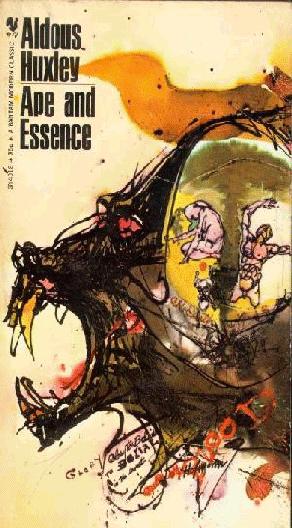
Think of the figure of the unreason-laced psychopath rapist, whether in the version Joanna Bourke examines as the ‘rapacious degenerate’ or that which Susan Brownmiller addresses as the ‘police-blotter rapist’: “[t]he typical American perpetrator of forcible rape…little more than an aggressive, hostile youth who chooses to do violence to women”. Such protagonists are common in popular representations of rape. In A Clockwork Orange, Alex and his droogs prowl the streets and lanes of town and country, opportunistically submitting the unlucky to attacks driven by a relentless juvenile machismo. And in the scandalous Irréversible, rape is also the product of a subterranean drive. ‘Le Tenia’ does not even search his victim for money as an afterthought – his priorities are only to enact his spontaneous lust and be called ‘daddy’ as he does so.

The monstrous masculine unites conceptions and intimations of masculinity as pathology. This is the Real of a “terrifying dimension, as the primordial abyss which swallows everything, dissolving all identities”. Put otherwise, it embodies in its most psychoanalytic inflection the idea (following Nick Cave) that the desire to possess her is a wound.


Continue reading

Suggestion


Why can’t I walk down the street
Free of suggestion?
Why can’t I walk down a street
Free of suggestion?
Is my body my only trait
In the eyes of men?
I’ve got some skin
You want to look in
….
Suffer your words, suffer your eyes, suffer your hands
Suffer your interpretation of what it is
To be a Man
….
We don’t want anyone to mind us
Play the roles that they assign us
She does nothing to conceal it
He touches her because he wants to feel it
We blame her
For being there
But we are all here
We are all
Guilty

Fugazi, Suggestion (1989)

Serious Obstacles; Or, Why Is The UK Government Undermining International Protections Against Gendered Violence?

Today is the 100th International Women’s Day. The Government has been announcing its latest action plan on violence against women and girls (including some bold promises for increased funding for rape crisis centres) accordingly. But The Times reports that British officials have, in the same moment, been deliberately undermining a draft convention against violence against women at the Council of Europe. Specifically:

Britain objects to the words, “violence against women is understood as a violation of human rights”. Instead, it wants “violence against women constitutes a serious obstacle for women’s enjoyment of human rights”.

Even more damningly, our representatives apparently want the convention to apply only to gendered violence carried out in ‘peacetime’ and not to violations in war. Today’s Home Office announcements make reference to various avenues and promises of international ‘co-operation’, but say nothing about this specific charge. Media reports are similarly silent so far.

This is extraordinary. The timing is brutally ironic, although that is likely down to the Editors at The Times. But why would William Hague and co., newly championing freedoms elsewhere, suddenly seek to undermine international cooperation on this front?

Continue reading

The Anti-Feminist Backlash in an Age of Austerity

I suppose, in a way, British men are like white people were in Nineties South Africa or young Germans after the Second World War. We are expected to go through a period of atonement for the sins of our fathers. To be treated worse than we merit because of crimes previously committed in our name: in this case the crime of feeding, protecting, loving and nurturing women in accordance with our biological imperative. They don’t want that any more. They want to be linesmen. And so we have to let them tell us endlessly how they wish we were all dead.

Thus spake a gourmand and professional waffler last week, a child-of-privilege educated at Westminster and Oxford, who, despite these handicaps, manages to articulate for us the crisis of contemporary masculinity. Apparently two compatriots got caught up in some garden-variety lechery of the career-halting kind. Their trials and tribulations, although obviously upsetting for them on a personal level, at least had the merit for many of acting as a flashpoint for opposition. That is, a common-sense opposition to the political correctness surrounding the damages wrought on men by feminism and feminists. Finally, people can begin to speak out.

It is rather tempting to pursue the bizarre line of metaphorical reason here (if ‘sexist crimes’ are merely love expressed biologically, and if British men today are like post-fascist South Africans and Germans, does that make apartheid and Nazi rule the equivalents of a natural and benevolent stewardship? Did they even involve ‘real’ crimes?). But we should resist that. Coren is but a symptom, and should not detain us overlong in picking the low-hanging fruit. The triggering events are themselves already old news, the detritus of the news cycle now rendered especially vulgar and tattling by some actual struggles for justice.

The tropes at play have been with us for some time, inflecting what are essentially public relations SNAFUs with the full force of mythological sex wars. But these themes do seem to be becoming increasingly familiar. Those who grumbled about the rise of such minimal concessions as equal pay legislation in the halcyon days of economic vibrancy now have the pressures of austerity with which to buttress their case. Outrage at the redundancy of a favourite sports broadcaster spirals rather quickly into a diagnosis of women’s ‘special treatment’ in our society and the counter-sexism of a gender settlement in which men are no longer authorised to authentically, organically, just be themselves. Castrated. Emasculated. Prostrated.

Continue reading

Rape & Rape Prevention: A Cod-Evolutionary Perspective

Rape is an evolutionary adaptation. More than that, it now appears that anti-rape strategies are evolutionary too, which for women means increased strength at certain stages of the menstrual cycle, increased general distrust of men and hatred of black men in particular. Taking Darwin in vain, this is the argument put together by Jesse Bering at Slate.

We should probably start by getting our definitional house in order. In an admirable example of rigging the answer by misspecifiying the question Bering names rape as “the use of force, or threat of force, to achieve penile-vaginal penetration of a woman without her consent“. So men are biologically incapable of being raped, women incapable of raping, and the sexual-reproductive organs the only legible site for sexualised aggression (no anal here please!).

Hardly surprising, given this terminological firing gun, that rape emerges as a phenomena only comprehensible in procreational terms. This is a narrower agenda even than saying that it is somehow ‘evolutionary’, itself already less than saying it has something to do with ‘biology’ (the possibility of rape being about ‘sex’, socially understood, or ‘power’ stands at yet further removes).

The quality of proof offered doesn’t fare much better. Take the study on racist attitudes and menstrual cycles, results we’re at risk of ignoring with our rampant ‘political correctness’ (*yawn*). Turns out women from this sample (77 white undergraduates) scored higher on fear-of-rape metrics of black men when they were most vulnerable biologically to impregnation. Bering takes this as supporting an evolutionary adaptation against ‘out-groups’, although he concedes that ‘cultural transmission’ may play a role.

The study itself suggests something rather less conclusive. It found that implicit race bias (non-conscious stereotyped associations of the form ‘black-physical’) was much more strongly correlated with rising fertility than explicit bias. Its metrics for race bias were all clearly consistent with a sociological or interpretive account of race (which is to say that race is a social, not a biological category, and that its meaning is historically and politically determined, not the outcome of adaptive ancestral behaviour). The data is also somewhat partial, as its relation to some wider questions. There is no comment on the fact that, for example, race bias remains fairly pronounced even where there is no ‘conception risk’, nor any significant attempt to cite work on general levels of race bias in general populations as a comparator or to examine variation among degree of bias in the women studied and the possible sources for those differences.

Continue reading

Intimate Dissidence: Assange, Foucault and (Feminist) Rape Discourse

At Critical Legal Thinking, Narnia Bohler-Muller takes issue with the narrow legalism of the often ‘surreal’ commentaries on the Assange controversy. In amongst the denunciation and counter-denunciation she detects an undercurrent of disciplinary power. On this account, the apparently ‘very broad’ rape laws of Sweden, like efforts in South Africa to force HIV tests on rape suspects, enforce dichotomies under the guise of legal formality, and so cast the accused as impurities of the social body:

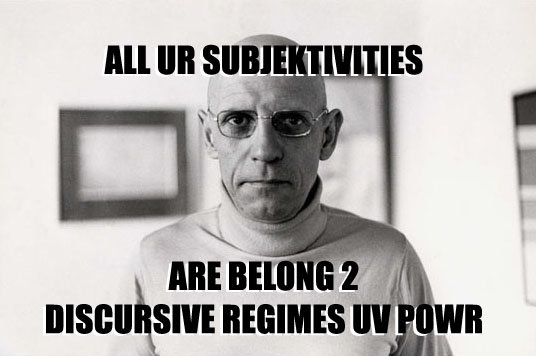
The argument is that the law is not an appropriate instrument to deal with matters of sexual intimacy as general principles can never do justice to the particularity of the situation and the nuances of sexual game-playing. Such is the forceful and violent nature of The Law. To depend on legal regulation to resolve all the complexities and quirks of human relations is a dangerous precedent and enforces the dualisms of guilt/innocence and normal/perverted. It is such dualisms that serve to re-produce Foucauldian ‘docile bodies’ that do not threaten or resist the status quo

…The problem is that in such a way harmless conduct may be punished merely because we do not approve of it. If Assange is HIV negative, which one assumes he is, and neither of the complaints fall pregnant, then his failure to wear a condom caused no harm. Or are we now choosing to punish potential harm or the risk of harm? Or, perhaps, punishing the failure to be a considerate lover, or the narcissism and promiscuity of a man who fucks helpless women and then leaves?

This ends up turning sexual assault into a form of dissent, a refusal “to express comfort with any kind of subservience to Authority“. As before, Assange is not really the issue, merely a bystander and stand-in. But, amidst her caution against law as a substitute for political critique and her rejection of marginalising discourse (points well-taken), Bohler-Muller’s use of him to mobilise broader arguments about a Foucauldian analytics of rape raises some stark problems. Continue reading

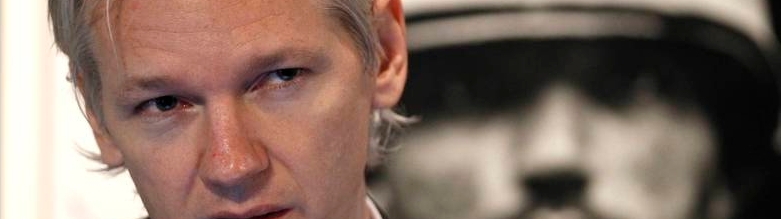
Julian Assange and the Spectre of Rape

One step took him through the roaring waterfall
That closed like a bead-curtain, left him alone with the writhing
Of what he loved or hated.
His hands leapt out: they took vengeance for all
Denials and soft answers. There was one who said
Long since, ‘rough play will end in tears’.

Cecil Day Lewis, Sex Crime (in Joanna Bourke, Rape: A History from 1860 to Present)

And so the Julian Assange Rape Thing rambles on. For some of those keen to defend wikileaks from a legitimacy-crisis-by-proxy, the allegations have invalidated themselves in even being stated. The timing is more than suspicious, and public incompetence reveals machinations behind the scenes. It’s a classic Kompromat, a transparent stitch-up.

The standard ‘rule of law’ holding position – let due process take its course before condemnation – is strangely ineffective in this situation. The taint of sex crime is almost a performative speech act. The suggestion passes the sentence, and trimmings like ‘alleged’ only reinforce the effect, which thrives on ambiguity. All that said, there are two elements to the defences of Assange that deserve unpicking.

The first is the unforgivable recycling of rape myths. Smear is followed by counter-smear. After all, one of his accusers is a radical feminist! And we all know what that means. More than that, a lesbian! Or perhaps not. Like many a spectre of the inconstant feminine before her, she is not what she seems. Her identity, like her allegation itself, hints at a mercenary cunning.

The second, and related, problem is that of the pure non-sexuality implicitly attributed to Assange. Profiles brim with Matrix-y tropes, or paint him as the new King of the Hackerati, like Johnny Lee Miller with long hair. He moves mysteriously, a homeless pilgrim, and needs only a coffee and a laptop to wreak havoc on those stale old boys at the Pentagon. More than once he is identified as a monk, if one who self-flagellates at the altar of techno-modernity. Pristine public service. Political heroes don’t fuck, let alone rape. All those mucky fluids pull them down from their symbolic perch.

Why are these responses necessary? Clearly they are stand-ins for our feelings about wikileaks itself, and for visceral identifications with, and reactions against, the figure of the rebel. They are moves to person-alise the political. Assange is an embodiment, and the enterprise for all concerned stands and falls on the robustness or weakness of his flesh. But it is obvious that the stakes are wider than that, and that ‘the debate’ about information and truth in war can hardly be settled in the courtrooms of Sweden.

Instead of holding on to an agnostic distance from the allegations, could we not better serve both anti-rape politics and free knowledge by cutting the moral link altogether? In rushing to quash accusations and to lambaste accusers, matters on which we can’t possibly speak with authority, we only confirm their wider political power. Why should the outcome of the case affect our view on wikileaks at all? Can we really be saying that our politics is that reductionist? Or our moral sense so basic that the revelation of wrong-doing would bring the whole edifice tumbling down? Rape is quite bad enough on its own without it having to act as a keystone for just conduct in war or the rights of an informed citizenry.


UPDATE (30 Nov): The stakes in the game of embodiment have just been raised. An Interpol arrest warrant has just been issued for Assange, not on any charges of treason, breaches of secrecy, or hacking, but for ‘sex crimes’.