Excuses In Our Sleep: Libya, the Arms Trade, Universities and the Political Economy of Human Rights

A common purpose
Gains value as a common goal
Let’s flail together
If we must flail at all.
Deep in the heart of the battle
Caught in the switch of the flow
Freedom from notes, she sells freedom from songs
She sells freedom and arms Eritrea.
I could have made these excuses in my sleep
As if anyone had doubted them at all
But if we arm Eritrea we won’t have to pay her
And everyone can go home.

Future Of The Left, ‘Arming Eritrea’ (2009)

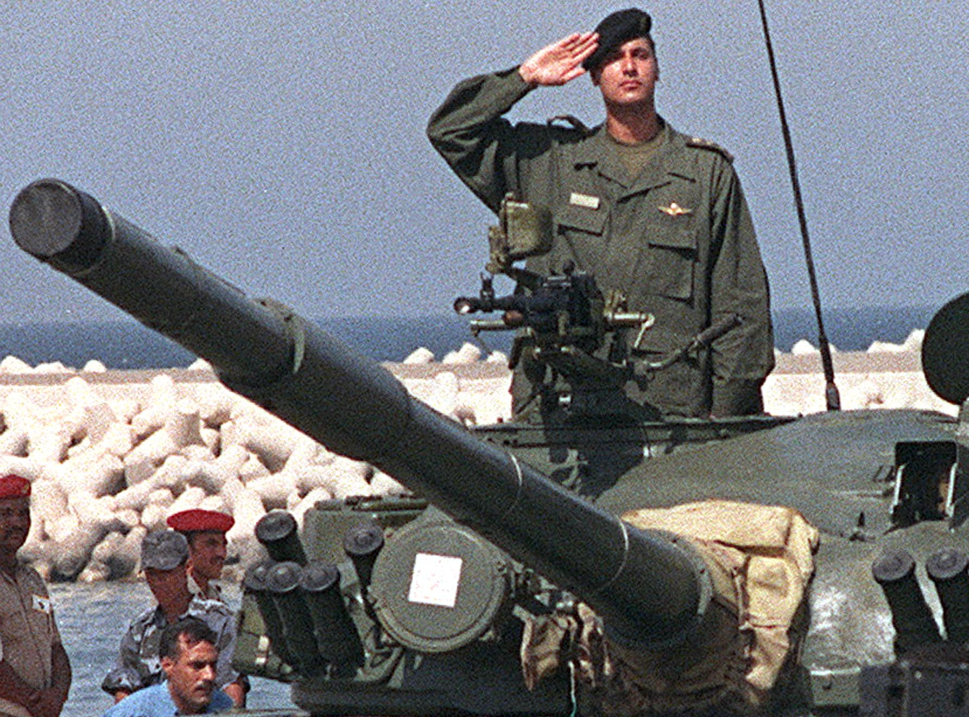
This now fairly-widely disseminated video of Saif Gaddafi brandishing his militarised manhood and promising death can only fuel the paroxysms of guilt and denial afflicting those previously enamoured of him. Not a topic to be neglected, fersure, and one that will be returned here at The Disorder Of Things soon (I promise). But there is another element at play, and one rather more materially linked to massacre and repression. Where are the guns coming from?

Last month, The Guardian engaged in one of its periodic moments of data-explication, borrowing somewhat from Dan O’Huiginn to set out which regimes get UK arms exports, and how much. Since David Cameron is unashamed in his claims that we’re merely helping democracies protect themselves (barring minor hiccups), the numbers and relations make interesting reading. The conventional (if perhaps flawed) metric for such political goods as freedom and democracy is that provided by Freedom House. The top five Middle East and North African beneficiaries of UK military export licences in 2009-2010 were Algeria (£270 million), Saudi Arabia (£64 million), Libya (almost £34 million), the United Arab Emirates (almost £16 million) and Jordan (£12 million).

Every single one is listed as ‘Not Free’ in the Freedom House Index for 2010.
Continue reading

Libya and the Temptations of Geo-Political Reason

While Libya quakes, an assorted commentariat tussles over the legacy of the new military humanism and its possible revival. That such statements are now tempered with a caution absent for Kosovo and its successors mitigates matters somewhat, but not much. Despite the disavowal and dissimulation, the conclusions reached are much the same. Something must still be done. There is an obscenity about this rush to engage in geo-political reason, to pronounce on real and illusory national interests, to play soldier by speculating on where to move the battalions on the great chess board of high politics. In periods of less emergency, we might speak of a complex weaving of beliefs and interests, of competition between economic, military and political logics, or of international statecraft as a particular and peculiar kind of practice. But in the face of NFZ+, RPGs and UNSCRs, such vulgar and academic maneuvers appear to be surplus to requirements, for the cheer-leaders as much as for the poo-poo-ers.

But the advocates and the critics are closer now too. Both want the revolution to succeed. Both are wary or hostile to the rationales of power. Both see the possibility of a sub-optimal partition or stalemate. And both are engaging in some wishful thinking, whether by assuming that the authorisation of the UN or the absence of explicit lies will limit the reach of militarism or in simply asserting that the Revolution is on the verge of seizing the state without (faux) internationalism. Which isn’t to say that there aren’t some fairly compelling assessments available.

All of this opens up a space for further discursive refinements. We might do well to talk about the confusion between ad bellum and in bello concerns, or about the wisdom of replacing a concern with the consequences of intervention with a folk-psychological assessment of the true intentions of its instigators, as if the legacy of ‘muscular liberalism’ mattered more than the fate of those with some rather more pressing concerns.

But what of the sudden convergence around a statist geopolitics?  Continue reading

Revolution in Egypt

Because of the politics of becoming, gaps and fissures open up periodically between positional sovereignty as the highest authority to interpret the law and sovereignty as the effective power to decide what it will be. These two dimensions of sovereignty often shade into one another. But the discrepancy sometimes becomes a fissure that is too dramatic to ignore

William E. Connolly, Pluralism

Memo from an Old Contrarian: Hitchens on Revolution, Islamism and More-Or-Less Benign Dictatorship

No one really knows what will come of ongoing events in Tunisia and Egypt (and Yemen and Palestine, &c.). A plethora of under-qualified voices are currently vying for interpretative hegemony, not to mention secure plottings of the various ‘implications’ for the US, global order and the very meaning of freedom in the 21st century. What will it mean for the Mammonites currently scrambling behind the curve? Will the language of ‘partnership’ and ‘reform’ contain the unrest?

It will surely not be long before someone frames the last days’ clashes in Alexandria as the eventual outcome of bombs over Baghdad. I have no particular interest in indulging such faux-talking-head insta-response. What did catch my attention was an especially contrary and confused statement from Christopher Hitchens, billed at Slate as an encouragement to juvenile Tunisia and then at The National Post as a qualified defence of ‘civilized dictatorship’.

Continue reading